China believes hostile short-sellers caused panic

A recent sell-off in China’s stock markets is the first major challenge facing the country since the introduction of margin trading, and is believed to have been caused by hostile short-sellers.

In a report on the Chinese news site ifeng.com, an analyst said the sell-off was similar to what took place in Hong Kong in 1997, when the territory’s benchmark Hang Seng Index plunged 60% after peaking at 16,673 points.

The steep drop in share prices in Hong Kong in 1997 was caused by financier George Soros, who shorted both the Hong Kong dollar and the Hang Seng Index futures, the analyst said, adding that similar practices were observed in the last two trading sessions in China.

According to the analyst, massive funds entered the futures market, building a short position and leading to declines in the stock markets. The size of the funds and the sophisticated trading methods are beyond the ability of Chinese institutional investors, the analyst said.

In fact, Bill Gross of Janus Capital, a co-founder of global investment firm PIMCO, said in early June that the Shenzhen Stock Exchange’s Component Index presented perfect short-selling opportunities.

At the time, the index was at a seven-year high but plummeted 30% on Gross’s comments. Morgan Stanley and Credit Suisse have also been bearish on Chinese shares recently.

Several measures introduced or announced by the Chinese government, such as lower interest rates, required reserve ratio cuts, and a plan to allow the investment of pension funds in equities, have failed to prop up the Chinese stock markets.

The Chinese government is expected to introduce new policies to rescue the market, since further a decline will hurt companies’ ability to borrow money and will put pressure on the economy.

The China Securities Regulatory Commission reportedly was soliciting proposals from institutions to rescue the market.

There have also been reports of brokerages promising not to force liquidation of shares held by investors facing margin calls.

Source: China Times
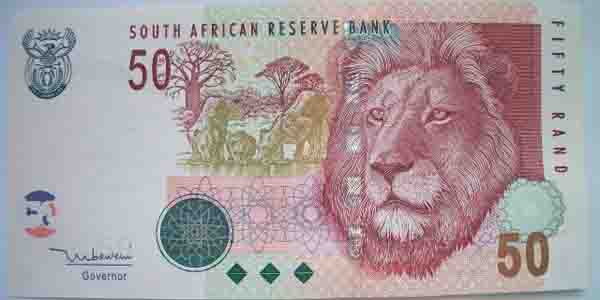
Strong dollar a threat to Eskom and South Africa

In the world of economics, one policymaker towers above all others. The head of America’s central bank, Janet Yellen, presides over a $17 trillion economy. The empire of her nearest competitor, Mario Draghi, amounts to a relatively puny $10 trillion. On top of this, the dollar’s global role means Ms Yellen has a huge impact abroad, influencing more than $9 trillion in borrowing in dollars by non-financial companies outside America—more than enough to buy all the firms listed on the stock exchanges of Shanghai and Tokyo. As the dollar strengthens both in response to healthier growth in America and in the expectation that the Federal Reserve is getting ready to raise rates, this burden is becoming harder to bear.

Dollar borrowing is everywhere, but the biggest growth has been in emerging markets. Between 2009 and 2014 the dollar-denominated debts of the developing world, in the form of both bank loans and bonds, more than doubled, from around $2 trillion to some $4.5 trillion, according to the Bank for International Settlements (BIS). Places like Brazil, South Africa and Turkey, whose exports fall far short of imports, finance their current-account gaps by building up debts to foreigners.

Even countries without trade gaps have been borrowing heavily. With interest rates on American assets so meagre—a five-year Treasury bond pays just 1.5%—those with dollars to invest have sought out more rewarding opportunities. Firms based in emerging markets seemed to fit the bill. Some are big names: state-owned energy giants like Russia’s Gazprom and Brazil’s Petrobras have been issuing dollar bonds via subsidiaries based in Luxembourg and the Cayman Islands. Others are smaller. Recent months have seen Lodha group, an Indian property developer, Eskom, a South African power generator, and Yasar, a Turkish firm that makes TV dinners, sell dollar-denominated bonds. By borrowing dollars at several percentage points below the prevailing interest rate in their domestic currency, CEOs have pepped up profits in the short term.

But finance rarely offers a free lunch. The worry is that tumbling energy prices mean firms like Gazprom and Petrobras now have much lower dollar income than expected when they took on debts. Others, such as Lodha, Eskom and Yasar, have few dollar earnings. Taking on debt just before a shift in exchange rates can be painful. In 2010 a Turkish firm borrowing $10m via a ten-year bond with a 5% coupon could expect to pay 22.5m lira ($15m) over the life of the bond. But the lira is down 43% against the dollar since then; the payments are now over 39m lira.

Where foreign debts and earnings line up there is little reason to worry. Asian firms’ foreign-currency debts tripled from $700 billion to $2.1 trillion between 2008 and 2014, going from 7.9% of regional GDP to 12.3%, according to economists at Morgan Stanley, a bank. To see whether the surge was bearable, the economists looked at the accounts of 762 firms across Asia. The findings were reassuring: on average 22% of their debt is dollar-denominated, but so are 21% of earnings. Although Asian firms are a big part of the emerging-markets’ borrowing binge, on the whole they seem well placed to cope with a rising dollar.

Yet there are still two reasons to worry. First, the outlook for China is a puzzle. The country holds $1.2 trillion in Treasury bills, many of which are sitting in its sovereign-wealth fund. When the dollar rises, the fund gets richer. But even in a dollar-rich country, there can be pockets of pain. China’s firms have built up a nasty currency mismatch. Almost 25% of corporate debt is dollar-denominated, but only 8.5% of corporate earnings are. Worse, this debt is concentrated, according to Morgan Stanley, with 5% of firms holding 50% of it.

Chinese property developers are the most obviously vulnerable. Companies like Evergrande, China Vanke and Wanda build and sell offices and houses, so most of their earnings are in yuan. Banned from borrowing directly from banks, they have been active issuers of dollar bonds. They have also borrowed from trust companies, according to Fitch, a rating agency. The trusts are themselves highly leveraged and have borrowed dollars via subsidiaries in Hong Kong. This arrangement will amplify the economic pain if property prices in China continue to decline, as they have been doing for several months.

The second problem is that whole economies, rather than just the corporate sector, look short of dollars. In Brazil and Russia, for instance, bail-outs of firms lacking greenbacks are blurring the lines between the state, banks and big companies. The general scramble for dollars has contributed to the plunge of the real and the rouble. Others could follow this path. Turkey’s dollar borrowing has grown rapidly since 2009: in addition to the debts Turkish firms have taken on, the state’s external debt has grown to almost 50% of GDP, far above the average for middle-income countries (23%). South Africa looks worrying too: its current-account deficit is the widest of any big emerging market, and the government’s external debt is 40% of GDP.

A wave of defaults would be unlikely to cause problems as widespread as the subprime crisis of 2008. Most bonds are owned by deep-pocketed institutional investors such as pension funds and insurers. The banks that have made loans face far tougher regulation than they did eight years ago and are generally far better capitalised. An emerging-market rout would not cause another Lehman moment. But it would mean big job losses at stricken firms. As investors reprice risk it would probably also lead to a sudden tightening of credit. In countries like South Africa or Turkey, where growth is evaporating fast, that could still be very painful. – The Economist

Gold prices up

Gold was up $42.70 per ounce in trading today.

The New York spot price was $1,320.20

Also on Wall Street, investors remained in a record-setting mood Thursday.

The Standard & Poor’s 500 index closed at an all-time high for the second time in two days and notched its fifth gain in five days.

The Dow Jones industrial average and Nasdaq composite ended mixed after drifting between small gains and losses for much of the day.

The three key stock indexes all opened higher, holding on to tiny gains in premarket trading as investors sized up the latest data on unemployment aid applications and an index of economic indicators.

The Labor Department reported that applications for unemployment benefits fell last week to 312,000, the lowest in more than six years. The Conference Board added to the good news, saying its index of leading indicators rose 0.5 percent in May from the previous month.

The market began to drift lower, however, as investors looked beyond the economic data and focused instead on a mixed bag of corporate earnings from companies such as Kroger, Rite Aid and Pier 1 Imports.

By midday, stocks veered into the red, where they remained until halfway through the final hour of trading, when a late push elevated the S&P 500 and Dow barely higher on the day.

The S&P 500 index rose 2.50 points, or 0.1 percent, to 1,959.48. That’s slightly above the prior day’s record close of 1,956.98. The last time the index closed at a record high was June 9th.

The Dow Jones industrial average added 14.84 points, or 0.1 percent, to 16,921.46. The Nasdaq composite slipped 3.51 points, or 0.1 percent, to 4,359.33.

The three indexes are all up for the year.

The U.S. economy shrank at an annual rate of 1 percent in the January-March quarter, the victim of a severe winter which slowed business activity in a number of areas. Many analysts anticipate growth rebounded strongly in the April-June quarter.

The market will get a sense of that next month, when the next round of corporate earnings begins. Until then, the next key market mover will likely be the June jobs report, due out the first week of July.

Bond prices fell, sending the yield on the 10-year Treasury note up to 2.63 percent from 2.59 percent late Wednesday.

Source: Elko Daily Free Press

South African strikes hurt currency, bonds

South Africa’s rand sank this week to within sight of three-year lows against the dollar as a wave of strikes spread beyond the mining sector, threatening the biggest industrial crisis since the end of apartheid.

After two months of violent labor unrest in the platinum and gold mines, Japanese car giant Toyota said on Thursday its Durban plant had fallen victim to the wildcat strikes that are shaking Africa’s biggest economy only three months before an ANC leadership election.

President Jacob Zuma is favorite to win re-election as head of the ruling party, although a widening of the strikes and sell-offs of the rand and domestic bonds threaten to expose his lack of economic expertise.

So far, a wave of foreign flows into the bond market related to South Africa’s October 1 inclusion in the influential Citi World Government Bond Index (WGBI) on October 1 have helped underpinned domestic asset prices.

But signs are emerging that the WGBI effect is waning, and concerns about the strikes’ impact on growth is rising.

The rand has lost nearly 1.3 percent this week, recording its fourth daily loss in five days on Wednesday as strikes, a yawning current account gap and a Moody’s ratings downgrade took their toll.

“These events have had a marked impact on the currency, not-withstanding the evidence of substantial purchases of South African bonds by foreign investors on the back of the WGBI inclusion,” said Bruce Donald, a strategist at Standard Bank

“The strikes are certainly one of the factors impacting investor sentiment towards South Africa in terms of the political uncertainty it might create. It also has negative consequences for growth and for the current account through its impact on mining exports.”

In July, before the wave of strikes started with a wildcat walkout at Lonmin’s Marikana platinum mine, exports of minerals, precious stones and metals accounted for half of all South Africa’s trade receipts.

Moody’s last week cut South Africa’s sovereign credit rating to Baa1 from A3 amid a souring of investor sentiment over the protests that have hit production in the world’s top platinum producer and No. 4 gold producer.

All that has put pressure on Zuma’s government, which was criticized for its handling of the unrest at Marikana, where more than 40 people were killed in August, the majority shot dead by police.

This week, Reserve Bank Governor Gill Marcus noted the rand remained vulnerable to “changing risk perceptions in global financial markets and domestic issues, such as the tragic events at Marikana”.

Joining the club

The rand has been lifted by about 84 billion rand ($10 billion) of portfolio flows since the start of 2012 as foreign accounts that track the WGBI stocked up on local debt ahead of the October 1 inclusion, Marcus said.

But the governor cautioned these levels were not sustainable.

Despite its recent strong run, the rand is still among the weakest performers against the dollar so far this year in a basket of 20 emerging market currencies, shedding more than four percent since January.

By contrast, units such as the Hungarian forint, Polish zloty and Turkish lira have rallied 9 percent, 8 percent and 4 percent respectively.

The rand hit 8.4524 earlier on Thursday, within sight of Wednesday’s month low of 8.4590. A sustained hold below the 8.45 area could push it to 8.55/dollar, then all the way towards the three-year low of 8.71 it hit in early June amid intense concerns about Europe’s debt crisis.

Waning WGBI flows make the currency more vulnerable to swings in global risk appetite as investors eye the unabating credit crunch in the single currency area.

“We expect the WGBI flows could start to ease up now after the actual inclusion date and perhaps thin out over the next week or two and then normality could kick back into effect,” said Sean McCalgan, a market analyst at ETM.

“That leaves the rand in a rather vulnerable position,” he added. “WGBI is one of the only positive drivers working in favor of the rand at the moment.”

($1 = 8.4415 South African rand) – Reuters