Strikes loom with deadlock

Tortuous public sector wage negotiations are underway, as another deadlock has been reached which could mean a damaging strike.

As Mugwena Maluleke, convenor of the Cosatu public sector unions has warned: “If the negotiations reach a breaking point, they will severely affect the public in what will follow”.

After seven months of talks, the dispute over future wage increases and benefits for some 1.3 million civil servants is now in conciliation.

The government, as the employer, has until Monday to table revised proposals. These seem likely to include a pay deal that will take account of increases in the rate of inflation beyond the present estimate of 4.8%.

Meanwhile workers have been on strike at Medupi power station in Limpopo for nearly six weeks, Eskom said on Wednesday.

Those wanting to go back to work have been intimidated from doing so, the power utility said in a statement.

“The striking employees belonging to contractors on the Medupi Power Station Project have not heeded the call to return to work since the unprotected industrial action that took place on March 25, 2015, despite a court interdict as well as ultimatums issued in this regard…

“Violence and intimidation was experienced in the accommodation areas where these employees reside as well as en-route to the project site. This has resulted in employees that want to return to work, being prevented or intimidated from doing so.”

The police was keeping a close eye on the situation but it remained “tense”, News24 reported.

Labour unrest has been plaguing Medupi, a dry-cooled coal-fired power station meant to alleviate South Africa’s under pressure power grid.

Source: News24

Cosatu vows to bring SA to its knees

On Thursday, Cosatu public service unions vowed to bring the country to its knees, saying the government seemed to want to plunge the country into crisis.

Pretoria’s central business district was brought to a standstill on Thursday as 11 000 public servants took to the streets. But in a week’s time the country could be hit by rolling mass action, stay-aways and civil disobedience, should a settlement not be reached by the government and public sector unions, which are demanding a 10 percent pay rise.

A strike will mean schools, hospitals and government services would work on a skeletal to a no-staff complement.

During the march, major CBD intersections were gridlocked and frustrated motorists had to find “alternative routes”.

This situation was compounded by ongoing city council roadworks – in cases approaching two years – which have seen some streets narrowed to one lane; others have been closed off.

The pay talks at the Public Service Co-ordinating Bargaining Council stalled again this week.

The government says it cannot afford more than a 5.8 percent increase, but has offered to pay the lowest-paid state-employed workers a 14 percent wage increase.

But powerful police and teachers unions want a 10 percent increase across the board and a R1 500 monthly housing allowance.

Source: IOL

Police clash with Medupi strikers

Police have clashed with striking workers at various hostels housing construction workers of Medupi Power Station in Limpopo.

The workers had barricaded the streets and entrances to the hostels preventing buses to pick up workers to the construction site.

They are burning tyres and pelting stones at motorists.

Police nyalas and water tankers have been deployed in the area.

On Tuesday the striking workers refused Eskom’s offer to return to work on Wednesday.

The workers are demanding that those dismissed be reinstated unconditionally.

The utility had on Tuesday confirmed it will reinstate the 1 700 workers who were fired for vandalising property during the strike.

Labour disruption and technical faults have increased costs at Eskom’s Medupi coal-fired plant, expected to start generating 800 megawatts of extra electricity by July.

Meanwhile Eskom implemented stage 2 load shedding from 06:00 on Wednesday morning.

This followed stage 2 and stage 3 load shedding on Tuesday, with Eskom assuring customers that load shedding is implemented as a necessary measure to protect the power system.

Deferred generator maintenance has caused an overload of unplanned repairs, resulting in a week of darkness for South Africa.

Amcu miners eating human flesh for muti commission hears

“We took some of the flesh of the security [officer]. It was to make our muti strong.”

This was one of the confessions made by Mr X during his first day of testifying at the Marikana commission on Thursday.

Mr X, who was one of the striking miners at Marikana in 2012, is under police witness protection and his long-awaited testimony is now being heard in-camera.

While his evidence was being led by Advocate Frank Mathibedi, who represents the South African Police Service (SAPS), Mr X told how they took pieces of flesh from one of the Lonmin security guards who was killed by the striking miners on August 12 2012. They did this on the instruction of inyangas (traditional healers) to make the muti, used during the rituals with the strikers, strong.

According to Mr X, the muti and rituals were to protect the strikers. “An inyanga would make people brave, who would lead the warriors,” he told the commission through an isiXhosa interpreter. “The inyanga was going to make us not subject to being shot [and] lock the fire arms if we’re being shot at.”

Upon being shown a photo of the inyangas’ rag with lions printed on it, Mr X slowly started singing a song the strikers made up while on the koppie taking part in the rituals. “The lion from Bezana, the lion that eats people,” he sang in his low, husky voice. The significance of this song has not yet emerged.

A “committee” of 15 people were chosen by the strikers to undergo these rituals. It was these 15 who were the leaders of the strikers, and responsible for conveying messages between the inyangas and other strikers.

March to NUM
When questioned by Mathibedi on why the mine workers marched to National Union of Mineworkers’ (NUM) offices on August 11 2012, Mr X insisted that “we had gone to kill [them]”.

Mathibedi referred to three instances where other mine workers testified to other reasons why they had marched to the NUM offices, namely to ask them why the union was preventing the mine workers from talking to Lonmin management; and to deal with allegations that strikers had been assaulted and forced to go to work by NUM officials while they were on strike.

But Mr X remained insistent that the reason they marched to the NUM offices was to kill the people inside. “We were armed, Mr Chairperson, with pangas and spears. We were going to kill [them] in the office,” he said.

Initial meetings
Mr X also spoke about the initial meetings held by the mine workers on August 9 and 10 2012 to discuss their wage demands and plan of action with each other.

It was on August 10 that miners marched “peacefully” to the offices of Lonmin management to make their requests known, by writing their wage demands on a piece of cardboard.

Mr X told how after 15 minutes a “white man” – one of Lonmin’s management – emerged from the office. “He said the demands would be addressed by the union in 2013, and that is the agreement with the union. [He said] go back to work [and that] our strike is illegal.”

The miners then decided they would take action against those miners who returned to work and would also take steps against the refusal of Lonmin to address their wage demands.

Objection
The testimony of Mr X got off to a slow start, as technicians fine-tuned the video link through which he is testifying, but also due to a lengthy objection by Advocate Dali Mpofu, who represents the injured and arrested mine workers.

Mr X, a miner under police protection, has testified about removing “pieces of human flesh” from a murdered security guard to make their muti stronger.

While his evidence was being led by Advocate Frank Mathibedi, who represents the South African Police Service (SAPS), Mr X told how they took pieces of flesh from one of the Lonmin security guards who was killed by the striking miners on August 12 2012.

They did this on the instruction of inyangas (witchdocters) to make the muti, used during the rituals with the Amcu-strikers, strong.

According to Mr X, the muti and rituals were to protect the strikers. “An inyanga would make people brave, who would lead the warriors,” he told the commission through an isiXhosa interpreter. “The inyanga was going to make us not subject to being shot [and] lock the fire arms if we’re being shot at.”

Upon being shown a photo of the inyangas’ rag with lions printed on it, Mr X slowly started singing a song the strikers made up while on the koppie taking part in the rituals. “The lion from Bezana, the lion that eats people,” he sang in his low, husky voice.

The significance of this song has not yet emerged.

A “committee” of 15 people were chosen by the strikers to undergo these rituals. It was these 15 who were the leaders of the strikers, and responsible for conveying messages between the inyangas and other strikers.

When questioned by Mathibedi on why the mine workers marched to National Union of Mineworkers’ (NUM) offices on August 11 2012, Mr X insisted that “we had gone to kill [them]”.

Mathibedi referred to three instances where other mine workers testified to other reasons why they had marched to the NUM offices, namely to ask them why the union was preventing the mine workers from talking to Lonmin management; and to deal with allegations that strikers had been assaulted and forced to go to work by NUM officials while they were on strike.

But Mr X remained insistent that the reason they marched to the NUM offices was to kill the people inside. “We were armed, Mr Chairperson, with pangas and spears. We were going to kill [them] in the office,” he said.

Mr X’s testimony continues on Friday.

Source: M&G

Anglo might sell SA platinum assets

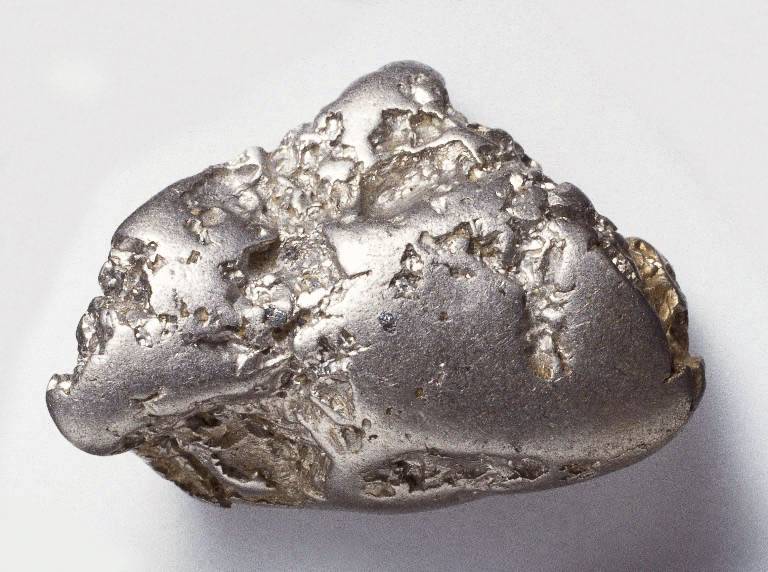
Diversified mining firm Anglo American might sell its platinum assets in South Africa, valued at $1.4 billion (R15bn), next year, Deutsche Bank speculated yesterday in a note.

A sale would increase fair value for Anglo’s stock by 13 percent to £17.50 (R318 at yesterday’s exchange rate), said Rob Clifford, a Deutsche Bank mining analyst.

Sibanye Gold, South Africa’s second-largest gold producer, might be interested in the company’s three mines in Rustenburg, while an offer from platinum peers was unlikely, he said. “We think this offers Anglo the cleanest exit, minimising legacy closure and employment obligations.”

Subsidiary Anglo American Platinum (Amplats), the world’s largest platinum producer, had been rocked by the strike at its Rustenburg and Union mines since January 23.

Anglo planned to switch to mechanised open-pit mining from labour-intensive underground excavation, the chief executive, Mark Cutifani, said in April.

The company was seeking to exit its high-cost, low-return mines in Rustenburg in 2015, Clifford said. “There is an opportunity for a new owner of the Rustenburg mines to take out costs. Some industry participants are looking in general at mergers and acquisition opportunities in the platinum industry. The ongoing strike may bring some of those opportunities to fruition.”

About 37 percent of Anglo’s assets are in South Africa and generate 55 percent of operating profit. They include Kumba Iron Ore operations, the Venetia Diamond Mine in Limpopo and the Zibulo Colliery in Mpumalanga.

Source: IOL

Strikes in mining sector hit five-year high

labourThe number of strikes last year in South Africa hit a five-year high, with the mining sector accounting for 82.4% of them, says the labour depratment.

A total of 99 strikes were recorded in 2012, close to half of them unprotected or wildcat strikes, and many of them characterised by violence, labour director general Nkosinathi Nhleko told journalists in Cape Town on Wednesday.

Tabling the latest Industrial Action Report, which covers the 2012 calendar year, he said strikes over the period involved 241 391 workers, cost the economy 3.3-million working days, and resulted in workers losing R6.6-billion in wages.

The trend was continuing into this year.

“From what we can all see, there is a continuation of the trend we experienced in 2012,” Nhleko said.

However, no figures were yet available for the current calendar year. Asked why so many strikes involved violence, he suggested this had to do with leadership.

“The issue of how parties in the dispute have got to conduct themselves … hinges largely around the issue of exercise of leadership.

“And when we cite leadership as a factor … it is also informed by the mere fact that when these things begin to happen, it is something that wants to suggest that at a level of exercise of leadership, there is something that has not been handled properly and … accordingly.”

‘Worrying’
This, Nhleko said, was a “worrying point”. He said “social partners” needed to tackle the issue of how to prevent violence during strikes.

According to the report, 99 “strike incidents” were recorded in 2012, compared to 67 in 2011; 74 in 2010; 51 in 2009; and, 57 in 2008.

“South Africa experienced violent, bloody and deadly industrial actions in the mining, transport and agricultural industries … Out of 99 strikes processed within the department, 45 strikes were unprotected.”

The department of labour said in a statement that “A feature of industrial action during 2012 was the heightened violence that accompanied strike action, particularly in the mining and transport sectors. The violence and damage to property that was evident in the agricultural sector should also be noted, although these were protest actions and not strictly strike action.”

Mining
The document finds most of the working days lost by industry were in the mining sector (82.4%).

“Wages, bonuses and other compensation issues still remain the main reasons for work stoppages in South Africa during 2012.”

Further, most workers involved in last year’s labour unrest were members of the National Union of Mineworkers.

Among the provinces, Gauteng – South Africa’s economic heartland – had the most work stoppages.

“Gauteng experienced 42 strikes in 2012, up from 33 in 2011, an increase of 27.3%.”

According to the report, workers still had confidence in the Labour Relations Act, the legislation governing bargaining processes and associated legislation, “[but] most of them believe that the cost of living is too high”.

Among its conclusions are that “government needs to take control of the situation and solidify practice and protocol with regard to wage negotiations before the nation’s mining sector becomes un-investable [sic] as a result of the strikes.” – Sapa

Showdown looms at Water Sisulu University

walter-sisulu-universityA show down is looming between management of the Water Sisulu University and students in the Eastern Cape as the 12 o’clock deadline to vacate the premises nears.

The university says the move to vacate the residences is for the safety of students but they have threatened to resist it on the grounds that management must address the workers’ demands.

Staff are on strike demanding a salary increase of 8% while the university is offering 4.25%.

Students’ spokesperson, Lusanda Thutha says they will resist any attempt to vacate them legally or otherwise. “We are not going anywhere. It cannot be good that we have been told through Facebook that we have to leave and vacate the premises because we know that we never applied through Facebook,” says Thutha.

She says that every decision that has to be taken about students has to involve the leadership of the students. Meanwhile, the university’s spokesperson Angela Church says that students have started to go home.

Church, has warned against resistance. “We issued the notice on Tuesday that they must vacate the residences. We did extend the deadline to Friday August 30. We need our students to vacate the residences for their own safety and security as the situation around the WSU campuses is very volatile. Some of our students have been injured in skirmishes with police and we cannot put them at risk any further,” she says.

“We will assess the situation after  5 o’clock on Friday,” Church added.

Quadrupled recycled platinum supply driving mining price down

A significant increase in the supply of platinum from recycling, a strong fall in demand for autocatalysts and price-elastic Chinese jewellery demand are combining to hobble the platinum mining industry.

 (Amplats) CEO Chris Griffith tells Mining Weekly Online in the accompanying video interview that secondary supply of platinum from recycling quadrupled from 500 000 oz a year to 2-million ounces a year from 2000 to 2012, with demand for autocatalysts falling by nearly 9% in the latter year.

While much store was placed on extra demand for jewellery in China, this demand proved to be price elastic, with demand rising when the price was down and demand falling when it was up, which kept the price in a narrow range.

With the price unlikely to rise and with the massive increase in costs, the industry is facing an increasingly tight future.

“Current market conditions are very difficult for platinum miners,” says Griffith.

This is in sharp contrast to the market conditions of the past.

From the 1980s to the 2000s, the rate of growth of demand for platinum in jewellery, industry and autocatalysis averaged 5% a year.

In 2006, Amplats anticipated wrongly that these halcyon conditions would persist to 2012.

But instead of demand continuing to grow at a rate of 5% a year from 2007 to 2012, there was a slight overall demand reduction, plummeting autocatalyst demand and ups-and-downs from jewellery demand, which traditionally serves as a market saviour when prices are low.

Miners were increasing supply in the expectation of continued high growth and at the same time the 2-million ounces of recycled supply began to virtually match what Amplats puts on to the market a year from its mining activities.

As a result of these fundamentals, there is an oversupply of platinum in the market – a scenario that is likely to persist.

“We’re unlikely to see a substantial improvement in demand in the short term and we are likely to see additional ounces come on to the market from secondary supply.

“Some of the demand will come from highly price-elastic areas, which means that the price is unlikely to rise.

“With the price unlikely to rise and with the massive increase in costs, it means that the industry is facing increasingly difficult times going ahead, not better times, hence the need for us, under circumstances of having loss-making shafts, to make a change to the business.”

The change has been the most far-reaching in the JSE-listed company’s 58-year history and involves the closure of two mines, the mothballing of four shafts, the selling of Union mine and the offer to create at least one new non-mining job for each of the 14 000 mining jobs that are expected to be shed.

“Clearly, our first objective has to be to restore profitability. In that process, we’ve evaluated this business inside and outside, backwards and forwards, for almost a year now, “ Griffith tells Mining Weekly Online.

The production profile will be cut by 400 000 oz to align the output with demand and Rustenburg will be restructured into three operating entities, removing 250 000 oz to 300 000 oz a year of high-cost production.

Four Rustenburg shafts, Khuseleka 1 and 2 shafts and Khomanani 1 and 2 shafts, will be mothballed for the long-term and the Rustenburg operations will become a 320 000 oz to 350 000 oz a year producer, ensuring more effective capital allocation.

As a result, Amplats will reduce its planned capital expansion over the next ten years by 25% to R100-billion in order to focus investment on low-cost, high-margin projects. – Creamer Media

Dangerous chaos in South Africa – appeal from farmers

Looting and arson on Western Cape wine farms

SOUTH AFRICA TODAY: Farms in the Western Cape region are being burned, shops in small towns ransacked, people assaulted and intimidated. At least two people have been shot. Reports that a white farmer had been dragged from his vehicle and murdered.

This is total chaos; yet the ANC government and its trade union partner Cosatu are ENCOURAGING the carnage! Very few reports go out on the mainstream media, indicating a media black-out. Social networks like Facebook and Twitter are our only means of information and action.

Make no mistake – this is a xenophobic attack aimed at white people. This had been going on for years now with thousands of Afrikaners/Boers murdered and attacked; yet there is no outcry from the world.

WE URGE you – please use your status in your country’s Parliament to make this known to the world; to impose sanctions against the black racist government of South Africa until they stop the madness.

We are not going to sit back and follow the route of Zimbabwe where all whites were bankrupted, murdered and forced to flee. We are 4,5 million – and as God is my witness – this madness has all the elements of turning into a full scale race war.

We need you and your country to stand up TODAY and stop the nonsense.

Hannes Engelbrecht, Boer Crisis Action

South African strikes hurt currency, bonds

South Africa’s rand sank this week to within sight of three-year lows against the dollar as a wave of strikes spread beyond the mining sector, threatening the biggest industrial crisis since the end of apartheid.

After two months of violent labor unrest in the platinum and gold mines, Japanese car giant Toyota said on Thursday its Durban plant had fallen victim to the wildcat strikes that are shaking Africa’s biggest economy only three months before an ANC leadership election.

President Jacob Zuma is favorite to win re-election as head of the ruling party, although a widening of the strikes and sell-offs of the rand and domestic bonds threaten to expose his lack of economic expertise.

So far, a wave of foreign flows into the bond market related to South Africa’s October 1 inclusion in the influential Citi World Government Bond Index (WGBI) on October 1 have helped underpinned domestic asset prices.

But signs are emerging that the WGBI effect is waning, and concerns about the strikes’ impact on growth is rising.

The rand has lost nearly 1.3 percent this week, recording its fourth daily loss in five days on Wednesday as strikes, a yawning current account gap and a Moody’s ratings downgrade took their toll.

“These events have had a marked impact on the currency, not-withstanding the evidence of substantial purchases of South African bonds by foreign investors on the back of the WGBI inclusion,” said Bruce Donald, a strategist at Standard Bank

“The strikes are certainly one of the factors impacting investor sentiment towards South Africa in terms of the political uncertainty it might create. It also has negative consequences for growth and for the current account through its impact on mining exports.”

In July, before the wave of strikes started with a wildcat walkout at Lonmin’s Marikana platinum mine, exports of minerals, precious stones and metals accounted for half of all South Africa’s trade receipts.

Moody’s last week cut South Africa’s sovereign credit rating to Baa1 from A3 amid a souring of investor sentiment over the protests that have hit production in the world’s top platinum producer and No. 4 gold producer.

All that has put pressure on Zuma’s government, which was criticized for its handling of the unrest at Marikana, where more than 40 people were killed in August, the majority shot dead by police.

This week, Reserve Bank Governor Gill Marcus noted the rand remained vulnerable to “changing risk perceptions in global financial markets and domestic issues, such as the tragic events at Marikana”.

Joining the club

The rand has been lifted by about 84 billion rand ($10 billion) of portfolio flows since the start of 2012 as foreign accounts that track the WGBI stocked up on local debt ahead of the October 1 inclusion, Marcus said.

But the governor cautioned these levels were not sustainable.

Despite its recent strong run, the rand is still among the weakest performers against the dollar so far this year in a basket of 20 emerging market currencies, shedding more than four percent since January.

By contrast, units such as the Hungarian forint, Polish zloty and Turkish lira have rallied 9 percent, 8 percent and 4 percent respectively.

The rand hit 8.4524 earlier on Thursday, within sight of Wednesday’s month low of 8.4590. A sustained hold below the 8.45 area could push it to 8.55/dollar, then all the way towards the three-year low of 8.71 it hit in early June amid intense concerns about Europe’s debt crisis.

Waning WGBI flows make the currency more vulnerable to swings in global risk appetite as investors eye the unabating credit crunch in the single currency area.

“We expect the WGBI flows could start to ease up now after the actual inclusion date and perhaps thin out over the next week or two and then normality could kick back into effect,” said Sean McCalgan, a market analyst at ETM.

“That leaves the rand in a rather vulnerable position,” he added. “WGBI is one of the only positive drivers working in favor of the rand at the moment.”

($1 = 8.4415 South African rand) – Reuters

Zuma blames apartheid

Jacob Zuma

South Africa’s president says the mining unrest that captured international attention following the police killing of 34 striking miners will be resolved through negotiation.

President Jacob Zuma told the Associated Press that the Aug. 16 killings at the Lonmin PLC platinum mine in Marikana should not be viewed as “the kind of incident that will be a common occurrence” or “that things have gone out of control in South Africa.”

He said the strikes which spread to other, mostly gold, mines were a direct consequence of the strike at Marikana and that they too would be resolved through negotiation.

Zuma denied that the strikes revealed startling inequalities in post-apartheid South Africa, saying it was not a problem that has “arisen now,” blaming the problem on the legacy of apartheid. – AP

Strikes spread as firebrand Malema is charged

As outspoken supporter of striking miners in South Africa, Julius Malema, appeared in court on corruption charges, mining giant AngloGold was forced to stop operations due to work stoppages.

Malema was formally charged with money laundering on Wednesday.

Supporters of the populist firebrand say the high-profile corruption case is politically motivated and is a means to silence the fierce critic of President Jacob Zuma.

“This case is an abuse of power by Zuma against Malema,” supporter Sonett Masemola told Reuters news agency outside the provincial magistrates’ court in Polokwane, 250 kilometers (220 miles) north Johannesburg.

Supporters say Malema is being brought to trial in a bid to sideline him from an African National Congress (ANC) leadership vote which is due to take place in December and in which Zuma is seeking re-election as party head.

Prosecutors allege Malema “improperly received” 4.2 million rand ($514,000 or 399,400 euros) in a conspiracy involving government tenders.

Police forces erected razor wire to block more than 1,000 of Malema’s supporters from gaining access to the court house.

Malema was granted bail after the 10 minute hearing. A further court date was not set.

Strikes roll on

Meanwhile, AngloGold Ashanti has been forced to halt all its operations in South Africa as most of its 35,000 strong mining workforce went on strike, a company spokesperson said on Wednesday.

The unlawful strike, which began last week with several thousand workers laying down tools, now includes “a large majority” of the company’s mining employees, a spokesperson for the world’s third largest gold producer told news agency dpa.

“The strike is affecting all our six mines,” said Alan Fine, adding that workers were yet to formally present their demands to management.

“Obviously we will engage with our workforce, but the wages are negotiated centrally at the level of the Chamber of Mines and we don’t intend to change that.” But, he said, Anglo Gold would be willing to discuss other demands with the miners.

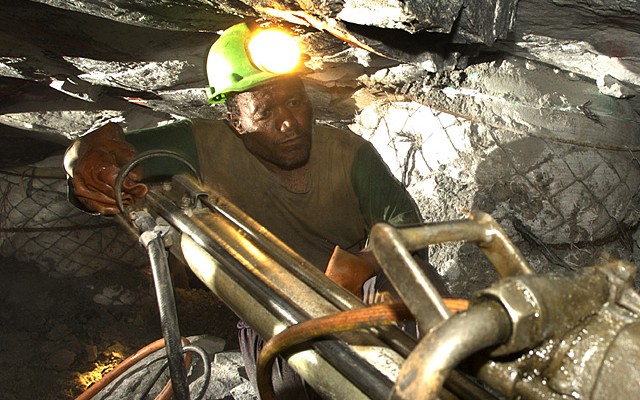
Unrest across the country’s vital minerals sector has spread in recent weeks as workers’ demand higher wages after employees at Lonmin’s Marikana platinum mine were granted an 11-12 percent wage rise.

The industrial action at Lonmin, which lasted for six weeks, left 46 people dead. Thirty-five were shot by police forces.

Malema has expressed his support for the striking miners. – DW