
Gill Marcus received millions in donations from Steinhoff

Gill Marcus, the former Reserve Bank governor and currently an assistant commissioner of the Public Investment Corporation (PIC) Commission of Inquiry, has been a beneficiary of Markus Jooste’s Steinhoff Group’s largesse, according to Independent Online (IOL).

An NGO of which Marcus was executive director, Kilt (Knysna Initiative for Learning and Teaching) received annual donations in excess of R10 million from Steinhoff, amounting to almost 50% of the organisation’s annual budget of R24,7 million. Kilt’s latest annual report the 12 months ended February 28, 2018 showed this amount.

The Steinhoff debacle has been the subject of hearings by the Public Investment Corporation (PIC) Commission of Inquiry on which Marcus sits. The PIC has effectively lost billions of rands due to its shareholding in Steinhoff.

According to IOL, “the inquiry heard evidence from 77 witnesses over the past eight months, and is working to finalise its report for submission to President Cyril Ramaphosa by October 31.

“On Tuesday, a businessperson who preferred to remain anonymous but who has been close to the inquiry, questioned why the commission never requested Steinhoff management to testify, while other companies were vigorously questioned for lengthy periods about much smaller investments made by the PIC.”

The businessperson suggested that perhaps it was due to Steinhoff’s support of the NGO, because he alleged Marcus had become a “major beneficiary” of the Steinhoff Group.

The commission responded yesterday to say Marcus had made “full disclosure” of her interest in the NGO to the commission.

“The work she performs there is pro-bono; she does not receive any remuneration from it. Furthermore, the commitment made by Steinhoff is also detailed in the Kilt’s annual reports, which is publicly available,” the commission said.

Responding to a question why Steinhoff had not been asked to testify, the commission said that it was required to look into the question of impropriety on the part of the PIC.

“The PIC’s decisions to make further investment in Steinhoff was extensively covered in the testimony and cross-examination of Dr (Dan) Matjila and other PIC officials, as well as testimony and evidence related to the Lancaster Group,” the commission said.

Matjila, the former chief executive of the PIC, testified before the commission that the asset manager had in 2016 leapt at an opportunity to raise its stake in Steinhoff when businessman and former ANC minister Jayendra Naidoo approached them with an opportunity to buy up to 3,5 percent of the shares in Steinhoff that carried special voting rights and a seat on the board. The PIC ended up acquiring a 3 percent stake in Steinhoff for R9,4 billion.

Read the more detailed article here.
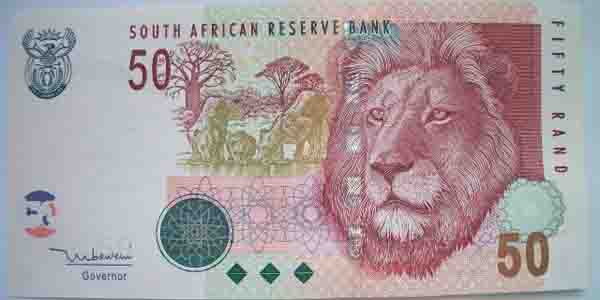
South African strikes hurt currency, bonds

South Africa’s rand sank this week to within sight of three-year lows against the dollar as a wave of strikes spread beyond the mining sector, threatening the biggest industrial crisis since the end of apartheid.

After two months of violent labor unrest in the platinum and gold mines, Japanese car giant Toyota said on Thursday its Durban plant had fallen victim to the wildcat strikes that are shaking Africa’s biggest economy only three months before an ANC leadership election.

President Jacob Zuma is favorite to win re-election as head of the ruling party, although a widening of the strikes and sell-offs of the rand and domestic bonds threaten to expose his lack of economic expertise.

So far, a wave of foreign flows into the bond market related to South Africa’s October 1 inclusion in the influential Citi World Government Bond Index (WGBI) on October 1 have helped underpinned domestic asset prices.

But signs are emerging that the WGBI effect is waning, and concerns about the strikes’ impact on growth is rising.

The rand has lost nearly 1.3 percent this week, recording its fourth daily loss in five days on Wednesday as strikes, a yawning current account gap and a Moody’s ratings downgrade took their toll.

“These events have had a marked impact on the currency, not-withstanding the evidence of substantial purchases of South African bonds by foreign investors on the back of the WGBI inclusion,” said Bruce Donald, a strategist at Standard Bank

“The strikes are certainly one of the factors impacting investor sentiment towards South Africa in terms of the political uncertainty it might create. It also has negative consequences for growth and for the current account through its impact on mining exports.”

In July, before the wave of strikes started with a wildcat walkout at Lonmin’s Marikana platinum mine, exports of minerals, precious stones and metals accounted for half of all South Africa’s trade receipts.

Moody’s last week cut South Africa’s sovereign credit rating to Baa1 from A3 amid a souring of investor sentiment over the protests that have hit production in the world’s top platinum producer and No. 4 gold producer.

All that has put pressure on Zuma’s government, which was criticized for its handling of the unrest at Marikana, where more than 40 people were killed in August, the majority shot dead by police.

This week, Reserve Bank Governor Gill Marcus noted the rand remained vulnerable to “changing risk perceptions in global financial markets and domestic issues, such as the tragic events at Marikana”.

Joining the club

The rand has been lifted by about 84 billion rand ($10 billion) of portfolio flows since the start of 2012 as foreign accounts that track the WGBI stocked up on local debt ahead of the October 1 inclusion, Marcus said.

But the governor cautioned these levels were not sustainable.

Despite its recent strong run, the rand is still among the weakest performers against the dollar so far this year in a basket of 20 emerging market currencies, shedding more than four percent since January.

By contrast, units such as the Hungarian forint, Polish zloty and Turkish lira have rallied 9 percent, 8 percent and 4 percent respectively.

The rand hit 8.4524 earlier on Thursday, within sight of Wednesday’s month low of 8.4590. A sustained hold below the 8.45 area could push it to 8.55/dollar, then all the way towards the three-year low of 8.71 it hit in early June amid intense concerns about Europe’s debt crisis.

Waning WGBI flows make the currency more vulnerable to swings in global risk appetite as investors eye the unabating credit crunch in the single currency area.

“We expect the WGBI flows could start to ease up now after the actual inclusion date and perhaps thin out over the next week or two and then normality could kick back into effect,” said Sean McCalgan, a market analyst at ETM.

“That leaves the rand in a rather vulnerable position,” he added. “WGBI is one of the only positive drivers working in favor of the rand at the moment.”

($1 = 8.4415 South African rand) – Reuters