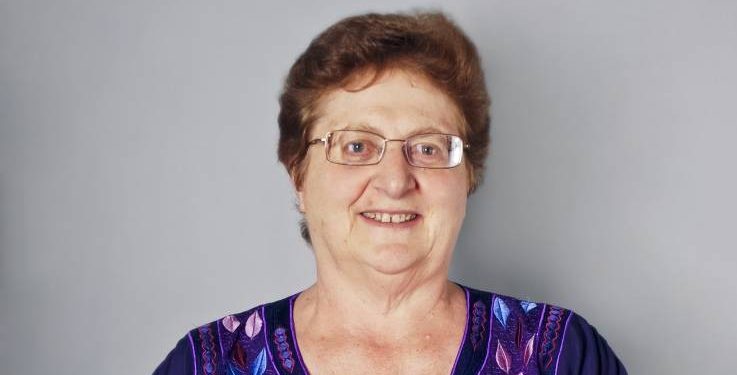
Gill Marcus received millions in donations from Steinhoff

Gill Marcus, the former Reserve Bank governor and currently an assistant commissioner of the Public Investment Corporation (PIC) Commission of Inquiry, has been a beneficiary of Markus Jooste’s Steinhoff Group’s largesse, according to Independent Online (IOL).

An NGO of which Marcus was executive director, Kilt (Knysna Initiative for Learning and Teaching) received annual donations in excess of R10 million from Steinhoff, amounting to almost 50% of the organisation’s annual budget of R24,7 million. Kilt’s latest annual report the 12 months ended February 28, 2018 showed this amount.

The Steinhoff debacle has been the subject of hearings by the Public Investment Corporation (PIC) Commission of Inquiry on which Marcus sits. The PIC has effectively lost billions of rands due to its shareholding in Steinhoff.

According to IOL, “the inquiry heard evidence from 77 witnesses over the past eight months, and is working to finalise its report for submission to President Cyril Ramaphosa by October 31.

“On Tuesday, a businessperson who preferred to remain anonymous but who has been close to the inquiry, questioned why the commission never requested Steinhoff management to testify, while other companies were vigorously questioned for lengthy periods about much smaller investments made by the PIC.”

The businessperson suggested that perhaps it was due to Steinhoff’s support of the NGO, because he alleged Marcus had become a “major beneficiary” of the Steinhoff Group.

The commission responded yesterday to say Marcus had made “full disclosure” of her interest in the NGO to the commission.

“The work she performs there is pro-bono; she does not receive any remuneration from it. Furthermore, the commitment made by Steinhoff is also detailed in the Kilt’s annual reports, which is publicly available,” the commission said.

Responding to a question why Steinhoff had not been asked to testify, the commission said that it was required to look into the question of impropriety on the part of the PIC.

“The PIC’s decisions to make further investment in Steinhoff was extensively covered in the testimony and cross-examination of Dr (Dan) Matjila and other PIC officials, as well as testimony and evidence related to the Lancaster Group,” the commission said.

Matjila, the former chief executive of the PIC, testified before the commission that the asset manager had in 2016 leapt at an opportunity to raise its stake in Steinhoff when businessman and former ANC minister Jayendra Naidoo approached them with an opportunity to buy up to 3,5 percent of the shares in Steinhoff that carried special voting rights and a seat on the board. The PIC ended up acquiring a 3 percent stake in Steinhoff for R9,4 billion.

Read the more detailed article here.

SA government pension fund to bail out left-wing media group?

After plundering South Africa’s state-owned companies to the point of bankruptcy, the ANC-Communist Party regime is increasingly turning its attention to the country’s Government Employee Pension Fund as a source  of funds. The latest suspicious transaction involves Iqbal Survé, CEO of the Independent Media Group.

Survé plans to list a new media group, Sagarmatha Technologies, which mainly belongs to his family trust.

According to Anton Alberts, an MP of the Freedom Front Plus, the tiny Afrikaner opposition party in the South African parliament, the GEPF is already implicated in Iqbal’s Survés finances.

“Through the Public Investment Corporation (PIC) that manages the pension fund, the GEPF already holds a 25% share in Independent Media,” Alberts said in a statement. “According to media reports in Business Day, Independent Media finds itself in a financial crisis and it is hoped that selling Sagarmatha Technologies shares, after the company is listed on the JSE on Friday, will save Independent Media. It seems as if the plan is to incorporate Independent Media into Sagarmatha Technologies so that the newly-listed company can fund the sinking company.”

Independent Media is one of the mainstream media companies controlling The Star and Cape Argus newspapers, as well as the Independent Online (IOL) website. It regularly publishes anti-white tirades by black columnists as well as anti-Afrikaner propaganda by “Janet Smith” who purports to be a British journalist.

Advocate Alberts is of the opinion that “there is a problem with the listing of Sagarmatha Technologies because, according to reports, the company is technically insolvent and first needs to find private funding before it will be able to comply with the Financial Markets Act. The company must prove that it is capitalised with at least R500 million (about $40 million) and chances are that the PIC was once again approached to invest in yet another Iqbal Survé venture.”

For this reason, the FF Plus yesterday addressed a letter to Mr Deon Botha, the head of corporate affairs at the PIC, asking whether the PIC will indeed buy the said shares. As yet, no response has been received.

“If the PIC is indeed planning on buying Sagarmatha Technologies shares, the FF Plus will advise the GEPF pensioners to immediately obtain an interdict against the transaction,” said Alberts.

The FF Plus MP also gave other examples of how public servants’ pension money was had been misused for suspicious transactions over the last few years. The fund, with assets of R1,87 trillion, is the biggest investor in the country’s economy, which makes it an attractive target for exploitation.

Such examples of financial abuse are:

  1. February 2018: The PIC lends R5 billion to Eskom in the form of bridging finance.
  2. March 2018: The Reserve Bank places VBS Mutual Bank under curatorship. The PIC holds approximately a 30% share in VBS. It is also widely known that VBS gave former President Jacob Zuma a loan of R8 million to cover his Nkandla debt. The FF Plus is of the opinion that the PIC’s acquiring of shares in VBS was not purely motivated by business considerations.
  3. The PIC had an enormous investment in Steinhoff and in December last year, the misgiving that the GEPF could suffer a loss of up to R12 billion with this investment was voiced.
  4. In 2015, the PIC saved Lonmin from ruin by acquiring a further 25% of the platinum producer, on top of its existing shares, through the struggling platinum producer’s rights issue. The investment amount was R1,9 billion. What is important to note, however, is that this was after Lonmin’s share price decreased with 80% in the previous year – from R35 to a mere R3. In terms of market value, it decreased from R29 billion to R3,5 billion in a single year, so this was no more than a blatant bail out.
  5. In 2014, there were reports that the PIC invested nearly R3 billion in an oil company, Camac Energy, which was basically bankrupt. According to the reports, Mr Kase Lawal, an American of Nigerian descent and acquaintance of former President Jacob Zuma, was head of the company. There were no further reports and it is not clear whether the company still exists.
  6. In 2016, there was great dissatisfaction when an economic development plan for Tshwane/Pretoria, with money coming from the PIC, was adopted and it was announced that “only black people” would benefit from it.

In the light of the many examples of poor investment decisions prompted by political intervention, Alberts stated that “it is clear that many of the PIC’s transaction were not driven by healthy business considerations”.