Islamic State mints its own coins

Islamic State of Iraq and the Levant (ISIS) has begun minting its own “Islamic dinar” coins, Syrian activists claimed on Tuesday night.

Pictures posted on social media showed a series of gold sovereigns bearing ISIS inscriptions, and with a reported value of one gold dinar being with $139 (£89).

An anti-ISIS activist by the name of Abu Ibrahim Raqqawi, who lives in the ISIS controlled city of Raqqa in Syria, posted photographs of the coins on his Twitter account, saying they were due to come into circulation soon. Pictures were also posted on pro-ISIS social media accounts.

Isil announced last November that it would start producing their own currency in areas under its control, in an effort to “emancipate itself from the satanic global economic system”.

The currency, based on the original dinar coins used during the Caliphate of Uthman in 634 CE, was set to include seven minted coins: two gold, three silver and two copper.

Designs due to be embossed on the gold coins included a symbol of seven wheat stalks – a Quranic reference – and a world map.

The prototype design had also shown that the coins would carry an Arabic message on the lines of “The Islamic State – A caliphate based on the doctrine of the Prophet”.

ISIS has not attacked Israel but has concentrated on Islamic countries instead.

Source: The Telegraph

China’s yuan joins top five curriencies

China’s yuan has become one of the five most widely used currencies in global payments, an international financial transactions agency announced Wednesday.

The yuan passed the Canadian and Australian dollars in popularity in December, according to the Society for Worldwide Interbank Financial Telecommunication, which provides communications between financial institutions and companies. It said the yuan now ranks behind the dollar, the euro, the British pound and Japanese yen.

The change is an “important milestone,” and confirms the yuan’s transition from an emerging to a “business as usual” currency, said Wim Raymaekers, Swift’s head of banking markets, in a statement.

Beijing has signed agreements with a number of foreign financial centers including London to become hubs for clearing yuan transactions.

The yuan, also known as the renminbi, accounted for 2.17 percent of global payments in December, behind the yen’s share of 2.69, according to Swift. The U.S. dollar’s share is about 45 percent.

Global payments in yuan increased by 20.3 percent in December, outpacing overall payments growth of 14.9 percent, according to Swift.

Source: AP

De-dollarization: Europe and China start direct trading

China will started direct trading between the yuan and the euro today as the world’s second-largest economy seeks to spur global use of its currency.

The move will lower transaction costs and so make yuan and euros more attractive to conduct bilateral trade and investment, the People’s Bank of China said today in a statement on its website. HSBC Holdings Plc said separately it has received regulatory approval to be one of the first market makers when trading begins in China’s domestic market.

The euro will become the sixth major currency to be exchangeable directly for yuan in Shanghai, joining the U.S., Australian and New Zealand dollars, the British pound and the Japanese yen. The yuan ranked seventh for global payments in August and more than one-third of the world’s financial institutions have used it for transfers to China and Hong Kong, the Society for Worldwide International Financial Telecommunications said last week.

“It’s a fresh step forward in China’s yuan internationalization,” said Liu Dongliang, an analyst with China Merchants Bank Co. in Shenzhen. “However, the real impact on foreign exchange rates and companies may be limited as onshore trading volumes between yuan and non-dollars are still too small to gain real pricing power.”

Transactions exchanging yuan for dollars totaled 12.2 trillion yuan in the first half of 2014, dwarfing the 110.4 billion yuan worth of trades for euros and the 251.7 billion yuan for yen, the PBOC said in a monetary policy report last month.

Trading Ties

China’s trade with European Union nations grew 12 percent from a year earlier to $404 billion in the first eight months of 2014, according to data from the Asian nation’s customs department. That compares with just $354 billion with the U.S. during the period.

French and German companies lead among countries outside of greater China in the use of the yuan, according to a July report by HSBC that was based on a survey of 1,304 businesses in 11 major economies that have ties with mainland China. Some 26 percent of French corporates and 23 percent of German companies were using the currency to settle trade, the highest proportions apart from mainland China, Hong Kong and Taiwan.

Last One

China appointed yuan clearing banks this year in Frankfurt, Paris and Luxembourg, and Germany’s financial capital as well as Paris were awarded quotas under the Renminbi Qualified Foreign Institutional Investor program to invest the currency raised offshore in China’s domestic capital markets.

“Given the appointments of renminbi clearing banks in Frankfurt and Paris, today’s announcement is largely expected,” Australia & New Zealand Banking Group Ltd.’s economists led by Liu Li-gang wrote in a research note today. The agreement marks a “significant milestone” in yuan internationalization as the euro is the only G3 currency that has not had direct conversion with the yuan, Liu said.

The European Central Bank is able to draw on a maximum 350 billion yuan ($57 billion) swap line from the People’s Bank of China under the terms of an agreement signed in October 2013. The PBOC can access 45 billion euros ($57 billion) under the terms of the currency swap.

Source: Bloomberg

US cuts aid to Uganda over anti-gay laws

Uganda’s shilling dropped to the lowest level in nine months after the US government said it was cutting aid to the East African nation.

The US cut aid over a February law that toughened punishment for homosexual acts.

The currency fell 0.8 percent to 2,610 per dollar by 1:37 p.m. in the capital, Kampala, the lowest since Aug. 26.

The shilling slumped 6.1 percent since President Yoweri Museveni signed the bill on Feb. 24.

The US is discontinuing or redirecting funds for programs in Uganda, where life sentences can be imposed for some homosexual acts, the National Security Council said last week.

Norway, Denmark and Sweden also redirected or withheld aid.

The shilling weakened “because of the negative sentiment after the US announced they are cutting off donor funding,” Joseph Mwanguo, head of treasury at NIC Bank Uganda Ltd. said by phone today. “There will definitely be reduced inflow of dollars.”

It will impact people that the US “purports to support and aims to protect,” the Ugandan government said in an e-mailed statement.

Source: Bloomberg

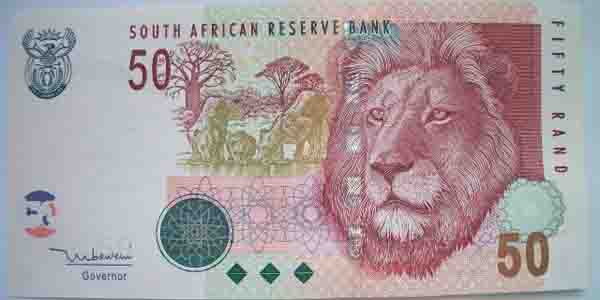
South African strikes hurt currency, bonds

South Africa’s rand sank this week to within sight of three-year lows against the dollar as a wave of strikes spread beyond the mining sector, threatening the biggest industrial crisis since the end of apartheid.

After two months of violent labor unrest in the platinum and gold mines, Japanese car giant Toyota said on Thursday its Durban plant had fallen victim to the wildcat strikes that are shaking Africa’s biggest economy only three months before an ANC leadership election.

President Jacob Zuma is favorite to win re-election as head of the ruling party, although a widening of the strikes and sell-offs of the rand and domestic bonds threaten to expose his lack of economic expertise.

So far, a wave of foreign flows into the bond market related to South Africa’s October 1 inclusion in the influential Citi World Government Bond Index (WGBI) on October 1 have helped underpinned domestic asset prices.

But signs are emerging that the WGBI effect is waning, and concerns about the strikes’ impact on growth is rising.

The rand has lost nearly 1.3 percent this week, recording its fourth daily loss in five days on Wednesday as strikes, a yawning current account gap and a Moody’s ratings downgrade took their toll.

“These events have had a marked impact on the currency, not-withstanding the evidence of substantial purchases of South African bonds by foreign investors on the back of the WGBI inclusion,” said Bruce Donald, a strategist at Standard Bank

“The strikes are certainly one of the factors impacting investor sentiment towards South Africa in terms of the political uncertainty it might create. It also has negative consequences for growth and for the current account through its impact on mining exports.”

In July, before the wave of strikes started with a wildcat walkout at Lonmin’s Marikana platinum mine, exports of minerals, precious stones and metals accounted for half of all South Africa’s trade receipts.

Moody’s last week cut South Africa’s sovereign credit rating to Baa1 from A3 amid a souring of investor sentiment over the protests that have hit production in the world’s top platinum producer and No. 4 gold producer.

All that has put pressure on Zuma’s government, which was criticized for its handling of the unrest at Marikana, where more than 40 people were killed in August, the majority shot dead by police.

This week, Reserve Bank Governor Gill Marcus noted the rand remained vulnerable to “changing risk perceptions in global financial markets and domestic issues, such as the tragic events at Marikana”.

Joining the club

The rand has been lifted by about 84 billion rand ($10 billion) of portfolio flows since the start of 2012 as foreign accounts that track the WGBI stocked up on local debt ahead of the October 1 inclusion, Marcus said.

But the governor cautioned these levels were not sustainable.

Despite its recent strong run, the rand is still among the weakest performers against the dollar so far this year in a basket of 20 emerging market currencies, shedding more than four percent since January.

By contrast, units such as the Hungarian forint, Polish zloty and Turkish lira have rallied 9 percent, 8 percent and 4 percent respectively.

The rand hit 8.4524 earlier on Thursday, within sight of Wednesday’s month low of 8.4590. A sustained hold below the 8.45 area could push it to 8.55/dollar, then all the way towards the three-year low of 8.71 it hit in early June amid intense concerns about Europe’s debt crisis.

Waning WGBI flows make the currency more vulnerable to swings in global risk appetite as investors eye the unabating credit crunch in the single currency area.

“We expect the WGBI flows could start to ease up now after the actual inclusion date and perhaps thin out over the next week or two and then normality could kick back into effect,” said Sean McCalgan, a market analyst at ETM.

“That leaves the rand in a rather vulnerable position,” he added. “WGBI is one of the only positive drivers working in favor of the rand at the moment.”

($1 = 8.4415 South African rand) – Reuters