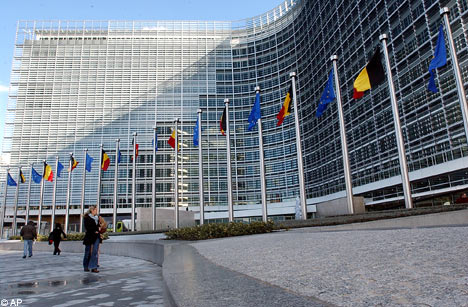
Germany sells fifth nuclear submarine to Israel

Germany’s Federal Security Council has approved the export of a fifth submarine to Israel.

It’s the penultimate submarine promised to Israel by German Chancellor Angela Merkel and will be handed over by the company Thyssen Krupp.

Süddeutsche Zeitung newspaper revealed the approval, citing the Federal Security Council’s report to the parliamentary Economics Committee.

Germany’s Howaldtswerke-Deutsche Werft (HDW) builds the new Air Independent Propulsion Dolphins and the decision to sell them has been criticized for two reasons. One, in that German taxpayers are shouldering a third of the cost.

Secondly, the vessels are reportedly capable of being equipped with nuclear weapons.

Peter Roberts is an expert in sea power and naval weapons systems at the Royal United Services Institute in London and told Sputnik News that Israel will want to produce and develop nuclear capability on the new submarines.

“That’s the long term aspiration”, says Roberts. “But does it have it right now? No.

“These are new batch of submarines that Israel is receiving which have a markedly increased capability on what they’d had previously in terms of range, covertness and ability to reach different parts of the world then they had previously been able to do.”

Roberts adds that the submarines have the capability to become nuclear armed, “but probably not right now.”

“Several hurdles have to be overcome before it can be armed with a nuclear warhead.”

He explains that the key to being able to arm the submarines with nuclear weapons is down to the delivery mechanism.

“The Israelis rely on the fact they could fire the Popeye submarine missile — a system that the Americans successfully launched in 2002. But traditionally the Israelis only keep the Harpoon anti-ship missile.”

“These are the first submarines that will be able to fire this missile, the size of the torpedo tubes allow it to be fired, they have a bigger tubes for bigger missiles.

“The submarines would have the ability to launch them [missiles] — it’s the weapon itself that is the critical part and developing that weapon and navigation system for the guidance from within a submerged submarine is a further challenge.”

Peter Roberts says it’s difficult to say whether the submarines are distinctly designed for nuclear weapons.

“The Israelis will want to add this to their golf bag of capability which will give them huge resilience in their nuclear forces — but they’re not there yet.”

According to an article written by Anthony Bellchambers for Global Research, the Dolphin Class nuclear powered submarines “that have already been converted by the Israeli navy to being armed with ICB nuclear missiles…has given the Israeli state ‘deep sea dominance’ that is now virtually irreversible.”

Adding that German Chancellor Merkel agreed to supply Israel with the vessels “without any prior consultation with the EU.”

EU lends to Zimbabwe again

The European Union has given Zimbabwe $267 million, it said on Monday, the first time the bloc has given financial aid to the southern African nation’s government since imposing sanctions in 2002.

The 28-nation EU has gradually eased biting sanctions on Zimbabwe to encourage political reform, although it has kept an asset freeze and a travel ban on veteran President Robert Mugabe and his wife Grace, as well as an arms embargo.
Since imposing the sanctions, the EU has shunned the government, and restricted its funding to charities only.

The EU ambassador to Zimbabwe Philippe Van Damme said during a signing ceremony that the agreement opened a new chapter in the bloc’s relationship with Zimbabwe, but cautioned that new problems could still emerge in future.
“Does this mean that everything is suddenly sorted out and that we are entering a new honeymoon? No, we have cleared some obstacles in our partnership, and as in any partnership new problems may emerge, old problems may reappear,” he said.

Mugabe’s ZANU-PF party has long demanded the complete removal of EU sanctions it denounces as illegal.

Finance Minister Finance Patrick Chinamasa said the aid marked a significant step towards improving ties between Zimbabwe and the EU but that sanctions on Mugabe and his wife would hurt full normalisation of relations.

“As long as the chief executive (Mugabe) remains under sanctions, our relations remain poisoned and unproductive,” Chinamasa said.

The EU said the funds will improve health, agriculture-based economic development, governance and institution-building.
Half of the money would be released this year, and the rest will be paid gradually until 2020, Van Damme said.

Swiss reject gold reserve increase

Swiss voters rejected two closely watched referendums on Sunday that would have forced the central bank to buy up massive amounts of gold and introduced strict new limits on immigration, in a result that could bolster its economic ties to the European Union.

Proposed by the right-wing Swiss People’s Party out of concern that the Swiss National Bank has already sold too much gold, the measure would have compelled the SNB to boost its gold reserves to 20% from around 8% currently. Switzerland already holds the most gold per capita in the world.

An initial analysis of the voting trend from Swiss broadcaster SRF showed voters were likely to have turned down the “Save our Swiss gold” initiative.

A report from Bloomberg said the measure was voted down by a margin to 78-22.

If Swiss voters had approved the measures, it would have severely complicated policy at a time when the central bank is trying to defend a 1.20 euro cap on the Swiss franc imposed at the height of the euro crisis.

Earlier this month, gold futures went on a wild ride after polling data showed an advantage in favor of votes against measure. Previous polls had shown about an even split among voters.

Swiss were also set to reject a separate initiative that aimed to cut annual immigration by three-quarters from current levels in order to reduce the strain on Switzerland’s natural environment, and a third referendum aimed at scrapping a tax perk for wealthy foreigners was also set to be defeated.

Over the last several months, the price of gold has been declining sharply, with the precious metal currently near mu tli-year lows.

Source: Business Insider

De-dollarization: Europe and China start direct trading

China will started direct trading between the yuan and the euro today as the world’s second-largest economy seeks to spur global use of its currency.

The move will lower transaction costs and so make yuan and euros more attractive to conduct bilateral trade and investment, the People’s Bank of China said today in a statement on its website. HSBC Holdings Plc said separately it has received regulatory approval to be one of the first market makers when trading begins in China’s domestic market.

The euro will become the sixth major currency to be exchangeable directly for yuan in Shanghai, joining the U.S., Australian and New Zealand dollars, the British pound and the Japanese yen. The yuan ranked seventh for global payments in August and more than one-third of the world’s financial institutions have used it for transfers to China and Hong Kong, the Society for Worldwide International Financial Telecommunications said last week.

“It’s a fresh step forward in China’s yuan internationalization,” said Liu Dongliang, an analyst with China Merchants Bank Co. in Shenzhen. “However, the real impact on foreign exchange rates and companies may be limited as onshore trading volumes between yuan and non-dollars are still too small to gain real pricing power.”

Transactions exchanging yuan for dollars totaled 12.2 trillion yuan in the first half of 2014, dwarfing the 110.4 billion yuan worth of trades for euros and the 251.7 billion yuan for yen, the PBOC said in a monetary policy report last month.

Trading Ties

China’s trade with European Union nations grew 12 percent from a year earlier to $404 billion in the first eight months of 2014, according to data from the Asian nation’s customs department. That compares with just $354 billion with the U.S. during the period.

French and German companies lead among countries outside of greater China in the use of the yuan, according to a July report by HSBC that was based on a survey of 1,304 businesses in 11 major economies that have ties with mainland China. Some 26 percent of French corporates and 23 percent of German companies were using the currency to settle trade, the highest proportions apart from mainland China, Hong Kong and Taiwan.

Last One

China appointed yuan clearing banks this year in Frankfurt, Paris and Luxembourg, and Germany’s financial capital as well as Paris were awarded quotas under the Renminbi Qualified Foreign Institutional Investor program to invest the currency raised offshore in China’s domestic capital markets.

“Given the appointments of renminbi clearing banks in Frankfurt and Paris, today’s announcement is largely expected,” Australia & New Zealand Banking Group Ltd.’s economists led by Liu Li-gang wrote in a research note today. The agreement marks a “significant milestone” in yuan internationalization as the euro is the only G3 currency that has not had direct conversion with the yuan, Liu said.

The European Central Bank is able to draw on a maximum 350 billion yuan ($57 billion) swap line from the People’s Bank of China under the terms of an agreement signed in October 2013. The PBOC can access 45 billion euros ($57 billion) under the terms of the currency swap.

Source: Bloomberg

Geert Wilders riding high

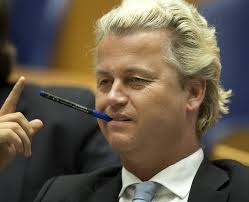
geertDutch right-wing leader Geert Wilders is riding high ahead of this month’s European Parliament elections, hoping to destroy from within what he calls the ‘monster of Brussels’.

The platinum-haired Wilders in November announced “the start of the liberation of Europe” from the European Union after forming a partnership with French right-wing party National Front (FN).

Like the FN’s leader Marine Le Pen, Wilders wants to take his country out of the EU and to abandon the euro.

The latest Ipsos opinion poll on May 1 ranked Wilders’ PVV third in the Netherlands, just below the ruling coalition partner People’s Party for Freedom and Democracy (VVD) and the pro-Europe D66.

Despite thousands filing police complaints of racism against Wilders, his anti-EU and anti-immigration call still appeals to many disillusioned with crisis-driven budget cuts blamed on Brussels.

The virulently pro-Israel Wilders has been giving extensive interviews, including to pro-Kremlin media, blaming the Ukraine crisis on the European Union.

The Dutch Centre for Information and Documentation on Israel (CIDI) on Wednesday said he was “betraying his principles” by cooperating with Le Pen.

Despite Wilders’ fawning approaches to Nigel Farage, his UK Independence Party (UKIP) and Scandinavian eurosceptic parties have said they would not work with Wilders because of his association with Le Pen.

In order to form a far-right anti-European bloc, Wilders and Le Pen would have to find like-minded politicians in at least a quarter of the EU’s 28 member states and see 25 members elected to the now trimmed-down 751-seat European Parliament.

So far Wilders reportedly wants Italy’s Northern League, Austria’s FPO, Belgium’s Vlaams Belang, Slovakia’s SNS and the Swedish Democrats on board.

If they become an official European political group, they would benefit from subsidies, offices, a communication budget, seats on committees and speaking time in parliament proportional to their number.

The Netherlands this time only has 27 seats in the European Parliament and with the PVV expected to gain around five seats, it will remain junior to the mightier National Front.

“Indirectly though he’ll have a far greater impact,” said political analyst Andre Krouwel, because of his ability to create doubt and division within bigger parties.

“He’s using it on national level. It is likely to happen on European level as well,” Krouwel said.

Source: AFP

International observer in Crimea receives death threats

Johan Bäckman
Johan Bäckman

An international observer from Finland, who sees the referendum on the status of Crimea as absolutely legitimate, has received death threats.

A referendum is due to be held in Crimea on the status of the peninsula tomorrow, on Sunday, March 16, so on Saturday, any campaigning is banned there. An ad-hoc commission is due to see to it that this is strictly observed.

Meanwhile, an international monitor from Finland, Johan Bäckman, has complained at Simferopol airport of pressure that has been brought to bear on him and his colleagues, and also said he’d received death threats, because he supports the referendum.

“It’s all threats and slander. I received a letter with death threats earlier today”, Bäckman said. “The letter is anonymous. The Western media are full of aggression against Russia. I can’t really make out the position of the West that the referendum is allegedly in breach of international law”.

He said the residents of Crimea have every right to determine their future. The US and the European Union are bending every effort to have the referendum cancelled, and are threatening with sanctions. That the EU is considering sanctions is absolutely absurd.

Bäckman said the attempts of western politicians to stop or cancel the referendum are prompted by their desire to downgrade Russia’s authority.

The All-Crimea plebiscite is due on Sunday from 8 a.m. to 8 p.m. local time. The minimum voter turnout to consider the referendum valid is 50%. International observers keep arriving in Crimea to monitor the plebiscite.The international observer stressed that he sees the referendum on the status of Crimea as absolutely legitimate.

The situation in Crimea is calm, Deputy of the Belgian parliament Frank Creelman, who arrived to monitor the referendum to be held on March 16, said on Saturday. Everything is very calm and normal, absolutely not the way it is being pictures abroad, he said.

There are many pro-Russian people among residents and many law enforcement officers are at streets, Creelman said.

Creelman said he intended to monitor the referendum on the status of Crimea not just in Simferopol but in relatively small Crimean settlements as well.

The former Republican congressman and three-time presidential candidate Ron Paul has launched a scathing attack on what he calls a US-backed coup in Ukraine, insisting the Crimean people have the right to align their territory with Moscow and characterising sanctions against Russia as “an act of war”.

“The evidence is pretty clear that the NGOs [non-governmental organisations] financed by our government have been agitating with billions of dollars, trying to get that government changed,” he said. “Our [American] hands are not clean.”

Voice of Russia, Interfax, Life News, The Guardian

Iceland moves to withdraw EU application

Faroe Islands
Faroe Islands

Iceland’s government will seek parliamentary approval to withdraw its application to join the European Union, opting not to restart accession talks that were put on ice a year ago.

A bill proposing the withdrawal was sent to parliament late on Friday and was due to be debated next week, a foreign ministry spokesperson said on Saturday.

The move came after the parliamentary caucuses of the ruling parties – the centrist Progressive Party and the conservative Independence Party – voted on Friday to withdraw the application.

In comments on the proposal quoted by online news site Visir.is, the government said it “did not have a support base” to complete the accession process.

Opinion polls have consistently shown a majority of Icelanders oppose joining the EU.

A year after its banks collapsed, Iceland declared it would stop observing mackerel quotas agreed with the European Union, Norway and the Faroe Islands — a small archipelago north of Scotland and under the protection of Denmark.

Iceland and the Faroe Islands argue that the rise in sea temperatures caused by a combination of global warming and natural factors has sent such large quantities of mackerel and herring further north that the allocations should have been amended to reflect that.

Observers say the main problem the EU faces is obvious: Fish go where they find the best feeding and spawning grounds, oblivious to the political rows they create in their wake.

“The fact that these fish aren’t necessarily carrying a passport and flying a flag for a particular nation means that it starts to get interesting when they start to move out of EU jurisdiction,” marine biologist Stephen Simpson of the University of Exeter said in an interview.

A meeting of Coastal States (European Union, Faroe Islands, Iceland and Norway) was held in London on the in October 2013 under the chairmanship of the European Union to discuss management measures for 2014 for the mackerel stock in the North-East Atlantic. The meeting was also attended by observers from Greenland and the Russian Federation.

The discussions focused on the latest scientific advice from the International Council for the Exploration of the Sea (ICES), which has recommended a significant increase in fishing possibilities as compared to 2013.

RoboEarth: Should we just surrender?

roboearthScientists have created a network which various smart devices and artificial intelligences will use autonomously to share information and learn from each other – increasing their capabilities. Should we just surrender now? The BBC reports:

A world wide web for robots to learn from each other and share information is being shown off for the first time. The system has been developed by research scientists from Philips and five European universities including Eindhoven.

It is the culmination of a four-year project, funded by the European Union. The eventual aim is that both robots and humans will be able to upload information to the cloud-based database, which would act as a kind of common brain for machines.

“At its core RoboEarth is a world wide web for robots: a giant network and database repository where robots can share information and learn from each other,” said Rene van de Molengraft, the RoboEarth project leader.

James Barrat, who has written extensively about the dangers of robots gaining their own intelligence, thinks there need to be safeguards: “The consequences of sharing that capability [to evolve or otherwise improve their own software] with the central ‘mind’ should be explored before it happens.”

Source: BBC

EU wants to stop S. African citrus imports

citrusThe European Union (EU) is preparing a ban on South African citrus imports that could take orange juice off Europe’s breakfast tables next summer and sour efforts in Brussels to broaden trade with Africa’s biggest economy.

The move follows the interception of 35 citrus shipments this year from Europe’s chief summer supplier that were contaminated with the fungal black spot disease, which growers in southern Europe fear could take hold in their citrus groves.

In response, the European Commission, the EU executive, was drawing up plans for a ban that could be adopted by European governments by the end of November, said a person with knowledge of the plan who spoke on condition of anonymity.

Another person close to the matter said EU trade chief Karel de Gucht told South African officials during a visit to Johannesburg this week that the contaminated shipments were “serious and problematic”, and that a response was needed.

South Africa exports about 600,000 tonnes of citrus fruit — mainly oranges, lemons, limes and tangerines — to the EU each year worth about €1bn. It is the main source of orange juice drunk by consumers in Britain, Germany and France during the European summer months.

The dispute comes at a sensitive time because the EU is seeking South Africa’s support to unlock stalled trade deals with sub-Saharan Africa.

During negotiations in South Africa this week, EU officials offered to improve the terms of a bilateral free-trade deal dating from 1999 by granting South African sugar farmers duty-free access to Europe for the first time.

For now the planned citrus ban would be largely symbolic, as it would only apply to this year’s South African citrus harvest, which ended in October, meaning EU imports have already stopped.

But the bloc’s food safety watchdog is analysing the situation and if its studies show the disease has a risk of taking hold in Europe’s estimated 500,000ha of citrus groves, the EU could extend the ban.

Citrus Growers Association CEO Justin Chadwick warned the commission against a ban.

“Global experts have confirmed that citrus black spot is not a risk, so a ban would seem unnecessary,” he said.

Spanish pressure

Citrus black spot is harmless to humans, but causes unsightly lesions on the fruit and leaves of affected plants, reducing both harvest quality and quantity. There is no known cure but fungicides can be used to control the spread of the disease.

It is found in many citrus-growing regions in the southern hemisphere as well as China and the US, but has never established itself in Europe.

Since 2011, the number of citrus shipments from South Africa found to contain black spot has averaged about 35 each year.

Following calls by citrus growers in top EU producer Spain to take a tougher stance on the issue, the commission said it would be forced to take action if more than five contaminated shipments were intercepted from the country this year.

“Every day, South Africa displays its inability to control the pests in its crop,” Spanish farming association AVA-ASAJA said. “Political interests prevail over the risk that such imports pose to the future of Europe’s citrus farms.”

In its draft scientific opinion published in July, the European Food Safety Authority said the chance of citrus black spot taking hold in Europe was “moderately likely”. But it said there was a high level of uncertainty due to a lack of knowledge over how the disease would respond to the EU climate.

The European Food Safety Authority is due to finalise its assessment by the end of the year and its findings will largely determine what further moves, if any, the commission will take to restrict South African imports.

But a group of citrus black spot experts from countries affected by the disease said it had identified “factual errors and omissions” in the European Food Safety Authority’s draft assessment and there was no recorded case of the disease ever having spread via fruit exports. – Reuters

As anti-EU alliance takes shape, Soviet-style collapse looms

eu2As European Union bosses openly claim that a “federation” ruled from Brussels is inevitable, a growing coalition of political parties across the EU is coming together in an effort to preserve national sovereignty and self-government while putting the brakes on uncontrolled immigration. Led in large part by prominent political leaders from Holland and France, the budding anti-EU alliance is already being viciously demonized in the establishment press with smears like “radical” and “far-right.” More than a few analysts have compared the developments to the rise of the U.S. Tea Party.

The almost comical hysteria being expressed among top bloc officials about the effort to defeat the “integration” agenda suggests that paranoia is starting to take hold at the top — especially after recent polls revealed that the peoples of Europe largely reject the EU even as the super-state continues to usurp more power. Indeed, amid the economic crisis, the controversial bid to smash national sovereignty in favor of unaccountable “regional” governance is coming under increasing pressure from across the political spectrum.

Critics are saying the integration scheme is doomed anyway, but they want to help bring it down before more damage is inflicted. The EU is on track to “collapse like the Soviet Union,” said European Parliament Member (MEP) and French “National Front” party leader Marine Le Pen, echoing sentiments expressed by more than a few respected analysts and political leaders. Le Pen, whose socially conservative party — the third largest in France — has been surging in the polls, is working with other European political leaders to create a powerful alliance within the so-called European Parliament in defense of national sovereignty.

Blasting the EU as a “global anomaly,” Le Pen vowed to work with others toward reining in the growing super-state in favor of a system involving “cooperation of sovereign states.” The peoples of Europe, she complained, now have “no control” over their economies, currency, or the movement of people within their nations. “I believe that the EU is like the Soviet Union now: It is not improvable,” Le Pen was quoted as saying, adding that the increasingly unpopular behemoth would crumble under its own weight like the USSR did decades ago.

Joining forces with Le Pen in the effort to rein in the EU after regional parliamentary elections next summer is firebrand Dutch Member of Parliament Geert Wilders and his powerful party. According to Le Pen, one of the reasons for her party to campaign with Wilders and his Party for Freedom (PVV) is to show voters across Europe that “similar patriotic movements are active in every EU country.” It is important for voters to see that “we do not stand alone,” she noted. “The current system has a lot to lose if our movements work together.”

A poll released this month showed the National Front currently on track to be the biggest winner in the upcoming EU elections with 24 percent support — sending shockwaves through the French political establishment. The Dutch Party for Freedom, meanwhile, is also soaring in the polls, with recent surveys suggesting that it is the most popular party in the Netherlands at the moment. If elections were held today, it would dominate, polls suggest.

As chief of the Party for Freedom (PVV), MP Wilders has developed an international reputation as a strong critic of Islam — especially the ongoing mass immigration of Muslims into Europe, which he sees as a threat to the continent’s future. While Le Pen has distanced herself from some of the most heated rhetoric, National Front is also critical of radical Islam’s increasing prominence in France. The PVV calls for a withdrawal from the euro and the restoration of free markets, while National Front has strayed somewhat from its solid pro-market positions in recent years.

Even with those differences, the two party leaders are reportedly planning a meeting in the Netherlands next month. Among other topics on the agenda is forming a pro-sovereignty parliamentary grouping to unite so-called “euro-skeptic” and pro-sovereignty parties in the quasi-legislative European Parliament. Some of the political parties being considered as possible allies include Italy’s Northern League, the Austrian Freedom Party, the Sweden Democrats, Belgium’s Vlaams Belang, and others. While there are significant policy differences among potential members, all of them share concerns over the increasingly out-of-control EU.

Based on his public comments, despite the inter-party differences, MP Wilders believes that unity among anti-EU forces will help the cause. “The National Front and the PVV could make the Europhile elite sing a different tune,” he was quoted as saying on Dutch TV, referring to extremist “integration”-at-all-costs advocates who currently dominate EU institutions. “We want to do whatever we can to turn the forthcoming European elections into a Europe-wide electoral landslide against Brussels.”

According to analysts and news reports, a brutal electoral outcome for pro-EU extremists may well be on the way as people across the region grow increasingly furious with the EU for a wide array of reasons. The government-funded BBC, for example, reported without citing a source that the upcoming elections could see 170 out of 751 members of the European Parliament representing either euro-skeptic or outright anti-EU parties. The U.K. Telegraph, meanwhile, said that “even ardent European federalists” concede that as much as 30 percent of the quasi-legislative body could be composed of euro-skeptics.

Despite the fact that the European Parliament is virtually impotent compared with other bloc institutions, the developments reportedly have EU bosses and the anti-sovereignty establishment on edge. “If we allow these forces to gain a foothold once again on our continent we will have wasted a century of building closer ties and condemned history to repeat itself,” claimed former Belgian Prime Minister Guy Verhofstadt, invoking World War II for fear-mongering purposes while absurdly calling on “mainstream” parties to circle the wagons to fight “extremism.”

Socialist French President François Hollande, who recently declared that Europeans had “no choice” but to “march toward a unified Europe,” claimed the rising alliance of anti-EU parties could spark “regression and paralysis” in the region. The radical leader also argued, implausibly, that the developments could “threaten” Europe’s ability to recover from the eurozone crisis, which according to experts and economists was actually caused largely by EU scheming as well as the European Central Bank and its controversial single currency.

If the budding alliance does take shape in the wake of next year’s elections, which would require at least 25 members from seven countries to become official, it will not be alone in slamming the EU inside the European Parliament. Other major parties in Europe also oppose the euro and even membership in the EU. The liberty-minded United Kingdom Independence Party (UKIP), for example, part of the Europe of Freedom and Democracy grouping in the regional parliament, has been surging in the polls thanks in large part to its calls for Britain to withdraw from the controversial super-state.

Led by Nigel Farage, a former trader who is probably the best known member of the European Parliament due to his hard-hitting anti-EU speeches going viral across the Internet, the UKIP is also opposed to massive immigration, Huge Government, and never-ending EU power grabs. According to news reports, however, the popular British party will not be joining with the potential alliance led by Wilders and Le Pen.

“I am sure that a new Eurosceptic group of parties comprising Marine Le Pen and Geert Wilders will happen. But UKIP will not be part of it,” MEP Farage was quoted as saying, adding that his libertarian party would continue taking a principled stand against EU political union. “The European elections shall be a chance for people to give their views if they wish to remain in the EU or leave the EU and face towards global opportunities like UKIP.”

Even with recent polls showing a collapse in remaining support for the EU, the anti-sovereignty establishment working fiendishly to advance a federal regime is now doing so out in the open. It has also become clear that powerful forces intend to do anything and everything to keep the EU and the euro marching onwards — no matter what the people think. However, with the backlash against the schemes continuing to grow across the bloc, the longtime establishment dream of a centralized Europe ruled from Brussels is hardly assured. – thenewamerican.com

Obama talks to Rouhani

Pres. Rouhani
Pres. Rouhani

President Obama announced today that he talked on the phone with Iranian president Rouhani: “Just now I spoke on the phone with President Rouhani of the Islamic Republic of Iran,” he said. “The two of us discussed our ongoing efforts to reach an agreement over Iran’s nuclear program.”

This is the first time leaders from America and Iran have spoken since 1979.

“I reiterated to President Rouhani what I said in New York. While there will surely be important obstacles to moving forward and success is by no means guaranteed, I believe we can reach a comprehensive solution.

“I’ve directed Secretary Kerry to continue pursuing this diplomatic effort with the Iranian government. We had constructive discussions yesterday in New York with our partners, the European Union, the United Kingdom, France, Germany, Russia, and China, together with the Iranian foreign minister, and going forward, President Rouhani and I have directed our teams to continue working expeditiously in corporation with the P-5 plus one to pursue an agreement. And throughout this process we will stay in close touch with our friends and allies in the region, including Israel.

“Now we are mindful of all the challenges ahead. The very fact that this was the first communication between an American and Iranian president since 1979 underscores the deep mistrust between our countries.”

Obama said that “Iran’s supreme leader has issued a fatwa against the development of nuclear weapons, President Rouhani has indicated that Iran will never develop nuclear weapons.”

“I have made clear that we respect the right of the Iranian people to access peaceful nuclear energy in the context of Iran meeting its obligations. So the test will be meaningful, transparent, and verifiable actions,” said Obama, which could lead to a relaxation of sanctions.

Obama talked of a new relationship between the U.S. and Iran, if his diplomatic efforts succeed. – TWS

EU warns Egypt it ‘will review ties’

eulawmakersEuropean Union leaders Herman Van Rompuy and Jose Manuel Barroso warned Egypt’s army and interim government Sunday the bloc would review its ties with the country unless the violence ended.

Further escalation could have “unpredictable consequences” for Egypt and its neighbours, the presidents of the European Council and European Commission said.

“This path will not succeed. It is crucial that violence ends immediately,” they said.

The 28-nation bloc would continue efforts to promote an end to violence, resumption of political dialogue, and return to a democratic process, the statement added.

“To this effect, together with its member states, the EU will urgently review in the coming days its relations with Egypt and adopt measures aimed at pursuing these goals.”

Senior diplomats from the 28 EU nations will Monday hold emergency talks on Egypt in Brussels in which they are expected to call for a snap meeting of foreign ministers within the next days.

The EU has pledged nearly five billion euros in loans and grants for Egypt for 2012-2013 and said shortly after the July 3 ouster of president Mohamed Morsi that aid provisions would be “under constant review” as the situation evolved.

“While all should exert maximum restraint, we underline the particular responsibility of the interim authorities and of the army in bringing clashes to a halt,” Van Rompuy and Barroso said.

“The calls for democracy and fundamental freedoms from the Egyptian population cannot be disregarded, much less washed away in blood.”

They regretted that international efforts and proposals for building bridges were set aside and confrontation chosen instead, and said there was no alternative to dialogue.

“All the Egyptian political forces must recommit to the country’s democratic future and engage in a political process leading to the early holding of elections and the establishment of a civilian government,” they said.

“The violence and the killings of these last days cannot be justified nor condoned. Human rights must be respected and upheld. Political prisoners should be released.”

The leaders of Germany and France, President Francois Hollande and Chancellor Angela Merkel, last week raised the spectre of the EU rethinking its cooperation with Egyptian authorities and called for a swift meeting of the bloc’s foreign ministers.

The next scheduled meeting of EU foreign ministers is in the Lithuanian capital, Vilnius, on September 6 and 7. – AFP

Croatia celebrates historic entry into European Union

The European Union flag, left, and Croatian national flag fly from the Croatian state parliament building in Zagreb, Croatia.

Tens of thousands of Croatians cheered the country’s entry into the European Union at midnight Sunday as fireworks lit up the skies above Zagreb.

It was a historic moment for the former Yugoslav republic, coming nearly two decades after it emerged from a bloody independence war in the 1990s.

Some 20,000 people gathered at Zagreb main square, joining more than 100 European dignitaries to mark event on the stroke of midnight (2200 GMT) when Croatia officially became the bloc’s 28th member.

“Welcome to the European Union!” European Commission President Jose Manuel Barroso told the crowd.

Countdown celebrations were held in towns throughout the country as crowds cheered to the EU anthem, Beethoven’s “Ode to Joy”, waving EU and Croatia’s flags in joy.

Welcoming Croatia into the bloc, European President Herman Van Rompuy said the country had “crossed an important threshold.

“It will change the life of this nation for good,” Van Rompuy told the festive crowd in Zagreb.

As thousands of Croatians took to the city squares to celebrate, officials removed the “Customs” sign at a border crossing with fellow EU member Slovenia.

At the same time, the “EU” sign appeared at the land border with Serbia, another ex-Yugoslav republic which on Friday got a green light from Brussels to open membership talks by January 2014.

But the celebrations were overshadowed by economic worries that the membership would only burden already recession-hit Croatia’s economy.

“There is nothing to celebrate, it will not get better, prices will jump and we will become a cheap workforce,” said 30-year old Zagreb administrator Branka Horvat.

The centre-left government hopes that EU entry will attract badly needed foreign investment and boost the economy with 11.7 billion euros ($15 billion) of potential financial aid.

Croatia’s tourism-oriented economy has been either in recession or stagnant for the past four years, while unemployment stands at around 20 percent.

The country’s per capita gross domestic product is 39 percent below the EU average, with only Romania and Bulgaria lagging behind, the bloc’s figures show.

But Croatian President Ivo Josipovic vowed not to “let the cloud of the economic crisis overshadow our vision and optimism.”

“The crisis is a challenge, an invitation to make tomorrow better than today,” Josipovic said in his celebratory speech in Zagreb.

A lavish EU entry celebration in Zagreb included performances by some 700 singers, musicians and dancers at three stages decked out in the EU’s trademark blue colour.

Nik Kolveshi, 23-year-old student from Zagreb, said Croatia was “finally joining its family.”

“Many opportunities will open as we will be officially linked with Europe,” he said.

“I am satisfied that we are finally there where we belong, but we are not ecstatic as we have a pile of problems to deal with,” said psychiatrist Lukrecija Pavicevic.

But Croatia’s branch of global Occupy movement declared: “EU entry is an economic genocide against our citizens.”

Prime Minister Zoran Milanovic earlier dismissed fears that Croatia, with a population of 4.2 million, would be an economic burden on the EU.

“At the end of the day we are not a part of the eurozone,” he said referring to the crisis-ridden single currency bloc.

In a toast at the official dinner on Sunday, Josipovic described the EU accession as the “end of one stage in Croatia’s history and the beginning of a new, European age for us.

“The moment of Croatia’s accession to the EU is a time of many doubts and questioning. In Croatia also there are similar dilemmas,” Josipovic added, in a reference to the eurozone debt crisis.

Zagreb has aspired to join the EU club ever since it proclaimed independence from the former Yugoslavia, a move that sparked the bloody 1991-1995 war against rebel Serbs backed by Belgrade.

Croatia becomes only the second former Yugoslav republic to join the bloc, after Slovenia, following the bloody breakup of the ex-communist federation in the 1990s.

Heads of state from all six ex-Yugoslav republics were among the guests, but the leaders of many EU member states including Britain, France and notably Germany did not attend.

German Chancellor Angela Merkel cited a full workload to excuse herself from the event, but both Croatian media and the opposition labelled her decision a “diplomatic slap”.

European Union must not side with the farm murderers of South Africa

by Dan Roodt

The news that South Africa supplies 70% of the citrus fruit consumed in the European Union adds another ingredient to the debate around farmland in South Africa. In strictly economic terms, both farm murders and ANC’s radical land reform plans serve European protectionist interests.

Our farmers are almost superhuman. Against all odds, they manage to compete against the pampered, subsidised EU agricultural producers. They live within a virtual war zone of terrorist attacks on farms, hostile propaganda from the left-liberal media and concerted attempts by neo-Marxist think tanks like the Cape-based PLAAS that advocate the abolition of property rights altogether.

The ANC government is amenable to the radicals of PLAAS, such Dr. Ruth Hall, an Afrikaner-hating, Oxford academic who came to this country with the sole intention of instigating a Soviet-style “agrarian revolution” that would push Afrikaners off their ancestral, family-owned lands. In the process, agriculture as we know it will be destroyed and our sought-after fruit will again disappear off European supermarket shelves as in the days of the anti-apartheid boycott against South Africa when French communists and Dutch anarchists focussed their hate on the word “Outspan”.

Apart from the teaching profession, there are few areas of economic activity in South Africa that are so dominated by Afrikaners as agriculture. To understand why, one must briefly look at the history of this country. During the nineteenth century, colonial British mining companies snapped up all the minerals in the old Boer republics and when that wasn’t enough, they persuaded Britain to invade us, burn all our farms and put our women and children in concentration camps.

In the cities, Afrikaners were discriminated against and even forbidden to speak their language in stores. With most of business, mining and industry closed to us, we had only farming and the professions open to us. That is how Afrikaners doggedly stuck to agriculture, through droughts and crises, and managed to get fifty percent of the postgraduate qualifications in this country. We also produced a large number of accountants, doctors and lawyers.

With the ANC’s revolutionary takeover, the first thing they did was to apply stringent affirmative action to our medical schools so that hardly any Afrikaner physicians are being trained anymore. The legal profession was dumbed down so that just about anybody could get a degree and even a mediocre advocate could become a judge, as long as he happened to be black. Accounting standards are still being upheld, but one wonders for how long before racial quotas will be applied there too.

Agriculture therefore represents a last economic foothold for Afrikaners. Despite European and American protectionism, we have managed to carve out a niche in the world market. Our beautiful, tasty, healthy oranges and grapefruit grace the breakfast tables of Europe.

However, when EU Commissioner Catherine Ashton and the South African Minister of International Relations, Maite Nkoana-Mashabane, met yesterday in Brussels, there was no-one representing the Afrikaner interest around the table. Neither the protectionist EU, nor the anti-white, anti-Afrikaans ANC, gives two hoots about our economic survival in this country. We are already excluded from government, from the big corporations, from the mines, from the bench, from hospitals and banks.

Once our academics were able to build some of the finest universities in this country and in the world. Yet even there, the imperatives of “transformation” have dictated our exclusion on racial and cultural grounds from the very institutions our fathers and grandfathers had founded and developed. Foreign academics from the United Kingdom, Nigeria, Zimbabwe and other African countries have flocked to our universities to displace us, the indigenous whites of South Africa.

Until now, the European Union has said nothing about the vicious attacks on our farmers. Unless Europeans want to be seen as siding with the radical, ethnocentric and even genocidal elements in this country who wish to ethnically cleanse Afrikaners from the land, they will have to speak out and condemn such attacks.

At the same time, we insist upon open access to the EU market in fruit as it is one of the few lifelines we have left in this left-fascist environment where an alliance of UK academics and farm killers threaten to destabilise our agriculture further, or even destroy it completely.

We also appeal to European political parties sympathetic to Afrikaners to voice their concerns about maintaining the health of our exports and trade. Stability needs to return, against the outlandish ideas of “land reform” advocated by unreconstructed communists. “Land reform” is a slogan for extending the full-spectrum racial dominance that we already experience in the rest of the economy and the public sector, but it will also serve those in Europe who see a threat in our honest and fair competition with them.