Battlelines drawn for independence

Leaders of the Flemish nationalists in Belgium, the Catalans in Spain and Italy’s Venetians said they still have momentum on their side, despite the ‘No’ vote in Scotland.

“Whether it was a ‘no’ or a ’yes’ vote, the main thing is that the process has started,” Gerolf Annemans, leader of the Vlaams Belang, or Flemish Interest party, said in an a phone interview. “You can’t say this is a clear vote for unity. The process of autonomy and national identity can’t be stopped.”

Separatists across Europe that had been energized by the Scottish nationalists’ push for independence were drawing breath today after voters opted to remain with the U.K. by about 10 percentage points. That leaves the Catalans as the most likely candidate to test EU leaders’ insistence that newly independent states will have to reapply for membership and face a period in the wilderness before reclaiming its full rights.

European Commission President Jose Manuel Barroso, Spanish Prime Minister Mariano Rajoy and German Foreign Minister Frank-Walter Steinmeier all welcomed the vote, which shores up the constitutional status quo in the 28-member bloc.

“I think this is a good decision for Scotland, Great Britain and Europe,” Steinmeier said in a statement.

Roger Albinyana, head of the foreign affairs department of the Catalan regional government, said in an interview with Bloomberg Television today that his movement is still determined to hold a referendum, despite the opposition of the national government in Madrid.

“There is a strong determination from the Catalan people,” Albinyana said. “We’ll do our best to hold that vote.”

Rajoy — who today said Scotland had avoided “grave social, economic, institutional, political consequences” of a split — has pledged to prevent Catalans voting on independence from Spain in a ballot Regional President Artur Mas has penciled in for November. The Catalan Parliament is set to approve the legal framework for the referendum today and Mas’s allies are urging him to defy the legal threats from the central government.

Mas today told reporters in Barcelona that Catalonia will push on with its independence referendum, and that a vote is the only way to resolve conflicts between Catalonia and the rest of Spain.

Gianluca Busato, who organized an unofficial referendum in March that called for independence of the Veneto region in northeast Italy, said economic arguments appeared to have won out in Scotland, the exact same reason why he said his region will eventually choose independence.

What the Catalans do regarding independence will likely have an impact on Spain’s Basques, who already have some autonomy.

The Basque region on the border between Spain and France has long sought independence. Around 150,000 Basques formed a 123km-long human chain on June 8 in a “Right to Decide” event.

The organizers of the Veneto vote said 2.36 million people voted in March, with 89 percent approving independence. Busato said Scotland’s experience shows the need for a more professionally prepared referendum next time.

“The oppressive fiscal transfers from Veneto to the rest of Italy are apparent for all to see,” Busato said in a phone interview. “For the Scottish, independence may have appeared more of a gamble.’

Source: Bloomberg
Vlaams Belang following in Scotland’s footsteps

An independent Flanders with Brussels as its capital will be best for the Flemish people who represent 60 percent of the Belgium population, and provide 80 percent of its economy, Flemish MP Tom van Grieken told RT.

Following in the footsteps of Scotland, Veneto in Italy and Catalonia in Spain, and Belgium’s Flemish region may become the next to hold a referendum on independence. The Flanders area of northern Belgium has been claiming its own sovereignty for years, and if it succeeds, Belgium may be no more, along with its being the symbol of a united Europe.

The 2008 financial crisis has boosted separatism movements in Europe, with rich and developed regions in a number of countries starting to voice their discontent with policies from the capital, and the necessity to feed economically weak regions. However, for such Scotland, Catalonia and Flanders it is also a question rooted in the history of the formation of the countries they belong to.

Dutch-speaking Flanders and French-speaking Wallonia have always been rich and well-developed regions, connected to each other despite language and cultural differences. The artificial creation of the Belgian state put these nations into a difficult situation, forcing them to coexist with people they don’t feel any connections with. Meanwhile, Scotland’s independence vote has inspired the Flemish people with hope to finally create their own state.

RT: Why does your party Vlaams Belang (“Flemish Interest”) support independence of Flanders?

Tom van Grieken: We are the only party in Belgium who are for Flemish independence. We think Belgium is dead, it is from the beginning in 1830 an artificial state, where two different people are forced to live together. Although we are only 60 percent of the population of Belgium, we produce 80 percent of our economy. Independent Flanders with Brussels as its capital will be the best for the Flemish people.

RT: The world’s attention is now chained to the Scottish referendum. After this vote we expect Catalonia to follow the same path. If Flanders was to hold a referendum, what results do you foresee?

TG: The importance of holding a referendum – it’s not the result which is important. The public debate concerning becoming independent is also important. In my country there is almost no debate on public television about independence, although the population really wants it. For example, in Scotland whether it is “yes” or “no” vote when the referendum results are made public, they already have their victory simply by having a public debate about independence of the people.

RT: Is it mostly for political reasons that the Flemish people seek independence? Does Flanders want to take decisions on its own?

TG: Of course it’s not our main purpose. The economic part is also very important. Like I have already said, 60 percent of the population of Belgium is Dutch-speaking, Flemish-speaking and they produce 80 percent. Also there are differences between cultures – the Flemish culture is completely different [from] the French culture in the south. We also have different political views: [in] the south [people] are all socialists, social-democrats and the North Flemish part votes for the right and center-right. It would be the best democratic solution to split up Belgium.

RT: Do you think in case of “yes” vote Flanders, Catalonia and Veneto will be able to survive?

TG: Of course. Small nation-states can produce easier answers to the difficult questions we all face in Europe. Flanders will not be smaller than independent Ireland or Denmark, or Estonia, or Lithuania. We would be a full-grown nation-state in the heart of Europe.

RT: How do you see the development of the situation?

TG: I think it will be like in a marriage. At the moment we are always fighting in every discussion but we should divorce, split up and become good friends, good neighbors. I think it will be our first economic partner to work together with but it’s better to become good friends than stay together in a bad marriage.

RT: What are the reasons for a marriage to become bad? And what makes bad neighbors?

TG: What makes bad neighbors? Of course it’s not something among individuals. As you know, my country, Belgium, where I’m forced to live in, holds the world’s record for days without government because we don’t agree on anything. Every political discussion has an aspect which Flemish and Wallonia people disagree on. So it would be better not only for Flanders but also for my French friends in the south.

RT: Do you think a referendum is needed?

TG: Yes, of course. We are the only independence party in Belgium. I think referendum is a good thing because if you are afraid of the opinion of your people, then you are not ready to be a leader of your people. So I think we need also in Belgium a referendum concerning the Flemish independence.

Source: RT

Marine Le Pen fails to form conservative group in EU parliament

Marine Le Pen has failed to find support in the minimum of seven European Union countries for her conservative group, the European Alliance for Freedom.

Le Pen and Geert Wilders of the Dutch Freedom Party did not gain enough allies to qualify as a single caucus in the new European parliament, which now denies them access to funding and extra speaking time. They would also not be able to serve on committees.

Following European parliamentary elections last month, won by Le Pen’s Front National, the various parties had until Monday midnights to form a group comprising at least 25 MEPs from at least seven countries.

The Le Pen-led grouping includes Wilders’ Freedom party, the Austrian Freedom Party, Italy’s Liga Nord and Belgium’s Vlaams Belang. Le Pen and Wilders easily easily exceeded the minimum seats required, the European Alliance for Freedom was two countries short of the required seven.

Wilders and Le Pen said they refused to collaborate with a new party of the extreme right in Poland, viewed as antisemitic but also certain to clash with Wilders’ and Le Pen’s views on immigration to their countries from eastern Europe.

The Polish New Right Congress – which advocates abolishing women’s voting rights – and the Lithuanian Order and Justice parties said they refused to join the Le Pen group.

The Lithuanian party preferred to join British Ukip leader Nigel Farage’s Europe of Freedom and Democracy parliamentary group.

Yesterday, the Front National declared that it failed to muster a full-sized European parliamentary group as it had not wanted to ally itself with parties demonstrating incompatible values.

Florian Philippot, the party’s vice-president, told the French radio station Europe 1: “We were several parties, but we needed to come from seven countries and this time it didn’t work.”

Philippot also said to Reuters: “We have no group, for the time being at least. But our deputies, who are more numerous than any other party in the French delegation, will be there to defend France under any circumstances, with or without a group.”

Ludovic de Danne, Le Pen’s European spokesman, tweeted: “Never mind the betrayals and media agitation. We and our allies will build a solid and coherent political group later.”

The new 751-seat European assembly sits for the first time next week.

Subsidies for political groups in the European parliament are substantial. The European Alliance for Freedom could have received up to €22m for operational expenses.

In its media release yesterday, the Front National stated:

“We regret it in the short term, but we take responsibility for our moral and political choice in the long term.

Convinced that it will be possible for us to form this group shortly, we are committed from the very first session in Strasbourg on 1 July to our struggle as patriots for our sovereignty, our identity and our liberty. We shall continue in parallel and with the greatest determination, our negotiations with several parties in Europe so as to constitute this greater formation in favour of sovereignty in the European parliament.”

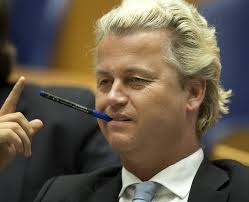
Geert Wilders riding high

geertDutch right-wing leader Geert Wilders is riding high ahead of this month’s European Parliament elections, hoping to destroy from within what he calls the ‘monster of Brussels’.

The platinum-haired Wilders in November announced “the start of the liberation of Europe” from the European Union after forming a partnership with French right-wing party National Front (FN).

Like the FN’s leader Marine Le Pen, Wilders wants to take his country out of the EU and to abandon the euro.

The latest Ipsos opinion poll on May 1 ranked Wilders’ PVV third in the Netherlands, just below the ruling coalition partner People’s Party for Freedom and Democracy (VVD) and the pro-Europe D66.

Despite thousands filing police complaints of racism against Wilders, his anti-EU and anti-immigration call still appeals to many disillusioned with crisis-driven budget cuts blamed on Brussels.

The virulently pro-Israel Wilders has been giving extensive interviews, including to pro-Kremlin media, blaming the Ukraine crisis on the European Union.

The Dutch Centre for Information and Documentation on Israel (CIDI) on Wednesday said he was “betraying his principles” by cooperating with Le Pen.

Despite Wilders’ fawning approaches to Nigel Farage, his UK Independence Party (UKIP) and Scandinavian eurosceptic parties have said they would not work with Wilders because of his association with Le Pen.

In order to form a far-right anti-European bloc, Wilders and Le Pen would have to find like-minded politicians in at least a quarter of the EU’s 28 member states and see 25 members elected to the now trimmed-down 751-seat European Parliament.

So far Wilders reportedly wants Italy’s Northern League, Austria’s FPO, Belgium’s Vlaams Belang, Slovakia’s SNS and the Swedish Democrats on board.

If they become an official European political group, they would benefit from subsidies, offices, a communication budget, seats on committees and speaking time in parliament proportional to their number.

The Netherlands this time only has 27 seats in the European Parliament and with the PVV expected to gain around five seats, it will remain junior to the mightier National Front.

“Indirectly though he’ll have a far greater impact,” said political analyst Andre Krouwel, because of his ability to create doubt and division within bigger parties.

“He’s using it on national level. It is likely to happen on European level as well,” Krouwel said.

Source: AFP