Austrian right doubles votes in regional election

The far-right Freedom Party (FPOe) doubled its votes Sunday in a regional election in Upper Austria province dominated by the issue of migration, according to final results issued by the provincial government.

With a result of 30 per cent, FPOe became Upper Austria‘s second-strongest party, relegating the Social Democratic Party (SPOe) to third place.

The FPOe had “taken the worries and concerns of the population seriously and understood them,” partly leader Heinz-Christian Strache said.

Voter surveys showed that nearly two thirds of voters felt that the refugee issue was important.

Austria is the main transit country for migrants travelling from the Balkans to Germany. Nearly 19,800 people arrived in Austria on the weekend, police estimated.

The populist right-wingers had called for stricter border controls and a fence similar to Hungary‘s to control the flow of thousands of migrants that have been arriving daily in recent weeks. They also accused the government in Vienna of inaction amid what they called “asylum chaos.”

The central government and regional politicians had bickered for months over creating sufficient accommodation for new refugees.

As arrivals soared over the past weeks, the government introduced border controls, deployed the army at the border and started discussing more restrictive asylum rules shortly before the regional election.

Social Democratic Chancellor Werner Faymann said the migratory flow from Syria was not the government‘s fault. “I say yes to controls and order, but it must absolutely done in a humane manner,” he said.

Faymann‘s party got 18 per cent of the votes, nearly 7 percentage points less than in the previous election in 2009.

The conservative People‘s Party (OeVP), which forms a coalition with the Social Democrats in Faymann‘s cabinet, remained the strongest force in Upper Austria but plummeted 10 percentage points to 36 per cent.

Upper Austria‘s conservative governor Josef Puehringer said the EU‘s migration policy decisions in the past days had come too late to alter the election result.

The FPOe hopes to carry Sunday‘s momentum forward to the Vienna city council polls on October 11. Three years before the next regular parliamentary election, the rightists have been leading surveys for months, ahead of the two national coalition parties.

Source: dpa
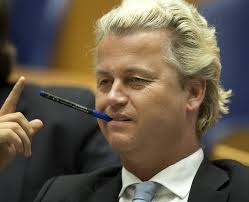
Geert Wilders riding high

geertDutch right-wing leader Geert Wilders is riding high ahead of this month’s European Parliament elections, hoping to destroy from within what he calls the ‘monster of Brussels’.

The platinum-haired Wilders in November announced “the start of the liberation of Europe” from the European Union after forming a partnership with French right-wing party National Front (FN).

Like the FN’s leader Marine Le Pen, Wilders wants to take his country out of the EU and to abandon the euro.

The latest Ipsos opinion poll on May 1 ranked Wilders’ PVV third in the Netherlands, just below the ruling coalition partner People’s Party for Freedom and Democracy (VVD) and the pro-Europe D66.

Despite thousands filing police complaints of racism against Wilders, his anti-EU and anti-immigration call still appeals to many disillusioned with crisis-driven budget cuts blamed on Brussels.

The virulently pro-Israel Wilders has been giving extensive interviews, including to pro-Kremlin media, blaming the Ukraine crisis on the European Union.

The Dutch Centre for Information and Documentation on Israel (CIDI) on Wednesday said he was “betraying his principles” by cooperating with Le Pen.

Despite Wilders’ fawning approaches to Nigel Farage, his UK Independence Party (UKIP) and Scandinavian eurosceptic parties have said they would not work with Wilders because of his association with Le Pen.

In order to form a far-right anti-European bloc, Wilders and Le Pen would have to find like-minded politicians in at least a quarter of the EU’s 28 member states and see 25 members elected to the now trimmed-down 751-seat European Parliament.

So far Wilders reportedly wants Italy’s Northern League, Austria’s FPO, Belgium’s Vlaams Belang, Slovakia’s SNS and the Swedish Democrats on board.

If they become an official European political group, they would benefit from subsidies, offices, a communication budget, seats on committees and speaking time in parliament proportional to their number.

The Netherlands this time only has 27 seats in the European Parliament and with the PVV expected to gain around five seats, it will remain junior to the mightier National Front.

“Indirectly though he’ll have a far greater impact,” said political analyst Andre Krouwel, because of his ability to create doubt and division within bigger parties.

“He’s using it on national level. It is likely to happen on European level as well,” Krouwel said.

Source: AFP