Wilders urges premier to stand up for his own people

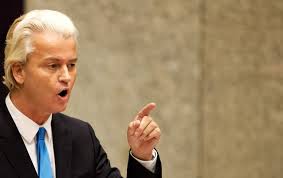
PVV leader Geert Wilders’ anti-refugee, anti-Islam comments have caused many ruffled feathers in the immigration debate in the Tweede Kamer, lower house of the Dutch parliament, this week.

According to the PVV leader, the refugees are safe enough in the refugee camps in their own regions.

The only ones coming to northwest-Europe are “economic refugees”, NU reports. He spoke of an “Islamic invasion” of “men with beards” flooding into Europe.

Wilders insisted on closing the borders and abandoning the Schengen Treaty. He closed his speech with a statement to Prime Minister Mark Rutte: “Stop building refugee centers. Stand up for your own people, your own culture.”

During his speech Wilders had used phrases such as ‘Islamic asylum tsunami’ and described refugees as ‘testosterone bombs’ who ‘threaten our girls’.

Prime minister Rutte launched a strong attack on Wilders.

Rutte said on Thursday such terminology is ‘terrible’ and failed to make any contribution to finding a solution.

While agreeing with Wilders that some councils had not properly consulted their residents about the arrival of refugee centres, the prime minister said he had ‘very great faith’ in the Dutch people.

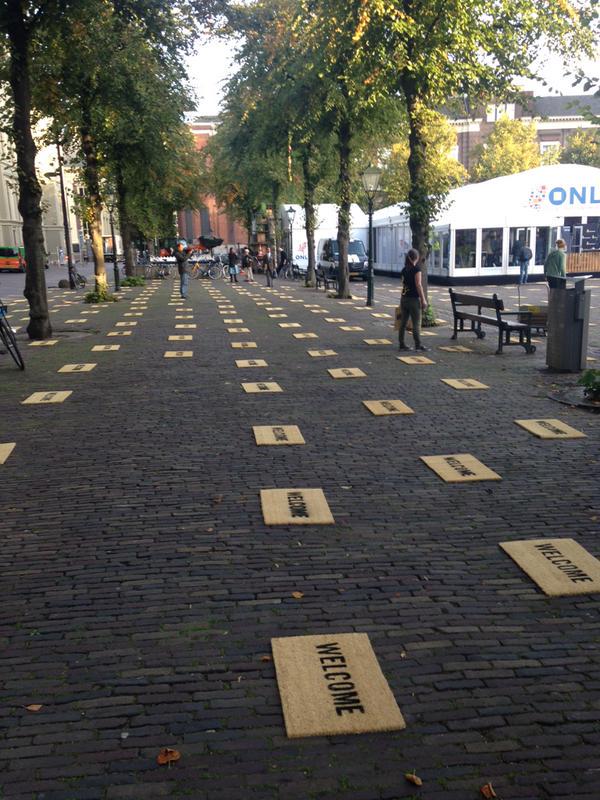
In support of Rutte, Amnesty International placed hundreds of welcome mats on the Plein in The Hague on Thursday morning. This is a call on Prime Minister Mark Rutte to be more welcoming to refugees.

Wilders broadcasts Mohammed cartoons

Dutch television has aired a slideshow of Prophet Mohammad cartoons, a month after the series was presented at a caricature competition in Texas that was attacked by two gunmen. Anti-Islam politician Geert Wilders is at the helm of the new scandal.

During a three minute broadcast slot allocated to Wilder’s Freedom Party, the politician promoted the “freedom of speech” action by presenting a slideshow of Mohammad cartoons accompanied by piano music.

According to the right-wing politician, he assumed the responsibility for revealing to the world the taboo nature of Islam after visiting the exhibition in May in the USA. The broadcast coincided with the Muslim holy month of Ramadan.

“The only way to show terrorists that they are not going to win is to do exactly what they do not want us to do,” Wilders said. “I do not broadcast the cartoons to provoke; I do it because we have to show that we stand for freedom of speech and that we will never surrender to violence. Freedom is our birthright. Freedom of speech must always prevail over violence and terror.”

The populist politician also explained that he was “forced” to air the provocative caricatures after the Dutch Parliament refused to host the exhibition.

Prior to broadcast, the Dutch government took precautionary steps, sending out 140 diplomatic cables worldwide preparing their embassies for the potential ramifications. In their brief, the Dutch government emphasized that the broadcast was Wilder’s private initiative.

Wilders to show cartoons of prophet on TV

Dutch anti-Islam lawmaker Geert Wilders said Wednesday he plans to show cartoons of the Prophet Muhammad on Dutch television after Parliament refused to display them.

Wilders said he would show the cartoons during television airtime reserved for political parties, in a move likely to offend Muslims since Islamic tradition holds that any physical depiction of the Prophet Muhammad is blasphemous.

Political parties in the Netherlands get a small amount of airtime each year and broadcasting authorities have no say in what the parties show. Wilders said the broadcast would likely take place in the next few weeks, but an exact date has yet to be determined.

The announcement came a month after Wilders gave a speech at a contest in Garland, Texas, for cartoon depictions of Muhammad. Shortly after Wilders left the event, it was targeted by two men with pistols and assault rifles. Security guards shot and killed the attackers.

Wilders, whose Freedom Party holds 12 of the 150 seats in Parliament’s lower house, told The Associated Press he wants to air cartoons from the Texas competition to support people “who use the pen and not the sword.”

Wilders is no stranger to pushing the boundaries of free speech and targeting Islam. He has lived under round-the-clock protection since 2004 because of death threats.

He was acquitted in 2011 of hate speech as judges said that his anti-Islam rhetoric came in the context of a fierce national debate about immigration and multiculturalism.

Wilders is again facing prosecution for hate speech over a chant last year in which he asked his supporters whether they wanted more or fewer Moroccans in the Netherlands and they shouted back “Fewer! Fewer! Fewer!”

Source: AP

Wilders rallies thousands of PEGIDA followers

Dutch lawmaker Geert Wilders rallied thousands of PEGIDA followers in eastern Germany Monday to counter society’s “Islamisation”.

The “Patriotic Europeans Against the Islamisation of the Occident”, founded half a year ago in the city of Dresden, had aimed to top their previous record from January of 25,000 people joining a rally.

Many were waving Germany’s red-black-gold national flag and yelling their standard chant of “we are the people”.

“Dresden is showing how it’s done,” said the flamboyant Dutch politician with the trademark peroxide blond hair, who has called Islam a fascist religion and compared the Koran to Hitler’s “Mein Kampf”.

“We have had enough of the Islamisation of society,” he said, speaking in German to loud cheers from the crowd.

“Immigrants have to adopt our values, not the other way around.”

He also insisted that “we don’t hate Muslims, but they have to integrate” and demanded the reintroduction of border controls within the European Union.

More than 2,000 anti-fascist counter-demonstrators had rallied in the afternoon, away from the PEGIDA protest site which was blocked off by police.

PEGIDA marches, which have also targeted “criminal asylum seekers”, mainstream political parties and the media — began with several hundred supporters last October and peaked in January, just after the deadly Islamist attacks in Paris.

Wilders, 51, who heads the Party for Freedom, was again accused of inciting racial hatred after pledging last year to ensure there will be “fewer Moroccans” in the Netherlands.

The German integration commissioner, Aydan Ozoguz, had warned citizens against attending the PEGIDA event, saying that by inviting Wilders the group had shown its true extremist colours.

“Anyone who still marches behind their flag is joining an openly far-right movement,” Ozoguz told the Welt daily.

Saxony state Interior Minister Markus Ulbig said: “This is not a good day for Saxony. With Geert Wilders they have invited a person who has hate inside him, who is divisive”.

Dresden police declined to provide a crowd estimate for the PEGIDA event.

Source: AFP

Support for Geert Wilders doubles after Paris attack

Support for the anti-Islamic Freedom Party (PVV) of Dutch politician Geert Wilders has jumped to its highest level in more than a year after the Islamist militant attacks in Paris.

Wilders, known for his cool rhetoric, said after the Paris bloodshed that the West was “at war” with Islam, drawing a rebuke from Dutch Prime Minister Mark Rutte on Sunday.

If elections were held now, his party would be the single largest in the Netherlands, with 31 seats in the 150-member parliament, more than twice as many as it won in the last elections, according to a Sunday poll.

The governing Liberal and Labour parties, damaged by persistent sluggish growth, would have just 28 seats between them, compared to the 79 they held after the 2012 elections.

The Freedom Party was polling 30 seats just prior to the Jan. 7-9 Paris attacks, in which 17 people including journalists and policemen were killed by three Islamist gunmen who were later shot dead by French special forces.

Wilders this week called in an interview for measures against Islam: “If we don’t do anything, it will happen here,” he was quoted by the newspaper Het Parool as saying.

More than 80 percent of respondents to the De Hond poll said people who left the Netherlands to wage jihad (holy war) in Syria should lose their Dutch citizenship and those returning from fighting in Syria or Iraq should face lengthy jail terms.

The attack on the French satirical newspaper Charlie Hebdo had particular resonance in the Netherlands. In 2004, Dutch filmmaker Theo van Gogh, known for making anti-Islam remarks that were designed to offend, was stabbed to death by an Islamic radical as he cycled down an Amsterdam street.

Wilders, who has described Islam as a “lie” and the prophet Muhammad as a “criminal”, has lived in hiding and under 24-hour armed guard since van Gogh’s murder.

He is currently facing prosecution over remarks he made at an election rally last year, when he appeared to call for “fewer Moroccans” in the city of The Hague, and later referred in a television interview to “Moroccan scum”.

Source: Reuters

Marine Le Pen fails to form conservative group in EU parliament

Marine Le Pen has failed to find support in the minimum of seven European Union countries for her conservative group, the European Alliance for Freedom.

Le Pen and Geert Wilders of the Dutch Freedom Party did not gain enough allies to qualify as a single caucus in the new European parliament, which now denies them access to funding and extra speaking time. They would also not be able to serve on committees.

Following European parliamentary elections last month, won by Le Pen’s Front National, the various parties had until Monday midnights to form a group comprising at least 25 MEPs from at least seven countries.

The Le Pen-led grouping includes Wilders’ Freedom party, the Austrian Freedom Party, Italy’s Liga Nord and Belgium’s Vlaams Belang. Le Pen and Wilders easily easily exceeded the minimum seats required, the European Alliance for Freedom was two countries short of the required seven.

Wilders and Le Pen said they refused to collaborate with a new party of the extreme right in Poland, viewed as antisemitic but also certain to clash with Wilders’ and Le Pen’s views on immigration to their countries from eastern Europe.

The Polish New Right Congress – which advocates abolishing women’s voting rights – and the Lithuanian Order and Justice parties said they refused to join the Le Pen group.

The Lithuanian party preferred to join British Ukip leader Nigel Farage’s Europe of Freedom and Democracy parliamentary group.

Yesterday, the Front National declared that it failed to muster a full-sized European parliamentary group as it had not wanted to ally itself with parties demonstrating incompatible values.

Florian Philippot, the party’s vice-president, told the French radio station Europe 1: “We were several parties, but we needed to come from seven countries and this time it didn’t work.”

Philippot also said to Reuters: “We have no group, for the time being at least. But our deputies, who are more numerous than any other party in the French delegation, will be there to defend France under any circumstances, with or without a group.”

Ludovic de Danne, Le Pen’s European spokesman, tweeted: “Never mind the betrayals and media agitation. We and our allies will build a solid and coherent political group later.”

The new 751-seat European assembly sits for the first time next week.

Subsidies for political groups in the European parliament are substantial. The European Alliance for Freedom could have received up to €22m for operational expenses.

In its media release yesterday, the Front National stated:

“We regret it in the short term, but we take responsibility for our moral and political choice in the long term.

Convinced that it will be possible for us to form this group shortly, we are committed from the very first session in Strasbourg on 1 July to our struggle as patriots for our sovereignty, our identity and our liberty. We shall continue in parallel and with the greatest determination, our negotiations with several parties in Europe so as to constitute this greater formation in favour of sovereignty in the European parliament.”

Le Pen causes stir with Ebola and migration comments

Dutch politician Geert Wilders on Thursday dismissed a comment by his political ally Jean-Marie Le Pen that the ebola virus could address Europe’s immigration problem.

ebolalepen
Jean-Marie Le Pen

At a cocktail party before an election rally in Marseille on Tuesday evening in which the FN is leading the polls in France, Le Pen spoke of the “demographic explosion” in the world.

“Monseigneur Ebola could sort that out in three months,” he said in front of journalists.

“I think it was a silly remark,” the platinum-haired Dutch anti-immigration politician said shortly after casting his ballot in European parliamentary elections in a Hague suburb.

The quote was widely picked up by French media to embarrass Marine Le Pen, the current head of the FN.

Wilders reminded journalists that Marine Le Pen was in charge of the FN.

Jean-Marie Le Pen on Wednesday downplayed the comment. He is the honorary president of the National Front and is standing in this week’s European parliamentary elections.

Mr Le Pen, who will celebrate his 86th birthday on 20 June, said he did not see “how it is possible to argue about this.” “I say France must prepare itself for a shock, for a flood of migration caused by the ongoing growth of the world’s population,” the politician said.

Le Pen said later he wasn’t calling for an epidemic; his daughter’s chief of staff said his words had been misinterpreted.

Wilders and Le Pen late last year announced a historic alliance to fight the European elections and form a bloc in Brussels.

In developing her anti-euro platform, Marine Le Pen has also exchanged notes with Matteo Salvini of Italy’s Northern League.

British anti-EU and anti-immigration leader Nigel Farage, who leads the United Kingdom Independence Party (UKIP) has ruled out joining the group though, saying the FN was too tainted by “anti-Semitism”.

In the Czech Republic the Workers’ Party (DS) and National Party (NS) have stood up for Mr Le Pen on their official websites. Czech voters will be electing new MEPs this coming Friday and Saturday.

Voters among the more than 380 million Europeans in 28 countries will choose a total of 751 new MEPs.

Le Pen unknowingly joins Paul Ehrlich’s predictions. Ehrlich, a Stanford University biologist famous for his book “The Population Bomb,” doubled down on his climate change and overpopulation fears with HuffPost Live on May 21.

Ehrlich’s co-author Michael Tobias praised Ehrlich’s older predictions and said they underestimated the problem.

Ehrlich told the interviewer humans must soon begin contemplating “eat[ing] the bodies of your dead” after resources are depleted.

Ehrlich claimed that scarcity of resources will get so bad that humans will need to drastically change our eating habits and agriculture. Instead, we will soon begin asking “is it perfectly okay to eat the bodies of your dead because we’re all so hungry?” He added that humanity is “moving in that direction with a ridiculous speed.”


Geert Wilders riding high

geertDutch right-wing leader Geert Wilders is riding high ahead of this month’s European Parliament elections, hoping to destroy from within what he calls the ‘monster of Brussels’.

The platinum-haired Wilders in November announced “the start of the liberation of Europe” from the European Union after forming a partnership with French right-wing party National Front (FN).

Like the FN’s leader Marine Le Pen, Wilders wants to take his country out of the EU and to abandon the euro.

The latest Ipsos opinion poll on May 1 ranked Wilders’ PVV third in the Netherlands, just below the ruling coalition partner People’s Party for Freedom and Democracy (VVD) and the pro-Europe D66.

Despite thousands filing police complaints of racism against Wilders, his anti-EU and anti-immigration call still appeals to many disillusioned with crisis-driven budget cuts blamed on Brussels.

The virulently pro-Israel Wilders has been giving extensive interviews, including to pro-Kremlin media, blaming the Ukraine crisis on the European Union.

The Dutch Centre for Information and Documentation on Israel (CIDI) on Wednesday said he was “betraying his principles” by cooperating with Le Pen.

Despite Wilders’ fawning approaches to Nigel Farage, his UK Independence Party (UKIP) and Scandinavian eurosceptic parties have said they would not work with Wilders because of his association with Le Pen.

In order to form a far-right anti-European bloc, Wilders and Le Pen would have to find like-minded politicians in at least a quarter of the EU’s 28 member states and see 25 members elected to the now trimmed-down 751-seat European Parliament.

So far Wilders reportedly wants Italy’s Northern League, Austria’s FPO, Belgium’s Vlaams Belang, Slovakia’s SNS and the Swedish Democrats on board.

If they become an official European political group, they would benefit from subsidies, offices, a communication budget, seats on committees and speaking time in parliament proportional to their number.

The Netherlands this time only has 27 seats in the European Parliament and with the PVV expected to gain around five seats, it will remain junior to the mightier National Front.

“Indirectly though he’ll have a far greater impact,” said political analyst Andre Krouwel, because of his ability to create doubt and division within bigger parties.

“He’s using it on national level. It is likely to happen on European level as well,” Krouwel said.

Source: AFP

Geert Wilders says EU responsible for mess in Ukraine

wildersThe EU is responsible for “the mess” in Ukraine, Geert Wilders, Holland’s Party for Freedom leader, told RT. Wilders wonders why the bloc has got involved in a country where half the population is against joining Europe.

Wilders, who was speaking exclusively on RT’s SophieCo, believes the EU should have kept out of the conflict and only made things worse by giving the country hopes of a pre-accession treaty to the union, when the people of Ukraine were not in unison about joining the organization.

“It was a very delicate balance in Ukraine with 50 percent looking eastwards, towards Russia, and 50 percent of the population looking westwards, towards the European Union. So I think it was very irresponsible what the EU did; they should have kept out of it,” Wilders said.

The leader of the right-wing Party for Freedom criticized politicians from Europe, the US and from his home country for appearing in Kiev and giving the impression that Ukraine had the complete support of the West while completely ignoring the fact that Ukraine remains a very complex situation.

“I believe Europe was more thinking about itself and expanding it and its territory than really thinking about the whole of Ukraine, let alone the stability in that region.”

Wilders admits he understands the gripes of those living in the east of the country, who were unhappy when the coup-appointed government took power in Kiev. “The best thing to do is to de-escalate by taking the Russian minority in eastern Ukraine seriously; give them rights and make them really feel as important as the other half of Ukraine,” the 50 year-old Eurosceptic continued.

The Dutch politician says Russia is also partly to blame and that retaining the territorial integrity of Ukraine is of the utmost importance.

“I’m not only blaming the EU, I’m blaming both Russia and the EU. But I have to be honest, the European Union made a terrible move in the beginning of November last year, and they at least partially started a lot of the troubles, and that analysis is shared by more parties in the EU for sure,” said the leader of the Party for Freedom.

The US and the EU recently introduced more economic sanctions against Russia as they believe the country is having a destabilizing effect on Ukraine. However, Wilders says this will help neither the Russians nor the EU and cannot have a “positive effect.”

Wilders has achieved success in his native Netherlands on a ticket of euro skepticism and is adamant that his country should leave the EU. “We can deal better economically when we are in charge of our country, again, when it comes to national sovereignty – so, yes, we would like to leave the EU and be stronger as a national country,” the Dutchman said.

Wilders cites the example of Switzerland, as a model that his country could follow, with the Alpine nation being one of the richest on the continent, despite never having joined the EU.

“We lost our identity; we lost our national sovereignty to the EU, an institution that really a lot of people in the West don’t like so much anymore. I have nothing against Europe, but I have a lot against the EU as an organization,” Wilders concluded.

Source: RT

FN triumphs in local elections

Le Pen and Wilders
Le Pen and Wilders

France’s National Front party dealt a major blow to the ruling Socialists Sunday after several of its candidates took prime position in the first round of local elections.

According to preliminary results from the interior ministry, the UMP and allies took 47 percent of the vote nationwide while the Socialist party and allies took 38 percent, and the FN five percent — far higher than its 0.9 percent result in the first round of 2008 municipal polls.

Applauding what she said was “an exceptional vintage for the FN”, Marine Le Pen — head of the anti-immigration, anti-EU party — said the polls marked the “end of the bipolarisation of the political scene”.

Although the FN had been expected to do well, the first round results were far better than expected.

FN candidates came ahead in several key towns and cities that will put them in pole position in the second round on March 30.

In the former coal-mining town of Henin-Beaumont in northern France, Steve Briois went a step further and achieved 50.3 percent, an absolute majority which made him the outright winner and mayor.

Under municipal election rules in France, any candidate who gets more than 50 percent is declared the winner and there is no need for a second round.

The FN hopes to claim the mayorship of 10 to 15 mid-sized town after the second round, and if it achieves that, it will have beaten its previous record in 1997 when it had four mayors.

The Socialists immediately responded to the surge of the FN by acknowledging that some voters had registered their discontent with current government policies.

“Some voters expressed their concerns, and even their doubts, by abstaining or through their vote,” Prime Minister Jean-Marc Ayrault said.

Turnout was dismally low at around 38 percent — a record for French municipal elections.

Ayrault called on voters to rally in the second round to block the “advance of the FN”, in a mirror of 2002 presidential elections when then FN leader Jean-Marie Le Pen reached the second round, prompting the Socialist Party to urge support for centre-right candidate Jacques Chirac.

“Where the National Front is in a situation where it could win the second round, all democratic and Republican forces have the responsibility to create the conditions to stop it from doing so,” he said.

The leader of the UMP party meanwhile called on those who had voted for the FN to “carry over their vote” onto UMP candidates in the second round.

Jean-Francois Cope predicted a “big victory” for his party in the second round, in a sign that corruption scandals that have affected the UMP as well as former president Nicolas Sarkozy had little impact.

In the French capital, the UMP was encouraged by an unexpected lead won by former Sarkozy minister Nathalie Kosciusko-Morizet, who is competing against Anne Hidalgo, the daughter of Spanish immigrants, in a fierce battle that will see Paris get its first ever female mayor.

Hidalgo had largely been tipped as the favourite, but the results instead gave Kosciusko-Morizet a handy advantage going into the second round.

The mayorship of the French capital is the most high profile of municipal elections that will produce over 36,000 new mayors for villages, towns and cities across France.

And while very few of these will be from the FN, the Sunday results are a remarkable turnaround for a party that, at the time of the last municipals, was mired in financial crisis and internal bickering.

Le Pen took over the FN leadership in 2011 and set about broadening the appeal of a party regarded as taboo by many voters in light of her father’s repeated convictions for Holocaust denial and inciting racial hatred.

As well as trying to “detoxify” the FN’s image, she has attempted to make it less of a single-issue party by campaigning on unemployment, costs of living and crime.

Past FN attempts at running local councils have often failed as a result of the eccentric personalities involved, but Le Pen has been eager to show that the party is capable of prudent governance.

“We want to become apparent as a big local political force,” Le Pen said Sunday.

Source: Yahoo

Dutch fear rise in immigration after EU law changes

schengenLodewijk Asscher, deputy prime minister of the Netherlands, this month warned that migration from eastern Europe threatened his country’s wages and social welfare policies.

In his home country Bulgaria, Viktor, a logistical engineer, earned €350 a month as head of an emergency response unit at the national railway company. In the Netherlands, he works as a handyman, making up to €100 cash a day – less than his Dutch counterparts – and paying no taxes or social insurance.

The Netherlands, Britain and several other western European countries have maintained work permit requirements for Bulgarians and Romanians since they joined the EU in 2007. But even with that restriction, there has been a steady rise in immigration from those countries. Those requirements will expire on January 1, intensifying fears about a further rise in immigration and what this could mean for wages and services.

Mr Asscher compared the situation with a “Code Orange”, the warning Dutch authorities issue when high water levels threaten to overwhelm the dikes.

Sitting in his sister Maria’s smoky kitchen in a heavily eastern European neighbourhood near Amsterdam, an immigrant Viktor however said such concerns are overblown. “There are only seven million people in Bulgaria, and two million have emigrated since the fall of communism. Most of the people who want to leave have left already,” he said.

The Netherlands once boasted of its history as an asylum for immigrants, such as the refugee Jews and Protestants who flocked there in the 16th century.

But over the past decade, it has been wracked by debates over assimilation, with the rightwing populist Geert Wilders denouncing the country’s Muslim immigrants, mainly ethnic Moroccans and Turks. More recently he has turned his fire on immigrants from eastern and central Europe, setting up a controversial website last year to solicit complaints about their behaviour.

Such attacks play on fears that eastern Europeans are prone to crime and compete for Dutch jobs, driving down wages, particularly for unskilled labour.

With the Netherlands in the midst of a year-long recession and unemployment up from 4.4 per cent in 2010 to 7 per cent, such concerns have sharpened.

The government, a coalition between the centre-right Liberals of Prime Minister Mark Rutte and Mr Asscher’s centre-left Labour party, has mainly played down the immigration issue. But with polls showing the Socialists and the Freedom party pulling ahead, they are starting to feel the pressure.

The numbers of eastern Europeans in the Netherlands have indeed grown rapidly since EU expansion. Since 2005, the official Polish-born population in this country of 17m has more than doubled to 110,000, while the Bulgarian and Romanian communities have quadrupled to a combined 30,000.

Such figures count only those immigrants who have officially registered as residents; unofficial residents may add another 50 per cent to those figures.

Most economists think such immigration is a boon to the economy. A recent study by the Dutch think-tank SEO Economic Research found that labour migration from eastern Europe was mainly temporary, and that it had little or no effect on local employment or wages while contributing a net €1,800 a head to the government treasury.

But that study assumed that employers who hire foreign workers observe Dutch labour law, including the national sector-wide wage agreements between employers and unions.

“On the big energy plant construction projects we researched in the north, we found that scarcely any firms were sticking to the wage agreements,” said Herman Pol, an organiser for the main Dutch metalworkers’ union. Contractors, he said, typically won bids with offers that required them to undercut wage norms by several euros an hour.

Europeans are braced for a new age of austerity as governments across the region take action to eliminate unsustainable budget deficits

There is no realistic chance that the government will maintain work permits for Bulgaria and Romania after January 1, as it would explicitly violate EU law.

“The end of the work permission won’t be a big difference,” said one immigrant, who plans to return to Bulgaria in a year or two anyway. “Whether you have a permit or not, the main question is, where can I work?” – FT

Afrikaans becomes a campaign issue in Dutch election

Geert Wilders

Shutting the Netherlands down on Sundays, protecting Afrikaans and living a work-free life are some of the more offbeat policies being put forward by Dutch parties ahead of Wednesday’s vote.

A whopping 21 parties are contesting parliament’s 150 seats in the election, the second in just over two years after government collapsed in April over a disagreement on European Union austerity measures.

Should they get their say, the conservative Reformed Political Party (SGP), which currently has two seats in the Lower House, wants to close all shops on Sundays in order for citizens “to go to church”.

The party, which bases itself on strict Christian principles and has never had a woman in parliament since its founding in 1918, advocates a “no work” Sunday, unless the work is an act of charity or an essential service.

In an ideal world the SGP would also like to see an end to Sunday matches that are watched religiously at stadiums and in sitting rooms around the football-mad country because they mean police officers “have to work”, a party official told AFP.

The Sovereign Independent Pioneers Netherlands (SOPN), also known as the “UFO party” after its founder UFOlogist Anton Teuben, wants to give every citizen a “living wage” and do away with the necessity of having a job.

The SOPN also advocates the ban of future land ownership with the total “land area of the Dutch State being seen as the property of Mother Earth. Current owners can use the land provided they look after it,” the SOPN said in its election manifesto.

A “movement” rather than a party, the SOPN predicted winning this election with a “majority of 76 seats or more” but has not managed a single seat since it started in 2003.

In its campaign manifesto, the Party for Freedom (PVV), run by eurosceptic anti-Islam politician Geert Wilders said it wanted to push for the preservation of the Afrikaans language in South Africa and Namibia.

Spoken by white and mixed-race South Africans, Afrikaans has its roots in 17th-century Dutch spoken by early colonial farmers and slaves, with words borrowed from Indonesian and indigenous languages.

“We are defending our Dutch language. Afrikaans is closely related to Dutch… but the language is further being marginalised,” the PVV said.

The Party for Animals (PvdD), currently with two MPs, wants recreational angling banned, demanding also that “fishing lessons” in schools be scrapped.

The party also wants a complete ban on pigeon racing as a sport, saying many of the birds die of exhaustion.

The Dutch Electoral Commission struck down 26 other parties who said they wanted to take part in the polls, but failed to hand in valid candidacy lists.

Of these, the Party for Humans and Other Earth Dwellers said they had no problem with people taking drugs “but in moderation.”

They also advocate free food and drink in supermarkets, financed by income tax gained from citizens.

The Club of Non-voters argued that at least a third of all Dutch citizens were disillusioned with politics and would support their movement.

“Should the movement decide to become a political party and take part in the elections, there would be a big chance that the prime minister would come from our ranks.”

“But in the current political system you have to take part. We won’t.” – AFP

U.S. groups also sponsor Geert Wilders of Dutch Freedom Party

Geert Wilders

(Reuters) – Anti-Islam groups in America have provided financial support to Dutch politician Geert Wilders, an anti-immigration campaigner who is seeking re-election to the Dutch parliament this week.

While this is not illegal in the Netherlands, it sheds light on the international connections of Wilders, whose Freedom Party is the least transparent Dutch parliamentary group and a rallying point for Europe’s far right.

Wilders’ party is self-funded, unlike other Dutch parties that are subsidized by the government. It does not, therefore, have to meet the same disclosure requirements.

Groups in America seeking to counter Islamic influence in the West say they funded police protection and paid legal costs for Wilders whose party is polling in fourth place before the Sept 12 election.

Wilders’ ideas – calling for a halt to non-Western immigration and bans on Muslim headscarfs and the construction of mosques – have struck a chord in mainstream politics beyond the Netherlands. France banned clothing that covers the face in April 2011 and Belgium followed suit in July of the same year. Switzerland barred the construction of new minarets following a referendum in 2009.

The Middle East Forum, a pro-Israeli think tank based in Philadelphia, funded Wilders’ legal defense in 2010 and 2011 against Dutch charges of inciting racial hatred, its director Daniel Pipes said.

The Middle East Forum has a stated goal, according to its website, of protecting the “freedom of public speech of anti-Islamist authors, promoting American interests in the Middle East and protecting the constitutional order from Middle Eastern threats”. It sent money directly to Wilders’ lawyer via its Legal Project, Pipes said.

Represented by Dutch criminal lawyer Bram Moscowitz, Wilders successfully defended himself against the charges, which were brought by prosecutors in Amsterdam on behalf of groups representing minorities from Turkey, Morocco and other countries with Muslim populations.

The case heard in October 2010 was filed in response to Wilders’ comments in the Dutch media about Muslims and his film “Fitna”, which interlays images of terrorist attacks with quotations from the Koran and prompted protests by Muslims in Islamic countries worldwide. The court found he had stayed within the limits of free speech.

Pipes declined to say how much his group paid for Wilders’ defense.

Moscowitz declined to discuss payments for Wilders’ defense, citing client confidentiality.

Wilders said in an emailed statement that his legal expenses were paid for with the help of voluntary donations from defenders of freedom of speech.

“I do not answer questions of who they are and what they have paid. This could jeopardize their safety,” Wilders said.

VISITS TO THE UNITED STATES

Wilders, 49, first became a member of the Dutch parliament for the pro-business Liberal Party before winning nine seats for his own Freedom Party in 2006, campaigning against Islam, which he calls a threat to Dutch culture and Western values.

He called Islam a violent political ideology and vowed never to enter a mosque, “not in 100,000 years”. His party won 24 seats in the 150-seat lower house in June 2010.

He has been under 24-hour security for eight years after receiving death threats from radical Muslim groups in the Netherlands and abroad. Norwegian mass killer Anders Breivik cited anti-Islamic comments by Wilders in an online manifesto that sought to justify his crimes. Wilders has denounced Breivik and his actions.

David Horowitz, who runs a network of Los Angeles-based conservative groups and a website called FrontPage magazine, said he paid Wilders fees for making two speeches, security costs during student protests and overnight accommodation for his Dutch bodyguards during a 2009 U.S. trip.

Horowitz said he paid Wilders for one speech in Los Angeles and one at Temple University in Philadelphia. He declined to specify the amounts, but said that Wilders had received “a good fee.”

When Wilders’ Philadelphia appearance sparked student protests, Horowitz said, he paid a special security fee of about $1,500 to the Philadelphia police department. Horowitz said he also paid for overnight accommodation for four or five Dutch government bodyguards accompanying Wilders on the trip.

Wilders said in response: “I am frequently asked to speak abroad. Whenever possible I accept these invitations. I never ask for a fee. However, sometimes the travel and accommodation expenses are paid. My personal security is always paid for by the Dutch government.”

Pipes and Horowitz denied funding Wilders’ political activities in Holland. Both run non-profit, tax exempt research and policy organizations which, under U.S. tax laws, are forbidden from giving direct financial backing to any political candidate or party. U.S. law does allow such groups to support policy debates financially.

During Wilders’ visit to Los Angeles, where Horowitz runs an organization called the David Horowitz Freedom Center, Horowitz said he organized an event at which Danish cartoons lampooning the Prophet Mohammed were auctioned. He said he did not remember how much money this event raised or what happened to the proceeds.

Horowitz agreed with the Dutchman’s repeated, public comparison of the Koran to Hitler’s Mein Kampf. Comparing the two works was a “fair analogy,” Horowitz said. He said Wilders was “fighting the good fight.”

Horowitz said U.S. backers helped Wilders raise money to pay legal fees to fight a ban from visiting Britain in 2009, where he planned to screen Fitna. The British government said at the time: “The Government opposes extremism in all its forms. The decision to refuse Wilders admission was taken on the basis that his presence could have inflamed tensions between our communities and have led to inter-faith violence.”

Wilders won an appeal in the British courts in October 2009 when the ban was overturned.

Wilders has other supporters in the United States, such as Pamela Geller, who runs Stop Islamization of America and has backed Wilders in public statements. Geller remains a supporter. She says she does not provide Wilders with financial assistance.

Wilders has not revealed how his political activities are paid for. Former Freedom Party officials have said he has no personal funds and almost entirely relies on foreign donations.

Like other Dutch political parties, members of parliament for the Freedom Party have been allocated 165,000 euros ($211,200) per year for expenses. Former Freedom Party officials speaking on condition of anonymity said the money, nearly 4 million euros per year, went to the party and has not been accounted for.

Wilders said in his emailed response that former Freedom Party officials making such allegations were bitter and spiteful. “These people have other motives than telling the truth,” he said.

“Our party has a sixty euro annual budget. The rumors about millions of euros in sponsoring are complete nonsense. A Freedom Party-related foundation receives donations from Dutch or foreign sources, but these are modest amounts of money and certainly never millions,” it continued.

The Dutch government turned down requests for additional information about Freedom Party finances.

“I do not possess relevant information or documents” about the Freedom party finances or campaign contributions because the party does not receive subsidies, Dutch Minister for Internal Affairs Liesbeth Spies said in a written response.

Anders Breivik’s ideas ‘are almost mainstream in many European countries’

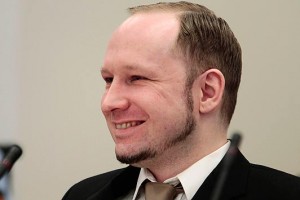
Anders Breivik in court in April 2012Norwegian mass killer Anders Behring Breivik may have failed to ignite a race war with Muslims, but he succeeded in stoking anxieties about the stability of Europe’s increasingly diverse societies.

Though his talk of an international underground of killers – latter-day Crusaders he called the Knights Templar – seemed to be mere fantasy, and while his methods place him far beyond the pale of mainstream politics, many of his beliefs are to be found within the fold of anti-Muslim, anti-immigrant populists.

“His ideological `manifesto’ is a distilled representation of a cultural crisis that pervades the European continent and finds expression in an increasingly xenophobic populism,” Kirsten Simonsen, a professor at Denmark’s Roskilde University, wrote in “Bloodlands”, a 2012 series of essays about Breivik.

Some notions – that Europe and its indigenous cultures are being weakened by immigration and multiculturalism – have been helping reshape the continent’s right-wing politics for years.

These beliefs occasionally find an echo on the margins of centre-right parties, among politicians seeking support from communities plagued by rising unemployment.

Mario Borghezio is a case in point.

The Italian politician set off a storm of outrage after Breivik’s gun and bomb massacre by declaring in a radio interview that its perpetrator had some “excellent” ideas.

Borghezio exemplifies a trend among populist anti-immigration groups – the use of the language of Western counter-terrorist efforts against al Qaeda to pursue what amounts to an anti-Islamic cultural campaign.

CALL FOR A “EUROPEAN SPRING”

Human rights groups are increasingly alarmed, not just at the far right, but at what many see as the pandering to its Islamophobic stereotypes by Europe’s mainstream parties.

“We need our own ‘European Spring’ to overcome old and emerging forms of racism and intolerance,” Nils Muiznieks, the Commissioner for Human Rights at the Council of Europe, a governmental human rights body, wrote in a July 2012 blog.

Muslims, he said, had become the primary “other” in right-wing populist discourse in Europe, and needed to be accepted as an integral part of society, entitled to equality and dignity.

Political parties in Austria, Bulgaria, Belgium, Denmark, France, Italy, the Netherlands, Norway and Switzerland had employed anti-Muslim rhetoric for political gain, he said.

Borghezio’s Breivik comment was denounced by his party, the pro-devolution, anti-immigrant Northern League, which apologized to Norway and temporarily suspended Borghezio from their ranks.

The European lawmaker argued the indignant reaction was misplaced, because he strongly condemned Breivik’s violence.

And yet, a year on, he still sees Breivik’s stance on some issues as attractive – particularly a perceived need to prevent Muslim immigration to Europe and combat Islamist extremism.

“Not all the ideas were criminal. It is the man who behaved in a criminal way,” Borghezio told Reuters.

CHEAP MUSLIM LABOUR

Tough regulation of immigrants, particularly Muslims, was essential, he said. In many mosques in Italy, he said, Muslims in economic difficulty were encouraged by extremist Islamist organizations “to carry out antisocial and illegal acts”.

His comments echo the public position of many in Europe’s far-right networks: a sense that the continent is under threat from Islamic extremists and is being betrayed by a rapacious political elite that values cheap Muslim labor above the economic welfare of its own communities.

Security specialists worry that far-right social media commentary stigmatizing Europe’s Muslims may help push enthusiasts towards militancy, much as al Qaeda propaganda opened pathways to violence for numerous Islamist radicals.

In a 2012 report, European police agency Europol stated the threat of violent right-wing extremism “has reached new levels in Europe and should not be underestimated. The threat will most likely come from lone actors, but organized, underground groups also have the capability and intention to carry out attacks.”

Some argue Breivik might have had more chance of setting off the kind of religious war he imagined if he had targeted Muslims, so as to create a cycle of revenge killings, rather than killing young white Norwegians from the pro-immigration Labour party, which encouraged a rallying behind common values.

“COUNTER-JIHADIST” MOVEMENT

On September 3, 2011, six weeks after Breivik’s Utoeya massacre, Stephen Lennon, a leader of the rightist English Defence League, took to a podium in central London and warned against any repeat of the 2005 attacks by British Islamists on London’s transport network that killed 52 people.

“The Islamic community will feel the full force of the English Defence League if we see any of our citizens killed, maimed or hurt on British soil ever again,’ he said.

U.S.-based researcher Arun Kundnani, in a June 2012 paper for the Hague-based International Centre for Counter-Terrorism, asserts that in the past two decades rightist violence in Europe has been comparable to Islamist bloodshed.

By his count, since 1990, at least 249 people had died in incidents of far‐right violence in Europe, compared to 263 who have been killed by jihadist violence.

A 2012 report by a left-wing anti-racist group, Hope Not Hate, identified more than 100 groups it said were part of a so-called counter-jihadist movement promoting anti-Islamic agendas in Europe, the United States, Canada and Australia, sharing anti-Islamic commentaries, photos, videos and rock music.

The groups, some of which Breivik quotes from in his manifesto, replaced the old racial nationalist politics of neo-Nazis with the language of cultural wars, Hope Not Hate said.

Immigration is an obsession with such groups.

Fifteen to 20 million Muslims, out of a total population of 500 million, are estimated to live in the 27-member European Union as well as non-EU members Norway and Switzerland.

France, a nation of 60 million people, is home to Europe’s largest Muslim minority, estimated at about 5 million. Norway estimates two percent of its 5 million population are Muslims.

A 2011 Pew survey of 50 European countries said the Muslim share of the population was expected to grow from six percent of the region’s people in 2010 to eight in 2030, due in part to higher birth rates among Muslims than non-Muslims.

“ADULTERATING” PURE NORWEGIAN BLOOD

Breivik argued his 77 victims, mostly teenagers at the ruling Labour Party’s summer camp on Utoeya, deserved to die because they supported Muslim immigration, which he said was adulterating pure Norwegian blood.

In Norway itself, Breivik’s deeds rebounded against the right. The mainstream but anti-immigration Progress Party, briefly joined by Breivik, suffered a huge blow in municipal elections two months after the attack.

But a growing number of opinion surveys show Europeans increasingly receptive to the notion that immigration, especially by Muslims, should be curbed or halted.

A July 2011 Pew Attitudes survey found that, when asked whether Muslims wanted to adopt local customs or stay culturally distinct, majorities of European populations chose the latter answer. A Populus research service poll in 2011 of more than 5,000 people in Britain for the Left-wing Searchlight Educational Trust found deep resentment among a range of communities about immigration.

“TOO MANY” IMMIGRANTS

In June 2012 an Ipsos MORI poll on attitudes to immigration found that in seven out of nine EU member states surveyed the majority regarded immigration as having had a negative impact on their country: Sweden and Poland were the only exceptions.

Mainstream centre-political parties have tried to keep up with the trend, enacting a variety of measures in the social sphere that have sometimes inflamed tensions on the street.

France banned clothing that covers the face in April 2011 and Belgium followed suit in July of the same year, while similar legislation has been proposed in the Netherlands, Italy and some Spanish regions. Switzerland barred the construction of new minarets following a referendum in 2009.

There is a broad European shift away from overt skin-color racism to prejudices about culture and religion shaped in part by the West’s war on al Qaeda.

“The whole focus of far right activity in Europe has shifted from race, the idea that ‘blacks are inferior’, to wider issues of identity,” said Ted Cantle, executive chairman of the Institute of Community Cohesion, a think tank.

Multiculturalism is another bugbear of the far right, which tends to define it as an excessive tolerance of immigrant communities that amounts to Western cultural suicide.

Centre-right politicians who have also questioned multiculturalism and advocated the primacy of Western liberalism in recent years include British Prime Minister David Cameron, German Chancellor Angela Merkel and former French President Nicolas Sarkozy. All did so facing domestic political pressure to take a tougher line on immigrants unwilling to adapt to host cultures.

Another example is Dutch populist Geert Wilders, head of the anti-immigration, anti-euro Freedom Party. Breivik’s manifesto reproduced anti-Islamic comments Wilders made to the Dutch parliament. Wilders has denounced Breivik and his actions.

Pepe Egger, head of Western European Forecasting for the UK-based Exclusive Analysis research house, says some of Breivik’s ideas are held quite widely among European political activists.

“The bizarre thing is that his ideas, as Islamophobic as they are, are almost mainstream in many European countries,” he told Reuters. “The perceived need to defend Europe against ‘Islamisation’ is not that far removed from what you can find in the opinion pieces in large daily newspapers.” – Reuters