German intel concerned about Islamists recruiting migrants

German intelligence warned Tuesday that the number of Islamic extremists in the country had increased sharply in recent months and expressed serious concern that they were recruiting among refugees.

The Office for the Protection of the Constitution (BfV), Germany’s domestic security watchdog, said the number of radical Salafists had surged to 7,900 in September from 7,500 in June, and that many were trying to lure asylum-seekers into their ranks.

“We are very concerned that Islamists in Germany are trying, under the cover of humanitarian assistance, to exploit the situation of the refugees for their own ends and to proselytise and recruit among asylum-seekers,” BfV president Hans-Georg Maassen said in a statement.

Germany expects to receive up to one million asylum-seekers this year, five times more than last year. Syrians, who are fleeing their war-ravaged country, form the largest group.

Maassen said that a total of 740 radical Muslims had left Germany to join jihadists in Syria and Iraq, 20 percent of them female. Around one-third of those who went to the region have returned to Germany, while about 120 of them have been killed.

He said the BfV was keeping close watch on such activities given their “significant radicalisation potential” in the migrant community.

“We are keeping a particularly close eye on unaccompanied minors among the refugees, who could be easy targets for Islamists,” he said.

German police carried out dawn raids in Berlin Tuesday targeting individuals suspected of inciting people to go and fight for the Islamic State group in Syria.

The raids began at 6:30 am (0430 GMT) and targeted, among others, a 51-year-old Moroccan suspected of recruiting for the jihadists, police said in a statement.

A 19-year-old Macedonian thought to be currently in Syria is also suspected of involvement in the recruitment drive, it said.

“We are looking for evidence to see whether these allegations are true,” a police spokesman said. No arrests were made.

One raid was conducted at an association linked to a mosque in Berlin’s central Tempelhof district, the spokesman said. Seven homes were also searched.

Source: AFP

Austria deploys army against migrants

The Austrian army has been sent to assist in introducing tougher border checks amid the growing migrant crisis, Reuters cited the country’s vice-chancellor as saying.

At least 2,200 soldiers will assist police in tackling the refugee crisis on the border, according to a statement from the Austrian government.

The soldiers will be deployed when their help is required, Austrian Chancellor Werner Faymann said, Krone newspaper reported.

“If Germany carries out border controls, Austria must put strengthened border controls in place,” Vice Chancellor Reinhold Mitterlehner said in a joint news conference with Chancellor Werner Faymann. “We are doing that now.”

Thousands of asylum seekers continue to pour into Austria from Hungary. Police told Reuters that 8,400 people had arrived on Sunday.

“The flow of refugees remains very high,” the spokesman said. “I don’t think I would be wrong in saying that we might exceed the threshold of 10,000 if it continues like this.”

Police spokesman Gerald Pangl told AP that some 14,000 people had arrived in the town of Nickelsdorf on Sunday, and about 2,500 in the early hours of Monday.

Slovakia has introduced temporary controls on its borders with Hungary and Austria, sending an additional 220 police officers, the country’s Interior Ministry said Monday.

The move comes after Germany introduced border checks over the weekend to tackle the flow of asylum seekers.

Source: RT

Is Europe doomed as Gadaffi promised?

As Europe’s migrant crisis grows far and wide, many Russian media are recalling the late Libyan leader Muamar Gaddafi’s gloom prophecy made several months before his violent death. “Now listen you, people of NATO. You’re bombing a wall which stood in the way of African migration to Europe, and in the way of Al-Qaeda terrorists. This wall was Libya. You‘re breaking it. You’re idiots, and you will burn in Hell for thousands of migrants from Africa and for supporting Al-Qaeda. It will be so. I never lie. And I do not lie now,” said Gaddafi in an open letter obtained by the Russian daily Zavtra and published in May 2011 several months before the Lybian leader was killed.

Since the beginning of the year 500,000 refugees have arrived in Europe. The migrant crisis has become number one priority for the EU countries, European Commission President Jean-Claude Juncker told the European Parliament in his annual message regarding the state of affairs in the European Union.

“It is Europe today that represents a beacon of hope, a haven of stability in the eyes of women and men in the Middle East and in Africa. That is something to be proud of and not something to fear,” said Juncker.

The question what caused the migrant crisis in Europe has evoked a deluge of comments from the expert community and Russian society in general. Europe is about to lose its reputation of the most stable place in the world, largely because the leading European countries and the United States have been shaking loose the regimes precisely in those countries whose people are now storming railway stations in the EU, experts say.

“That the refugee crisis is an outcome of US-European policies is clear to the naked eye,” says senior research fellow Boris Dolgov, of the Oriental Studies Institute under the Russian Academy of Sciences. “The destruction of Iraq, the destruction of Libya and attempts to topple Bashar Assad in Syria with the hands of Islamic radicals — that’s what EU and US policies are all about, and the hundreds of refugees are a result of that policy,” he told TASS.

“It’s a very serious and multi-faceted problem,” Professor Irina Zvyagelskaya, of the oriental studies department at the Moscow state institute of international relations MGIMO, told TASS. “The civil war in Syria and tensions in Iraq and Libya keep fueling the flow of migrants, but that is not the only cause. I agree with those who see the current events as a trend towards another mass resettlement of peoples, which leave the weaker countries with ineffective economies. There are systemic problems that cause people to abandon their homes and take to the road. And the liberal European legislation allows many of them to not only stay in Europe, but also to live there on social benefits without seeking employment.”

“These people are exhausted, angry and humiliated. They have no idea of European values, lifestyles and traditions, multi-culturalism or tolerance. They will never agree to abide by European laws,” says Russian author, playwright and stage director Yevgeny Grishkovets in his blog. “They will never feel grateful to the people whose countries they have managed to get into with such problems, because the very same states first turned their own home countries into a bloodbath.”

“Angela Merkel vows modern German society and Europe are prepared for problems… That’s a lie and nonsense! I am certain that many of those in France, Italy and Germany, who are pretending compassion and shaking their heads in bewilderment at the news more migrants have drowned or died of suffocation or fatigue on the way, in reality are saying to themselves something like this: ‘This serves them right! That will teach others a lesson!” says Grishkovets.

Columnist and blogger Vitaly Tretyakov wonders why the European Union has walked into this trap which it will never be able to get out of.

“The reasons are many, but all of them are confined to arrogance and exaggerated self-confidence. In most cases this high-handedness is never expressed aloud, but the ‘Europeans’ always feel superiority over everybody else in this world.”

“It remains to be seen whether the European Union succumbed to Washington’s pressures or preferred to manifest solidarity with the United States when it decided to speed up the so-called ‘process of democratization’ in North Africa and the Middle East. Whatever the case, by doing so it helped thrust open Pandora’s Box. Now a vast territory has plunged into civil wars and armed chaos and millions of refugees were forced to flee for life,” Tretyakov said.

Source: TASS

ISIS set up stronghold in Europe

Security services think the Osve area in Bosnia is used for ISIS training camps and could be a base for devastating terror attacks on the West.

Islamic State have established a stronghold in mainland Europe, a Sunday Mirror investigation reveals.

Terrorists are secretly buying land in an isolated village, surrounded by deep woodland.

Security services think the area in Bosnia is used for ISIS training camps and could be a base for devastating terror attacks on the West.

Crucially, the location gives IS a key strategic position due to its proximity to the Mediterranean which is used by extremists from Syria, Iraq and North Africa.

At least 12 ISIS fighters trained in the village of Osve have left for Syria in recent months and five are reported to be dead.

Terror expert Dzevad Galijasevic said: “From this village a large number of people went to Syria and are going constantly.

“The chosen location of some of the properties is on a hill, where there is no possibility to approach without being seen. It is clear that the source of the terrorist threat is right there. It is a major threat.

“There is no one there who isn’t ready to respond to the summons to jihad.”

We visited the hilltop village 60 miles from Sarajevo and six miles from the town of Maglaj afternoon.

It is not mapped by GPS and is only accessible by steep and winding roads barely wide enough for cars to pass.

Bosnia is an ideal position for jihadis travelling illegally from Syria to Greece, via Turkey, and then through Macedonia and Serbia.

Guns and other weapons are easier to obtain in Bosnia than in other parts of Europe due to illegal ownership following the conflicts of the 1990s.

Five months ago, anti-terror cops raided the village of Gornja Maoca in the north of the country following reports of houses flying the ISIS flag.

The area is home to followers of the strict Sunni Islam Wahhabi movement. It has been raided by police several times over the past decade due to suspected links with radical groups.

Source: Daily Mirror

Hungary joins Silk Road

Hungary has become the first European country to sign a memorandum of understanding with China on promoting the Silk Road Economic Belt and Maritime Silk Road, China media report. The MoU was signed on Sunday, during Chinese Foreign Minister Wang Yi’s visit to Budapest, where he met with Prime Minister Viktor Orban. In a statement on the occasion, Wang said he hopes more European countries will join in.

Hungary may be the first country in Europe to officially sign an MoU relating to China’s “One Belt, One Road” strategy, but the subject has cropped up repeatedly during Chinese interactions with Europe. When Xi Jinping toured Europe in April 2014, with stops in The Netherlands, France, Germany, and Belgium, he urged the EU and China to work together to combine EU policies with China’s Belt and Road. When Li Keqiang attended the China-Central and Eastern European (CEE) Leaders’ Meeting in Serbia in December 2014, he also highlighted the role Europe has to play in the Belt and Road – and the role China can play in completing infrastructure and energy projects in Central and Eastern Europe under the aegis of that initiative.

More recently, during Xi’s visits to Russia and Belarus this May, both countries agreed to work with China on the Silk Road Economic Belt. Belarus agreed to the project hoping to win Chinese infrastructure investments, while Russia promised to link its new Eurasia Economic Union with China’s Belt and Road.

While the Belt and Road are often discussed primarily in the context of China’s near neighbors – particularly Southeast and Central Asia – Beijing has long been clear about the importance of Europe, particularly Central and Eastern Europe, to the project. A few months after Xi Jinping first unveiled the twin Belt and Road concepts in speeches in Kazakhstan (September 2013) and Indonesia (October 2013), Li extended the Belt and Road all the way to Europe during a November 2013 visit to Romania.

Likewise, the official action plan for the Belt and Road, issues by Chinese government agencies in March 2015, described the Silk Road as “a new Eurasian Land Bridge” that “focuses on bringing together China, Central Asia, Russia, and Europe.” That means the Belt and Road, by China’s own definition, will be incomplete without buy-in from European countries. And Central and Eastern European countries in particular have a special role to play. As Xinhua put it on Monday, “CEE nations will be essential links in the Belt and Road Initiative.”

European countries, like many of the Asian supporters of the Belt and Road, are primarily focused on the economics. “Chinese firms have invested more than 5 billion U.S. dollars in CEE countries in sectors such as energy, infrastructure and machinery,” Xinhua reports. In coming years, China will build a high-speed railway connecting Hungary and Serbia and construct two nuclear reactors at a Romanian nuclear power plant. According to U.S. law firm Baker and McKenzie, Chinese investment in Europe doubled from 2013 to 2014, reaching $18 billion.

In other words, the Silk Road in Europe was alive and well before Hungary signed the MoU – and it will only continue to grow as more government agreements officially tie existing investments and initiatives to China’s Belt and Road strategy.

Source: The Diplomat

Africans are not refugees

We’re supposed to believe that everybody scrambling to get into Europe is a refugee from some kind of war. But the Wall Street Journal sends reporter Drew Hinshaw to look at the flow of migrants out of Senegal, a country that is currently peaceful and (relatively) prosperous:

Allure of Wealth Drives Deadly Trek
Young Men in Senegal Join Migrant Wave Despite Growing Prosperity at Home
BY DREW HINSHAW

… Mr. Ba represents a puzzling segment of the migrant population: Unlike those fleeing war, famine or economic desperation, this group is risking rising living standards to brave banditry, starvation and stormy seas to make a better life in Europe.

Officials here say five men from this village of several thousand—which in recent years has welcomed smartphones, laptops and satellite television—are known to have perished this year. More are missing, their fate unknown. Another man leaves every week, officials say.

Senegal is a stable West African democracy, and Kothiary has profited from the currents of globalization transforming rural Africa’s more prosperous areas. Flat screen TVs and, increasingly, cars—mostly purchased with money wired home by villagers working in Europe—have reshaped what was once a settlement of mud huts. The wealth has plugged this isolated landscape of peanut farms and baobab trees into the global economy and won respect for the men who sent it.

But it has also put European living standards on real-time display, and handed young farm hands the cash to buy a ticket out.

They leave behind a proud democracy whose steady economic growth has brought American-style fast food chains, cineplexes and shopping malls to this nation of 15 million, but hasn’t kept pace with the skyrocketing aspirations of the youthful population. Dusty and remote villages like Kothiary have become an unlikely ground zero for this exodus.

The number of Senegalese jumped 123% from the first four months of last year, which also saw record emigration. West Africa houses several of the world’s faster-growing economies but is also sending some of the most migrants out.

Students there, Mr. Sidibé included, have cashed out their scholarships to pay traffickers for a ride to Tripoli. Even their professors have traded in paychecks to journey north, joining policemen, civil servants and teachers, said Souleymane Jules Diop, the country’s minister for emigrants.

“People don’t go because they have nothing, they go because they want better and more,” said Mr. Diop. “It’s aspiration.”

An aide walked into his office to list the countries that had seen spiking numbers of Senegalese showing up without papers—places the minister would have to visit in the next two weeks: Cuba, Brazil, Venezuela, Turkey, Morocco, France and the U.S.

“What is happening now is not that different from the time of slavery,” Mr. Diop said. “We are losing the arms we need to build this country.”

For policy makers on the world’s poorest continent, the experience of Kothiary highlights a predicament. Senegal has followed almost every Western prescription on how to push Africa out of poverty: holding free and fair elections for four decades, liberalizing trade, building some of Africa’s better infrastructure.

And yet many of its best and brightest young people are leaving. Almost 75% of people here surveyed in a 2013 Oxford University study said they wanted to emigrate in the next five years. Last year, the ministry of emigration nearly tripled the number of passports it printed from the previous year.

Legal entry to most nations for a Senegalese citizen would require a visa—and, to obtain that, steady salaried work of a sort rare in Senegal.

The exodus is spurred by Senegal’s youthfulness. Half the population of Senegal, and of Africa, is under 19.

These African youth are coming of age in a bleak job market. Just 11% of Senegalese adults were employed full time during a 2012 Gallup poll, a rate the poll showed was typical for the continent. For many young men who acquire extra cash, the best place they see to invest it is on a ticket out.

The result is a cycle that is making Senegal’s expanding economy hooked on remittances. … More than half the houses in Senegal have at least one family member abroad. In Kothiary, they are the homes with satellite TV. …

More than half the houses in Senegal have at least one family member abroad. In Kothiary, they are the homes with satellite TV.

Four cellphone towers climb over the settlement. Constant electricity and treated tap water, their bills paid for with remittances, flow into its homes. Outside, some children still chase tires together down the dusty roads. More and more, however, hang by themselves, thumbing soccer games on their new smartphones.

In the home of 72-year-old Amadou Kanté, four satellite TV dishes poke out from the walls of a two-story compound. There are TVs in several of his living rooms. Four Lenovo laptops are scattered on the furniture. Asked how many members of this family have a smartphone, his daughter Oumou Kanté replied, “everyone.”

Mr. Kanté lavishes praise on the son—a nurse in France—who sends him home the €225, or about $250, each month that buys these gadgets.

And yet this year, a younger son sneaked out, calling his father to say he was a few days from the Libyan border and needed $600 to get to Tripoli. The old man wired the cash.

It’s not mentioned, but I’m guessing that this 72 year old patriarch who owns a compound with several living rooms is a polygamist:

A ‘polygamy belt’ stretches across Africa, from Senegal through to Tanzania, in which it is not uncommon for a third of married women to share their husbands (Jacoby 1995). In the present day, this prevalence is almost unique to Africa. All Demographic and Health Survey (DHS) data sets report that at least 92% of married women are monogamous – except for those from Haiti and sub-Saharan Africa.

‘US drawing Europe into crusade against Russia, against our interests’

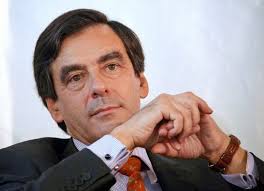
The US is drawing European states into a “crusade” against Russia, which goes against Europe’s interests, former French Prime Minister Francois Fillon has said. Speaking to French media, he stressed that Europe now is dependent on Washington.

“Today, Europe is not independent… The US is drawing us [the EU] into a crusade against Russia, which contradicts the interests of Europe,” Fillon told the BFMTV channel.

The ex-French prime minister, who served in Nicolas Sarkozy’s government from 2007 till 2012, lashed out at Washington and its policies.

Washington, Fillon said, pursues “extremely dangerous” policies in the Middle East that the EU and European states have to agree with.

He accused German intelligence of spying on France “not in the interests of Germany but in the interests of the United States.”

Fillon pointed out that Washington is pressurizing Germany to concede to Greece and find a compromise.

He noted the “American justice system” often interferes with the work of “European justice systems.”

“Europe is not independent,” the ex-PM said, calling for “a broad debate on how Europe can regain its independence.”

This, however, would not be possible if Europe goes ahead and signs the Transatlantic Trade and Investment Partnership (TTIP), a proposed EU-US treaty, which has drawn much criticism for its secretiveness and lack of accountability.

“I am definitely against signing this agreement [TTIP] in the form in which it is now,” he added.

The TTIP agreement seeks to formalize the economic relationship between the EU and US economies across the board. The two partners trade nearly €1 billion (US$1.1 billion) worth of goods and services annually.

Its supporters promise €100 billion in GDP growth for the EU and almost $90-billion growth for the US, as well as the creation of over 700,000 extra jobs in the US. However, TTIP critics warn the deal would create environmental problems, a loss of economic sovereignty, bring in torrents of genetically modified food and cause unemployment.

Germany sells fifth nuclear submarine to Israel

Germany’s Federal Security Council has approved the export of a fifth submarine to Israel.

It’s the penultimate submarine promised to Israel by German Chancellor Angela Merkel and will be handed over by the company Thyssen Krupp.

Süddeutsche Zeitung newspaper revealed the approval, citing the Federal Security Council’s report to the parliamentary Economics Committee.

Germany’s Howaldtswerke-Deutsche Werft (HDW) builds the new Air Independent Propulsion Dolphins and the decision to sell them has been criticized for two reasons. One, in that German taxpayers are shouldering a third of the cost.

Secondly, the vessels are reportedly capable of being equipped with nuclear weapons.

Peter Roberts is an expert in sea power and naval weapons systems at the Royal United Services Institute in London and told Sputnik News that Israel will want to produce and develop nuclear capability on the new submarines.

“That’s the long term aspiration”, says Roberts. “But does it have it right now? No.

“These are new batch of submarines that Israel is receiving which have a markedly increased capability on what they’d had previously in terms of range, covertness and ability to reach different parts of the world then they had previously been able to do.”

Roberts adds that the submarines have the capability to become nuclear armed, “but probably not right now.”

“Several hurdles have to be overcome before it can be armed with a nuclear warhead.”

He explains that the key to being able to arm the submarines with nuclear weapons is down to the delivery mechanism.

“The Israelis rely on the fact they could fire the Popeye submarine missile — a system that the Americans successfully launched in 2002. But traditionally the Israelis only keep the Harpoon anti-ship missile.”

“These are the first submarines that will be able to fire this missile, the size of the torpedo tubes allow it to be fired, they have a bigger tubes for bigger missiles.

“The submarines would have the ability to launch them [missiles] — it’s the weapon itself that is the critical part and developing that weapon and navigation system for the guidance from within a submerged submarine is a further challenge.”

Peter Roberts says it’s difficult to say whether the submarines are distinctly designed for nuclear weapons.

“The Israelis will want to add this to their golf bag of capability which will give them huge resilience in their nuclear forces — but they’re not there yet.”

According to an article written by Anthony Bellchambers for Global Research, the Dolphin Class nuclear powered submarines “that have already been converted by the Israeli navy to being armed with ICB nuclear missiles…has given the Israeli state ‘deep sea dominance’ that is now virtually irreversible.”

Adding that German Chancellor Merkel agreed to supply Israel with the vessels “without any prior consultation with the EU.”

US, UK and NATO up the infowar

Documents posted on the web reveal a high-level anti-Russian propaganda war being waged in south and eastern Ukraine by the US, the UK and NATO on behalf of the Kiev Government, using non-governmental organisations (NGOs) as agents.

According to the Drakula blog, the West is raising its game in its campaign against Russian President Vladimir Putin. While it is — on the one hand — pumping up the military volume by moving NATO and US hardware nearer to the Ukraine and Russian borders, it is also playing a hybrid war by pumping funds into an anti-Russian propaganda war.

NATO documents show that a “co-ordination meeting on StratCom training for Ukraine” was held in Riga, Latvia on February 19, 2015 as part of its “on-going capacity building programme”.

StratCom stands for Strategic Communication, which means dealing with the “inability of Ukrainian media to provide sufficient reach for the south/east of the country; vast reach of media originating from Russia; lack of strong Public Broadcaster; lack of success stories; [and] lack of trust of the population of the south/eastern regions in the central government”.

The NATO document reveals the Kiev Government has a “weak Public Affairs capacity” and sets out proposals to counter Russian influence and tackling what it describes as a lack of cross-government work and co-ordination as well as a lack of understanding of the importance of “national narrative”.

Further documents reveal a project run by the UK Foreign Office, the Department for International Development and the Ministry of Defence worth $360,500 with the purpose of: “National reconciliation in Ukraine through effective communication for restoring public trust and empowering of the participatory democracy mechanisms using regional media coverage, counteraction to Russian information influence”.

It outlines a pro-Kiev propaganda battle using Ukrainian agencies including the Ukrainian Institute for International Politics (UIIP); the Analytical Center for Geopolitical Studies ‘Borysfen Intel’ (BI); and the Department of the civil-military cooperation, HQ of the armed forces.

The program involves “resuming the communication and community dialog in Eastern and Southern regions of Ukraine using international experience shared by UIIP and BI foreign partners; informational support of national reconciliation ideas through broadcasting and media coverage of Eastern and Southern Ukraine regions by new alternative regional mass-media and Internet resources; and decreasing the Russian information influence in Ukraine, discredit of the Russian political and military leaders.”

The revelations will embarrass the US, NATO and UK who have been at pains to denounce Russia for promoting what they call a ‘hybrid war’ in Ukraine.

Source: Sputniknews

‘Czech Republic is not an American protectorate’

As readers know, I have emphasized for years that European governments are regarded by Washington as vassals who behave according to Washington’s wishes. It has been 70 years–two or three generations–since former world powers, such as Great Britain and Germany had an independent foreign policy.

In addition to this ignobility, European governments are also vassals to the EU, so on the sovereignty front European countries are twice damned. They simply have no sovereignty.

This is why it is so easy for Washington to spin a web of lies and drive its vassals into a “crisis” with Russia that does not serve the interests of Europeans. Washington’s European puppets don’t count. Only Washington counts.

Next month is Russia’s Victory Day celebration over Nazi Germany. Washington has told its puppets not to attend, and many including German chancellor Merkel have complied with their overlord’s demand. But not the President of the Czech Republic.

When the US ambassador to the Czech Republic, Andrew Schapiro, advised President Milos Zeman to cancel his participation in the Russian celebration, President Zeman threw the Obama fundraiser out of the presidential castle. The Czech people, President Zeman said, were next in line for extermination by the Nazis, and it was the Red Army that saved the Czech people.

Of course Washington and its corrupt court historians are at work revising the history of World War II in order to cleanse the record of Russia’s victory over Germany. Of course, everyone in Europe knows that this is just another Washington attempt to control all explanations regardless of the facts, but vassals are accustomed to vassalage and its humiliations. Proud peoples are not what Europeans any longer are.

Petr Hajek, who served as an advisor to former Czech president Vaclav Klaus, said that the US ambassador thinks he is the governor of a conquered territory issuing orders to the locals and that previous ambassadors from Washington had the same idea:

“President Zeman’s position rejecting the advice of the US ambassador is the only possible adequate response. Our country’s leader has carried himself as the President of the Czech Republic, and not as the head of a protectorate of the United States.”

Read more here and here.

Dr. Paul Craig Roberts was Assistant Secretary of the Treasury for Economic Policy and associate editor of the Wall Street Journal. He was columnist for Business Week, Scripps Howard News Service, and Creators Syndicate. He has had many university appointments. His internet columns have attracted a worldwide following. Roberts’ latest books are The Failure of Laissez Faire Capitalism and Economic Dissolution of the West and How America Was Lost.

EU rightwing groups gather in Moscow

Representatives of about a dozen “far-right” groups from across Europe gathered in Russia Sunday for a pro-Kremlin conference as concern grows over Moscow’s alleged attempts to court “extremists” on the continent.

About 150 members of Russian nationalist and right-wing European parties — including Greece’s Golden Dawn and Germany’s National Democratic Party — met in Russia’s second city Saint Petersburg to berate the West for its stance on the Ukraine conflict and to promote “traditional values”.

Rightwing groups across Europe have become vocal supporters of Russian President Vladimir Putin over his handling of the Ukraine crisis, prompting allegations they have reached a Faustian pact to help burnish the Kremlin’s battered image.

The growing ties come despite Moscow’s claims it is aiming to counter what it sees as “fascism” in Ukraine, where pro-Western protesters swept a Kremlin-backed president from power last year.

“We do not support the sanctions against Russia over the Ukraine conflict,” Udo Voigt, a member of the European Parliament from Germany’s National Democratic Party, told the conference.

“It is incredible what patience Russia and President Putin have shown in the face of NATO’s aggressive policies.”

But the Russian federation of Jewish communities said it was extremely worried about such a meeting in “one of the cities that suffered most from the Nazis”, saying it was “particularly cynical” given Russia would celebrate the 70th anniversary of its victory over Adolf Hitler’s Germany in May.

Organisers said the forum was intended to strengthen links with right-wing groups across Europe and help shape a common agenda.

“This meeting is the first foundation stone towards constructing the new world that we are obliged to build,” said Fyodor Birukov, from the pro-Kremlin Rodina party that organised the event.

“I see this forum as a way pushing the fight back against liberalism and what we call modernism, the destruction of traditional values including Christianity throughout the modern world,” said Nick Griffin, former head of the British National Party.

France’s National Front did not attend the meeting but its leader Marine Le Pen appeared on Russian state television on Saturday to condemn EU sanctions against Moscow and anti-Russian “propaganda”, which she claimed is being done “under orders from the US”.

Source: AFP

Swiss diplomat dissects diverging US, EU interests

It is important to understand that US interests are fundamentally different from those of Europeans, Lena Lio, a former Swiss politician and diplomat, expert on Russian studies, told the newspaper 24 Heures.

The instability in Eastern Europe is beneficial for Washington, as the ongoing conflict in Ukraine will lead to a weak Europe, implying also that mostly white nations will suffer the consequences.

The weak Europe, in turn, cannot pose an economic threat or political competition to the United States. That is one reason why Washington passionately hates “nationalists”, the real backbone of the EU.

If Europe manages to solve its internal problems, it will be a dangerous challenger for the US hegemony, Lio said.

Unable to remain the top dog in international politics, the United States deliberately destabilizes its potential competitors by creating conflicts and fueling existing disputes.

The United States is losing its dominance in the international arena and that is why Washington deliberately tries to destabilize and crush any potential competition.

Most Americans now see Russia – ahead of North Korea, China and Iran – as the US’s public enemy number one and the greatest threat to the US due to a relentless demonization campaign. Americans regard Europeans as “appeasers”.

But the EU has no energy security in the Middle East and North Africa, and without their reliable partner Russia, will have no energy security at all.

The United States can thus no longer remain the only hegemon in the world, the position it has become so used to since the fall of the Berlin Wall and the end of Cold War.

Therefore, unable to stay on the top, the United States uses aggressive style of conducting politics by deliberately damaging relations between other countries, such as fueling disputes between China and Japan, destabilizing Eastern Europe by supporting the conflict in Ukraine, artificially driving down global oil prices and damaging the Russian economy by imposing economic sanctions, said the former Swiss diplomat.

NATO in Europe embodies the ultimate geopolitical existential paradox; an alliance that exists to manage the chaos it perpetuates.

Putin signs law ratifying BRICS bank

Following the Duma, or Russian Parliament, President Vladimir Putin has signed the ratification of a law that sanctions Russian participation in the $100 billion BRICS Bank on Monday.

The BRICS bank, Putin has said, “will become one of the largest multilateral financial development institutions in the world”.

“The bank and the Currency Pool, with combined resources of 200 billion dollars, lay the foundation for coordinating a macroeconomic policy between our nations,” Putin said during the 6th BRICS Summit in Brazil.

The BRICS Bank launched last year will fund infrastructure projects in Brazil, Russia, India, China and South Africa, and challenge the dominance of the Western-led World Bank and the IMF.

The Agreement will enter into force and the Bank will begin operations only after all member countries deposit their instruments of ratification with Brazil.

Central Banks of the member countries will also have to finalize an Inter-Central Bank Agreement containing the operational details of swap transactions and the Standing Committee’s Operational Procedures (SCOP) before the arrangement can be operational.

Russian Finance Minister Anton Siluanov is likely to become the bank’s first Chairman of the Board of Governors while India will nominate the first President of the BRICS Bank.

The first board meeting is supposed to take place in April in the Russian city of Ufa and the Bank is expected to start fully functioning by the end of 2015, according to the Russian Finance Ministry.

BRICS launched a $100 billion development bank and a currency reserve pool in July this year in their first concrete step toward reshaping the Western-dominated international financial system.

“The creation of the BRICS Development Bank and the Contingency Reserve Agreement (CRA) had been discussed for several years, and yet it still comes as a surprise to most Western analysts who consistently argued that the BRICS countries were too different from each other to ever agree on much,” writes Professor Oliver Stuenkel who teaches at the Getulio Vargas Foundation (FGV) in São Paulo, Brazil.

Each of the five-member countries is expected to allocate an equal share of the $50 billion startup capital that will be expanded to $100 billion.

The next BRICS Summit will be held in the Russian city of Ufa on July 9-10 this year.

Black Hawks head to Europe

An additional 450 soldiers and 25 Black Hawk helicopters will join the expanding roster of NATO forces converging on Eastern Europe in March

Pilots, flight and ground crews from the 4th Battalion, 3rd Aviation Regiment, 3rd Combat Aviation Brigade out of Hunter Army Air Field, Ga., will be deploying to Illesheim, Germany, later this month.

From the staging ground there, they will then deploy in support of Operation Atlantic Resolve, a multinational training mission to reassure Poland and the Baltic countries of NATO’s commitment in the face of Russia’s aggressive moves in Ukraine.

The unit will remain deployed for about nine months, U.S. Army Europe said in a March 3 news release.

While in Europe they will serve as a supporting element to the Operation Atlantic Resolve ground forces, led by the 1st Armor Brigade Combat Team, 3rd Infantry Division, from Fort Stewart, Ga., as that unit assumes the role of the regionally aligned force in the area. The Vilseck-based 2nd Cavalry Regiment is currently holding that position.

About 100 soldiers from the 4th Infantry Division from Fort Carson, Colo., make up the regionally aligned force operational command element, led in part by Brig. Gen. Randy George, the 4th ID deputy commander.

“USAREUR right now is running [Operation Atlantic Resolve], but the commander of USAREUR also has responsibilities elsewhere throughout Europe,” said 4th ID mission command element deputy chief of staff Maj. George H. Johnson. “He just has somebody now that he can give particular direction to.”

George will run the first iteration of the mission command element in Europe. His first task, according to Johnson, will be to coordinate the transition with the outgoing 2CR.

After that, the 4th Infantry soldiers will settle in for their first long-term command of troops in Europe as Operation Atlantic Resolve continues.

“USAREUR was running that themselves and that is because there hasn’t been a division headquarters in Europe since the 1st Infantry Division left,” Johnson said. “Now they see a place where having a division headquarters in Europe could help in synchronizing between the militaries of nations, making sure that we train together and learn how to work and operate together. That’s what we’re here to do.”

Source: Stars and Stripes