Italy records another 800 deaths in a day

The Italian region of Lombardy has introduced stricter measures in a bid to tackle the spread of coronavirus.

Under the new rules announced late on Saturday, sport and physical activity outside, even individually, is banned. Using vending machines is forbidden.

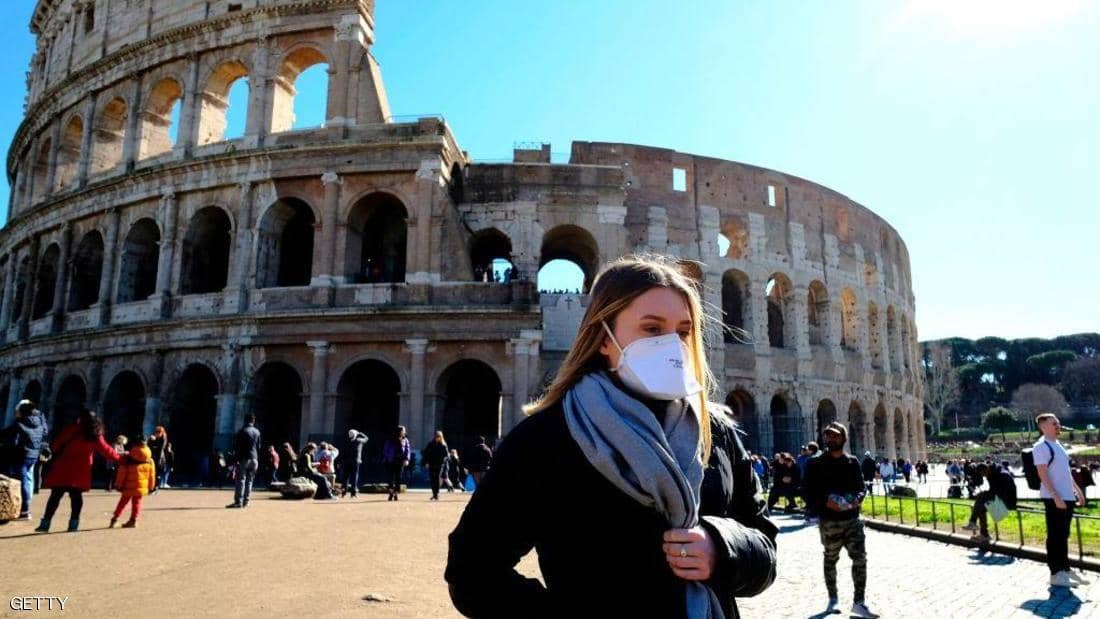
The move comes as Italy reported nearly 800 coronavirus deaths on Saturday and saw its toll for the past month reach 4,825, the highest in the world.

Lombardy is the worst-affected region in the country with 3,095 deaths.

The region’s President Attilio Fontana announced the new measures in a statement.

Businesses have been asked to close all operations excluding “essential” supply chains. Work on building sites will be stopped apart from those working on hospitals, roads and railways.

All open-air weekly markets have been suspended.

Across Italy there have been 53,578 total cases to date, with about 6,000 people having recovered.

Sources: BBC, Johns Hopkins

Berlusconi visits Putin in Crimea

Former Italian prime minister Silvio Berlusconi became the most prominent Western politician to visit Russian-annexed Crimea when he strolled beside the Black Sea on Friday with Russian President Vladimir Putin.

Western visitors have been rare since Russia seized Crimea from Ukraine in March 2014. The takeover drove relations between Moscow and the West to their lowest point since the Cold War era, and prompted the United States and European Union to slap economic sanctions on Russia.

Putin and Berlusconi, known for their warm rapport going back more than a decade, laid flowers at a monument commemorating soldiers who fell in a 19th century war over Crimea. They included troops of the Kingdom of Sardinia, part of modern-day Italy.

Short footage run by Russia’s state TV broadcaster showed Putin telling Berlusconi he wanted to find out the names of the Italian soldiers and imprint them on the memorial.

As part of a joint two-day tour of Crimea, the two men then sat down in an open-air restaurant for a meeting with local residents of Italian origin.

A crowd of several hundred along the way cheered Berlusconi and Putin, who at one point took a small girl in his arms. Both took pictures with residents.

Source: Reuters

Is Europe doomed as Gadaffi promised?

As Europe’s migrant crisis grows far and wide, many Russian media are recalling the late Libyan leader Muamar Gaddafi’s gloom prophecy made several months before his violent death. “Now listen you, people of NATO. You’re bombing a wall which stood in the way of African migration to Europe, and in the way of Al-Qaeda terrorists. This wall was Libya. You‘re breaking it. You’re idiots, and you will burn in Hell for thousands of migrants from Africa and for supporting Al-Qaeda. It will be so. I never lie. And I do not lie now,” said Gaddafi in an open letter obtained by the Russian daily Zavtra and published in May 2011 several months before the Lybian leader was killed.

Since the beginning of the year 500,000 refugees have arrived in Europe. The migrant crisis has become number one priority for the EU countries, European Commission President Jean-Claude Juncker told the European Parliament in his annual message regarding the state of affairs in the European Union.

“It is Europe today that represents a beacon of hope, a haven of stability in the eyes of women and men in the Middle East and in Africa. That is something to be proud of and not something to fear,” said Juncker.

The question what caused the migrant crisis in Europe has evoked a deluge of comments from the expert community and Russian society in general. Europe is about to lose its reputation of the most stable place in the world, largely because the leading European countries and the United States have been shaking loose the regimes precisely in those countries whose people are now storming railway stations in the EU, experts say.

“That the refugee crisis is an outcome of US-European policies is clear to the naked eye,” says senior research fellow Boris Dolgov, of the Oriental Studies Institute under the Russian Academy of Sciences. “The destruction of Iraq, the destruction of Libya and attempts to topple Bashar Assad in Syria with the hands of Islamic radicals — that’s what EU and US policies are all about, and the hundreds of refugees are a result of that policy,” he told TASS.

“It’s a very serious and multi-faceted problem,” Professor Irina Zvyagelskaya, of the oriental studies department at the Moscow state institute of international relations MGIMO, told TASS. “The civil war in Syria and tensions in Iraq and Libya keep fueling the flow of migrants, but that is not the only cause. I agree with those who see the current events as a trend towards another mass resettlement of peoples, which leave the weaker countries with ineffective economies. There are systemic problems that cause people to abandon their homes and take to the road. And the liberal European legislation allows many of them to not only stay in Europe, but also to live there on social benefits without seeking employment.”

“These people are exhausted, angry and humiliated. They have no idea of European values, lifestyles and traditions, multi-culturalism or tolerance. They will never agree to abide by European laws,” says Russian author, playwright and stage director Yevgeny Grishkovets in his blog. “They will never feel grateful to the people whose countries they have managed to get into with such problems, because the very same states first turned their own home countries into a bloodbath.”

“Angela Merkel vows modern German society and Europe are prepared for problems… That’s a lie and nonsense! I am certain that many of those in France, Italy and Germany, who are pretending compassion and shaking their heads in bewilderment at the news more migrants have drowned or died of suffocation or fatigue on the way, in reality are saying to themselves something like this: ‘This serves them right! That will teach others a lesson!” says Grishkovets.

Columnist and blogger Vitaly Tretyakov wonders why the European Union has walked into this trap which it will never be able to get out of.

“The reasons are many, but all of them are confined to arrogance and exaggerated self-confidence. In most cases this high-handedness is never expressed aloud, but the ‘Europeans’ always feel superiority over everybody else in this world.”

“It remains to be seen whether the European Union succumbed to Washington’s pressures or preferred to manifest solidarity with the United States when it decided to speed up the so-called ‘process of democratization’ in North Africa and the Middle East. Whatever the case, by doing so it helped thrust open Pandora’s Box. Now a vast territory has plunged into civil wars and armed chaos and millions of refugees were forced to flee for life,” Tretyakov said.

Source: TASS

Italy’s taste of violence: black migrant murders 2, causing public outrage

Italy’s simmering anti-immigrant sentiment has been stoked by the murder of an elderly couple in their home in Sicily, allegedly by an African asylum seeker.

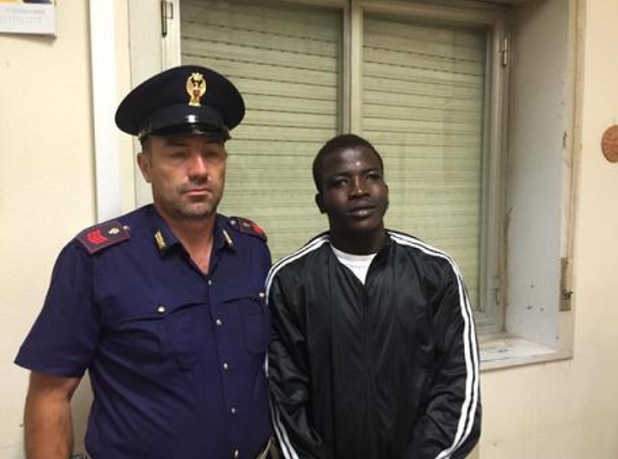
Mamadou Kamara, an 18-year-old from the Ivory Coast, allegedly slit the throat of Vincenzo Solano, 68, and then attacked his Spanish-born wife, Mercedes Ibanez, 70.

Ms Ibanez fell to her death from a second-floor balcony, during a robbery that turned violent.

Mr Kamara is one of thousands of migrants and refugees living at a vast reception centre at nearby Mineo, in south-eastern Sicily.

They are accommodated there after arriving by boat from Libya, and wait sometimes for months to have their asylum applications assessed.

The migrants are allowed to come and go freely from the facility, a former US military base where prostitution, links with organised crime and the trade in illicit goods is said to be rife.

Mr Kamara, who was rescued in the Mediterranean on June 8 and brought with other migrants to the port of Catania in Sicily, allegedly broke into the pensioners’ flat in the village of Palagonia, six miles away, and slit the throat of Mr Solano.

The elderly man’s wife was found dead in the courtyard of their three-storey apartment block. Investigators believe she may have fallen over the balcony in panic after trying to flee the attacker.

Mr Kamara was arrested after police searched his bag on Sunday as he returned to the migrant centre.
Inside they found a mobile telephone, a laptop computer, a video camera and a pair of trousers, allegedly belonging to Mr Solano, that were covered in blood.

The young African man claimed to have “found” the items, but police arrested him and are expected to charge him with two counts of murder.

Sebastian Maccarrone, the director of the Mineo migrant centre, said: “If it was him, it is a tragedy within a tragedy – for the people killed, and for integration. We are all shocked… For each small step we have taken forward in terms of integration, this has put us 10 steps backwards.”

More than 100,000 refugees have arrived by boat in Italy this year, making the crossing from Libya in overcrowded rubber dinghies and leaky fishing boats. Last year, a record 170,000 arrived on Italian shores.

“Italians fear for their lives inside their own homes,” said Gianluca Buonanno, an MEP with the Northern League, a staunchly anti-immigrant party of the Right.

“This is Renzi’s national security strategy. What kind of country are we living in?”

Giorgia Meloni, another centre-Right politician and a close ally of Silvio Berlusconi, the former prime minister, said: “The instigator of the murder of these two innocents is the Italian state, which is responsible for having kept open a facility … which we said should be closed down.”

“The murdered couple had returned from living in Germany to enjoy their retirement in Sicily,” a relative told La Stampa newspaper. “They shouldn’t have died like this, slaughtered like goats.” – London Daily Telegraph

Murder of elderly couple fuels anti-immigrant sentiment in Italy

Italy’s simmering anti-immigrant sentiment has been stoked by the murder of an elderly couple in their home in Sicily, allegedly by an African asylum seeker.

Mamadou Kamara, an 18-year-old from the Ivory Coast, allegedly slit the throat of Vincenzo Solano, 68, and then attacked his Spanish-born wife, Mercedes Ibanez, 70.

Ms Ibanez fell to her death from a second-floor balcony, during a robbery that turned violent.

Mr Kamara is one of thousands of migrants and refugees living at a vast reception centre at nearby Mineo, in south-eastern Sicily.

They are accommodated there after arriving by boat from Libya, and wait sometimes for months to have their asylum applications assessed.

The migrants are allowed to come and go freely from the facility, a former US military base where prostitution, links with organised crime and the trade in illicit goods is said to be rife.

Mr Kamara, who was rescued in the Mediterranean on June 8 and brought with other migrants to the port of Catania in Sicily, allegedly broke into the pensioners’ flat in the village of Palagonia, six miles away, and slit the throat of Mr Solano.

The elderly man’s wife was found dead in the courtyard of their three-storey apartment block.

Mr Kamara was arrested after police searched his bag on Sunday as he returned to the migrant centre.
Inside they found a mobile telephone, a laptop computer, a video camera and a pair of trousers, allegedly belonging to Mr Solano, that were covered in blood.

The young African man claimed to have “found” the items, but police arrested him and are expected to charge him with two counts of murder.

Source: The Telegraph

Italy saves 3000 migrants

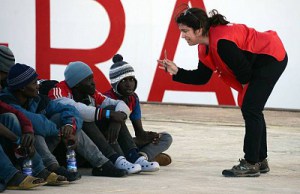
Italy’s coastguard on Saturday successfully coordinated the rescue of around 3000 migrants in the Mediterranean after receiving distress calls from more than 20 overcrowded vessels drifting in waters off Libya.

One of the biggest single-day rescue operations to date appeared to have been concluded without any reports of casualties.

Two navy ships, the Cigala Fulgosi and the Vega, picked up, respectively, 507 and 432 migrants from two wooden boats in danger of sinking just off Libya, the navy said.

The coastguard said its patrol boats had boarded a total of just under 1,000 people from various unseaworthy fishing boats and inflatables that had left Libya overnight Friday-Saturday.

At least another 1,000 rescued migrants and refugees were reported to be headed for Italian ports on other boats as the wave of new arrivals triggered increasingly virulent attacks on centre-left Prime Minister Matteo Renzi’s handling of the migration crisis.

“This must a joke. We are using our own forces to do the people smugglers’ business for them and ensure we are invaded,” said Maurizio Gasparri, a senator for Silvio Berlusconi’s centre-right Forza Italia party.

“Help them, rescue them and take care of them: but don’t let them land here,” the populist leader of the anti-immigration Northern League wrote on his Facebook page.

The rescued migrants included a batch of 311, including a new-born baby, who were on a boat belonging to humanitarian group Doctors without Borders (MSF) which is expected to dock on Monday in Vibo Valentia in Calabria, according to port authorities there.

A further 370 had been picked up by the Italian customs police and were headed for Messina in Sicily and the Norwegian boat Siem Pilot was also carrying hundreds of people to port.

Just over 170,000 migrants and refugees from Africa, the Middle East and South Asia landed at Italy’s southern ports in 2014 after being rescued in the Mediterranean, while the total for 2015 has already topped 104,000.

A further 135,000-plus have landed in Greece since January and more than 2,300 people have died at sea while trying to make it to Europe with the help of traffickers.

Source: AFP

Huge rally in Rome against gay unions

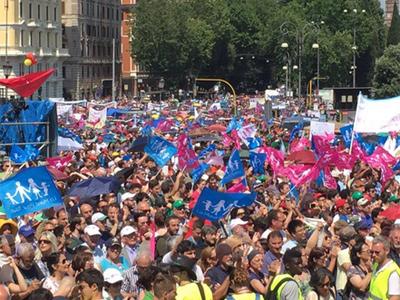
Hundreds of thousands of Italians gathered in Rome on Saturday to demonstrate against gay unions and the teaching of gender theories in schools, as Prime Minister Matteo Renzi tries to push a civil union bill through parliament.

Holding aloft banners reading “The family will save the world” and “Let’s defend our children”, a sea of people crammed into the San Giovanni square near the Italian capital’s historic centre to support family values.

The square, which can hold an estimated 300,000 people, was overflowing with the young, elderly and parents with toddlers, an AFP photographer said, with many more demonstrators spilling into nearby streets. Organisers for their part said one million people were taking part. Italian police never provide figures for demos.

“In my children’s schools they are talking about families made up of two fathers or two mothers, without asking parents’ permission,” said 41-year old doctor Giuseppe Ripa, adding: “It’s dangerous and wrong.”

Fellow protester Piero Uroda, a 78-year-old pharmacist, said it was “not honest to say these things to the very young, it’s not like they are students who can debate these ideas.”

“I don’t want gay marriage or gay adoption, the natural family is like ours,” he said, pointing to his relatives gathered around.

‘Defending children’s future’

The protest comes as the Italian senate examines a civil union bill, which Renzi wants to see go to a vote in the coming weeks, with the aim of legislation being enacted before the end of July.

The call for Italy to keep pace with its western European neighbours on the issue has grown stronger since Ireland voted overwhelmingly in favour of gay marriage last month.

But rights activists warn it will be no mean feat for the leader of the centre-left Democratic Party to find allies across the political spectrum, blaming an excessive influence of the Catholic clergy on the political class.

While a survey published by Italian daily La Stampa at the end of May found that 51 percent of voters would support gay marriage, protesters in Rome said the state should stop trying to interfere in sexual or gender education.

“We are asking for families based on marriage be respected, and stressing the central role parents play. We forcefully reject the attempt to sneak into the curriculum projects which aim to destroy children’s sexual identities,” said Massimo Gandolfini, spokesman for the “Defend our children!” committee.

There were both cries of support and derision from the political sphere. Matteo Salvini, rising star on the far right and head of the Northern League party, sent a Facebook “hug for all the mummies and daddies protesting peacefully in Rome to defend their children’s future.”

Vincenzo Brana, head of the long-standing Arcigay gay rights association in Bologna, was quick to point out that “today is World Refugee Day”, with hundreds of thousands of migrants in Italy facing an uncertain future.

Their problems “are an urgent issue which concerns us all. Those who take to the streets to talk of other things show they are living on another planet, and I would recommend leaving them on that planet alone.”

Source: AFP

French media call G7 ‘idiots’

Nicolas Bonnal of Boulevard Voltaire believes Russia is lucky that it wasn’t invited to the G7 summit this year, comparing the group to the company of hypocritical “idiots.”

As the West is reaching new heights of absurdity, Russia should be happy that it didn’t end up in the company of “idiots,” Nicolas Bonnal said in Boulevard Voltaire.

Russia certainly shouldn’t be ashamed of not being invited to the G7 summit this year. The group of the richest Western nations gathered in Germany, without Russia and China, but with “Italy and its crowds of Libyan refugees,” Bonnal said, comparing the summit akin to being in a luxurious hotel up in mountains, but with non-alcoholic beer.

Even Ethiopia was invited to attend the summit, but not Russia. Russia was punished for not dancing to Washington’s tune.

Moscow was put in a corner for the alleged aggression against Ukraine and the lack of respect for human rights, the author said.

Meanwhile, the United States has 2.2 million prisoners, Guantanamo Bay and the Patriot Act, 1,200 victims of police brutality and over a million people killed because of drug-related gang wars.

American neoconservatives started a series of atrocious wars in Libya, Iraq, and Syria in their “irrational and even frightening desire to harm,” Bonnal said.

The contemporary G7, which was originally seen as the collection of the world’s largest economies, lacks not only Russia, but also China, India and Brazil. Currently, the group consists of the United States, Germany, Britain, France, Japan, Canada and Italy. And almost no economic growth.

Source: Sputnik News

Some 400 migrants drown in shipwreck off Libya

About 400 migrants died in an attempt to reach Italy from Libya when their boat capsized. This is the latest tragedy in the Mediterranean where the death toll from shipwrecks has surged this year.

The boat, carrying about 550 migrants in total, flipped about 24 hours after leaving the Libyan coast, according to some of the 150
survivors who were rescued and brought to a southern Italian port on Tuesday morning, Save the Children reported.

Before this incident there had already been more than 500 deaths of migrants crossing the Mediterranean from Africa this year, up sharply from 47 in the same period of 2014, says the Geneva-based International Organisation for Migration (IOM).

The survivors of the latest shipwreck were mostly sub-Saharan Africans, but no further details were available, a Save the Children spokesperson tells Reuters. It is not clear exactly when the boat had capsized.

The number of boats carrying migrants aiming to reach the EU from Africa has picked up in recent weeks as fine spring weather makes the passage safer.

In February, more than 300 drowned when attempting the crossing in cold weather and rough seas. Save the Children, the IOM and other humanitarian organisations have called for the European Union to bolster its sea rescue operations before the migrant flows soar as they usually do in the summer months.

On Monday, 2 851 migrants were saved in rescue operations in the Mediterranean, the Italian coast guard said, adding to at least nine who died and 5 629 who were saved over the weekend. Italy, which handled the largest number of migrant arrivals in the EU, has become increasingly alarmed about the breakdown of law and order in Libya, which has greatly exacerbated the task of tackling the migrant flows.

Source: Reuters

Dutch soccer fans trash Rome

Rotterdam 2005, was just another ugly chapter during De Klassieker, when hundreds of Ajax fans had spent the journey down from Amsterdam trashing the train.

Once on the platform outside the stadium they started to tear down the wire fencing. On the opposite side of the barricades, their Feyenoord rivals were waiting.

Rotterdam is barely 50 miles from Amsterdam but Feyenoord and Ajax might as well be at opposite ends of the galaxy for all they have in common.

This weekend Feyenoord fans, however, clashed with armed Italian riot police in one of Rome’s most beautiful piazzas on Thursday.

Police said 20 people had been arrested and more than 10 injured during the clashes ahead of their Europa League tie with Roma.

Six police officers required medical attention, scooters in the area were damaged and the famous fountain at the bottom of the Spanish Steps was damaged with a large chip.

Fans had rampaged through the streets of central Rome before converging on the cobbled square beneath the famous Spanish Steps and trashing the recently restored 17th century Barcaccia fountain, which was designed by Italian artists Pietro and Gian Lorenzo Bernini.

Perhaps Feyenoord fans had Ajax in mind. Ajax is a reflection of the artistic and freewheeling party-city of Amsterdam. Utilitarian and practical-minded Rotterdam is Holland’s factory, and Feyenoord endorse work ethic and blue-collar camaraderie. The loathing is mutual.

But Rome is also notorious for its footballing violence, and has been the scene of bloodshed for Tottenham Hotspur, Manchester United and England fans in recent years.

And then there’s the Jewish question. Amsterdam has a Jewish heritage, which is reflected in Ajax’s history and paraded by some supporters’ groups, who adorn the Amsterdam Arena with the Star of David.

This has produced an anti-semitic backlash among some Feyenoord supporters, who taunt their rivals with songs about Auschwitz and gas ovens.

The soccer chaos in Rome cap comments from one of Italy’s top officials Arrigo Sacchi who said too many coloured players featured in Italian football.

Nicola Zingaretti, president of the Lazio region of Rome tweeted: ‘The scarring of Rome is the work of uncivilised. Now exemplary punishment is needed and no indulgence. Solidarity to the police.’

Italian coach complains about too many black players

Former Italy and AC Milan coach Arrigo Sacchi has made headlines across the peninsula by stating that there are too many black players in Italian youth teams.

The comments come on the same day after Inter claimed the Viareggio Cup over Hellas Verona and will no doubt cause a stir for the next few days regarding the the ongoing battle against racism in the country.

“Italy is without dignity, there is no pride: it’s not possible to see a youth team with 15 foreigners,” Sacchi stated while speaking at a ceremony in Pistoia as reported by Sportmediaset.

“Watching the Viareggio Cup I must say there are too many black players, even in the Primavera.

“I am not racist, my history as a coach speaks for itself starting with Frank Rijkaard, but our football must show some pride.”

Source: forzaitalianfootball.com

Italian town renames piazza ‘Martyrs of Odessa’

The renaming of a piazza in a small Italian town has caused a diplomatic incident.

The square in Ceriano Laghetto, in the northern province of Lombardy, is now called “Martyrs of Odessa” in memory of people killed during the recent upheaval in the Ukrainian city. It is named for pro-Russian separatists who died during clashes with Ukrainian government supporters in May 2014, Mayor Dante Cattaneo, of the right-wing Northern League party, tells Il Fatto Quotdiano.

More than 30 people were killed in a fire after barricading themselves into a government-run building in the city to escape the mayhem.

The renaming of the piazza – which is used as a car park – has angered Ukraine’s ambassador in Rome, Yevhen Perelygin.

In a letter to the region’s prefect, he asks for the decision to be revoked, saying the events of May 2014 “are still unclear”.

He also suggested in an interview that the decision was “manipulated by political forces who support the Russian initiative” in Ukraine, something the mayor refutes.

Mr Cattaneo appears to be defiant, despite a request from the regional authority to undo the change, and says Italy shouldn’t be allowing foreign interference in decision making. “Piazza for the Martyrs of Odessa is there and will remain,” he tweeted.

“In Ceriano there’s a democratically elected local authority. It is not Ukraine.”

Source: BBC

Traffickers make $3 on ship with illegal immigrants

Traffickers made some $3m from 359 illegal migrants found abandoned on a cargo ship in the Mediterranean, the Italian police said.

The Ezadeen was towed into the Italian port of Corigliano Calabro after being found by coast guards on Friday.

It is the second such case involving a freighter in a week.

Both ships reportedly started in Turkey, in a change from the Libyan route usually favoured by gangs.

The police chief of Cosenza province, Luigi Liguori, said each migrant had paid between $4,000 and $8,000 to board the ship.

Officers say that the smugglers wore hoods and locked the migrants in the ship’s hold before apparently abandoning ship on a lifeboat.

Last year it is estimated that nearly 3,500 refugees died trying to cross the Mediterranean while another 200,000 were rescued.

Italian Red Cross volunteers were on hand to offer assistance The Ezadeen, an ageing Sierra Leone-flagged ship originally used to transport cattle, was spotted on Thursday evening and arrived in port in Italy on Friday night.

In the earlier case, Italian coastguards boarded a ship, the Blue Sky M, carrying 796 migrants on Tuesday. Finding it without a crew, they steered it into the south Italian port of Gallipoli.

The smugglers’ new tactic appears to be simple and effective: point a cargo ship towards Italy and let the coastguard do the rest.

Illegal migration to the EU has been fuelled by government grants and the promise of easy money.

“Smugglers are finding new routes to Europe and are employing new methods in order to exploit desperate people,” Dimitris Avramopoulos, the EU’s commissioner for migration said, promising to present a “comprehensive approach on migration”.


Rifts show as sanctions bite EU

The foreign ministers of the European Union’s 28 member states will consider the situation around the EU’s anti-Russian sanctions for Moscow’s position on Ukrainian events at a meeting on November 17, the EU’s high representative for foreign affairs and security policy, Federica Mogherini, said Tuesday.

Austrian Chancellor Werner Faymann spoke on Tuesday against the imposition of new anti-Russian sanctions over Moscow’s position on the situation in Ukraine.

Faymann made the statement to journalists after a government meeting.

He said Vienna believes in the negotiating process to settle the situation in Ukraine, the Austria Press Agency (APA) reported.

The sanctions have had a significant impact on the Austrian economy.

Until now, Russia was the tenth most important business partner for Austria. In 2013, Austrian companies exported an aggregate of 3.5 billion Euros of products to Russia and imports reached 3.2 billion Euros. Russia had also become an increasingly important destination for Austrian direct investments.

The sanctions have particularly affected Austrian banks, who remain concerned about the possible commercial risks should Russia decide impose sanctions against the financial sectors of EU Member States, either in the form of extraordinary taxations, restrictions to capital movement or even expropriation.

It is likely that the EU sanctions and any Russian countermeasures will cost the Austrian economy in the region of 750 million Euros.

With this in mind, the Austrian government recently adopted a crisis package, including support for small and medium sized enterprises, SME’s.

The European Union’s sanctions regime against Russia is not expected to change in the near future, the new European Commission president said on Wednesday, however.

Jean-Claude Juncker said toughening or easing the sanctions is not an issue for today.

Juncker also said he would make his first visit to Kiev.

The US has urged the EU to impose several rounds of economic sanctions against Russia over the country’s alleged role in the Ukrainian crisis, while Moscow has repeatedly stated that Russia is not a party to the Ukrainian internal conflict.

German Chancellor Angela Merkel believes that latest events in Ukraine, primarily elections in self-proclaimed Donetsk and Luhansk People’s Republics, do not allow for consodering possible cancellation of sanctions imposed on Russia.

“There are no reasons to cancel them now,” she said in Berlin on Tuesday. Merkel named elections in the self-proclaimed republics “illegal,” noting that Moscow should influence militias more actively to prevent the conflict from escalation.

“Russia does not take effort at an extent we would like them to do so,” she said, noting importance of observing the Minsk agreements by all conflicting parties.