Austrian right doubles votes in regional election

The far-right Freedom Party (FPOe) doubled its votes Sunday in a regional election in Upper Austria province dominated by the issue of migration, according to final results issued by the provincial government.

With a result of 30 per cent, FPOe became Upper Austria‘s second-strongest party, relegating the Social Democratic Party (SPOe) to third place.

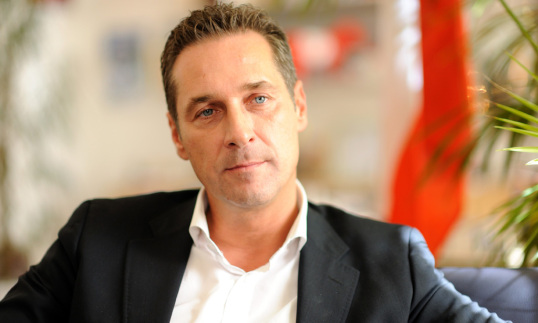
The FPOe had “taken the worries and concerns of the population seriously and understood them,” partly leader Heinz-Christian Strache said.

Voter surveys showed that nearly two thirds of voters felt that the refugee issue was important.

Austria is the main transit country for migrants travelling from the Balkans to Germany. Nearly 19,800 people arrived in Austria on the weekend, police estimated.

The populist right-wingers had called for stricter border controls and a fence similar to Hungary‘s to control the flow of thousands of migrants that have been arriving daily in recent weeks. They also accused the government in Vienna of inaction amid what they called “asylum chaos.”

The central government and regional politicians had bickered for months over creating sufficient accommodation for new refugees.

As arrivals soared over the past weeks, the government introduced border controls, deployed the army at the border and started discussing more restrictive asylum rules shortly before the regional election.

Social Democratic Chancellor Werner Faymann said the migratory flow from Syria was not the government‘s fault. “I say yes to controls and order, but it must absolutely done in a humane manner,” he said.

Faymann‘s party got 18 per cent of the votes, nearly 7 percentage points less than in the previous election in 2009.

The conservative People‘s Party (OeVP), which forms a coalition with the Social Democrats in Faymann‘s cabinet, remained the strongest force in Upper Austria but plummeted 10 percentage points to 36 per cent.

Upper Austria‘s conservative governor Josef Puehringer said the EU‘s migration policy decisions in the past days had come too late to alter the election result.

The FPOe hopes to carry Sunday‘s momentum forward to the Vienna city council polls on October 11. Three years before the next regular parliamentary election, the rightists have been leading surveys for months, ahead of the two national coalition parties.

Source: dpa

Hungary closes main migrant crossing as EU struggles with deal

Hungary closed the main migrant crossing with Serbia and more states imposed border checks Monday as the failure of EU ministers to agree how to share the burden of a flood of refugees deepened the crisis.

With Europe’s 20-year-old Schengen passport-free zone creaking under the pressure, Austria and Slovakia said they would follow economic powerhouse Germany’s lead in reinstating border controls to deal with the flow of people.

Poland said it was considering similar steps while the Netherlands said it would have “more patrols” on its frontiers.

Long traffic jams built up on the Germany-Austria border and refugees were left stranded on non-EU Serbia’s side of the frontier with Hungary in the latest chaotic scenes from the biggest such crisis since World War II.

Yet amid opposition from eastern states, EU ministers failed to reach agreement on a plan to share out 120,000 refugees and ease the burden on frontline states from the tide of people fleeing war zones like Syria and Afghanistan.

A day before Hungary has vowed to begin arresting illegal migrants, police fenced off a gap in the razor-wire barrier with Serbia that hardline Prime Minister Viktor Orban’s government is racing to complete.

At the Roszke border crossing, several dozen migrants including many children, some in pushchairs, were stuck on the Serbian side of the border, with several women crying, after police shut the border, AFP journalists saw.

“We had heard the Hungarians were closing their border, but they told us it would be Tuesday,” cried Hassan, a Syrian in his thirties who is trying to reach Sweden.

The migrants were redirected to the official crossing around two kilometres (1.6 miles) away, from where they were being taken on buses to Roszke train station, officials said.

Hungary is on the frontline of Europe’s migrant crisis, with almost 200,000 people travelling up from Greece through the western Balkans and entering the country this year, most of them seeking to travel on to economic powerhouse Germany.

Austria and Slovakia pounced on the U-turn by Chancellor Angela Merkel’s government — which had previously said it would throw open its doors to Syrian refugees — to reinstate their own border checks.

“We will proceed as Germany did,” Austrian Interior Minister Johanna Mikl-Leitner said in Brussels.

Poland said it will impose border controls at the first sign of “any threat” while Netherland promised “more” patrols.

Source: AFP

Austrian far-right leader blames US, NATO for migrant crisis

The leader of Austria’s far-right Freedom Party (FPO) has blamed the United States and the NATO Western military alliance for triggering the refugee crisis that has overwhelmed Europe.

“The USA and NATO have destroyed Iraq and Libya with their military intervention, bombs and missiles; provided financial, logistical and military support to the opposition against President Assad in Syria, and thus made possible the destruction, chaos, suffering and radical Islamism (IS) in the region,” Heinz-Christian Strache said on his Facebook page.

Strache’s opposition FPO party, which leads opinion polls ahead of the centrist Social Democrats and People’s Party coalition partners, typically espouses anti-Muslim and isolationist approaches to dealing with foreign policy.

Source: Jerusalem Post

Ground Zero for migrants errupts in chaos

Keleti train station in Budapest, which has emerged as ground zero in Europe’s spiraling migration crisis, temporarily shut down its services on Tuesday under the strain of an influx of migrants trying to travel to Germany from Hungary.

Emphasizing the sense of confusion across Europe, Austria’s interior minister, Johanna Mikl-Leitner, called on Germany, the preferred destination for many of the migrants, to clarify its stance on asylum rules.

Rows of riot police officers wearing red caps tried to contain the migrants in Budapest, and the migrants erupted in protest after the station stopped allowing them to board trains. Instead, they were allowed into the courtyard of the station, which has been transformed into a makeshift camp.

The migrants, who had been gathered since 5 a.m. in the hopes of boarding a train, chanted: “Go free! Go free! Go free!” Later, they shouted, “Merkel, Merkel,” referring to Angela Merkel, the German chancellor, whose country is expected to receive 800,000 asylum seekers this year.

Train services at Keleti were restored shortly after 10 a.m., and no migrants were being allowed back into the station.

The scenes of confusion and despair at Keleti underlined the challenges facing Europe as tens of thousands of migrants, buffeted by civil war and conflict in the Middle East and Syria, are trying to make the perilous journey to Europe, only to be confronted with a patchwork of policies across a 28-member bloc that is ill equipped to deal with the surge.

In the last five days, the number of migrants trying to leave from the Budapest station has grown to 2,000 a day from about 800.

The chaotic scenes at the station came as Austria asked Germany to provide guidance about how to handle asylum seekers.

The cold reception migrants received in Budapest was a marked contrast to the one in Munich, where the police said on Tuesday that about 2,500 people had arrived on trains from Budapest, via Vienna, in the span of 24 hours. Hundreds more continued to arrive early Tuesday.

Streets around the city’s central train station were blocked off to allow the authorities to organize the migrants and bring them to the city’s refugee processing centers, where they were to be registered and begin the process of applying for asylum.

Matching the flood of people was a flow of donations of drinks, food and baby necessities from Munich residents. “There is no end to the willingness of people to help — Great!” the police said on Twitter.

In Hungary, the center-right government, under pressure from a far-right anti-immigrant party with a sizable voice in Parliament, has itself aired some of the most strident anti-immigrant speech on the Continent.

Source: NYT

Bilderberg follows ANC in jamming signals

Cellphone signals were being jammed at South Africa’s Parliament ahead of the State of the Nation address, journalists and MPs reported. Now Bilderberg seems to have followed the move.

After visiting one of the closest spots to the InterAlpen hotel that is still accessible, Infowars filmed a communications truck owned by the Austrian Federal Ministry for Transport and Technology.

Large antennas are also visible on top of the hotel, as well as a giant newly erected mast in the forest near the hotel.

Infowars spoke to an informed local in the immediate vicinity who confirmed that cellphone coverage in the area around the hotel had died since the tower was erected. The individual had also met with police and security near the hotel.

Cellphone jammers work by preventing cellular phones from receiving signals from base stations. The jammers are technically illegal in European Union countries.

This triangulated jamming system would explain why Infowars reporters Rob Dew and Josh Owens have been unable to broadcast live via Skype anywhere near the InterAlpen hotel.

Apparently, Bilderberg is so afraid of media coverage, that police checkpoints miles away from the hotel are not enough, now they have resorted to installing expensive devices which shut down communications, presumably at taxpayer expense.

Media attending the State of the Nation address (SONA) at Parliament in Cape Town on 12 February 2015 reported that cellular phone signals (including mobile data) in the National Assembly had been jammed.

“Shocking: Parliament has scrambled all 3G and cell reception in the House,” tweeted Report editor Waldimar Pelser.

“Please help us Sanef, FXI, Right2Know. There’s a jamming device in the parly chamber next to media bay. We can’t work at SONA 2015,” an online editor posted to Twitter.

State Security Minister David Mahlobo said a ruling in the Western Cape High Court yesterday had clarified that the State Security Agency can own and operate cellphone jamming devices and use them at major events.

No fewer than three serving European prime ministers will be attending, from the Netherlands, Finland and Belgium. They will be discussing “European strategy” with the head of Nato, Jens Stoltenberg, and the president of Austria, Heinz Fischer. Two European finance ministers are on the list: one Dutch, the other from Britain.

Bilderberg 2015 has an extremely high-powered participant list, featuring a large number of senior politicians and public figures. With participants this powerful, and an agenda containing this many hot topics.

Bilderberg is actually where the big guns go, not the G7. They will be covering issues from Europe to terrorism and IT the policy conference.

Failure of the US coup d’État in Macedonia

Macedonia has just neutralised an armed group whose sponsors had been under surveillance for at least eight months writes Thierry Meyssan.

By doing so, it has prevented a new attempt at a coup d’État, planned by Washington for the 17th of May. The aim was to spread the chaos already infecting Ukraine into Macedonia in order to stall the passage of a Russian gas pipeline to the European Union.

On the 9th of May, 2015, the Macedonian police launched a dawn operation to arrest an armed group which had infiltrated the country and which was suspected of preparing a number of attacks.

The police evacuated the civilian population before launching the assault.

The suspects opened fire, which led to a bitter firefight, leaving 14 terrorists and 8 members of the police forces dead. 30 people were taken prisoner. There were a large number of wounded

The Macedonian police were clearly well-informed before they launched their operation. According to the Minister for the Interior, Ivo Kotevski, the group was preparing a very important operation for the 17th May, the date of the demonstration organised by the Albanophone opposition in Skopje.

The identification of the suspects has made it possible to determine that they were almost all ex-members of the Kosovo Liberation Army).

The principal leaders of this operation, including Fadil Fejzullahu killed during the assault, are all close to the United States ambassador in Skopje, Paul Wohlers.

Paul Wohlers is the son of US diplomat Lester Wohlers, who played an important part in Atlantist propaganda, and directed the cinematographic service of the U.S. Information Agency. Paul’s brother, Laurence Wohlers, is presently an ambassador in the Central African Republic.

Paul Wohlers himself is a specialist in counter-espionage. He was the assistant director of the United States Department of State Operations Center, in other words, the service for the surveillance and protection of diplomats.

Although Macedonia is not a member of NATO, Jens Stoltenberg was « following » the police operation in Kumanovo.

To eliminate any doubt about the identity of the operation’s sponsors, the General Secretary of NATO Stoltenberg, intervened even before the assault was over – not to declare his condemnation of terrorism and his support for the constitutional government of Macedonia, but to paint a picture of the terrorist group as a legitimate ethnic opposition.

In January 2015, Macedonia foiled an attempted coup d’état organised for the head of the opposition, the social-democrat Zoran Zaev. Four peole were arrested, and Mr. Zaev had his passport confiscated, while the Atlantist press began its denunciation of an “authoritarian drift by the régime”.

Zoran Zaev is publicly supported by the embassies of the United States, the United Kingdom, Germany and Holland. But the only trace left of this attempted coup d’état indicates the responsibility of the US because this coup was coordinated by Mile Zechevich, an employee of one of George Soros’ foundations.

In order to understand Washington’s urgency to overthrow the Macedonian government, we have to go back and look at the gas pipeline war. Because international politics is a huge chess-board on which every move by any piece causes consequences for all the others.

The gas pipieline Turkish Stream was intended to pass through Turkey, Greece, Macedonia and Serbia in order to supply the European Union with Russian gas. On the initiative of Hungarian President Viktor Orbán, the Ministers for Foreign Affairs of each of the countries concerned met on the 7th April in Budapest to coordinate their position facing the United States and the European Union.

The United States have been attempting to sever communications between Russia and the European Union since 2007.

They managed to sabotage the projet South Stream by obliging Bulgaria to cancel its participation, but on the 1st December 2014, to everyone’s surprise, Russian President Vladimir Putin launched a new project when he succeeded in convincing his Turkish opposite number, Recep Tayyip Erdoğan, to sign an agreement with him, despite the fact that Turkey is a member of NATO.

It was agreed that Moscow would deliver gas to Ankara, and that in return, Ankara would deliver gas to the European Union, thus bypassing the anti-Russian embargo by Brussels. On the 18th of April 2015, the new Greek Prime Minister, Alexis Tsípras, gave his agreement that the pipeline could cross his country.

As for Macedonian Prime Minister Nikola Gruevski, he had already conluded discrete negotiations last March.

Finally, Serbia, which had been a partner in the South Stream project, indicated to the Russian Minister for Energy Aleksandar Novak, during his reception in Belgrade in April, that Serbia was ready to switch to the Turkish Stream project.

To halt the Russian project, Washington has multiplied its initiatives in Turkey, Greece, Macedonia and Serbia.

Last comment, but not the least: Turkish Stream will also supply Hungary and Austria, thus ending the alternative project negotiated by the United States with President Hassan Rohani – against the advice of the Revolutionary Guards – for supplying them with Iranian gas.

Thierry Meyssan French intellectual, founder and chairman of Voltaire Network. His columns specializing in international relations feature in daily newspapers and weekly magazines in Arabic, Spanish and Russian. His last two books published in English : 9/11 the Big Lie and Pentagate.

Elderly Austrian nun raped in KZN

Police are combing a small KwaZulu-Natal midlands town for the killers of an elderly nun‚ who was allegedly robbed‚ raped and strangled over the weekend.

The 86-year-old nun was found gagged and bound with a typewriter cord‚ in her quarters at the Sacred Heart Missionary in Ixopo‚ police said on Monday.

The Austrian immigrant‚ who has been with the mission for 60 years‚ was found by another nun on Sunday morning.

She was alone in her room when the robbers struck‚ tied her up and robbed her of cash.

“Rape is also suspected in this matter. The victim was found tied with a typewriter cord. She was also gagged‚” said police spokesman Major Thulani Zwane.

It is understood that the nun worked closely with impoverished children in the community‚ and was described by her fellow nuns as having a “kind heart and love for children”.

Zwane said police were still looking for the suspects‚ who are facing charges of rape‚ robbery and murder.

“We are following all leads. We are also appealing to the community to come forward with any information that will help us solve this case.”

Source: timeslive.co.za

‘Don’t kick Russia out of SWIFT’

European Central Bank policymaker Ewald Nowotny has warned against kicking Russian banks out of the SWIFT payments transfer system as part of tighter sanctions on Moscow, the Austria Press Agency quoted him as saying on Thursday.

Such a move “we would see as very problematic because it could perhaps undermine confidence in this system,” the governor of Austria’s central bank told reporters in Brussels after meeting European Commissioner Pierre Moscovici.

Russia has drafted a law to regulate a local equivalent to SWIFT in response to concerns that the Belgian-based system, the world’s biggest for electronic payments, could be a focus of Western sanctions against Moscow over the Ukraine crisis.

In 2012, SWIFT cut off Iranian banks that were the subject of EU sanctions over Iran’s nuclear program — a step that shut down a major avenue through which Iran did business with the rest of the world.

APA quoted Nowotny as saying Austria would not be immediately affected should Russian banks be excluded from SWIFT, but that Russia could retaliate, “and this could of course affect all companies that do business in Russia.”

He reiterated that Austrian banks had no plans to leave Russia because they had proven themselves to be an element of stability in the latest economic crisis. Raiffeisen Bank International and Bank Austria are active there.

Source: Reuters

CIA sting spurs reassesment of Iran’s nuclear

Details of a CIA sting emerging from a court case in the U.S. may prompt United Nations monitors to reassess some evidence related to Iran’s alleged nuclear weapons work, two western diplomats said.

International Atomic Energy Agency inspectors in Vienna will soon have to review intelligence they received about Iran as a result of the revelations, said the two diplomats who are familiar with the IAEA’s Iran file and asked not to be named because the details are confidential. The CIA passed doctored blueprints for nuclear-weapon components to Iran in February 2000, trial documents have shown.

“This story suggests a possibility that hostile intelligence agencies could decide to plant a ‘smoking gun’ in Iran for the IAEA to find,” said Peter Jenkins, the U.K.’s former envoy to the Vienna-based agency. “That looks like a big problem.”

The UN agency is charged with deciding whether the Iranian government has been trying to develop nuclear weapons and its ruling may determine whether international sanctions against the country are lifted. While Iranian officials have consistently accused the IAEA of basing its case on forged documents, the agency has never acknowledged receiving tampered evidence.

The CIA documents were filed as evidence to an Alexandria, Virginia court on Jan. 14 for the trial of Jeffrey Sterling, who was convicted of leaking classified information about operations against Iran. Sterling worked on a CIA project aimed at misleading Iranian scientists by feeding modified designs for nuclear-weapons components to the country’s IAEA mission in Austria.

“The goal is to plant this substantial piece of deception information on the Iranian nuclear-weapons program, sending them down blind alleys, wasting their time and money,” according to a May 1997 cable submitted to the court.

The CIA sting shows the kind of tactics that the U.S. and its allies have used against Iran, according to Dan Joyner, a law professor at the University of Alabama.

“The falsification of nuclear-related documents is a very real part of such states’ efforts to frustrate Iran’s nuclear program,” said Joyner, who has written extensively on nuclear proliferation risks. “This revelation highlights the dangers of reliance by the IAEA upon evidence concerning Iran provided to it by third party states whose political agendas are antithetical to Iran.”

Source: Bloomberg

Will Russia remonetize in gold?

The “perfect-storm” of geopolitical instability, diplomatic isolation, severe currency depreciation, and economic decline now confronting Russia has profoundly damaged Moscow’s international standing, and possibly for the long-term.

Yet, it is precisely such conditions that may push the country’s leadership into taking the radical step that will secure its world-player status once and for all: the adoption of a gold-exchange standard.

Though a far-fetched idea at first glance, many factors suggest that remonetization in gold may be a logical next step for Moscow.

First, for years Moscow has been expressing its unwillingness to remain at the monetary mercy of the US and its NATO allies and this view has been most vehemently expressed by President Putin’s long-time economic advisor, Sergei Glazyev.

Russia is prepared to play strategic hardball with the West on the issue: the governor of Russia’s central bank took the unusual step last November of presenting to the international media details of the bank’s zealous gold-buying spree.

The announcement, in sharp contrast to that institution’s more taciturn traditions, underscores Moscow’s outspoken dismay with dollar hegemony; its timing suggests coordination with the top rungs of government to present gold as a possible currency-war weapon.

Second, despite international pressure, Russia has been very wary of the sell-off policies that led the UK, France, Spain, and Italy to unload gold over the past decade during unsuccessful attempts to prop up their respective ailing economies — in particular, of then-Prime Minister Gordon Brown’s sell-off of 400 metric tons of the country’s reserves at stunningly low prices.

Moscow’s surprise decision upon the onset of the ruble’s swift decline in early December 2014 to not tap into the country’s gold reserves, now the world’s sixth largest, highlights the ambitiousness of Russia’s stance on the gold issue. By the end of December, Russia added another 20.73 tons, according to the IMF in late January, capping a nine-month buying spree.

Third, while the Russian economy is structurally weak, enough of the country’s monetary fundamentals are sound, such that the timing of a move to gold, geopolitically and domestically, may be ideal. Russia is not a debtor nation. At this writing in January, Russia’s debt to GDP ratio is low and most of its external debt is private.

Physical gold accounts for 10 percent of Russia’s foreign currency reserves. The budget deficit, as of a November 2014 projection, is likely to be around $10 billion, much less than 1 percent of GDP. The poverty rate fell from 35 percent in 2001 to 10 percent in 2010, while the middle class was projected in 2013 to reach 86 percent of the population by 2020.

Collapsing oil prices serve only to intensify the monetary attractiveness of gold. Given that oil exports, along with the rest of the energy sector, account for 45 percent of GDP, the depreciation of the ruble will continue; newly unstable fiscal conditions have devastated banks, and higher inflation looms, expected to reach 10 percent by the end of 2015. As Russia remains (for the foreseeable future) mainly a resource-based economy, only a move to gold, arguably, can make the currency stronger, even if it does limit Russia’s available currency.

In buying as much gold as it has, the country is, in part, ensuring that it will have enough money in circulation in the event of such fundamental transformation. In terms of re-establishing post-oil shock international prestige, a move to gold will allow the country to be seen as a more reliable and trustworthy trading partner.

The repercussions of Russia on a gold-exchange standard would be immense. Above all, it would mean the first major schism in the world’s monetary order. China would quite likely follow suit. It could mean the threat of a severe inflation in the United States should rafts of unwanted dollars make their way back across the Atlantic — the Fed’s ultimate nightmare. Above all, the country will avoid the extreme debt leverages which would not have happened had Western capitals remained on gold.

“A gold standard would be politically appealing, transforming the ruble to a formidable currency and reducing outflows significantly,” writes Dr. Enrico Colombatto, economics professor at the University of Turin, Italy.

He notes that the only major drawback would be that the imposed discipline of a gold standard would deprive authorities of discretionary political power. The other threat would be that of a new generation of Russian central bankers becoming too heavily influenced by the monetary mindset of the European Central Bank (ECB) and the Fed.

As Alisdair MacLeod, a two-decade veteran of off-shore banking consulting based in the UK, recently wrote, Russia (and China) will “hold all the aces” by moving away from any possible currency wars of the future into the physical gold market. In his article, he adds that there is currently a low appetite for physical gold in Western capital markets and longer-term foreign holders of rubles would be unlikely to exchange them for gold, preferring to sell them for other fiat currencies.

Mr. Macleod cites John Butler, CIO at Atom Capital in London, who sees great potential in a gold-exchange standard for Russia. With the establishment of a sound gold-exchange rate, he argues, the Central Bank of Russia would no longer be confined to buying and selling gold to maintain the rate of exchange. The bank could freely manage the liquidity of the ruble and be able to issue coupon-bearing bonds to the Russian public, allowing it a yield linked to gold rates. As the ruble stabilizes, the rate of the cost of living would drop; savings would grow, spurred on by long term stability and lower taxes.

Foreign exchange also would be favorable, Mr. Butler maintains. Owing to the Ukraine crises and commodities crises, rubles have been dumped for dollar/euro currencies. Upon the announcement of a gold-exchange, demand for the ruble would increase. London and New York markets would in turn be countered by provisions restricting gold-to-ruble exchanges of imports and exports.

The geopolitics of gold also figure into Russia’s increasingly close relations with China, a country that also has made clear its preference for gold over the dollar. (Russia recently edged out China as the world’s top buyer of the metal.) In the aftermath of the $400 billion, 30-year deal signed between Russian gas giant Gazprom and the China National Petroleum Company in November 2014, China turned its focus to the internationalization of its own gold market. On January 15, 2015, the Shanghai Gold Exchange, the largest physical gold exchange worldwide, and the World Gold Council, concluded a strategic cooperation deal to expand the Chinese gold market through the new Shanghai Free Trade Zone.

This is not the first time the gold standard has been seen as the ultimate cure for Russia’s economic problems. In September 1998, the noted economist Jude Wanninski predicted in a far-sighted essay for The Wall Street Journal that only a gold ruble would get the the country out of its then-debt crises. It was upon taking office about two years later, in May 2000, that President Putin embarked upon the country’s massive gold-buying campaign. At the time, it took twenty-eight barrels of crude just to buy an ounce of gold. The gold-backed ruble policy of those years was adopted to successfully pay down the country’s external debt.

As a pro-gold stance is, essentially, anti-dollar, speculation about how the US would react raises the question of whether an all-out currency war would follow. The West would have to keep Russia regionally and militarily marginalized, not to mention kept within the confines of the Fed, the ECB, and the Bank of England (BOE).

Nor is that prospect too far-fetched. As Dutch author Willem Middelkoop has written in his 2014 book The Big Reset: War on Gold and the Financial Endgame,

A system reset is imminent. Even before 2020 the world’s financial system will need to find a different anchor. … In a desperate attempt to maintain this dollar system, the United States waged a secret war on gold since the 1960s. China and Russia have pierced through the American smokescreen around gold and the dollar and are no longer willing to continue lending to the United States. Both countries have been accumulating enormous amounts of gold, positioning themselves for the next phase of the global financial system.

Source: Von Mises Institute

Russia turns to right-wing parties in EU

A Russian loan to France’s National Front. Invitations to Moscow for leaders of Austria’s Freedom Party. Praise for Vladimir Putin from the head of Britain’s anti-European Union party.

As the diplomatic chill over Ukraine deepens, the Kremlin is keen to enlist Europe’s far-right parties in its campaign for influence in the West.

Russia fears that NATO could spread to countries it considers part of its sphere of influence. And it has rightly served notice that it will not tolerate meddling, most recently with its Ukraine campaign.

Europe’s right-wing and populist parties, meanwhile, see an Atlanticist-dominated EU as contrary to their vision of Europe. They want to see a union of strong national states that do not toady to America.

The fact that many of Moscow’s allies are right to far-right reflects the Kremlin’s full turn. Under communism, nationalist parties were shunned as “xenophobic”.

Statements by leading critics of the EU, or euroskeptics, reflect their admiration of the Kremlin.

National Front founder Jean-Marie Le Pen told The Associated Press this month that France and Russia “have a communality of interest.”

Daughter Marine Le Pen, party president and a strong contender for the French presidency in 2017, envisions a Europe stretching “from the Atlantic to the Urals” — a “pan-European union” that includes Russia and is supported by other right-wing parties.

Nationalist Hungarian Prime Minister Viktor Orban perceives prevailing winds as “blowing from the East” and sees in Russia an ideal political model for his concept of an “illiberal state.”

The head of Britain’s euroskeptic Independence Party, Nigel Farage, has said Putin is the world leader he most admires.

Among other Moscow regulars from euroskeptic parties across Europe are members of Hungary’s anti-Semitic Jobbik and Austria’s Freedom Party.

Jobbik parliamentarian Bela Kovacs is under investigation in Hungary for allegedly “spying” for Russia.

While in Moscow recently, Freedom Party firebrand Johann Gudenus accused the European Union of kowtowing to NATO and America and denounced the spreading influence of the homosexual lobby in Europe.

Shunned at home by the liberal establishment and pro-American media, many are eager to gain air time on RT television, Russia’s international answer to CNN.

For them, “the benefit is that they can receive diplomatic support from a very high level from a superpower,” says Peter Kreko of Hungary’s Political Capital research institute.

Financial rewards are also incentives. Orban just signed a nuclear-reactor deal with Moscow. France is abuzz over the National Front’s recent 9 million euro loan from a Russian bank owned by a reputed Putin confidant.

Marine Le Pen describes it as “a perfectly legal loan that we will reimburse perfectly legally,” saying the party turned to Russia after being rejected by Western banks. But the transaction has galvanized fears among the National Front’s opponents of increased Kremlin influence, with the Socialists calling for an inquiry.

Links between Russia and the right predate the Ukraine conflict. A 2005 US diplomatic cable made public by Wikileaks noted close ties between Bulgaria’s extreme-right Ataka party and the Russian Embassy in Sofia.

And Joerg Haider, the late leader of Austria’s Freedom Party, helped powerful Russian businessmen with residency permits more than a decade ago in exchange for close to 1 million euros in campaign funding.

Putin’s friendships with German ex-Chancellor Gerhard Schroeder and Italy’s former Premier Silvio Berlusconi were also useful for the Kremlin.

Now the diplomatic gloom is settling in, their strong domestic and EU election showings this year will help further its own interests, Moscow hopes.

Of the 24 right-wing populist parties that took about a quarter of the European Parliament’s seats in May elections, Political Capital lists 15 as “committed” to Russia.

Many owe their popularity to evidence that EU-friendly parties in power are to blame for the continent’s economic woes — a view that could grow if the downturn persists.

“What Russia is saying is, ‘It’s fine for you to be the way you are’,” says analyst Melik Kaylan, in a study for the Institute of Modern Russia.

Austria mulling gold repatriation

The Austrian state audit court says the central bank should address the concentration risk of storing 80% of its gold reserves with the Bank of England, Standard reports, citing draft audit report.

The court has advised the central bank to diversify storage locations, and contract partners, Bloomberg reported.

The Austrian central bank is currently reviewing gold storage concept, and doesn’t rule out relocating some of its gold from London to Austria.

Standard cited unidentified central bank officials.

The gold reserves of the Oesterreichische Nationalbank (OeNB) and their deposits in the UK and in Switzerland are a recurring theme in political discussions.

Especially after the example of the Deutsche Bundesbank the Austrians are serious about bringing gold home.

Given the “high concentration of risk in the Bank of England” the bank is also reviewing the “actual spread of the storage locations”.

Austria has 280 tons gold reserves, according to 2013 annual report, but only a small part (17 percent) is kept in Vienna, while 80 percent of the reserves are located in London, and three percent in Switzerland.

In comparison, the German Bundesbank has 3400 tons of gold, about half of it in the United States.

The decision was taken to resettle half of the gold to Germany.

Rifts show as sanctions bite EU

The foreign ministers of the European Union’s 28 member states will consider the situation around the EU’s anti-Russian sanctions for Moscow’s position on Ukrainian events at a meeting on November 17, the EU’s high representative for foreign affairs and security policy, Federica Mogherini, said Tuesday.

Austrian Chancellor Werner Faymann spoke on Tuesday against the imposition of new anti-Russian sanctions over Moscow’s position on the situation in Ukraine.

Faymann made the statement to journalists after a government meeting.

He said Vienna believes in the negotiating process to settle the situation in Ukraine, the Austria Press Agency (APA) reported.

The sanctions have had a significant impact on the Austrian economy.

Until now, Russia was the tenth most important business partner for Austria. In 2013, Austrian companies exported an aggregate of 3.5 billion Euros of products to Russia and imports reached 3.2 billion Euros. Russia had also become an increasingly important destination for Austrian direct investments.

The sanctions have particularly affected Austrian banks, who remain concerned about the possible commercial risks should Russia decide impose sanctions against the financial sectors of EU Member States, either in the form of extraordinary taxations, restrictions to capital movement or even expropriation.

It is likely that the EU sanctions and any Russian countermeasures will cost the Austrian economy in the region of 750 million Euros.

With this in mind, the Austrian government recently adopted a crisis package, including support for small and medium sized enterprises, SME’s.

The European Union’s sanctions regime against Russia is not expected to change in the near future, the new European Commission president said on Wednesday, however.

Jean-Claude Juncker said toughening or easing the sanctions is not an issue for today.

Juncker also said he would make his first visit to Kiev.

The US has urged the EU to impose several rounds of economic sanctions against Russia over the country’s alleged role in the Ukrainian crisis, while Moscow has repeatedly stated that Russia is not a party to the Ukrainian internal conflict.

German Chancellor Angela Merkel believes that latest events in Ukraine, primarily elections in self-proclaimed Donetsk and Luhansk People’s Republics, do not allow for consodering possible cancellation of sanctions imposed on Russia.

“There are no reasons to cancel them now,” she said in Berlin on Tuesday. Merkel named elections in the self-proclaimed republics “illegal,” noting that Moscow should influence militias more actively to prevent the conflict from escalation.

“Russia does not take effort at an extent we would like them to do so,” she said, noting importance of observing the Minsk agreements by all conflicting parties.

The flying car has landed

Organisers of Vienna’s Pioneers Festival, an annual conference for future technology and digital entrepreneurship, announced on Thursday that they would unveil the prototype of “the world’s most advanced flying car” on 29 October.

An earlier prototype of the Flying Roadster by Slovakian company AeroMobil reportedly took its first test flight in October last year. The latest version will be tested a day before its premiere, on 28 October.

Company co-founder Juraj Vaculik said that AeroMobil had sped up the prototyping process after having seen “enthusiastic reactions of the global engineering and design community”.

Weighing 450 kg, with carbon-fibre wings that fold behind the cabin and a flight top speed of 124mph, the two-seater promises to be more of a flying sports car than a flying family car.

“We want to make personal transportation exciting, more efficient and sustainable. With ever more cars on the roads and ever more crowded airports, travelling is no longer what it used to be,” said AeroMobil’s CTO Stefan Klein, who has been working on developing a flying car for two decades.

In June, Terrafugia announced that it was two years away from finishing its first “roadable aircraft” , but now it looks like the US company will be beaten to the prize.

aeromobil