Germany’s Bundesbank resumes gold repatriation

The Bundesbank successfully continued and further stepped up its transfers of gold last year. In 2014, 120 tonnes of gold were transferred to Frankfurt am Main from storage locations abroad: 35 tonnes from Paris and 85 tonnes from New York. “Implementation of our new gold storage plan is proceeding smoothly. Operations are running very much according to schedule,” said Carl-Ludwig Thiele, Member of the Executive Board of the Deutsche Bundesbank.

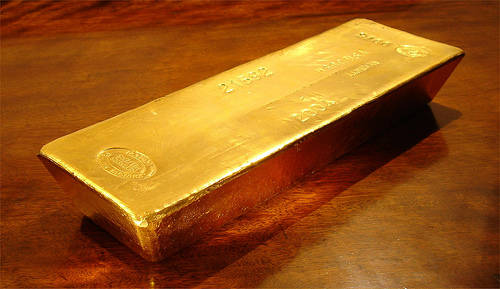
The Bundesbank took advantage of the transfer from New York to have roughly 50 tonnes of gold melted down and recast according to the London Good Delivery standard, today’s internationally recognised standard. “We also called on the expertise of the Bank for International Settlements for the spot checks that had to be carried out. As expected, there were no irregularities,” said Mr Thiele.

According to its new gold storage plan, unveiled in January 2013, the Bundesbank will be storing half of Germany’s gold reserves in its own vaults from 2020 onwards. This necessitates a phased transfer to Frankfurt am Main of 300 tonnes of gold from New York and all 374 tonnes of gold from Paris.

Since the transfers began in 2013, the Bank has relocated a total of 157 tonnes of gold to Frankfurt am Main – 67 tonnes from Paris and 90 tonnes from New York. This is equivalent to roughly 23% of the total quantity to be transferred.

The Bundesbank assures the identity and authenticity of German gold reserves throughout the transfer process – from when they are removed from warehouses abroad until they are stored in Frankfurt am Main. As soon as the gold was removed from the warehouse locations abroad, Bundesbank employees cross-checked the lists of bars belonging to the Bundesbank against the information on the bars removed. Finally, once they arrived in Frankfurt am Main, all the transferred gold bars were thoroughly and exhaustively inspected and verified by the Bundesbank. When all the inspections had been concluded, no irregularities came to light with regard to the authenticity, fineness and weight of the bars.

The gold community paid great attention to the decision of the German Bundesbank to “bring German gold home”. At the beginning of 2013, the Bundesbank announced it would repatriate 300 tonnes of gold stored in the US by 2020. It is well behind schedule, citing logistical difficulties. Yet diplomatic difficulties are more likely to be the chief cause of the delay, especially seeing as the Bundesbank has proven its capacity to organise large-scale gold transports. In the early 2000s, the Bundesbank incrementally repatriated 930 tonnes of German gold held by the Bank of England.

Source: BUBA
Austria mulling gold repatriation

The Austrian state audit court says the central bank should address the concentration risk of storing 80% of its gold reserves with the Bank of England, Standard reports, citing draft audit report.

The court has advised the central bank to diversify storage locations, and contract partners, Bloomberg reported.

The Austrian central bank is currently reviewing gold storage concept, and doesn’t rule out relocating some of its gold from London to Austria.

Standard cited unidentified central bank officials.

The gold reserves of the Oesterreichische Nationalbank (OeNB) and their deposits in the UK and in Switzerland are a recurring theme in political discussions.

Especially after the example of the Deutsche Bundesbank the Austrians are serious about bringing gold home.

Given the “high concentration of risk in the Bank of England” the bank is also reviewing the “actual spread of the storage locations”.

Austria has 280 tons gold reserves, according to 2013 annual report, but only a small part (17 percent) is kept in Vienna, while 80 percent of the reserves are located in London, and three percent in Switzerland.

In comparison, the German Bundesbank has 3400 tons of gold, about half of it in the United States.

The decision was taken to resettle half of the gold to Germany.

Frankfurt: First European direct settlements in Chinese yuan

European companies now have the opportunity to settle trading accounts in Chinese yuan. The Bank of China in Frankfurt has become the first to operate European yuan clearing. Trading costs will be cut as there will be no dollar exchange first.

More than 10 German regional and international banks including Deutsche Bank, Commerzbank, DZ Bank AG, and Landesbank Hessen-Thueringen Girozentrale, have opened accounts at Bank of China in Frankfurt.

In June the People’s Bank of China chose Bank of China Ltd. to clear payments in the eurozone. The last five months were spent building the settlement infrastructure before the official start of clearing Monday.

Yuan clearing in Frankfurt “will increase the share of German SMEs using the renminbi for their trade with China to well over the current 10 percent,” Frank-Oliver Wolf, divisional head of cash management and international business at Commerzbank told Bloomberg.

Frankfurt is the first European financial center to conduct transactions in yuan. Germany and China agreed to establish a settlement center for the yuan in March. The agreement was concluded by the Bundesbank and the People’s Bank of China during the state visit of Chinese leader Xi Jinping to Germany.

The yuan is “gaining traction as a trade currency and has in my opinion already reached the level of an investment currency,” Joachim Nagel, a board member at the Bundesbank, said Monday in a speech in Frankfurt. “It is only a matter of time before the renminbi [yuan-Ed] becomes an international reserve currency,” he added.

“It’s clear from our observations in the course of 2014 that the yuan is no longer an emerging market currency,” Sven Juergensen, head of forex sales for corporate clients at HSBC Holdings Plc in Germany, said in a Bloomberg interview on November 14. “Trades can be conducted at any point in time at adequate spreads.”

China has reduced control over the yuan exchange rate and is gradually moving towards making it a global trading currency. Other financial centers, including Hong Kong, Taipei, Singapore, Seoul, Paris and London, have also signed similar agreements with China.

Another step in this direction has already been made in China. The Hong Kong and Shanghai Stock Exchanges a have created a mechanism for cross-trading – Shanghai-Hong Kong Stock Connect.

It allows investors access to the largest stock market on China’s mainland and vice versa.

In recent years China has been promoting its currency. It has concluded swap agreements with a growing number of countries. In some countries China helps companies to issue yuan denominated bonds. Establishing a yuan clearing service in Europe is an essential to create a new reserve currency.


Conflict between Bundesbank and Draghi intensifies

The conflict between ECB President Mario Draghi and Bundesbank President Jens Weidmann over the course of the European Central Bank is more severe than expected, and has become “almost impossible.”

The Italian ECB chief characterizes the Bundesbank president after statements from witnesses internally on a regular basis with the three German words “No to all”.

According to insiders, therefore Draghi is no longer even trying to win the Germans for its programs.

Since July there was a direct contact between the two presidents of the ECB and the Bundesbank outside of the two Council meetings in early September and early October.

Source: Focus Magazine


Silence is Golden: BuBa backing away from gold repatriation

bar-of-goldI am typically hesitant to highlight foreign articles that have been translated by others from languages I can’t comprehend. That said, Koos Jansen of In Gold We Trust, is someone who does great work and so I am running with his latest blog post on German gold repatriation, or a lack thereof.

According to Peter Boehringer, Founder German Precious Metal Society, it appears that the German Bundesbank is backing away from a specific repatriation schedule for the nation’s gold. He sources this claim from a recent article written in the Handelsblatt, titled ”Silence is Golden.” So in other words, the Federal Reserve told them to get lost.

Here are excerpts from Koos’ translation of Peter’s piece:

Due to new developments, the initiators of the Repatriate Our Gold action today publish a small update. The print version of the German Handelsblatt today (02.06.2014) published a substantial three page feature exclusively on the German Gold Reserves, widely known to be stored by the German Bundesbank, the Fed, the Banque de France, and the Bank of England. Under the ambiguous title ”Silence is Golden,” no less than four Handelsblatt editors along with Norbert Häring, a senior and competent voice in matters of Gold vs Money, delivered a piece that is in parts pretty critical against the Bundesbank.

Source: libertyblitzkrieg.com

Bundesbank: China’s currency fast becoming global reserve currency

chinacurrencyFollowing the most recent shift ‘away’ from a USD-centric world (with the China-Australia direct currency convertibility), it seems the possibility of China’s Yuan as the next global reserve currency is getting closer. The Brits, Germans, and now the Swiss (who just signed a free-trade-agreement with China) are all actively vying to become Europe’s Yuan trading hub as it seems the long line of developments to internationalize the currency over the past two years. As Bundesbank board member Joachim Nagel noted in a speech entitled “Reniminbi as a potential reserve currency” this week, “the Chinese currency is well on its way to becoming one of the future global reserve currencies.” He noted that, although the USD is still the most commonly-used currency for settling trade with China; from virtually zero in 2010, the Yuan is used to settle over 12% of trading transactions now – and is likley to increase further.

Remember, nothing lasts forever:

This latest development in global currency relations should come as no surprise to those who have followed our series on China’s slow but certain  internationalization of its currency over the past two years. To wit: “World’s Second (China) And Third Largest (Japan) Economies To Bypass Dollar, Engage In Direct Currency Trade“, “China, Russia Drop Dollar In Bilateral Trade“, “China And Iran To Bypass Dollar, Plan Oil Barter System“, “India and Japan sign new $15bn currency swap agreement“, “Iran, Russia Replace Dollar With Rial, Ruble in Trade, Fars Says“, “India Joins Asian Dollar Exclusion Zone, Will Transact With Iran In Rupees“, “The USD Trap Is Closing: Dollar Exclusion Zone Crosses The Pacific As Brazil Signs China Currency Swap“, and “Thanks, World Reserve Currency, But No Thanks: Australia And China To Enable Direct Currency Convertibility.”

Via Deutsche Bundebank (Dr. Joachim Nagel),

Renminbi as a potential reserve currency

According to Bundesbank Executive Board member Joachim Nagel, the Chinese currency is well on its way to becoming one of the future global reserve currencies. This potential stems from the renminbi’s increasing convertibility, he said at a conference of the Chamber of Industry and Commerce in Frankfurt.

He emphasised that although the US dollar is currently the most commonly used currency for settling trade with China, the significance of the renminbi has increased greatly over the last few years. He underlined this by referring to figures published by SWIFT, which indicate that the percentage of trading transactions settled in renminbi jumped from virtually zero to around 12% between 2010 and 2012 – and is likely to increase further. In view of this, he pointed out that the renminbi has already achieved the status of a trading currency.

Drawing parallels to the Deutsche Mark

Mr Nagel compared China’s growing importance with the German economic miracle of the 1950s and drew parallels between the renminbi’s current growth and the development of the Deutsche Mark. Thanks to the recovery of the German economy, the country accumulated a large volume of foreign exchange reserves and the Deutsche Mark acquired the status of a global investment and reserve currency, he explained. He anticipates that “the renminbi is certain to have similar long-term prospects if market access is liberalised further”. Mr Nagel backed up his comments by citing a survey of reserve managers carried out by RBS. The survey revealed that 14% of reserve managers have already invested in renminbi, with 37% of respondents considering investing in the currency in the next five to ten years.

Mr Nagel sees the renminbi as currently transitioning from a being trading currency to an investment currency. While both inward and outward direct investment is now possible, portfolio investments will continue to be regulated, he remarked, adding that improvements are expected in this area. “The internationalisation process of the Chinese currency is taking place more gradually than was the case with the Deutsche Mark, which, at times, was subject to radical upheaval”, he added. Mr Nagel recalled, in this context, the collapse of the Bretton Woods system of fixed exchange rates and the crisis in the European Monetary System at the beginning of the 1990s.

Renminbi financial centre in Frankfurt

Mr Nagel noted that “given China’s growing economic importance, the internationalisation of the renminbi seems long overdue”. He explained the Chinese government’s decision to employ offshore trading centres, which would allow China to establish its currency internationally, while protecting its domestic financial system. Hong Kong, where around 80% of all renminbi trade is settled, is by far the most important trading centre for the currency, with London and Singapore each accounting for 4% of renminbi trade since mid-2012. He added that the expansion of the market has led to the growing significance of other financial centres for renminbi.

Mr Nagel welcomed Frankfurt’s endeavour to position itself as a trading hub for the Chinese currency, calling it a step in the right direction, towards the free movement of capital. “The high level of interaction between China’s and Germany’s real economies highlights the necessity for a more active renminbi trade”, Mr Nagel remarked, “perhaps even using Germany as a hub” – Zero Hedge