Interview with Paul Craig Roberts

The Saker interviews Paul Craig Roberts

I had been wanting to interview Paul Craig Roberts for a long time already. For many years I have been following his writings and interviews and every time I read what he had to say I was hoping that one day I would have the privilege to interview him about the nature of the US deep state and the Empire. Recently, I emailed him and asked for such an interview, and he very kindly agreed. I am very grateful to him for this opportunity.

The Saker

——-

The Saker: It has become rather obvious to many, if not most, people that the USA is not a democracy or a republic, but rather a plutocracy run by a small elite which some call “the 1%”. Others speak of the “deep state”. So my first question to you is the following. Could you please take the time to assess the influence and power of each of the following entities one by one. In particular, can you specify for each of the following whether it has a decision-making “top” position, or a decision-implementing “middle” position in the real structure of power (listed in no specific order)

Federal Reserve
Big Banking
Bilderberg
Council on Foreign Relations
Skull & Bones
CIA
Goldman Sachs and top banks
“Top 100 families” (Rothschild, Rockefeller, Dutch Royal Family, British Royal Family, etc.)
Israel Lobby
Freemasons and their lodges
Big Business: Big Oil, Military Industrial Complex, etc.
Other people or organizations not listed above?
Who, which group, what entity would you consider is really at the apex of power in the current US polity?

Paul Craig Roberts: The US is ruled by private interest groups and by the neoconservative ideology that History has chosen the US as the “exceptional and indispensable” country with the right and responsibility to impose its will on the world.

In my opinion the most powerful of the private interest groups are:
The Military/security Complex
The 4 or 5 mega-sized “banks too big to fail” and Wall Street
The Israel Lobby
Agribusiness
The Extractive industries (oil, mining, timber).

The interests of these interest groups coincide with those of the neoconservatives. The neoconservative ideology supports American financial and military-political imperialism or hegemony.

There is no independent American print or TV media. In the last years of the Clinton regime, 90% of the print and TV media was concentrated in 6 mega-companies. During the Bush regime, National Public Radio lost its independence. So the media functions as a Ministry of Propaganda.

Both political parties, Republicans and Democrats, are dependent on the same private interest groups for campaign funds, so both parties dance to the same masters. Jobs offshoring destroyed the manufacturing and industrial unions and deprived the Democrats of Labor Union political contributions. In those days, Democrats represented the working people and Republicans represented business.

The Federal Reserve is there for the banks, mainly the large ones.The Federal Reserve was created as lender of last resort to prevent banks from failing because of runs on the bank or withdrawal of deposits. The New York Fed, which conducts the financial interventions, has a board that consists of the executives of the big banks. The last three Federal Reserve chairmen have been Jews, and the current vice chairman is the former head of the Israeli central bank. Jews are prominent in the financial sector, for example, Goldman Sachs. In recent years, the US Treasury Secretaries and heads of the financial regulatory agencies have mainly been the bank executives responsible for the fraud and excessive debt leverage that set off the last financial crisis.

In the 21st century, the Federal Reserve and Treasury have served only the interests of the large banks. This has been at the expense of the economy and the population. For example, retired people have had no interest income for eight years in order that the financial institutions can borrow at zero costs and make money.

No matter how rich some families are, they cannot compete with powerful interest groups such as the military/security complex or Wall Street and the banks. Long established wealth can look after its interests, and some, such as the Rockefellers, have activist foundations that most likely work hand in hand with the National Endowment for Democracy to fund and encourage various pro-American non-governmental organizations (NGOs) in countries that the US wants to influence or overthrow, such as occurred in Ukraine. The NGOs are essentially US Fifth Columns and operate under such names as “human rights,” “democracy,” etc. A Chinese professor told me that the Rockefeller Foundation had created an American University in China and is used to organize various anti-regime Chinese. At one time, and perhaps still, there were hundreds of US and German financed NGOs in Russia, possibly as many as 1,000.

I don’t know if the Bilderbergs do the same. Possibly they are just very rich people and have their proteges in governments who try to protect their interests. I have never seen any signs of Bilderbergs or Masons or Rothchilds affecting congressional or executive branch decisions.

On the other hand, the Council for Foreign Relations is influential. The council consists of former government policy officials and academics involved in foreign policy and international relations. The council’s publication, Foreign Affairs, is the premier foreign policy forum. Some journalists are also members. When I was proposed for membership in the 1980s, I was blackballed.

Skull & Bones is a Yale University secret fraternity. A number of universities have such secret fraternities. For example, the University of Virginia has one, and the University of Georgia. These fraternities do not have secret governmental plots or ruling powers. Their influence would be limited to the personal influence of the members, who tend to be sons of elite families. In my opinion, these fraternities exist to convey elite status to members. They have no operational functions.

The Saker: What about individuals? Who are, in your opinion, the most powerful people in the USA today? Who takes the final, top level, strategic decision?

Paul Craig Roberts: There really are no people powerful in themselves. Powerful people are ones that powerful interest groups are behind. Ever since Secretary of Defense William Perry privatized so much of the military in 1991, the military/security complex has been extremely powerful, and its power is further amplified by its ability to finance political campaigns and by the fact that it is a source of employment in many states. Essentially Pentagon expenditures are controlled by defense contractors.

The Saker: I have always believed that in international terms, organizations such as NATO, the EU or all the others are only a front, and that the real alliance which controls the planet are the ECHELON countries: US, UK, Canada, Australia and New Zealand aka “AUSCANNZUKUS” (they are also referred to as the “Anglosphere” or the “Five Eyes”) with the US and the UK are the senior partners while Canada, Australia and New Zealand are the junior partners here. Is this model correct?

Paul Craig Roberts: NATO was a US creation allegedly to protect Europe from a Soviet invasion. Its purpose expired in 1991. Today NATO provides cover for US aggression and provides mercenary forces for the American Empire. Britain, Canada, Australia, are simply US vassal states just as are Germany, France, Italy, Japan and the rest. There are no partners; just vassals. It is Washington’s empire, no one else’s.

The US favors the EU, because it is easier to control than the individual countries.

The Saker: It is often said that Israel controls the USA. Chomsky, and others, say that it is the USA which controls Israel. How would you characterize the relationship between Israel and the USA – does the dog wag the tail or does the tail wag the dog? Would you say that the Israel Lobby is in total control of the USA or are there still other forces capable of saying “no” to the Israel Lobby and impose their own agenda?

Paul Craig Roberts: I have never seen any evidence that the US controls Israel. All the evidence is that Israel controls the US, but only its MidEast policy. In recent years, Israel or the Israel Lobby, has been able to control or block academic appointments in the US and tenure for professors considered to be critics of Israel. Israel has successfully reached into both Catholic and State universities to block tenure and appointments. Israel can also block some presidential appointments and has vast influence over the print and TV media. The Israel Lobby also has plenty of money for political campaign funds and never fails to unseat US Representatives and Senators considered critical of Israel. The Israel lobby was able to reach into the black congressional district of Cynthia McKinney, a black woman, and defeat her reelection. As Admiral Tom Moorer, Chief of Naval Operations and Chairman of the Joint Chiefs of Staff, said: “No American President can stand up to Israel.” Adm. Moorer could not even get an official investigation of Israel’s deadly attack on the USS Liberty in 1967.

Anyone who criticizes Israeli policies even in a helpful way is labeled an “anti-Semite.”

In American politics, media, and universities, this is a death-dealing blow. You might as well get hit with a hellfire missile.

The Saker: Which of the 12 entities of power which I listed above have, in your opinion, played a key role in the planning and execution of the 9/11 “false flag” operation? After all, it is hard to imagine that this was planned and prepared between the inauguration of GW Bush and September 11th – it must have been prepared during the years of the Clinton Administration. Is it not true that the Oklahoma City bombing was a rehearsal for 9/11?

Paul Craig Roberts: In my opinion 9/11 was the product of the neoconservatives, many of whom are Jewish allied with Israel, Dick Cheney, and Israel. Its purpose was to provide “the new Pearl Harbor” that the neoconservatives said was necessary to launch their wars of conquest in the Middle East. I don’t know how far back it was planned, but Silverstein was obviously part of it and he had not had the WTC for very long before 9/11.

As for the bombing of the Murrah Federal Building in Oklahoma City, US Air Force General Partin, the Air Force’s munitions expert, prepared an expert report proving beyond all doubt that the building blew up from the inside out and that the truck bomb was cover. Congress and the media ignored his report. The patsy, McVeigh, was already set up, and that was the only story allowed.

The Saker: Do you think that the people who run the USA today realize that they are on a collision course with Russia which could lead to thermonuclear war? If yes, why would they take such a risk? Do they really believe that at the last moment Russian will “blink” and back down, or do they actually believe that they can win a nuclear war? Are they not afraid that in a nuclear conflagration with Russia they will lose everything they have, including their power and even their lives?

Paul Craig Roberts: I am as puzzled as much as you. I think Washington is lost in hubris and arrogance and is more or less insane. Also, there is belief that the US can win a nuclear war with Russia. There was an article in Foreign Affairs around 2005 or 2006 in which this conclusion was reached. The belief in the winnability of nuclear war has been boosted by faith in ABM defenses. The argument is that the US can hit Russia so hard in a preemptive first strike that Russia would not retaliate in fear of a second blow.

The Saker: How do you assess the current health of the Empire? For many years we have seen clear signs of decline, but there is still not visible collapse. Do you believe that such a collapse is inevitable and, if not, how could it be prevented? Will we see the day when the US Dollar suddenly become worthless or will another mechanism precipitate the collapse of this Empire?

Paul Craig Roberts: The US economy is hollowed out. There has been no real median family income growth for decades. Alan Greenspan as Fed Chairman used an expansion of consumer credit to take the place of the missing growth in consumer income, but the population is now too indebted to take on more. So there is nothing to drive the economy. So many manufacturing and tradable professional service jobs such as software engineering have been moved offshore that the middle class has shrunk. University graduates cannot get jobs that support an independent existence. So they can’t form households, buy houses, appliances and home furnishings. The government produces low inflation measures by not measuring inflation and low unemployment rates by not measuring unemployment. The financial markets are rigged, and gold is driven down despite rising demand by selling uncovered shorts in the futures market. It is a house of cards that has stood longer than I thought possible. Apparently, the house of cards can stand until the rest of the world ceases to hold the US dollar as reserves.

Possibly the empire has put too much stress on Europe by involving Europe in a conflict with Russia. If Germany, for example, were to pull out of NATO, the empire would collapse, or if Russia can find the wits to finance Greece, Italy, and Spain in exchange for them leaving the Euro and EU, the empire would suffer a fatal blow.

Alternatively, Russia might tell Europe that Russia has no alternative but to target European capitals with nuclear weapons now that Europe has joined the US in conducting war against Russia.

The Saker: Russia and China have done something unique in history and they have gone beyond the traditional model of forming an alliance: they have agreed to become interdependent – one could say that they have agreed to a symbiotic relationship. Do you believe that those in charge of the Empire have understood the tectonic change which has just happen or are they simply going into deep denial because reality scares them too much?

Paul Craig Roberts: Stephen Cohen says that there is simply no foreign policy discussion. There is no debate. I think the empire thinks that it can destabilize Russia and China and that is one reason Washington has color revolutions working in Armenia, Kyrgyzstan, and Uzbekistan. As Washington is determined to prevent the rise of other powers and is lost in hubris and arrogance, Washington probably believes that it will succeed. After all, History chose Washington.

The Saker: In your opinion, do presidential elections still matter and, if yes, what is your best hope for 2016? I am personally very afraid of Hillary Clinton whom I see as an exceptionally dangerous and outright evil person, but with the current Neocon influence inside the Republican, can we really hope for a non-Neocon candidate to win the GOP nomination?

Paul Craig Roberts: The only way a presidential election could matter would be if the elected president had behind him a strong movement. Without a movement, the president has no independent power and no one to appoint who will do his bidding. Presidents are captives. Reagan had something of a movement, just enough that we were able to cure stagflation despite Wall Street’s opposition and we were able to end the cold war despite the opposition of the CIA and the military/security complex. Plus Reagan was very old and came from a long time ago. He assumed the office of the president was powerful and acted that way.

The Saker: What about the armed forces? Can you imagine a Chairman of the JCS saying “no, Mr President, that is crazy, we will not do this” or do you expect the generals to obey any order, including one starting a nuclear war against Russia? Do you have any hope that the US military could step in and stop the “crazies” currently in power in the White House and Congress?

Paul Craig Roberts: The US military is a creature of the armaments industries. The whole purpose of making general is to be qualified to be a consultant to the “defense” industry, or to become an executive or on the board of a “defense” contractor. The military serves as the source of retirement careers when the generals make the big money. The US military is totally corrupt. Read Andrew Cockburn’s book, Kill Chain.

The Saker: If the USA is really deliberately going down the path towards war with Russia – what should Russia do? Should Russia back down and accept to be subjugated as a preferable option to a thermonuclear war, or should Russia resist and thereby accept the possibility of a thermonuclear war? Do you believe that a very deliberate and strong show of strength on the part of Russia could deter a US attack?

Paul Craig Roberts: I have often wondered about this. I can’t say that I know. I think Putin is humane enough to surrender rather than to be part of the destruction of the world, but Putin has to answer to others inside Russia and I doubt the nationalists would stand for surrender.

In my opinion, I think Putin should focus on Europe and make Europe aware that Russia expects an American attack and will have no choice except to wipe out Europe in response. Putin should encourage Europe to break off from NATO in order to prevent World War 3.

Putin should also make sure China understands that China represents the same perceived threat to the US as Russia and that the two countries need to stand together. Perhaps if Russia and China were to maintain their forces on a nuclear alert, not the top one, but an elevated one that conveyed recognition of the American threat and conveyed this threat to the world, the US could be isolated.

Perhaps if the Indian press, the Japanese Press, the French and German press, the UK press, the Chinese and Russian press began reporting that Russia and China wonder if they will receive a pre-emptive nuclear attack from Washington the result would be to prevent the attack.

As far as I can tell from my many media interviews with the Russian media, there is no Russian awareness of the Wolfowitz Doctrine. Russians think that there is some kind of misunderstanding about Russian intentions. The Russian media does not understand that Russia is unacceptable, because Russia is not a US vassal. Russians believe all the Western bullshit about “freedom and democracy” and believe that they are short on both but making progress. In other words, Russians have no idea that they are targeted for destruction.

The Saker: What are, in your opinion, the roots of the hatred of so many members of the US elites for Russia? Is that just a leftover from the Cold War, or is there another reason for the almost universal russophobia amongst US elites? Even during the Cold War, it was unclear whether the US was anti-Communist or anti-Russian? Is there something in the Russian culture, nation or civilization which triggers that hostility and, if yes, what is it?

Paul Craig Roberts: The hostility toward Russia goes back to the Wolfowttz Doctrine:

“Our first objective is to prevent the re-emergence of a new rival, either on the territory of the former Soviet Union or elsewhere, that poses a threat on the order of that posed formerly by the Soviet Union. This is a dominant consideration underlying the new regional defense strategy and requires that we endeavor to prevent any hostile power from dominating a region whose resources would, under consolidated control, be sufficient to generate global power.”

While the US was focused on its MidEast wars, Putin restored Russia and blocked Washington’s planned invasion of Syria and bombing of Iran. The “first objective” of the neocon doctrine was breached. Russia had to be brought into line. That is the origin of Washington’s attack on Russia. The dependent and captive US and European media simply repeats “the Russian Threat” to the public, which is insouciant and otherwise uninformed.

The offense of Russian culture is also there–Christian morals, respect for law and humanity, diplomacy in place of coercion, traditional social mores–but these are in the background. Russia is hated because Russia (and China) is a check on Washington’s unilateral uni-power. This check is what will lead to war.

If the Russians and Chinese do not expect a pre-emptive nuclear attack from Washington, they will be destroyed.

The Swiss gold referendum: What it really means

In a few days the Swiss people will go to the polls to decide whether the Swiss central bank is to be required to hold 20% of its reserves in the form of gold

Polls show that the gold requirement is favored by the less well off and opposed by wealthy Swiss invested in stocks. These poll results provide new insight into the real reason for Quantitative Easing by the Federal Reserve and European Central Bank.

First, let’s examine the reasons for these class-based poll results. The view in Switzerland is that a gold backed Swiss franc would be more valuable, and a more valuable franc would increase the purchasing power of wage earners, thus reducing their living costs. For the wealthy stock owners, a stronger franc would reduce Swiss exports, and less exports would reduce stock prices and the wealth of the wealthy.

The vote is clearly a vote about income shares between the rich and the poor. The Swiss establishment opposes the gold-backed franc, as does Washington.

A few years ago the Swiss government, after experiencing a strong rise in the exchange value of the Swiss franc as a result of dollar and euro inflows seeking safety in the Swiss franc, decided to expand the Swiss money supply in line with the foreign currency inflows in order to stop the rise of the franc. The liquidity supplied by the central bank creating new francs has stopped the rise of the franc and supports exports and stock prices. As a vote in favor of a gold backed franc is not in the interest of the elite, it is unclear that the vote will be honest.

What does this tell us about the Federal Reserve’s policy of Quantitative Easing, which is an euphemism for printing an enormous amount of new dollars?

The official reason for QE is the Keynesian Phillips Curve claim that economic growth requires mild inflation of 2-3%. This false theory was put to death by the supply-side policy of the Reagan administration, but the misrepresentation of the Reagan administration’s policy by the Establishment has kept the bogus Phillips curve theory alive.

The claim based in disproven Phillips Curve theory that the Fed’s policy is directed at helping the overall economy is another example of the deception practiced by US authorities. The real purpose of QE is to drive up the wealth and income of the one percent by providing the liquidity that flows into financial asset prices such as stocks and bonds.

Since the 2008 US recession, skeptics of the Fed’s explanation of QE as support for the US economy have stressed instead that the purpose of US economic policy has been to support the federal deficit at low interest rate costs and to support the balance sheets of the troubled banks by pushing up the prices of debt-related derivatives on the banks balance sheets.

These have been important purposes, but it now appears that the main purpose has been to make the rich richer. This is why we have a stock market whose high values are not based in fundamentals but, instead, are based on the outpouring of liquidity by the Federal Reserve. As the economic policy of the US is entirely in the hands of the rich, it is not surprising that the rich use it to enrich themselves at the expense of everyone else. The Fed’s monetary policy that enriches the rich by driving up the prices of stocks and bonds also has robbed retirees of hundreds of billions of dollars, perhaps trillions, in lost interest income on their savings.

As I recently explained, QE is not over. The Fed is rolling over its interest and principal payments on its $4.5 trillion bond inventory into new bond purchases, and the banks now infused with $2.6 trillion in cash from the Fed are purchasing the bonds in place of the Fed’s QE purchases.

According to the latest news reports, Mario Draghi, the head of the European Central Bank will print all the money necessary to support financial asset prices. Draghi, like the Federal Reserve, masks his policy of enriching the rich in Phillips curve terms of driving up inflation in order to support economic growth. Of course, the real purpose is to drive up stock prices.

Like the Fed, the ECB pretends that the money it prints flows into the economy. But given the poor condition of the banks and potential borrowers loan volume is low. Instead the money created by central banks flows into paper financial asset prices. Thus, the monetary policy of the Western world is directed toward supporting the wealth of the rich and worsening the inequality in the distribution of income and wealth.

The rich are far from finished with their pillage. In exchange for campaign donations, state governors are turning over state pension funds to the management of high-fee, high-risk private pension fund managers who do a better job of maximizing their fee income than protecting the nest eggs of retirees.

Throughout the Western world economic policy is run for the sole benefit of the one percent and at the cost of everyone else. The greed and stupidity of the rich are creating ideal conditions for violent revolution. Karl Marx might yet triumph.

The real reason the Netherlands repatriated its gold

In what could definitely be called a stunning move, the Netherlands has announced it has repatriated in excess of 120 tonnes of gold from the vaults of the Federal Reserve in New York to the Dutch Central Bank in Amsterdam. Officially a move made to rebalance the locations where the gold is being stored, one cannot ignore the fact that the Netherlands only repatriated a large part of the gold which was stored in New York and it did not touch the gold stored in Canada and London.

Additionally, it’s not just ‘some’ gold being brought back home, no, the total amount is 122.47 tonnes or almost 4 million ounces with a market value of $5B. This will reduce the exposure of the Dutch Central Bank to the US financial system as now just 31% of its gold is being stored in the vault of the Fed, coming down from 51%. We have the impression this won’t be the last repatriation as the Dutch Central Bank is keeping its shipping route secret ‘in case more gold needs to be repatriated’.

So what was the main reason why the Netherlands brought the shiny precious metal back home? The central bank wants you to believe it’s just an ordinary decision, but believe it or not, the only reason for this move was to restore the confidence of the public in the Central Bank. By publishing this statement, the Dutch Central Bank basically admits that holding gold increases the public trust in the central bank as an institution, and that’s an statement which should not and cannot be underestimated as it basically means that only physical gold can be trusted and that the gold should be stored inside the country. ‘He who owns the gold makes the rules’ once again seems to be up-and-coming again.

The best place to store your gold is obviously in your own back yard, and it looks like the Netherlands aren’t agreeing with the Germans which also wanted to repatriate most of its gold which was stored in the vaults of the Federal Reserve. However, after bringing just a fraction of its gold back to Berlin, Germany publicly stated it would not repatriate any more gold as it ‘fully trusts the Federal Reserve as an institution’ and ‘the Americans are taking good care of their gold’. That’s obviously a bogus reason as the Fed obviously wasn’t suddenly taking better care of the gold than a year before. It’s also interesting to notice that the Netherlands and Germany used a different approach. Whilst Germany was boasting about its attempt to repatriate the gold, the Netherlands chose the ‘stealth’ way and repatriated it first before announcing it.

This strategy isn’t surprising as the Dutch always have been quite savvy. Keep in mind it was one of the most powerful nations right after the middle ages when the VOC really ruled the world shipping five times more goods to and from Asia than its main competitor in Great Britain. This savvy business mind is still in place and we wouldn’t be surprised if the Netherlands would be the frontrunner in a worldwide move to repatriate gold.

Keeping the German repatriation story in mind, the Netherlands are basically giving the Federal Reserve the finger. Unlike Germany, it does not trust the Federal Reserve more than its own central bank and it prefers to ‘sit’ on the gold in Amsterdam rather than store it in a foreign nation. This is a huge policy shift which cannot be underestimated, especially not if you look at all pieces of the puzzle.

As you know, China is still buying gold like crazy and was recently joined by Russia which has bought more gold every month since the beginning of this year. People were fast to dismiss this increased interest in gold as those were ‘special’ countries. Well, that argument is no longer valid. Germany wanted to repatriate its gold last year (but came under pressure to drop its plan), the Netherlands have now successfully repatriated almost 4 million ounces of gold, and there’s a Swiss referendum which asks the opinion of its citizens to increase the gold holdings once again. It’s unlikely the Swiss will approve this proposal as the latest polls show 38% in favor and 47% against the proposal with approximately 15% undecided voters.

Swiss Gold Referendum

The main takeaway here is not that 47% of the people are against increasing the gold reserves, but that 38% is strongly in favor of backing the Swiss Franc with Gold and an additional 15% might consider it. We are sure that a better explanation of the proposal would reduce the amount of opponents. Additionally, a lot of nay-sayers are voting against the party which proposed the idea and aren’t necessarily against the renewed gold standard.

This gold repatriation isn’t an isolated case. All signs are pointing in the direction that several central banks are now getting increasingly interested to increase their gold holdings and to have the gold inside the country instead of somewhere else. The Dutch repatriation is the first step, but we expect more pieces of the puzzle to fall into place soon. Very soon.

Sprout Money offers a fresh look at investing. We analyze long lasting cycles, coupled with a collection of strategic investments and concrete tips for different types of assets.

Ukraine’s gold has vanished

The disappearance of Ukraine’s gold has been confirmed, and perhaps it is time to refresh the “unconfirmed” story that a little after the current Ukraine regime took power the bulk of Ukraine’s gold was taken to the United States.

The NY Fed has still not answered requests for a comment as to whether Ukraine’s gold has been redomiciled at the gold vault located some 80 feet below Liberty 33.

According to recent data, the value of Ukraine gold should be $988.7 million. That is the value of gold proportion of gold in gold reserves is 8%. If you believe Gontareva, it turns out there is a mere $123.6 million in gold remaining.

The figure is fantastic, considering that the amount of gold at the end of February (when the new authorities have already taken key positions) was $1.8 billion or 12% of the reserves.

In other words, since the beginning of the year gold reserves dropped almost 16 times. Gold stock in February were approximately 21 tons of gold, the presence of which was once proudly reported by Sergei Arbuzov, who led the NBU in 2010-2012. So what happened to 20.8 tons of gold?

Explaining the dramatic reduction in the context of the hryvnia devaluation through gold sales is impossible. After all, 92% of the reserves of the National Bank is in the form of a foreign currency that is much easier to use to maintain hryvnia levels and cover current liabilities. Besides since March the international price of gold has plummeted. Selling gold under such circumstances is a crime. In fact it would be more expedient to increase gold reserves through currency conversion in precious metals.

As history shows, the reduction of the gold reserves in the context of an acute political crisis is usually preceded by the collapse of the state.

From iskra-news

Tonight, 07-03-2014 around at 2:00 am, an unregistered transport plane took off took off from Boryspil airport. According to Boryspil staff, prior to the plane’s appearance, four trucks and two cargo minibuses arrived at the airport all with their license plates missing. Fifteen people in black uniforms, masks and body armor stepped out, some armed with machine guns. These people loaded the plane with more than forty heavy boxes.

After this, several mysterious men arrived and also entered the plane. The loading was carried out in a hurry. After unloading, the plateless cars immediately left the runway, and the plane took off on an emergency basis.

Airport officials who saw this mysterious “special operation” immediately notified the administration of the airport, which however strongly advised them “not to meddle in other people’s business.”

Later, the editors were called by one of the senior officials of the former Ministry of Income and Fees, who reported that, according to him, tonight on the orders of one of the “new leaders” of Ukraine, all the gold reserves of the Ukraine were taken to the United States.

In an interview on Ukraine TV, none other than the head of the Ukraine Central Bank made the stunning admission that “in the vaults of the central bank there is almost no gold left. There is a small amount of gold bullion left, but it’s just 1% of reserves.”

American financial markets bear no relationship to reality

By Paul Craig Roberts and Dave Kranzler

As we have demonstrated in previous articles, the bullion banks (primarily JP Morgan, HSBC, ScotiaMocatta, Barclays, UBS, and Deutsche Bank), most likely acting as agents for the Federal Reserve, have been systematically forcing down the price of gold since September 2011. Suppression of the gold price protects the US dollar against the extraordinary explosion in the growth of dollars and dollar-denominated debt.

It is possible to suppress the price of gold despite rising demand, because the price is not determined in the physical market in which gold is actually purchased and carried away. Instead, the price of gold is determined in a speculative futures market in which bets are placed on the direction of the gold price. Practically all of the bets made in the futures market are settled in cash, not in gold. Cash settlement of the contracts serves to remove price determination from the physical market.

Cash settlement makes it possible for enormous amounts of uncovered or “naked” futures contracts — paper gold — to be printed and dumped all at once for sale in the futures market at times when trading is thin. By increasing the supply of paper gold, the enormous sales drive down the futures price, and it is the futures price that determines the price at which physical quantities of bullion can be purchased.

The fact that the price of gold is determined in a paper market, in which there is no limit to the supply of paper contracts that can be created, produces the strange result that the demand for physical bullion is at an all time high, outstripping world production, but the price continues to fall! Asian demand is heavy, especially from China, and silver and gold eagles are flying off the shelves of the US Mint in record quantities. Bullion stocks are being depleted; yet the prices of gold and silver fall day after day.

The only way that this makes sense is that the price of bullion is not determined in a real market, but in a rigged paper market in which there is no limit to the ability to print paper gold.

The Chinese, Russians, and Indians are delighted that the corrupt American authorities make it possible for them to purchase ever larger quantities of gold at ever lower prices. The rigged market is perfectly acceptable to purchasers of bullion, just as it is to US authorities who are committed to protecting the dollar from a rising price of gold.

Nevertheless, an honest person would think that the incompatibility of high demand with constrained supply and falling price would arouse the interest of economists, the financial media, financial authorities, and congressional committees.

Where are the class action suits from gold mining companies against the Federal Reserve, its bullion bank agents, and all who are harming the interest of the mining companies by short-selling gold with uncovered contracts? Rigged markets–especially on the basis of inside information–are illegal and highly unethical. The naked short-selling is causing damage to mining interests. Once the price of gold is driven below $1200 per ounce, many mines become uneconomical. They shut down. Miners are unemployed. Shareholders lose money. How can such an obviously rigged and manipulated price be permitted to continue? The answer is that the US political and financial system is engulfed with corruption and criminality. The Federal Reserve’s policy of rigging bond and gold prices and providing liquidity for stock market speculation has damaged the US economy and tens of millions of US citizens in order to protect four mega-banks from their mistakes and crimes. This private use of public policy is unprecedented in history. Those responsible should be arrested and put on trial and they should simultaneously be sued for damages.

US authorities use the Plunge Protection Team, the Exchange Stabilization Fund, currency swaps, Federal Reserve policy, and purchases of S&P futures to support an artificial exchange value of the dollar and to provide the liquidity needed to support stock and bond prices, with the latter so artificially high that savers receive negative real interest rates on their saving.

The authorities have created a financial system totally out of sync with reality. When the authorities can no longer keep the house of cards standing, the collapse will be extreme.

It is a testament to the complicity of economists, the incompetence of financial media, and the corruption of public authorities and private institutions that this house of cards was constructed. The executives of the handful of mega-banks that caused the problem are the people who are running the US Treasury, the New York Fed, and the US financial regulatory agencies. They are using their control over public policy to protect themselves and their institutions from their own reckless behavior. The price for this protection is being paid by the economy and ordinary Americans – and that price is rising.

The latest orchestrated takedown of the gold price is related to two events (see the graphs below). One is that the Federal Reserve decided to boost the upward spike in the dollar’s exchange rate from the Fed’s announcement of the end of Quantitative Easing (QE). The Fed’s announcement of the end of dollar creation in order to support bond prices lessened the rising anxiety in the world about the US dollar’s value when the supply of new dollars continued to increase faster than the US output of goods and services. The Fed reinforced the boost that its announcement gave to the dollar by having its bullion bank agents drive down the gold price with naked short-selling.

ss3Screen shot 2014-11-04 at 12.59.45 PM


Naked short selling was also used to offset the effect on the gold price by the Bank of Japan’s surprise announcement on October 31 of a massive new program of QE. Apparently, the Bank of Japan either has been pressured by Washington to inflate Japan’s currency in order to support the dollar’s value or is applying a policy based on the Keynesian Phillips Curve that 2-3% inflation stimulates economic growth. Japan has been in the economic doldrums for a long time and is now reduced to pre-Reagan “snake oil” prescriptions in a desperate attempt to revive its economy.

Japan’s announcement of infinite money creation should have caused the price of gold to rise. To prevent a rise, at 3:00 AM US Eastern Time, during one of the least active trading periods for gold futures, the electronic futures market (Globex) was hit with a sale of 25 tonnes of uncovered Comex paper gold contracts, which dropped the gold price $20 dollars. No legitimate seller would destroy his own capital by selling a position in this way.

The gold price stabilized and moved higher, but at 8 AM US Eastern Time, and 20 minutes prior to the opening of the New York futures market (Comex), another 38 tonnes of uncovered paper gold futures were sold. The only possible purpose of such a sale is to drive down the price of gold. Again, no legitimate investor would unload a huge amount of his holdings in this way, thereby wiping out his own wealth.

ss4Screen shot 2014-11-04 at 1.01.51 PM


Allegedly, the United States is the home of scientific economics with the predominance of winners of the Nobel Prize in economics. Despite these high qualifications, the price of gold, silver, equities, and bonds that are set in the US bear no relationship to economic reality, and American economists do not notice.

The divergence of markets from economic reality disturbs neither public policymakers nor economists, who promote the interests of the government and its allied interest groups. The result is an economy that is a house of cards.

For additional reading see: http://investmentresearchdynamics.com/the-system-is-terminally-broken/

Dr. Paul Craig Roberts was Assistant Secretary of the Treasury for Economic Policy and associate editor of the Wall Street Journal. He was columnist for Business Week, Scripps Howard News Service, and Creators Syndicate. He has had many university appointments. His internet columns have attracted a worldwide following. Roberts’ latest books are The Failure of Laissez Faire Capitalism and Economic Dissolution of the West and How America Was Lost.

Rigged gold price distorts perception of economic reality

The Federal Reserve and its bullion bank agents (JP Morgan, Scotia, and HSBC) have been using naked short-selling to drive down the price of gold since September 2011. The latest containment effort began in mid-July of this year, after gold had moved higher in price from the beginning of June and was threatening to take out key technical levels, which would have triggered a flood of buying from hedge funds.

The Fed and its agents rig the gold price in the New York Comex futures (paper gold) market. The bullion banks have the ability to print an unlimited supply of gold contracts which are sold in large volumes at times when Comex activity is light.

Generally, on the other side of the trade the buyers of contracts are large hedge funds and other speculators, who use the contracts to speculate on the direction of the gold price. The hedge funds and speculators have no interest in acquiring physical gold and settle their bets in cash, which makes it possible for the bullion banks to sell claims to gold that they cannot back with physical metal. Contracts sold without underlying gold to back them are called “uncovered contracts” or “naked shorts.” It is illegal to engage in naked shorting in the stock and bond markets, but it is permitted in the gold futures market.

The fact that the price of gold is determined in a futures market in which paper claims to gold are traded merely to speculate on price means that the Fed and its bank agents can suppress the price of gold even though demand for physical gold is rising. If there were strict requirements that gold shorts could not be naked and had to be backed by the seller’s possession of physical gold represented by the futures contract, the Federal Reserve and its agents would be unable to control the price of gold, and the gold price would be much higher than it is now.

Gold price manipulation is used when demand for delivery of gold bullion begins to put upward pressure on the price of gold and hedge funds speculate on the rising price of gold by purchasing large quantities of Comex futures contracts (paper gold). This speculation accelerates the upward move in the price of gold. The TF Metals Report provides a good description of this illegal manipulation of the gold market:

“Over a period of 10 weeks to begin the year, the Comex bullion banks were able to limit the rally to only 15% by supplying the “market” with 95,000 brand new naked short contracts. That’s 9.5MM ounces of make-believe paper gold or about 295 metric tonnes.

“Over a period of just 5 weeks in June and July, the Comex bullion banks were able to limit the rally to only 7% by supplying the “market” with 79,000 brand new naked short contracts. That’s 7.9MM ounces of make-believe paper gold or about 246 metric tonnes.” http://www.tfmetalsreport.com/comment/429940

In previous columns, we have documented the heavy short-selling into light trading periods.
See for example: http://www.paulcraigroberts.org/2014/07/16/insider-trading-financial-terrorism-comex/.

The bullion banks do not have nearly enough gold in their possession to make deliveries to the buyers if the buyers decide to stand for delivery per the terms of the paper gold contract. The reason this scheme works is because the majority of the buyers of the contracts are speculators, not gold purchasers, and never demand delivery of the gold. Instead, they settle the contracts in cash. They are looking for short-term trading profits, not for a gold hedge against currency inflation. If a majority of the longs (the purchasers of the contracts) required delivery of the gold, the regulators would not tolerate the extent to which gold is shorted with uncovered contracts.

In our opinion, the manipulation is illegal, because it is insider trading. The bullion banks that short the gold market are clearing members of the Comex/NYMEX/CME. In that role, the bullion banks have access to the computer system used to clear and settle trades, which means that the bullion banks have access to all the trading positions, including those of the hedge funds. When the hedge funds are in the deepest, the bullion banks dump naked shorts on the Comex, driving down the futures price, which triggers selling from stop-loss orders and margin calls that drive the price down further. Then the bullion banks buy the contracts at a lower price than they sold and pocket the difference, simultaneously serving the Fed by protecting the dollar from the Fed’s loose monetary policy by lowering the gold price and preventing the concern that a rising gold price would bring to the dollar.

Since mid-July, nearly every night in the US the price of gold remains steady or drifts higher. This is when the eastern hemisphere markets are open and the market players are busy buying physical gold for which delivery is mandatory. But as regular as clockwork, following the close of the Asian markets, the London and New York paper gold markets open, and the price of gold is immediately taken lower as paper gold contracts flood into the market setting a negative tone for the day’s trading.

Gold serves as a warning for aware people that financial and economic trouble are brewing. For instance, from the period of time just before the tech bubble collapsed (January 2000) until just before the collapse of Bear Stearns triggered the Great Financial Crisis (March 2008), gold rose in value from $250 to $1020 per ounce, or just over 400%. Moreover, in the period since the Great Financial Collapse, gold has risen 61% despite claims that the financial system was repaired. It was up as much as 225% (September 2011) before the Fed began the systematic take-down and containment of gold in order to protect the dollar from the massive creation of new dollars required by Quantitative Easing.

The US economy and financial system are in worse condition than the Fed and Treasury claim and the financial media reports. Both public and private debt burdens are high. Corporations are borrowing from banks in order to buy back their own stocks. This leaves corporations with new debt but without income streams from new investments with which to service the debt. Retail stores are in trouble, including dollar store chains. The housing market is showing signs of renewed downturn. The September 16 release of the 2013 Income and Poverty report shows that real median household income has declined to the level in 1994 two decades ago and is actually lower than in the late 1960s and early 1970s. The combination of high debt and decline in real income means that there is no engine to drive the economy.

In the 21st century, US debt and money creation has not been matched by an increase in real goods and services. The implication of this mismatch is inflation. Without the price-rigging by the bullion banks, gold and silver would be reflecting these inflation expectations.

The dollar is also in trouble because its role as world reserve currency is threatened by the abuse of this role in order to gain financial hegemony over others and to punish with sanctions those countries that do not comply with the goals of US foreign policy. The Wolfowitz Doctrine, which is the basis of US foreign policy, says that it is imperative for Washington to prevent the rise of other countries, such as Russia and China, that can limit the exercise of US power.

Sanctions and the threat of sanctions encourage other countries to leave the dollar payments system and to abandon the petrodollar. The BRICS (Brazil, Russia, India, China, South Africa) have formed to do precisely that. Russia and China have arranged a massive long-term energy deal that avoids use of the US dollar. Both countries are settling their trade accounts with each other in their own currencies, and this practice is spreading. China is considering a gold-backed yuan, which would make the Chinese currency highly desirable as a reserve asset. It is possible that the Fed’s attack on gold is also aimed at making Chinese and Russian gold accumulation less supportive of their currencies. A currency linked to a falling gold price is not the same as a currency linked to a rising gold price.

It is unclear whether the new Chinese gold exchange in Shanghai will displace the London and New York futures markets. Naked short-selling is not permitted in the Chinese gold exchange. The world could end up with two gold futures markets: one based on assessments of reality, and the other based on gambling and price-rigging.

The future will also determine whether the role of reserve currency has been overtaken by time. The US dollar took that role in the aftermath of World War II, a time when the US had the only industrial economy that had not been destroyed in the war. A stable means of settling international accounts was needed. Today there are many economies that have tradable currencies, and accounts can be settled between countries in their own currencies. There is no longer a need for a single reserve currency. As this realization spreads, pressure on the dollar’s value will intensify.

For a period the Federal Reserve can support the dollar’s exchange value by pressuring Japan and the European Central Bank to print their currencies with which to support the dollar with purchases in the foreign exchange market. Other countries, such as Switzerland, will print their own currencies so as not to endanger their exports by a rise in the dollar price of their exports. But eventually the large US trade deficits produced by offshoring the production of goods and services sold into US markets and the collapse of the middle class and tax base caused by jobs offshoring will destroy the value of the US dollar.

When that day arrives, US living standards, already endangered, will plummet. American power will have been destroyed by corporate greed and the Fed’s policy of sacrificing the US economy in order to save four or five mega-banks, whose former executives control the Fed, the US Treasury, and the federal financial regulatory agencies.

Dr. Paul Craig Roberts was Assistant Secretary of the Treasury for Economic Policy and associate editor of the Wall Street Journal. He was columnist for Business Week, Scripps Howard News Service, and Creators Syndicate. He has had many university appointments. His internet columns have attracted a worldwide following. Roberts’ latest books are The Failure of Laissez Faire Capitalism and Economic Dissolution of the West and How America Was Lost.

Dave Kranzler also contributed to this article.

Defining away economic failure

Redefinition is America’s most powerful factor of production

By Paul Craig Roberts

Last week’s government guesstimate that second quarter 2014 real GDP growth will be 4% seems nonsensical on its face. There is no evidence of increases in real median family incomes or real consumer credit that would lift the economy from a first quarter decline to 4% growth in the second quarter. Middle class store closings (Sears, Macy’s, J.C. Penney) have spread into the Dollar stores used by those with lower incomes. Family Dollar, a chain in the process of closing hundreds of stores is being bought by Dollar Tree, the only one of the three Dollar store chains that is not in trouble. Wal-Mart’s sales have declined for the past 5 quarters. Declining sales and retail store closings indicate shrinking consumer purchasing power. Retail facts do not support the claim of a 4% GDP growth rate for the second quarter, and they do not support last Friday’s payroll job claim of 26,700 new retail jobs in July.

What about the housing market? Don’t the headlines accompanying last Friday’s payroll jobs report, such as “Hiring Settles Into Steady Gains,” mean more people working and a boost to the economy from a housing recovery? No. What the financial press did not report is that the US is in a structural jobs depression. In the 12-month period from July 2013 through July 2014, 2.3 million Americans of working age were added to the population. Of these 2.3 million only 330 thousand entered the labor force. My interpretation of this is that the job market is so poor that only 14% of the increase in the working age population entered the labor force.

The decline in the labor force participation rate is bad news for the housing market. The US labor force participation rate peaked at 67.3% in 2000 and has been in a sustained downturn ever since. The rate of decline increased in October 2008 with the bank bailout and Quantitative Easing. From October 2008 to the present, 13.2 million Americans were added to the working age population, but only 818 thousand, or 6%, entered the labor force. Despite government and financial press claims, the Federal Reserve’s multi-year policy of printing money with which to purchase bonds did not restore the housing or job markets.

What about the stock market? It has been down in recent days but is still high historically. Isn’t the stock market evidence of a good economy? Not if stocks are up because corporations are buying back their own stock. Corporations are now the largest buyers of stocks. Recently we learned that from 2006 through 2013 corporations authorized $4.14 trillion in buybacks of their publicly traded stocks. Moreover, it appears that corporations have been borrowing the money from banks with which to buy back their stocks. Last year there were $754.8 billion in authorized stock buybacks and $782.5 billion in corporate borrowing. In the first three months of this year, companies purchased $160 billion of their own stocks.

Borrowing to buyback stock leaves a company with debt but without new investment with which to produce revenues to service the debt. The massive stock buybacks demonstrate that American capitalism is now corrupt. In order to maximize personal short-term financial benefits flowing from bonuses, stock options, and capital gains, CEOs, boards of directors, and shareholders are decapitalizing public companies and loading them up with debt.

Well, isn’t the economy being helped by the return of manufacturing to America? Apparently not. Data for 1999-2012 indicate that the offshoring of manufacturing increased by 9%.

One economist, Susan Hester, an economist for the Retail Industry Leaders Association, has decided to turn the loss of manufacturing jobs into a virtue. Her argument is that retail employment dwarfs manufacturing employment and that more American jobs can be created by selling more imports than by encouraging manufacturing in order to provide exports.

According to Ms. Hester’s research, the US makes more money from the retail side than from the production side. She concludes that the value added to a product by offshore labor is a small percentage of the value added by “managing offshored production, handling Customs clearances, managing warehouses and distribution, marketing apparel products, and by millions of people in the retail sector stocking shelves and working cash registers.”

In other words, the US manufacturing jobs moved offshore are just a throwaway. The money is made in selling the imports.

Ms. Hester neglects to recognize that when offshored production is brought to the US to be marketed, it comes in as imports and results in a larger US trade deficit. Foreigners use dollars paid to them for the products that they make for US firms to purchase ownership of US bonds, stocks, and real assets such as land, buildings, and companies. Consequently, interest, profits, capital gains, and rents associated with the foreign purchases of US assets now flow to foreigners and not to Americans. The current account worsens.

It works like this: The excess of US imports over US exports leaves foreigners with claims on US income and wealth that are settled by foreign purchases of US assets. The income produced by these assets now flows abroad with the consequence that income earned by foreigners on their US investments exceeds the income earned by the US on its foreign investments.

According to Ms. Hester’s reasoning, Americans would be better off it they produced nothing that they need and in place of manufacturing relied on the incomes of US fashion designers and pattern makers who specify the offshored production for US markets, on the compliance officers and freight agents, on production planning and expediting clerks, and on longshore workers and railroad employees who deliver the foreign-made goods to US consumer markets.

Ms. Hester believes that the value-added by offshored manufacturing is inconsequential. How then did China get rich from it, becoming the second largest economy and employing 100 million people in manufacturing (compared to America’s 12 million), and acquire the largest foreign reserves of any country?

After Ms. Hester answers that question she can explain why US corporations go to the trouble to offshore their manufacturing if the contribution to value-added is so low? The value added is obviously substantial enough for the labor cost savings to pay for transportation costs to the US from Asia, for the cost of set-up and management of foreign based facilities, and for the cost of the adverse publicity from abandoning US communities for Asia and still leave value-added after all costs to enlarge profits and drive up stock prices and executive bonuses.

Ms. Hester fools herself. The low value that she calculates Chinese, Indian, or Vietnamese labor adds to the price of a shirt reflects the low foreign labor cost, not a low value of the shirt in US markets or a low value of an iPhone in European markets. Marketing, warehousing and distribution are done in the US by more highly paid people, and this is why it looks like the value added comes from sources other than manufacturing. Ms. Hester overlooks that the lower cost of foreign labor does not translate into a less valued product but into higher profits.

Economists assume that the labor cost savings are passed on to the consumers in lower prices, but I have not experienced declining prices of Nike and Merrell sports shoes, of sheets and towels, of Brooks Brothers and Ralph Lauren shirts, of Apple computers, or whatever as a result of moving US production offshore. The labor cost savings go into profits, managerial bonuses, and capital gains for shareholders and is one reason for the extraordinary increase in income and wealth inequality in the US.

Focused on short-term profit, manufacturers and retailers are destroying the US consumer market. The average annual salary of a US apparel manufacturing worker is $35,000. The average salary of US retail employees is less than half of that amount and provides no discretionary income with which to boost consumer spending in retail stores.

The American corporate practice of offshoring manufacturing has made it impossible for the Obama regime to keep its promises of creating manufacturing jobs and exports. Unable to create real jobs and real exports, the US government has proposed to create virtual jobs and virtual exports made by “factoryless goods producers.” In order to keep his promise of doubling the growth of US exports, the Obama regime wants to redefine foreign output as US output.

A “factoryless goods producer” is a newly invented statistical category. It is a company like Nike or Apple that outsources the production of its products to foreign companies. The Obama regime is proposing to redefine companies such as Apple that own a brand name or a product design as manufacturing companies even though the companies do not manufacture.

In other words, whether or not a US company is a manufacturer does not depend on its activity, but on its ownership of a brand name made for the company by a foreign manufacturer. For example, Apple iPhones made in China and sold in Europe would be reported as US exports of manufactured goods, and iPhones sold in the US would no longer be classified as imports but as US manufacturing output. Apple’s non-manufacturing employees would be transformed into manufacturing employment.

Clearly, the purpose of this statistical deception is to inflate the number of US manufacturing jobs, US manufacturing output, and US exports and to convert imports into domestic production. It is a scheme that eliminates the large US trade deficit by redefinition.

The reclassification would leave the government’s Office of Statistical Lies with the anomaly that products made in China, India, Indonesia or wherever become US GDP as long as the brand name is owned by a US corporation, but the payments to the Asian workers who produced the products remain as claims on US wealth and can be converted into ownership of US bonds, companies, and real estate.

For example, Chinese workers produced the Apple products, and China has the claims on US wealth to prove it. How are these claims accounted for statistically by the Obama regime’s redefinition? The US can add China’s production of the Apple products to US GDP, but how does the US deduct the Chinese-produced Apple products from China’s GDP? And how does the Obama regime’s redefinition get rid of the payments by Apple to the Chinese labor that produced the products? These payments comprise claims on US wealth.

In other words, the reclassification would double count the output of Apple’s products. If every country does this, world GDP will rise statistically regardless of the fact that no more goods and services are produced. Perhaps this is the way to define away world poverty.

“Factoryless goods producers” was foreshadowed by Harvard professor Michael Porter’s 2006 competitiveness report, a justification for jobs offshoring. Defending jobs offshoring, Porter downplayed the rise in the US trade deficit and decline in the US GDP growth rate caused by jobs offshoring. Porter argued, in effect, that ownership of the revenues and products, not the location in which the revenues and products are produced, should determine their classification. As I pointed out in my critique (see The Failure of Laissez Faire Capitalism and Economic Dissolution of the West), the result would be to raise US GDP by the amount of US production outsourced abroad and by the output of US overseas subsidiaries and to decrease the GDP of the countries in which the manufacturing actually takes place. Consistency would require that the German and Japanese autos, for example, that are produced in the US with US labor would become deductions from US GDP and be reported as German and Japanese GDP.

As I have emphasized for years, the West already lives in the dystopia forecast by George Orwell. Jobs are created by hypothetical add-ons to the reported payroll figures and by inappropriate use of seasonal adjustments. Inflation is erased by substituting lower priced items in the inflation index for those that rise in price and by redefining rising prices as quality improvements. Real GDP growth is magicked into existence by deflating nominal GDP with the understated measure of inflation. Now corporations without factories are going to produce US manufacturing output, US exports, and US manufacturing jobs!

Every sphere of Western existence is defined by propaganda. Consequently, we have reached a perfect state of nihilism. We can believe nothing that we are told by government, corporations, and the presstitute media.

We live in a lie, and the lie is ever expanding.

Dr. Paul Craig Roberts was Assistant Secretary of the Treasury for Economic Policy and associate editor of the Wall Street Journal. He was columnist for Business Week, Scripps Howard News Service, and Creators Syndicate. He has had many university appointments. His internet columns have attracted a worldwide following. Roberts’ latest books are The Failure of Laissez Faire Capitalism and Economic Dissolution of the West and How America Was Lost.

Panama staring at empty grocery shelves

Less than four weeks after starting his new job, Panama’s President Juan Carlos Varela already has a serious challenge to deal with: empty grocery shelves.

Over the last five years, in fact, food prices have risen more than 24%.

Inflation isn’t a particularly unusual phenomenon in Central America, or in developing countries in general.

But what sets Panama apart is that the country is dollarized.

In its entire 111-year history as a sovereign nation, in fact, Panama has never issued its own currency.

This means that the country is subject to US monetary policy; when the Fed prints money, negative effects are quickly exported to Panama.

Of the jobs that the Fed claims they have created by printing $3.7 trillion over the last few years, zero of those have ended up in Panama.

Not to mention, the Panamanian government doesn’t have an endless supply of foreigners lining up to buy its debt.

Source: Sovereign Man

Gold posts biggest daily gain in nine months

Gold prices posted the biggest daily gain in nine months on Thursday, driven by investors who were caught flat-footed by the Federal Reserve’s outlook for continued low interest rates.

Gold for August delivery, the most actively traded contract, rose 3.3%, the biggest one-day percentage gain since September 2013. The contract rose $41.40 to $1,314.10 a troy ounce, its highest level since April 14.

Meanwhile, silver for July delivery gained 4.4% to $20.648 an ounce, its highest settlement since March 19.

Source: WSJ

Major banks admitting the dollar is in trouble

oxywashingtonOn Feb. 16, a Bank of America analyst announced that the global economy is giving out clear warning signs that the dollar is entering into serious trouble, which adds more credence to John Williams recent assertion that 2014 will be the year of a dollar panic.

Global financial and commodity markets are warning that the US Dollar is in for a bout of trouble, warns BofAML’s Macneil Curry. Across asset classes, Curry points out that Gold was the first to make its low against the US Dollar, doing so back on Dec-15. The second market to turn against the US Dollar was US Treasuries, with Ten year note futures turning bullish back on Dec-26. Currently, the FX market – most specifically GBP – is breaking out and pressuring the US Dollar. Finally, the Japanese stock market continues to suffer, putting downward pressure on USDJPY and thus US Dollar weakness. – Zerohedge

Over the past month, the dollar has fallen over 120 basis points (bps), from 81.30 to hovering just above 80 as economic weakness continues to place the currency at the forefront of financial backlash. In that same time, gold has climbed more than $100 from $1220 on Jan. 9, to now over $1324 on Feb. 16, validating the increasing cracks showing up in the dollars ability to hold global value.

Additionally, the dollar is dealing with a deteriorating economy in Japan, as well as a backlash from the emerging markets as hedge funds pull out their investments due to the Fed tapering their cheap money programs.

Nearly every alternative economist has put 2014 as the primary year for a crucial change in both the dollar, and its reserve currency status. And as the recession that never ended begins to pick up steam after so many years of cheap money infusion, chances continue to increase for the dollar to either collapse, or become persona non grata, to the rest of the world each passing day.

Source: http://www.secretsofthefed.com

Silence is Golden: BuBa backing away from gold repatriation

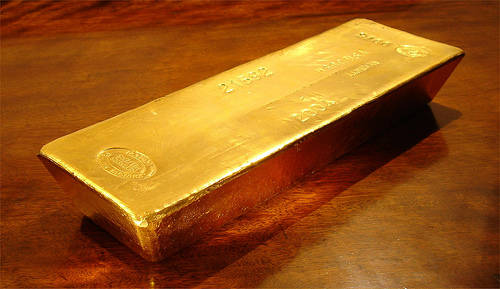
bar-of-goldI am typically hesitant to highlight foreign articles that have been translated by others from languages I can’t comprehend. That said, Koos Jansen of In Gold We Trust, is someone who does great work and so I am running with his latest blog post on German gold repatriation, or a lack thereof.

According to Peter Boehringer, Founder German Precious Metal Society, it appears that the German Bundesbank is backing away from a specific repatriation schedule for the nation’s gold. He sources this claim from a recent article written in the Handelsblatt, titled ”Silence is Golden.” So in other words, the Federal Reserve told them to get lost.

Here are excerpts from Koos’ translation of Peter’s piece:

Due to new developments, the initiators of the Repatriate Our Gold action today publish a small update. The print version of the German Handelsblatt today (02.06.2014) published a substantial three page feature exclusively on the German Gold Reserves, widely known to be stored by the German Bundesbank, the Fed, the Banque de France, and the Bank of England. Under the ambiguous title ”Silence is Golden,” no less than four Handelsblatt editors along with Norbert Häring, a senior and competent voice in matters of Gold vs Money, delivered a piece that is in parts pretty critical against the Bundesbank.

Source: libertyblitzkrieg.com

Japan’s stock market is imploding

nikkeiDid you see what just happened in Japan? The stock market of the 3rd largest economy on the planet is imploding. On Tuesday, the Nikkei fell by more than 610 points.

If that sounds like a lot, that is because it is. The largest one day stock market decline in U.S. history is only 777 points. So far, the Dow is only down about 1000 points during this “correction”, but the Nikkei is down more than 2,300 points.

The Nikkei has dropped more than 14 percent since the peak of the market, and many analysts believe that this is only just the beginning. Those that have been waiting for a full-blown stock market collapse may be about to get their wish.

Japan is absolutely drowning in debt, their central bank is printing money like crazy and the Japanese population is aging rapidly. As far as economic fundamentals go, there is very little good news as far as Japan is concerned.

So will an Asian financial collapse precede the next great financial crisis in the United States? That is what some have been predicting, and it starting to look increasingly likely.

What happened to the Nikkei early on Tuesday was absolutely breathtaking. The following is how Bloomberg described the carnage…

At the end of January 2013, Japanese stocks trailed only Portugal for the biggest rally among developed markets. Now the Nikkei 225 Stock Average is leading declines, slumping 8.5 percent last month and today capping a 14 percent drop from its Dec. 30 peak.

Losses snowballed in Tokyo during a global retreat that has erased $2.9 trillion from equity values worldwide this year amid signs of slower growth in China and stimulus cuts by the U.S. Federal Reserve.

As Bloomberg noted, much of the blame for the financial problems that we are seeing all over the planet right now is being placed on the Federal Reserve.

Source: theeconomiccollapseblog.com

The dying dollar

pcrSince 2006, the US dollar has experienced a one-quarter to one-third drop in value to the Chinese yuan, depending on the choice of base.

Now China is going to let the dollar decline further in value. China also says it is considering undermining the petrodollar by pricing oil futures on the Shanghai Futures Exchange in yuan. This on top of the growing avoidance of the dollar to settle trade imbalances means that the dollar’s role as reserve currency is coming to an end, which means the termination of the US as financial bully and financial imperialist. This blow to the dollar in addition to the blows delivered by jobs offshoring and the uncovered bets in the gambling casino created by financial deregulation means that the US economy as we knew it is coming to an end.

The US economy is already in shambles, with bond and stock markets propped up by massive and historically unprecedented Fed money printing pouring liquidity into financial asset prices. This month at the IMF annual conference, former Treasury Secretary Larry Summers said that to achieve full employment in the US economy would require negative real interest rates. Negative real interest rates could only be achieved by eliminating cash, moving to digital money that can only be kept in banks, and penalizing people for saving.
The future is developing precisely as I have been predicting.

As the dollar enters its death throes, the lawless Federal Reserve and the Wall Street criminals will increase their shorting of gold in the paper futures market, thereby driving the remnants of the West’s gold into Asian hands.

PBOC Says No Longer in China’s Interest to Increase Reserves
By Bloomberg News – Nov 20, 2013
The People’s Bank of China said the country does not benefit any more from increases in its foreign-currency holdings, adding to signs policymakers will rein in dollar purchases that limit the yuan’s appreciation.

“It’s no longer in China’s favor to accumulate foreign-exchange reserves,” Yi Gang, a deputy governor at the central bank, said in a speech organized by China Economists 50 Forum at Tsinghua University yesterday. The monetary authority will “basically” end normal intervention in the currency market and broaden the yuan’s daily trading range, Governor Zhou Xiaochuan wrote in an article in a guidebook explaining reforms outlined last week following a Communist Party meeting.

Paul Craig Roberts was Assistant Secretary of the Treasury for Economic Policy and associate editor of the Wall Street Journal. He was columnist for Business Week, Scripps Howard News Service, and Creators Syndicate. He has had many university appointments. His internet columns have attracted a worldwide following. His latest book, The Failure of Laissez Faire Capitalism and Economic Dissolution of the West is now available.

Mystery of US unchanging national debt

usdebtThe Treasury Department’s Financial Management Service (FMS), which publishes both the US federal government’s official Daily Treasury Statement and its official Monthly Treasury Statement, is reporting that in July the federal government ran a deficit of $98 billion but that the federal government’s debt remained exactly $16,699,396,000,000 for the entire month.

The FMS said that the deficit went up $98 billion ($97,594,000,000) in the Monthly Treasury Statment for July, which it released on Monday.

At the same time, the FMS said the debt stayed at exactly $16,699,396,000,000 in its Daily Treasury Statements, which are published every business day. The Daily Treasury Statements show the daily value of the federal government debt that is subject to a legal limit set by Congress.

At the static $16,699,396,000,000 level that the Treasury reported for every day of July, the debt was just $25 million below the legal limit of $16,699,421,000,000 that was set in a law passed by Congress and signed by President Barack Obama.

If Treasury’s daily statements were to declare that the government had borrowed an additional net $98 billion to cover the $98 billion deficit the Treasury declared in its monthly statement for July, the Treasury would be conceding that the government had already surpassed the legal limit on the debt–and has been violating the law by continuing to borrowing additional money.

Instead, even as the Treasury was running up the $98-billion deficit it reported in the July Monthly Treasury Statement, every one of the 22 Daily Treasury Statements published for July said the Treasury had closed out the previous business day with exactly $16,699,396,000,000 in debt.

The Daily Treasury Statement for Aug. 12, released Tuesday afternoon, says the debt remained stuck at exactly $16,699,396,000,000 during the first 12 days of this month, too.

On May 17, the first day the Treasury reported that the debt had hit exactly $16,699,396,000,000–and was thus just $25 million below the legal limit–Treasury Secretary Lew sent a letter to House Speaker John Boehner saying he was beginning to implement what he called “the standard set of extraordinary measures” to prevent the Treasury from exceeding the legal limit on the federal debt.

Since Lew sent that letter–announcing that he would use “extraordinary measures”–the debt has remained stuck at exactly $16,699,396,000,000 for 87 straight days.

That includes all 31 days in July when Lew’s Treasury says it was running a $98 billion deficit.

When Lew stops using “extraordinary measures” to keep the debt at exactly $16,699,396,000,000, the government will have another debt-limit crisis. – CNSNews.com