Austrian right doubles votes in regional election

The far-right Freedom Party (FPOe) doubled its votes Sunday in a regional election in Upper Austria province dominated by the issue of migration, according to final results issued by the provincial government.

With a result of 30 per cent, FPOe became Upper Austria‘s second-strongest party, relegating the Social Democratic Party (SPOe) to third place.

The FPOe had “taken the worries and concerns of the population seriously and understood them,” partly leader Heinz-Christian Strache said.

Voter surveys showed that nearly two thirds of voters felt that the refugee issue was important.

Austria is the main transit country for migrants travelling from the Balkans to Germany. Nearly 19,800 people arrived in Austria on the weekend, police estimated.

The populist right-wingers had called for stricter border controls and a fence similar to Hungary‘s to control the flow of thousands of migrants that have been arriving daily in recent weeks. They also accused the government in Vienna of inaction amid what they called “asylum chaos.”

The central government and regional politicians had bickered for months over creating sufficient accommodation for new refugees.

As arrivals soared over the past weeks, the government introduced border controls, deployed the army at the border and started discussing more restrictive asylum rules shortly before the regional election.

Social Democratic Chancellor Werner Faymann said the migratory flow from Syria was not the government‘s fault. “I say yes to controls and order, but it must absolutely done in a humane manner,” he said.

Faymann‘s party got 18 per cent of the votes, nearly 7 percentage points less than in the previous election in 2009.

The conservative People‘s Party (OeVP), which forms a coalition with the Social Democrats in Faymann‘s cabinet, remained the strongest force in Upper Austria but plummeted 10 percentage points to 36 per cent.

Upper Austria‘s conservative governor Josef Puehringer said the EU‘s migration policy decisions in the past days had come too late to alter the election result.

The FPOe hopes to carry Sunday‘s momentum forward to the Vienna city council polls on October 11. Three years before the next regular parliamentary election, the rightists have been leading surveys for months, ahead of the two national coalition parties.

Source: dpa
Trump leads the pack in NC

GOP presidential candidate Donald Trump is the leading choice among North Carolina Republican primary voters in a recent US Public Policy Poll. Trump received 16 percent, while former Florida Gov. Jeb Bush received 12 percent.

Wisconsin Gov. Scott Walker came in tied for second with Bush at 12 percent. Former Arkansas Gov. Mike Huckabee was third with 11 percent. Dr. Ben Carson got 9 percent with Sen. Marco Rubio (R-FL). Sen. Rand Paul (R-KY) got 7 percent while Se. Sen. Ted Cruz (R-TX) got six percent. Gov. Chris Christie received five percent. Carly Fiorina followed with four percent and former Texas Gov. Rick Perry had two percent.

Sen. Lindsey Graham (R-SC) had one percent, as did Gov. Bobby Jindal, and former Sen. Rick Santorum. Gov. John Kasich and George Pataki were under one percent.

President Obama carried North Carolina in 2008, but Republican nominee Mitt Romney took it back in 2012.

“Trump’s favorability rating in North Carolina is 55/32, much higher than we were finding in national polls prior to his entry into the race. Trump’s really caught fire with voters on the far right- 66% of ‘very conservative’ voters see him favorably to only 24% with a negative view of him. Trump is polling particularly well with younger voters (29%) and men (20%),” Public Policy Poll (PPP) reported.

Bush had been the leader in the North Carolina polls, but is struggling to get the conservative vote.

Clinton saw a ten-point drop in support from last month’s standing.

“Clinton’s polling over 70% with African Americans, 60% with liberals and women, and 50% with moderates and voters in every age group,” PPP reported, adding she is weaker with white voters and men.

“All of the general election match ups in North Carolina are close with Clinton trailing 5 of the Republican hopefuls, leading 4 of them, and tied with one,” PPP noted.

Source: Breitbart

Botswana president wins second term

Botswana President Ian Khama yesterday saw off the biggest challenge posed by the opposition since independence, winning a second term in power as his ruling party secured a majority at the polls.

His Botswana Democratic Party won at least 34 of the 57 parliamentary seats, AFP reported.

With counting continuing for seven seats, it was unclear if the ruling party would match its previous tally of 41 seats.

An opposition coalition called the Umbrella for Democratic Change won 14 seats, while another opposition group, the Botswana Congress Party, secured two.

Khama, 61, the son of the country’s first president, Seretse Khama, will be inaugurated today.

Friday’s general elections had been billed as the most challenging for the ruling party since Botswana gained independence from Britain in 1966.

Opposition parties had made inroads in urban areas after the formation of a breakaway party, the Botswana Movement for Democracy, in 2010. It is now part of Umbrella for Democratic Change, led by Duma Boko, which won seats in districts that were once strongholds of the ruling party, including in the capital, Gaborone.

“The UDC did well for a new party ,” said party representative Seakamela Motsoaledi.

Why no military coup before 1994?

sadf_coupby Albert Brenner


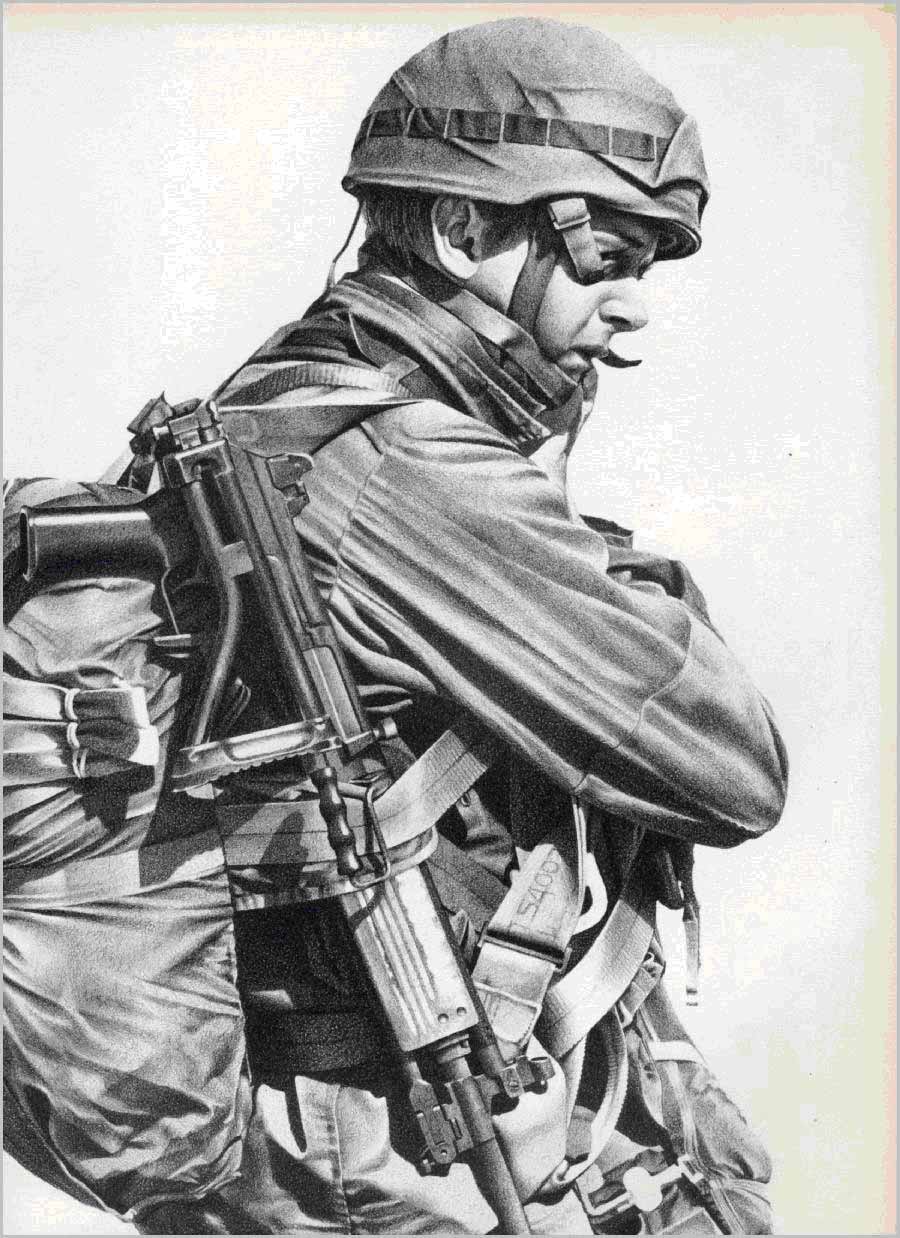
Many of us still wonder why no military coup was carried out by the, erstwhile, formidable South African Defense Force in the early 1990s – an army rated as one of the top four at the time, and one which contributed hugely to the final defeat of Communism.

It goes without saying that the SADF had some of the best soldiers in the world. True winners! So it is a very pertinent question to ask why these top people failed to take matters into their own hands, especially given the fact that what FW de Klerk and ilk did was illegal in terms of internationally-recognized norms and conventions governing the democratic process.

I have received personal permission to publish the opinion of one of those former SADF members. A man who has some knowledge and insight regarding what transpired during those tumultuous years… in which political treachery bested even one of the top armies on the planet at the time:

During the time period leading up to 1994, there were plans made within the SADF military hierarchy to oppose, and possibly prevent, the impending hand-over of South Africa to the main South African terrorist organisation and our enemies. These plans were never executed, for various reasons. However, even if they had been attempted, they would probably have failed, at the latest in the long run, because they were simply not good enough. They did not sufficiently take into account the political aspect and what is nowadays called ‘sustainability’.

Let us start with what we could see was coming, and what our SADF ‘coup’ planners were up against: A hand-over of our internationally recognised state, the Orange-White-and-Blue RSA, to our enemies BY MEANS OF AN ELECTION. An Azanian election, dressed up and touted as an all-inclusive South African one, i.e. one in which WE, the voters of the Orange-White-and-Blue republic, were seen to take part in and thus recognise. Now, if you go against this with military force only, – even though you have the power to do so, – you will lose the legality and acceptance which our own state had had ever since 1910. You needed a righteous and un-smearable issue to make a stand. A stand on which you would and could JUSTIFY your resistance and action, – at the very least in the eyes of your own people, and then also in the eyes of your friends and people of goodwill overseas (who did exist, make no mistake, they weren’t all loony left).

Such an issue had, in fact, been presented to us by FW de Klerk and his scheming Broeders. In fact, they had no choice, because, in essence, what they were planning was illegal. You cannot simply eliminate an internationally recognised state and replace it with another one, which was basically what they were doing. ‘Freedom once conferred cannot be taken away’, – old English international law. De Klerk’s elimination-and-hand-over plan had more than one such weak point, in fact. I will mention just two, the most vulnerable ones in my opinion. First, he stopped our traditional, democratic by-elections. And ‘sommer’ all of our own democratic elections. And thereby our whole democratic election process, undermining his own legitimacy. This was after he saw during the Florida by-election in 1992 that his government would lose the next national election. Then, in 1993, he handed over, officially, the authority of our state to an UNELECTED body, the Transitional Executive Council, on 7 December to be exact. A total no-no if you think about it, what with unelected terrorists with the blood of innocent civilians like those of the Church Street massacre on their hands sitting there and ruling over us.

Any military action by the SADF to try stop FW de Klerk would have had to utilize, and home in on, these weak points of our enemies’ and traitors’ plans. Thereby giving the resistance to it the necessary legality, righteousness and appeal to decent people in our own ranks and overseas. For example, making an armed, militarily overwhelming stand somewhere, – not necessarily at the Union Buildings and not necessarily using force or shedding blood, – at the time of, or just after, the above illegal (in terms of our own constitution) acts by de Klerk. Demanding the restoration of our democracy and legality of government. Making it clear to our own people and the world that it is about restoring our democracy, our right to elect our own leaders, and have an elected, loyal government of our own as we had had since 1910, as set up by Great Britain and with the full approval of the international community. SUCH a military action would have had a chance of success.