The nationwide grounding of US flights has exposed serious weaknesses in America’s ageing infrastructure, while a high-level visit by Israel’s Mossad chief to Washington has highlighted the growing pressure on Donald Trump to resume military action against Iran.
The United States experienced one of its most significant aviation disruptions in decades on Friday, November 13, when the Federal Aviation Administration (FAA) ordered a nationwide ground stop following a breakdown in its air traffic communications network.
The shutdown lasted almost five hours and affected more than 20,000 flights. Seventeen of the FAA’s 22 en-route air traffic control centres experienced communications problems, disrupting the systems used to coordinate aircraft movements and radar information.
Although flights subsequently resumed, the incident exposed the vulnerability of critical American infrastructure and raised fresh questions about the country’s ability to maintain and modernise essential technological systems.
An ageing system brought to a standstill
US Transportation Secretary Sean Duffy attributed the disruption to a technical failure during routine maintenance work carried out by L3Harris, a longstanding contractor responsible for operating the FAA’s telecommunications network.
The work involved replacing ageing copper telecommunications lines with fibre-optic connections. According to Duffy, a router associated with the upgrade began generating an extraordinary number of connection attempts, overwhelming other routers in the network.
Officials reported more than 1,000 connection attempts every four to five seconds.
The resulting instability affected communications between air traffic controllers and aircraft, as well as radar feeds. The FAA consequently decided to ground departing flights nationwide as a precautionary measure.
Duffy said investigators were examining whether the incident resulted from human error, faulty installation or defective equipment. No definitive technical cause had yet been established.
The administration also stated that there was no indication of a cyberattack or deliberate hostile action.
The incident nevertheless highlighted a wider problem: parts of America’s air traffic control infrastructure remain dependent on equipment and telecommunications systems that are decades old.
Congress has already approved substantial funding for modernisation, but the transition has been slow and technically complicated.
The episode raises questions about the resilience of infrastructure that is essential not only to commercial aviation but also to the functioning of the world’s largest economy.
Netanyahu presses Trump over Iran
While Washington was dealing with the aviation crisis, another development was unfolding in the relationship between the United States and Israel.
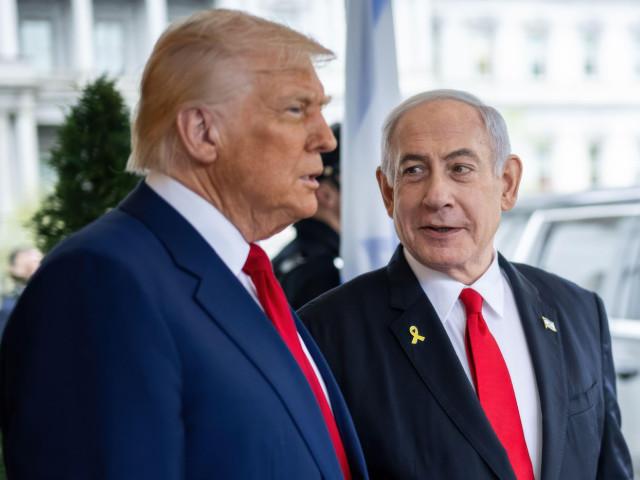
According to a report by Axios on November 13, Mossad director Roman Gofman was in Washington for discussions with senior Trump administration officials concerning the war with Iran.
Gofman was reportedly scheduled to meet CIA director John Ratcliffe and was also expected to travel to Miami for discussions with White House envoy Steve Witkoff.
The visit coincided with renewed pressure from Israeli Prime Minister Benjamin Netanyahu for the United States to resume military operations against Iran.
Trump has so far resisted this pressure, although his position on the conflict has fluctuated. Reports have described disagreements over whether to continue diplomatic efforts or return to a more extensive military campaign.
The Israeli government considers Iran’s military and nuclear capabilities an existential security concern. Washington, meanwhile, must weigh the consequences of renewed hostilities, including the possibility of a wider regional conflict, disruption to energy markets and further American military commitments.
The presence of the Mossad director in Washington therefore illustrates the extent to which intelligence and military cooperation form part of the relationship between the two countries.
It also raises an important question about the degree of influence Israel exercises over American strategic decision-making.
Intelligence cooperation and political pressure
The relationship between American and Israeli intelligence agencies has traditionally been close. Cooperation between the CIA and Mossad covers a range of regional security issues, including Iran, counterterrorism and intelligence gathering.
However, cooperation does not necessarily imply agreement over every strategic decision.
The reported Washington visit comes at a particularly sensitive moment. Israel wants to prevent Iran from consolidating its regional military position, while the Trump administration faces the economic and political consequences of prolonging a costly conflict.
The question is whether American foreign policy is being determined primarily by Washington’s assessment of its own national interests or increasingly by the strategic priorities of a close regional ally.
This is a legitimate subject for public debate, particularly when decisions about war and peace are involved.
There have also been allegations and speculation in political circles about possible intelligence leverage, blackmail and pressure exerted on American political leaders. However, no independently verified evidence has established that Mossad is blackmailing Trump or that Israeli intelligence has been responsible for the recent American infrastructure disruptions.
Such allegations should not be confused with the documented diplomatic and political pressure surrounding the Iran conflict.
Is America becoming more vulnerable?
The FAA incident and the renewed diplomatic activity surrounding Iran are separate developments. There is currently no evidence connecting the aviation shutdown to Israel, Mossad or the conflict in the Middle East.
Nevertheless, both events illustrate different aspects of the challenges confronting the United States.
On the domestic front, an advanced industrial economy remains dependent on ageing infrastructure that can be disrupted by relatively isolated technical failures.
On the international front, Washington faces competing strategic priorities and pressure from allies whose regional objectives do not necessarily coincide with American interests.
The United States possesses enormous military, technological and economic resources. Yet the ability to project power abroad ultimately depends on the reliability of institutions and infrastructure at home.
The question facing Washington is therefore not simply whether it should resume military action against Iran. It is whether American foreign policy can remain independent, coherent and sustainable while the country struggles to modernise the systems upon which its own security and prosperity depend.
For a country that has long presented itself as the guarantor of international stability, these are questions that cannot easily be ignored.
PRAAG — November 15, 2026