America’s infrastructure crisis: Israel, Iran and the growing pressure on Washington

America’s nationwide aviation shutdown has exposed serious weaknesses in its ageing infrastructure. Meanwhile, Israel’s Mossad chief has travelled to Washington as Benjamin Netanyahu presses Donald Trump to resume military action against Iran.

The nationwide grounding of US flights has exposed serious weaknesses in America’s ageing infrastructure, while a high-level visit by Israel’s Mossad chief to Washington has highlighted the growing pressure on Donald Trump to resume military action against Iran.

The United States experienced one of its most significant aviation disruptions in decades on Friday, November 13, when the Federal Aviation Administration (FAA) ordered a nationwide ground stop following a breakdown in its air traffic communications network.

The shutdown lasted almost five hours and affected more than 20,000 flights. Seventeen of the FAA’s 22 en-route air traffic control centres experienced communications problems, disrupting the systems used to coordinate aircraft movements and radar information.

Although flights subsequently resumed, the incident exposed the vulnerability of critical American infrastructure and raised fresh questions about the country’s ability to maintain and modernise essential technological systems.

An ageing system brought to a standstill

US Transportation Secretary Sean Duffy attributed the disruption to a technical failure during routine maintenance work carried out by L3Harris, a longstanding contractor responsible for operating the FAA’s telecommunications network.

The work involved replacing ageing copper telecommunications lines with fibre-optic connections. According to Duffy, a router associated with the upgrade began generating an extraordinary number of connection attempts, overwhelming other routers in the network.

Officials reported more than 1,000 connection attempts every four to five seconds.

The resulting instability affected communications between air traffic controllers and aircraft, as well as radar feeds. The FAA consequently decided to ground departing flights nationwide as a precautionary measure.

Duffy said investigators were examining whether the incident resulted from human error, faulty installation or defective equipment. No definitive technical cause had yet been established.

The administration also stated that there was no indication of a cyberattack or deliberate hostile action.

The incident nevertheless highlighted a wider problem: parts of America’s air traffic control infrastructure remain dependent on equipment and telecommunications systems that are decades old.

Congress has already approved substantial funding for modernisation, but the transition has been slow and technically complicated.

The episode raises questions about the resilience of infrastructure that is essential not only to commercial aviation but also to the functioning of the world’s largest economy.

Netanyahu presses Trump over Iran

While Washington was dealing with the aviation crisis, another development was unfolding in the relationship between the United States and Israel.
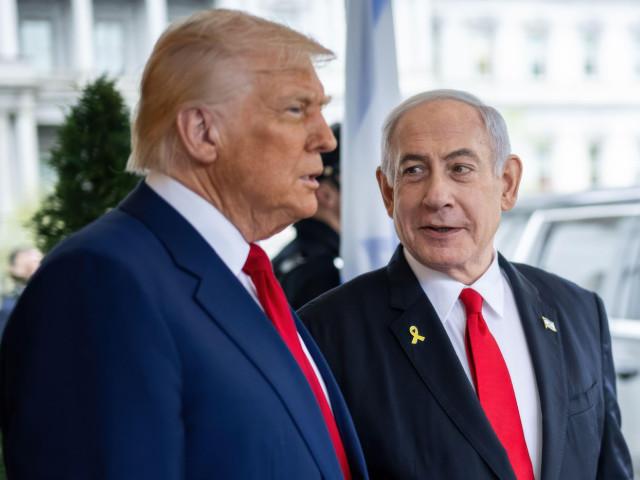
President Trump and Israeli prime minister Benjamin Netanyahu

According to a report by Axios on November 13, Mossad director Roman Gofman was in Washington for discussions with senior Trump administration officials concerning the war with Iran.

Gofman was reportedly scheduled to meet CIA director John Ratcliffe and was also expected to travel to Miami for discussions with White House envoy Steve Witkoff.

The visit coincided with renewed pressure from Israeli Prime Minister Benjamin Netanyahu for the United States to resume military operations against Iran.

Trump has so far resisted this pressure, although his position on the conflict has fluctuated. Reports have described disagreements over whether to continue diplomatic efforts or return to a more extensive military campaign.

The Israeli government considers Iran’s military and nuclear capabilities an existential security concern. Washington, meanwhile, must weigh the consequences of renewed hostilities, including the possibility of a wider regional conflict, disruption to energy markets and further American military commitments.

The presence of the Mossad director in Washington therefore illustrates the extent to which intelligence and military cooperation form part of the relationship between the two countries.

It also raises an important question about the degree of influence Israel exercises over American strategic decision-making.

Intelligence cooperation and political pressure

The relationship between American and Israeli intelligence agencies has traditionally been close. Cooperation between the CIA and Mossad covers a range of regional security issues, including Iran, counterterrorism and intelligence gathering.

However, cooperation does not necessarily imply agreement over every strategic decision.

The reported Washington visit comes at a particularly sensitive moment. Israel wants to prevent Iran from consolidating its regional military position, while the Trump administration faces the economic and political consequences of prolonging a costly conflict.

The question is whether American foreign policy is being determined primarily by Washington’s assessment of its own national interests or increasingly by the strategic priorities of a close regional ally.

This is a legitimate subject for public debate, particularly when decisions about war and peace are involved.

There have also been allegations and speculation in political circles about possible intelligence leverage, blackmail and pressure exerted on American political leaders. However, no independently verified evidence has established that Mossad is blackmailing Trump or that Israeli intelligence has been responsible for the recent American infrastructure disruptions.

Such allegations should not be confused with the documented diplomatic and political pressure surrounding the Iran conflict.

Is America becoming more vulnerable?

The FAA incident and the renewed diplomatic activity surrounding Iran are separate developments. There is currently no evidence connecting the aviation shutdown to Israel, Mossad or the conflict in the Middle East.

Nevertheless, both events illustrate different aspects of the challenges confronting the United States.

On the domestic front, an advanced industrial economy remains dependent on ageing infrastructure that can be disrupted by relatively isolated technical failures.

On the international front, Washington faces competing strategic priorities and pressure from allies whose regional objectives do not necessarily coincide with American interests.

The United States possesses enormous military, technological and economic resources. Yet the ability to project power abroad ultimately depends on the reliability of institutions and infrastructure at home.

The question facing Washington is therefore not simply whether it should resume military action against Iran. It is whether American foreign policy can remain independent, coherent and sustainable while the country struggles to modernise the systems upon which its own security and prosperity depend.

For a country that has long presented itself as the guarantor of international stability, these are questions that cannot easily be ignored.

PRAAG — November 15, 2026
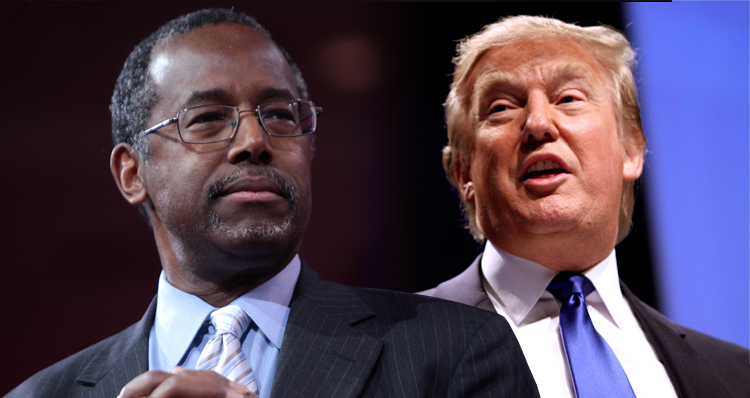
Trump, Carson have Republican Jewish establishment worried

Longtime GOP Jewish donors and activists look on in dismay as the two presidential hopefuls lead the polls

The Republican Jewish establishment is watching the surge of political outsiders — like Donald Trump and Ben Carson — in the presidential primaries with dismay.

“It’s like we have a conference call every morning, and we ask, ‘What can we do to screw ourselves up today?’” said Fred Zeidman, a longtime fundraiser for Republican presidential candidates.

Zeidman’s exasperation pervades the Jewish Republican world: A party that has, in recent years, established a cozy relationship with Jewish conservatives seems to be careening — at least since the presidential race began.

Donald Trump, the billionaire reality show star, has lobbed rhetorical bombs at Hispanics, women and GOP rivals, and promised to deport 11 million illegal immigrants. Ben Carson, the retired world-famous neurosurgeon, said this weekend that a Muslim can’t be president.

“This election is proving that nobody really knows anything, including me,” said Seth Mandel, the Op-Ed editor of the New York Post.

It’s a disorienting experience for longtime Republican Jewish donors and activists, who have made inroads into the party’s establishment over the last two decades, and who have been at the forefront of advocacy for tolerance and pluralism within the party.

“The tone of what they’re saying, we get painted as a party of intolerance,” said Zeidman, who practices law in the Houston area and backs Bush’s candidacy.

The anti-immigrant rhetoric especially infuriates Zeidman, a past chairman of the US Holocaust Memorial Council, who was driving near his home during his phone interview with JTA.

“I think half the people I’m looking at doing roadwork in 100-degree heat are not legal — and they are working their tuchus off,” he said.

Mandel said online that white supremacist backing for Trump — who has suggested immigrants from Mexico are predominantly criminals — has been unsettling. “That will always make Jews uncomfortable, that’s why there’s so much pushback” among some Jewish conservatives against the Trump candidacy.

Tevi Troy, a deputy health secretary in the President George W. Bush administration who is not yet backing a candidate, said one plus that’s emerging from the debates is that the entire range of candidates — insiders and outsiders alike — are pro-Israel and have embraced the party’s skepticism of the Iran nuclear deal.

Contrast that with previous Republican primary seasons, when disruptive outsiders were cool on Israel – notably in the 1990s, when Pat Buchanan ran twice, Troy said.

“Fortunately, the outsiders this time, just about all are exceedingly pro-Israel and that’s a good thing,” he said.

Still, he noted, for a constituency that has cultivated the Republican establishment, the emergence of outsiders is discomfiting.

The Republican Jewish Coalition’s board is a who’s who of the party’s most generous givers — most famously Sheldon Adelson, the Las Vegas casino magnate.

Adelson has yet to come out for a candidate, the conventional wisdom being that he is waiting in order to avoid a repeat of 2012, when his bankrolling of long-shot Newt Gingrich ended up weakening the eventual nominee, Mitt Romney. But one of Adelson’s top allies, Mort Klein of the Zionist Organization of America, recently expressed concern over Trump’s behavior and lead in the polls.

“Trump is making many of us very nervous,” Klein told Talking Points Memo, speaking after Trump derided the black Carson’s skills as a physician. (Carson is a world-famous neurosurgeon.) “He doesn’t have the temperament to be president. I mean, really, to lash out at Carson as a talented doctor? You don’t know what you’re talking about.”

Source: Times of Israel

Overwhelming majority vote for Palestinian flag at UN HQ

UN General Assembly has passed a Palestinian resolution to allow its flag fly in front of the United Nations headquarters in New York, angering Israel and giving hope to Palestinians seeking to gain full UN membership.

The resolution stated that flags of non-member observer states like Palestine “shall be raised at [UN] Headquarters [in New York] and United Nations Offices following the flags of the member states.”

The vote was passed with 119 votes out of 193 in favor. Among the European countries that voted ‘yes’ were France, Russia, Sweden, Italy, Spain, Ireland, Slovenia, Luxembourg, Belgium, Malta and Poland.

The majority of EU member states were among the 45 countries that chose to abstain. A total of eight countries voted against the idea, including the US and Israel.

Palestinian Prime Minister Rami Hamdallah told reporters that he strongly believes this marks another step towards recognition of Palestinian statehood.

“It’s a step to the recognition of Palestine as a full member state of the United Nations,” Hamdallah said in Paris.

Currently, the UN has only one other non-member observer state – the Vatican. The Holy See did not demonstrate any excitement when the idea was first brought up last month, however, and rejected the Palestinians’ original proposal to introduce the resolution as a joint effort, asking the Vatican to co-sponsor the document.

The Vatican still remained unsure on Wednesday whether it will be flying its flag next to Palestine’s.

Source: RT

Thousands of Palestinian buildings to be demolished in West Bank

Palestinians have little chance of obtaining a construction permit in the West Bank, while Israel keeps issuing new demolition orders for Palestinian buildings faster than it can bulldoze them, says a new report from the local United Nations mission.

“Official data released by the Israeli authorities indicate that over 11,000 demolition orders – affecting an estimated 13,000 Palestinian-owned structures, including homes – are currently ‘outstanding’ in Area C of the West Bank,” begins a report, titled “Under Threat,” published by the United Nations Office for the Coordination of Humanitarian Affairs occupied Palestinian territory (OCHA-oPt).

While Israel has destroyed over 2,800 buildings since it began issuing demolition orders in 1988, most of them have never been carried out, remaining a Sword of Damocles hanging over the heads Palestinian residents.

“Structures built without permits are regularly served with demolition orders. While only a minority of the orders issued are executed, these orders do not expire and leave affected households in a state of chronic uncertainty and threat,” say the authors. “Where the orders have been implemented, they have resulted in displacement and disruption of livelihoods, the entrenchment of poverty and increased aid dependency.”

A shockingly low percentage of Palestinian applications for permits is ever approved. Israeli Civil Administration data reveals that Palestinians submitted 2,020 requests for building permits in Area C between 2010 and 2014 and only 33 of them (1.5 percent) were approved.

Palestinians have been demanding full recognition as a sovereign state from the UN and the international community for years now.

Recently, a number of international organizations have intensified their criticism of Israel’s stepped up demolition activities in the West Bank.

Source: RT

Israel bans journalists voicing opinions on air

The Israeli parliament has passed a law banning journalists working for the country’s public broadcast authority from expressing their opinions on air.

The law, passed early Thursday in the middle of the night, drew criticism from journalists, who accused the government of trying to stifle dissent.

The law says broadcasts should “avoid one-sidedness, prejudice, expressing personal opinions, giving grades and affixing labels.”

The Israel Press Council urged parliament to cancel the law, saying it violates free speech.

Cabinet Minister Ofir Akunis said the law only applies to newscasts. He told Channel 2 TV that some journalists critical of the government “aren’t being professional and are doing it for political reasons.”

It remains unclear how the law will be enforced.

Source: AP

Showers at Auschwitz shock Israelis

Israelis who visited the Auschwitz concentration camp museum in Poland on Sunday were shocked to discover that the museums’ management had placed mist showers near the facilities entrance, in an effort to beat the heat. Anyone who saw the showers could not help get past the gas chamber connotation.

“As soon as I got off the bus I walked into the shower contraption,” said Meyer Bolka, an Israeli visiting the museum. “I was in shock. It was a punch to the gut. I walked up to the reception and asked the worker there about the showers, she said it was a hot day. I told her: ‘With all due respect it reminds me of the gas chambers,’ she told me she is very sorry.”

According to Bolka, Israeli youths who were visiting the museum used the mist showers to cool down, but the placement of the contraptions raised anger among the older visitors. “I think that in a place like this they should have thought about the type of connotation this would raise,” he added. “If you want to cool the people down, you need to find another solution. It was not a pleasant sight to see those sprinklers.”

The Auschwitz museum management responded saying that there was no intention to hurt the feelings of the visitors, but rather to make their visit more pleasant on one of the hottest days of the year. The Museum will assess the continued placement going forward.

Source: ynetnews.com

Israel appoints ‘irresponsible’ UN envoy

The appointment by Israeli prime minister Benjamin Netanyahu of one of his most hawkish and outspoken rivals as Israel’s new ambassador to the United Nations has prompted widespread consternation. As one analyst noted, Danny Danon’s appointment is a “cruel joke” on the international community. The new envoy “lacks even the slightest level of finesse and subtlety required of a senior diplomat”, the analyst said.

Last year, Mr Netanyahu sacked Mr Danon as deputy defence minister, describing him as too “irresponsible” even by the standards of Israel’s usually anarchic politics. Mr Danon had denounced the prime minister for “leftist feebleness” in his handling of Israel’s attack on Gaza last summer.

Mr Danon is a UN official’s worst nightmare. He is a vocal opponent of a two-state solution and has repeatedly called for the annexation of the West Bank.

The appointment comes as the Palestinians are expected to step up efforts at the UN to entrench recognition of their statehood, and as Israel tries to fend off war crimes investigations at the International Criminal Court.

The accepted explanation is that Mr Netanyahu’s move is driven by domestic, not diplomatic calculations. The two faced off for Likud party leadership in November. Mr Danon lost but Mr Netanyahu doubtless fears, as his party and the Israeli public shift to the right, that his rival’s time is coming.

The posting removes Mr Danon as head of the Likud’s powerful central committee, dispatches him to a distant land, and should provide him with opportunities aplenty to self-harm.

Mr Danon’s appointment also reveals something more significant about Israel’s deteriorating relations even with its international supporters.

In the decade following 1948, Abba Eban, Israel’s foremost diplomat, sought to carve out international recognition and respectability for his country at the UN, even as it launched wars in 1956 at Suez and again against Egypt in 1967.

Reality caught up with Israel when the UN adopted a resolution in 1975 equating Israel’s official ideology, Zionism, with racism. The resolution was only revoked 16 years later after Washington arm-twisted the General Assembly with promises that Israel would engage in a peace process with the Palestinians, culminating a short time later in the Oslo Accords.

But as Oslo slowly unravelled, Israel was forced on to the back foot again. Today, the consensus in Israel is not only that the UN is a bastion of anti-Israel prejudice but that it is an incubator of global anti-semitism.

This year, after stepping down as Israel’s ambassador to the US, Michael Oren argued that the plague of anti-semitism had infected even America’s leading Jewish journalists. Their critical coverage of Israel was proof of self-hatred, he claimed. The need for such desperate diplomacy has grown as Israel’s moral image has tarnished. But the hectoring has produced diminishing returns.

Mr Danon’s posting is part of a pattern of appointments by Mr Netanyahu that reflect a growing refusal to engage in diplomacy. It started with the decision in 2009 to let the thuggish Avigdor Lieberman lead the foreign ministry and diplomatic corps.

Most notably, Mr Netanyahu picked Ron Dermer to replace Mr Oren in 2013. Mr Dermer is credited with engineering Mr Netanyahu’s provocative address this year to the US Congress – an undisguised effort to undermine president Barack Obama’s talks with Iran.

Mr Danon’s appointment indicates the extent to which the Israeli right has abandoned any hope of persuading the international community of the rightness of its cause – or even of working within the rules of statecraft. Mr Danon can be expected to barrack, abuse and alienate fellow ambassadors at the UN.

An Israel that has no place for negotiations or compromise wants only to tell the world that it is wrong and that Israelis don’t care what others think. Mr Danon is the right man for that job.

Source: The National

Jimmy Carter has cancer

Former US president Jimmy Carter said on Wednesday that recent liver surgery revealed he had cancer that had spread to other parts of his body.

“I will be rearranging my schedule as necessary so I can undergo treatment by physicians at Emory Healthcare,” Carter, 90, said in a statement.

“A more complete public statement will be made when facts are known, possibly next week.”

Carter, a Democrat, served as the 39th president from 1977 to 1981 after defeating Republican incumbent Gerald Ford.

He was defeated for re-election in 1980 by Republican Ronald Reagan.

The Carter family has a history of pancreatic cancer, including his parents, two sisters and younger brother Billy Carter who all died from the disease.

Carter told the New York Times in 2007 that he and other relatives had given blood for genetic studies seeking to help doctors diagnose the disease.

Asked why he has escaped the disease for so long while it devastated the rest of his family he blamed smoking.

“The only difference between me and my father and my siblings was that I never smoked a cigarette,” said Carter, former governor of Georgia and a state senator.

Carter is a virulent critic of Israel. He maintains that Israeli policy in the West Bank represented instances of apartheid worse that those that once held sway in South Africa.

Carter’s comments were broadcast on Israel Radio, which played a tape of an interview with the ex-president. He made similar remarks in interviews, such as one to CBC television.

“When Israel does occupy this territory deep within the West Bank, and connects the 200-or-so settlements with each other, with a road, and then prohibits the Palestinians from using that road, or in many cases even crossing the road, this perpetrates even worse instances of apartness, or apartheid, than we witnessed even in South Africa.”

Carter has rejected the criticism of use of the word apartheid.

“I feel completely at ease,” said Carter, while accusing Israel of oppressing Palestinians. “I am not running for office. And I have Secret Service protection.”

Saudi king blames Mossad for 9/11

The former ambassador to Saudi Arabia said in an interview this week that following 9/11, Saudi King Salman had insisted to him that the Mossad was responsible for the attacks.

“One of my first calls was with then-governor of Riyadh… Prince Salman, who is now the king. His response was very emphatic [that] this could not have been Saudis, we couldn’t possibly have done this,” former envoy Robert Jordan said on CNN’s Fareed Zakaria GPS.

“This had to have been an Israeli plot. The Mossad must have done this,” he cited Salman as saying at the time.

“I got the same thing from the minister of interior, Prince [Mohammed bin] Nayef,” Jordan continued. “I finally had to bring a CIA briefer out and show some of these princes some compelling evidence that it, indeed, was Saudis who were the hijackers.”

Jordan went on to say that he saw the Saudis as being in denial about the fact that 15 of the 19 hijackers were from their country.

The Saudis eventually altered their position, he said, after al-Qaida bombed three Western housing compounds in May 2003.

“At that point, Crown Prince Abdullah said to me that he understood that they had a problem, that they would take immediate action to capture or kill the attackers and to treat just as harshly anyone who gave them comfort or aid or even tried to justify what they did,” said the former ambassador.

In his new book, Desert Diplomat: Inside Saudi Arabia Following 9/11, Jordan writes that the Palestinian issue was often a “source of Saudi anger directed at me.”

“America should be able to resolve this, they told me.

After all, the United States was omnipotent. All Washington had to do was snap its fingers and Israel would come to heel, do whatever we commanded it to do,” he says in the book.

Source: Jerusalem Post

Palestinian toddler dies in arson attack

A suspected “price tag,” or retaliation, arson attack by Jewish settlers killed an 18-month-old Palestinian child in a house in the occupied West Bank and injured several other people, according to Israeli police.

The toddler died in a house fire which broke out in a village of Kafr Duma near the West Bank city of Nablus, Reuters reports.

The victim’s four-year-old brother and both parents were also injured and have been brought to the hospital. The attack took place in the early hours of the morning when the family was fast asleep and could not react immediately.

The house was reportedly destroyed by fire at the time the family was sleeping inside, RT reported.

The infamous “price tag” tactic, typically used by radical Jewish settlers attacking Palestinian homes, Christian churches, mosques and government buildings, in response to Palestinian attacks on Jewish settlements, was daubed on the walls of the family’s home.

The death of a child will inevitably aggravate Israeli-Palestinian tensions at the time when the government of Prime Minister Benjamin Netanyahu pursues the controversial settlement expansion policy in the occupied territories.

Just this Wednesday, Netanyahu approved the construction of 300 new homes in the central West Bank Jewish settlement of Beit El despite international condemnation. US State Department responded by a statement criticizing the “illegitimate” construction.

However, Israeli authorities have, at the same time, disgruntled some of the Jewish settlers in Beit El, as the Supreme Court has ordered that two blocks of houses illegally built on the Palestinian-owned land in the same area be torn down. The demolition sparked fierce resistance, with settlers protesting and clashing with police on Tuesday.

Israeli missile may have downed MH17

With debris of Malaysia Airlines Boeing 777 still covering the crash site in eastern Ukraine, the investigation of the July 17, 2014 tragedy is surrounded by secrecy. RT talked to international experts and the victims’ families, still waiting for answers.

“We want the facts, we don’t want propaganda,” Malaysian engineer Azahar Zanudin told RTD. “I’d like to know the real things about the disaster of MH17, because in MH17 case there is something wrong about the investigation,” the engineer said. Blaming the local media for “following the western media” bias, Zanudin has created a Facebook page, where he collects the news about the crash from around the world “for the people to see.”

“You can study the whole world behind your laptop, but the best thing you can do is check the spot yourself,” Dutch blogger Max Van Der Werff told RTD. The blogger has visited the crash site in Ukraine, and said that in the one week he spent there, he had learned more about the crash “than in a whole year behind my laptop.”

“The Netherlands is the official head of the investigation… (but) we are part of NATO, we are part of anti-Russian alliance, so we are not independent investigators,” Van Der Werff said, adding that the MH17 crash should have been investigated by the UN, “not a biased country like the Netherlands.”

Another independent researcher from the West also changed his opinion on the possible cause of the tragedy after visiting the crash site. “I thought that the story of (another) plane taking the Boeing was a propaganda of Russia,” German independent journalist Billy Six shared with RTD. Then he visited the site in eastern Ukraine and spoke to witnesses who claimed they saw military jets flying in the area, but no BUK missile launcher vapor trail.

A report on Malaysian Airlines MH17 air disaster in Ukraine last year by a group of old-hand aviation security experts maintains that the Boeing might have been downed by an Israeli Python air-to-air missile.

The report was leaked via the private LiveJournal account of Albert Naryshkin (aka albert_lex) late on Tuesday and has already been widely discussed by social media communities in Russia.

The authors of the investigative report have calculated the possible detonation initiation point of the missile that hit the passenger aircraft and approximate number and weight of strike elements, which in turn designated the type and presumed manufacturer of the weapon.

The missile that attacked MH17 had a passive radar homing head, which explains why the missile exploded so close to the cockpit. Under the radar-transparent nosecone of a Boeing 777-200 there is a surveillance radar station operable during the flight, so most likely the missile homed on to this radar as the target.

Apart from a radar homing head, the missile could also be equipped with an advanced, matrix type, imaging IR seeker, which enables the missile to determine the size and the type of the target and choose for attack its most vital element. For a huge Boeing aircraft, that’s the cockpit.

A simulation of the missile attack has proved that missiles with that type of guidance choose to attack a big passenger plane from the front hemisphere.

There are four air-to-air missiles that fit the description established by the experts, namely: French Magis-2, Israeli Shafrir, American AIM-9 and Israeli Python – all short-range.

The first three have been struck off the list for various reasons, including type of warhead or guidance system specifications. The Python deserved a closer look.

Contact lost with Freedom Flotilla

Contact has been lost with the Swedish boat Marianne, which had been leading the Gaza-bound Freedom Flotilla, after other boats turned back. The IDF announced that they intercepted and searched the vessel which had tried to “breach the maritime blockade.”

The Freedom Flotilla Coalition lost contact with the flagship of the flotilla at 10:57pm GMT, the organization said. The vessel was some 100 nautical miles from its destination when it happened.

Israel is maintaining its naval blockade of Gaza according to international law, as confirmed by the US Secretary General, said Israeli Foreign Affairs deputy spokesman, Oren Rozenblat.

The Israeli navy has engaged the vessel, boarded and searched it, the Israeli Defense Forces’ spokesman Peter Lerner confirmed. He said the Marianne is now being escorted to Ashdod Port after ignoring “repeated appeals to change course.”

However, the organizers of the flotilla have reasons to believe that the engagement was not as uneventful and non-violent as the navy claims, and that some people on board “might be hurt.”

“There is no humanitarian crisis in Gaza whatsoever,” claimed the official, commenting on the Israeli prime minister’s office sarcastically proposing the flotilla head for Syria instead.

However, the European activists against Gaza siege don’t agree with the Israeli official. Rami Abdo, one of the campaigners, says ‘the situation on the ground is dire.’

Meanwhile, Israeli PM Benjamin Netanyahu has praised the navy personnel “for their determined and efficient” actions that allowed for the maintenance of the the blockade.

“This flotilla is nothing but a demonstration of hypocrisy and lies that is only assisting the Hamas terrorist organization and ignores all of the horrors in our region,” Netanyahu said. “We are not prepared to accept the entry of war materiel [in] to the terrorist organizations in Gaza as has been done by sea in the past.”

“Israel is the only democracy that defends itself in accordance with international law,” Netanyahu was cited as saying in an issued statement.

The four vessels which departed from various ports on Saturday attempted to break the eight-year long Palestinian blockade, a news release on the campaign’s official webpage said. This time, some 70 people were on board, including former Tunisian President Moncef Marzouki and Spanish MEP Ana Maria Miranda Paza.

In 2010, a similar attempt to break the blockade with the “Freedom Flotilla” ended in bloodshed. Israeli troops then boarded a Gaza-bound vessel in international waters. Nine pro-Palestinian activists were killed.

In 2011, a report by a UN investigative committee implied that Israel has the right to stop Gaza-bound vessels, The Times of Israel reported. On Wednesday, UN Secretary-General Ban Ki-moon said he believed “a flotilla will not help to address the dire situation in Gaza,” but urged Israel to “lift all closures, with due consideration of Israel’s legitimate security concerns.”

Palestinian submission an ‘ICC credibility test’

The Palestinian Authority has submitted the first evidence of alleged Israeli war crimes committed during the Gaza conflict in 2014 to the International Criminal Court, seeking to accelerate the investigation of these abuses.

After meeting the ICC chief prosecutor Fatou Bensouda, Palestinian Foreign Minister Riyad al-Maliki said that he had submitted the dossiers concerning the 2014 Gaza war, as well as Israeli settlements on the occupied Palestinian land and treatment of Palestinian prisoners in Israel.

“Palestine is a test for the credibility of international mechanisms … a test the world cannot afford to fail. Palestine has decided to seek justice, not vengeance,” Maliki said.

He also added that he had agreed with prosecutors on a date of their visit to Palestine, although he did not reveal the exact time. “It depends on their ability to enter Palestinian territory without problems,” he added.

ICC prosecutors intend to make a field visits both to Palestine and Israel, but they have not received a formal permission from Israel yet, Reuters reports.

In the interview to RT, former special rapporteur to the UN Human Rights Council concerning Palestinian affairs said that International Criminal Court “faces a real credibility test”, as “if chief prosecutor fails to open any investigation into crimes committed in Palestine, there is a real danger that the ICC will fall apart…”

Israel denied all allegations of war crimes against its soldiers as well as disputed the UN report on alleged war crimes by claiming that its soldiers had upheld the “highest international standards.” It also accused Palestinian militants of firing thousands of rockets at Israeli population centers.

John Dugard said that Israel had just white-washed all involvement of its forces in any abuses during the 2014 Gaza war as it is clearly determined not to prosecute its soldiers for the crimes committed during this conflict.

Islamic State mints its own coins

Islamic State of Iraq and the Levant (ISIS) has begun minting its own “Islamic dinar” coins, Syrian activists claimed on Tuesday night.

Pictures posted on social media showed a series of gold sovereigns bearing ISIS inscriptions, and with a reported value of one gold dinar being with $139 (£89).

An anti-ISIS activist by the name of Abu Ibrahim Raqqawi, who lives in the ISIS controlled city of Raqqa in Syria, posted photographs of the coins on his Twitter account, saying they were due to come into circulation soon. Pictures were also posted on pro-ISIS social media accounts.

Isil announced last November that it would start producing their own currency in areas under its control, in an effort to “emancipate itself from the satanic global economic system”.

The currency, based on the original dinar coins used during the Caliphate of Uthman in 634 CE, was set to include seven minted coins: two gold, three silver and two copper.

Designs due to be embossed on the gold coins included a symbol of seven wheat stalks – a Quranic reference – and a world map.

The prototype design had also shown that the coins would carry an Arabic message on the lines of “The Islamic State – A caliphate based on the doctrine of the Prophet”.

ISIS has not attacked Israel but has concentrated on Islamic countries instead.

Source: The Telegraph