Israeli missile may have downed MH17

With debris of Malaysia Airlines Boeing 777 still covering the crash site in eastern Ukraine, the investigation of the July 17, 2014 tragedy is surrounded by secrecy. RT talked to international experts and the victims’ families, still waiting for answers.

“We want the facts, we don’t want propaganda,” Malaysian engineer Azahar Zanudin told RTD. “I’d like to know the real things about the disaster of MH17, because in MH17 case there is something wrong about the investigation,” the engineer said. Blaming the local media for “following the western media” bias, Zanudin has created a Facebook page, where he collects the news about the crash from around the world “for the people to see.”

“You can study the whole world behind your laptop, but the best thing you can do is check the spot yourself,” Dutch blogger Max Van Der Werff told RTD. The blogger has visited the crash site in Ukraine, and said that in the one week he spent there, he had learned more about the crash “than in a whole year behind my laptop.”

“The Netherlands is the official head of the investigation… (but) we are part of NATO, we are part of anti-Russian alliance, so we are not independent investigators,” Van Der Werff said, adding that the MH17 crash should have been investigated by the UN, “not a biased country like the Netherlands.”

Another independent researcher from the West also changed his opinion on the possible cause of the tragedy after visiting the crash site. “I thought that the story of (another) plane taking the Boeing was a propaganda of Russia,” German independent journalist Billy Six shared with RTD. Then he visited the site in eastern Ukraine and spoke to witnesses who claimed they saw military jets flying in the area, but no BUK missile launcher vapor trail.

A report on Malaysian Airlines MH17 air disaster in Ukraine last year by a group of old-hand aviation security experts maintains that the Boeing might have been downed by an Israeli Python air-to-air missile.

The report was leaked via the private LiveJournal account of Albert Naryshkin (aka albert_lex) late on Tuesday and has already been widely discussed by social media communities in Russia.

The authors of the investigative report have calculated the possible detonation initiation point of the missile that hit the passenger aircraft and approximate number and weight of strike elements, which in turn designated the type and presumed manufacturer of the weapon.

The missile that attacked MH17 had a passive radar homing head, which explains why the missile exploded so close to the cockpit. Under the radar-transparent nosecone of a Boeing 777-200 there is a surveillance radar station operable during the flight, so most likely the missile homed on to this radar as the target.

Apart from a radar homing head, the missile could also be equipped with an advanced, matrix type, imaging IR seeker, which enables the missile to determine the size and the type of the target and choose for attack its most vital element. For a huge Boeing aircraft, that’s the cockpit.

A simulation of the missile attack has proved that missiles with that type of guidance choose to attack a big passenger plane from the front hemisphere.

There are four air-to-air missiles that fit the description established by the experts, namely: French Magis-2, Israeli Shafrir, American AIM-9 and Israeli Python – all short-range.

The first three have been struck off the list for various reasons, including type of warhead or guidance system specifications. The Python deserved a closer look.

Hacker explains to FBI how he steered airliner mid-flight

A computer security expert has revealed that he accessed aircraft control systems on up to 20 occasions, according to an FBI search warrant.

The founder of One World Labs, Chris Roberts, was detained for questioning and had his hardware confiscated in April by federal agents after exiting a United flight from Chicago to Syracuse, New York following a tweet suggesting he might attempt to hack into a flight’s entertainment system.

In a search warrant application, obtained by APTN National News, Roberts previously claimed to have told agents that during his research he used his skills and equipment to gain access to the aircraft control systems on as many as 20 occasions.

“During these conversations, Mr. Roberts stated … that he had exploited vulnerabilities with IFE systems on aircraft while in flight. He compromised the IFE systems approximately 15 to 20 times during the time period 2011 through 2014. He last exploited an IFE system during the middle of 2014,” FBI Special Agent Mark Hurley wrote in his application.

During at least one of these “test” flights, Roberts “stated that he then overwrote code on the airplane’s Thrust Management Computer while aboard a flight,” the document claims. “He stated that he successfully commanded the system he had accessed to issue the CLB or climb command. He stated that he thereby caused one of the airplane engines to climb resulting in a lateral or sideways movement of the plane.”

The court document does not mention during which particular flights the interference with the aircraft controls took place.

According to the affidavit, Hurley met with Roberts in February and March to discuss IFE security vulnerabilities with regards to the Boeing 737 and 757, and Airbus A320 aircraft. It was during these interview sessions that Roberts revealed that his hacking into IFE that was produced by Panasonic and Thales.

When Roberts revealed his hacking abilities, Hurley writes that he had warned the programmer that accessing plane’s in-flight systems without authorization is a federal crime. Roberts, at the time said he understands and promised not to engage in such activity.

But after his April 15 tweet, the FBI apparently alleged the security expert could attempt to repeat success, and did go on to detain and question the man. The agents and technicians who inspected the aircraft which he flew to Chicago, before connecting to New York, allegedly found tampering on two electronic boxes next to Roberts’s seat. According to affidavit, one of the electronic boxes had been damaged.

“Technical specialists with the FBI believed that he may have just [hacked the plane’s system] again, or attempted to do so using the equipment then in his possession,” it said.

When the agents confiscated Roberts’ equipment in Syracuse – including a MacBook, an iPad, three hard drives and numerous removable USB flash drives – he denied hacking into any systems during the flight from Denver to Chicago.

“We believed that Roberts had the ability and the willingness to use the equipment … to access or attempt to access the IFE and possibly the flight control systems … and that it would endanger public safety to allow him to leave the Syracuse airport that evening with the equipment,” Hurley’s report states.

Roberts meanwhile told the Wired that the FBI has taken his remarks about hacking out of context of their comprehensive discussions with the agency.

Germanwings investigation is hardly conclusive

Christine Negroni is an aviation journalist and safety specialist who is writing a book on aviation mysteries to be published by Penguin in 2016.

Negroni says the evidence so far shows first officer Andreas Lubitz deliberately flew the plane to a lower altitude.

We know also that the plane wound up crashing into a mountain. The question French prosecutor Brice Robin has not answered is how he knows the co-pilot had that end in mind.

We know the plane was commanded down to a lower altitude after reaching 38,000 feet. We do not yet know why.

We know the Captain, identified in web postings as Patrick Sonderheimer, left the cockpit and was unable to get back in. We do not know that he tried to enter using the door passcode or that the door was blocked beyond the normal locking function. All we know is that the cockpit voice recorder shows he tried to enter by knocking.

There may be reasons for trying to enter by knocking, including confusion or distraction due to alarm.

We know that the first officer Lubitz failed to heed the knocks on the door. We do not know if this was deliberate. We know Lubitz was breathing. Both his inappropriate action in not heeding the knocking on the door and his breathing is consistent with deliberate action OR incapacitation.

We know the plane descended. We do not know if this was via programming the plane to descend or flight by hand by the first officer. A conscious and lucid pilot does not fly a plane into a mountain unless it is deliberate. An addled or unconscious pilot does not see or recognize the threat of a mountain and does. Either one of those options is possible, but the evidence presented so far does not allow conclusions.

Finally, unlike in the United States and other countries, the French judicial authorities are in charge of cockpit voice recorders and flight data recorders, which then makes them available to the air safety agency the Bureau d’Enquêtes et d’Analyses. There’s a reason for this increased oversight: In the crash of an Airbus A-320 in 1988, BEA was suspected of tampering with FDR data.

As a consequence, air accidents in France are seen through the prism of criminality. In other countries seasoned air safety investigators understand there is a multitude of factors that contribute to a disaster and will wait to have all the evidence before drawing conclusions.

This is the only way I can understand how the Marseilles French prosecutor made the tremendous leap of logic in concluding that the first officer “wanted” to crash the plane killing all 150 onboard.

The evidence so far shows Lubitz deliberately flew ​the plane to a lower altitude and a crash resulted. The question not answered in anything I’ve heard or seen is whether he intended for that to happen. This is not a subtle quibble. It makes a monumental difference in what really happened to Germanwings Flight 9295.

French president declares contents of second black box missing

French President François Hollande said the contents of a second black box found on Wednesday were missing as investigators managed to extract audio recordings from the first flight recorder recovered from Germanwings flight 4U9525.

French investigators say they have succeeded in extracting “usable data”, including sound and voices, from the first black box recovered from the Airbus A320 that crashed in the French Alps.

After revelations emerged that one of the pilots was locked out of the cockpit as Germanwings flight 4U9525 crashed and killed 150 on board, speculation has swirled as to what exactly happened in the moments before the disaster.

A senior military official involved in the investigation has told the New York Times that the audio from the “black box” flight recorder reveals that one of the pilots left his seat and then exited the cockpit.

He can then be heard knocking lightly on the door in an attempt to get back in. Soon after, he can reportedly be heard trying to break the door down.

No conversation is heard. Minutes later the plane hit a mountain in the French Alps, killing all 150 on board.

It remains unknown which pilot was in the cockpit and which was locked out.

The information remains unconfirmed by authorities.

The co-pilot had been on the job since September 2013 and had 630 hours of flying experience. He “was First Officer at Germanwings since September 2013,” a Lufthansa spokeswoman told AFP.

By comparison the plane’s pilot had more than ten years experience and 6,000 hours of experience flying the Airbus A320 model.

Neither of the pilots have been named.

French aviation safety expert Christophe Naudin told The Local that it remains unclear whether someone else may have gained entry to the cockpit.

“We don’t know whether the pilot left and was locked out or someone else entered the cockpit and locked him out,” he said.

“What’s troubling is that apparently we don’t hear voices anymore once the door is locked.”

Once the cockpit door is locked it is impossible to gain access, even with the code, explained Naudin.

Reinforced cockpit doors were installed on all planes at the behest of the US in the aftermath of 9/11.

“This case could show that having reinforced doors does not necessarily increase security and safety on airplanes,” Naudin said.

The is the biggest mystery is what happened with pilot inside. No distress signal was sent from the plane and the crew failed to respond to ground control’s desperate attempts to make contact.

Authorities have said the plane was still flying at the moment of the crash, meaning it did not explode mid-air.

Aviation experts have suggested several theories.

“If the pilots did not stop the airplane from flying into the mountains, it is because they were unconscious or dead, or they had decided to die, or they were forced to die,” one expert told the AFP news agency.

Authorities hope to find the second black box to reveal more.

Unlikely. The head of France’s Bureau d’Enquetes et d’Analyses (BEA) crash investigation agency, Remi Jouty, told reporters he still had “not the slightest explanation” for the tragedy at this stage.

“It is inexplicable. The plane was in perfect condition and the two pilots were experienced,” Lufthansa chief executive Carsten Spohr said in Frankfurt.

Weather did not appear to be a factor in the crash, with conditions calm at the time, and Germanwings had an unblemished safety record.

More than 140 believed dead in latest air disaster

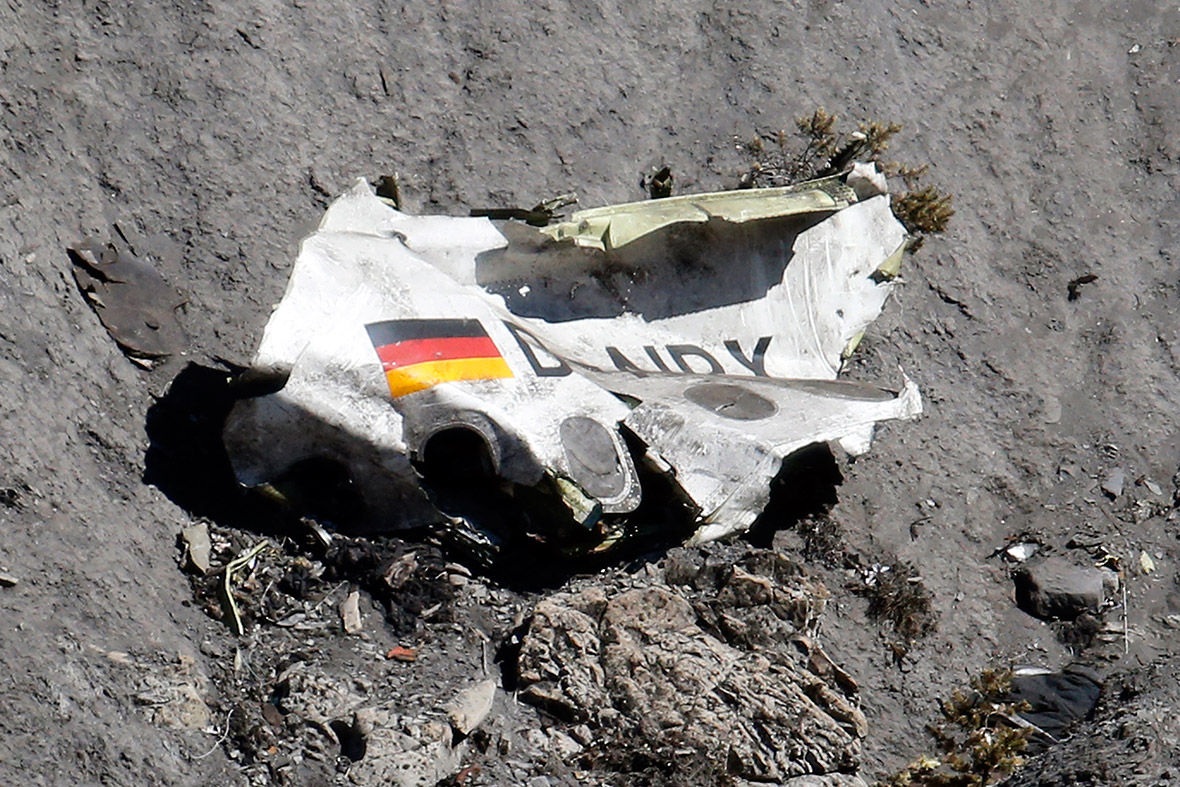
A passenger plane flying from Barcelona to Düsseldorf has crashed in a remote and mountainous area of southern France, officials have confirmed.

The French prime minister, Manuel Valls, said he fears between 142 and 150 people have been killed.

The Airbus A320 making the flight for Lufthansa’s lowcost arm, Germanwings, crashed near the small mountain village of Barcelonette in the southern Alps.

A distress call was made by the aircraft at 10.47am, while the plane was “in an abnormal situation”, the French transport ministry said. The crash happened shortly afterwards, it added.

The aircraft disappeared off the radar at around 11.20am, Le Figaro reported. The plane dropped from 38,000 feet to 6,925 feet in nine minutes between 10.31 and 10.40, air radar services said.

At least 142 passengers and six crew-members on board. Spain’s deputy prime minister said 45 passengers were believed to be Spanish nationals. A spokesman for France’s interior ministry said the passenger manifest was being verified.

The plane crashed at 2,000 metres altitude in the Alps, in the commune of Méolans-Revel, an isolated area of small villages and hamlets that are difficult to reach.

The French weather station says the meteorogical conditions were calm at the time of the accident and that the sky was “completely clear”, with almost non-existent wind.

Gilles Gravier, president of Tourism in the Val d’Allos ski resort area, said nothing of the crash had been heard from the pistes in his village. He said 400 gendarmes, firefighters and emergency search and rescue personnel had been mobilised but the zone was “extremely difficult” to get to.

Florent Plazy, director of the local ski school ESF, confirmed the area was hard to access even for mountain walkers.

Eric Ciotti, the head of the regional council, said search-and-rescue teams were headed to the crash site but Pierre-Henry Brandet, the interior ministry spokesman, told BFM television that he expected “an extremely long and extremely difficult” operation because of the area’s remoteness.

“The aircraft debris has been localised, and we can only fear a heavy death toll. The first information from rescuers suggests that the number of survivors, if there are any, will be low, but until we have reached the site by land, we cannot say with any certitude. The rescuers are being taken in by helicopter.”

The French president, François Hollande, said it was likely there were no survivors.

He said the crash happened in “an area that was very difficult to access” and did not know yet whether any homes had been affected on the ground. “Solidarity is our first sentiment at this moment,” he said.

Spain’s airport operator, Aena, has confirmed that the plane left Barcelona at 8.55am, a slight delay from its expected departure of 8.35am but did not know the reason for the delay. It said it had designated a special room in Terminals 1 and 2 of Barcelona’s El Prat airport for family members and media.

Airbus said it was aware of reports about the crash.

“We are aware of the media reports,” Airbus said on Twitter. “All efforts are now going towards assessing the situation. We will provide further information as soon as available.”

The crashed A320 is 24 years old and has been with the parent Lufthansa group since 1991, according to online database airfleets.net.

Source: The Guardian

Former pilots speak out on latest MH17 claims

As the investigation into the MH17 tragedy continues in eastern Ukraine, the SU-25’s chief designer has told German media that the fighter jet could not possibly have taken down the passenger plane. RT spoke to former pilots about the jet’s capabilities.

Malaysia Airlines flight MH17, en route from Amsterdam to Kuala Lumpur, crashed down over rebel-held eastern Ukraine on July 17, 2014. Everyone on board – 283 passengers and 15 crew members – perished in the tragedy.

A report on the official investigation published in September 2014 said the crash was a result of structural damage caused by a large number of high-energy objects that struck the Boeing from the outside. However, it did not conclude what the objects were, where they came from, or who was responsible.

Kiev and some Western states have placed blame on eastern Ukraine militias and Russia. The Russian Defense Ministry shared radar data pointing to other possibilities in July – including an attack by a Ukrainian Sukhoi-25 fighter jet, which was said to have been tracking the passenger plane.

While an official international investigation into the crash has been dragging on for nine months, the debate into the cause of the tragedy has been once again reignited by recent comments from the chief designer of the SU-25.

Kiev-born Soviet and Russian aircraft designer Vladimir Babak said on Monday that the SU-25 jet – which was spotted tracking the MH17 Boeing at the moment it crashed down – did not have the capability to shoot down a passenger plane. He said the fighter jet could have successfully attacked the Boeing at an altitude of 3,000-4,000 meters, but not at the plane’s altitude of 10,500 meters. He added that air-to-air missiles would have only damaged the Boeing – not completely destroyed it while still in the air.

“I believe all allegations that a SU-25 could be involved into this tragedy are a cover-up attempt,” Babak said in an interview to German channels NDR and WDR. “I cannot explain it otherwise. We cannot understand how an SU-25 could take down the Boeing.”

‘SU-25 capable of high altitude flights, can carry powerful missiles’
However, several former top officials and SU-25 pilots disagree with Babak.

Based on the analysis of the plane debris and the nature of the damage, there is a high probability the plane was stuck by an air-to-air missile and an aircraft gun, Lieutenant General Aleksandr Maslov, former deputy chief of the Russian Air Defense and Land Forces, told RT.

“The published photos [from the MH17 crash site] enable to assume that the Boeing was downed by a military jet. Besides that, the existing damage indicates that the airplane was shot with air-to-air missiles together with an aircraft gun with a 30mm caliber,” Maslov said.

Claims that the passenger plane was downed by a surface-to-air Buk missile “cannot be supported,” as the nature of the damage from the missiles is different, he added.

Commenting on the jet’s ability to maneuver at higher altitudes, the former commander of an aviation division, Major General Sergey Borysyuk, noted that the jet would have had the capability to “maneuver comfortably,” even at such a high altitude.

“I personally flew, and not once, at an altitude of 12,000 meters…,” he said. “My colleagues have risen to an altitude of 14,000 meters. The altitude of 10,500 was officially authorized during operations in Afghanistan. Therefore the plane, even at an altitude of 12,000 meters, has the capability to maneuver comfortably, its aerodynamic characteristics enable it to do so.”

Borysyuk explained that the R-60 missiles on the SU-25 have an infrared homing and a rod warhead. Citing the nature of the plane’s debris and the “precisely sliced fuselage,” he said that R-60 missiles were possibly used.

“The firing range of the missile is 7.5km. And in those conditions, the probability of hitting the target increases,” he added.

The former chief commander of Russia’s Air Force, Vladimir Mikhailov, also said he flew the SU-25, reaching an altitude of 12,000 meters and even 14,000 meters. He also stated that the plane “comfortably maneuvers” at such heights.

“If the plane was downed by Buk [missile defense system], it would have almost immediately fallen to pieces in the air and we could not have witnessed such large debris on the ground,” he said.

Along with Russia’s Ministry of Defense, he also questioned why the MH17 flight stayed within the flying corridor until it reached Donetsk, but then deviated from the route to the north.

In July 2014, Russia’s Ministry of Defense presented military monitoring data which showed Kiev military jets tracking MH17 shortly before the crash and posed a set of questions to Ukraine over the circumstances of the tragedy, which have still not been answered.

‘You can’t fire Buk missile in broad daylight with no witnesses’
Speculation about the combat capabilities of the SU-25 jet stem from the Russian definition of the aircraft’s service ceiling – which is not the same as its absolute ceiling, as defined by the US military, Veterans Today senior editor Gordon Duff told RT.

“The claimed service ceiling is based on the oxygen supply in the aircraft. Now, there is a claim that this plane [SU-25] will only work to 22,000 feet. At the end of World War II, a German ME-262 would fly at 40,000 feet, a P-51 Mustang propeller plane flew at 44,000 feet. The SU-25 was developed as an analogue of the A-10 Thunderbolt, an American attack plane. The planes have almost identical performance, except that the SU-25 is faster and more powerful. The A-10 Thunderbolt has a service ceiling of 45,000 feet. The US estimates the absolute ceiling, which is a different term,” Duff explained.

The known estimate for the absolute ceiling of the SU-25 is 52,000 feet (15.8km), he added.

Moreover, Duff said one cannot be entirely sure the detected fighter jet was an SU-25 at all, as modern radar spoofing counter-measures – such as those designed by BAE Systems and employed by NATO – are able to mask any other aircraft, be it an SU-27 or F-15, as another plane.

Duff said he also discussed the possibility of the MH17 flight having been shot by a ground-to-air missile with experts from the FAA (Federal Aviation Administration), the FBI, the Air Line Pilots Association, as well as air traffic and air operational officers – and they all agreed that no proof of anti-aircraft missile use has been provided to the public.

It is highly unlikely that the launch of such a missile would have gone unnoticed in the area, Duff stressed, adding that the trail left by the rocket in the air would have been witnessed and filmed by “thousands.”

“One of the things we settled on early on is that in the middle of the day, if this were a Buk missile, the contrail would have been seen for 50 miles [80km]. The contrail itself would have been photographed by thousands of people; it would have been on Instagram, on Twitter, it would have been all over YouTube – and no one saw it. You can’t fire a missile on a flat area in the middle of the day leaving a smoke trail into the air and having everyone not see it,” Duff said.

“There is no reliable information supporting that it was a Buk missile fired by anyone,” he added.

German intel report on MH17 contradicts Western version

The German BND foreign intelligence agency’s new report on the Boeing crash in Ukraine in fact contradicts the Western version on the causes of the tragedy. On Monday this opinion was voiced by Alexey Pushkov, the head of the foreign-affairs committee in the State Duma, the lower house of the Russian parliament.

“The German intelligence report questions the main version which was accepted by the West and stated by a range of Western politicians and almost all mass media that Russia had handed over to militias the Buk missile systems that were used to shoot down the Malaysian Boeing,” Alexey Pushkov said.

“The German intelligence stated: The Boeing was downed by a Buk missile system ‘captured by militias.’ That means Russia was not involved. And the Buk could have been launched by the Ukrainian Armed Forces,” Pushkov said on Twitter.

This came after BND President Gerhard Schindler claimed his agency had found that Donbas militia was responsible for shooting down the Malaysian Boeing using a Buk missile system, though no evidence was unveiled.

Self-defence leader Andrej Purgin said on Sunday in response that pro-Russian groups could not have shot down MH17. According Purgin the Buk missile system is very complicated and self-defence forces do not have the knowledge to operate such a system.

He blamed the leadership in Kiev for the disaster. It is incomprehensible Purgin said, that the government had not closed the airspace over the conflict area.

“The new version means that Russia has no relation to the downed Boeing,” Pushkov stressed.

“If this was done by a Ukrainian missile, Russia has no relation at all to this tragic event,” Pushkov said.

The Dutch Safety Board, which is leading the probe and coordinating the international team of investigators, said in its preliminary report published September 9 that “Flight MH17 with a Boeing 777-200 operated by Malaysia Airlines broke up in the air probably as the result of structural damage caused by a large number of high-energy objects that penetrated the aircraft from outside.

Meanwhile there will not be hearing about the plane crash of flight MH17 in the Netherlands because coalition parties are blocking it.

It appears the VVD and PvdA do not find it necessary to study satellite images showing the the downing of the plane.

On July 17, a Malaysia Airlines Boeing 777 passenger airliner on flight MH17 en route from the Dutch city of Amsterdam to the Malaysian capital of Kuala Lumpur crashed in the Donetsk Region in eastern Ukraine, killing all 298 people on board.

The hearing could “hamper” the ongoing investigation by the Prosecution into the cause of the disaster,  VVD MP Han ten Broeke told NU.nl.

The CDA and D66 insisted Sunday on a hearing after satellite images and various photographs were provided by German intelligence (BND).

Source: ItarTASS/nu.nl/ RIANovosti

German sanctions against Russia voted on pure speculation

A German parliamentarian, who is also chairman of the German Defense Committee and former member of the Yugoslavian OCSE, says the German government had no idea whether MH17 was actually shot down.

Alexander Neu, during an interview for Rossiya Segodnya, also spoke about Germany’s proclaimed neutrality in its involvement in Ukraine.

Neu requested a deputy’s inquest from the German government concerning the Boeing which was shot down over Ukraine on September 6.

The reply has now been released to the public.

It was clear from the reply that, firstly,  the German government had no idea whether MH17 was actually shot down. Secondly, if it had been shot down, the government couldn’t answer who the responsible party was.

The Hague published its first interim report from the Dutch Safety Board two days later and it was announced that the plane was hit by a missile, but again it was not said by whom.

The territory where the plane’s debris fell was hit by mass shelling from Kiev’s artillery, rendering it highly unlikely that any new evidence would be found.

The conversations between the pilots and the dispatchers has also still not been released.

The German media however unanimously blamed Russia and, incredibly, it was on the basis of pure speculation that sanctions were leveled against the Russian Federation, since it is now certain that the Germans had no knowledge of who might have been responsible.

Neu also wonders why crucial information is not being released from the black boxes.

Andrej Hunko, another German member of parliament, asked the OSCE in Vienna recently whether the organization had appealed to the German government for German drone support.

The OSCE replied stating that they asked neither the German nor the French government for support via drones. In fact, they wanted no military support from these countries whatsoever.

When the German Defense Minister Von der Leien was confronted with these lies at a meeting of the parliamentary defense committee, Ms. Von der Leien repeated that the OSCE had asked for support, but she would give no specifics.

In other words, von der Leien is pushing the drones, even though the OSCE had not specifically asked for them.

Germany, France and the European Union, as well as the members of NATO are a part of the conflict, supporting the Kiev regime with instructors and intelligence assistance, and are not neutral observers.

Switzerland, the chairman of the OSCE, provides drones and so does Austria, since these countries are neutral.

Dutch foreign minister says MH17 victim wore oxygen mask

A passenger of the downed Malaysia Airlines Flight MH17 was found with an oxygen mask over the mouth when the body was recovered from the crash site, Dutch Foreign Minister Frans Timmermans said on Wednesday.

Timmermans’ statement came in response to a comment from TV host Jeroen Pauw that the final moments aboard Flight MH17 were not as suggested by Timmermans in his speech at the U.N. Security Council in the week after the tragedy.

Timmermans had reportedly said during his U.N. speech on July 21 that the passengers on board the Malaysia Airlines plane remained conscious after the aircraft was struck by a suspected missile.

“I’ve been thinking how horrible the final moments of their lives must have been, when they knew the plane was going down,” Timmermans reportedly said at the time. “Did they lock hands with their loved ones, did they hold their children close to their hearts, did they look each other in the eyes, one final time, in a wordless goodbye? We will never know.”

A preliminary report of the investigation by the Dutch Safety Board into the crash stated that the jetliner broke apart in mid-air after being hit by “a large number of high-energy objects that penetrated the aircraft from outside.”

Timmermans’ announcement indicates that some passengers on board Flight MH17 may have remained conscious after the aircraft was reportedly hit by a surface-to-air missile. It contradicts findings that claimed that the people aboard the jetliner, which was traveling from Amsterdam to Kuala Lumpur, had been killed instantly after the strike of a BUK missile.

Jeroen Pauw  accused Timmermans of making an emotional speech about the last moments of those on board the plane to the United Nations shortly afterwards.

The first report on the crash shows there is no single moment when the passengers could have realised that a rocket was approaching the plane, Pauw said.

In his rebuttal, Timmermans said one of the passengers was found with an oxygen mask on. ‘So there was time to do that,’ the minister said.

The plane had 298 people on board, of whom 196 were Dutch. So far 262 of the victims have been identified. The Netherlands is in charge of the investigation.

Timmermans was invited to a Dutch late-night talk show “Pauw,” Dutch News reported.

Experts said earlier that the passenger may not have noticed the attack. “The passengers probably lost consciousness immediately,” said researcher James Vosswinkel to Bloomberg. Joris Melkert, lecturer in aeronautical engineering at Delft University concluded that the device disintegrated in the air.

Relatives of the victims this morning received yet another email confirming that an oxygen mask was found on an Australian victim.

About 228 coffins have been reportedly flown back to the Netherlands for identification of the victims. However, forensic experts have not been able to recover all the bodies from the crash site due to the ongoing conflict in the area.


German company to pay for MH17 info

Germany’s fraud investigation company Wifka is ready to pay $30 million for the information on those behind the shootdown of the Malaysian Airlines MH17 flight in eastern Ukraine on July 17, the company said on its website on Wednesday.

The company said it has been tasked with investigating the air crash that killed all 298 passengers and crew. Wifka did not disclose the name of its client who is providing the reward.

Wifka said the reward would be paid to those who know who had shot down the plane, who gave the order to shoot it down, what happened to the people involved in the shootdown and to the weapon used.

“The money is securely deposited in Zurich, Switzerland. It will be paid there or in a different neutral place of the whistleblower’s choice,” Wifka said.

The company said its work was absolutely confidential and advised “whistleblowers to take great care, that is to contact them through a lawyer”.

Source: ItarTASS

Russia to request UN report on MH17 air disaster

Russia is planning to request an official report on the progress of the investigation into the crash of a Malaysian passenger plane in eastern Ukraine, Russia’s UN envoy Vitaly Churkin said Monday.

“We will ask for a briefing by the UN Secretariat on the progress of the implementation of Resolution 2166,” Churkin told reporters at the United Nations headquarters in New York.

Churkin said it had been a month since the start of the probe and paragraph 13 of the resolution envisions periodical reports by the UN secretary general on the progress of the investigation.

On August 14, the Dutch Safety Board, which is in charge of victim identification and probing the cause of the disaster, said it had finished its work in Ukraine, and that an initial report on the flight MH17 crash will be released during the first week of September.

A total of 298 people, including 193 Dutch citizens and 27 Australians, died on July 17 as a Malaysia Airlines Boeing 777 en route from Amsterdam to Kuala Lumpur crashed in Donetsk Region of Ukraine.

The investigation into the circumstances of the crash is seriously obstructed by continuing clashes between independence supporters and Kiev forces in eastern regions of Ukraine.

Ukrainian authorities claim the plane was shot down by independence supporters, whereas the latter say they do not have necessary equipment to hit a target flying this high.

Source: RIA Novosti

International experts have still not arrived at MH17 crash scene

The international community has been accusing the anti-Kiev forces on the ground of mishandling bodies and evidence at the crash site.

A day earlier a spokesperson from the Donetsk People’s Republic (DPR) Aleksandr Borodai, accused the international community of lacking enthusiasm to investigate the plane crash.

The Dutch foreign minister said his country was “furious” to hear bodies were being “dragged around.” Australian Prime Minister Tony Abbott described the crash site in the territory controlled by anti-Kiev forces as “absolutely chaotic.”

Borodai explained all of the actions undertaken at the site of the crash were dictated by urgent humanitarian need to take care of the decomposing bodies.

The bodies of 196 MH17 crash victims have been placed inside refrigerated train carriages, according to the leadership of DPR, with international experts still not at the crash scene.

The DPR once again said it was waiting for the international experts to come and said it guaranteed their security, but wanted the Kiev authorities to agree to a ceasefire in turn, according to statement by DPR’s deputy PM, Andrey Purgin.

“We declare that we guarantee security of international experts at the site of the tragedy if Kiev agrees to a ceasefire,” the statement reads as cited by RIA Novosti. “We call on Kiev to immediately sign this agreement with DPR at least for the period of time while experts are going to work at the site of the plane crash.”

Meanwhile, foreign journalists got to a station where a train with the dead bodies stood. Their tweets from the site made many internet users wonder why journalists were able to make it to the crash scene, but experts could not.

The carriages at the Torez station were reportedly examined by the OSCE observers, who said there were 196 bodies inside.

That has not been confirmed by Alexander Hug, deputy chief monitor of the OSCE special monitoring mission to Ukraine, who said his team had actually seen body bags in the train carriages but were unable to count them, Reuters reports.

Representatives of the special mission of the Organization for Security and Cooperation in Europe (OSCE) in Ukraine do have access to the crash site of a Malaysian Boeing-777 in eastern Ukraine, a representative of the mission, Michael Bochurkiv, told Itar-Tass on Sunday.

Earlier, the U.S. Department of State spokeswoman Jen Psaki expressed concern over the alleged failure of OSCE observers to reach the crash site.

“This is an element of information war against us,” Borodai said in an interview with Ekho Moskvy radio station, noting that “Fourteen OSCE observers have been working at the airliner’s crash site already for three days. In fact, on the first day they faced some restrictions in their movement. But we explained this by a very simple fact: we are responsible for their security.

“The air disaster area is very big and exceeds more than ten square metres,” Borodai added, noting that “When they entered the zone, which is precisely in sight of Ukrainian machine guns, patrolmen stopped them [OSCE observers]. They proposed to them [OSCE observers] not to go there for one simple reason that if they had come under Ukrainian machine gun fire, responsibility would be shouldered on us.”

Source: RT/Itar-Tass