Hacker explains to FBI how he steered airliner mid-flight

A computer security expert has revealed that he accessed aircraft control systems on up to 20 occasions, according to an FBI search warrant.

The founder of One World Labs, Chris Roberts, was detained for questioning and had his hardware confiscated in April by federal agents after exiting a United flight from Chicago to Syracuse, New York following a tweet suggesting he might attempt to hack into a flight’s entertainment system.

In a search warrant application, obtained by APTN National News, Roberts previously claimed to have told agents that during his research he used his skills and equipment to gain access to the aircraft control systems on as many as 20 occasions.

“During these conversations, Mr. Roberts stated … that he had exploited vulnerabilities with IFE systems on aircraft while in flight. He compromised the IFE systems approximately 15 to 20 times during the time period 2011 through 2014. He last exploited an IFE system during the middle of 2014,” FBI Special Agent Mark Hurley wrote in his application.

During at least one of these “test” flights, Roberts “stated that he then overwrote code on the airplane’s Thrust Management Computer while aboard a flight,” the document claims. “He stated that he successfully commanded the system he had accessed to issue the CLB or climb command. He stated that he thereby caused one of the airplane engines to climb resulting in a lateral or sideways movement of the plane.”

The court document does not mention during which particular flights the interference with the aircraft controls took place.

According to the affidavit, Hurley met with Roberts in February and March to discuss IFE security vulnerabilities with regards to the Boeing 737 and 757, and Airbus A320 aircraft. It was during these interview sessions that Roberts revealed that his hacking into IFE that was produced by Panasonic and Thales.

When Roberts revealed his hacking abilities, Hurley writes that he had warned the programmer that accessing plane’s in-flight systems without authorization is a federal crime. Roberts, at the time said he understands and promised not to engage in such activity.

But after his April 15 tweet, the FBI apparently alleged the security expert could attempt to repeat success, and did go on to detain and question the man. The agents and technicians who inspected the aircraft which he flew to Chicago, before connecting to New York, allegedly found tampering on two electronic boxes next to Roberts’s seat. According to affidavit, one of the electronic boxes had been damaged.

“Technical specialists with the FBI believed that he may have just [hacked the plane’s system] again, or attempted to do so using the equipment then in his possession,” it said.

When the agents confiscated Roberts’ equipment in Syracuse – including a MacBook, an iPad, three hard drives and numerous removable USB flash drives – he denied hacking into any systems during the flight from Denver to Chicago.

“We believed that Roberts had the ability and the willingness to use the equipment … to access or attempt to access the IFE and possibly the flight control systems … and that it would endanger public safety to allow him to leave the Syracuse airport that evening with the equipment,” Hurley’s report states.

Roberts meanwhile told the Wired that the FBI has taken his remarks about hacking out of context of their comprehensive discussions with the agency.

Airbus to court over NSA/BND espionage

European aviation consortium Airbus said it would file criminal charges over industrial espionage, following reports that US and German foreign intelligence spied on the industry giant.

“We are aware that as a large company in the sector, we are a target and subject of espionage,” the company said in a statement to AFP on Thursday. “However, in this case we are alarmed because there is concrete suspicion of industrial espionage.”

The move follows reports in Bild newspaper and Der Spiegel news magazine based on intelligence documents, claiming US spy agency, the NSA, deliberately targeted Airbus and Eurocopter – also run by the French-based company. The reports additionally revealed Berlin was aware of the espionage and kept quiet since 2008.

Following the allegations, Airbus “asked the German government for information.”

“We will now file a criminal complaint against persons unknown on suspicion of industrial espionage,” the company said.

It is alleged the German Foreign Intelligence service (BND) collaborated with the NSA in providing information about Airbus’ industrial secrets. The German media reports also alleged BND used the Bad Aibling monitoring station in Bavaria not only to spy on industrial business, but also to eavesdrop on the French president, the French foreign ministry, and the European Commission.

A French foreign ministry spokesman was quoted by DW as saying: “We are in close contact on this issue with our German partners.”

The German public and the political elite were furious following the 2013 disclosures by former NSA contractor Edward Snowden, into the NSA hack of Chancellor Angela Merkel’s cell phone. Yet while promising to respond, Germany has done nothing so far.

French president declares contents of second black box missing

French President François Hollande said the contents of a second black box found on Wednesday were missing as investigators managed to extract audio recordings from the first flight recorder recovered from Germanwings flight 4U9525.

French investigators say they have succeeded in extracting “usable data”, including sound and voices, from the first black box recovered from the Airbus A320 that crashed in the French Alps.

After revelations emerged that one of the pilots was locked out of the cockpit as Germanwings flight 4U9525 crashed and killed 150 on board, speculation has swirled as to what exactly happened in the moments before the disaster.

A senior military official involved in the investigation has told the New York Times that the audio from the “black box” flight recorder reveals that one of the pilots left his seat and then exited the cockpit.

He can then be heard knocking lightly on the door in an attempt to get back in. Soon after, he can reportedly be heard trying to break the door down.

No conversation is heard. Minutes later the plane hit a mountain in the French Alps, killing all 150 on board.

It remains unknown which pilot was in the cockpit and which was locked out.

The information remains unconfirmed by authorities.

The co-pilot had been on the job since September 2013 and had 630 hours of flying experience. He “was First Officer at Germanwings since September 2013,” a Lufthansa spokeswoman told AFP.

By comparison the plane’s pilot had more than ten years experience and 6,000 hours of experience flying the Airbus A320 model.

Neither of the pilots have been named.

French aviation safety expert Christophe Naudin told The Local that it remains unclear whether someone else may have gained entry to the cockpit.

“We don’t know whether the pilot left and was locked out or someone else entered the cockpit and locked him out,” he said.

“What’s troubling is that apparently we don’t hear voices anymore once the door is locked.”

Once the cockpit door is locked it is impossible to gain access, even with the code, explained Naudin.

Reinforced cockpit doors were installed on all planes at the behest of the US in the aftermath of 9/11.

“This case could show that having reinforced doors does not necessarily increase security and safety on airplanes,” Naudin said.

The is the biggest mystery is what happened with pilot inside. No distress signal was sent from the plane and the crew failed to respond to ground control’s desperate attempts to make contact.

Authorities have said the plane was still flying at the moment of the crash, meaning it did not explode mid-air.

Aviation experts have suggested several theories.

“If the pilots did not stop the airplane from flying into the mountains, it is because they were unconscious or dead, or they had decided to die, or they were forced to die,” one expert told the AFP news agency.

Authorities hope to find the second black box to reveal more.

Unlikely. The head of France’s Bureau d’Enquetes et d’Analyses (BEA) crash investigation agency, Remi Jouty, told reporters he still had “not the slightest explanation” for the tragedy at this stage.

“It is inexplicable. The plane was in perfect condition and the two pilots were experienced,” Lufthansa chief executive Carsten Spohr said in Frankfurt.

Weather did not appear to be a factor in the crash, with conditions calm at the time, and Germanwings had an unblemished safety record.

More than 140 believed dead in latest air disaster

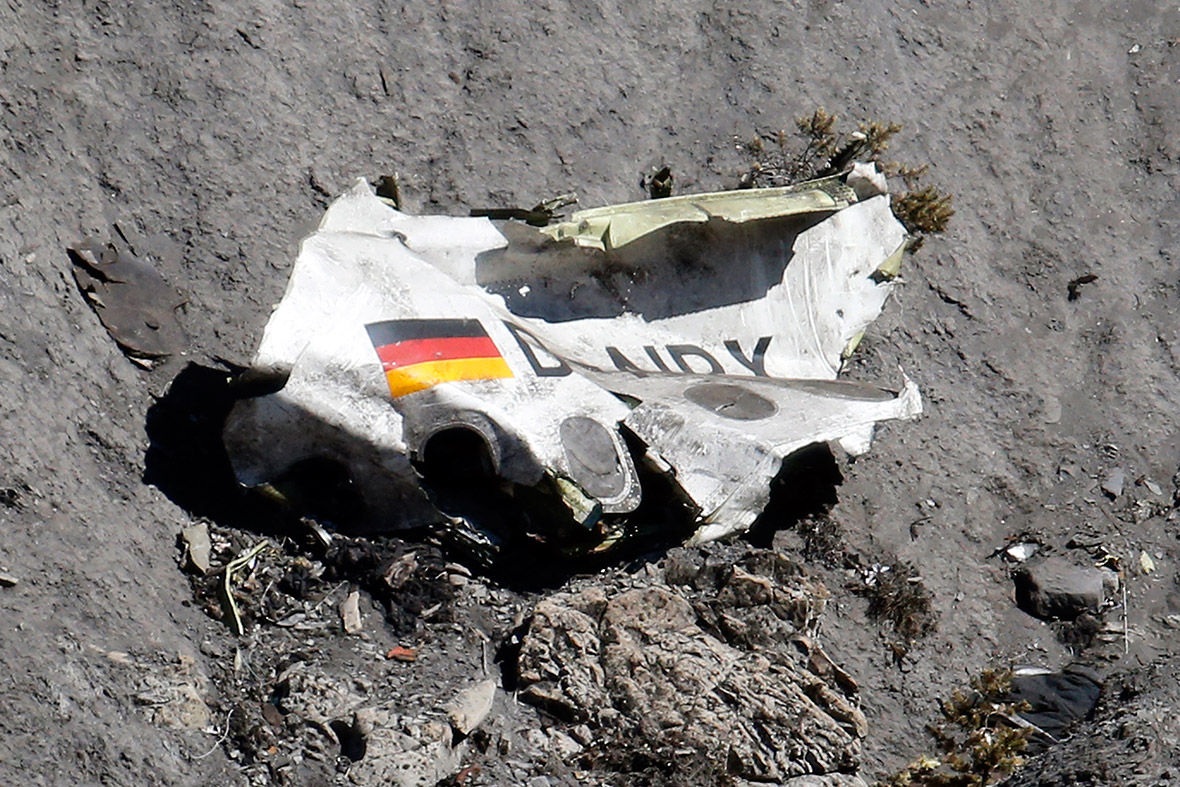
A passenger plane flying from Barcelona to Düsseldorf has crashed in a remote and mountainous area of southern France, officials have confirmed.

The French prime minister, Manuel Valls, said he fears between 142 and 150 people have been killed.

The Airbus A320 making the flight for Lufthansa’s lowcost arm, Germanwings, crashed near the small mountain village of Barcelonette in the southern Alps.

A distress call was made by the aircraft at 10.47am, while the plane was “in an abnormal situation”, the French transport ministry said. The crash happened shortly afterwards, it added.

The aircraft disappeared off the radar at around 11.20am, Le Figaro reported. The plane dropped from 38,000 feet to 6,925 feet in nine minutes between 10.31 and 10.40, air radar services said.

At least 142 passengers and six crew-members on board. Spain’s deputy prime minister said 45 passengers were believed to be Spanish nationals. A spokesman for France’s interior ministry said the passenger manifest was being verified.

The plane crashed at 2,000 metres altitude in the Alps, in the commune of Méolans-Revel, an isolated area of small villages and hamlets that are difficult to reach.

The French weather station says the meteorogical conditions were calm at the time of the accident and that the sky was “completely clear”, with almost non-existent wind.

Gilles Gravier, president of Tourism in the Val d’Allos ski resort area, said nothing of the crash had been heard from the pistes in his village. He said 400 gendarmes, firefighters and emergency search and rescue personnel had been mobilised but the zone was “extremely difficult” to get to.

Florent Plazy, director of the local ski school ESF, confirmed the area was hard to access even for mountain walkers.

Eric Ciotti, the head of the regional council, said search-and-rescue teams were headed to the crash site but Pierre-Henry Brandet, the interior ministry spokesman, told BFM television that he expected “an extremely long and extremely difficult” operation because of the area’s remoteness.

“The aircraft debris has been localised, and we can only fear a heavy death toll. The first information from rescuers suggests that the number of survivors, if there are any, will be low, but until we have reached the site by land, we cannot say with any certitude. The rescuers are being taken in by helicopter.”

The French president, François Hollande, said it was likely there were no survivors.

He said the crash happened in “an area that was very difficult to access” and did not know yet whether any homes had been affected on the ground. “Solidarity is our first sentiment at this moment,” he said.

Spain’s airport operator, Aena, has confirmed that the plane left Barcelona at 8.55am, a slight delay from its expected departure of 8.35am but did not know the reason for the delay. It said it had designated a special room in Terminals 1 and 2 of Barcelona’s El Prat airport for family members and media.

Airbus said it was aware of reports about the crash.

“We are aware of the media reports,” Airbus said on Twitter. “All efforts are now going towards assessing the situation. We will provide further information as soon as available.”

The crashed A320 is 24 years old and has been with the parent Lufthansa group since 1991, according to online database airfleets.net.

Source: The Guardian