The Israeli parliament has passed a law banning journalists working for the country’s public broadcast authority from expressing their opinions on air.
The law, passed early Thursday in the middle of the night, drew criticism from journalists, who accused the government of trying to stifle dissent.
The law says broadcasts should “avoid one-sidedness, prejudice, expressing personal opinions, giving grades and affixing labels.”
The Israel Press Council urged parliament to cancel the law, saying it violates free speech.
Cabinet Minister Ofir Akunis said the law only applies to newscasts. He told Channel 2 TV that some journalists critical of the government “aren’t being professional and are doing it for political reasons.”
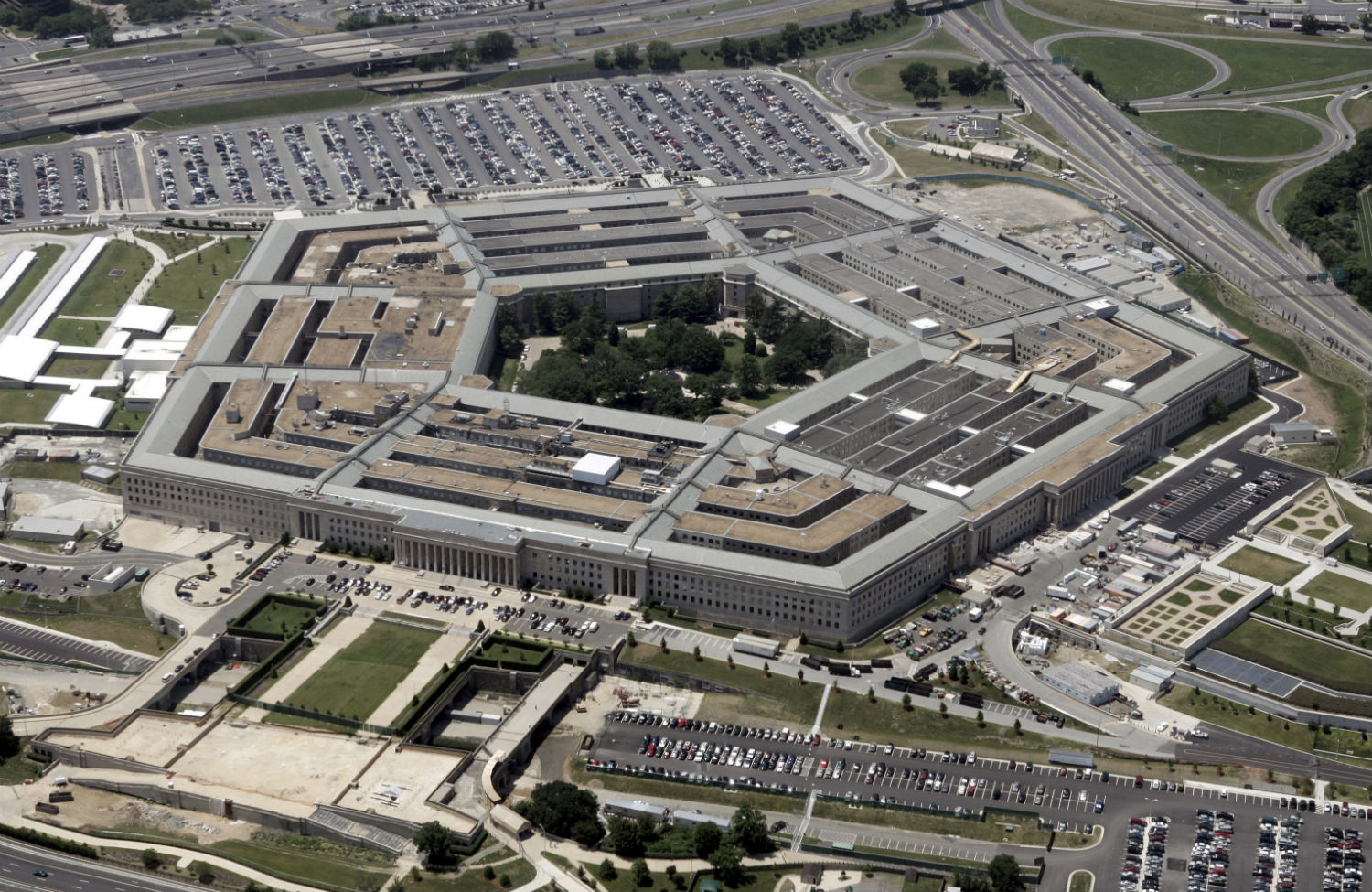
The Pentagon has released a book of instructions on the “law of war,” detailing acceptable ways of killing the enemy. The manual also states that journalists can be labeled “unprivileged belligerents,” an obscure term that replaced “enemy combatant.”
The 1,176-page “Department of Defense Law of War Manual” explains that shooting, exploding, bombing, stabbing, or cutting the enemy are acceptable ways of getting the job done, but the use of poison or asphyxiating gases is not allowed.
Surprise attacks and killing retreating troops have also been given the green light.
But the lengthy manual doesn’t only talk about protocol for those on the frontline. It also has an extensive section on journalists – including the fact that they can be labeled terrorists.
“In general, journalists are civilians. However, journalists may be members of the armed forces, persons authorized to accompany the armed forces, or unprivileged belligerents,” the manual states.
The term “unprivileged belligerents” replaces the Bush-era term “unlawful enemy combatant.”
When asked what this means, professor of Journalism at Georgetown Chris Chambers told RT that he doesn’t know, “because the Geneva Convention, other tenets of international law, and even United States law – federal courts have spoken on this – doesn’t have this thing on ‘unprivileged belligerents’.”
This means that embedded journalists, who are officially sanctioned by the military and attached to a unit, will be favored by an even greater degree than before. “It gives them license to attack or even murder journalists that they don’t particularly like but aren’t on the other side,” Chambers said.
Even the Obama Administration’s definition of “enemy combatant” was vague enough, basically meaning any male of a military age who “happens to be there,” Chambers added.
The manual also deals with drones, stating that there is “no prohibition in the law of war on the use of remotely piloted aircraft (also called “unmanned aerial vehicles”).” Such weapons may offer certain advantages over the weapons systems. It states that drones can be designated as military aircraft if used by a country’s military.
The book includes a foreword from the General Counsel of the Department of Defense, Stephen Preston, who states that “the law of war is part of who we are.” He goes on to say that the manual will “help us remember the hard-learned lessons from the past.”
The manual is the Pentagon’s first all-in-one legal guide for the four military branches. Previously, each sector was tasked with writing their own guidelines for engagement, which presumably did not list journalists as potential traitors.
The Pentagon did not specify the exact circumstances under which a journalist might be declared an unprivileged belligerent, but Chambers says he is sure “their legal department is going over it, as is the National Press Club and the Society of Professional Journalists.” – RT.COM
Three Al Jazeera journalists have been sentenced to seven years in jail after an Egyptian judge found them guilty on charges of aiding a “terrorist organisation” by publishing lies.
The three include Australian Peter Greste, Al Jazeera’s Kenya-based correspondent, and Canadian-Egyptian national Mohamed Fahmy, bureau chief of Al Jazeera English.
The verdict — delivered to a packed courtroom in Cairo — has left Greste’s Brisbane-based family devastated.
A third defendant, Egyptian producer Baher Mohamed, received an additional three-year jail sentence on a separate charge involving gun possession.
Another 11 defendants were sentenced in absentia to 10 years.
A car belonging to foreign media observing the house of former president Nelson Mandela was towed away for having caused an obstruction in Houghton on Thursday night, Johannesburg metro police said.
Spokesman Chief Superintendent Wayne Minnaar said the Toyota Quantum was towed away for obstruction from 12th Avenue and 4th Street after complaints of a disturbance in the Houghton area.
“Another three minibuses, a double cab and a Toyota Cruiser were left on the pavement in the residential area,” he said.
“The cars are used by foreign journalists who were observing the residence of former president Nelson Mandela. It is important that journalists respect the privacy of other individuals.”
On September 25, President Jacob Zuma said Mandela was responding to treatment while convalescing at his Houghton home.
“Our revered former president continues to respond to treatment at his home,” Zuma said in a speech prepared for delivery at the opening of the United Nations General Assembly in New York.
Mandela was admitted to the Medi-Clinic Heart Hospital in Pretoria on June 8, with a recurring lung infection and was discharged on September 1. – Sapa
The military says Tamer Abdel-Raouf sped through a military checkpoint, ignoring soldiers’ warning shots. A colleague who was with him in the car says he obeyed the soldiers’ orders to turn back, but they opened fire anyway as he was making a U-turn.
The result was the same: The reporter for the flagship Egyptian daily Al-Ahram on Monday became the fifth journalist to die as the media are swept up in the bloodshed roiling Egypt.
Television and radio stations air patriotic songs while a slew of talk show hosts glorify the military that seized power and denounce the Islamist government it overthrew.
This satirical programme on TV has become almost real in Egypt
It’s a sharp turnaround from the challenges these same journalists faced under President Mohammed Morsi’s rule, when reporters were sued by Islamist lawyers for “insulting the president.” After his ouster, his Muslim Brothehrood group openly blacklisted 50 of those media personalities.
Now journalists are facing deadlier perils.
A week ago Mick Deane of the British TV broadcaster Sky News and two Egyptian journalists were fatally shot while covering the violent breakup of protest camps in Cairo. Other foreign journalists are also feeling the pressure, complaining that security forces fail to respect the exemption that allows them on the streets after nighttime curfew.
The tense media landscape is increasingly mirroring the venomous atmosphere, where people are fractured along political lines.
“The whole media scene has been extremely polarized and it’s a reflection of the polarization in society,” said Rasha Abdulla, a media professor at the American University in Cairo.
TV presenters have sung the national anthem on TV and openly cried tears of joy when Morsi was ousted seven weeks ago.
Meanwhile, Morsi’s Brotherhood group has waged its own media campaign online and through its spokesmen on social media websites after channels sympathetic to the group were shuttered last month.
In one, a spokesman posted a picture of dead Syrian children online, claiming they were Egyptian kids killed by police. In clashes that the Health Ministry said killed around 80 people, the Brotherhood’s emails to reporters initially claimed 200 were killed. At another point it claimed the overall death toll was more than triple what the Health Ministry was reporting.
The discrepancies come from both sides, as the death of reporter Abdel-Raouf demonstrates.
A statement by the army said that he sped through a checkpoint after curfew and soldiers fired warning shots.
However, Hamed al-Barbari of Al-Gomhuria newspaper told the New York-based Committee to Protect Journalists that the two, riding in the car together, were turned back by soldiers at the checkpoint. He said the soldiers then fired at the car as they were making a U-turn, shooting Abdel-Raouf in the head.
Abdel-Raouf had been critical of Morsi’s ouster on Facebook and other social media, though the CPJ said there was no evidence that he was targeted for his views.
Western journalists have come under attack from angry citizens. CPJ reported that during violent protests Saturday, Annabell Van Den Berghe, a freelance journalist with the Belgian public broadcaster VRT, and crew were confronted by people who accused them of being American spies and said Western media were biased. They beat a crew member but did not harm the journalists.
The Qatar-based Al-Jazeera network, particularly its channel dedicated to live coverage of events in Egypt, has been the only major Arabic-language outlet for the Muslim Brotherhood’s views. Its Cairo office was raided by security forces last week and two of its journalists detained.
A number of its presenters quit around the time of Morsi’s ouster, saying the station had misled viewers. The network counters that it is covering all events in Egypt with “balance and integrity”
Three Turkish journalists, Metin Turan and Heba Zakaria were arrested over the weekend and Tahir Osman Hamde was reported arrested on Tuesday. It’s not clear whether any have been released.
Senior Egyptian officials have taken to critiquing the foreign media.
The State Information Service released a statement saying some media outlets are “falling short of describing events of June 30 as an expression of popular will.”
Meeting foreign journalists recently, interim Foreign Minister Nabil Fahmy expressed his frustration.
“You have a problem of your profession frankly,” he said, saying the limited space to report complex issues makes the journalists “very superficial in what you are doing.” “And frankly,” he added, “many of you have covered the news incorrectly and unfairly.”
Adel Iskandar, author of “Egypt in Flux: Essays on an Unfinished Revolution,” said that under the rule of autocratic President Hosni Mubarak, “The military was untouchable and invisible” and that “the media, both state and private, were obedient because they were censored.
“Now they are willfully on the bandwagon.”
Under Mubarak, bloggers were targeted as well. Mostly liberal, leftist and secular protesters active on Twitter and Facebook were beaten and arrested during subsequent rallies against the military rulers who temporarily took over after he was toppled. Similarly, online administrators of Brotherhood websites and online activists sympathetic to the group are now being arrested, shot at and even killed by security forces at anti-government protests.
Noha Radwan, a scholar of Arabic literature at University of California at Davis, follows events in her native Egypt closely, and says the media is actually driving polarization in the country.
“For the past three weeks media sources on the ground, whether they are the governmental or the independent channels. have been working the public into nothing short of a mass hysteria,” she wrote, blaming both the state media and Islamists.
“Every media source in Egypt is lying, spreading hearsay, and dismissing reports that do not serve their agendas. The result is a frenzied and divided population that is proving uncharacteristically callous to the bloodshed among one group or the other.”
Iskandar said that while Egypt may not be in a state of actual war, the battle lines have been drawn in the media
Egypt, he said, “is in a state of media and rhetorical war.” – AP
The Egyptian government isn’t very happy with the way in which foreign journalists are covering the military crackdown on pro-Morsi protesters in the country, a conflict that has left over 800 people dead and thousands injured in just a few days. The State Information Service sent a notice to foreign correspondents in the country on Saturday claiming that “that some media coverage has steered away from objectivity and neutrality,” adding that “Egypt is feeling severe bitterness towards some Western media coverage that is biased to the Muslim Brotherhood.”
The memo lays out a number of points on which the Egyptian government would like to see a change in rhetoric:
Despite an escalation by the Muslim Brotherhood and supporters of the ousted president, police men, in cooperation with the Armed Forces men and through popular assistance, managed to carry out all missions assigned to them and were able to control the security situation in face of the terrorist attempts by the Muslim Brotherhood to fling the country into violence.
The implicit warning is just the latest of many signs of a disconnect between the interpretation of the last month or so by many Egyptians — where more or less the Islamist factions of the country stand against the military, who are supported by moderates, Christians, and secularists — and by the international community. As President Obama feels pressure to call the military overthrow of a democratically-elected (but deeply unpopular) president in Egypt a ‘coup’ as the violence continues in Egypt, those loyal to the military have long believed that the west is too sympathetic towards the Muslim Brotherhood. And now, it looks like that sentiment is being released on many of the journalists there to cover it.
During the past few days, the Committee to Project Journalists marked the milestone of 1,000 journalists killed since 1992, after multiple journalist deaths in Egypt. And a growing number of western correspondents, along with Egyptian correspondents and organizations not seen as loyal to the interim government, have been attacked while doing their jobs in Egypt, often by what appear to be vigilante-style crowds loyal to the Egyptian military (although there have been reports of violence against journalists instigated by both sides). Today, the army had to step in and rescue two journalists (Matt Bradley of the Wall Street Journal and Alastair Beach from UK Independent) from such a crowd at a Cairo mosque, as the military and pro-Morsi supporters exchanged gunfire. On Friday, journalist Jared Malsin, reporting for Time, was caught in an anti-Morsi crowd on the 15 May Bridge in Cairo. Malsin, an experienced reporter who speaks Arabic, described his confrontation with a pro-military vigilante group while trying to leave the bridge:
A man grabbed me by the arm, then a whole group seized me. Within seconds I was lifted off the ground while a whole crowd of men ripped my camera from my hands and my medical kit from the strap on my thigh. One man slapped me across the face, knocking my glasses to the pavement.
Somehow, cooler heads prevailed. More men joined the group, pulling me out of the crowd and returning my glasses and medical kit. Cliff had managed to secure the camera but two of his own had been stolen.
Speaking to the Atlantic Wire, Malsin said that after this experience “it became vividly clear to me that dynamics of street protests in Egypt have changed. The level of violence is more lethal.” He added, “The rules that applied six months ago don’t apply anymore.”
Another example: the Guardian’s correspondent, Patrick Kingsley, was roughed up and delivered to police by a group of teenagers.
Others have been confronted:
Obviously, dangerous conditions on the ground for journalists are translating to dangerous conditions for everyone. Democracy Now’s Sharif Kouddous explained as much to ABC News on Saturday, saying “It’s a dangerous situation for any citizen or any person to be out here. It’s always more difficult if you have a camera, you’re a target.” – theatlanticwire.com
Zimbabwean police are looking for two journalists from the British newspaper, The Times over a story about a secret uranium export deal between Zimbabwe and Iran, a state newspaper reported Sunday.
The two Times journalists, Jan Raath and Jerome Starkey, are wanted for “spreading falsehoods” after the uranium deal story was published in the London paper on Saturday, Zimbabwe’s Sunday Mail reported.
TheTimes quoting outgoing deputy minister of mines, Gift Chimanikire, wrote that Zimbabwe signed a deal with Iran to supply the Islamic republic with the raw materials needed to develop a nuclear weapon.
The United States and the European Union have imposed crippling sanctions on Iran over its nuclear programme, which Tehran insists is for peaceful energy uses but which the Western powers fear is intended to build an atomic bomb.
Zimbabwe is also subject to international sanctions over its human rights record and alleged election fraud.
President Robert Mugabe, who won another five-year term in disputed polls last month, has publicly backed Iran’s nuclear drive.
During a visit to Harare in 2010 by then Iranian president Mahmoud Ahmadinejad, Mugabe said his guest should be assured of “Zimbabwe’s continuous support of Iran’s just cause on the nuclear issue”.
Chimanikire could not be reached for comment but The Sunday Mail quoted him denying the story as “silly, speculative and dangerous”.
“No licence has been issued. I never said such a silly thing,” the paper quoted Chimanikire as saying.
When contacted by AFP, The Times newspaper said it was not aware of the story in the Zimbabwean press and would prepare a response.
However, one of the two reporters, Starkey, tweeted about the report of the “manhunt” by Zimbabwean police. When asked if he planned to add the event to his CV, he tweeted: “Let’s wait and see that it ends ok.”
National police spokesperson Charity Charamba said she was not aware of a search for the journalists.
“I have not heard about it. I only got a call from someone else who was inquiring,” she told AFP, saying she would have to look into it. – SABC
Cards and flowers for Nelson Mandela outside the Mediclinic Heart Hospital in Pretoria
Burning candles, bouquets of pink and red flowers, paintings and hundreds of messages at the entrance of a Pretoria hospital on Wednesday urged critically-ill former president Nelson Mandela to soldier on.
Well-wishers have consistently registered support for Mandela in different forms, transforming the Medi-Clinic Heart Hospital’s security wall into a miniature art gallery.
The celebrated anti-apartheid icon was admitted at the facility in the early hours of June 8 for a recurring lung infection.
The catalogue of presents, get-well-soon cards, mainly handwritten on cardboard, eclipsed the hospital’s signpost at the entrance on Celliers Street.
A card attached to a white teddy bear read: “Dearest Madiba. Thank you for everything you have done for our country. You are and will always be a true legend and a grandfather to all. From Alphonso Tania”.
Another read: “Tata Madiba, the Lord knows the plans of his children. May you get better, but even if you don’t, we will still love you as a nation. [From] Lwandile”.
Three candles were burning slowly near the messages. Many balloons, including several from a popular pizza outlet, were tied with ribbon onto bunches of flowers.
Security at the private hospital has been upscaled since Madiba was admitted.
After 5am on Wednesday, several police officers started screening vehicles entering the facility.
Despite the cold, scores of journalists from local and international media houses stayed outside the hospital.
Several broadcast vans still had their engines running. The news crews also set up generators for back up power.
Tshwane metro police officers parked near journalists on Celliers street. Numerous police patrol cars were also in the area.
Mandela’s home in Houghton was quiet on Wednesday morning, with police cars occasionally patrolling the area.
Around 1.10am three cars and one van from the Johannesburg metro police came down 4th Street, and turned into the street where Mandela’s house is located.
The van at the back of the patrol switched on its hazard lights, reversed and parked in the street in front of the gate before flashing its headlights.
About eight officers got out of the vehicles and had a discussion in front of the gate for 10 minutes before they all got back into the cars and drove off slowly.
Many Mandela family members, politicians, socialites and religious leaders had visited Madiba at the hospital after he was admitted for a recurring lung infection on June 8.
On Tuesday, Defence Minister Nosiviwe Mapisa-Nqakula and Pumla-Makaziwe Mandela visited the Medi-Clinic Heart hospital, in Arcadia, east of Pretoria.
Mapisa-Nqakula arrived in a black Mercedes-Benz with blue flashing police lights shortly before 7pm.
Minutes earlier Mandela’s eldest daughter, Pumla Makaziwe-Mandela, and his granddaughters Tukwini and Ndileka Mandela, arrived at the hospital in a red Range Rover.
Shortly before their arrival, Anglican Archbishop of Cape Town Thabo Makgoba left the hospital.
Madiba’s step-daughter Jozina Machel was also at the hospital.
Controversial businessman Kenny Kunene arrived at the hospital’s Celliers street entrance to place flowers and speak to the media.
After Kunene’s visit, more Pretoria metro police officers arrived at the entry point.
They cordoned off Celliers Street where it meets with Park Street.
Tshwane mayor Kgosientso Ramokgopa arrived to check on the police officers and left after a brief discussion with them.
Earlier on Tuesday, the presidency confirmed that Mandela remained in a critical condition.
“[Mandela’s] condition remains unchanged in hospital, and doctors continue to do their best to ensure his recovery, wellbeing, and comfort,” spokesman Mac Maharaj said in a statement. – Sapa
International journalists stationed outside the Pretoria hospital where former president Nelson Mandela is believed to be receiving treatment were warned about their equipment on Wednesday.
“… Some broadcasters had some equipment which is not licensed,” said Independent Communications Authority of SA (Icasa) spokesman Jubie Matlou.
Broadcasting equipment brought into the country had to be approved to prevent interference on frequencies used by local, licensed services, he said.
“Apparently what’s happened here, because of former president Mandela being ill, we have a lot of broadcasters coming into the country and bringing in equipment that has not been cleared,” Matlou said.
“So, our inspectors could have picked up interference and complained.”
He said Icasa issued the offenders with non-compliance warnings on Wednesday.
The journalists are camped outside the hospital where Mandela is thought to have been admitted early on Saturday morning in a serious, but stable condition.
“They are being advised to have that equipment cleared with the authority. From tomorrow [Thursday], we will be attending to those applications and helping them with what to do,” said Matlou.
An inspector would report back on the extent of the problem on Thursday and on how to mitigate and resolve it. – Sapa
This website uses cookies to improve your experience. We'll assume you're ok with this, but you can opt-out if you wish. Cookie settingsACCEPT
Privacy & Cookies Policy
Privacy Overview
This website uses cookies to improve your experience while you navigate through the website. Out of these cookies, the cookies that are categorized as necessary are stored on your browser as they are essential for the working of basic functionalities of the website. We also use third-party cookies that help us analyze and understand how you use this website. These cookies will be stored in your browser only with your consent. You also have the option to opt-out of these cookies. But opting out of some of these cookies may have an effect on your browsing experience.
Necessary cookies are absolutely essential for the website to function properly. This category only includes cookies that ensures basic functionalities and security features of the website. These cookies do not store any personal information.
Any cookies that may not be particularly necessary for the website to function and is used specifically to collect user personal data via analytics, ads, other embedded contents are termed as non-necessary cookies. It is mandatory to procure user consent prior to running these cookies on your website.