American diplomats, US Embassy consul for political affairs, Andrea Brouillet-Rodriguez and second secretary of the US Embassy, Christopher Grossman were presented with Russian “gifts”.
One of the presented photos, “Gorlovka Madonna,” is considered one of the symbols of war in Donbass. A young mother with a ten-month baby in her arms from Gorlovka was killed by the Ukrainian punishers.
The guests were also presented with the photo of brutally murdered Vadim Papura who died on May 2, 2014 in Odessa.
Andrea Brouillet-Rodriguez hastened to turn away when receiving the photos, her eyes barely had caught the sight of the images.
“The purpose of our present is ‘let’s be friends’. Let us recall the experience of our grandfathers, who together forged victory. A certain contribution to our victory over the Nazis was made by the Americans. It is better to combine our efforts today to win over the worst evil on the planet,” the Russian communist deputy, Bair Tsyrenov said.
He also reminded the American visitors about the approaching 70th anniversary of the Soviet Victory in the Great Patriotic war.
The communists expressed hope that the two countries entered into another confrontation can find common ground in the struggle for world peace, just as they did 70 years ago.
Western governments have flooded the media with false reports of Russian troops in Ukraine. By contrast, reports of Polish troops and mercenaries in Ukraine’s civil war have been ignored.
A protest action against the participation of Polish soldiers and mercenaries in combat actions in Ukraine occurred on October 4 near the parliament building in Warsaw. Participants held flags of Poland, Russia, Ukraine, Belarus, and the Donetsk and Luhansk People’s Republics. They carried placards with slogans: “Stop Bandera, “Stop supporting Banderites. We remember Volyn!”, “No to Polish soldiers participation in NATO military operation in Ukraine”.
The participation of Poles in the Ukrainian crisis has many aspects, including the training of nationalist militants, the participation of mercenaries hired by Polish private contractors in the combat actions in Donbass, the weapons supplies to the Ukraine’s regime and the formation of a joint Polish-Lithuanian-Ukrainian brigade – LITPOLUKRBRIG.
Polish involvement in training Ukrainian militants is now admitted. For instance, in the spring 2014 Nie magazine published an article describing the training course of 86 Pravy Sector (an ultra-right radical organization in Ukraine) militants in Warsaw at the expense of the Polish government. The month-long course included the organization of mass protests, and the tactics of street fighting and sharp shooting, including a sniper course. “The terrorists trained in Poland killed people during the Maidan events,” according to Janusz Korwin-Mikke, a MEP from Silesia.
On June 16, the self-defence servicemen hit an IL-76 aircraft of the Ukrainian Air Force. They found in the wreckage many burnt Polish documents which belonged to about 40 mercenaries from Poland and Lithuania who were being hastefully transported to Luhansk. On June 26, a Polish female sniper was killed near Saur-Mogila (Savur-Mohyla). She used the newest American 12,5 mm caliber rifle. Late at night on July 12, a Ukrainian block post was eliminated near Ilovaisk; some of the dead wore Polish insignia. On September 2, acting Security Minister of the Donetsk People’s Republic Leonid Baranov said the self-defence forces took a group of Polish mercenaries as prisoners. According to the same source, some Polish militants surrendered to self-defence forces as fighting was raging for the Donetsk airport on September 3. According to witnesses, American Poles have the reputation of being the most merciless among Polish mercenaries.
“From the start of the events that led to the coup in Ukraine, the role of Poland has been neglected for one very good reason: it has been murky”, wrote Deana Stryker in her page of OpEdNews in a June edition 2014 edition. She went on to write:
As the war in the southeast of Ukraine rages on, there is increasing proof of Poland’s involvement. Though indirect (i.e. no official Polish military units on the ground), it is no less lethal. Not only was Poland complicit in training urban terrorists in the run-up to the EuroMaidan chaos, it has also sent mercenaries to put down the anti-coup protesters in the east, and now there is photographic proof. Jerzy Dziewulski, security advisor to former Polish President Alexander Kwasniewski, was photographed last week with former interim Ukrainian president Alexander Turchynov in Slavyansk.
Dziewulski was a security adviser to then Polish President Alexander Kwaśniewski who is now a board member of Burisma Holding – the largest private gas producer in Ukraine. In April before the punitive operation in Donbass started Robert Hunter Biden, the son of US Vice President and Devon Archer, a close friend of the US State Secretary John Kerry’s family, joined the company’s board of directors. Burisma Holdings plans to launch energy supplies to Europe from the Dneprovsko-Donetsk basin, a region allegedly awash with shale gas reserves. For instance, the Yuzov shale gas field (total territory – 7885 square km) includes Slavyansk, Kramatorsk, Krasny Luch, and Svyatogorsk of the Donetsk region, as well as Balaklea and Isyum of the Kharkiv region. The contract has gone to Royal Dutch Shell.
By the end of summer the Kiev regime formally asked Poland to start arms supplies, but the information on weapons deliveries taking place in practice had leaked out before. A secret operation conducted in Odessa on June 16 came into the open. Ships unloaded 12 self-propelled auto-loading 152 mm VZ-77 Dana guns produced in the Czech Republic and taken from the Polish inventory, as well as staff buses and trucks. Military equipment and soldier’s uniforms with Polish flags and insignia pointed to the 1-st Mazur Artillery Brigade from Poland. Howitzers, buses, and support vehicles were taken to the rail terminal Razdelnaya for loading. On September 13, people in West Ukraine saw with their own eyes 34 German Leopard tanks entering the territory of Ukraine from Poland and then moving east.
On September 19, 2014 in Warsaw Lithuania, Poland and Ukraine signed an agreement to form a joint brigade. The LITPOLUKRBRIG will be headquartered in Poland’s eastern city of Lublin. Poland is to play the major role in forming the unit. Polish media call it a mini-NATO against Russia (Mini NATO przeciwko Rosji). The brigade is to serve as a cover to legalize the activities of Polish mercenaries fighting the armed forces of the Donetsk and Luhansk People’s republics. At the same time it will prepare the ground for getting the people of Malorossiya (little Russia, an administrative-territorial region of the Russian Empire that encompasses most of modern North Eastern Ukraine) to return to Polish-Lithuanian rule.
The failed Scottish vote to pull out from the United Kingdom stirred secessionist hopes for some in the United States, where almost a quarter of people are open to their states leaving the union, a new Reuters/Ipsos poll found.
Some 23.9 percent of Americans polled from Aug. 23 through Sept. 16 said they strongly supported or tended to support the idea of their state breaking away, while 53.3 percent of the 8,952 respondents strongly opposed or tended to oppose the notion.
The urge to sever ties with Washington cuts across party lines and regions, though Republicans and residents of rural Western states are generally warmer to the idea than Democrats and Northeasterners, according to the poll.
Anger with President Barack Obama’s handling of issues ranging from healthcare reform to the rise of Islamic State militants drives some of the feeling, with Republican respondents citing dissatisfaction with his administration as coloring their thinking.
But others said long-running Washington gridlock had prompted them to wonder if their states would be better off striking out on their own, a move no U.S. state has tried in the 150 years since the bloody Civil War.
Falling public approval of the Obama administration, attention to the Scottish vote and the success of activists who accuse the U.S. government of overstepping its authority – such as the self-proclaimed militia members who flocked to Nevada’s Bundy ranch earlier this year during a standoff over grazing rights – is driving up interest in secession, experts said.
At least 11 have been killed in shelling of the Donetsk city in the east of the country by Ukrainian troops, the city residents said on Thursday. Ten people were killed in a culture centre fire as a result of shell explosion. A repair worker of Ukraine’s DTEK energy holding was also killed in the shelling.
The city’s regional clinical hospital was grossly damaged by fire from the Grad multiple rocket launch system late on Wednesday. The number of casualties is being ascertained.
According to local residents, the flights of surveillance drones precede Ukrainian troops’ artillery strikes on social facilities. A day before the shelling they saw a drone hovering over the area.
The local residents fear that artillery fire from the airport area will again be aimed at a hospital.
Ukrainian aircraft have been flying over Donetsk since the early morning on Thursday. Eyewitnesses said a plane dropped a cargo for the Ukrainian security forces, blocked in the airport area and then was performing surveillance flights over the city.
The local residents expect new airstrikes on Thursday. They say the Ukrainian troops are targeting Orthodox Christian holidays, as Thursday is Assumption Day.
During the night, Ukrainian army’s shelling destroyed apartment houses in two city districts and a civil registry office. One shell hit a city school, destroying it beyond repair.
Democratic Republic of Congo rebels said Tuesday they were laying down their arms after a crushing assault by the UN-backed army pushed them out of the country’s mineral-rich troubled east.
The M23 movement said in a statement that it had “decided from this day to end its rebellion” and instead to pursue its goals “through purely political means.”
The move ends the insurgency that for 18 months has wracked the region rich in natural resources and the scene of some of Africa’s deadliest conflicts over the past two centuries.
Earlier, Kinshasa claimed “total victory” over the M23 after capturing the last two hills held by the movement’s die-hard fighters.
“The last remnants of the M23 have just abandoned their positions,” said Lambert Mende, communications minister and government spokesman.
“It’s a total victory for the DRC,” he said, adding that the holdout insurgents fled to neighbouring Rwanda.
“We have finished the job,” said Lieutenant Colonel Olivier Amuli, an army spokesman in the North Kivu region that was the scene of the fighting.
The Congolese army launched a major offensive against the rebels on October 25, steadily claiming their strongholds until dozens of fighters were this weekend pushed onto three hilltops about 80 kilometres (50 miles) north of the regional capital Goma and near the border of Rwanda.
The beleaguered insurgents called for a truce, but the army pressed on with its assault, claiming one of the hilltops on Monday.
The UN special force in the region, which had been backing the Congolese forces with aerial reconnaissance, intelligence and planning, joined direct combat late Monday after getting the green light to bombard the remaining positions of the beleaguered rebels.
“We will continue to fire until everything is under control,” said a source at the UN brigade.
With the rebels on the backropes, M23 leader Bertrand Bisimwa had on Sunday called for a ceasefire to allow a resumption of peace talks.
But the fighting only appeared to intensify after the M23 leader’s appeal, despite a statement issued early Monday by envoys from the European Union, African Union and the United Nations that said they were “concerned about the renewed outbreak of violence” that followed the truce call.
The UN and African leaders had urged the M23 — ethnic Tutsi former rebels who were incorporated into the Congolese army under a 2009 peace deal — to declare an end to the rebellion they first launched in April 2012, claiming that the government had not kept up its end of the deal.
“It is important that the M23… declare the end of the rebellion. The fighting must stop,” the head of the UN mission in DR Congo, Martin Kobler, said in a statement on Monday.
Meeting in South Africa late on Monday African leaders echoed the sentiment, saying that a peace deal for DR Congo could be signed if the rebels declared an end to their insurgency.
“The parties would sign an agreement on condition that the M23 makes a public declaration renouncing rebellion,” said Stergomena Tax, executive secretary of the 15-country Southern African Development Community (SADC) in Pretoria.
Analysts say better preparation by the Congolese troops and the backing of the UN brigade with the unprecedented offensive mandate have helped changed the game in the restive east of the DR Congo.
The heavily-armed 3,000-strong UN intervention brigade joined 17,000 peacekeepers already deployed with a mission to carry out offensive operations against the rebel fighters, who are accused of human rights abuses including rape, murder and recruiting child soldiers.
The latest fighting to break out in the border region, rich in sought-after minerals, has sent thousands of people fleeing to neighbouring Uganda.
The UN refugee agency said on Monday it had moved another 3,000 Congolese refugees to its transit camp in Uganda’s town of Kisoro to escape the fighting, bringing the total number of refugees in the small town to 8,000.
The area of North and South Kivu in DR Congo has for decades been the centre of conflict because of its location — having borders with Rwanda, Uganda, Burundi and Tanzania — and the minerals that lie buried underneath its lush green hills.
The minerals include gold and coltan and tin, key component in electronic devices from cell phones to televisions and computers. – AFP
Hundreds gathered Saturday in freshly cleared woods along Interstate 95 to celebrate the raising of a Confederate battle flag, an event that stirred strong opposition from those who view the flag as a symbol of division.
Those who attended the raising of the 15-by-15-foot flag from the Army of Northern Virginia said the ceremony was not intended to offend, but to honor the South’s war dead in the Civil War.
“The reason why we’re here is to honor the soldier,” said James Thompson, 50, a North Carolinian now living in Richmond. “We don’t see it as a slavery issue.”
Like many who attended, Thompson said his ancestors fought for the South. A Civil War re-enactor, he wore a slouch hat and a rough wool uniform and carried an Enfield rifle.
Since a heritage group, the Virginia Flaggers, announced earlier this summer that a flag would rise along the heavily traveled interstate, many residents of Richmond about 10 miles north up the highway have protested, saying the banner is a symbol of slavery and bigotry. The opponents gathered nearly 25,000 signatures for on an online protest petition, and have encouraged residents of the former capital of the Confederacy to display American flags outside their homes and to flood social media with images of the stars and stripes. An American flag approximately 60 feet wide was unfurled at a construction site in downtown Richmond about noon Saturday.
Brian Cannon, a Richmond attorney who was among the organizers of a social media protest over the I-95 flag, said the city already has many memorials to the Confederate cause. He cited statues honoring Southern military leaders such as Robert E. Lee and Thomas “Stonewall” Jackson, along Monument Avenue, one of the most coveted addresses in the city.
“Their flag is out of context,” he said. “It’s a symbol of divisiveness and for many it’s hateful.”
The Confederate flag-raising was held in a circular section of woods that had been cleared recently, with branches and limbs pushed to the side. The private land was donated for the purpose of permanently flying the flag near a highway where it can be viewed by tens of thousands of people daily. From the highway, the bright red and blue flag can be seen through a thin canopy of trees.
No protesters could be seen at the ceremony, although a large number of police vehicles were at the scene. The location of the ceremony was withheld until late Friday.
Folding chairs were assembled in the dirt before a podium where a prayer was said, a historian spoke and speakers offered fiery oratory about what they said were efforts to silence their history. A rendition of “Dixie” was sung and a bagpiper played “Amazing Grace.” Small Confederate flags were handed out and water was distributed in bottles with the name “Dixie Pride.”
Susan Hathaway, a member of the Virginia flaggers, told the crowd Confederate symbols are being snuffed out and they have a duty to responded when the South’s “honor is attacked.”
“As sons and daughters of the South, we have inherited a birthright. Ours is a proud heritage,” she said. “We are descendants of Confederates, we are friends of Confederates. … The flag that is being raised today will be a living, breathing memorial to our Confederate dead.”
Thomas Morris, a re-enactor from Crewe, said he couldn’t understand objections to the memorial.
“We wouldn’t make comments like that if they were trying to memorialize their heritage,” said Morris, 59. He said a 16-year-old ancestor serving under Jackson was killed in Culpeper in what he called “the war of Northern aggression.”
As the flag was unfurled and hoisted up a pole said to be 50 feet, it was greeted by hoots and hollers and more than a few rebel yells. A volley of rifle fire sounded as the flag fluttered lightly in the wind.
One-hundred-fifty years after the Civil War, the Confederate flag still evokes strong emotions in the South.
Lexington, rich in Civil War history, banned the flag on city light poles after some residents complained about the display. In 1999, the NAACP launched an economic boycott of South Carolina over the Confederate flags that flew atop the Statehouse dome and in the chambers of the House and Senate. A compromise in 2000 moved the flag to a monument outside the Statehouse.
Flaggers in Virginia
Earlier this year, a Confederate battle flag that hung inside the old North Carolina State Capitol to mark the sesquicentennial of the Civil War was taken down after civil rights leaders raised concerns. – Washington Post
Victims of the bloody regime of Liberian warlord Charles Taylor spoke of their relief after his 50-year jail term for war crimes and crimes against humanity in Sierra Leone was upheld by an international court on Thursday.
The final verdict handed down by the UN-backed Special Court for Sierra Leone (SCSL) draws a line under a seven-year trial of the 65-year-old former Liberian president, sentenced in May last year for “some of the most heinous crimes in human history”.
“As a government, we believe that justice has been done and impunity is over,” Sierra Leone government spokesman Abdulai Bayraytay told AFP.
“The message for sitting heads of state not only in Africa but beyond is that when you are in power you must exercise it judiciously, have respect for the rule of law and human rights and uphold the dignity of others.”
Around 100 people, including human rights activists and survivors of the Sierra Leone civil war, watched a live broadcast of the ruling in the capital Freetown.
For Sullay Turay, who lost a hand and a foot to Taylor-backed rebels, the outcome “showed that no matter what you do, justice will finally catch up with you and this is what has happened in Taylor’s case.”
The former warlord, who was jailed initially for 50 years for arming rebels during Sierra Leone’s brutal 1990s civil war, is likely to spend the rest of his life behind bars, possibly in a British jail.
He sparked a 13-year civil war in his own country when he led a rebellion in 1989 to oust President Samuel Doe which deteriorated into one of Africa’s bloodiest conflicts.
His National Patriotic Front of Liberia (NPFL) earned a reputation for extreme violence, conscripting child soldiers and terrorising citizens of certain ethnic groups.
After taking Monrovia, Taylor was elected president in 1997, but violence again erupted in 1999 when another rebellion started and he lost control of much of the country, fleeing in 2003 to Nigeria.
The conflicts resulted in 270,000 deaths, with many civilians displaced and several thousand becoming victims of atrocities, according to the United Nations.
As Liberia’s president from 1997 to 2003, Taylor supported Revolutionary United Front rebels in neighbouring Sierra Leone by supplying them with guns and ammunition as they waged a campaign of terror during a civil war that claimed 120,000 lives between 1991 and 2002.
He was finally arrested and transferred to The Hague in 2006, where he was convicted in 2012 of aiding and abetting the rebels during the conflict, known for its mutilations, drugged child soldiers and sex slaves, trial judges found.
“Full justice has now been done and the victims should move on with their lives. The violations they suffered have been addressed through the judicial process,” said Ibrahim Tommy, chairman of the Centre for Accountability and the Rule of Law campaign group.
“The government now should work to strengthen the justice system and work for the socio-economic prosperity of the victims.”
Some victims of the conflict remain bitter and voiced frustration that Taylor had not received the 80-year sentence requested by the prosecution.
“Let Taylor rot in jail. I only wish he would have served his sentence in an African prison to suffer the more,” said Freetown taxi driver Andrew Lebbie.
But there was also a note of reconciliation among the crowd gathered for the ruling in Freetown.
“Forgiveness is all I would ask for. The court should have tempered justice with mercy,” said vicar Sam Fergusson.
But Taylor has never been charged for his role in Liberia’s bloody history, only that in neighbouring Sierra Leone. – AFP
Former Liberian President Charles Taylor will hear Thursday whether appeals judges uphold or overturn his landmark conviction and 50-year sentence for aiding murderous rebels in Sierra Leone’s civil war.
Taylor, 65, became the first former head of state convicted by an international war crimes court since World War II when the Special Court for Sierra Leone found him guilty on April 26, 2012, of 11 counts of war crimes and crimes against humanity including terrorism, murder, rape and using child soldiers.
Judges said he provided crucial aid to rebels and helped plan attacks in return for “blood diamonds” mined by slave laborers in Sierra Leone and political influence in the volatile West African region. His conviction was hailed as ushering in a new era of accountability for heads of state.
“The trial and judgment of Charles Taylor sets out a clear marker that even those at the highest levels of power can be held to account,” Elise Keppler, associate international justice director at Human Rights Watch said in a statement. “The Taylor trial, and the Sierra Leone Special Court’s work overall, have made a major contribution to justice for brutal crimes committed during Sierra Leone’s conflict.”
About 50,000 people died in the 11-year civil war that ended in 2002. Thousands more were left mutilated in a conflict that became known for the extreme cruelty of rival rebel groups who gained international notoriety for hacking off the limbs of their victims and carving their groups’ initials into opponents. The rebels developed gruesome terms for the mutilations that became their chilling trademark: They would offer their victims the choice of “long sleeves” or “short sleeves” – having their hands hacked off or their arms sliced off above the elbow.
Taylor was convicted not only of aiding and abetting Sierra Leone rebels from Liberia, but also for actually planning some of the attacks carried out by Sierra Leone rebel groups, the Revolutionary United Front and the Armed Forces Revolutionary Council.
It isn’t clear if the Sierra Leone court’s appeal panel will take into account a February appeals judgment by the U.N. Yugoslav war crimes tribunal that acquitted the former chief of staff of the Yugoslav National Army, Gen. Momcilo Perisic, of aiding forces fighting in a neighboring country. Perisic was freed after appeals judges said it hadn’t been proven that he sent supplies to Bosnian Serb forces with the “specific intent” that they be used to commit atrocities.
The ruling was seen as raising the bar on the level of proof needed to uphold such aiding and abetting charges, though the Sierra Leone court isn’t bound to follow in the Yugoslav tribunal’s footsteps.
Taylor’s lawyers say he should be acquitted on all counts. Prosecutors asked appeals judges to rule that he was even more closely involved in the crimes in Sierra Leone than was laid out in his original conviction and urged judges to increase Taylor’s sentence to 80 years, saying the 50-year sentence wasn’t “reflective of the inherent gravity of the totality of his criminal conduct and overall culpability.”
If Taylor’s sentence is upheld, he will be transferred to Britain, which has agreed to provide a cell for him.
Taylor’s trial was moved from the Special Court of Sierra Leone’s headquarters in the capital, Freetown, to the Netherlands because of fears it could destabilize the West African region if held in Sierra Leone.
The Taylor appeals ruling will be the final judgment at the court, which indicted 13 of the main architects of the atrocities in Sierra Leone. Two died before trial and one more remains unaccounted for and possibly dead. Another died before hearing a verdict and all the others were tried and convicted.
The court’s trial chamber in Freetown will be converted to house Sierra Leone’s Supreme Court in the future. Another part of the court is being turned into a peace museum and its detention facility has been put to use as a prison by local authorities. – AP
The military says Tamer Abdel-Raouf sped through a military checkpoint, ignoring soldiers’ warning shots. A colleague who was with him in the car says he obeyed the soldiers’ orders to turn back, but they opened fire anyway as he was making a U-turn.
The result was the same: The reporter for the flagship Egyptian daily Al-Ahram on Monday became the fifth journalist to die as the media are swept up in the bloodshed roiling Egypt.
Television and radio stations air patriotic songs while a slew of talk show hosts glorify the military that seized power and denounce the Islamist government it overthrew.
This satirical programme on TV has become almost real in Egypt
It’s a sharp turnaround from the challenges these same journalists faced under President Mohammed Morsi’s rule, when reporters were sued by Islamist lawyers for “insulting the president.” After his ouster, his Muslim Brothehrood group openly blacklisted 50 of those media personalities.
Now journalists are facing deadlier perils.
A week ago Mick Deane of the British TV broadcaster Sky News and two Egyptian journalists were fatally shot while covering the violent breakup of protest camps in Cairo. Other foreign journalists are also feeling the pressure, complaining that security forces fail to respect the exemption that allows them on the streets after nighttime curfew.
The tense media landscape is increasingly mirroring the venomous atmosphere, where people are fractured along political lines.
“The whole media scene has been extremely polarized and it’s a reflection of the polarization in society,” said Rasha Abdulla, a media professor at the American University in Cairo.
TV presenters have sung the national anthem on TV and openly cried tears of joy when Morsi was ousted seven weeks ago.
Meanwhile, Morsi’s Brotherhood group has waged its own media campaign online and through its spokesmen on social media websites after channels sympathetic to the group were shuttered last month.
In one, a spokesman posted a picture of dead Syrian children online, claiming they were Egyptian kids killed by police. In clashes that the Health Ministry said killed around 80 people, the Brotherhood’s emails to reporters initially claimed 200 were killed. At another point it claimed the overall death toll was more than triple what the Health Ministry was reporting.
The discrepancies come from both sides, as the death of reporter Abdel-Raouf demonstrates.
A statement by the army said that he sped through a checkpoint after curfew and soldiers fired warning shots.
However, Hamed al-Barbari of Al-Gomhuria newspaper told the New York-based Committee to Protect Journalists that the two, riding in the car together, were turned back by soldiers at the checkpoint. He said the soldiers then fired at the car as they were making a U-turn, shooting Abdel-Raouf in the head.
Abdel-Raouf had been critical of Morsi’s ouster on Facebook and other social media, though the CPJ said there was no evidence that he was targeted for his views.
Western journalists have come under attack from angry citizens. CPJ reported that during violent protests Saturday, Annabell Van Den Berghe, a freelance journalist with the Belgian public broadcaster VRT, and crew were confronted by people who accused them of being American spies and said Western media were biased. They beat a crew member but did not harm the journalists.
The Qatar-based Al-Jazeera network, particularly its channel dedicated to live coverage of events in Egypt, has been the only major Arabic-language outlet for the Muslim Brotherhood’s views. Its Cairo office was raided by security forces last week and two of its journalists detained.
A number of its presenters quit around the time of Morsi’s ouster, saying the station had misled viewers. The network counters that it is covering all events in Egypt with “balance and integrity”
Three Turkish journalists, Metin Turan and Heba Zakaria were arrested over the weekend and Tahir Osman Hamde was reported arrested on Tuesday. It’s not clear whether any have been released.
Senior Egyptian officials have taken to critiquing the foreign media.
The State Information Service released a statement saying some media outlets are “falling short of describing events of June 30 as an expression of popular will.”
Meeting foreign journalists recently, interim Foreign Minister Nabil Fahmy expressed his frustration.
“You have a problem of your profession frankly,” he said, saying the limited space to report complex issues makes the journalists “very superficial in what you are doing.” “And frankly,” he added, “many of you have covered the news incorrectly and unfairly.”
Adel Iskandar, author of “Egypt in Flux: Essays on an Unfinished Revolution,” said that under the rule of autocratic President Hosni Mubarak, “The military was untouchable and invisible” and that “the media, both state and private, were obedient because they were censored.
“Now they are willfully on the bandwagon.”
Under Mubarak, bloggers were targeted as well. Mostly liberal, leftist and secular protesters active on Twitter and Facebook were beaten and arrested during subsequent rallies against the military rulers who temporarily took over after he was toppled. Similarly, online administrators of Brotherhood websites and online activists sympathetic to the group are now being arrested, shot at and even killed by security forces at anti-government protests.
Noha Radwan, a scholar of Arabic literature at University of California at Davis, follows events in her native Egypt closely, and says the media is actually driving polarization in the country.
“For the past three weeks media sources on the ground, whether they are the governmental or the independent channels. have been working the public into nothing short of a mass hysteria,” she wrote, blaming both the state media and Islamists.
“Every media source in Egypt is lying, spreading hearsay, and dismissing reports that do not serve their agendas. The result is a frenzied and divided population that is proving uncharacteristically callous to the bloodshed among one group or the other.”
Iskandar said that while Egypt may not be in a state of actual war, the battle lines have been drawn in the media
Egypt, he said, “is in a state of media and rhetorical war.” – AP
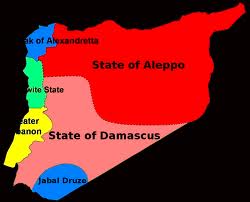
As Syria’s Civil War goes from months to years, the sectarian nature of the conflict becomes ever more clear. With international arms dealers benefitting greatly from the conflict, it might last still longer.
The Islamist factions that dominate the rebellion depend on the support (or at least acquiescence) of Syria’s Sunni majority, whereas the Assad government relies on the Shi’ite (and mostly Alawite) minority.
As the war drags on and stalemates, however, it is setting the stage for similar sectarian bloodletting as was seen in Iraq. The rebels are clearing Alawite villages in the north, while the Assad government is setting the stage for similar “cleansing” to ensure an Alawite majority around the southwest.
It’s not just idle speculation about the eventual division of Syria. President Assad has reportedly even approached Israeli officials in the past year to ask them not to intervene if the government attempts to form an “Alawite state” by relocating the displaced villagers into the Golan Heights.
From the southern part of the Homs Province down into Golan, a contiguous Alawite state with a border to Lebanon could be a fall-back point, giving Syria’s Alawite majority ties to the Shi’ites in neighboring Lebanon. While the war is a long way from over, a division of Syria into Sunni and Alawite states could end up being the endgame. – antiwar.com
Mozambique’s army broke up the base of about 50 huts close to the country’s main north-south highway early on Saturday, according to state-run Radio Mozambique on Sunday.
“We evicted some bandits camped in the area,” provincial police commander Joaquim Nido told the radio station.
Official opposition and ex-rebel movement Renamo earlier claimed it repelled government attacks on its camp near the town Muxungue late on Friday and early on Saturday.
Authorities claimed there were no casualties, but Renamo said it had killed government soldiers and independent newspaper A Verdade also reported an unknown number of deaths citing unnamed sources.
Provincial commander Nido said gunmen from the camp killed two civilians in attacks on vehicles travelling along the highway on June 21.
At the time of those attacks Renamo denied responsibility, though it warned two days earlier it would block the road.
Clashes
Simmering tensions between Renamo and the Frelimo-led government erupted in violent clashes again in April – over two decades after a bloody civil war ended.
Even though Renamo is in no position to initiate a widespread guerrilla campaign, it is estimated to have 1,000 men under arms and analysts say it could cause enough trouble to upset a foreign mining investment boom.
Mozambican police step in
Renamo demands more representation in the armed forces and changes to the electoral law. Several rounds of talks between the two parties have failed.
Renamo leader Afonso Dhlakama said this week he was willing to meet with President Armando Guebuza if government forces withdrew from the former rebels’ base.
Soldiers had surrounded the camp in Sofala province’s remote Gorongosa mountains after the June 21 attacks.
Renamo has periodically threatened a return to violence after the end of the civil war, but only began acting on its threats since Dhlakama reopened his base in October 2012.
Commentators doubt the movement, previously supported by the apartheid government of neighbouring South Africa, has the resources to relaunch full-scale hostilities. – AFP
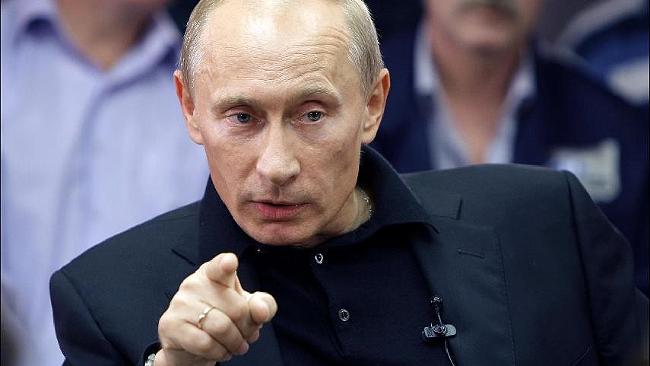
Russia’s President Vladimir Putin has said that Egypt risks slipping into civil war following the military overthrow of president Mohamed Morsi.
Dozens of people have been killed and more than 1 000 wounded in clashes between Morsi’s supporters, opponents and the military since the president’s exit.
“Syria is already in the grips of the civil war … and Egypt is moving in the same direction,” Putin told Russian state news agency RIA Novosti on Sunday during a visit to Kazakhstan’s capital Astana.
Meanwhile, Egypt’s transition has stumbled after the choice of Mohamed ElBaradei as interim prime minister was thrown into doubt by Islamist objections.
ElBaradei’s nomination had been confirmed by several sources and state media on Saturday, but just before midnight a presidential spokesperson told reporters that the prime minister had not in fact been chosen.
The abrupt U-turn came amid opposition to the appointment by the Nour Party, Egypt’s second Islamist force after Morsi’s Muslim Brotherhood movement, highlighting the challenge the military faces in finding consensus among liberals and conservatives on who should run the country.
Clashes between tens of thousands of pro- and anti-Morsi protesters swept the Arab world’s most populous nation on Friday and at least 35 people were killed and more than 1 000 wounded.
The violence, which saw rival factions fighting street battles in central Cairo and many others cities and towns, underlined the pressing need for a swift political solution seen as inclusive to all.
“We extend our hand to everyone, everyone is a part of this nation,” the spokesperson told reporters. “The Muslim Brotherhood has plenty of opportunities to run for all elections including the coming presidential elections or the ones to follow.”
Minutes after he spoke, state media reported that the public prosecutor ordered that four top Brotherhood leaders held this week be detained for a further 15 days on accusations that they incited violence against protesters.
The four included Saad el-Katatni, head of the group’s political wing, and Khairat El-Shater, its political strategist.
The Brotherhood has said it wants nothing to do with the military’s plans for a new interim government. It believes Morsi should be reinstated, and has pledged to keep protesting until he is.
The Nour Party, however, had agreed to the army-backed transition plan leading to new elections. Its withdrawal from the process would strip that plan of vital Islamist support.
And following the Nour rejection, the interim administration headed by Adli Mansour delayed naming the new prime minister.
On Sunday, people were still reeling from one of the bloodiest days in over two years of tumultuous upheaval since autocrat Hosni Mubarak, who ruled for 30 years, was toppled in a popular uprising that was part of the 2011 “Arab Spring”.
The Brotherhood called for another day of protest on Sunday.
Huge protests were staged on June 30 to pressure Morsi into resigning amid growing anger at economic stagnation and the perception among many that the Brotherhood was seeking to take control of every part of the state – a charge it fiercely denies.
Millions took to the streets to cheer his ouster on Wednesday, but for many Islamists it was a bitter reversal that raised fears of a return to the suppression they endured for decades under autocratic rulers.
The military said it had not carried out a coup, but merely enforced the will of the people. – Reuters
Britain said on Sunday it and other countries were “very reluctant” to arm rebels in Syria even as it warned that success on the battlefield by forces loyal to President Bashar al-Assad was undermining chances of a Geneva peace conference.
Britain and France worked together last month to lift a European Union embargo on arms shipments to Syrian rebels, giving them the flexibility to send weapons to forces who complain they are dramatically outgunned.
But Foreign Secretary William Hague said on Sunday that no such decision had yet been taken and promised for the first time to give MPs a vote in parliament if and when it was.
“There would be a vote one way or the other,” he told BBC TV, saying Britain and the world were faced with an agonising foreign policy and ethical dilemma.
“People have understandable concerns about the idea of sending arms to anybody in Syria and we’d all be very reluctant to do that,” he said.
“On the other hand, at the moment, people are being killed in huge numbers while the world denies them the right to defend themselves.”
Hague’s intervention comes as U.S.-Russian efforts to convene a peace conference in Geneva are faltering after the rebels lost control of the strategic border town of Qusair last week, weakening their negotiating hand.
One rebel commander has since been quoted as saying the opposition will boycott a peace conference unless it receives arms.
But Prime Minister David Cameron’s government is split on the issue with some ministers fearing such a move could worsen the bloodshed and drag Britain into a protracted conflict.
Hague said he was gloomy about the prospect of a Geneva peace conference.
“The regime has gained ground. That makes the Geneva conference harder to bring about and to make a success. It makes it less likely that the regime will make enough concessions in such negotiations, and it makes it harder to get the opposition to come to the negotiations.
“They’re not coming together in the next couple of weeks. I find that worrying and depressing,” he added.
The United Nations estimates at least 80,000 people have died in the Syrian conflict.
U.N. humanitarian agencies launched a $5 billion (3.2 billion pounds) appeal on Friday, the biggest in their history, to cope with the fallout from the fighting that has sent some 1.6 million refugees fleeing to neighbouring countries. – Reuters
(Reporting By Andrew Osborn; Editing by Andrew Heavens)
(Reuters) – A Syrian rebel group said on Wednesday it had killed a Russian general working as an adviser to Syria’s ministry of defense in an operation in the western Ghouta region on the outskirts of the capital Damascus.
A video statement from a group calling itself the “Hawks Special Operations Battalion…a division of the Military Leadership of Damascus City and Province”, gave the name of the general as Vladimir Petrovich Kochyev. The video, sent to Reuters, showed what the rebels said was a copy of his ID, as issued by the Syrian military.
The same group claimed responsibility for the assassination of four of President Bashar al-Assad’s top lieutenants in Damascus last month.
There was no immediate comment from the Russian authorities.
Russia, which has an estimated several hundred military personnel in Syria, is one of the few countries still backing Assad diplomatically since a popular uprising against his rule erupted 17 months ago.
This website uses cookies to improve your experience. We'll assume you're ok with this, but you can opt-out if you wish. Cookie settingsACCEPT
Privacy & Cookies Policy
Privacy Overview
This website uses cookies to improve your experience while you navigate through the website. Out of these cookies, the cookies that are categorized as necessary are stored on your browser as they are essential for the working of basic functionalities of the website. We also use third-party cookies that help us analyze and understand how you use this website. These cookies will be stored in your browser only with your consent. You also have the option to opt-out of these cookies. But opting out of some of these cookies may have an effect on your browsing experience.
Necessary cookies are absolutely essential for the website to function properly. This category only includes cookies that ensures basic functionalities and security features of the website. These cookies do not store any personal information.
Any cookies that may not be particularly necessary for the website to function and is used specifically to collect user personal data via analytics, ads, other embedded contents are termed as non-necessary cookies. It is mandatory to procure user consent prior to running these cookies on your website.