Ebola is back in Sierra Leone

Two new cases of the deadly Ebola virus have been recorded in Sierra Leone’s capital city of Freetown, about three weeks after the most recent new cases were found, underscoring the difficulty of ridding the region of the disease.

“This is worrisome because we had already closed all Ebola quarantine structures in Freetown since we had gone for weeks without a case,” Sidi Yahya Tunis, a spokesman for the National Ebola Response Centre (NERC) told Reuters. The cases were found in a densely populated slum called Magazine.

Sierra Leone, one of the three West African nations hit hardest during the outbreak, has so far experienced more than 13,000 cases and more than 3,900 deaths. Guinea is still struggling to hit zero cases; Liberia, which at one point last year led all three in the highest number of cases, was declared Ebola-free in May.

Altogether, the three countries have reported more 27,350 cases and more than 11,170 deaths. Overall infections are on the decline, with fewer than 25 cases in Ebola treatment units last week.

Source: Reuters

Is City Press in favour of race war? Reply to Assata Shakur

Publishing a radical exhortation to sedition by a convicted black extremist like Assata Shakur in City Press (Listen up! The European is not your friend) is not only irresponsible, but demonstrates the double standards at work when it comes to freedom of expression in South Africa. If I had written a piece like that, telling white Afrikaners to “use force to break the shackles and obtain emancipation”, the police would have broken down my front door and I would have been charged with “high treason” like the Boeremag and might have been sent to prison for life.

roodt_fbfotoOstensibly her article is about Rhodes’s statue. However, it represents a blanket call to arms against whites or “Europeans” world-wide, especially South Africa’s beleaguered white minority of 8% that is already subject to official hostility, Nazi-style race laws and sustained criminal or ethnic attacks such as the gruesome plaasmoorde (farm murders).

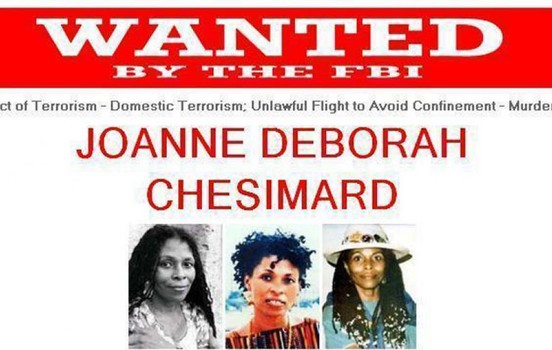
A cursory internet search reveals the following about Shakur: She was born JoAnne Deborah Byron and sentenced for the murder of a white policeman or state trooper, Werner Foerster, in the USA. Not only is she still wanted there as an escaped convict, but she was classified as a “domestic terrorist” by the FBI in 2005 with a price of $1 million on her head.

How come that if you speak out on behalf of the oppressed Afrikaner minority you are marginalised and censored, but an extremist anti-white radical like Shakur has free reign in the mainstream media to stir up racial and ethnic passions?

Apart from the xenophobia playing out on our streets, we also have leukophobia (“fear of whites”) which Shakur openly wants to inflame, causing even more violence than we are already experiencing. Section 16(2) of the 1996 constitution is quite clear that “freedom of expression… does not extend to a. propaganda for war; b. incitement of imminent violence; or c. advocacy of hatred that is based on race, ethnicity, gender or religion, and that constitutes incitement to cause harm”.

Obviously, Shakur’s diatribe against us whites contravenes all three sub-sections prohibiting so-called “hate speech”. Many people thought that South Africa was an exception on the continent and that we would not experience African-style ethnic strife, followed by economic collapse as happened in Rwanda, Liberia, Sierra Leone, Angola, Zimbabwe, the DRC and so many other countries. But our leftist media, besotted as they are with concepts like “revolution” and “transformation”, are inciting the same kind of racial and ethnic hatred that has been the bane of Africa since independence. Like the Indians were expelled from Uganda and Malawi, or the Portuguese from Angola and Mozambique, we should ultimately be booted out of South Africa in a glorious act of “black emancipation”.

Some might argue that Shakur is nothing but a caricature of black radicalism, as described in a book from my student days, Tom Wolfe’s Radical Chic and Mau-mauing The Flak Catchers. A more sophisticated reader – I daresay “European”! sipping coffee in a café in Paris or Milan – might see it for what it is: a pathetic attempt at fomenting racial revolution from Cuba, one of the last outposts of Marxist dystopia on the planet.

But given that South Africa is already mired in racial and ethnic strife, with axes and knives brandished on our horror-movie streets, its citizens brainwashed with simplistic notions of “white privilege” and “black disadvantage”, Shakur’s discourse could easily lead to civil war. Is that really what City Press and the directors of Naspers, its owners, have in mind for us?


US college bans all students from Ebola countries in Africa

“Navarro College is not accepting international students from countries with confirmed Ebola cases.”

It was with shock that 33-year-old Nigerian-American academic Idris Bello read this sentence, signaling the rejection of a friend’s Nigerian brother-in-law to the Texas community college based solely on his citizenship. “I didn’t believe it, I was so surprised. I thought: This cannot be,” Bello says.

A lead entrepreneur in Africa, with a master’s degree in global health from Oxford University, Bello received a copy of the letter from Dr. Kamor Abidogun, a mechanical engineer and friend of his in Houston. Abidogun’s brother-in-law also decided to apply to Navarro, and used his address as the point of contact. Along with the letter he received rejecting his 29-year-old brother-in-law, Abidogun received an identical one for his 20-year-old nephew, who had also decided to apply from Nigeria.

ebola-letter

According to the letter, the small community college 20 miles outside of Dallas has decided to stop accepting students from places with confirmed cases of Ebola. Nigeria, it seems, is an odd place to enact that policy. The country of 174 million has only registered 20 total cases of Ebola since the index patient in July, a response so strikingly effective that the CDC dispatched a team to the country to study their methods.

Already through the first 21-day incubation period following the initial cases, the country is now just five days away from being officially declared by the World Health Organization as Ebola-free. Much of the response is believed to center around what WHO has declared “world-class epidemiological detective work,” which traced all 20 cases back to one passenger at the Lagos airport—ironically, an American.

Unlike its three most affected neighboring countries, Liberia, Sierra Leone, and Guinea, Nigerian citizens are under no threat of becoming infected with the disease within their borders, or at least no more than the threat we face in our country—and definitely not as much risk as an institution merely minutes away from its own outbreak.

The country of 174 million has only registered 20 total cases of Ebola since the index patient in July, a response so strikingly effective that the CDC dispatched a team to the country to study their methods.

Seven days after receiving the letter from Navarro, Abidogun had yet to break the “bad news” to his brother-in-law and his nephew. Neither applied to other universities. Living in Ibadan, Oyo State, neither are anywhere close to the small epidemic that swept through Nigeria in July—nor have either of them ever visited the most affected countries.

While Bello says he’s faced this kind of misinformed fear himself—he was recently stopped at a gym in Houston and asked if he’s Liberian, for example—he was most shocked to find an actual college making the same judgments. “I’ve had several people in the community act that way, but this is the first time I was going [heard] that from an institution,” says Bello. “An institution of learning, for that matter.”

He wasn’t the only one appalled by the news. When Bello posted the letter on his website, many took to Twitter to express similar feelings of disappointment. “@NavarroCollege so you won’t be accepting any Americans given Texas has confirmed cases? Seems like your enrollment will plummet. #messedup,” wrote one user. “I’m sure they didn’t mind discriminating against students from Africa beforehand, but this just gives them a new easy out,” posted another. “What a gross display of open bias. They descended too low. My brother, just choose another school,” said a third.

For Bello, spreading the message of this case isn’t about Navarro. Instead, it’s about influencing how American universities handle the epidemic in relation to their admissions moving forward. “I understand the fear about Ebola, but we’re not going to tackle epidemics by being scared or by misinformation, it’s going to be true education,” says Bello. “They are teaching students to be leaders in the future. Someone from that school needs to step forward and say, listen we made a mistake we are going to fix that mistake.” – thedailybeast.com

Ebola threatens chocolate industry

Ebola is threatening much of the world’s chocolate supply.

Ivory Coast, the world’s largest producer of cacao, the raw ingredient in M&M’s, Butterfingers and Snickers Bars, has shut down its borders with Liberia and Guinea, putting a major crimp on the workforce needed to pick the beans that end up in chocolate bars and other treats just as the harvest season begins. The West African nation of about 20 million — also known as Côte D’Ivoire — has yet to experience a single case of Ebola, but the outbreak already could raise prices.

The world’s chocolate makers have taken notice.

The World Cocoa Foundation is working now to collect large donations from Nestlé, Mars and many of its 113 other members for its Coca Industry Response to Ebola Initiative. The initiative hasn’t been publicly unveiled, but the WCF plans to announce details Wednesday, during its annual meeting in Copenhagen, Denmark, on how the money will fuel Red Cross and Caritas Internationalis work to help the infected and staunch Ebola’s spread.

Ivory Coast, which produces about 1.6 million metric tons of cacao beans per year — roughly 33 percent of the world’s total, according to data from the United Nations Food and Agriculture Organization — closed its borders in August to Guinea and Liberia. More than 8,000 have been diagnosed with Ebola, and nearly 4,000 have died in those two countries and Sierra Leone. Next to Ivory Coast is Ghana, the world’s third-largest producer of cacao beans — 879,348 metric tons per year — or 15 percent of the world’s total.

Source: Politico

Ebola patient in Germany dies

A United Nations medical worker who was infected with Ebola in Liberia has died despite “intensive medical procedures,” a German hospital said Tuesday, AP reported.

The St. Georg hospital in Leipzig said the 56-year-old man, whose name has not been released, died overnight of the infection. It released no further details and did not answer telephone calls.

The man tested positive for Ebola on Oct. 6, prompting Liberia’s UN peacekeeping mission to place 41 staff members who had possibly been in contact with him under “close medical observation.”

He arrived in Leipzig for treatment on Oct. 9. The hospital’s chief executive, Dr. Iris Minde, said at the time that there was no risk of infection for other patients, relatives, visitors or the public.

The man was kept in a secure isolation ward specially equipped with negative pressure rooms that are hermetically sealed and can only be accessed through a number of airlocks. All air and fluids are filtered and all equipment is decontaminated after use, Minde said.

The Ebola patient was the third to be flown to Germany for treatment.

The first, a Senegalese man infected with Ebola while working for the World Health Organization in Sierra Leone was brought to a Hamburg hospital in late August for treatment. The man was released Oct. 3 after recovering and returned to his home country, the hospital said.

Another patient, a Ugandan man who worked for an Italian aid group in West Africa, is undergoing treatment in a Frankfurt hospital.

Formaldehyde in water allegedly causing ebola-like symptoms

A man in Schieffelin, Liberia, has been arrested for attempting to put formaldehyde into a well used by the community.

Reports say around 10 a.m., he approached the well with powder in a bottle. Mobbed by the community, he confessed that he had been paid to put formaldeyde into the well, and that he was not the only one. He reportedly told community dwellers, “We are many.” There are are agents in Harbel, Dolostown, Cotton Tree and other communities around the ountry, he said.

State radio, ELBC, reports that least 10 people in the Dolostown community have died after drinking water from poisoned wells.
The man also alleged that some water companies, particularly those bagging mineral water to sell, are also involved. The poison, he said, produces Ebola-like symptoms and subsequently kills people.

The Observer had previously been informed that people dressed as nurses were going into communities with ‘Ebola Vaccines’. Once injected, it reportedly produces Ebola-like symptoms and sends victims into a coma. Shortly thereafter, victims expire. Communities are now reportedly chasing vaccine peddlers out of their communities. After 10 children reportedly died from the ‘vaccine’ in Bensonville, the peddlers were reportedly chased out of the community upon their next visit.

It is possible that the ‘vaccine’ is/was composed of the same formaldehyde-water mixture. This publication has received reports from families whose loved ones’ organs were missing upon return of the bodies to the families. Families suspect an organ trafficking operation is capitalizing on the outbreak of the Ebola virus in Liberia.

The district’s representative condemned the act as barbaric, but called upon Liberians not to doubt the existence of the Ebola virus in the country.

An investigation is ongoing.

Source: The Observer

Doctor that discovered ebola fears ‘unimaginable tragedy’

I am more worried about the many people from India who work in trade or industry in west Africa… that really is the apocalyptic scenario

Peter Piot was a researcher at a lab in Antwerp when a pilot brought him a blood sample from a Belgian nun who had fallen mysteriously ill in Zaire. Now, the Director of the London School of Hygiene and Tropical Medicine warns, “around June it became clear to me there was something different about this outbreak. I began to get really worried.

“It is rather medieval. But what can you do? Even in 2014, we hardly have any way to combat this virus… There will certainly be Ebola patients from Africa who come to us in the hopes of receiving treatment. And they might even infect a few people here who may then die… I am more worried about the many people from India who work in trade or industry in west Africa… that really is the apocalyptic scenario.”

The Guardian spoke to Piot.

After Yambuku, you spent the next 30 years of your professional life devoted to combating Aids. But now Ebola has caught up to you again. American scientists fear that hundreds of thousands of people could ultimately become infected. Was such an epidemic to be expected?

No, not at all. On the contrary, I always thought that Ebola, in comparison to Aids or malaria, didn’t present much of a problem because the outbreaks were always brief and local. Around June it became clear to me that there was something fundamentally different about this outbreak. At about the same time, the aid organisation Médecins Sans Frontières sounded the alarm. We Flemish tend to be rather unemotional, but it was at that point that I began to get really worried.

Why did WHO react so late?

On the one hand, it was because their African regional office isn’t staffed with the most capable people but with political appointees. And the headquarters in Geneva suffered large budget cuts that had been agreed to by member states. The department for haemorrhagic fever and the one responsible for the management of epidemic emergencies were hit hard. But since August WHO has regained a leadership role.

There is actually a well-established procedure for curtailing Ebola outbreaks: isolating those infected and closely monitoring those who had contact with them.

How could a catastrophe such as the one we are now seeing even happen?

I think it is what people call a perfect storm: when every individual circumstance is a bit worse than normal and they then combine to create a disaster. And with this epidemic there were many factors that were disadvantageous from the very beginning. Some of the countries involved were just emerging from terrible civil wars, many of their doctors had fled and their healthcare systems had collapsed. In all of Liberia, for example, there were only 51 doctors in 2010, and many of them have since died of Ebola.

The fact that the outbreak began in the densely populated border region between Guinea, Sierra Leone and Liberia …

… also contributed to the catastrophe. Because the people there are extremely mobile, it was much more difficult than usual to track down those who had had contact with the infected people. Because the dead in this region are traditionally buried in the towns and villages they were born in, there were highly contagious Ebola corpses travelling back and forth across the borders in pickups and taxis. The result was that the epidemic kept flaring up in different places.

For the first time in its history, the virus also reached metropolises such as Monrovia and Freetown. Is that the worst thing that can happen?

In large cities – particularly in chaotic slums – it is virtually impossible to find those who had contact with patients, no matter how great the effort. That is why I am so worried about Nigeria as well. The country is home to mega-cities like Lagos and Port Harcourt, and if the Ebola virus lodges there and begins to spread, it would be an unimaginable catastrophe.

Have we completely lost control of the epidemic?

I have always been an optimist and I think that we now have no other choice than to try everything, really everything. It’s good that the United States and some other countries are finally beginning to help. But Germany or even Belgium, for example, must do a lot more. And it should be clear to all of us: This isn’t just an epidemic any more. This is a humanitarian catastrophe. We don’t just need care personnel, but also logistics experts, trucks, jeeps and foodstuffs. Such an epidemic can destabilise entire regions. I can only hope that we will be able to get it under control. I really never thought that it could get this bad.

What can really be done in a situation when anyone can become infected on the streets and, like in Monrovia, even the taxis are contaminated?

We urgently need to come up with new strategies. Currently, helpers are no longer able to care for all the patients in treatment centres. So caregivers need to teach family members who are providing care to patients how to protect themselves from infection to the extent possible. This on-site educational work is currently the greatest challenge. Sierra Leone experimented with a three-day curfew in an attempt to at least flatten out the infection curve a bit. At first I thought: “That is totally crazy.” But now I wonder, “why not?” At least, as long as these measures aren’t imposed with military power.

A three-day curfew sounds a bit desperate.

Yes, it is rather medieval. But what can you do? Even in 2014, we hardly have any way to combat this virus.

Do you think we might be facing the beginnings of a pandemic?

There will certainly be Ebola patients from Africa who come to us in the hopes of receiving treatment. And they might even infect a few people here who may then die. But an outbreak in Europe or North America would quickly be brought under control. I am more worried about the many people from India who work in trade or industry in west Africa. It would only take one of them to become infected, travel to India to visit relatives during the virus’s incubation period, and then, once he becomes sick, go to a public hospital there. Doctors and nurses in India, too, often don’t wear protective gloves. They would immediately become infected and spread the virus.

The virus is continually changing its genetic makeup. The more people who become infected, the greater the chance becomes that it will mutate …

… which might speed its spread. Yes, that really is the apocalyptic scenario. Humans are actually just an accidental host for the virus, and not a good one. From the perspective of a virus, it isn’t desirable for its host, within which the pathogen hopes to multiply, to die so quickly. It would be much better for the virus to allow us to stay alive longer.

Could the virus suddenly change itself such that it could be spread through the air?

Like measles, you mean? Luckily that is extremely unlikely. But a mutation that would allow Ebola patients to live a couple of weeks longer is certainly possible and would be advantageous for the virus. But that would allow Ebola patients to infect many, many more people than is currently the case.

But that is just speculation, isn’t it?

Certainly. But it is just one of many possible ways the virus could change to spread itself more easily. And it is clear that the virus is mutating.

You and two colleagues wrote a piece for the Wall Street Journal supporting the testing of experimental drugs. Do you think that could be the solution?

Patients could probably be treated most quickly with blood serum from Ebola survivors, even if that would likely be extremely difficult given the chaotic local conditions. We need to find out now if these methods, or if experimental drugs like ZMapp, really help. But we should definitely not rely entirely on new treatments. For most people, they will come too late in this epidemic. But if they help, they should be made available for the next outbreak.

Testing of two vaccines is also beginning. It will take a while, of course, but could it be that only a vaccine can stop the epidemic?

I hope that’s not the case. But who knows? Maybe.

In Zaire during that first outbreak, a hospital with poor hygiene was responsible for spreading the illness. Today almost the same thing is happening. Was Louis Pasteur right when he said: “It is the microbes who will have the last word”?

Of course, we are a long way away from declaring victory over bacteria and viruses. HIV is still here; in London alone, five gay men become infected daily. An increasing number of bacteria are becoming resistant to antibiotics. And I can still see the Ebola patients in Yambuku, how they died in their shacks and we couldn’t do anything except let them die. In principle, it’s still the same today.

Liberian doctor defends ebola treatment with HIV drug

Desperate for a cure and frustrated at the massive death toll from Ebola, Dr. Gabriel; Gorbee Logan turned to a rare unconventional method, trying lamivudine, a drug used to treat HIV patients in Ebola patients under his care. The results, according to Dr. Logan, County Health Officer, Tubmanburg Hospital, has been impressive.

Word of Dr. Logan’s method is generating buzz and some suspicions even as international drug makers race the clock in search of a drug capable of beating the menacing virus. To date, the trial drug ZMAPP has been tested on some patients, but it is still uncertain whether it has been effective in treating cases it was tested on. Dr. Logan is quick to dismiss the belief of many concerned that Tubmanburg Hospital is using Anti Retrovirus Drugs (ARD) that is used to treat HIV/AIDS to treat the Ebola survivors.

Says Dr. Logan: “There is a particular type tablet that forms part of ARD referred to as Lamivudine and it is a 150 mg tablets. This medication has been doing well for some of the patients that I have treated.”

Dr. Logan’s recovery rate has been impressive as he cautions that his method only works if the patients turn themselves in on time. “When the patients come early, and they are put on this medication, they recover within three to five days. This medication is not specifically for HIV/AIDS, I want this to be clear, but an Anti Retrovirus agent that is used to treat other virus illnesses like hepatitis ‘B’. It is one of those medications that are combined with two or three other medications to treat HIV/AIDS, so it should not really be called an HIV/AIDS drugs,” He says.

Dr. Logan explains that he got the idea to try Lamivudine on Ebola patients when he read in scientific journals that HIV and Ebola replicate inside the body in much the same way. “Ebola is a brainchild of HIV,” he said. “It’s a destructive strain of HIV.”

Dr. Logan says he first tried an HIV drug called acyclovir without success. Later, he said, he tried Lamivudine on a health care worker who had come down with the virus, but showed signs of improvement and survived in only a few days.

Hopeful ‘Promise’

CNN reported recently that Dr. Anthony Fauci, Director of the National Institute of Allergy and Infectious Diseases gave thumbs up to Dr. Logan’s method because Lamivudine is a nucleotide analog, and other drugs in this class are being studied to treat Ebola. Promise Galakimene, 26, one of thirteen patients who have been successfully treated by Dr. Logan told FrontPageAfrica that she owes her life to the doctor after losing a good portion of her entire family.

Source: FrontPageAfrica

Largest Liberian newspaper accuses US of creating ebola

The Liberian Daily Observer, which is the largest newspaper in Liberia, just published an article on their front page with the headline, “Ebola, AIDS Manufactured By Western Pharmaceuticals, US DoD?” The article accuses the US of manufacturing the Ebola outbreak in a scheme to use Africa as a testing ground for bioweapons.

SITES AROUND AFRICA, AND IN WEST AFRICA, HAVE OVER THE YEARS BEEN SET UP FOR TESTING EMERGING DISEASES, ESPECIALLY EBOLA

The World Health Organization (WHO) and several other UN Agencies have been implicated in selecting and enticing African countries to participate in the testing events, promoting vaccinations, but pursuing various testing regiments. The August 2, 2014 article, West Africa: What are US Biological Warfare Researchers Doing in the Ebola Zone? by Jon Rappoport of Global Research pinpoints the problem that is facing African governments.

Obvious in this and other reports are, among others:

(a) The US Army Medical Research Institute of Infectious Diseases (USAMRIID), a well-known centre for bio-war research, located at Fort Detrick, Maryland;

(b) Tulane University, in New Orleans, USA, winner of research grants, including a grant of more than $7 million the National Institute of Health (NIH) to fund research with the Lassa viral hemorrhagic fever;

(c) the US Center for Disease Control (CDC);

(d) Doctors Without Borders (also known by its French name, Medicins Sans Frontiers);

(e) Tekmira, a Canadian pharmaceutical company;

(f) The UK’s GlaxoSmithKline; and

(g) the Kenema Government Hospital in Kenema, Sierra Leone.

Reports narrate stories of the US Department of Defense (DoD) funding Ebola trials on humans, trials which started just weeks before the Ebola outbreak in Guinea and Sierra Leone. The reports continue and state that the DoD gave a contract worth $140 million dollars to Tekmira, a Canadian pharmaceutical company, to conduct Ebola research. This research work involved injecting and infusing healthy humans with the deadly Ebola virus. Hence, the DoD is listed as a collaborator in a “First in Human” Ebola clinical trial (NCT02041715, which started in January 2014 shortly before an Ebola epidemic was declared in West Africa in March. Disturbingly, many reports also conclude that the US government has a viral fever bioterrorism research laboratory in Kenema, a town at the epicentre of the Ebola outbreak in West Africa. The only relevant positive and ethical olive-branch seen in all of my reading is that Theguardian.com reported, “The US government funding of Ebola trials on healthy humans comes amid warnings by top scientists in Harvard and Yale that such virus experiments risk triggering a worldwide pandemic.” That threat still persists.

World War E

As the unprecedented Ebola outbreak in West Africa, dubbed “World War E,” rages out of control, the United Nations is admitting the approximately 6,000 peacekeepers still in Liberia are not trained in health-care operations.

The acknowledgement comes after a top German virologist told reporters Friday he does not expect the Ebola virus to burn out in Liberia or Sierra Leone until it infects half the population of the two countries and kills 5 million people.

Confirmed cases of Ebola have increased 57 percent in the past three weeks, with the death toll currently at 1,296 and no end in sight, according to updated World Health Organization statistics.

Jones Schmidt-Chanasit, the director of viral diagnostics at the Bernhard Nocht Institute of Tropical Medicine in Hamburg, told the international press Friday he and his colleagues have lost all hope of halting the spread of the virus in Sierra Leone and Liberia.

“We lost the possibility of controlling this Ebola outbreak in those two countries back in May or June,” Schmidt-Chanasit said.

The Ebola outbreak in Liberia has not been slowed by the more than 8,000 U.N. personnel currently in Libya, including 6,000 uniformed peacekeepers. According to U.N. records, there are 4,460 troops, 126 military observers and 1,434 police forces, with an approved budget from July 2014 through June 2015 of $427.3 million.

Last week, Under-Secretary-General for Peacekeeping Hervé Ladsous addressed media in the Liberian capital, Monrovia, vowing the U.N. will continue to stand by Liberia as it battles an “unprecedented” Ebola outbreak. He said the peacekeepers will be “standing by Liberia through good and bad times.”

Some 95 percent of the expatriate doctors left when the Ebola outbreak began in March, leaving 50 physicians to treat the country’s 4.3 million population.

Ladsous, according to the U.N. News Center, emphasized that a peacekeeping mission is not a public health mission, stressing that handling the Ebola outbreak is “not something we are trained for.”

“It is true that we, the international community, have invested a lot over the years to bring back peace and security to Liberia, and, more generally, to West Africa. And it is even more true that we do not want to jeopardize that patient work,” stated Ladsous.

He added that while the UNMIL, the United Nations Mission in Liberia, is not a public health operator, the mission and the wider U.N. system would be on hand to ensure Liberia overcome the crisis.

“You have seen the very public and proactive position taken by the secretary-general … who has given orders to the entire U.N. system to mobilize in comprehensive, strategic [and] concrete ways to support efforts to stem the epidemic,” he said.

The civil war that raged from 1989 to 2003 left Liberia with 250,000 dead, the country in economic ruin and overrun with weapons, the capital city without electricity or running water, and the presence of some 15,000 United Nations peacekeepers, one of the most expensive peacekeeping efforts in U.N. history.

The fourth poorest nation in the world, Liberia suffers unemployment estimated to be as high as 85 percent, with 90 percent of the population earning less than $410 a year.

The population of Monrovia doubled to an estimated 1.5 million as a result of the civil war, with most of the residents crowded into shantytown slums lacking sanitation, such as West Point, Buzzi Quarter, Clara Town and Sawmill. About two-thirds of the population lacks access to clean toilets, with cholera rampant and the two leading child killers listed as malaria and diarrhea.

Source: WND

Suspected Ebola patient hospitalized in Sweden

A patient suspected to have Ebola has been hospitalized in the Swedish capital of Stockholm, Reuters reported, citing local media sources.

It is reported, that a man has recently returned from a country that is included in the “risk zone,” one of the countries with previously reported cases of fatal disease.

The patient was taken to Karolinska University Hospital, where doctors put him in a detention center to run the necessary tests.

The Ebola virus has claimed 1,552 lives from 3,069 cases since December, according to the World Health Organization.

The worst Ebola epidemic in history and the first to have occurred in West Africa began in southern Guinea and soon spread to Liberia, Sierra Leone and Nigeria.

A separate outbreak in the Democratic Republic of Congo has killed 13 people.

The WHO says it could infect some 20,000 people before it is brought under control.

Historically, the disease has a mortality rate of about 90 percent, although the current outbreak has so far recorded fewer deaths per infection. Ebola is transmitted through direct contact with the blood or bodily fluids of the infected.

WHO pandemic business plan states goal is to vaccinate world’s population

A WHO business plan to increase the supply of pandemic vaccines says the goal is to produce enough pandemic vaccine to inject 6.7 billion people – or the world’s entire population.

The WHO documents says the capacity to produce pandemic vaccines with adjuvants would reach 6.2 billion doses in 2010.

“This business plan evaluates the short to medium-term (2007–2017) options available to pursue the Global pandemic influenza action plan to increase vaccine supply (GAP) goal of developing enough pandemic vaccine to immunize the world’s population (6.7 billion people).”

Meanwhile a video showing the bodies of ebola victims dumped in the source of a river by the Liberian government, currently partnering with WHO, has fueled fears that Ebola is being spread through rivers.

Locals describe how the wetlands where the bodies of at least 45 ebola victims were dumped is the source of a major river located northwest of a city. Householders close by express fears that their well could be contaminated with Ebola.

The government of Sierra Leone said in a press release on August 6th, that it had overturned a WHO plan to build Ebola treatment centers in built up areas. Treatment centers are to be relocated to communities away from where people dwell or reside,” says the press release. An Ebola center already under construction is to be moved.

Violence errupts in Ebola quarantine zone as deaths surge

Violence erupted in an Ebola quarantine zone in Liberia’s capital Wednesday when soldiers opened fire and used tear gas on protesting crowds as they evacuated a state official and her family.

Four residents were injured in the clashes that flared in Monrovia’s West Point slum which has been sealed off as part of new security measures aimed at containing the deadly virus.

The death toll from the Ebola oubreak in West Africa has risen to 1,350, the World Health Organization said on Wednesday, with 106 new deaths reported between August 17-18 in three countries.

The U.N. health agency said that 221 new suspected, probable and confirmed cases of the deadly fever were reported across Guinea, Liberia and Sierra Leone over the two-day period.

The crackdown in Liberia comes as authorities around the world scramble to stem the worst-ever outbreak of Ebola, which has killed at least 1,350 people across west Africa this year.

Liberian President Ellen Johnson Sirleaf quarantined West Point and Dolo Town, to the east of the capital, and imposed a night-time curfew as part of new drastic measures to fight the disease.

Residents of West Point, where club-wielding youths stormed an Ebola medical facility on Saturday, reacted with fury to the crackdown, hurling stones and shouting at the security forces.

“It is inhumane,” resident Patrick Wesseh told AFP. “They can’t suddenly lock us up without any warning, how are our children going to eat?”

Deaths from the epidemic that has swept through west Africa since March now stand at 1,350 after a surge of 106 victims in just two days, according to the World Health Organization.

Fears that the virus could spread to other continents have seen flights to the region cancelled, and authorities around the world adopting measures to screen travellers arriving from affected nations.

Shoot-on-sight order against Ebola

Liberia’s armed forces have reportedly been given orders to shoot people trying to illegally cross the border from neighbouring Sierra Leone, which was closed to stem the spread of Ebola.

Soldiers stationed in Bomi and Grand Cape Mount counties, which border Sierra Leone, were to ‘shoot on sight’ any person trying to cross the border, said deputy chief of staff, Colonel Eric Dennis, according to local newspaper the Daily Observer.

The order comes after border officials reported people continued to cross the porous border illegally.

Grand Cape Mount county had 35 known ‘illegal entry points,’ according to immigration commander Colonel Samuel Mulbah.

Illegal crossings were a major health threat, said Mulbah, ‘because we don’t know the health status of those who cross at night’.

Liberia closed its borders with Sierra Leone weeks ago in an attempt to contain the Ebola outbreak, which killed more than 1100 people in west Africa.

The announcement came after residents of a slum near the capital broke into an isolation centre and freed up to 30 Ebola patients, local newspaper Front Page Africa reported.

‘As I speak the police station is deserted. There is no security now in West Point,’ resident Moses Teah was quoted as saying.

The break-in to protest poor conditions at Ebola quarantine centres has raised fears that the deadly virus will spread in the slum.

Source: Skynews