LUANDA, Angola. As Mozambique cracks the whip on officials and cronies allegedly involved in the multibillion-dollar debt scandal, string indications of deals between Angola and global companies involved in the scandal is increasingly bringing to question the credibility of President Joao Lourenco’s already-debatable drive against corruption and presents Angola as risky for foreign investors.
The direct involvement of the Lourenco, who was the Minister of Defense when the transactions at the centre of the emerging controversy were carried out, makes the revelations even more damning to his government and his quest to rid the oil-rich nation of rampant graft and address economic decline.
It has emerged some engagements were during his tenure as president. He has been in power since September 2017.
EXX Africa, the business risk intelligence firm, has unearthed indications that the Ministry around the same time as the US$2 billion debt scandal emerged in fellow ex-Portugal colony Mozambique.
Between 2013 and 2014, Mozambique state-owned security companies borrowed from some international financiers but the government only disclosed most of the debt in 2016.
According to findings by EXX Africa, Angolan Ministry Defense reached a €495 million contract to buy ships and maritime construction capacity from Privinvest, in a contract strikingly similar with ProIndicus and MAM, the companies at the center of the ‘hidden debt’ scandal in Mozambique.
Among other prominent transactions, it has emerged that in 2015, Simportex – a company of the Angolan Defense Ministry, which entered into a partnership with Privinvest, signed contracts, totaling €122 with Finmeccanica, now called Leonardo SpA, for acquisitions that Privinvest is said could have made itself.
In December that year Simportex apparently signed contracts equivalent to for the purchase and sale of equipment, substitutes, and to provide installation and training to equip a national center and three regional maritime coordination centers, as well as to install several control stations, replicators of signal and means of communication in the Angolan coast, according to EX Africa.
It also included the reported purchase and sale of two ultra-fast patrol vehicles, spare parts, tools and training services between the Ministry of National Defense and the company Whitehead Sistemi Subacquei SPA, with local currency equivalent to €7,3 million.
In the same year, Angola entered another agreement with the French subsidiary of Privinvest, CMN, to provide a hydroelectric project but the scheme never materialized to date.
In addition to the agreements, there are indications of a relationship between Lourenço and ProIndicus. Sources reported that during his tenure as minister from 2014-17, he visited the Mozambique project to secure a similar package for his country.
Investigations ascertained a broader network of individuals and entities were likely to have been involved in the relationship. The name of former Vice-President Manuel Vicente has again cropped up.
In June 2017, a Portuguese court ruled that Vincente should face trial over bribery allegations he bribed a magistrate with $810 000 in order to shelve investigations into his deals at the named Sonangol Group, the oil firm he headed between 2009 and 2012.
Local analysts concurred with EXX Africa that indications of deals secured by Angola raised serious doubts about the credibility of Lourenco’s anti-corruption drive, embarrasses the president and risk and undermines the country’s prospects as an investment destination.
Lourenco’s campaign has largely culminated in a purge of family members of his predecessor, Jose Eduardo dos Santos, and government officials linked to the former president.
“The revelations of links with companies synonymous with Mozambique’s debt crisis indicate Angola might have a similar problem brewing, equivalent if not deeper than Mozambique’s,” said analyst Miguel Sanz.
A2 Global Risk, the think-tank, stated that questions had been asked why the government has excluded certain figures from the clampdown, which seemed at odds with Lourenco’s public rhetoric.
“With politically exposed persons who have moved to the new administration still likely to dominate Angolan businesses until Lourenço’s efforts bring returns, where does this leave foreign companies seeking investment opportunities in Angola?” the firm asked rhetorically.
EXX Africa stated that besides possibly embarrassing Lourenço and undermining government’s anticorruption platform, mounting evidence risked straining relations with relations with the International Monetary Fund (IMF).
Last December, IMF approved a three-year $3,7 billion loan seen as a boost to revive an economy facing a decline owing to the global upheavals in the oil sector. Angola’s economy is overly-reliant on oil.
Angola’s is struggling to control its foreign and domestic debt, which is estimated at nearly $80 billion.
IMF and foreign donors cut off support to Mozambique. It sparked a currency collapse and the Southern African country defaulting on sovereign debt.
In recent days, a son former President Armando Guebuza, the ex-head of Mozambique’s intelligence services and the chairmen of three firms linked to the debt scandal were among several individuals arrested for their alleged roles. These beleaguered chairmen were ex-members of the State Security and Information Service (SISE)
President Felipe Nyusi last week dismissed Deputy Minister of Economy and Finance, Maria Isaltina Lucas, for her alleged involvement.
Former Finance Minister, Manuel Chang, has been held in South Africa since he was arrested in December.
Mozambique and the United States have both want him extradited to the respective countries.
Publishing a radical exhortation to sedition by a convicted black extremist like Assata Shakur in City Press (Listen up! The European is not your friend) is not only irresponsible, but demonstrates the double standards at work when it comes to freedom of expression in South Africa. If I had written a piece like that, telling white Afrikaners to “use force to break the shackles and obtain emancipation”, the police would have broken down my front door and I would have been charged with “high treason” like the Boeremag and might have been sent to prison for life.
Ostensibly her article is about Rhodes’s statue. However, it represents a blanket call to arms against whites or “Europeans” world-wide, especially South Africa’s beleaguered white minority of 8% that is already subject to official hostility, Nazi-style race laws and sustained criminal or ethnic attacks such as the gruesome plaasmoorde (farm murders).
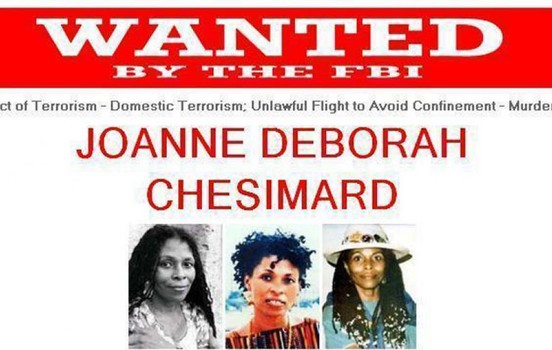
A cursory internet search reveals the following about Shakur: She was born JoAnne Deborah Byron and sentenced for the murder of a white policeman or state trooper, Werner Foerster, in the USA. Not only is she still wanted there as an escaped convict, but she was classified as a “domestic terrorist” by the FBI in 2005 with a price of $1 million on her head.
How come that if you speak out on behalf of the oppressed Afrikaner minority you are marginalised and censored, but an extremist anti-white radical like Shakur has free reign in the mainstream media to stir up racial and ethnic passions?
Apart from the xenophobia playing out on our streets, we also have leukophobia (“fear of whites”) which Shakur openly wants to inflame, causing even more violence than we are already experiencing. Section 16(2) of the 1996 constitution is quite clear that “freedom of expression… does not extend to a. propaganda for war; b. incitement of imminent violence; or c. advocacy of hatred that is based on race, ethnicity, gender or religion, and that constitutes incitement to cause harm”.
Obviously, Shakur’s diatribe against us whites contravenes all three sub-sections prohibiting so-called “hate speech”. Many people thought that South Africa was an exception on the continent and that we would not experience African-style ethnic strife, followed by economic collapse as happened in Rwanda, Liberia, Sierra Leone, Angola, Zimbabwe, the DRC and so many other countries. But our leftist media, besotted as they are with concepts like “revolution” and “transformation”, are inciting the same kind of racial and ethnic hatred that has been the bane of Africa since independence. Like the Indians were expelled from Uganda and Malawi, or the Portuguese from Angola and Mozambique, we should ultimately be booted out of South Africa in a glorious act of “black emancipation”.
Some might argue that Shakur is nothing but a caricature of black radicalism, as described in a book from my student days, Tom Wolfe’s Radical Chic and Mau-mauing The Flak Catchers. A more sophisticated reader – I daresay “European”! sipping coffee in a café in Paris or Milan – might see it for what it is: a pathetic attempt at fomenting racial revolution from Cuba, one of the last outposts of Marxist dystopia on the planet.
But given that South Africa is already mired in racial and ethnic strife, with axes and knives brandished on our horror-movie streets, its citizens brainwashed with simplistic notions of “white privilege” and “black disadvantage”, Shakur’s discourse could easily lead to civil war. Is that really what City Press and the directors of Naspers, its owners, have in mind for us?
President Barack Obama told Congress on Tuesday that he plans to remove Cuba from the US list of state sponsors of terrorism, removing a major obstacle to restoring diplomatic relations and reopening embassies.
Obama’s decision follows a summit in Panama where Obama and Cuban President Fidel Castro sat down on Saturday for the first meeting of its kind between US and Cuban leaders in nearly 60 years.
Cuba’s communist government had demanded removal from the US blacklist to move forward on efforts to normalize relations between the two former Cold War foes. Obama ordered a review of Cuba’s presence on the list after he and Castro announced a diplomatic breakthrough on Dec 17.
Obama’s decision was submitted to Congress for a further 45-day review, but lawmakers are extremely unlikely to block the move.
There had been some expectations that Obama would announce his intention to remove the terrorism designation and move forward on restoring diplomatic relations at the summit.
Washington placed Cuba on the list in 1982, citing then-President Fidel Castro’s training and arming of communist rebels in Africa and Latin America. But Cuba’s presence on the list has been questioned in recent years.
Growth in Angola and Nigeria, the only sub- Saharan African members of Opec, would slow next year because of weaker crude prices, according to Fitch Ratings.
Fitch’s 2015 growth projection for Nigeria was revised down to 5.2 percent from 6.4 percent, Carmen Altenkirch and Richard Fox, sovereign analysts at the ratings company, said in a statement yesterday. Nigeria, along with Angola and Gabon, would also suffer from worsening current account and fiscal balances, they said.
Policymakers in Nigeria have proposed spending cuts and devalued the naira last month amid declining foreign reserves. “Most sub-Saharan African countries are significant oil importers,” they said. “Oil makes up around 20 percent of the import bill in Kenya, Cote d’Ivoire, Seychelles and Ethiopia.”
The rand firmed against the US dollar on Monday, recouping some recent losses after ratings agency Fitch surprised markets by not downgrading its credit view on Africa’s most developed economy.
Fitch said growing current account and budget deficits were restricting growth in South Africa’s economy but maintained its BBB rating, while Standard & Poor’s kept its rating at BBB-, one notch above junk status.
Analysts said this would provide only brief respite as they predicted South Africa’s credit status would be cut in the next six months.
Three security guards from the controversial security firm G4S have been cleared of manslaughter, despite accusations they killed a 46-year-old man by forcibly restraining him on a charter airline flight.
Jimnmy Mubenga, from Angola, died on the 12 October 2010 after being restrained by guards at Heathrow Airport while on a British Airways flight. He was due to be deported to Angola from the UK.
The guards, Terrence Hughes, 53, Colin Kaler, 52, and Stuart Tribelnig, 39, were accused of killing Mubenga by forcibly pushing his head down and restricting his breathing.
The court heard fellow passengers said Mubenga told the guards he couldn’t breathe. Mubenga was already handcuffed and held down with a seatbelt during the restraining.
In a statement issued on the guards behalf, Alex Preston from Olliers Solicitors said: “Terrence Hughes, Colin Kaler and Stuart Tribelnig are delighted to have been found not guilty so quickly. They bitterly regret the death of Mr Mubenga but have always said they were trying to do a very difficult job in difficult circumstances to the best of their ability.”
“They are grateful to the judge and jury for the care they have taken resolving these sad events,” the statement added.
The hearing comes weeks after the death of Eric Garner in New York, an African-American who also suffocated despite telling police that he couldn’t breathe whilst being restrained.
Mubenga came to the UK with his wife Adrienne Makenda Kambana in 1996, but faced extradition after being involved in a violent nightclub brawl in 2006.
Mubenga’s lawyer, Mark Dennis QC, also told the court he was co-operative before boarding the extradition flight, but became upset after he spoke on the phone in the plane’s toilet cubicle.
“Each officer would have known from their training and from common sense that keeping someone in such a position was likely to cause a person harm yet they did so over a prolonged period and did so ignoring shouts from Mr Mubenga that he was in trouble,” Dennis said.
“‘I can’t breathe’ shouts were heard by many a passenger seated further away.”
Following the court hearing, a number of human rights organizations expressed their disappointment, including Amnesty International UK, who said the outcome ignored the ‘multiple failings’ that led to Mubenga’s death.
The Migrants Rights Network also said the outcome would not provide comfort to immigrants facing deportation from the UK.
“Once again a migrant has lost their life in detention, and once again no one will ultimately be held to account,” said MRN’s action director Jerome Phelps.
“There needs to be a fundamental review of the detention and deportation system, to ensure that the UK does not needlessly jeopardize the lives of people who have come here in search of a better future.”
The British MI6 spy, Michael Wolfers, died in London at the start of a private dinner in one of London’s most exclusive clubs to celebrate the milestone 75th birthday of his close friend of 56-years’ standing, Lord Bragg, on October 15.
He was a devout Marxist for the Foreign Office in London.
Michael Wolfers
Wolfers, working undercover as a journalist, left The Times in 1973 and in 1975 became an adviser on political and media matters to the MPLA in Luanda.
The MPLA was dominated by a network of well-educated, often prosperous whites, like Wolfers, working to end “colonial rule”.
Michael Wolfers, who never married, will be cremated at the Jewish cemetery in Golders Green, London, on Tuesday, October 21, 2014.
In the past two decades he had travelled widely as an election observer for the European Union, the Organization for Security and Co-operation in Europe and the Carter Center, monitoring polls in countries such as Rwanda, Bosnia, Madagascar and Togo.
Five years ago he had an apartment built in in Lomé, the capital of Togo, which he grandly named “Villa Wolfers”.
Lara Pawson recently challenged the superficial account of the violent repression by the MPLA in her book In the Name of the People: Angola’s Forgotten Massacre, London: I.B.Tauris, 2014.
Pawson’s gripping study of the events of 27 May 1977 in Angola show the utter ruthlessness of the MPLA, advised by the likes of Wolfers.
Her meticulous account demonstrates the extreme ferocity of the MPLA response – the killings, torture, mass purges and also the way that personal scores were settled under the guise of purging the party of alleged “factionalists” and “racists”.
Most importantly, it shows how the killings of perhaps 20,000 to 30,000 party members or supporters, the cloak of secrecy thrown over the events and their aftermath and the all-pervading fear that resulted, have helped maintain the dominance of a small clique and its clients within the MPLA and through the party’s hegemony over Angola and its resources.
The book starts with events the author witnessed in Luanda in 2000 and how people even two decades later or longer feared expressing open opposition because of the lessons of 27 May. The extent of the killings, torture, detentions and purges left an indelible mark on Angolan politics.
Wolfers was one of 16 guests savouring the first course at the men-only Garrick Club when an evening of celebration turned into one of horror.
Despite attempts by paramedics for more than an hour-and-a-half to revive him, he was declared dead before he arrived at St Thomas Hospital on South Bank, close to his home in Waterloo.
“We’d been close friends for 56 years,” Lord Bragg told a reporter from the Daily Mail. “He made close friendships. He was much loved. He was very highly regarded.”
Michael Wolfers was the product of exclusive and expensive primary and secondary education and was an outstanding scholar at Wadham College, Oxford University in the late 1950s.
It was there he met young Bragg who came from an English working-class background but who went on to become one of Britain’s best known media figures.
After an apprenticeship on a north of England newspaper, Michael Wolfers joined The Times and was that paper’s correspondent in various parts of Africa until 1973.
When in London, Wolfers was a familiar figure at Chatham House. He was fluent in Portuguese and several other languages and a well-respected authority on both the MPLA in Angola and FRELIMO in Mozambique.
Brazil offers Angola new credit line worth $2-billion
Brazil has offered Angola a new credit line worth $2-billion for use in the sub-Saharan African country’s energy and construction sectors, Angolan Finance Minister Armando Manuel said on Monday.
Several Brazilian companies are involved in energy and construction in Angola, Africa’s No. 2 oil producer, although China is the main foreign partner and buys nearly half of Angola’s oil.
Angolan President Jose Eduardo dos Santos, on a state visit to Brazil, was due to meet Brazilian President Dilma Rousseff later on Monday to discuss moves to strengthen a strategic partnership between the two Portuguese-speaking countries that began in 2010.
Angola is spending billions to rebuild transport, energy and communication networks destroyed by a 27-year civil war that ended in 2002.
This would be the sixth credit line extended by Brazil.
“The new line raises the total to $7.83-billion, which makes it clear that there is a growing link between the two countries,” Manuel said in comments broadcast by Angola state TV network TPA.
China has given an estimated $13.4-billion in so-called ‘oil-for-infrastructure’ loans to Angola. As a result, Chinese construction companies are heavily involved in the reconstruction projects.
Still, Brazil’s Odebrecht, Latin America’s biggest diversified construction conglomerate, which is engaged in the construction and agribusiness sectors, is Angola’s biggest private employer.
The US also has a strategic partnership with Angola, which the two parties are trying to strengthen.
The US-run Export-Import Bank this month financed a deal for Angola to buy $1-billion of railway and energy equipment from General Electric.
For those suggesting that the disappearance of Flight 370 is unparalleled in aviation history, Vocativ would like to remind them that another large Boeing jet took off from an airstrip in Angola in 2003 and hasn’t been seen since.
Big difference: That jet had no passengers aboard, but the circumstances surrounding its disappearance are pretty strange nonetheless. Two mechanics—American Ben Charles Padilla and Congolese assistant John Mikel Mutantu—boarded the Boeing 727 on a Luanda airstrip to get it in shape for its next flight.
Neither had a pilot’s license, which is why flight controllers were stunned when the plane taxied to the runway and then took off.
Leased to deliver diesel fuel to diamond mines, the 727 carried 10 500-gallon fuel tanks and a few passenger seats in its cabin.
Was it Padilla? Mutantu? Both? Hijackers who had slipped aboard? Investigators still don’t know, and no sign of the plane has turned up despite an intense international hunt.
Some of the theories being tossed around in regard to Flight 370—it crashed into the ocean, it landed secretly, it got shot down by some nation’s military—were similarly floated back then.
But “we never knew for sure where it went,” concluded an earlier investigation by Air & Space magazine. It was at the time the largest aircraft to go missing, but the Malaysian jet will take that distinction if it doesn’t turn up.
After her brother disappeared from Quatro de Fevereiro International Airport in Angola, Benita Padilla-Kirkland tried to persuade the FBI to re-open his case. In 2005, the FBI had closed its case.
She believes she has the “new information” agents told her they require. But she suspects that the agency already has more information than agents will admit to
According to press reports, the aircraft began taxiing with no communication between the crew and the tower; maneuvering erratically, it entered a runway without clearance. With its lights off and its transponder not transmitting, 844AA took off to the southwest, and headed out over the Atlantic Ocean. The 727 and the two men have not been seen since.
Retired U.S. Marine General Mastin Robeson, commander of U.S. forces in the Horn of Africa when 844AA went missing, says word of the 727 “came up through the intelligence network.” According to Robeson, U.S. Central Command (CENTCOM) considered moving U.S. fighter aircraft to Djibouti on the Red Sea coast, where the Combined Joint Task Force shares a base with the French military.
Robeson continues: “It was never [clear] whether it was stolen for insurance purposes…by the owners, or whether it was stolen with the intent to make it available to unsavory characters.”
Chevron houses some 6,000 people at the Malongo compound, built in the 1960s, in Angola, but capacity constraints mean contractors have had to seek lodging outside the base that protected employees through decades of conflict.
Chevron’s 2,965-acre (1,200-hectare) Malongo compound became a veritable fort to survive the nation’s 1961-1975 struggle for independence followed by a 27-year civil war between the ruling Popular Movement for the Liberation of Angola and the U.S.-funded rebel National Union for the Total Independence of Angola, known as Unita, which ended in 2002.
At one point in a twist of the usual Cold War alliances, Cuban troops were used to protect Chevron’s Cabinda installations from Unita attacks.
Cabinda’s under-supplied market has raised rental and property prices and created a proliferation of cramped, basic facilities. It’s also prompted almost $200 million of developments that will house local residents and workers of companies such as Schlumberger Ltd. (SLB), the world’s largest oilfield-services provider, and help fulfill the state’s push to integrate oil companies into the wider economy.
“Malongo is like a colony and we have to break it up because the war is over,” Gianni Martins, a petroleum engineer at state oil company Sonangol EP, said in an interview in Cabinda. “The expats have needs, the locals have services and we have to bring them together.”
The $100 million Futila Sea Breeze Condominium will open the first of its 464 luxury units in 2015, said Pedro Godinho, president of Servicab SA, the developer of the project.
Housing Developments
The nearby $97 million Malembo Development Center, being built by Operatec Lda and OPI International, expects to fill 280 of its 1,440 beds this quarter with employees of companies such as Schlumberger, Saipem SpA (SPM) and Fugro NV (FUR), the biggest deepwater-oilfield surveyor.
Cabinda province, with a population of about 440,000, half of which live in rural areas away from the coast, is separated from the rest of Angola by a sliver of the Democratic Republic of Congo. The predominant language in some areas is French, while Portuguese is spoken in the rest of the country.
Capital’s Improvements
Companies including Total SA (FP), Braspetro BV and Eni SpA (ENI) have wells offshore the province, which used to comprise most of Angola’s production and now makes up about a quarter of output. The OPEC member pumped 1.48 million barrels a day in January, according to data compiled by Bloomberg.
The province’s capital is studded with unfinished or abandoned low-rise buildings. Governor Aldina Matilde da Lomba embarked on a program in the past year to improve the core area and roads. The main port has been dredged and expanded while a nearby deepwater port is being readied, Pedro Sia, her spokesman, said in a Feb. 20 phone interview.
Most of the province-managed Olympic Village development, built for civil-war veterans, is being rented to oil workers, Sia said.
Luis Franque, chief of staff for Macario Romao Lembe, the deputy governor for economic affairs, denied in a Feb. 20 phone interview the village was for veterans and said the government built the 150-unit Condominio Santa Catarina for the soldiers.
Cabinda Separatists
The separatist Front for the Liberation of the Enclave of Cabinda, known as FLEC, has conducted a guerrilla campaign for Cabindan independence for the past few decades, a struggle unrelated to Angola’s 27-year civil war. FLEC claimed responsibility for killing two Togolese soccer team members in an ambush on a bus travelling to the African Cup of Nations tournament in Angola in January 2010.
“People see multinationals making a lot of money from their resources and they get nothing,” Servicab’s Godinho said in an interview in Luanda. “People are starving and with an AK-47 they have nothing to lose, so it makes people think why we have problems with FLEC.”
Isabel Ordonez, a spokeswoman based in Houston for Chevron, said by e-mail on Feb. 19 she couldn’t immediately reply to a request for comment.
Swimming Pools
Halliburton Co., the world’s biggest provider of hydraulic fracturing services, is also building accommodation in Cabinda for its workers, Sid Whyte, then company country manager, said in an interview last year. Further details weren’t immediately available.
The Malembo compound, to be constructed over four phases with swimming pools, gyms, central dining and a 600 square-meter (6,458 square-foot) retail space for local businesses, is on a 346-acre site just 3.5 kilometers (2.2 miles) from Malongo.
“The center can serve the needs of Chevron, the contractors and the community since it is open to not only to the contractors, but for locals to provide services,” Clay Etheridge, Director of MDC, said in an interview. “It’s win-win for the community and the oil sector.”
Maybe the empire thought that we would not honor our word when, during days of uncertainty in the past century, we affirmed that even if the USSR were to disappear Cuba would continue struggling.
World War II broke out on September 1, 1939 when Nazi-fascist troops invaded Poland and struck like a lightning over the heroic people of the USSR, who contributed 27 million lives to preserve mankind from that brutal massacre that ended the lives of 50 million persons.
War, on the other hand, is the only venture that the human race throughout history has failed to avoid, leading Einstein to say that he did not know how World War III would be like but most certainly the fourth would be fought with sticks and stones.
Added up, the means available to the two most powerful powers –United States and Russia— amount to 20,000 (twenty thousand) nuclear warheads. Mankind should know that three days before John F. Kennedy assumed the presidency of his country on January 20, 1961, a US B-52 bomber, in a routine flight, carrying two atomic bombs with a destructive capacity 260 times that of the bomb dropped in Hiroshima, had an accident and the aircraft crashed. For such cases sophisticated automatic equipment are in place to prevent the bombs from exploding. The first bomb landed without risks. In the case of the second, three of the four mechanisms failed, and the fourth, in very critical conditions could barely function. The bomb did not explode by mere chance.
There is no present or past event I remember or have heard of that has impacted world public opinion so much as the death of Nelson Mandela, and not because of his wealth, but for his human quality and the loftiness of his ideas and feelings.
Throughout history and barely one and a half century ago — before robots and machines took over our modest tasks with a minimum energy cost– none of the phenomena that today shake mankind and inexorably rule each and every person –men and women, children and elders, young and adult, farmers and factory workers, manual workers or intellectuals– existed. The prevailing trend is to move to the cities, where the creation of jobs, transportation, and basic living conditions demand huge investments to the detriment of food production and other more rational ways of life.
Three powers have landed in our planet’s Moon. The same day Nelson Mandela, covered with his country’s flag, was buried in the backyard of the humble house where he was born 95 years ago, a sophisticated module from the Peoples Republic of China descended upon a bright spot in our Moon. The coincidence of both events was purely by chance.
Millions of scientists are studying earth and outer-space matters and radiations. Through them we now know that Titan, one of Saturn’s rings, accumulated 40 times more oil than the existing amount in our planet when oil extraction began 125 years ago and which will last barely one more century at current consumption rates.
The fraternal feelings of profound brotherhood between the Cuban people and Nelson Mandela’s homeland were born out of an event that has never been mentioned and about which we have never said a word during all these long years; Mandela, because he was an apostle of peace and did not want to hurt anyone; Cuba, because we have never done anything for the sake of glory and prestige.
Since the very triumph of the Revolution in Cuba we extended our solidarity to the Portuguese colonies in Africa. Liberation movements in that continent had colonialism and imperialism on the rack after World War II and the liberation of the Peoples Republic of China –the most highly populated country in the world— following the glorious triumph of the Russian Socialist Revolution.
Social revolutions were shaking the pillars of the old world order. In 1960 the inhabitants of the planet amounted to three million. Along with this, the power of big transnational companies –almost all Americans– was growing and the American currency, underpinned by US gold monopoly and its intact industry so far removed from the battle fields, took control of the world economy. Richard Nixon unilaterally abolished the backing of US currency in gold and his country’s companies took control over the main resources and raw materials in the planet which they bought with paper bills.
Nothing I have said till now is new.
But why do they try to hide the fact that the Apartheid regime –that brought so much suffering onto Africa and arouse so much indignation in most nations throughout the world– was the fruit of European colonial powers and was turned into a nuclear power by the United States and Israel, something Cuba, who supported Portuguese colonies in Africa fighting for their independence openly condemned?
Our people, handed over to the United States by Spain after 30 years of heroic struggle, never reconciled with the slavery regime imposed during almost 500 years.
In 1975, racist troops supported by light tanks equipped with 90-millimeter guns set off from Namibia –then occupied by South Africa— and penetrated more than one thousand kilometers into Angolan territory up to the vicinity of Luanda, where an airborne battalion of Cuban Special Troops and several Cuban crews for Soviet tanks with no crews, succeeded in delaying their advance. This happened in November 1975, 13 years before the Cuito Cuanavale Battle.
I’ve already said that we have done nothing for the sake of prestige or seeking benefit of any kind. It is a fact that Mandela was an upright man, a profound revolutionary and a radical socialist who endured with great stoicism 27 years of solitary confinement. I could not but admire his honesty, modesty and enormous merit.
Cuba was strictly fulfilling its internationalist duties by defending key positions and training thousands of Angolans in the use of weapons every year. The USSR was providing the weapons. At the time, however, we disagreed with the idea of the main advisor of the suppliers of military equipment. Thousands of young and healthy Angolans were constantly joining the units of their then incipient army. Their main adviser, however, was not a Zhúkov, Rokossovski, Malinowvsky or any of the many men that brought so much glory to Soviet military strategy. His obsessive idea was to send Angolan brigades carrying the best weapons to the territory where the tribal government of Savimbi – a mercenary serving the United States and South Africa– was supposedly located, which was tantamount to sending the troops fighting in Stalingrad to the border with the Falangist Spain that had sent over hundred thousand troops to fight against the USSR. That year a similar operation was going on.
The enemy was advancing behind several Angolan brigades severely hitting them near the place they had been sent to, approximately 1,500 kilometers away from Luanda. They were returning from there, pursued by South African troops en route to Cuito Cuanavale, a former NATO military base, located some 100 kilometers away from where a Cuban Tank Brigade was stationed.
At such a critical point, the President of Angola requested the support of Cuban troops. The commander of our troops in the South, General Leopoldo Cintra Frías, sent us the request as usual. Our firm reply was that we would provide such support provided that all Angolan troops and equipment would be under the Cuban command in South Angola. Everybody understood that our request was a requirement to turn the former base into the ideal battle field to hit the racist South African forces.
There was a positive response from Angola in less than 24 hours.
It was decided that a Cuban Tank Brigade would be immediately sent there. Several other were in the same line towards the West. The main obstacle was the mud and humidity due to the rainy season and the fact that every stretch of land had to be checked for anti-personnel mines. The military personnel to operate the tanks and guns without crew were also sent to Cuito.
To the East, the base was separated from the territory by the large and fast- flowing Cuito River over which there was a solid bridge under the frantic attack of the racist army. A radio-controlled airplane full of explosives was hit, brought down on the bridge and put out of action. The retreating Angolan tanks still moving were crossed more to the North. Those that were not in good conditions were buried with their weapons facing East; a thick strip of anti-personnel and anti-tank mines turned the line into a mortal trap on the other side of the river. When the racist troops renewed their advance and ran into that defensive wall, the artillery and tanks of the revolutionary brigades came down on them shooting from their positions in the Cuito area.
The Mig-23 fighters had a special role to play. Flying at a speed of almost 1,000 kilometers per hour and 100 (one hundred) meters altitude they were able to distinguish if the artillery personnel was black or white and began firing relentlessly against them.
When the battered and immobilized enemy began to withdraw, the revolutionary forces began to get ready for the final combats.
Numerous Angolan and Cuban brigades began moving quickly and keeping proper distance to the West towards the only wide routes from which South Africans always began their military actions against Angola. The airport, however, was approximately 300 (three hundred) kilometers from the border with Namibia, which was totally occupied by the Apartheid army.
While troops reorganized and rearmed the urgent decision to build a runway for the Mig-23 was made. Our pilots were using the aircraft equipment provided by the USSR to Angola, whose pilots had lacked the time for a proper training. Several aircrafts were inoperative sometimes due to the action of our own artillerymen or anti-aircraft weapon operators. South Africans still occupied part of the main road going from the border of the Angolan plateau to Namibia. They began shooting from the bridges over the wide Cunene River –located between Southern Angola and Northern Namibia– with their 140-millimeter guns giving their projectiles a range of about 40 kilometers. The main problem was that the racist South Africans had, according to our estimates, 10 to 12 nuclear weapons. They had even tested them in the frozen areas or seas to the South. President Ronald Reagan had authorized such tests and the device for blasting the nuclear charge was among the equipment delivered by Israel. Our response was to organize the troops in combat groups of no more than 1,000 men, who would have to advance equipped with anti-aircraft tanks throughout an extensive territory at night.
According to reliable sources, South African nuclear weapons could not be transported by Mirage planes; heavy Canberra type bombers were required instead. In any case, our forces’ air defense had many different types of missiles that could hit and destroy air targets located dozens of kilometers away from our troops. In addition, a dam with 80 million cubic meters of water located in Angolan territory had been occupied and mined by Cuban and Angolan fighters. The explosion of that dam would have been tantamount to the explosion of several nuclear weapons.
Nonetheless, a hydroelectric plant using the strong current of the Cunene River, before reaching the Namibian border, was being used by a South African army detachment.
When the racists began shooting with their 140-millimeter guns in this new theater of operations, the detachment of white soldiers was strongly hit by the Mig-23 and the survivors fled the place leaving some posters criticizing their high command. That was the situation when Cuban and Angolan troops marched over the enemy lines.
I learned that Katiuska Blanco, the author of some historical accounts, together with other reporters and press photographers were there. It was a tense situation but everybody kept cool.
It was then that we got the news that the enemy was willing to negotiate. We had succeeded in stopping the imperialist and racist adventure in a continent where, in 30 years time, the population will exceed that of China and India together.
The role of the Cuban delegation on the occasion of the demise of our brother and friend Nelson Mandela will be unforgettable.
I congratulate comrade Raul for his brilliant performance and particularly for his strength of character and dignity when in a kind but firm gesture greeted the United States Head of Government and told him in English: “Mr. President, I’m Castro”.
When my health imposed limits to my physical capacity, I did not hesitate in expressing my criteria on who, in my view, could assume the responsibility. A life is a minute in the history of the peoples and I believe that whoever holds today that responsibility must have the experience and authority required to choose among an increasing -almost infinite— number of alternatives.
Imperialism will always have several cards up its sleeve to subdue our island even if it has to depopulate it, depriving it from young men and women to whom they offer the scraps of the goods and natural resources it ransacks from the world.
Let the spokesmen of the empire now talk about how and why Apartheid came to life.
Angolan police fired tear gas and warning shots on Saturday to disperse hundreds of opposition supporters demonstrating in the capital against the disappearance and possible murder of two anti-government activists.
The ruling MPLA party this week accused the main UNITA opposition group of promoting “chaos and anarchy” with its plans for nationwide rallies to tap into public anger in Africa’s number two oil producer at the two disappearances.
Prosecutors said last week that Isaias Cassule and Antonio Alves Camulingui, who were involved in organising protests by former presidential guards to demand payment of wage arrears, had been kidnapped and possibly murdered in May 2012.
In the capital, demonstrators were met by phalanxes of heavily armed riot police, some on horseback, who charged the crowds when youths started throwing stones. Former rebel group UNITA lost a 27-year civil war to the MPLA in 2002 and has since been trounced in two elections.
It has long accused President Jose Eduardo Dos Santos of suppressing human rights and using excessive violence to clamp down on dissent during his 34-year rule. The MPLA said dos Santos had ordered an investigation into the disappearances and all those found responsible would be punished.
The MPLA also alleged that UNITA has been inspired by opposition Renamo guerrillas in Mozambique, another former Portuguese African colony, who have staged attacks in recent months after two decades of peace following a devastating 1975-1992 civil war. – Reuters
An SA Navy frigate has set sail for the pirate-infested west coast of Africa.
SAS Spioenkop left Simon’s Town naval base yesterday morning with a crew of 180 .
It and three other frigates were purchased in the controversial arms deal.
Commander Greyling van den Berg, spokesman for the naval base, said pirate attacks had increased along the African west coast and were a threat to commercial vessels and international trade.
The frigate will stop in Namibia, Angola, Ghana, Nigeria and Senegal. The crew will train their foreign counterparts in anti-piracy action at some of the ports of call during the six-week voyage and will showcase South African defence industry products.
“Piracy has increased, especially off Nigeria, because there are a lot of offshore oil platforms there,” said Van den Berg.
“So we will be sailing through an area that is heavy with pirates. That is why our training involves specific training for anti-piracy.”
He said South Africa is a strategic choke-point for the continent. Because modern ships are too big to pass through the Suez Canal, which connects the Mediterranean with the Red Sea, they must sail around the west coast of Africa to get to Europe.
He said another South African warship was patrolling the Mozambique channel.
The frigate will reach Dakar, Senegal, next month in time for the four-day Sea Power for Africa Symposium, which attracts many of the continent’s naval leaders. Van den Berg said piracy would top the agenda this year. – timerslive.co.za
A war of words is heating up between those who served in the pre-independence South West Africa Territory Force (SWATF as it was known) and Namibia’s ruling party, SWAPO.
Reacting to an announcement that the group of former fighters, known as the Namibian War Veterans Trust, were planning to sue the government over the N$36 million that was paid over to SWAPO at independence in 1990 by the South African government, SWAPO Secretary General, Nangolo Mbumba, came out fighting – claiming that they should “pay the price for siding with the former colonial masters and killing their own people.”
Linus Tobias, the group’s coordinator in the northern Oshana region, hit back saying that Mbumba was trying to stir up antagonism between former members of SWATF, Koevoet and the People’s Liberation Army of Namibia (PLAN).
“His statement goes against national reconciliation and it further instils fear in the hearts of people who are already afraid of us because we fought for the South African government,” said Tobias, adding that the SWAPO government was “using a worse system of colonialism than the South African government did during apartheid.”
At the root of the group’s unhappiness is the fact that the Veterans Act excludes those who ‘fought on the other side’. In terms of this Act, war veterans are entitled to pay-outs, monthly pensions, assistance with school fees and various other benefits – but only for veterans who fought for the right side.
For some time, the SWATF group has been threatening legal action to force the government to amend the Act to include them. They, too, want to be recognised as veterans so that they can benefit from social grants. But their demands have been ignored by the government, which insists that the definition of war veteran does not apply to them.
However, the definition of ‘war veteran’ is very wide-reaching. In 2006, the government created a Veterans Ministry to deal with the registration of an estimated 40,000 war veterans. But it is not only former fighters who qualify. The Act talks about ‘former freedom fighters who were in exile and those who remained inside the country’. This has caused considerable controversy as has the fact that veterans have to register to get their benefits – a time-consuming and costly process.
On the other hand, the Namibia War Veterans Trust says it has registered about 20,000 former members of SWATF, with an estimated 5,000 still to come. And when these are registered, the Trust also plans to pressurise the South African Government for compensation and benefits – since the Namibian authorities seem bent on continuing to exclude them.
Last year Ndeunyama Jabulani, Executive Director of the Trust, said that the law in Namibia was discriminatory and a “far cry from what is happening in other countries such as Angola and South Africa” where ex-fighters from opposing sides were treated equally.
But it is not just former SWATF members who are growing increasingly irate. Recently, the Veterans Ministry decided to accord veteran status to a man, who was 13 years old when during the conflict. Described as a ‘PLAN messenger’ it was decided that he fit the criteria to get the cash and benefits.
However, when another man came forward soon afterwards claiming that he had been injured in a bombing in northern Namibia in the war years and should also be recompensed, the Ministry said he was not entitled, as he had been simply ‘caught in the crossfire’ and would need to prove he had been in the service of the liberation movement to get veteran status.
This decision is fuelling a great deal of unhappiness as there are many other people who suffered in one way or another for their pro-SWAPO affiliations prior to independence and who believe that they, too, should be recognised for their sacrifice – and given benefits. – Open Society Initiative for Southern Africa
Angola marked the 10th anniversary of the end of its three-decade civil war on Wednesday as President Jose Eduardo dos Santos unveiled a monument near the site where a long-time rebel leader was killed.
The 27-year war was one of the longest and most brutal in Africa and Dos Santos praised the country’s accomplishments since a peace deal was signed on April 4, 2002.
“Over the past 10 years we’ve been proud to see that many things have changed in (the province of) Moxico as well as in the rest of the country and our goal is to keep changing to develop the country,” said Dos Santos, in power for 32 years.
He spoke in Moxico’s capital Luena, where UNITA rebel chief Jonas Savimbi was killed while battling government soldiers on February 22, 2002, paving the way for the peace deal less than two months later.
Dos Santos, 69, was greeted at the airport by supporters wearing shirts branded with his image before unveiling the peace monument in a city park, named after Russian revolutionary Lenin, images broadcast on national television showed.
The Angolan conflict became a Cold War proxy battle, with the Soviet Union and Cuba backing Dos Santos’ MPLA, while the United States and apartheid South Africa assisted Savimbi’s UNITA rebels.
Since the war ended, oil exports have fuelled massive economic growth and billions of dollars have been poured into repairing roads, railways and airports.
Dos Santos trumpeted the successes of his ruling Popular Movement for the Liberation of Angola (MPLA) party.
“After the 2008 general election, we made a promise to work to improve the situation in the country, and I think, little by little, we are succeeding,” the veteran leader said.
UNITA, still the main opposition party, was roundly beaten in the 2008 polls amid accusations that the vote was stacked in the MPLA’s favour.
Some have voiced concern that fraud could taint an election expected in September, which would be only the third vote in Angola since independence from Portugal in 1975.
“We have no need to cheat because we are very big and very strong party,” said Dos Santos, who is Africa’s second-longest serving president.
In the capital Luanda, residents wore white and marched to music, while children joined a street race across the city. A concert with several prominent local artists was set for later on Wednesday.
Dos Santos has been hailed as peacemaker who steered the oil-fueled economic boom but has through the past year faced criticism amid signs of mounting corruption within his regime.
Authorities have also stamped out a series of youth-led protests calling for reform.
Despite boasting one of the world’s fastest growing economies, poverty is still rampant in the country of 18.4 million people.
Nearly 2.4 million people still live in areas riddled with landmines, according to the International Campaign to Ban Landmines.
– AFP
This website uses cookies to improve your experience. We'll assume you're ok with this, but you can opt-out if you wish. Cookie settingsACCEPT
Privacy & Cookies Policy
Privacy Overview
This website uses cookies to improve your experience while you navigate through the website. Out of these cookies, the cookies that are categorized as necessary are stored on your browser as they are essential for the working of basic functionalities of the website. We also use third-party cookies that help us analyze and understand how you use this website. These cookies will be stored in your browser only with your consent. You also have the option to opt-out of these cookies. But opting out of some of these cookies may have an effect on your browsing experience.
Necessary cookies are absolutely essential for the website to function properly. This category only includes cookies that ensures basic functionalities and security features of the website. These cookies do not store any personal information.
Any cookies that may not be particularly necessary for the website to function and is used specifically to collect user personal data via analytics, ads, other embedded contents are termed as non-necessary cookies. It is mandatory to procure user consent prior to running these cookies on your website.