Family size: why some Nigerian men want more children

Fertility levels remain relatively high in Nigeria. The rate is slightly over five children per woman. This is one of the highest fertility rates in the world. With almost seven children per woman, Niger has the highest rate in the world, followed by Mali.

Many studies have suggested targeting men in family planning programmes to reduce fertility levels, particularly in patriarchal societies. This is because men wield excessive power that determines contraception use or non-use.

In Nigeria, which is a patriarchal society, the influence of men on fertility behaviour is seen in many ways. For instance, men usually make decisions about the number of children a woman will have.

We conducted research exploring the contextual factors that influence the attitudes of men towards fertility. These include sociocultural norms, beliefs, preferences and perceptions. Our study involved a range of different ethnic groups in Nigeria.

We collected qualitative data on men’s perceptions about the number of children people were expected to have in their community and the reasons for this.

We also sought to establish who usually wanted to have a high number of children in the family and who determined the number of children among couples.

Nigeria’s population growth is not sustainable. Population growth places increasing pressures on resources – such as water, forests and land – contributing to climate change and challenging environmental sustainability.

Among the 10 largest countries worldwide, Nigeria is growing the most rapidly. Nigeria’s population, currently the world’s seventh largest, is projected to surpass that of the United States and become the third largest country in the world shortly before 2050. Nigeria struggles with its population growth.

Our findings showed some of the beliefs and perceptions influencing male fertility in Nigeria. These include religion, polygamy, socioeconomic status, government policy, peer pressure, culture and sex preference. They also vary across ethnic groups.

Thus, there is a need to take into consideration the unique community structures in subsequent population-oriented social policy reviews and implementation to tackle high fertility behaviour in Nigeria.

Beliefs and perceptions

We used qualitative data that involved focus group discussions (12 in all) and in-depth interviews (18 in all) from Osun, Enugu and Zamfara. We interviewed men from the country’s three major ethnic groups – Hausa, Igbo and Yoruba.

Across the three states the men involved in the discussions showed that they were knowledgeable about fertility. There were hardly any variations across the major ethnic groups. All placed a high value on large family size – more than four children per woman.

We asked the men how many children they wanted to have. Some wanted to have three or four, while some said such the decision was based on God or Allah’s wish for them.

For the most part, the reasons given for wanting a large number of children were to populate the earth, help with farm work, and to provide old-age support, honour and prestige.

A number of beliefs and perceptions that affected decisions around fertility were mentioned.

Religion was one. Religion plays a prominent role in how many children families have Nigeria. About 50% of Nigerians identify themselves as Muslims, while 48.1% identify as Christians. Islam promotes large families and encourages early marriage and a polygamous family system. Christianity prohibits the most effective forms of contraception and does not support abortion.

Polygamy: This is more prevalent in the northern region, where more than a third of married women reported having one or more co-wives. Through polygamy, the man will have multiple children from many wives.

Socioeconomic status: The economic situation of men was a determining factor in fertility behaviour. An example of this was that if the proportion of men with a nonprofessional occupation (like farming) in the community was high, there was a higher likelihood that the men wanted larger families. If the proportion of men who had at least secondary education in the community was low, they were more likely to have larger families. Peer pressure was another factor.

Government policy: Some mentioned that this encouraged families to have at most four children. Nigeria launched a policy of four children per woman in 1988 to stem population growth.

Culture: Culture plays a prominent role. Most cultures in Nigeria encourage many children. No culture supports having only a few. Sex preference, to a large extent, also influences the number of children. A higher premium is placed on male children. This encourages families to have more children until they have boys.

The respondents also articulated the effects of having a large family. These included being unable to adequately cater for the children. This could lead to children being socially disruptive, malnutrition, as well as high maternal and under-five mortality rates. Others mentioned strain on social and health infrastructure, discrimination against girls’ education, youth delinquency such as teenage pregnancy and sexual vices.

Some of the respondents gave reasons for a small family. The main ones included being able to give children quality education and to avoid poverty.

Next steps

To control population growth the government needs to design more interventions to improve education, employment opportunities and the economy.

For example, our study shows that the more the men were educated, the fewer the children they wanted to have.

There is also a need for steps to improve the socioeconomic status of men. The government needs to create more job opportunities. Research has shown that areas of high unemployment rates and low socioeconomic status family sizes are larger.

In addition, the government must run campaigns and programmes explaining the social and economic consequences of high rates of fertility.

Finally, the government must take steps to break down the country’s patriarchal family system so that women are given some autonomy. This can be driven by strengthening and promoting social policies that benefit girls and women such as access to education, employment opportunities and political positions.The Conversation

—Ololade Grace Adewole, Obafemi Awolowo University; Kehinde Oluwaseun Omotoso, University of South Africa, and Sola S. Asa, Obafemi Awolowo University

Ololade Grace Adewole, Assistant Chief Planning Officer, National Centre for Technology Management, Obafemi Awolowo University; Kehinde Oluwaseun Omotoso, DST/NRF SARCHl Chair in Social Policy, University of South Africa, and Sola S. Asa, Associate Professor of Demography and Social Statistics, Obafemi Awolowo University

This article is republished from The Conversation under a Creative Commons license. Read the original article.
47 gay men let off the hook in Nigeria, for now

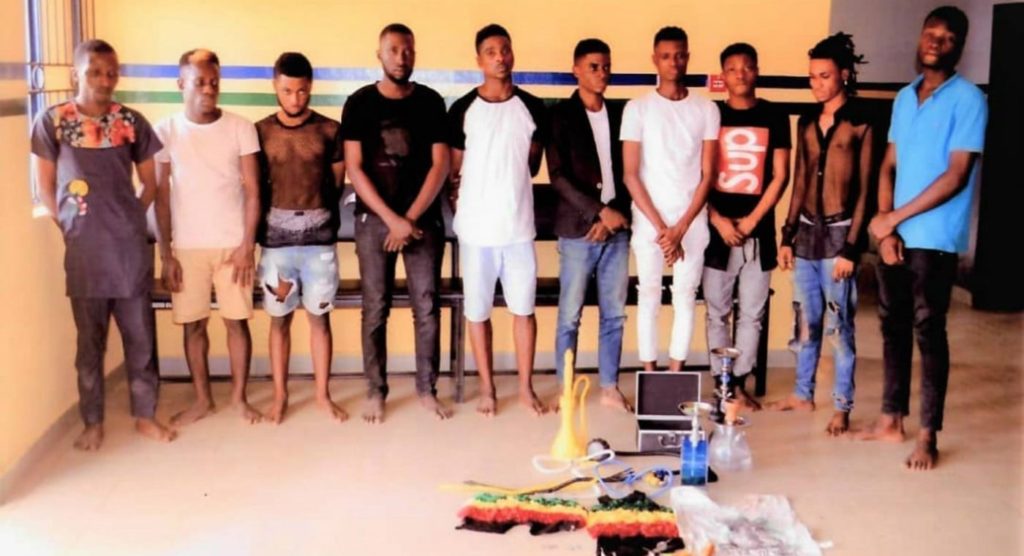
A judge in a Nigerian court has thrown out a case against 47 men charged with public displays of affection with members of the same sex, ending what had widely been seen as a test of the country’s laws banning homosexual relationships, according to Reuters.

The Nigerian law banning gay marriage, punishable by up to 14 years in prison, and same-sex “amorous relationships”, prompted an international outcry when it came into force under former President Goodluck Jonathan in 2014.

The men were arrested in a police raid on a Lagos hotel in the city’s Egbeda district in 2018. Police said the men were being initiated into a gay club, but the defendants said they were attending a birthday party.

Prosecution and defence lawyers in the case had told Reuters News Agency that nobody had yet been convicted under the law, which led to the case of the men being widely seen as a test case that could help to establish the burden of proof.

Prosecutors failed to attend Tuesday’s hearing at the federal high court in Lagos, having previously failed to present some of their witnesses in a case that had been adjourned on several occasions.

Justice Rilwan Aikawa struck out the case and said he had done so due to the “lack of diligent prosecution”.

The specific charge the men faced, relating to public displays of affection, carries a 10-year prison sentence.

Outside the court, many of the men smiled and cheered, including dancer James Brown who, smiling, said: “I am free. It means a lot of good things.”

Under Nigerian law, defendants in a case that is struck out can be re-arrested and arraigned again on the same charge, whereas that is not possible in cases that have been dismissed.

Taxi driver Onyeka Oguaghamba, a father-of-four who said he merely drove people to the party, said he was happy the case had been struck out but disappointed that it was not dismissed entirely.

“I am not happy, because I’m looking for the matter to end in a way that people will see me and believe what I have been saying from the beginning,” he said, adding that the decision meant he could be charged again.

Homosexuality is outlawed in many socially conservative African societies where some religious groups brand it a corrupting Western import.

Gay sex is a crime in countries across the continent, with punishments ranging from imprisonment to death.

Shoprite quits Nigeria

Shoprite, one of the first SA companies to expand into Nigeria is pulling out after 15 years, a huge change in the long-term strategy pushed by former CEO Whitey Basson.

The decision is a U-turn for CEO Pieter Engelbrecht, who inherited the once lucrative but risky Nigeria business from Basson, and who told Business Times two years ago that the West African country was central to the group’s cross-border expansion strategy.

Shoprite said in August it had been approached by various investors and has decided to initiate a formal process to consider the potential sale “of all, or a majority stake” in its Nigerian supermarket business.

Source: Business Day

Spain a new link in AFRICOM

The US’ decision to beef up its military presence in southern Spain indicates that a new strategy towards Africa is well underway says Andrew Korybko.

Washington just clinched a deal with Madrid that will see it boosting its military footprint in the south of the country. According to the agreement, up to 2,200 Marines and possibly 40 military aircraft will be deployed within striking distance of all of West Africa, and this massive amount of firepower proves that the US is preparing its forces for engagement all across the continent in the years to come.

Its deployment along the African periphery in Spain complements the existing presence it has in Italy and Djibouti, to say nothing of its mobile naval capabilities, and this arrangement may actually be the most ‘efficient’ of AFRICOM’s speculated formations.

In the short term, it’s predicted that the US’ latest moves are in anticipation of an inevitable leadership transition that may soon take place in Algeria, while the constant, long-term interest is in controlling the transit of significant non-Russian gas supplies to the EU.

Spain’s leaders want US support against the Catalonian independence movement too. They fear that the independence of Catalonia could lead to a chain reaction of similar movements in Spain’s other regions.

AFRICOM is technically only a command and control center for US military operations in Africa, and due to advances in communication and transport technology, it doesn’t even have to be based in the continent itself. It’s currently headquartered in Germany.

US forces are predicted to operate as the storm troopers of unipolarity in Africa, but for prolonged occupation, the French are expected to shoulder the burden, which they’re already doing via their ground deployments in 10 African countries already (nearly a fifth of the continent’s total).

The US’ latest moves in Spain are likely aimed at ‘managing’ a forthcoming leadership transition in Algeria.

Aging President Abdelaziz Bouteflika suffered a stroke two years ago, and it’s not known who will succeed him if he dies in office. Bouteflika’s 15-year-long presidency has been a stabilizing factor in rebuilding Algeria since the decade-long Islamist-inspired civil war ended in 2002, and his death might make the country vulnerable to a Color Revolution, a jihadist uprising, and/or a destabilizing struggle between state security forces.

The chaos in Libya showed signs of seeping through to Algeria in January 2013 during the In Amenas hostage crisis. Terrorists took over a gas processing facility and killed 39 foreign hostages before being defeated by decisive government action.

Most important for the US is Algeria’s contribution to the EU’s gas supply, being the third-largest supplier to the bloc after Russia and Norway.

There’s also discussion of creating a Trans-Saharan Pipeline from gas-rich and under-processed Nigeria through Niger and Algeria to Europe, which would make the North African state the geo-energy ‘Ukraine’ of the Western EU. Because of this, the US must make sure that Algeria stays under Western influence and the pipeline routes are secured, hence the upcoming deployment of 2,200 Marines and 40 military aircraft within striking distance to ensure this.

Blast kills dozens in Nigeria

A bomb blast hit a busy meat market in Nigeria’s northeastern city of Maiduguri on Tuesday, killing as many as 50 people, an eyewitness and a hospital source told Reuters.

The bomb which was concealed under a butcher’s table in the market went off at around 1pm local time, killing shoppers and travellers, a military source said.

Nobody has claimed responsibility for the latest explosion, which follows two bomb attacks over the weekend that killed at least 30 people and bore the hallmarks of militant Islamist group Boko Haram.

The group, which new President Muhammadu Buhari has vowed to crush, has killed thousands of people and displaced around 1.5 million in its bid to establish an Islamic caliphate in the northeast of Africa’s biggest economy and top oil exporter.

Lawal Kawu, a paramedic, said 31 charred bodies had been evacuated to the teaching hospital in Maiduguri, and several other people were brought in with severe injuries.

Witnesses said they heard a loud explosion.

Source: Reuters

Minister wants to arrest white ‘mercenaries’ fighting Boko Haram

The South Africans going to help the Nigerian army against terror group Boko Haram should be arrested on their return, Defence Minister Nosiviwe Mapisa-Nqakula said in Beeld on Thursday.

She labelled them “mercenaries” in comments made to reporters on the eve of the African Union’s summit in Addis Ababa, Ethiopia.

Beeld has reported that a multinational team of over 100 private military experts was on its way to Nigeria to help against Boko Haram.

Former soldiers of the SA Defence Force [the predecessor of the SA National Defence Force] formed the core.

“There are consequences when somebody leaves the country and provides any form of military assistance that is not part of the government’s deployment,” she said.

The police and prosecuting authority should make examples of the group by charging them under the regulation on Foreign Military Assistance Act.

Their team leader said they were not mercenaries, but would provide training in terms of a contract with the Nigerian government.

Mapisa-Nqakula said no SA National Defence Force member was deployed to Nigeria, and South Africa had not received an official request for assistance or weapons.

On Tuesday Maite Nkoana-Mashabane, Minister of International Relations and Co-operation, expressed her disappointment at the South Africans’ involvement.

Nigerian restaurant serves human flesh

A Nigerian restaurant has reportedly been shut down for cooking human flesh and serving it to customers.

The police were tipped off by locals who suspected something horrific was taking place inside the kitchen.

They raided the hotel restaurant to discover human heads which were still dripping with blood in plastic bags.

A local priest who ate at the restaurant – in the south-eastern province of Anambra – was alarmed at the price of meals there, let alone where the meat came from, BBC Swahili reported.

He was presented with a bill of 700 Naira – around £2.20 – when the daily wage for tens of millions of Nigerians is approximately 60p.

The priest said: ‘The attendant noticed my reaction and told me it was the small piece of meat I had eaten that made the bill scale that high.

‘I did not know I had been served with human meat, and that it was that expensive.’The police also found a terrifying arsenal of weapons which included grenades when they raided the restaurant. Ten people were arrested in connection to the crimes.

One resident said: ‘I am not surprised at the shocking revelation… Every time I went to the market, I observed strange activities going on in the hotel.

‘People who were never cleanly dressed and who looked a bit strange made their way in and out of the hotel, making me very suspicious of their activities.’

Source: Daily Mail

Kenyan deputy president riles against homosexuality

Kenya’s deputy president, William Ruto, has told worshippers at a church service in Nairobi that homosexuality is not welcome in the east African nation.

Ruto’s comments came on the day US Secretary of State John Kerry arrived in Kenya promoting rights, alongside discussions on security and terrorism.

“We will not allow homosexuality in our society as it violates our religious and cultural beliefs,” Ruto reportedly told a cheering congregation at the Jesus Winner Ministry Church near the capital.

“We will stand with religious leaders to defend our faith and our beliefs,” he said. “There’s no room for homosexuality in this country. That one I can assure you.”

Homosexuality remains illegal in many countries, including Kenya where it was outlawed under British colonial legislation.

Ruto, who is on trial at the International Criminal in The Hague accused of crimes against humanity, said his stance was about morality not politics.

“When we say this, we are not saying so as to get votes but to protect what we all believe is right,” he said, according to The Star newspaper.

Conservative Christian and Muslim countries in Africa reject open homosexuality.

In Uganda the anti-gay bill has been watered down and in Nigeria and Gambia tough new anti-gay laws have been introduced, with Gambia’s President Yahya Jammeh, calling homosexuals “ungodly, Satanic… vermins [sic]” in a speech last year.

Homosexuality is illegal in 36 out of 54 African countries and punishable by death in four, according to human rights group Amnesty International.

In Kenya, too, a cross-party parliamentary group is seeking stricter application of existing anti-gay legislation.

Nigeria elects Muslim president

Former military dictator Muhammadu Buhari defeated incumbent Goodluck Jonathan in Nigeria’s presidential poll by 2.57 million votes, the country’s electoral commission announced on Wednesday, ending Jonathan’s rule of Africa’s most populous nation.

Three decades after seizing power in a military coup, Buhari became the first Nigerian to oust a president through the ballot box, putting him in charge of Africa’s biggest economy.

The Independent National Electoral Commission said the All Progressives Congress (APC) candidate won 15,424,921 votes, or 53.95 percent of the 28,587,564 total valid votes cast.

Jonathan, of the Peoples Democratic Party (PDP), won 12,853,162 (44.96 percent).

As the scale of this weekend’s electoral landslide became clear, Jonathan called Buhari on Tuesday to concede defeat to the opposition leader, an unprecedented step that should help to defuse anger among Jonathan’s supporters.

Jonathan’s quick concession could help alleviate fears of a repeat of post-election violence that saw 1,000 killed after Jonathan defeated Buhari in 2011.

As vote counts rolled in and Buhari’s victory looked ever more assured, thousands of people spilled into the streets of northern Nigeria’s biggest city Kano to celebrate.

For Buhari, 72, it has been a long road back to the pinnacle of Nigerian politics. A former army general, Buhari overthrew president Shehu Shagari – widely seen as inept and corrupt – in a military coup in 1983. As the head of a military government in the 1980s, he earned a reputation for his tough stance against nepotism and fraud.

Voter dissatisfaction with Jonathan – whose time in office has been marked by the rise of militant Islamist group Boko Haram and allegations of failing to tackle endemic corruption in the oil-rich country.

He also promised to stamp out Boko Haram’s insurgency in the north, which has claimed the lives of more than 13,000 people and left some 1.5 million homeless.

Buhari has also managed to bridge the traditional ethnic and religious fault lines of Nigerian politics – typically divided between the mainly Christian south and Muslim north.

As a Muslim from the north, Buhari for the first time won states in the southwest and even took one-third of votes in a southeastern state – an unprecedented development that some say reflects voter dissatisfaction with Jonathan more than it does enthusiasm for Buhari.

With votes in, dangerous part of Nigerian elections begins

After waiting in long lines around the country over the past two days to vote, Nigerians are engaged in another long wait—to find out who will lead their country for the next four years. Both incumbent president Goodluck Jonathan and challenger retired general Muhammadu Buhari claim early leads.

Millions of people waited patiently to cast their votes for hours due to delays caused by various technical issues. Most notable were difficulties with a new personal voter card reader technology, which prompted the embarrassing spectacle of president Jonathan being unable to vote initially on Saturday morning.

The wait, of more than 48 hours after voting began, is causing tensions to rise. Voters in some areas of the country are worried that what has been a remarkably transparent process on the ground could be vulnerable to vote tampering at the national level.

Ultimately, the sooner results are announced, and Nigerians convinced the elections were fair and free, the better the chances the country has of avoiding violence and disruption.

The elections have so far been widely lauded as a success by both Nigerian and international observers including the United Nations secretary general Ban Ki-moon.

Yet, the most dangerous period in Nigeria’s electoral process is right after results are announced. In 2011 more than 800 people were killed in post-election violence.

Good luck to Nigeria’s president at the polls

Less than two weeks from national polls, Nigeria’s ruling party is facing unprecedented shifts in the politics of religion that could spell trouble for the incumbent, President Goodluck Jonathan.

While he may still be the favourite on February 14, experts said some factors could remove his Peoples Democratic Party (PDP) from power for the first time since the end of military rule in 1999.

Opposition leader Muhammadu Buhari, a northern Muslim, has gained surprising traction in the mostly Christian south, despite sustained PDP efforts to paint him as a religious extremist.

Jonathan has been heavily criticised for his apparent failure to reduce graft in Africa’s most populous country and top economy, where billions of dollars in public money have been stolen, especially in the oil sector.

Boko Haram’s brutal uprising has also worsened each year under Jonathan’s watch, with more than 13,000 people killed since 2009.

For Dapo Thomas, political scientist at Lagos State University, the emphasis on a candidate’s religion and tribe has “driven merit to the backseat”.

Jonathan beat Buhari by roughly 10 million votes in 2011, winning roughly eight million in the north and the religiously divided central states.

If Jonathan’s support in the north collapses and Buhari makes inroads in the south, analysts said the president could lose.

Buhari is helped by the fact that he is leading a united opposition, unlike in 2011 when rival candidates peeled off more than three million votes.

Source: AFP

Growth in Angola and Nigeria slow on weaker crude

Growth in Angola and Nigeria, the only sub- Saharan African members of Opec, would slow next year because of weaker crude prices, according to Fitch Ratings.

Fitch’s 2015 growth projection for Nigeria was revised down to 5.2 percent from 6.4 percent, Carmen Altenkirch and Richard Fox, sovereign analysts at the ratings company, said in a statement yesterday. Nigeria, along with Angola and Gabon, would also suffer from worsening current account and fiscal balances, they said.

Policymakers in Nigeria have proposed spending cuts and devalued the naira last month amid declining foreign reserves. “Most sub-Saharan African countries are significant oil importers,” they said. “Oil makes up around 20 percent of the import bill in Kenya, Cote d’Ivoire, Seychelles and Ethiopia.”

The rand firmed against the US dollar on Monday, recouping some recent losses after ratings agency Fitch surprised markets by not downgrading its credit view on Africa’s most developed economy.

Fitch said growing current account and budget deficits were restricting growth in South Africa’s economy but maintained its BBB rating, while Standard & Poor’s kept its rating at BBB-, one notch above junk status.

Analysts said this would provide only brief respite as they predicted South Africa’s credit status would be cut in the next six months.

Source: Bloomberg

Russia loses an oil ally

Christophe de Margerie’s last act as chief executive officer of Total SA (FP) left no room for doubt about his feelings toward Vladimir Putin’s Russia.

In a Moscow speech hours before the plane crash that took his life two days ago, de Margerie said U.S. and European Union sanctions on the country were “unfair and unproductive,” and that he opposed efforts to render it “isolated from the major global economic and political process.”

Appearing before a receptive audience that included Prime Minister Dmitry Medvedev and a host of Russian executives, he cited his work as co-chair of a Franco-Russian business body alongside Gennady Timchenko — a commodities billionaire who was one of the first targets of U.S. sanctions.

De Margerie’s death removes from the scene a businessman who rarely shied away from geopolitical debates and became one of Russia’s most outspoken allies in its efforts to avoid economic quarantine, willing to say what others only dared think. Although European corporate giants from Siemens AG to Renault SA (RNO) have built close relationships with Russia, most business leaders have preferred to keep their lobbying private to avoid offending governments committed to punishing Putin.

“Christophe was an extraordinary individual who had nurtured his relationships with Russia and many other international players on a person-to-person basis,” said John Hofmeister, former U.S. president of Royal Dutch Shell Plc and now CEO of advocacy group Citizens for Affordable Energy. “The major players in Russia operate at multiple levels of visibility. Christophe was singular in his approach.”

Good Reason

De Margerie, 63, had good reason to oppose efforts to fray Russia’s economic ties with other major economies in the wake of the simmering civil war in the Ukraine. Under his leadership, Total bet big on the world’s largest country by landmass, partnering with OAO Novatek (NVTK) to develop an Arctic gas-export terminal and hunting with OAO Lukoil (LKOD) for so-called tight oil deposits in Siberia.

Since taking over as CEO in 2007, De Margerie repeatedly told audiences at the endless conferences he attended around the world that meeting the growth in global energy demand would be impossible without Russia’s vast reserves.

After buying a stake in Novatek, Russia in 2013 became Total’s biggest source of production after Nigeria, the United Arab Emirates and Norway, providing about 9 percent of its daily oil output.

The CEO made clear his displeasure with sanctions shortly after they were imposed earlier this year. Total made plans in April to raise its stake in Novatek just weeks after the U.S. moved to freeze the assets of Timchenko, the company’s second-largest shareholder.

Business Conclave

In May, de Margerie traveled to the annual St. Petersburg Economic Forum, an annual business conclave convened by Putin and shunned by American executives at the urging of President Barack Obama’s administration.

In a letter expressing his condolences after de Margerie’s death, Lukoil CEO Vagit Alekperov said the Frenchman had “remained an example of honor, steadfastly defending the principles of an honest partnership with Russia.”

De Margerie and Alekperov had signed an agreement to work together in Russia at the St. Petersburg event.

Although other major oil companies have also worked to develop partnerships in Russia, which has the world’s largest proven oil and gas reserves, none has advocated as forcefully against isolation as Total.

De Margerie “said out loud what many didn’t dare,” said Laurence Parisot, former head of France’s employers federation Medef. He was never afraid to criticize anyone, from the president of France down, she said. “One of his exceptional characteristics was that he was very direct, very clear and very frank in all settings.”

Exxon Mobil

BP Plc (BP/) CEO Bob Dudley, whose company owns 20 percent of state-backed oil producer OAO Rosneft (ROSN), in July described sanctions as “a matter for governments to resolve.” Exxon Mobil Corp. (XOM) CEO Rex Tillerson has consistently declined to comment publicly on the measures, which have forced the world’s largest private oil producer to suspend Arctic exploration alongside Rosneft.

“In defending investment in Russia it’s likely de Margerie was driven by an economic rationale which will survive him,” Alex Griffiths, head of natural resources and commodities at Fitch Ratings, said by telephone from London. “A lot of western companies have major stakes in Russia because of the huge reserves there.”

The U.S. and European governments have said Putin is backing separatist rebels in the east of Ukraine, who this week skirmished with the Ukrainian army in and around Donetsk. Putin has denied supporting the militants.

Oil Search

Russia wasn’t the first controversial country that De Margerie, always on the hunt for new sources of oil and gas, sought to do business with even at the risk of political opprobrium. Total was working on developing the giant South Pars natural gas project in Iran until sanctions designed to halt its nuclear program drove the company to pull out in 2009.

This year de Margerie said he’d like to re-enter the country as soon as political conditions allow. He met with Iranian president Hassan Rouhani along with other energy CEOs in Davos, Switzerland.

Total’s press office wasn’t available to comment beyond a statement earlier today that the company’s board would meet in Paris to consider the appointment of a new CEO.

De Margerie and other Total executives “saw the world as a place they should be operating, not their own countries or their own continents,” James Hackett, the former CEO of Anadarko Petroleum (APC) Corp., said today. “He never reverted to a focus on financial engineering as opposed to finding resources.”

Yamal Development

De Margerie’s determination to keep pumping more oil and gas drove him in recent weeks to say he was “doing everything” to keep his signature Russian project on track, the $27 billion Yamal gas development. After U.S. sanctions barred the project from receiving loans in dollars, he said the company and its partners would look to Chinese banks to fill the gap.

Explaining his stance on Russia in May of this year, de Margerie told reporters he believed economic sanctions were an ineffective way to resolve conflicts between countries. Businesses, he argued, could serve as diplomatic intermediaries in political disputes, and “the relationship between politics and companies is a good way to calm things.”

Source: Bloomberg

US college bans all students from Ebola countries in Africa

“Navarro College is not accepting international students from countries with confirmed Ebola cases.”

It was with shock that 33-year-old Nigerian-American academic Idris Bello read this sentence, signaling the rejection of a friend’s Nigerian brother-in-law to the Texas community college based solely on his citizenship. “I didn’t believe it, I was so surprised. I thought: This cannot be,” Bello says.

A lead entrepreneur in Africa, with a master’s degree in global health from Oxford University, Bello received a copy of the letter from Dr. Kamor Abidogun, a mechanical engineer and friend of his in Houston. Abidogun’s brother-in-law also decided to apply to Navarro, and used his address as the point of contact. Along with the letter he received rejecting his 29-year-old brother-in-law, Abidogun received an identical one for his 20-year-old nephew, who had also decided to apply from Nigeria.

ebola-letter

According to the letter, the small community college 20 miles outside of Dallas has decided to stop accepting students from places with confirmed cases of Ebola. Nigeria, it seems, is an odd place to enact that policy. The country of 174 million has only registered 20 total cases of Ebola since the index patient in July, a response so strikingly effective that the CDC dispatched a team to the country to study their methods.

Already through the first 21-day incubation period following the initial cases, the country is now just five days away from being officially declared by the World Health Organization as Ebola-free. Much of the response is believed to center around what WHO has declared “world-class epidemiological detective work,” which traced all 20 cases back to one passenger at the Lagos airport—ironically, an American.

Unlike its three most affected neighboring countries, Liberia, Sierra Leone, and Guinea, Nigerian citizens are under no threat of becoming infected with the disease within their borders, or at least no more than the threat we face in our country—and definitely not as much risk as an institution merely minutes away from its own outbreak.

The country of 174 million has only registered 20 total cases of Ebola since the index patient in July, a response so strikingly effective that the CDC dispatched a team to the country to study their methods.

Seven days after receiving the letter from Navarro, Abidogun had yet to break the “bad news” to his brother-in-law and his nephew. Neither applied to other universities. Living in Ibadan, Oyo State, neither are anywhere close to the small epidemic that swept through Nigeria in July—nor have either of them ever visited the most affected countries.

While Bello says he’s faced this kind of misinformed fear himself—he was recently stopped at a gym in Houston and asked if he’s Liberian, for example—he was most shocked to find an actual college making the same judgments. “I’ve had several people in the community act that way, but this is the first time I was going [heard] that from an institution,” says Bello. “An institution of learning, for that matter.”

He wasn’t the only one appalled by the news. When Bello posted the letter on his website, many took to Twitter to express similar feelings of disappointment. “@NavarroCollege so you won’t be accepting any Americans given Texas has confirmed cases? Seems like your enrollment will plummet. #messedup,” wrote one user. “I’m sure they didn’t mind discriminating against students from Africa beforehand, but this just gives them a new easy out,” posted another. “What a gross display of open bias. They descended too low. My brother, just choose another school,” said a third.

For Bello, spreading the message of this case isn’t about Navarro. Instead, it’s about influencing how American universities handle the epidemic in relation to their admissions moving forward. “I understand the fear about Ebola, but we’re not going to tackle epidemics by being scared or by misinformation, it’s going to be true education,” says Bello. “They are teaching students to be leaders in the future. Someone from that school needs to step forward and say, listen we made a mistake we are going to fix that mistake.” – thedailybeast.com