Around the world people use bank machines to access cash: but in the Kenyan capital’s crowded slums, people now use similar machines to access an even more basic requirement — clean water.
In a bid to boost access to clean water, four water dispensing machines have been installed in Nairobi slums that operate like cash machines — with customers able to buy affordable water using smart cards.
It has cut costs dramatically, and is helping improve health, residents say.
“It’s pure and good for cooking, and above all it is affordable,” said Peter Ngui, who runs a small street restaurant.
“I used to get water from far away, but this water system is closer to my place of work.”
Previously people living in Nairobi’s cramped slums struggled to get clean water cheaply.
Without water pipes or plumbing in the tin-hut districts, residents resorted to buying water from sellers who dragged handcarts loaded with jerry cans or oil drums into the narrow streets.
That water was often dirty, sometimes taken illegally from broken pipes.
But the new machines, installed by the government-run Nairobi Water and Sewerage Company (NWSC), allow people to purchase water directly — and far more cheaply — than before.
Residents load money onto the water smart cards at a nearby kiosk or via payments sent on a mobile phone — a common system of payment in Kenya, which pioneered the sending of cash via phones — then tapping into the machine how many litres they want to buy.
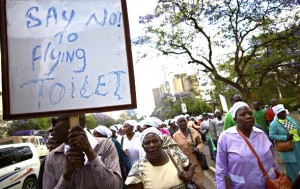
Kenya’s slums earned a grim reputation for “flying toilets” — when people defecate into plastic bags due to a lack of other facilities, which are then hurled somewhere else into the shanty town.
There was no celebrations to mark Africa Day in Kenya, but the country’s President Uhuru Kenyatta is urging the continent to work together to fight extremism.
Africa has 54 countries, but only six; Ghana, Mali, Namibia, Zambia, Lesotho and Zimbabwe observe the day with a public holiday. Celebrations in these countries began early.
Africa Day is celebrated annually within the African continent to mark the formation of the Organisation of African Unity (OAU) on 25 May 1963 and the African Union in 2002.
Nobel peace prize winner and Egyptian scholar Mohamed ElBaradei said on Africa Day it is generally good to celebrate, but not in Africa right now.
ElBaradei told journalists in Pretoria today that there were still too many problems in Africa, and even the world, and reflection was needed instead.
“It is good to celebrate, but it is also good to say we have a lot of problems on our hands. I don’t think it will suffice to celebrate now. I think it is time for reflection and to say we have a lot of problems on our hands. We owe our people a lot in terms of governance, and governance continues to be a major issue in Africa,” he said.
He said countries had to ask themselves if military intervention was the only way or whether there was another way to address the issues.
Elbaradei used to head the International Nuclear Atomic Agency.
Kenya’s deputy president, William Ruto, has told worshippers at a church service in Nairobi that homosexuality is not welcome in the east African nation.
Ruto’s comments came on the day US Secretary of State John Kerry arrived in Kenya promoting rights, alongside discussions on security and terrorism.
“We will not allow homosexuality in our society as it violates our religious and cultural beliefs,” Ruto reportedly told a cheering congregation at the Jesus Winner Ministry Church near the capital.
“We will stand with religious leaders to defend our faith and our beliefs,” he said. “There’s no room for homosexuality in this country. That one I can assure you.”
Homosexuality remains illegal in many countries, including Kenya where it was outlawed under British colonial legislation.
Ruto, who is on trial at the International Criminal in The Hague accused of crimes against humanity, said his stance was about morality not politics.
“When we say this, we are not saying so as to get votes but to protect what we all believe is right,” he said, according to The Star newspaper.
Conservative Christian and Muslim countries in Africa reject open homosexuality.
In Uganda the anti-gay bill has been watered down and in Nigeria and Gambia tough new anti-gay laws have been introduced, with Gambia’s President Yahya Jammeh, calling homosexuals “ungodly, Satanic… vermins [sic]” in a speech last year.
Homosexuality is illegal in 36 out of 54 African countries and punishable by death in four, according to human rights group Amnesty International.
In Kenya, too, a cross-party parliamentary group is seeking stricter application of existing anti-gay legislation.
The death toll in an attack by gunmen on the Kenyan coastal town of Mpeketoni rose to at least 48 people, the Kenya Red Cross and police said on Monday.
The death toll in an attack by gunmen on the Kenyan coastal town of Mpeketoni rose to at least 48 people, the Kenya Red Cross and police said on Monday.
Militants targeted two hotels, a bank and a police station with guns and at least one explosive device. The assault on Sunday night was the latest in a string of attacks that have hurt Kenya’s tourism business, a key source of foreign exchange.
Mpeketoni lies north of Kenya’s main port of Mombasa. – Reuters
South Africans are very conservative according to findings by an independent American fact tank Pew Research Centre.
Not soon…
Speaking on the poll, former Constitutional Court Justice Zak Yacoob said there was a “huge disconnect” between societal values and the constitution.
Pew released its Global Views on Morality survey earlier this month.
South Africa fared the most tolerant of the African countries polled – including Ghana, Nigeria and Kenya – but less so than its international counterparts.
The study, which covered 40 countries, focused on eight moral issues ranging from premarital sex to contraceptive use and divorce.
The following percentage of South Africans found these practices morally unacceptable:
Ninety eight percent of Ghanaians believe same-sex relationships are immoral. At 93%, the figure is slightly lower in Uganda. This is in stark contrast to European countries like Spain, Germany, Britain and Italy, where less than 20% rate homosexuality as unacceptable.
For South Africa, the findings could explain why violent attacks on members of the lesbian and gay community are common.
Justice Yacoob suspected that the true picture of South Africans’ views on moral issues was in fact “much worse”.
South Africans are not interested in most of the “liberating” issues foisted upon them by a small and too vocal minority, often isolated voices from a foreign and too powewrful transnational media hoping to thus gain influence in the country.
Experts questioned the items polled, and said South Africans should be concerned with “real moral issues”.
Gunmen opened fire on a car in the Kenyan port city of Mombasa, killing four people, including a radical Muslim cleric, a media report said Friday.
The cleric, Sheikh Ibrahim Ismail, was seen as the successor to Aboud Rogo Mohammed, a radical preacher who was gunned down in August last year, sparking unrest in Mombasa, including attacks on churches.
Rogo was on US and UN sanctions lists for his alleged links to the Somali militant group al-Shabaab and al-Qaeda.
The Nation newspaper quoted police as saying Ismail and four others were traveling in a car from mosque on Thursday evening when the incident took place. Only one passenger survived the attack.
Al-Shabaab claimed last month’s attack on the Westgate shopping centre, which left at least 72 people dead, including 61 civilians, six soldiers and five assailants.
Samantha Lewthwaite and Germaine Lindsay pose with their son.
A British woman thought to be linked to the Nairobi mall attacks used an assumed South African identity to take out bank loans and rent property in Johannesburg, local media reported Wednesday.
Samantha Lewthwaite — wanted by Kenyan police for alleged involvement in a separate terror plot — used the known alias Natalie Faye Webb to rent at least three properties and run up debts of $8,600 (6,400 euros), according to the eNews Channel Africa (eNCA).
The 29-year-old Muslim convert — nicknamed the “White Widow” because her husband was among the 2005 London suicide bombers — signed rental leases around Johannesburg, but it was unclear whether she lived at any of the premises.
According to credit records released by eNCA, she was listed as living in the city’s predominantly South Asian neighbourhood of Mayfair for four years.
Kenya’s foreign minister has said a British woman was among the Islamist attackers who shot dead dozens of people at a Nairobi shopping mall from Saturday.
President Uhuru Kenyatta later said the reports could not be confirmed.
But Kenyan authorities issued a wanted notice for Lewthwaite after she entered the country from Tanzania’s northeastern Lunga and Namanga border posts in February and August 2011 using a South African passport in the name of Webb.
Two months later South African clothing stores signalled debt defaults worth almost $2,700.
In August 2012 a Johannesburg court issued an order against her for defaulting on $2,800 debt with South Africa’s First Rand Bank.
Lewthwaite was married to Germaine Lindsay, one of four suicide bombers who attacked the London transport network in July 2005, killing 52 people.
A local terror expert and academic said earlier this week that she regularly travels to South Africa and stayed in South Asian suburbs of Johannesburg earlier this year.
However residents either denied Lewthwaite had lived at the cited addresses or could not remember having seen her.
Close to a bustling street with shops where women dressed in headscarves walked with their children, the structure of a new building now stands in the yard where two houses were demolished over a year ago.
“I have not seen her here before,” said a neighbour who has lived across the road for seven years, speaking on condition of anonymity.
A man who identified himself only as Junaid, and said he was redeveloping the property — bought from a 65-year-old owner two years ago — denied an English woman had lived there.
On the other side of the city in the leafy suburb of Bromhof, neighbours who have lived since 2008 across the road from the house Lewthwaite was said to have rented, also could not recall her living there. – AFP
Al-Shabab has released the names of the attackers in the weekend mall siege in Nairobi, Kenya, and they include at least six Americans, two from Minnesota, one from Kansas City, as well as one each from Maine, Illinois, and Arizona.
The attackers sparked a two-day hostage crisis at the upscale Westgate Mall which has killed at least 68 and has fueled concerns about al-Shabab’s revitalization in the region, despite many, many times when they were predicted to be on the verge of defeat.
The attack is believed to be retaliation against Kenya for its military operations in southern Somalia.
Though the group’s rank-and-file are overwhelmingly Somalis, the attackers were predominantly ethnic Somalis from overseas, and mainly Western countries including not only the Americans, but Canadians, English, Swedish and Finnish citizens.
Journalists and their cameras have been moved and no longer have a clear sight of the mall, but can see its perimeter.
Gunfire and explosions have been heard throughout the day from the Nairobi mall where fighters are holed up, possibly holding a number of civilians hostage.
Three al-Shabab fighters have been killed and ten soldiers wounded in the military operation to end the standoff, Kenya’s Cabinet Secretary for the Interior Ole Lenku said on Monday.
“We don’t want to give you a definitive position on when we think the process will come to an end, but we are doing anything reasonably possible, cautiously though, to bring this process to an end,” Lenku told a news conference.
Black smoke was seen rising over the mall complex, two days after it was stormed by al-Shabab fighters. Lenku said the smoke came from a fire set by the fighters.
Television images on Monday showed troops in camouflage running to new positions, while an armoured personal carrier was also seen shifting position
“They’ve got a huge job to secure the premises,” a former officer in the British special forces regiment, the SAS, told Al Jazeera, adding that the operation would likely take another 24 hours. – Al Jazeera/antiwar.com
Kenya wants to host a clearing house for China’s yuan currency – a bold African first that would deepen the continent’s ties with Beijing, already a big investor from The Cape to Cairo.
Such a venture would not eclipse the dollar in Africa anytime soon, however, because the yuan is tightly managed and traders are wedded to the greenback’s flexibility.
Africans can already get quotes for their currencies against the yuan . A clearing house would cut the need for dollar settlements, speed things up and reduce costs.
But the real prize for Kenya, or any other African host, would be the symbolism of being the continent’s business gateway with Asia’s economic emperor, even if business starts modestly.
Such an exchange would also be the first outside Asia.
Its prospect is a measure of China’s challenge to Africa’s traditional partners in Europe and the United States and reflects the increasing attractions of a continent with some of the world’s fastest growing economies.
“Even if the benefits to business have probably been slightly overblown by diplomats on both sides, I don’t think you can understate the symbolic aspect,” said Shilan Khan, Africa economist at London-based Capital Economics.
China’s ties with Africa have expanded fast.
In 2012, the total volume of China-Africa trade reached $198.49 billion, a rise of 19 percent over the previous year, Chinese government figures show. China accounted for 18.1 percent of Africa’s total trade volume in 2012, up from 3.8 percent in 2000.
“The proposal is basically to consider Kenya favourably given that the financial market is deep here,” Kenyan Finance Minister Henry Rotich told Reuters in August, citing rivals such as Nigeria, which already holds some reserves in yuan.
South Africa had a financial centre that dwarfs Kenya’s and has been mooted as a potential host, though officials there have not said they are pursuing such a plan.
“We are sort of competing and at the end of the day, the Chinese government is the one to decide where this clearing house will be,” Rotich said, making his pitch for east Africa’s biggest economy which aims to become a financial hub.
Early signals look good for Kenya.
“We are very positive about this clearing house and I think it is very important for Kenya to set up a financial hub here and to process the Chinese currency renminbi,” China’s ambassador to Kenya, Liu Guangyuan, told Reuters on the sidelines of a conference in Nairobi on Wednesday.
The value of potential business through such a clearing house was still a subject of discussion, he said.
Kenya’s daily turnover of foreign exchange is $330 million to $370 million, sometimes rising to $500 million.
Highlighting Nairobi’s enthusiasm for a clearing house based in Kenya’s central bank, President Uhuru Kenyatta made his bid for Beijing’s backing during a visit to China in August.
Business between Kenya and China is growing, even if Europe is still a bigger trade partner. Kenya’s Equity Bank, for example, has opened a branch in Nairobi for Chinese business executives, complete with Chinese tellers serving them.
“Everyone is trying to clinch a deal to directly clear and settle yuan transaction with the People’s Bank of China,” said an official at a Chinese state think-tank that often advises Beijing on policy, speaking about Africa’s clearing house plans.
In the meantime government officials in Niger have reportedly found evidence of bloated costs in oil deals with China National Petroleum Corporation (CNPC), leading the government to seek renegotiations on sections of
its contracts with CNPC. In Chad, CNPC operations have been suspended due to alleged “gross environmental negligence”, reports The New York Times.
Gabon, in another controversial move, will also be reclaiming Sinopec assets in 2015, because of breaches of contract, according to Macau- Daily Times
In August Chad’s oil minister Djerassem Le Bemadjiel told state radio that the Chadian government had “found flagrant violations of environmental standards by […] CNPC.
Not only do they not have facilities to clean spilled crude, there were also intentional spillages in order
A retired British Army officer who ran a game reserve where the Duke and Duchess of Cambridge were guests has been killed in a botched robbery at his home in Kenya.
Lieutenant Colonel David Parkinson, 58, and his wife Sonja were attacked after a gang of five robbers, armed with machetes and a gun, broke into their house in the Lolldaiga Hills, a wildlife farm, in the early hours of Sunday.
During the confrontation, Lt Col Parkinson’s hand was cut off and he was fatally wounded, police said.
Local police chief Marius Tum said the intruders entered the couple’s bedroom by breaking a glass door using a large stone.
They ordered the couple to hand over money and guns.
“One of the gang members was armed with a pistol, another with a machete while the rest had crude weapons. While one of them was terrorising Mr Parkinson the others tied his wife’s hands with ropes,” Mr Tum said.
However, Mrs Parkinson who had sustained a cut on her back managed to untie herself and escaped to a strong room where she hid herself until the robbers fled.
On returning to the main house she found the body of her husband on the floor, police said.
Mr Tum said a post-mortem examination would be carried out to determine the cause of Lt Col Parkinson’s death.
On Sunday afternoon, a suspect from a nearby village was arrested after police mounted a major manhunt using sniffer dogs.
Lt Col Parkinson, who had a distinguished career in the Army for 30 years, worked as the manager of the Lolldaiga ranch in Laikipia East district since 2008.
Before that he was a director of Lewa Wildlife Conservancy in Kenya where Prince William spent his gap year helping with various conservation projects before taking up his place at St Andrews University.
The Foreign Office confirmed the death of Lt Col Parkinson.
“We are aware of his death and we stand ready to provide consular assistance to his family at this sad time,” a spokesman said. – Sky News
Firemen inspect the damages inside the Nairobi airport building
by Peter Martell
A devastating fire shut down Nairobi’s international airport for much of Wednesday in a “major crisis” that forced the cancellation or diversion of scores of flights at east Africa’s biggest transport hub.
The first flights from abroad operated by Kenya’s national carrier will land early Thursday, officials said, with customs and baggage processed through what is normally the domestic terminal because international arrivals were gutted in the four-hour blaze.
Cargo and domestic flights out of the Kenyan capital resumed early Wednesday evening.
It was not clear whether other airlines would also land as early as Thursday.
The inferno, which started before dawn, sent plumes of black smoke billowing out of the main arrivals terminal.
But by 9:00am (0600 GMT), firefighters had succeeded in stemming the raging flames, despite a lack of both water and equipment.
“Everything is being done to resume normal operations,” presidential spokesman Manoah Esipisu told reporters outside the charred arrivals hall of Jomo Kenyatta International Airport (JKIA), where hours earlier flames had lit up the pre-dawn sky.
International passengers were given priority to fly to Kenya’s second city Mombasa to connect to onward flights while Nairobi’s domestic terminal was being prepared to handle flights from abroad.
Some 16,000 passengers usually transit through JKIA every day, Esipisu said.
The airport is a regional hub for east Africa, with many long-distance international flights landing there to connect to countries across the region.
Kenyan business operators were eager for a swift return to normal operations following the disaster.
“This is the busiest time of year for international flights,” said Duncan Muriuki, head of Destination Africa, a tour operator.
“We have people stuck in Mombasa, so it will definitely impact us negatively,” he said, adding that clients stuck at the coast would face journeys of several hours to travel by road to the capital.
The flower sector, which provides a livelihood for some half a million Kenyans, could be hard hit by the fire, as any delay in shipping out fragile lilies and roses would result in big losses.
Jane Ngige, who heads the Kenya Flower Council, said harvesting at flower farms had been halted Wednesday while the trade association waited for more information.
Tens of thousands of passengers could be affected by the JKIA’s closure, while regional airports have limited capacity and will likely struggle to handle all the travellers unable to land in Nairobi.
Around 250 flights take off and land there every day, regional aviation sources said, adding that some six million passengers used the airport last year.
The fire was reported to have begun at the immigration section at arrivals, but the cause is not yet known, with police chief David Kimaiyo saying that investigations had begun.
No casualties have been reported, but two people — an airport worker and a passenger — were taken to hospital due to smoke inhalation, Kenya Airways chief Titus Naikuni said.
The interior ministry was forced to issue public appeals for Nairobi’s notoriously congested traffic to give way to trucks ferrying water to the airport after firefighters tackling the blaze ran “dangerously low on water”.
Soldiers and police even came with buckets to help put out the fire, said Sylvia Amondi, who was at the airport to pick up a relative who had been due to arrive there.
“The international arrivals station has been completely destroyed, the roof has caved in and the floor is covered in debris and water,” she said.
Behind the scenes portly civil servants braved massive puddles to sift through soggy papers and files in what was left of their offices.
In the baggage claim area, only a giant advert for multi-choice TV remained untouched.
President Uhuru Kenyatta, whose father Jomo Kenyatta — Kenya’s first president — the airport is named after, visited the devastated terminal along with his top security chiefs to assess the damage caused by the “huge inferno”, the interior ministry added.
Kenyatta later called the fire a “tragic event”, and promised everything would be done to resume normal operations “as soon as possible”.
In Washington, the White House said President Barack Obama had called Kenyatta to offer US support.
August is one of Kenya’s busiest months for tourism, a key industry for the country, as foreign travellers fly in to see its wildlife and enjoy the white sand beaches on its Indian Ocean coast.
The airport offers direct connections to Europe, the Middle East, the Far East and other African cities. -AFP
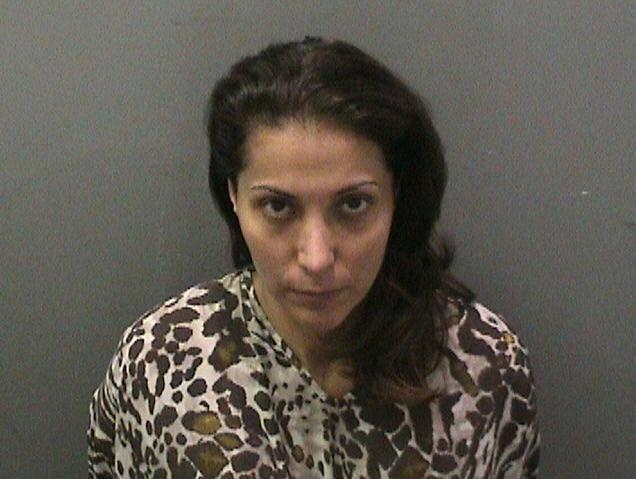
A Saudi princess has been charged with human trafficking for allegedly holding a Kenyan maid against her will in a luxury California apartment, news reports said late Wednesday.
Meshael Alayban, 42, was charged on Wednesday after being arrested at her home in a gated community in Irvine, California.
Prosecutors allege Alayban took the woman’s passport and forced her to work as a domestic servant for 16 hours a day, seven days a week for just 220 dollars a month, the Los Angeles Times reported.
A judge set bail of 5 million dollars for Alayban, and ordered her to wear a monitor if released from the women’s jail where she was being held.
“The law of our nation and California does not tolerate people who deprive or violate the liberty of another and obtain forced labour or services,” District Attorney Tony Rackauckas was quoted as saying.
The maid, whose identity was not released, began working for Alayban and her family in Saudi Arabia last year before moving to the US with them, the report said.
When police arrived at Alayban’s home they found four other women from the Philippines, who said their travel documents had also been taken by Alayban.
The Kenyan woman managed to escape from the apartment complex on Tuesday, before boarding a bus and contacting police.
Orange County prosecutors identified Alayban as one of the wives of Saudi Prince Abdulrahman bin Nasser bin Abdulaziz al Saud. She faces up to 12 years in prison if convicted of human trafficking. – dpa
After four days of counting and recounting votes, Uhuru Kenyatta was declared the winner of Kenya’s presidential election. This is not what the British government had been hoping for.
The failed attempt by the UK to warn people off voting for Kenyatta has changed the former colonial power’s standing in Kenya, both with its leaders and its people. Bungled diplomacy and most of all hubris, have ruined a crucial friendship in Africa.
Western governments made clear their support for Kenyatta’s rival, Raila Odinga. If Kenyatta was to win the election, they would limit relations with Kenya to “essential contact only”.
Clearly, the British had relied on their usual haughty manner to impress the natives once more.
The ostensible reason is that Kenyatta is to stand trial at the International Criminal Court on charges of crimes against humanity. Robert Mugabe however, enjoys the benefits of Western aid after having confiscating white farmland and ethnically cleansed his country.
Kenyatta is accused of having planned the violence which followed Kenya’s disputed 2007 election. Dealing with an ICC indictee could be difficult, so foreign diplomats made it clear that Kenya risked being marginalised if it voted for Kenyatta.
So keeping contact with an ICC indictee to a minimum; was the piont that diplomats repeatedly stressed in the months running up to the election on March 4. Kenyatta’s rivals began telling of the disastrous economic impact this could have on Kenya. Former UN Secretary General Kofi Annan also weighed in, telling Kenyans that voting for an ICC suspect would complicate foreign relations.
But this tactic has backfired. Instead of scaring people into voting for Odinga, Kenyans have begun to question why they should listen to the West. This played into Kenyatta’s hands: he portrayed Odinga as a puppet of the West and the ICC case as an example of Western countries bullying Africans.
The UK has been a particular focus for Kenyatta’s attention. Any comments made by the British High Commissioner, Christian Turner, were seized upon as an example of modern colonialism. Kenyatta told how he would defend Kenya from such interference if he were elected president. Whilst votes were being counted, Christian Turner was once again drawn into the discussion, when Kenyatta’s Jubilee Coalition accused him of “shadowy, suspicious and rather animated involvement” in the election.
The bad feeling Kenyatta has shown towards the UK may partly be due to personal history. Uhuru Kenyatta’s father and Kenya’s first president, Jomo Kenyatta, was imprisoned during British rule. The current British government’s political and financial support of the ICC case involving Kenyatta does not help either, particularly now that the prosecution’s case is has weakened following the dropping of an unreliable key witness. But it is possible that much of it is down to simple opportunism. Kenyatta saw a way of using the ICC case to his advantage, turning Kenyans against foreigners who were “out to get Kenya”.
British diplomats failed be drawn into a debate, which was helping Kenyatta win the election.
Now that Kenyatta has been elected, the UK has a problem. Kenya is a hub for business and political interests in sub-Saharan Africa and is a close ally in security and counter-terrorism operations.
The importance of these ties is likely to override any desire to avoid contact with Kenyatta. Already the UK has started to backtrack. In a statement released by the Minister for Africa, Mark Simmonds, the UK reaffirmed its commitment to the “deep and historic partnership with Kenya”, although the statement avoided any mention of Kenyatta. The pre-election threats of very limited contact seem to have been forgotten, as the UK now tries to find a way of working closely with Kenya, but without much public contact with its president. However, it will take more than talk of deep and historic partnerships to mend the damage the UK has done.
Convincing Kenyatta that he still has something to gain from working with the UK will be difficult. – Source: Standpoint
Britain’s Foreign Office said it would appeal a High Court judgement on Friday that three elderly Kenyans who were tortured under British rule in the 1950s could pursue their claim for damages from London.
“The judgement has potentially significant and far reaching legal implications,” it said in a statement.
“The normal time limit for bringing a civil action is 3 to 6 years. In this case, that period has been extended to over 50 years despite the fact that the key decision makers are dead and unable to give their account of what happened.”
The Foreign Office added that it did not dispute that each of the three claimants in the case suffered torture and other ill treatment at the hands of the colonial administration.
Lawyers for the claimants said Friday’s judgement would be carefully studied by victims of alleged colonial torture from Malaya to the Yemen from Cyprus to Palestine, as well as South Africa.
The claimants, Jane Muthoni Mara, Wambuga Wa Nyingi and Paulo Muoka Nzili celebrated the news in Nairobi, Kenya. They were represented by a white lawyer, Martyn Day.
London’s High Court ruled the case, relating to the 1950s Mau Mau uprising, could proceed despite the time elapsed.
The ruling means the case will now go to a full trial. Lawyers for the three hailed it as a “historic” judgement.
While the government accepts UK forces tortured detainees it denies liability and will appeal against the decision.
After the 2011 ruling, the case went back to the High Court in July to consider a claim by the UK Foreign and Commonwealth Office (FCO) that the actions had been brought outside the legal time limit. The FCO said it faced “irredeemable difficulties” in relation to the availability of witnesses and documents.
As the news filtered through, several dozen elderly Kenyans erupted into cheers. They linked arms and danced through the grounds of the Kenyan Human Rights Commission, which has been supporting the claimants.
For them, and other veterans of the Mau Mau struggle, today’s judgement was a significant victory.
But elsewhere in Kenya the case has received little attention. Only a handful of reporters from the Kenyan media turned up to cover the reaction from the veterans themselves.
There are historical reasons for this. Many of those who found themselves in power following independence in 1963 had previously been associated with the Home Guard: those who fought with the British colonial authorities against the Mau Mau rebels.
When independence came, many believed this chapter in Kenya’s recent history would sow division rather than foster unity. The elderly veterans of that struggle are still fighting for recognition, both at home and abroad.
In his ruling, the judge said: “A fair trial for the Kenyans on this part of the case does remain possible and the evidence on both sides does remain significantly cogent for the court to complete its task satisfactorily.”
A lawyer for the three said the claimants had not been in court because they were in the Kenyan capital Nairobi, but they were “absolutely delighted” when they learned of the result.
Martyn Day said lawyers would be pressing for a trial “as quickly as possible” but they would also be pushing for the government to reach an out-of-court settlement.
“This is a historic judgement which will reverberate around the world and will have repercussions for years to come,” he said in a separate statement.
“The British government has admitted that these three Kenyans were brutally tortured by the British colony and yet they have been hiding behind technical legal defences for three years in order to avoid any legal responsibility. This was always morally repugnant and today the judge has also rejected these arguments.”
He added: “Following this judgement we can but hope that our government will at last do the honourable thing and sit down and resolve these claims. There will undoubtedly be victims of colonial torture from Malaya to the Yemen, from Cyprus to Palestine, who will be reading this judgement with great care.”
Written evidence from the three Kenyans sheds light on their treatment at the hands of colonial forces:
Mr Nyingi, 84, a father of 16, said he was arrested in 1952 and detained for about nine years. In one incident in 1959 he said he was beaten unconscious and still bears marks from leg manacles, whipping and caning. “I have brought this case because I want the world to know about the years I have lost and what was taken from a generation of Kenyans, he said
Mr Nzili, 85, said he was stripped, chained and castrated shortly after being arrested in 1957. “I felt completely destroyed and without hope,” he said
Ms Mara, 73, said she was 15 when she was raped at a detention camp. “I want the British citizens of today to know what their forefathers did to me and to so many others. These crimes cannot go unpunished and forgotten,” she said
A spokesman for the FCO said the judgement had “potentially significant and far-reaching legal implications”.
“The normal time limit for bringing a civil action is three to six years. In this case that period has been extended to over 50 years despite the fact that the key decision-makers are dead and unable to give their account of what happened,” the spokesman said.
“Since this is an important legal issue, we have taken the decision to appeal. In light of the legal proceedings it would not be appropriate for the government to comment any further on the detail of the case.”
The spokesman reiterated that the government did not dispute that each of the claimants suffered torture at the hands of colonial forces.
“We have always said that we understand the pain and grievance felt by those, on all sides, who were involved in the divisive and bloody events of the emergency period in Kenya, and it is right that those who feel they have a case are free to take it to the courts,” he said.
This website uses cookies to improve your experience. We'll assume you're ok with this, but you can opt-out if you wish. Cookie settingsACCEPT
Privacy & Cookies Policy
Privacy Overview
This website uses cookies to improve your experience while you navigate through the website. Out of these cookies, the cookies that are categorized as necessary are stored on your browser as they are essential for the working of basic functionalities of the website. We also use third-party cookies that help us analyze and understand how you use this website. These cookies will be stored in your browser only with your consent. You also have the option to opt-out of these cookies. But opting out of some of these cookies may have an effect on your browsing experience.
Necessary cookies are absolutely essential for the website to function properly. This category only includes cookies that ensures basic functionalities and security features of the website. These cookies do not store any personal information.
Any cookies that may not be particularly necessary for the website to function and is used specifically to collect user personal data via analytics, ads, other embedded contents are termed as non-necessary cookies. It is mandatory to procure user consent prior to running these cookies on your website.