Uhuru calls for open borders

Kenyan President Uhuru Kenyatta has urged African governments to open their borders.

Speaking at the Pan African Parliament in Midrand, Kenyatta told members of the house that the continent’s potential could be realised only if African governments worked together and made it easier to trade with each other.

“There cannot be a good reason why it is easier for us to trade with Asia, Europe and the Americas rather than our own fellow Africans.

“Africa must significantly open her markets to African products to promote this ideal. That process can only be achieved if we start by opening up our borders to each other,” Kenyatta said.

He called for governments to significantly reduce the cost of inter-Africa trade and to forge partnerships which would take the continent into a new industrial development.

Partnerships in East Africa only began in July 2000 with Kenya, Tanzania, Rwanda, Uganda and Burundi. This community undertook to establish a customs union, common market, monitoring union and a political federation. The customs union is already in place and the common market goal is gradually being achieved.

SADC is much older.

“Despite our individually small economies, the integration has placed the entire region on a trajectory of growth that will fundamentally transform Africa,” Kenyatta said.

Kenyatta also announced that Kenya would be the second country after Mali to sign a protocol that will see the Pan African Parliament becoming a legislative body.

Africa forces UN vote over ICC trial for Kenyan president

Uhuru Kenyatta
Uhuru Kenyatta

African nations will Friday launch one of the biggest challenges yet to the International Criminal Court by forcing a UN Security Council vote on suspending the trial of Kenya’s president.

A resolution seeking to defer crimes against humanity charges against President Uhuru Kenyatta and Vice President William Ruto for one year is almost certain to fail through lack of support.

But diplomats and justice experts say the action risks heightening tensions between the ICC and Africa.

The two leaders are accused of masterminding unrest after a 2007 presidential election in 2007 in which at least 1,100 people died. Kenyatta and Ruto took office after an election this year.

Ruto’s trial has started, while that of Kenyatta gets underway February 5 after being delayed three times.

Both have so far cooperated with the ICC. But Kenya has made two written requests to the council to suspend or halt the cases.

Scores of Kenyan victims of the violence have also withdrawn from the ICC case because of what diplomats and experts call “intimidation.”

The resolution to be voted Friday is the most serious bid yet to suspend proceedings.

The Security Council can ask for an ICC case to be deferred for a year under Article 16 of the court’s founding Rome Statute if a trial is considered a threat to international peace.

The resolution has been pressed by Rwanda, a temporary Security Council member, but not an ICC signatory, with strong backing by Ethiopia, another ICC opponent.

It would need at least nine votes on the 15 member council to pass. But with the council’s seven ICC signatories and the United States against them, the resolution has no chance, diplomats said.

The draft resolution says the court case is “distracting and preventing” Kenyatta and Ruto from their duties.

It takes up African Union complaints that the two should be left to handle Kenya’s role in battling Islamist militants in Somalia and the aftermath of September’s Westgate mall attack in Nairobi which left 67 dead.

But western diplomats and activists see a largely political campaign to halt the proceedings and more generally by countries opposed to the ICC to discredit the court.

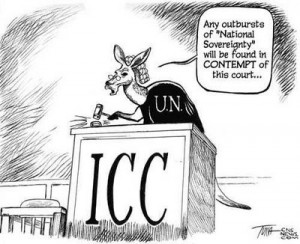
African leaders frequently complain that the ICC discriminates against their continent.

All eight cases being investigated by the ICC concern Africa. But nearly all were called by the countries involved and Africa’s 34 members make up a key chunk of the court’s 122 signatories.

“The Africans have now reached a stage where they are talking about this is as a test of whether you are in favour of Africa or against Africa,” said one UN diplomat who has taken part in the often highly emotive talks on the resolution.

This was “deeply resented” by countries who oppose the resolution, added the diplomat, who highlighted how the Security Council voted this week to increase an African force in Somalia which is almost entirely paid for by the European Union.

“This is turning into the biggest challenge to the court since it was set up,” added a second council diplomat.

“Undoubtedly, the pressure exerted by Kenya, by Rwanda, by Ethiopia increases strain on the court as it tries to strengthen its impact,” commented Richard Dicker, justice specialist with the Human Rights Watch group.

He said part of the motivation for the vote was to “ratchet up pressure” ahead of an assembly of the Rome Statute member countries in The Hague starting next Wednesday.

The assembly is to discuss possible measures such as allowing defendants to take part by video-conference and to give courts’ extra leeway to allow absences, which could help Kenyatta and Ruto.

Some African leaders have agitated for an African withdrawal from the ICC.

“I don’t think this would lead to a mass walkout, but if this vote goes ahead the atmosphere will be so bad at the assembly it is going to make it so much more difficult to reach agreement on things that could make a difference,” said the UN diplomat.

“And it would increase the likelihood that Kenyatta will not cooperate with the court,” the official added. – AFP

Kenya pushing for AU-split from ICC

iccAfrican leaders will debate the continent’s “relationship” with the International Criminal Court at a special summit on October 11, officials said Friday, amid growing opposition to the tribunal.

The 54-member African Union has accused The Hague-based ICC of singling out Africans for prosecution and has previously called for the court to drop crimes against humanity trials of Kenya’s leadership.

“They will discuss African relationship with ICC,” the deputy head of the AU’s executive branch, Erastus Mwencha, himself a Kenyan, told AFP.

Diplomats say member states of the court, which was founded primarily to try genocide, war crimes and crimes against humanity, are expected to discuss a possible united pullout from the ICC.

African countries account for 34 of the 122 parties to have ratified the Rome Statute, the court’s founding treaty, which took effect on July 1, 2002.

Mwencha said the cases of Kenyan President Uhuru Kenyatta and his deputy William Ruto were not specifically earmarked for discussion, saying only that the “agenda is very broad.”

Kenyatta and Ruto, as well as former radio boss Joshua Arap Sang, face crimes against humanity charges for their alleged roles in orchestrating ethnic violence after disputed 2007 elections. The violence left at least 1 100 dead and more than 600 000 homeless.

Last month, Kenyan lawmakers voted on a motion to withdraw recognition of the court’s jurisdiction.

Any move by the AU to leave the ICC’s Rome Statute will have no effect on the current trials, and pulling out is a lengthy process that must be done by nations on an individual basis.

The pan-African bloc in May accused the ICC of “hunting” Africans, and has requested that the cases against Kenyatta and Ruto be transferred to Kenya.

The trial of Ruto and Sang is already under way, and Kenyatta’s trial is set to begin in November. The three have pledged their cooperation with the court and maintain their innocence.

The ICC maintains that it is not targeting Africa as a continent, pointing out that many of the cases under investigation in Africa were referred to the court by the countries themselves.

It could lead to a breakdown in relations between the court and African leaders. Tensions between the African Union (AU) and the court (ICC) are nothing new, but the meeting in Addis Ababa, the Ethiopean capital, has the potential to irretrievably damage relations between them.


“The Kenyans were criss-crossing Africa in search of support for their cause even before their parliament voted to withdraw from the ICC,” said one AU diplomat. “A complete walkout by signatories is certainly a possibility – but other requests are also possible.”

Ruto and Kenyatta have been seen as stalwarts in the fight against Islamic extremism and have argued that their absence for months on end, particularly in the case of Mr Kenyatta, is not just dangerous but also untenable.

It is not just Kenya that is promoting the anti-ICC agenda and pointing out that all eight cases it is investigating are in Africa.

Sudanese president Omar al-Bashir, wanted for genocide and crimes against humanity in Darfur, visited Kenya last month but was not arrested, despite an ICC request. He says the charges are “exaggerated” and describes the ICC as part of a “western plot” against him.

Last week, Ivory Coast’s government decided not to transfer former first lady Simone Gbagbo to join her husband in The Hague on charges of crimes against humanity in connection with the 2010 presidential election, and said it would try her at home.

Rwanda’s ambassador to the African Union, Joseph Nsengimana, observed: “It is not only the case of Kenya. We have seen international justice become more and more a political matter.”

President Jacob Zuma said it was the impression that the ICC was being “unreasonable” – that led directly to the Addis Ababa summit on October 13th.

Countries that support the court and its work, notably Botswana, are likely to do so again. Those who oppose it are hoping it will be “a game-changer”, most immediately perhaps in the case against Mr Kenyatta. – Sapa/AFP/Irish Times

Uhuru Kenyatta, Britain’s nightmare

After four days of counting and recounting votes, Uhuru Kenyatta was declared the winner of Kenya’s presidential election. This is not what the British government had been hoping for.

The failed attempt by the UK to warn people off voting for Kenyatta has changed the former colonial power’s standing in Kenya, both with its leaders and its people. Bungled diplomacy and most of all hubris, have ruined a crucial friendship in Africa.

Western governments made clear their support for Kenyatta’s rival, Raila Odinga. If Kenyatta was to win the election, they would limit relations with Kenya to “essential contact only”.

Clearly, the British had relied on their usual haughty manner to impress the natives once more.

The ostensible reason is that Kenyatta is to stand trial at the International Criminal Court on charges of crimes against humanity. Robert Mugabe however, enjoys the benefits of Western aid after having confiscating white farmland and ethnically cleansed his country.

Kenyatta is accused of having planned the violence which followed Kenya’s disputed 2007 election. Dealing with an ICC indictee could be difficult, so foreign diplomats made it clear that Kenya risked being marginalised if it voted for Kenyatta.

So keeping contact with an ICC indictee to a minimum; was the piont that diplomats repeatedly stressed in the months running up to the election on March 4. Kenyatta’s rivals began telling of the disastrous economic impact this could have on Kenya. Former UN Secretary General Kofi Annan also weighed in, telling Kenyans that voting for an ICC suspect would complicate foreign relations.

But this tactic has backfired. Instead of scaring people into voting for Odinga, Kenyans have begun to question why they should listen to the West. This played into Kenyatta’s hands: he portrayed Odinga as a puppet of the West and the ICC case as an example of Western countries bullying Africans.

The UK has been a particular focus for Kenyatta’s attention. Any comments made by the British High Commissioner, Christian Turner, were seized upon as an example of modern colonialism. Kenyatta told how he would defend Kenya from such interference if he were elected president. Whilst votes were being counted, Christian Turner was once again drawn into the discussion, when Kenyatta’s Jubilee Coalition accused him of “shadowy, suspicious and rather animated involvement” in the election.

The bad feeling Kenyatta has shown towards the UK may partly be due to personal history. Uhuru Kenyatta’s father and Kenya’s first president, Jomo Kenyatta, was imprisoned during British rule. The current British government’s political and financial support of the ICC case involving Kenyatta does not help either, particularly now that the prosecution’s case is has weakened following the dropping of an unreliable key witness. But it is possible that much of it is down to simple opportunism. Kenyatta saw a way of using the ICC case to his advantage, turning Kenyans against foreigners who were “out to get Kenya”.

British diplomats failed be drawn into a debate, which was helping Kenyatta win the election.

Now that Kenyatta has been elected, the UK has a problem. Kenya is a hub for business and political interests in sub-Saharan Africa and is a close ally in security and counter-terrorism operations.

The importance of these ties is likely to override any desire to avoid contact with Kenyatta. Already the UK has started to backtrack. In a statement released by the Minister for Africa, Mark Simmonds, the UK reaffirmed its commitment to the “deep and historic partnership with Kenya”, although the statement avoided any mention of Kenyatta. The pre-election threats of very limited contact seem to have been forgotten, as the UK now tries to find a way of working closely with Kenya, but without much public contact with its president. However, it will take more than talk of deep and historic partnerships to mend the damage the UK has done.

Convincing Kenyatta that he still has something to gain from working with the UK will be difficult. – Source: Standpoint