Uhuru calls for open borders

Kenyan President Uhuru Kenyatta has urged African governments to open their borders.

Speaking at the Pan African Parliament in Midrand, Kenyatta told members of the house that the continent’s potential could be realised only if African governments worked together and made it easier to trade with each other.

“There cannot be a good reason why it is easier for us to trade with Asia, Europe and the Americas rather than our own fellow Africans.

“Africa must significantly open her markets to African products to promote this ideal. That process can only be achieved if we start by opening up our borders to each other,” Kenyatta said.

He called for governments to significantly reduce the cost of inter-Africa trade and to forge partnerships which would take the continent into a new industrial development.

Partnerships in East Africa only began in July 2000 with Kenya, Tanzania, Rwanda, Uganda and Burundi. This community undertook to establish a customs union, common market, monitoring union and a political federation. The customs union is already in place and the common market goal is gradually being achieved.

SADC is much older.

“Despite our individually small economies, the integration has placed the entire region on a trajectory of growth that will fundamentally transform Africa,” Kenyatta said.

Kenyatta also announced that Kenya would be the second country after Mali to sign a protocol that will see the Pan African Parliament becoming a legislative body.

‘EU could lift Russian sanctions by end of 2015’

The EU sanctions against Russia could be lifted by the end of the year, Czech President Milos Zeman said.

“I will also add that it may be possible to lift the sanctions fully, maybe even before the end of this year. The

European Council will discuss this in June, I think,” Zeman said in an interview with the Kommersant newspaper published Tuesday.

According to the Czech president, economic sanctions are “completely pointless”, while the political restrictions were introduced to prevent Russia from invading eastern Ukraine.

“I believe that all official moves by the Russian politicians prove that there will be no intervention in eastern Ukraine,” Zeman said, adding that he believed that the internal conflict in the region was dying down.

Russia’s relationship with the European Union deteriorated greatly amid the Ukrainian crisis, with the bloc introducing several rounds of sanctions against Moscow, accusing it of meddling in Ukraine’s internal affairs.

Source: Sputniknews

EU wants to stop S. African citrus imports

citrusThe European Union (EU) is preparing a ban on South African citrus imports that could take orange juice off Europe’s breakfast tables next summer and sour efforts in Brussels to broaden trade with Africa’s biggest economy.

The move follows the interception of 35 citrus shipments this year from Europe’s chief summer supplier that were contaminated with the fungal black spot disease, which growers in southern Europe fear could take hold in their citrus groves.

In response, the European Commission, the EU executive, was drawing up plans for a ban that could be adopted by European governments by the end of November, said a person with knowledge of the plan who spoke on condition of anonymity.

Another person close to the matter said EU trade chief Karel de Gucht told South African officials during a visit to Johannesburg this week that the contaminated shipments were “serious and problematic”, and that a response was needed.

South Africa exports about 600,000 tonnes of citrus fruit — mainly oranges, lemons, limes and tangerines — to the EU each year worth about €1bn. It is the main source of orange juice drunk by consumers in Britain, Germany and France during the European summer months.

The dispute comes at a sensitive time because the EU is seeking South Africa’s support to unlock stalled trade deals with sub-Saharan Africa.

During negotiations in South Africa this week, EU officials offered to improve the terms of a bilateral free-trade deal dating from 1999 by granting South African sugar farmers duty-free access to Europe for the first time.

For now the planned citrus ban would be largely symbolic, as it would only apply to this year’s South African citrus harvest, which ended in October, meaning EU imports have already stopped.

But the bloc’s food safety watchdog is analysing the situation and if its studies show the disease has a risk of taking hold in Europe’s estimated 500,000ha of citrus groves, the EU could extend the ban.

Citrus Growers Association CEO Justin Chadwick warned the commission against a ban.

“Global experts have confirmed that citrus black spot is not a risk, so a ban would seem unnecessary,” he said.

Spanish pressure

Citrus black spot is harmless to humans, but causes unsightly lesions on the fruit and leaves of affected plants, reducing both harvest quality and quantity. There is no known cure but fungicides can be used to control the spread of the disease.

It is found in many citrus-growing regions in the southern hemisphere as well as China and the US, but has never established itself in Europe.

Since 2011, the number of citrus shipments from South Africa found to contain black spot has averaged about 35 each year.

Following calls by citrus growers in top EU producer Spain to take a tougher stance on the issue, the commission said it would be forced to take action if more than five contaminated shipments were intercepted from the country this year.

“Every day, South Africa displays its inability to control the pests in its crop,” Spanish farming association AVA-ASAJA said. “Political interests prevail over the risk that such imports pose to the future of Europe’s citrus farms.”

In its draft scientific opinion published in July, the European Food Safety Authority said the chance of citrus black spot taking hold in Europe was “moderately likely”. But it said there was a high level of uncertainty due to a lack of knowledge over how the disease would respond to the EU climate.

The European Food Safety Authority is due to finalise its assessment by the end of the year and its findings will largely determine what further moves, if any, the commission will take to restrict South African imports.

But a group of citrus black spot experts from countries affected by the disease said it had identified “factual errors and omissions” in the European Food Safety Authority’s draft assessment and there was no recorded case of the disease ever having spread via fruit exports. – Reuters

European Union must not side with the farm murderers of South Africa

by Dan Roodt

The news that South Africa supplies 70% of the citrus fruit consumed in the European Union adds another ingredient to the debate around farmland in South Africa. In strictly economic terms, both farm murders and ANC’s radical land reform plans serve European protectionist interests.

Our farmers are almost superhuman. Against all odds, they manage to compete against the pampered, subsidised EU agricultural producers. They live within a virtual war zone of terrorist attacks on farms, hostile propaganda from the left-liberal media and concerted attempts by neo-Marxist think tanks like the Cape-based PLAAS that advocate the abolition of property rights altogether.

The ANC government is amenable to the radicals of PLAAS, such Dr. Ruth Hall, an Afrikaner-hating, Oxford academic who came to this country with the sole intention of instigating a Soviet-style “agrarian revolution” that would push Afrikaners off their ancestral, family-owned lands. In the process, agriculture as we know it will be destroyed and our sought-after fruit will again disappear off European supermarket shelves as in the days of the anti-apartheid boycott against South Africa when French communists and Dutch anarchists focussed their hate on the word “Outspan”.

Apart from the teaching profession, there are few areas of economic activity in South Africa that are so dominated by Afrikaners as agriculture. To understand why, one must briefly look at the history of this country. During the nineteenth century, colonial British mining companies snapped up all the minerals in the old Boer republics and when that wasn’t enough, they persuaded Britain to invade us, burn all our farms and put our women and children in concentration camps.

In the cities, Afrikaners were discriminated against and even forbidden to speak their language in stores. With most of business, mining and industry closed to us, we had only farming and the professions open to us. That is how Afrikaners doggedly stuck to agriculture, through droughts and crises, and managed to get fifty percent of the postgraduate qualifications in this country. We also produced a large number of accountants, doctors and lawyers.

With the ANC’s revolutionary takeover, the first thing they did was to apply stringent affirmative action to our medical schools so that hardly any Afrikaner physicians are being trained anymore. The legal profession was dumbed down so that just about anybody could get a degree and even a mediocre advocate could become a judge, as long as he happened to be black. Accounting standards are still being upheld, but one wonders for how long before racial quotas will be applied there too.

Agriculture therefore represents a last economic foothold for Afrikaners. Despite European and American protectionism, we have managed to carve out a niche in the world market. Our beautiful, tasty, healthy oranges and grapefruit grace the breakfast tables of Europe.

However, when EU Commissioner Catherine Ashton and the South African Minister of International Relations, Maite Nkoana-Mashabane, met yesterday in Brussels, there was no-one representing the Afrikaner interest around the table. Neither the protectionist EU, nor the anti-white, anti-Afrikaans ANC, gives two hoots about our economic survival in this country. We are already excluded from government, from the big corporations, from the mines, from the bench, from hospitals and banks.

Once our academics were able to build some of the finest universities in this country and in the world. Yet even there, the imperatives of “transformation” have dictated our exclusion on racial and cultural grounds from the very institutions our fathers and grandfathers had founded and developed. Foreign academics from the United Kingdom, Nigeria, Zimbabwe and other African countries have flocked to our universities to displace us, the indigenous whites of South Africa.

Until now, the European Union has said nothing about the vicious attacks on our farmers. Unless Europeans want to be seen as siding with the radical, ethnocentric and even genocidal elements in this country who wish to ethnically cleanse Afrikaners from the land, they will have to speak out and condemn such attacks.

At the same time, we insist upon open access to the EU market in fruit as it is one of the few lifelines we have left in this left-fascist environment where an alliance of UK academics and farm killers threaten to destabilise our agriculture further, or even destroy it completely.

We also appeal to European political parties sympathetic to Afrikaners to voice their concerns about maintaining the health of our exports and trade. Stability needs to return, against the outlandish ideas of “land reform” advocated by unreconstructed communists. “Land reform” is a slogan for extending the full-spectrum racial dominance that we already experience in the rest of the economy and the public sector, but it will also serve those in Europe who see a threat in our honest and fair competition with them.

South Africa is world’s biggest exporter of oranges and grapefruit

South African grapefruit

International Relations Minister Maite Nkoana-Mashabane and European Commission vice-president Baroness Catherine Ashton discussed citrus exports on Monday.

“Yes, we engaged on the citrus issue and there has been an undertaking, and producers will still be engaging,” Mashabane told reporters in Belgium.

“Discussions have already been accelerated, and scientific research would continue [into the citrus spot problem].”

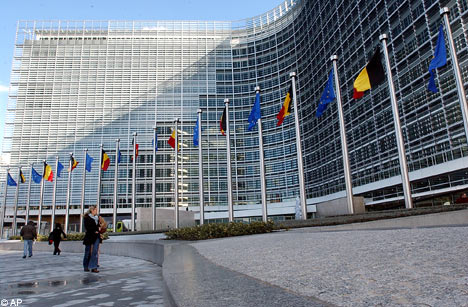
The discussion was held behind closed doors at the European External Affairs’ headquarters in Belgium’s capital, Brussels.

About 70 percent of the European Union’s citrus consumption comes from South Africa.

On Sunday, South Africa’s ambassador to Belgium, Mxolisi Nkosi, said the EU wanted to stop some imports from South Africa, like citrus fruit. He said the EU was increasingly using protectionism to block certain exports. Nkosi said the citrus sector contributed about R6 billion to South Africa’s gross domestic product.

The rise in citrus production was mainly due to the increase in cultivation areas, packaging and transport improvements, and preferences for healthier food options. But citrus harvesting and production in most of Europe continued to decline, particularly at the present time of year, due to the weather.

South Africa is the world’s biggest exporter of oranges and the largest shipper of grapefruit.

Citrus imports were halted after some shipments of fruit were tainted with a disease which affects the external appearance of the fruit. In 1993 the EU declared citrus black spot a phyto-sanitary measure.

This meant it was placed on a trade watch-list at EU borders. If spotty fruit was found, the consignment would be impounded. This reduced the size of citrus exports to the EU.