The United States said Burundi’s elections Tuesday lacked credibility and by pressing ahead, the government “risks its legitimacy.”
The voting “will further discredit the government,” State Department spokesman John Kirby said, after polling went ahead despite opposition protests that President Pierre Nkurunziza’s candidacy was unconstitutional.
Burundians went to the polls amid gunfire and grenade blasts, and at least two people were reported killed.
Opposition and civil society groups have denounced Nkurunziza’s candidacy as a breach of the constitution and of a 2006 peace deal that ended a 12 year of civil war.
“The government’s insistence on going forward with Presidential elections on Tuesday risks its legitimacy in the eyes of its citizens and of the international community,” Kirby said.
“More serious is the risk of unraveling the fragile progress made through the implementation of the Arusha Agreement, which states clearly that no Burundi president shall serve more than two terms in office,” he added.
The right-wing block in Denmark has just won the elections.
Dansk Folkeparti (DF) is a political party in Denmark which is described as right-wing populist by academics but “far-right” by the international Anglo-American media.
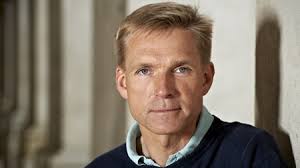
The real surprise is the 21% for the populist right DF under Kristian Thulesen Dahl. The DF no longer wants to take in any migrants at all.
The party was founded in 1995 by Pia Kjærsgaard, who led the party until 2012, when she passed the leadership on to Thulesen Dahl.
The DPP lent its support to the Liberal-Conservative government from the general election of 2001 until the 2011 election defeat. While not part of the cabinet, DPP cooperated closely with the governing coalition on most issues and received support for key political stances in return.
The party’s expressed goals are to protect the freedom and cultural heritage of the Danish people, including the family, the Monarchy and the Evangelical Lutheran Church of Denmark, to enforce a strict rule of law, to work against Denmark becoming a multi-ethnic society by limiting immigration and promoting cultural assimilation of admitted immigrants, to maintain a strong welfare system for those in need, and to promote entrepreneurship and economic growth by strengthening education and encouraging people to work, and to protect the environment and natural resources.
The UN Security Council has echoed calls by the Secretary General urging all parties in Burundi to refrain from acts of violence and intimidation as tempers flare over a decision that will see President Pierre Nkurunziza seeking a third term.
Demonstrations in the capital Bujumbura have been building for a number of months with opposition groups arguing that a third term would violate both the Arusha Peace Accord and the country’s constitution.
Thousands have already fled across the border to Rwanda while the UN has warned that 400 000 people could be affected as violence erupts.
While the African Union has urged patience for a Constitutional Court ruling on the legality of a third term, concerns from Security Council members about rising political tensions, Council President for April, Jordan’s Mahmoud Hmoud explains, ”They called on all parties to refrain from acts of violence and intimidation and for the need to restore calm and peace in Burundi.
Council members reiterated the importance of the freedom of expression and assembly in Burundi and expressed concern regarding the restrictions being placed on those freedoms.”
Opposition parties have expressed doubts that the Constitutional Court will be a fair arbiter on the third term’s legality. Presidential elections in Burundi are due on June 26th.
Former military dictator Muhammadu Buhari defeated incumbent Goodluck Jonathan in Nigeria’s presidential poll by 2.57 million votes, the country’s electoral commission announced on Wednesday, ending Jonathan’s rule of Africa’s most populous nation.
Three decades after seizing power in a military coup, Buhari became the first Nigerian to oust a president through the ballot box, putting him in charge of Africa’s biggest economy.
The Independent National Electoral Commission said the All Progressives Congress (APC) candidate won 15,424,921 votes, or 53.95 percent of the 28,587,564 total valid votes cast.
Jonathan, of the Peoples Democratic Party (PDP), won 12,853,162 (44.96 percent).
As the scale of this weekend’s electoral landslide became clear, Jonathan called Buhari on Tuesday to concede defeat to the opposition leader, an unprecedented step that should help to defuse anger among Jonathan’s supporters.
Jonathan’s quick concession could help alleviate fears of a repeat of post-election violence that saw 1,000 killed after Jonathan defeated Buhari in 2011.
As vote counts rolled in and Buhari’s victory looked ever more assured, thousands of people spilled into the streets of northern Nigeria’s biggest city Kano to celebrate.
For Buhari, 72, it has been a long road back to the pinnacle of Nigerian politics. A former army general, Buhari overthrew president Shehu Shagari – widely seen as inept and corrupt – in a military coup in 1983. As the head of a military government in the 1980s, he earned a reputation for his tough stance against nepotism and fraud.
Voter dissatisfaction with Jonathan – whose time in office has been marked by the rise of militant Islamist group Boko Haram and allegations of failing to tackle endemic corruption in the oil-rich country.
He also promised to stamp out Boko Haram’s insurgency in the north, which has claimed the lives of more than 13,000 people and left some 1.5 million homeless.
Buhari has also managed to bridge the traditional ethnic and religious fault lines of Nigerian politics – typically divided between the mainly Christian south and Muslim north.
As a Muslim from the north, Buhari for the first time won states in the southwest and even took one-third of votes in a southeastern state – an unprecedented development that some say reflects voter dissatisfaction with Jonathan more than it does enthusiasm for Buhari.
Ludovic de Danne, European Affairs Adviser for the leader of the French right-wing party Front National Marine Le Pen, said that Marine Le Pen could become number one in the presidential elections, if the National Front party gains 7 million voters.
French departmental elections showed that the National Front party could gain a record number of votes in the presidential elections, possibly making Marine Le Pen the next French president, European Affairs Adviser for the leader of the French right-wing party Front National Marine Le Pen, told Sputnik Monday.
“More than 5 million voters for National Front – it has never happened before, it’s unprecedented! If we could keep this kind of figures, Marine Le Pen will have the chance to reach 7 to 8 million voters for president’s elections… In this situation Marine Le Pen could become number one,” Ludovic de Danne told Sputnik.
De Danne explained that Marine Le Pen’s chances are very high as the UMP alliance consists of several different parties and each of them will have to present their own candidate for the presidential elections whereas National Front has a single candidate.
“Sarkozy pretends to be a winner in these elections, but when it comes to the president’s elections it’s not going to work like this. The UMP alliance will have to separate and each party will have to have the candidate of its own. And they don’t have the chances against Marine Le Pen,” de Danne said.
After waiting in long lines around the country over the past two days to vote, Nigerians are engaged in another long wait—to find out who will lead their country for the next four years. Both incumbent president Goodluck Jonathan and challenger retired general Muhammadu Buhari claim early leads.
Millions of people waited patiently to cast their votes for hours due to delays caused by various technical issues. Most notable were difficulties with a new personal voter card reader technology, which prompted the embarrassing spectacle of president Jonathan being unable to vote initially on Saturday morning.
The wait, of more than 48 hours after voting began, is causing tensions to rise. Voters in some areas of the country are worried that what has been a remarkably transparent process on the ground could be vulnerable to vote tampering at the national level.
Ultimately, the sooner results are announced, and Nigerians convinced the elections were fair and free, the better the chances the country has of avoiding violence and disruption.
The elections have so far been widely lauded as a success by both Nigerian and international observers including the United Nations secretary general Ban Ki-moon.
Yet, the most dangerous period in Nigeria’s electoral process is right after results are announced. In 2011 more than 800 people were killed in post-election violence.
Less than two weeks from national polls, Nigeria’s ruling party is facing unprecedented shifts in the politics of religion that could spell trouble for the incumbent, President Goodluck Jonathan.
While he may still be the favourite on February 14, experts said some factors could remove his Peoples Democratic Party (PDP) from power for the first time since the end of military rule in 1999.
Opposition leader Muhammadu Buhari, a northern Muslim, has gained surprising traction in the mostly Christian south, despite sustained PDP efforts to paint him as a religious extremist.
Jonathan has been heavily criticised for his apparent failure to reduce graft in Africa’s most populous country and top economy, where billions of dollars in public money have been stolen, especially in the oil sector.
Boko Haram’s brutal uprising has also worsened each year under Jonathan’s watch, with more than 13,000 people killed since 2009.
For Dapo Thomas, political scientist at Lagos State University, the emphasis on a candidate’s religion and tribe has “driven merit to the backseat”.
Jonathan beat Buhari by roughly 10 million votes in 2011, winning roughly eight million in the north and the religiously divided central states.
If Jonathan’s support in the north collapses and Buhari makes inroads in the south, analysts said the president could lose.
Buhari is helped by the fact that he is leading a united opposition, unlike in 2011 when rival candidates peeled off more than three million votes.
The US government loves to “promote democracy” overseas, often at the barrel of a gun. Strangely enough, however, it often “deplores” actual elections being held in such places. Take Ukraine, for example. An election held last week by a group that forcibly seized power from a legitimately-elected government was hailed by the US administration as a great democratic achievement.
Said John Kerry about last week’s parliamentary election held by the post-coup government in Kiev:
We applaud Ukraine’s commitment to an inclusive and transparent political process that strengthens national unity. … The people of Ukraine have spoken, and they have again chosen to chart the course of democracy, reform, and European integration.
In this US-approved vote, the parties disapproved by the US were harassed and even essentially banned. But that’s OK.
However in eastern Ukraine, which refused to recognize February’s US-backed coup in the western part of the country, parliamentary and presidential elections scheduled for tomorrow are scorned and even “deplored” by the US administration.
The White House condemned tomorrow’s elections in eastern Ukraine in no uncertain terms:
We deplore the intent of separatists in parts of eastern Ukraine to hold illegitimate so-called local ‘elections’ on Sunday, November 2. If held, these ‘elections’ would contravene Ukraine’s constitution and laws and the September 5 Minsk Protocol.
So much does the US administration hate the idea of unapproved people voting, that it even refused to call them elections, placing the very term in “scare quotes.”
Shortly after the February coup in Kiev, referenda were held in Crimea and in parts of eastern Ukraine to determine whether to remain tied to Kiev or declare independence from the new regime. Those elections were also condemned by the US.
“We reject the ‘referendum’ that took place today in the Crimean region of Ukraine. This referendum is contrary to Ukraine’s constitution,” said the White House immediately after the March vote in that region. The February coup was also contrary to Ukraine’s constitution but that did apparently not bother Washington.
Similarly, when referenda were held in eastern Ukraine this spring to determine that region’s future course, the White House spokesman condemned them as “illegal under Ukrainian law and a transparent attempt to create further division and disorder.”
When the wrong people hold votes, it seems, “division and disorder” are the result.
Those who overthrow democracy by force are legitimized – you might even say laundered – by an election they had no legal right to hold in the first place, while those who stood by previously-elected leaders and scheduled elections as a way out of the crisis caused by US interference are condemned, ignored, and not even recognized by the US government.
So here is the real message from the US government: elections overseas are only legitimate if we have pre-approved the parties allowed to stand and if we have pre-approved the outcome. The election must result in exactly the kind of “pro-West” government that we desire or we will begin destabilization and regime change, if completely ignoring the results does not do the trick.
German Chancellor Angela Merkel, an unflappable pastor’s daughter, is closing in on a third term in Sunday’s general election, cementing her title as the world’s most powerful woman.
So strong is Merkel’s position that she has often seemed to transcend politics during what may be the last of her juggernaut campaigns, simply ignoring her opponent along the way.
This month a giant billboard went up at Berlin’s main train station featuring only a picture of the chancellor’s hands folded in her trademark diamond-shape gesture.
Quite simply, the mighty Merkel is the message.
After eight years at the helm of the top European economy, and three as the go-to leader in the eurozone crisis, Merkel looks set to sail to another term at the helm for steering the country unscathed through the turmoil.
But abroad, angry protesters have marched through the streets of Athens, Lisbon and Madrid blaming her for national budget cuts they say are choking off desperately needed economic growth, some even brandishing caricatures of Merkel in Nazi garb.
“I am determined to see Europe emerge stronger from the crisis,” she intones regularly. “Germany can only be strong with a strong Europe.”
During a widely criticised campaign virtually devoid of real substance, observers complain that Merkel has lulled the prosperous country into a false sense of security 23 years after its joyful reunification.
“Merkel perfectly embodies the sensibilities of the Germans in the early 21st century,” the publisher of the influential weekly Die Zeit, Josef Joffe, wrote last month.
“You don’t have to expect any threatening new tacks from her, no tough decisions for or against. She is perfectly predictable in her flexibility and the risk-averse electorate loves it. Merkel is us, and we are Merkel.”
Her late biographer Gerd Langguth found a “sphinx-like quality” in her, allowing Merkel to quietly triumph in the most unlikely circumstances.
Merkel dispensed with rivals in her conservative Christian Democratic Union (CDU) despite being a misfit in a party of mainly Roman Catholic family men from the wealthy southwest.
A twice-married childless Protestant raised in communist East Germany, she has become the unchallenged conservative leader of her generation.
The girl born Angela Kasner in 1954 left Hamburg in then West Germany a few weeks after her birth when her Protestant preacher father decided to tend to the flock in the East.
Locals remember her fierce intellect and discretion as a Christian in a totalitarian state.
She earned a physics doctorate, married and divorced fellow student Ulrich Merkel, and stayed out of politics until the Berlin Wall fell in 1989.
In 1990 she joined the CDU and won her first parliamentary seat.
Then chancellor Helmut Kohl made her minister for women’s issues and later environmental affairs, and bestowed on her the fond but patronising nickname “the girl”.
But in 2000, the frumpy newcomer rose to the head of the CDU when she alone had the courage to tell Kohl to quit as party chairman over a slush fund scandal.
In 2005 she unseated Social Democratic (SPD) chancellor Gerhard Schroeder after seven years in power, becoming Germany’s first female chancellor as well as its youngest.
She is also the only woman to lead a major European power since Margaret Thatcher of Britain.
During her first term, Merkel presided over a loveless “grand coalition” between the conservatives and their traditional rivals, the SPD.
Her decisive victory in the 2009 vote allowed her to drop the SPD in favour of the smaller, pro-business Free Democrats, in theory giving her more scope to set her own course.
But polls indicate they may have trouble renewing their tie-up and Merkel may again have to revert to a grand coalition.
Forbes magazine has named her the world’s most powerful woman for seven out of the last eight years, and she insists despite the friction that hers is the “most successful government since reunification” in 1990.
Critics say her own science background leads her to scrutinise the minutiae and at times dither, which in the euro crisis has left ailing European partners to twist in the wind. Rivals also find her chameleon-like qualities exasperating.
Merkel was a staunch defender of nuclear power until Japan’s Fukushima disaster in 2011, prompting a dizzying about-face that has seen her pledge to phase out all of Germany’s nuclear power reactors by 2022.
Angela Merkel
A lover of German opera, French red wine and walking holidays in the Italian mountains, Merkel has repeatedly pointed to the iconic Swabian housewife — a paragon of thrift and self-control — as her model.
Indeed she shuns the trappings of power, wearing boxy trouser suits, spending precious free weekends in her spartan dacha north of Berlin, and doing her own shopping at a discount supermarket.
Meanwhile her husband since 1998, chemistry professor Joachim Sauer, is so publicity-shy he opted not to attend Merkel’s inauguration in 2005. – AFP
International unease mounted Sunday over the re-election of Africa’s oldest leader Robert Mugabe in polls denounced by Zimbabwe’s opposition as “stolen”.
Mugabe, 89, in power since 1980, trounced his long-standing rival Morgan Tsvangirai in Wednesday’s polls with 61 percent of the presidential vote while his party swept to a crushing parliamentary majority.
But 61-year-old Tsvangirai, leader of the Movement for Democratic Change (MDC) who has unsuccessfully tried to unseat Mugabe three times, condemned the vote as “fraudulent and stolen” and has vowed to challenge it.
Western powers, barred from sending full observer teams, voiced serious doubts about the polls following concerns over irregularities.
On Sunday, Germany said the election “casts a big shadow on the political and economic future of Zimbabwe”, while Australia called for new polls.
“Given our doubts about the results, Australia calls for a re-run of the elections based on a verified and agreed voters roll,” Foreign Minister Bob Carr said in a statement.
US Secretary of State John Kerry had Saturday described the election as “deeply flawed” and said Washington “does not believe that the results …today represent a credible expression of the will of the Zimbabwean people.”
British Foreign Secretary William Hague added his own “grave concerns” over the conduct of the vote in the former colony.
African and local observers raised concerns over the voters roll, the printing of extra ballot papers, and the turning away of voters at polling stations.
But with gentler assessments from the continent despite noting the flaws, President Jacob Zuma of powerful neighbour South Africa offered his “profound congratulations” to Mugabe on Sunday.
“President Zuma urges all political parties in Zimbabwe to accept the outcome of the elections as election observers reported it to be an expression of the will of the people,” a foreign ministry statement said.
The reaction in Zimbabwe’s Sunday press was starkly divided, with state-controlled newspaper The Herald proclaiming “President Mugabe romps to victory”, while the independent Daily News headlined, “It’s a Crisis”.
The vote marks the end of Mugabe and Tsvangirai’s tense compromise government, forced by bloodstained 2008 polls, that helped steer the isolated nation out of a protracted crisis.
In Harare’s oldest township Mbare on Sunday, several hundred Mugabe supporters carried a white coffin draped in an MDC flag, with a red knotted scarf placed on top with the inscription “RIP Morgan”.
“People are elated,” said one of the marchers, Tatenda Savanhu, 26, an economist.
“It’s really a moment of joy that the GNU (coalition government) is now gone that we are going into an era of ZANU-PF”.
— Finding a smoking gun may prove difficult —
Tsvangirai vowed to challenge the result in court and said the MDC would boycott government institutions.
“The fraudulent and stolen election has plunged Zimbabwe into a constitutional, political and economic crisis.”
Tsvangirai defended his 2008 decision to enter the uneasy pact with Mugabe, who has had him arrested, beaten and charged with treason, saying it had “rescued” Zimbabwe after years of meltdown.
But Mugabe’s ZANU-PF party says there is no need for the MDC in the new government.
“We have received over 60 percent of the vote, we have two-thirds majority, why would we want to bring someone else on board?” State Security Minister Sydney Sekeramayi told AFP.
The MDC now has until Saturday to present evidence of fraud to the constitutional court, but finding a smoking gun may prove difficult. The inauguration is expected within 48 hours of the court’s decision.
Tsvangirai said he would submit a dossier of “all irregularities and all the illegalities” to the influential 15-member Southern African Development Community (SADC) and called for an urgent summit.
The European Union, which had been moving toward easing long-standing sanctions, has also expressed concern.
But Emmerson Mnangagwa, defence minister and a key Mugabe lieutenant, argued that the result was a game-changer.
“The West will now have to climb down, they must find a ladder and climb down… A democratic election has taken place in Zimbabwe,” he told AFP.
The SADC, which engineered the power-sharing government, said the vote was “free and peaceful”.
But top SADC election observer Bernard Membe noted: “We did not say it was fair … we didn’t want to jump to a conclusion.”
The poll’s credibility was further tarnished by the resignation of one of the nine official electoral commissioners over “the manner” in which the polls “were proclaimed and conducted”.
But Harare based political analyst Blessing Vava said Western concerns meant little with African guarantors having given the polls the nod.
“The issue of Zimbabwe is over and done with,” Vava said.
The criticism will also be of little concern to Mugabe, he said.
“He will not care much with what the West will say, this is the reason why they were not invited to observe elections in the first place.” – AFP
Zimbabwe’s election was credible and fair, the chief of the African Union observer mission said Friday, but the bloc’s report noted some problems with the voter roll and of people being turned away from polling booths.
President Robert Mugabe’s Zanu-PF appeared confident of a sweeping victory, while the rival Movement for Democratic Change (MDC) led by Prime Minister Morgan Tsvangirai has said the “sham” polls would plunge the country into crisis.
“We are very happy this morning. We are very confident and excited. We think there is a sense of victory for us,” ZANU-PF spokesman Rugare Gumbo told dpa.
He said the party expected to get between 130 and 140 seats in the 210-member parliament.
Results from about 30 per cent of seats in parliament showed Zanu-PF taking a strong early lead, with 52 to the MDC’s 10.
Mugabe’s party managed to wrest control of some urban constituencies previously held by the rival MDC.
The final results of Wednesday’s election must be announced by Monday.
Local elections observers noted there were serious problems with the voters roll in urban areas – long considered MDC strongholds.
Tsvangirai has declared the elections to be “null and void” because of allegations of vote rigging.
Zanu-PF insists the poll were conducted in a “free and fair” manner, as does the Zimbabwe Election Commission.
In the 2008 election that was marred by violence, Tsvangirai won the first round but did not get enough votes to avoid a run-off. Widespread intimidation, including the deaths of some 200 of his supporters, forced him to pull out of the runoff.
The presidential poll results are only expected in the coming days. If no candidate gets at least 50 per cent of the vote, a second round will be held September 11.
The 89-year-old Mugabe, who has led Zimbabwe since 1980, has vowed to step down if he loses.
Africa’s oldest head of state presided over a decade-long economic collapse, in part blamed on his policy of grabbing white-owned farms without compensation and fueling hyper inflation. -sapa-dpa
The “outcome of this election is illegitimate,” Prime Minister Morgan Tsvangirai said Thursday, and “does not reflect the will of the people of Zimbabwe.”
“The shoddy manner in which it has been conducted and the consequent illegitimacy of the result will plunge this country in a crisis,” he said in Harare.
Tsvangirai said he had conveyed his concerns to the African Union and the Southern African Development Community.
“The message we have given is that this is not a credible election.” – sapa
Even before this week’s vote in Zimbabwe, it seems clear that President Robert Mugabe will remain in power. Voter lists have been manipulated, critics are being intimidated and the opposition is divided.
Even after a week’s search, there are no 100-year-olds to be found in Harare, the Zimbabwean capital. There isn’t even anyone who knows a centenarian. Still, there ought to be plenty of very old people in Zimbabwe, because exactly 116,195 of its 13 million citizens have supposedly reached this biblical age. If that were the case, Zimbabwe would be home to nine times as many centenarians as Germany.
“It’s easy to explain,” McDonald Lewanika says wryly: “These people don’t exist. They are phantom voters.” Lewanika is the director of the Crisis in Zimbabwe Coalition, an alliance of regime critics. “The voter list is bogus. I’m afraid the result is already clear: The old man will win again.”
The “old man” is Robert Mugabe, 89, president of Zimbabwe for the last 33 years, since Lewanika was born. During this time, his regime has practically ruined the country, and yet he has been repeatedly re-elected, with completely implausible election outcomes. Through a series of manipulations, Mugabe’s power machine has also made sure that this week’s presidential and parliamentary elections are decided in advance.
Voter List Irregularities
The large number of 100-year-olds is just one of many oddities. According to the voter lists, 63 districts have more voters than residents. And in the rural strongholds of Mugabe’s party, the Zimbabwe African National Union-Patriotic Front (Zanu-PF), there was a miraculous increase in eligible voters, while their numbers were corrected downward in urban areas where, coincidentally, many supporters of the main opposition party Movement for Democratic Change (MDC) live. More than a million people on the voter lists are either dead or have moved away. And 1.9 million citizens under 30 were not even included on the rolls, according to experts with the Research and Advocacy Unit, which analyzed the voter lists. Only those whose names appear on the lists are allowed to vote.
The remaining possible supporters of the opposition are intimidated to ensure that they vote for Zanu-PF. The regime has reportedly distributed 50,000 members of party militias across the country. Dissidents are systematically persecuted, locked up and tortured. In June, a former Zanu-PF cabinet minister who had exposed senior politicians’ involvement in diamond deals was killed in a mysterious traffic accident.
Glen View on the outskirts of Harare is a densely populated, dilapidated neighborhood, with potholed dirt roads, mountains of garbage and wrecked cars by the roadside. The majority of Glen View’s impoverished residents sympathize with the opposition.
A woman waits by the side of the road. She wears a broad-rimmed straw hat to avoid being recognized. It’s dangerous to be seen with white foreigners. She calls herself an activist fighting for democracy, but for security reasons she wants to remain anonymous. “In the 2008 election campaign, Mugabe’s gangs of thugs set houses on fire and beat up people wearing red clothing, the color of the MDC,” the woman says. “We haven’t forgotten that.” Today the Big Man, as he is called here, doesn’t need to resort to brute violence. It’s enough, she says, for his people to go from door to door and hold up matches. “Glen View is practically paralyzed. People are afraid.”
The live broadcast of a campaign event is on the TV screen in a beer pub in Glen View. Mugabe talks and talks, speaking for an entire two hours. He clings to the podium, mumbles, becomes muddled and gets the African Union confused with the European Union. He faces a sea of yellowish-green caps and T-shirts, either real supporters or people who were bussed in to cheer the president, the “God-chosen leader for Zimbabwe,” as Mugabe’s wife Grace calls him.
The geriatric dictator seems exhausted and fragile. He has advanced-stage prostate cancer and has reportedly had two or three mild strokes recently. But his will to stay in power keeps him going. He wants to bring in the harvest of fear and show the world, once again, that he can win.
‘The Kiss of Death’
Mugabe is at his best when he announces his rescue plan for the ailing country. He wants to “indigenize” — that is, expropriate — 1,138 foreign companies and turn them over to the majority control of local businesspeople, cleaning up the government’s budget in the process. “That would be the next pilferage after the catastrophic land reform,” says a market expert who prefers to remain anonymous. “It would be the kiss of death for Zimbabwe.”
The country’s rapid decline began with the land grab 13 years ago, when 4,000 white farmers were expropriated and driven out. Since then Zimbabwe, once a breadbasket, has had to import corn. In addition, some 1.5 million Zimbabweans would starve without the food provided by international aid organizations. Three million have emigrated to South Africa, in the search for bread and work.
After the so-called agrarian revolution, the economy has declined by as much as 40 percent a year, with unemployment topping 90 percent. In 2009, the currency collapsed and was replaced with the US dollar, after inflation had reached the unimaginable figure of 60 billion percent.
Mugabe liberated his country in its struggle against British colonial rule — and then he turned it into a poorhouse. But in his eyes, others are always to blame for Zimbabwe’s troubles: the British, neo-imperialists, whites, the West with its sanctions.
Ironically, the man charged with “indigenizing” the economy is named Saviour Kasukuwere, a giant of a man, as heavy as a prize fighter. His supporters call him “Tyson.” Kasukuwere, 42, the youngest minister in Zanu-PF, has his office on the 20th floor of a high-rise building in downtown Harare. It’s a large office with flashy leather sofas and a view of the city.
Is it possible that party leaders are trying to line their pockets with the help of expropriations? That’s complete nonsense, Kasukuwere grumbles. “It’s about fighting poverty. We are liberating ourselves from economic apartheid.” He sounds like Mugabe, which is probably one reason he is mentioned as a possible successor. There are rumors that the president told a politician friend from Zambia that he intends to step down shortly after winning the next election.
Western Hopes for Peaceful Election
“The preparation for these elections was much too short, and the requirements under the new constitution were not met,” says a Western diplomat. “We just hope that the election is peaceful. And that the military doesn’t stage a coup if the wrong outcome is achieved.” Representatives of the United States and the European Union have already announced their intention to lift the remaining sanctions against the regime if the election remains peaceful.
But that is by no means certain. The majority of the people no longer believe Mugabe’s bluster. In the last presidential election, in 2008, he lost the first round against MDC leader Morgan Tsvangirai, 61. To secure a Mugabe victory in the runoff election, the police, military and party militias terrorized the population, and more than 200 people were killed.
Neutral election observers are not allowed. Only the envoys of friendly nations are permitted to monitor the vote. “Once again, the elections are neither free nor fair. And, once again, Mugabe will steal victory,” predicts Blessing Vava, 30, one of the many bloggers who, for lack of an independent press, are gaining more and more supporters.
The best known of them is “Baba Jukwa,” who discovers new machinations on the part of Zanu-PF every day and has 286,000 supporters on Facebook. Baba Jukwa is a pseudonym, and no one knows who is behind the site. But the whistleblower’s revelations are often correct. So correct, in fact, that Mugabe has promised a reward of $300,000 (€226,000) for his exposure.
“Many young people mistrust the political class and won’t vote for the MDC, either,” says Vava. “They are disappointed in Tsvangirai. Some even accuse him of being in bed with Mugabe.”
Since 2009, MDC leader Tsvangirai has been prime minister in a government brokered by South Africa. But Mugabe still controls the police, military, intelligence services, judiciary and the media. Tsvangirai, the pro-forma premier and opposition leader in one, tends to make headlines because of his womanizing activities. Some of his fellow party members have become just as corrupt as the Zanu-PF fat cats, driving flashy official cars and living in attractive villas. The opposition is deeply divided and has failed to come up with a shared candidate.
In the Book Café in Harare, where artists, intellectuals and students meet, no one takes the politicians seriously anymore. Most of the patrons are under 30, part of a new, skeptical generation that gets its information from the Internet and sees no future in its country.
Three performers are doing a parody of the news broadcast by ZBC, the propagandist government broadcaster, on the stage at the café. One actor is playing a journalist, who is reporting from a village and holds up a sealed ballot box, already stuffed with 50,000 ballots before the election day. “Respect our ancestors!” says the host, and the people in the audience laugh. They know all about the many dead people on the voter lists. – spiegel.de
Vote counting was underway in Zimbabwe’s tightly fought election Wednesday, amid high turnout and accusations of rigging by President Robert Mugabe’s allies who wish to extend his 33-year rule.
The 89-year-old Mugabe is Africa’s oldest leader and is running for office for the seventh and perhaps final time.
His rival Morgan Tsvangirai hopes the election will usher in a new era for the troubled southern African nation.
Organisers reported high turnout across the country for the first election since the violent polls of 2008, that led to an uneasy power-sharing government between the two men.
There were no reports of widespread violence this time round, despite the fierce rhetoric of the campaign.
Police said officers in Harare fired warning shots in the air and arrested 10 soldiers who tried to jump the queue to vote.
At many stations voters started queueing before sunrise in the winter cold hours before polls opened. The lines continued well into the evening, with many marking their ballots by candle light.
Mugabe voted before lunchtime in a Harare suburb, where he insisted the poll would reflect the will of the people.
“I am sure people will vote freely and fairly, there is no pressure being exerted on anyone,” he said.
The one-time teacher came to prominence as a hero of Africa’s liberation movement, guiding Zimbabwe to independence from Britain and white minority rule.
But his military-backed rule has been marked by a series of violent crackdowns, economic crises and suspect elections that have brought international sanctions and made him a pariah in the West.
On Tuesday Mugabe vowed to step down if Tsvangirai was the victor. “If you lose you must surrender,” he said.
Tsvangirai, the current prime minister, said that promise should be taken “with a pinch of salt”.
Tsvangirai won the first round of voting in 2008, but was forced out of the race after 200 of his supporters were killed and thousands more injured in suspected state-backed attacks.
But the 61-year-old former union boss has repeatedly voiced concerns that the election is being rigged.
Tsvangirai’s party on Wednesday listed a battery of alleged irregularities.
Finance Minister Tendai Biti, a senior member of Tsvangirai’s Movement for Democratic Change, said the names of thousands of voters were missing from the electoral roll.
Biti, speaking after a meeting with the electoral commission, added: “They are admitting that there’s still two million people who are dead on the voters’ roll, but they said ‘because they’re dead, they can’t vote’.”
The MDC has handed its evidence to observers from the Southern African Development Community (SADC).
Since no Western groups were allowed to cover the presidential and parliamentary poll, the SADC’s account will be closely watched.
The African Union, which has been accused of whitewashing problems in the run up to the vote, said initial reports indicated it was “peaceful, orderly, free and fair”.
In Washington, US State Department spokeswoman Marie Harf also said that early signs indicated a “peaceful environment” — but that it was too soon to say if the election had been fair.
“We’ve made clear to the government of Zimbabwe and the region that further reductions in our sanctions will only occur if these next elections are credible, transparent and reflect the will of the Zimbabwean people,” she told reporters.
Tsvangirai cut a confident figure as he cast his own ballot, predicting his MDC would win “quite resoundingly”.
“This is a very historic moment for all of us,” he said. It is the time to “complete the change”.
Turnout appeared to be particularly brisk in the urban areas where Tsvangirai has enjoyed his strongest support, and which he must retain to stand any chance of victory.
But some analysts cautioned against interpreting the high urban turnout as a sign Tsvangirai would sweep the election.
“This election is going to be decided in the rural areas,” where two thirds of Zimbabweans live and where Mugabe enjoys strong support, said Michael Bratton, founder of polling organisation Afrobarometer.
Police warned on Wednesday that anyone trying to release unofficial results ahead of the official figures risked being arrested.
Already Sunday, Mugabe had threatened to arrest Tsvangirai if he tried to declare an early victory.
Some 6.4 million people, around half of the population, are eligible to vote. A candidate needs 50 percent of the vote to avoid a run-off.
The sharp-tongued Mugabe has focused his campaign on attacking homosexuals and on promises to widen the redistribution of wealth to poor black Zimbabweans.
As the economy recovers from a crisis that saw mass unemployment and galloping inflation, Mugabe loyalists insist their hero is “tried and tested”.
Tsvangirai hopes his plans to lure back foreign investors, create a million jobs in five years and improve public services will deliver a long-awaited victory.
The final results are expected within five days. – AFP
This website uses cookies to improve your experience. We'll assume you're ok with this, but you can opt-out if you wish. Cookie settingsACCEPT
Privacy & Cookies Policy
Privacy Overview
This website uses cookies to improve your experience while you navigate through the website. Out of these cookies, the cookies that are categorized as necessary are stored on your browser as they are essential for the working of basic functionalities of the website. We also use third-party cookies that help us analyze and understand how you use this website. These cookies will be stored in your browser only with your consent. You also have the option to opt-out of these cookies. But opting out of some of these cookies may have an effect on your browsing experience.
Necessary cookies are absolutely essential for the website to function properly. This category only includes cookies that ensures basic functionalities and security features of the website. These cookies do not store any personal information.
Any cookies that may not be particularly necessary for the website to function and is used specifically to collect user personal data via analytics, ads, other embedded contents are termed as non-necessary cookies. It is mandatory to procure user consent prior to running these cookies on your website.