Various allegations of rigging have been levied against Zimbabwe’s ZANU-PF following their victory in last week’s elections one of the allegations being that the oldest person who voted in Zimbabwe’s 31 July poll is 135 years old and still serves in the Zimbabwe National Army.
This particular allegation was levied by Zimelections13.com in a tweet.
“The oldest person who voted in Zimbabwe’s July 31 poll is 135 years old and still serves in the Zimbabwe National Army”, it tweeted.
The allegation comes as the outcry over the outcome of the just ended disputed elections in Zimbabwe continues to rattle the country and the international community, with the US saying it noted a “number of serious concerns”.
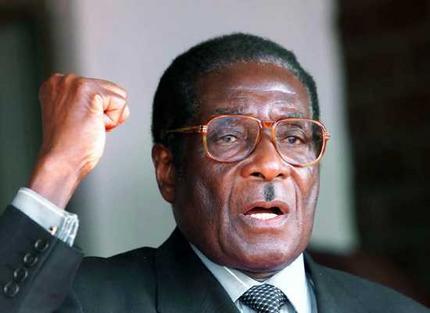
Zimbabwe’s incumbent president Robert Mugabe won overwhelmingly in the polls which have been dismissed as a ‘sham’ by his long-time arch rival Morgan Tsvangirai of the Movement Democratic Change.
Tsvangirai and his MDC party are preparing to mount a legal and political challenge against the vote that looks set to extend Mugabe’s 33-year rule.
The case could delay 89-year-old Mugabe’s inauguration for another five-year term. – nairaland.com
Zimbabwe’s Zanu-PF party has defended the fairness of its victory in last week’s elections. The latest challenge to the polls comes from Botswana, which says it will urge regional body Southern African Development Community (SADC) to audit the vote in its neighbouring state.
Botswana Foreign Affairs Minister, Phandu Skelemani, addressing journalists in Gaborone on Monday, said they are concerned that the vote failed to measure up to SADC guidelines.
Western countries have also questioned the polls, while Zimbabwe’s opposition MDC has slammed the polls as fraudulent and plans to challenge them in court.
Zanu-PF spokesperson Rugare Gumbo dismisses all the complaints saying that it is nonsense to talk of rigging because all sorts of structures were set up to ensure that voting was tight and water-proof.
Gumbo says: “The reality on the ground was that everything was done transparently, people voted in peace and tranquillity, the elections were free and fair, and quite credible as far as we are concerned.”
Former SA president Thabo Mbeki says Zimbabweans should be allowed to determine their own future. His statement comes after the recent disputed elections in Zimbabwe.
Addressing the students of the Thabo Mbeki African Leadership Institute in Pretoria, Mbeki said it was worrying that long before the Zimbabwean elections, some forces sought to discredit them.
Meanwhile, Zimbabwe’s opposition, Movement for Democratic Change (MDC), says it is ready to challenge the election results.
This after President Robert Mugabe won the presidential poll with over 61 % of the vote, while his Zanu-PF party obtained a two-thirds majority in parliamentary elections.
Both the United States and Britain have expressed doubts over the credibility of the presidential and parliamentary elections. US American Secretary of State, John Kerry, says he does not believe the official results represent a credible expression of the will of the people.
President Jacob Zuma has congratulated President Robert Mugabe and his Zanu-PF on their election success.
MDC spokesperson, Douglas Mwonzora says they party has serious concerns.
A veteran Zimbabwean opposition leader called on Thursday for a campaign to bring the country to a halt, after a disputed election that has seen President Robert Mugabe’s allies claim victory.
“There needs to be resistance against this theft and the people of Zimbabwe need to speak out strongly,” the Movement for Democratic Change’s (MDC) Roy Bennett told AFP in Johannesburg.
“I’m talking about passive resistance. I’m talking about people completely shutting the country down – don’t pay any bills, don’t attend work, just bring the country to a standstill.”
Bennett, an aide to Mugabe’s long-time rival Morgan Tsvangirai, spends much of his time outside Zimbabwe after a series of arrests.
He remains MDC treasurer.
Mugabe’s allies declared the veteran leader had romped to victory in Wednesday’s poll.
Bennett expressed dismay at an election he described as an “absolute total sham”.
“I’m totally shocked at how badly they’ve rigged it and expect to get away with it.”
“It’s not a case of even rigging it. It’s a case of having totally stolen it. Blatant, outright, daylight theft of the greatest proportions.”
Britain, meanwhile, has expressed concern that Zimbabwe had not enacted important electoral reform before Wednesday’s vote in the former British colony, and by reports that large numbers of voters had been turned away.
“We are also concerned by the late publication of the electoral roll,” a spokesperson for the British Foreign Office told Reuters.
“Any judgement on the credibility of elections will need to take these factors into account.” – AFP
The Zimbabwe Electoral Commission has begun announcing official results of Wednesday’s national elections.
The results announced on Thursday confirm earlier reports that Zanu-PF leader Robert Mugabe is headed for a big win, while his Zanu-PF party is set to claim a majority in Parliament.
ZEC deputy chairperson Joyce Kazembe released results of 31 constituencies in Bulawayo, Masvingo and Mashonaland West provinces, of which Zanu-PF claimed 28 of the seats.
Kazembe released results for 18 constituencies in Masvingo, all of which went to Zanu-PF.
Eight of the seats were won by MDC-T in 2008.
Zanu-PF officials and officials from the MDC formations say Zanu PF was likely to take all 26 seats in the province.
Kazembe also released results of 11 constituencies in Mashonaland West.
Ten of the constituencies were won by Zanu-PF, with MDC-T claiming the Chinhoyi Central seat.
MDC-T won the Pelandaba-Mpopoma and Nkulumane seats in Bulawayo and pointers were that the party would claim the 12 seats in the province.
Returns from polling stations indicated MDC-T would win less than 50 of the 210 contested seats in the House of Assembly, giving Zanu-PF the two-thirds majority it needs to change laws in Parliament.
The presidential election is also not likely to go to a runoff, as Mugabe is likely to garner the 50% plus one vote necessary for him to be sworn in as president without a second round. – mg.co.za
Zimbabwe President Robert Mugabe’s party claimed on Thursday that the veteran leader had won the hard-fought election over his long-time rival but local observers charged that the vote was seriously flawed.
“We have romped [to victory] in a very emphatic manner. We have defeated the MDC [Movement for Democratic Change],” a top member of Mugabe’s Zanu-PF party told AFP.
He said Mugabe had trounced three-time challenger Morgan Tsvangirai in Wednesday’s vote and that the Zanu-PF had retaken many parliamentary seats in urban areas, where support for the MDC was believed to be strong.
There was no immediate confirmation from election authorities about the claim, and no official results have yet been issued from the presidential and parliamentary vote.
And local observers cited a slew of flaws that called into question the victory claim, after the MDC charged that Mugabe’s rivals had been engaged in vote-rigging.
“The election is seriously compromised,” said Solomon Zwana, the chairperson of Zimbabwe Election Support Network. “Up to a million voters were disenfranchised.”
Regional observers from the African Union had said the process had been “orderly and fair” while the United States said it was too early to make a full judgement.
Turnout was reported to be high nationwide after queues of Zimbabweans lined up for hours to vote in the first election since bloody polls in 2008 that led to the creation of an uneasy government alliance between Mugabe and Tsvangirai.
Final results
The 89-year-old Mugabe, Africa’s oldest leader, is seeking a seventh term but Tsvangirai has voiced hope the election will usher in a new era for the troubled southern African nation.
Final results had been expected within five days of the election and police warned on Wednesday that anyone trying to release unofficial figures ahead of time risked being arrested.
Mugabe himself had even threatened to arrest Tsvangirai if he tried to declare an early victory.
The African Union, which has been accused of whitewashing problems in the run-up to the vote, said initial reports indicated it was “peaceful, orderly, free and fair”.
US State Department spokesperson Marie Harf also said early signs indicated a “peaceful environment” – but that it was too soon to say if the election had been fair.
“We’ve made clear to the government of Zimbabwe and the region that further reductions in our sanctions will only occur if these next elections are credible, transparent and reflect the will of the Zimbabwean people,” she said.
Despite the tensions over the rigging allegations and the fierce rhetoric of the campaign, there were no reports of widespread violence.
Many of the 6.4 million eligible voters started queueing before sunrise in the winter cold, hours before polls opened. The lines continued well into the evening, with many marking their ballots by candle light.
Mugabe said after he cast his ballot there was “no pressure” being exerted on voters.
Series of violent crackdowns
On Tuesday the firebrand had vowed to step down if Tsvangirai was the victor, saying: “If you lose you must surrender.”
Mugabe came to prominence as a hero of Africa’s liberation movement, guiding Zimbabwe to independence in 1980 from Britain and white minority rule.
But his military-backed rule has been marked by a series of violent crackdowns, economic crises and suspect elections that have brought international sanctions and made him a pariah in the West.
As the economy recovers from a crisis that saw mass unemployment and galloping inflation, Mugabe loyalists insist their hero is “tried and tested” and dismiss concerns about his age.
Mugabe had focused his campaign on attacking homosexuals and on promises to widen the redistribution of wealth to poor black Zimbabweans.
Tsvangirai himself predicted the MDC would win “quite resoundingly”.
“This is a very historic moment for all of us,” he said Wednesday. It is the time to “complete the change”.
Tsvangirai won the first round of voting in 2008, but was forced out of the race after 200 of his supporters were killed and thousands more injured in suspected state-backed attacks.
But the 61-year-old former union boss has repeatedly voiced concerns that the election was being rigged and the MDC on Wednesday listed a battery of alleged irregularities.
Rural areas
Finance Minister Tendai Biti, a senior MDC member, said the names of thousands of voters were missing from the electoral roll and that there were two million dead people on the lists.
The MDC handed its evidence to observers from the Southern African Development Community (SADC) and since no Western groups were allowed to monitor the polls, its account will be closely watched.
Tsvangirai hopes his plans to lure back foreign investors, create a million jobs in five years and improve public services will deliver a long-awaited victory.
But some analysts had cautioned against interpreting high urban turnout as a sign Tsvangirai would sweep the election — in which the victor needs more than 50% to avoid a second round.
“This election is going to be decided in the rural areas,” where two thirds of Zimbabweans live and where Mugabe enjoys strong support, said Michael Bratton, founder of pollsters Afrobarometer. – AFP
Vote counting was underway in Zimbabwe’s tightly fought election Wednesday, amid high turnout and accusations of rigging by President Robert Mugabe’s allies who wish to extend his 33-year rule.
The 89-year-old Mugabe is Africa’s oldest leader and is running for office for the seventh and perhaps final time.
His rival Morgan Tsvangirai hopes the election will usher in a new era for the troubled southern African nation.
Organisers reported high turnout across the country for the first election since the violent polls of 2008, that led to an uneasy power-sharing government between the two men.
There were no reports of widespread violence this time round, despite the fierce rhetoric of the campaign.
Police said officers in Harare fired warning shots in the air and arrested 10 soldiers who tried to jump the queue to vote.
At many stations voters started queueing before sunrise in the winter cold hours before polls opened. The lines continued well into the evening, with many marking their ballots by candle light.
Mugabe voted before lunchtime in a Harare suburb, where he insisted the poll would reflect the will of the people.
“I am sure people will vote freely and fairly, there is no pressure being exerted on anyone,” he said.
The one-time teacher came to prominence as a hero of Africa’s liberation movement, guiding Zimbabwe to independence from Britain and white minority rule.
But his military-backed rule has been marked by a series of violent crackdowns, economic crises and suspect elections that have brought international sanctions and made him a pariah in the West.
On Tuesday Mugabe vowed to step down if Tsvangirai was the victor. “If you lose you must surrender,” he said.
Tsvangirai, the current prime minister, said that promise should be taken “with a pinch of salt”.
Tsvangirai won the first round of voting in 2008, but was forced out of the race after 200 of his supporters were killed and thousands more injured in suspected state-backed attacks.
But the 61-year-old former union boss has repeatedly voiced concerns that the election is being rigged.
Tsvangirai’s party on Wednesday listed a battery of alleged irregularities.
Finance Minister Tendai Biti, a senior member of Tsvangirai’s Movement for Democratic Change, said the names of thousands of voters were missing from the electoral roll.
Biti, speaking after a meeting with the electoral commission, added: “They are admitting that there’s still two million people who are dead on the voters’ roll, but they said ‘because they’re dead, they can’t vote’.”
The MDC has handed its evidence to observers from the Southern African Development Community (SADC).
Since no Western groups were allowed to cover the presidential and parliamentary poll, the SADC’s account will be closely watched.
The African Union, which has been accused of whitewashing problems in the run up to the vote, said initial reports indicated it was “peaceful, orderly, free and fair”.
In Washington, US State Department spokeswoman Marie Harf also said that early signs indicated a “peaceful environment” — but that it was too soon to say if the election had been fair.
“We’ve made clear to the government of Zimbabwe and the region that further reductions in our sanctions will only occur if these next elections are credible, transparent and reflect the will of the Zimbabwean people,” she told reporters.
Tsvangirai cut a confident figure as he cast his own ballot, predicting his MDC would win “quite resoundingly”.
“This is a very historic moment for all of us,” he said. It is the time to “complete the change”.
Turnout appeared to be particularly brisk in the urban areas where Tsvangirai has enjoyed his strongest support, and which he must retain to stand any chance of victory.
But some analysts cautioned against interpreting the high urban turnout as a sign Tsvangirai would sweep the election.
“This election is going to be decided in the rural areas,” where two thirds of Zimbabweans live and where Mugabe enjoys strong support, said Michael Bratton, founder of polling organisation Afrobarometer.
Police warned on Wednesday that anyone trying to release unofficial results ahead of the official figures risked being arrested.
Already Sunday, Mugabe had threatened to arrest Tsvangirai if he tried to declare an early victory.
Some 6.4 million people, around half of the population, are eligible to vote. A candidate needs 50 percent of the vote to avoid a run-off.
The sharp-tongued Mugabe has focused his campaign on attacking homosexuals and on promises to widen the redistribution of wealth to poor black Zimbabweans.
As the economy recovers from a crisis that saw mass unemployment and galloping inflation, Mugabe loyalists insist their hero is “tried and tested”.
Tsvangirai hopes his plans to lure back foreign investors, create a million jobs in five years and improve public services will deliver a long-awaited victory.
The final results are expected within five days. – AFP
Coca-Cola Zimbabwe hastily removed an open palm symbol it was using on its red cans as part of its “Crazy for Good Campaign” after it was accused of aiding the MDC.
The move follows a barrage of accusations from Zanu-PF that the international firm was overtly campaigning for Prime Minister Morgan Tsvangirai’s formation of the MDC, whose party symbol is the open palm and party colour is also red.
The Zimbabwe flag has replaced the “offensive” open palm that some in Zanu-PF felt was intended to attract votes for the opposition.
In May this year the state-controlled Herald accused Coca-Cola of being an “agent of regime change”. Coca-Cola denied alleged links with Tsvangirai or the MDC.
At the time, the Mail & Guardian reported Zanu-PF’s director of information, Psychology Maziwisa, as saying: “We want our sovereignty and independence as a country to be respected.
“We want commercial entities to operate with us purely on commercial and business terms and not to delve into politics.”
Asked whether the company had bowed to political pressure, Coca-Cola Zimbabwe’s public affairs and communication office referred the M&G to a statement published in the Herald in May, in which it said the offending cans had been imported from South Africa to fill a gap in the market and were not a form of politicking.
“It was clearly stated that locally produced cans bear the Zimbabwe flag, and Crazy for Good graphics are for those imported from South Africa. Both types of cans are available in the market . . . Bottlers in Zimbabwe will continue to supplement local production with imports of any packs of beverage to cover any shortfall that might arise for any reason,” the statement says. – M&G
Zimbabwe’s main opposition the Movement for Democratic Change (MDC) on Thursday said President Robert Mugabe’s planned timetable for a constitutional referendum and elections was not realistic.
In a High Court filing seen on Thursday, Mugabe proposed a referendum for the first week of November and presidential and legislative polls for March next year.
“The dates being proposed are clearly not feasible,” MDC spokesman Douglas Mwonzora told AFP.
“The date for the election, especially, is unilateral, unrealistic and has no scientific or legal basis.”
Mugabe’s ruling ZANU-PF party has objected to many aspects of the long-delayed draft constitution that was only finished in July and would rein in presidential powers.
Mwonzora added his party was more concerned about conditions under which the vote takes place rather than the date. “For us to meet those dates, ZANU-PF has to change drastically.”
“We want elections to be held in conditions which allow the secrecy of the vote and the security of both the vote and the voter,” said Mwonzora.
Opposition MDC party members were on the receiving end of the violence that characterised the 2008 elections. – AFP
President Robert Mugabe’s ZANU-PF party has strengthened the militarisation of Zimbabwe ahead of next year’s general election with the opening of a National Military College.
Observers pointed out that Mugabe’s latest move sends a strong signal that the military complex will dictate the outcome at the ballot box. The long-serving Zimbabwean president is expected to triumph for the third time over rival Morgan Tsvangirai of the Movement for Democratic Change, after beating him in 2002 and 2008.
Last weekend Mugabe officially opened the college, built by China at a cost of $98 million. It is being described as a “think tank” on security issues. He said it will aslo be used as a bulwark against Western countries, preventing their “regime change” agenda.
The college will exclusively train personnel with a rank of colonel or captain or above, as well as equivalent high ranks in state security, the police and prisons.
In terms of the loan agreement, the loan by China will be paid off over 13 years by means of diamonds to be extracted by Chinese companies from the Marange diamond fields.
Anjin, the Chinese diamond company in Marange, was involved in an argument earlier this year with the Minister of Finance, Tendai Biti, because the Chinese had failed to pay “a single cent” in taxes.
The construction of the college indicates the sustained militarisation of Zimbabwean society, but also the domination of Chinese interests in the country.
This website uses cookies to improve your experience. We'll assume you're ok with this, but you can opt-out if you wish. Cookie settingsACCEPT
Privacy & Cookies Policy
Privacy Overview
This website uses cookies to improve your experience while you navigate through the website. Out of these cookies, the cookies that are categorized as necessary are stored on your browser as they are essential for the working of basic functionalities of the website. We also use third-party cookies that help us analyze and understand how you use this website. These cookies will be stored in your browser only with your consent. You also have the option to opt-out of these cookies. But opting out of some of these cookies may have an effect on your browsing experience.
Necessary cookies are absolutely essential for the website to function properly. This category only includes cookies that ensures basic functionalities and security features of the website. These cookies do not store any personal information.
Any cookies that may not be particularly necessary for the website to function and is used specifically to collect user personal data via analytics, ads, other embedded contents are termed as non-necessary cookies. It is mandatory to procure user consent prior to running these cookies on your website.


 Various allegations of rigging have been levied against Zimbabwe’s ZANU-PF following their victory in last week’s elections one of the allegations being that the oldest person who voted in Zimbabwe’s 31 July poll is 135 years old and still serves in the Zimbabwe National Army.