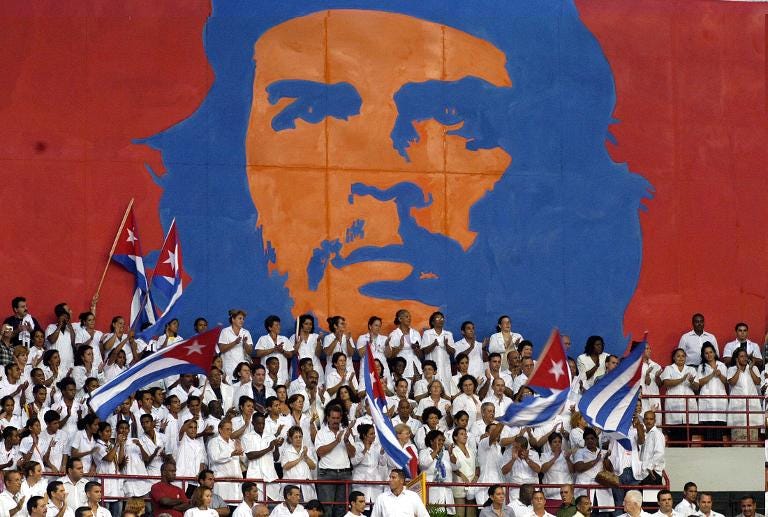
Pretoria – The South African Medical Association (Sama) has criticised the government for bringing in just over 200 Cuban medical experts to help South Africa’s fight against the coronavirus, arguing that the government should have exhausted local expertise first.
Sama chairperson Dr Angelique Coetzee said South Africa has many public and private health specialists, family physicians and epidemiologists who would have heeded the president’s call for assistance during this very challenging period.
“Retired doctors can be brought back into the service delivery system – even for a short time. They can also mentor younger doctors who lack the necessary experience and skills.
“Only when we have exhausted all our internal human resources should a consultative process between Sama, the Department of Health and the Presidency been initiated to bring the Cuban specialists to South Africa,” Coetzee said.
She added that Sama finds it “unacceptable that silo approaches” have been followed in the decision to bring the Cuban specialists to South Africa.
Sama will be requesting a meeting with Health Minister Dr Zweli Mkhize “to express its unhappiness on the processes and principles involved”.
Coetzee said Sama was not against roping in the Cuban Brigade, but added that the government did not consult all stakeholders.
“While we are not averse to the so-called Cuban Brigade assisting us, we feel strongly that the principle of not engaging with Sama – as the biggest representative body of doctors in the country – is flawed and wrong,” Coetzee said.
Sama insisted that in light of the current poor economic environment in South Africa, the money spent on bringing the Cuban specialists to South Africa would have been better spent on first employing local doctors who have the necessary skills and experience to drive this process, especially in rural areas.
“There are many unemployed doctors in South Africa and many community service medical officers have still not been placed. In addition, many private practitioners have indicated their willingness to assist,” Sama said.
President Cyril Ramaphosa on Monday welcomed the Cuban health professionals who arrived in Pretoria to support ongoing efforts to curb the spread of the novel coronavirus across South Africa.
The 217 Cuban health specialists and workers landed in South Africa on Monday as the country commemorated Freedom Day.
“Their arrival follows a request made by President Cyril Ramaphosa to President Díaz Canel Bermúdez of Cuba. The experts will support efforts being made in South Africa to contain the spread of Covid-19,” the Presidency said in a statement.
The group consists of experts in the fields of epidemiology, biostatistics and public health; family physicians to guide interventions through door-to-door testing and to assist local healthworkers in health promotion and disease surveillance at the community level; healthcare technology engineers to assist in maintaining the inventory, deployment and repair of aged medical equipment; and experts to provide technical assistance working with local experts. – African News Agency
South African author Marita van der Vyfer has stated in an interview that “Cuba is the only place on earth where communism is still colourful and sexy”. However, according to Human Rights Watch, Cuba is still behaving very much like a communist, totalitarian regime with repression, intolerance towards dissent and imprisonment for merely voicing an opinion.
Here follows Human Rights Watch’s latest report on Cuba:
The Cuban government continues to repress and punish dissent and public criticism. The number of short-term arbitrary arrests of human rights defenders, independent journalists, and others was significantly less in 2018 than in 2017, but still remained high, with more than 2,000 reports of arbitrary detentions between January and August. The government continues to use other repressive tactics, including beatings, public shaming, travel restrictions, and termination of employment against critics.
On April 19, Cuba inaugurated a new president, Miguel Díaz-Canel, who took over from Raúl Castro. Castro remained as the leader of the Communist Party and retained his seat in the National Assembly.
On July 22, the National Assembly unanimously approved a proposal for a new constitution, to be voted on in a national referendum on February 24, 2019. The new constitution, which would replace one adopted in 1976, would eliminate the objective of “achieving a Communist society” but retain the assertion that the Communist Party is the “superior leading force of society and the State.”
Arbitrary Detention and Short-Term Imprisonment
The Cuban government continues to employ arbitrary detention to harass and intimidate critics, independent activists, political opponents, and others. The number of arbitrary short-term detentions, which increased dramatically between 2010 and 2016—from a monthly average of 172 incidents to 827—started to drop in 2017, according to the Cuban Commission for Human Rights and National Reconciliation, an independent human rights group that the government considers illegal.
The number of reports of arbitrary detentions continued to drop in 2018, with 2,024 from January through August, a decrease of 45 percent compared to the 3,706 reports during the same period in 2017.
Security officers rarely present arrest orders to justify detaining critics. In some cases, detainees are released after receiving official warnings, which prosecutors can use in subsequent criminal trials to show a pattern of “delinquent” behavior.
Detention is often used preemptively to prevent people from participating in peaceful marches or meetings to discuss politics. Detainees are often beaten, threatened, and held incommunicado for hours or days. Police or state security agents routinely harass, rough up, and detain members of the Ladies in White (Damas de Blanco)—a group founded by the wives, mothers, and daughters of political prisoners—before or after they attend Sunday mass.
In March, a former political prisoner, Ivan Hernández Carrillo, reported having been violently beaten and detained when he intervened to stop the arrest of his mother, Asunción Carrillo, a Ladies in White member, who was leaving her home to attend mass. Hernández said he was charged—after shouting “Down with Raul Castro!”—and fined for “contempt for the figure of the maximum leader.” The Carrillos were released the same day.
On August 3, dissident José Daniel Ferrer, who founded the Patriotic Union of Cuba (UNPACU) in 2011—upon his release from eight years in prison—was arrested along with activist Ebert Hidalgo and charged with “attempted murder” when the car he was driving struck a Ministry of Interior official. Activists have said the charges are a farce and witnesses allege that the official threw himself in front of the car intentionally, only to get up and ride off on his motorcycle. Upon his release 12 days later, Hidalgo reported having been psychologically tortured and held in harsh conditions in a dark, dirty cell.
In September, dissident Arianna López Roque was briefly detained after burning a copy of the proposal for new constitution. According to Lopez, she was charged with public disorder, disobedience, resistance, and contempt and an official threatened with retaliating against her husband, who is currently imprisoned.
Freedom of Expression
The government controls virtually all media outlets in Cuba and restricts access to outside information. A small number of independent journalists and bloggers manage to write articles for websites or blogs, or publish tweets. The government routinely blocks access within Cuba to these websites, and only a fraction of Cubans can read independent websites and blogs because of the high cost of, and limited access to, the internet. In September 2017, Cuba announced it would gradually extend home internet services.
Independent journalists who publish information considered critical of the government are subject to harassment, smear campaigns, raids on their homes and offices, confiscation of their working materials, and arbitrary arrests. The journalists are held incommunicado, as are artists and academics who demand greater freedoms. Desacato laws continue to be enforced against opponents.
On January 30, Iris Mariño García, a journalist for La Hora de Cuba, was criminally charged with engaging in journalism without authorization. The manager of the newspaper said a woman accused Mariño of interviewing her on the street and that when police interviewed Mariño they focused on the paper’s opinion surveys, showing the political motivation behind the arrest. Mariño was detained again when attempting to take a picture of a May 1 workers’ parade. Officers took her to a police station and interrogated her.
In July, Roberto de Jesús Quiñones, an independent journalist whose work is published on the news site Cubanet, was detained for 58 hours and held incommunicado. Police raided his home and confiscated computers, phones, and other goods.
In April 2018, President Díaz-Canel signed Decree 349, expected to enter into force in December 2018, establishing broad and vague restrictions on artistic expression. Under the regulation, artists cannot “provide artistic services” in public or private spaces without prior approval from the Ministry of Culture. Those who hire or make payments to artists for artistic services which lacked proper authorization are subject to sanctions, as are the artists themselves. The decree provides different sanctions, including fines, confiscation of materials, cancellation of artistic events and revocation of licenses. Local independent artists have been protesting the decree. On August 11, police detained and beat Luis Manuel Otero Alcántara and at least three other artists when trying to organize a concert to protest the decree, according to press reports.
Political Prisoners
In May 2018, the Cuban Commission for Human Rights reported that Cuba was holding 120 political prisoners, including more than 40 members of the Cuban Patriotic Union. The government denies independent human rights groups access to its prisons. The groups believe that additional political prisoners, whose cases they have been unable to document, remain locked up.
Cubans who criticize the government continue to face the threat of criminal prosecution. They do not benefit from due process guarantees, such as the right to fair and public hearings by a competent and impartial tribunal. In practice, courts are subordinate to the executive and legislative branches, denying meaningful judicial independence.
Dr. Eduardo Cardet Concepción, leader of the Christian Liberation Movement, remained in prison at time of writing. Cardet, who had been threatened with jail because of his support for the “One Cuban, One Vote” campaign, was sentenced to three years in prison on March 2017. As of August 2018, he was being held in solitary confinement, and denied visits and any contact with family members, even by phone. Authorities argued that family visits were not “contributing to his re-education.”
In May, Dr. Ruíz Urquiola, a former biology professor and an outspoken environmentalist, was sentenced to a year in prison for disrespecting a park ranger. During his imprisonment he went on a hunger strike. In July 2018, he was granted a conditional release for health reasons. In August 2018, he reported irregularities in the handling of his case, and the imposition of travel restrictions.
Travel Restrictions
Since reforms in 2003 to travel regulations, many people who had previously been denied permission to travel have been able to do so, including human rights defenders and independent bloggers. The reforms, however, gave the government broad discretionary powers to restrict the right to travel on the grounds of “defense and national security” or “other reasons of public interest,” and authorities have repeatedly denied exit to people who express dissent.
The government restricts the movement of citizens within Cuba through a 1997 law known as Decree 217, which is designed to limit migration to Havana. The decree has been used to harass dissidents and prevent those from elsewhere in Cuba from traveling to Havana to attend meetings.
In April, dissidents and human rights defenders Dulce Amanda Duran, Roseling Peñalvar, and Wendis Castillo were barred from traveling to Lima for a civil society meeting. Castillo, a human rights defender and member of the Dignity Movement, had also been barred from traveling in November 2017, when she intended to fly to Lima for a conference on corruption and human rights in Latin America.
In July 2018, Rene Gómez Manzano, a prominent dissident who has been imprisoned several times, was intercepted at the airport before boarding a plane to attend a human rights meeting in Montevideo. Agents informed him that he was not authorized to travel.
Prison Conditions
Prisons are overcrowded. Prisoners are forced to work 12-hour days and are punished if they do not meet production quotas, according to former political prisoners. Inmates have no effective complaint mechanism to seek redress for abuses. Those who criticize the government or engage in hunger strikes and other forms of protest often endure extended solitary confinement, beatings, and restrictions on family visits, and are denied medical care.
While the government allowed select members of the foreign press to conduct controlled visits to a handful of prisons in 2013, it continues to deny international human rights groups and independent Cuban organizations access to its prisons.
On August 9, Alejandro Pupo Echemendía died in police custody at Placetas, Villa Clara, while under investigation for a crime related to horse racing. Family members say his body showed signs of severe beatings; authorities contend he threw himself against a wall and died of a heart attack. Allegations have surfaced of family members and witnesses being coerced to withdraw their initial statements and to confirm the official version.
Labor Rights
Despite updating its Labor Code in 2014, Cuba continues to violate conventions of the International Labour Organization that it ratified, specifically regarding freedom of association and collective bargaining. While the law technically allows the formation of independent unions, in practice Cuba only permits one confederation of state-controlled unions, the Workers’ Central Union of Cuba.
Human Rights Defenders
The Cuban government still refuses to recognize human rights monitoring as a legitimate activity and denies legal status to local human rights groups. Government authorities have harassed, assaulted, and imprisoned human rights defenders who attempt to document abuses.
Sexual Orientation and Gender Identity
Following public protest, the Cuban government decided to remove language from the proposed new constitution that would have redefined marriage to include same-sex couples.
Key International Actors
In November 2017, the US government reinstated restrictions on Americans’ right to travel to Cuba and to do business with any entity tied to the Cuban military, security, or intelligence services. The US also voted against a United Nations resolution condemning the US embargo on Cuba, a sharp break from its 2016 abstention.
In March, former Colombian President Andres Pastrana and former Bolivian President Jorge Quiroga were detained at Havana airport and denied entry. They had flown to Cuba to receive an award on behalf of the Democratic Initiative of Spain and the Americas, a forum of 37 former presidents and heads of state.
In April 2018, Secretary General of the Organization of American States Luis Almagro criticized the election of Díaz-Canel, calling it “an attempt to perpetuate a dynastic-familial autocratic regime. It is called a dictatorship.”
In January 2018, the foreign policy chief of the European Union met in Havana with Cuban authorities to accelerate the implementation of their Political Dialogue and Cooperation Agreement. On May 15, the EU and Cuba held their first-ever ministerial-level Joint Council meeting in Brussels.
Cuba is a current member of the Human Rights Council, having been reelected for the 2017-2019 term.
Report republished in terms of a Creative Commons Licence from Human Rights Watch.
Fidel Castro, the leader of the Cuban Revolution, marked his 89th birthday with an essay in which he states the USA owes Cuba a huge debt for decades of embargo, and claims he “would not stop struggling for peace… and well-being” of every person on Earth.
In his brief essay, published in Granma, Cuba’s official government newspaper on Thursday, Castro repeats his claims that the United States owes his country “millions of dollars” for damages inflicted on the Cuban economy by the US embargo.
“Cuba is owed compensation equivalent to damages, which have reached many millions of dollars, as our country has denounced throughout our interventions in the United Nations, with irrefutable arguments and facts,” Castro wrote.
In his composition, entitled Reality and Dreams, Fidel Castro recalls the history of the twentieth century, pointing out that the United States profited more than any other nation from the cruelties of World War II. He also condemns the nuclear bombings of Hiroshima and Nagasaki.
“The United States, whose territory and industries remained removed from the war, became the country with the greatest wealth and the best weaponry on Earth, in a world torn apart, full of death, the wounded and hungry,” wrote the former Cuban leader.
One of the Cuban Five has urged South Africans to keep the revolutionary legacy of the people who have fought for the democracy of the country alive.
Gerardo Hernandez is one of the Cuban Five members who visited the Free State on Wednesday as part of their world tour.
Speaking at a media briefing at the Kaizer Sebothelo building in Bloemfontein, he said he hopes that new leaders and the younger generation will be able to keep going forward and maintain the legacy of their older leaders.
He said they were happy to see many active young people during their visit to the country.
Hernandez stressed that it is very important for the youth to be active as imperialism would want people to forget their history.
Meanwhile the US and Cuba have formally agreed on Wednesday to restore diplomatic relations on July 20, setting up a trip to Havana by John Kerry, who would become the first US secretary of state to visit the country in 70 years.
Kerry, speaking from Vienna, said he would visit Havana to raise the US flag outside the future US embassy, currently labeled an interests section.
“The progress that we mark today is yet another demonstration that we don’t have to be imprisoned by the past,” Obama said from the White House Rose Garden. “When something isn’t working, we can – and will – change.”
Following 18 months of secret negotiations brokered by Pope Francis and Canada, Obama and Castro announced in December they planned to reopen embassies and normalize relations. The agreement also included a prisoner swap.
More than 1,000 gay, lesbian and transgender Cubans marched through Havana on Saturday, proudly displaying their truest selves for a day in a society where they still endure discrimination.
The Eighth Annual March against Homophobia and Transphobia took on extra meaning this year for about 20 couples who participated in a “Celebration of Love,” symbolically exchanging vows as same-sex marriage remains illegal in Cuba.
Religious figures from Cuba and abroad huddled with couples in a crowded pavilion in a ceremony inspired by the mass wedding of more than 100 couples at the World Pride event in Toronto last June.
“Our family accepts us but society doesn’t,” said Raul Orta, who “married” his partner of 13 years, Yaimel Medina. “If one us is no longer here tomorrow, the other one loses everything. That’s not right.”
The parade, with the beat of conga drums and the waving of rainbow-colored banners, gave gay Cubans and their supporters a rare opportunity to celebrate without fear.
“For eight years we’ve been living a dream we never thought would have been possible,” Orta said of the parade.
For Cubans from the provinces, the open display in Havana was even more liberating.
“In the interior of the country, you couldn’t even dream about an event like this,” said Raiza Marmol, who moved from Camaguey two years ago and exchanged vows with her partner of two years, Yatiana Garcia. “It’s a unique event and surprising for gays who can show their faces without having to hide from anyone.”
Cuba once sent gays to labor camps in the early years after the 1959 revolution, which retired leader later Fidel Castro admitted was wrong.
Cuban gays have made great strides in recent years with help from Mariela Castro, the daughter of current President Raul Castro and niece of Fidel. She is a member of the National Assembly and head of the National Center for Sex Education.
The National Assembly last year approved a labor law that banned discrimination based on sexual orientation. But Mariela Castro voted against the law in an extremely rare and possibly unprecedented dissenting vote because the law did not also ban discrimination based on gender identity.
Elsewhere in Latin America, Argentina and Uruguay have legalized same-sex marriage, as has Mexico City, but in Cuba marriage remains a distant goal.
“It’s not important for us to be first. It’s important to get there,” Mariela Castro told reporters.
President Barack Obama told Congress on Tuesday that he plans to remove Cuba from the US list of state sponsors of terrorism, removing a major obstacle to restoring diplomatic relations and reopening embassies.
Obama’s decision follows a summit in Panama where Obama and Cuban President Fidel Castro sat down on Saturday for the first meeting of its kind between US and Cuban leaders in nearly 60 years.
Cuba’s communist government had demanded removal from the US blacklist to move forward on efforts to normalize relations between the two former Cold War foes. Obama ordered a review of Cuba’s presence on the list after he and Castro announced a diplomatic breakthrough on Dec 17.
Obama’s decision was submitted to Congress for a further 45-day review, but lawmakers are extremely unlikely to block the move.
There had been some expectations that Obama would announce his intention to remove the terrorism designation and move forward on restoring diplomatic relations at the summit.
Washington placed Cuba on the list in 1982, citing then-President Fidel Castro’s training and arming of communist rebels in Africa and Latin America. But Cuba’s presence on the list has been questioned in recent years.
President Raúl Castro declared victory for the Cuban Revolution on Saturday in a wide-ranging speech, thanking President Obama for “a new chapter” while also reaffirming that restored relations with the United States did not mean the end of Communist rule in Cuba.
In a televised speech before Parliament and a group of favored guests — including Elián González, the center of a tug of war in 2000 between Cuban exiles and Havana, and the three men convicted of spying in the United States who were released as part of the historic agreement announced on Wednesday — Mr. Castro alternated between conciliatory and combative statements directed at the United States.
He stoked the flames declaring near the end of his statement, “We won the war.” But he also praised Mr. Obama for starting the biggest change in United States-Cuba policy in more than 50 years.
“The government in Cuba will still repress and throw into jail anyone who opposes the Castro regime,” said Blanca Gonzalez, 65, who moved to the United States 13 years ago. Her son Normando Hernandez spent seven years in a Cuban prison, she said, for “practicing independent journalism”; he was freed in 2011.
“All Obama is doing is throwing a lifeline to the Castros so that they can continue crushing the people of Cuba,” said Roberto Delgado Ramos,78, who said he was arrested twice, in 1960 and 1964, for “counterrevolutionary activities” and served a total of 12 years in prison. “The Castros are the ones who need to pay for the blood that they have spilled.”
White House says measures will “end our outdated approach,” promote change in Cuba consistent “with US national security interests”
Oddly, during a week when President Obama prepares to launch new sanctions against Venezuela and Russia, The White House admits that sanctions do not work.
“It is clear that decades of US isolation of Cuba have failed to accomplish our enduring objective of promoting the emergence of a democratic, prosperous, and stable Cuba,” the Obama administration declared.
Diplomatic relations between the United States and Cuba were severed in January 1961 after the rise of Fidel Castro and his Communist government.
Obama has now instructed Secretary of State John Kerry to immediately initiate discussions with Cuba about reestablishing diplomatic relations and to begin the process of removing Cuba from the list of states that sponsor terrorism, which it has been on since 1982, the White House said.
In coming months, the US “will re-establish an embassy in Havana and carry out high-level exchanges and visits between our two governments as part of the normalization process”.
The US will thus lift sanctions on Cuban nationals outside Cuba.
The initial step will involve US-Cuba Migration Talks in January after which institutions will be allowed to open accounts at Cuban financial institutions for authorized transactions and US credit, debit cards permitted for use by travelers to Cuba.
But in 2010, the same Obama administration warned the world against Cuba:
Recent events in Cuba, including the tragic death of Orlando Zapata Tamayo, the repression visited upon Las Damas de Blanco, and the intensified harassment of those who dare to give voice to the desires of their fellow Cubans, are deeply disturbing.
These events underscore that instead of embracing an opportunity to enter a new era, Cuban authorities continue to respond to the aspirations of the Cuban people with a clenched fist.
Today, I join my voice with brave individuals across Cuba and a growing chorus around the world in calling for an end to the repression, for the immediate, unconditional release of all political prisoners in Cuba, and for respect for the basic rights of the Cuban people.
During the course of the past year, I have taken steps to reach out to the Cuban people and to signal my desire to seek a new era in relations between the governments of the United States and Cuba. I remain committed to supporting the simple desire of the Cuban people to freely determine their future and to enjoy the rights and freedoms that define the Americas, and that should be universal to all human beings.
For more than two years, a US agency secretly infiltrated Cuba’s music scene, recruiting unwitting rappers to spark a youth movement against the government, according to documents obtained by The Associated Press.
The idea was to use Cuban musicians to build a network of young people seeking “social change,” documents show. But the operation was amateurish and profoundly unsuccessful.
On at least six occasions, Cuban authorities detained or interrogated people involved in the program; they also confiscated computer hardware, and in some cases it contained information that jeopardized Cubans who likely had no idea they were caught up in a clandestine U.S. operation. Still, contractors working for the U.S. Agency for International Development kept putting themselves and their targets at risk, the AP investigation found.
They also ended up compromising Cuba’s music culture.
Artists that USAID contractors tried to promote left the country or stopped performing after pressure from the Cuban government, and one of the island’s most popular independent music festivals was taken over after officials linked it to USAID.
The program is laid out in documents involving Creative Associates International, a Washington, D.C., contractor paid millions of dollars to undermine Cuba’s government. The thousands of pages include contracts, emails, preserved chats, budgets, expense reports, power points, photographs and passports.
The work included the creation of a “Cuban Twitter” social network and the dispatch of inexperienced Latin American youth to recruit activists, operations that were the focus of previous AP stories.
“Any assertions that our work is secret or covert are simply false,” USAID said in a statement Wednesday. Its programs were aimed at strengthening civil society “often in places where civic engagement is suppressed and where people are harassed, arrested, subjected to physical harm or worse.”
Creative Associates did not immediately respond to a request for comment.
The operation was initially run by a Serbian contractor Rajko Bozic. His project was inspired by the protest concerts of the student movement that helped undermine former Serbian President Slobodan Milosevic in 2000.
Contractors would recruit scores of Cuban musicians for projects disguised as cultural initiatives but really aimed at boosting their visibility and stoking a movement of fans to challenge the government.
The Serb homed in swiftly on Los Aldeanos, a popular hip-hop group.
“People marching blind, you have no credibility,” the group rapped in “Long Live Free Cuba!” ”Go and tell the captain — this ship’s sinking rapidly.”
Creative used a Panama front company and a bank in Lichtenstein to hide the money trail from Cuba, where thousands of dollars went to fund a TV program starring Los Aldeanos.
But Cuban officials had figured out what was going on. Within months, a USAID contractor told his handlers that the Cubans said USAID had infiltrated the festival, and soon enough, the Cubans took it over.
Moscow and Havana have reportedly reached an agreement on reopening the SIGINT facility in Lourdes, Cuba – once Russia’s largest foreign base of this kind – which was shut down in 2001 due to financial problems and under US pressure.
When operational, the facility was manned by thousands of military and intelligence personnel, whose task was to intercept signals coming from and to the US territory and to provide communication for the Russian vessels in the western hemisphere.
Russia considered reopening the Lourdes base since 2004 and has sealed a deal with Cuba last week during the visit of the Russian President Vladimir Putin to the island nation, reports Kommersant business daily citing multiple sources.
“I can say one thing: at last!” one of the sources commented on the news to the paper, adding that the significance of the move is hard to overestimate.
The facility in Lourdes, a suburb of Havana located just 250km from continental USA, was opened in 1967. At the peak of the cold war it was the largest signal intelligence center Moscow operated in a foreign nation, with 3,000 personnel manning it.
From the base Russia could intercept communications in most part of the US including the classified exchanges between space facilities in Florida and American spacecraft. Raoul Castro, then-Defense Minister of Cuba, bragged in 1993 that Russia received 75 percent of signal intelligence on America through Lourdes, with was probably an overstatement, but not by a large amount.
Following the collapse of the Soviet Union the base was downscaled, but continued operation. After Russia was hit the 1998 economic crisis, it found it difficult to maintain many of its old assets, including the Lourdes facility. In Soviet times Cuba hosted it rent-free, but starting 1992 Moscow had to pay Havana hundreds of millions dollars each year in addition to operational costs to keep the facility open.
An additional blow came in July 2000, when the US House passed the Russian-American Trust and Cooperation Act, a bill that would ban Washington from rescheduling or forgiving any Russian debt to the US, unless the facility in Lourdes is shut down.
Moscow did so in 2001 and also closed its military base in Vietnam’s Cam Ranh, with both moves reported as major steps to address Americans’ concerns. But, in the words of a military source cited by Kommersant, the US “did not appreciate our gesture of goodwill.”
At the end of last week, Uruguayan President Jose Mujica passed along a message from US President Barack Obama to Cuban leader Raul Castro, in which Obama demonstrated willingness to hold a dialogue aimed at cancelling the US embargo against Cuba, the Uruguayan newspaper Busqueda said with reference to sources in official circles.
The newspaper claims that Obama’s message was passed along to Castro by President of Uruguay on the sidelines of the summit in the Group of 77 and China format, which took place at the end of last week in the Bolivian city of Santa Cruz. Meanwhile, the newspaper does not specify in what form this message was given – oral or written.
For his part, Castro “shows great interest” having expressed willingness for rapprochement between Havana and Washington, but only in case the US did not impose their point of view.
According to the newspaper, Mujica assessed the meeting with Castro as “fairly optimistic”.
In May, Mujica visited the USA on an official visit and held talks with the US President. According to the Uruguayan newspaper, it was at this meeting that Obama reported to Mujika his readiness for closer ties with Havana.
Washington imposed sanctions against Cuba in 1961, after the failure of the operation aimed at overthrowing the government of Fidel Castro. In 1996, the US Congress adopted the “Helms – Burton Act” on additional sanctions against foreign companies trading with Cuba.
A Russian warship was docked in Havana Wednesday, without explanation from Communist Cuba or its state media.
The Viktor Leonov CCB-175 boat, measuring 91.5 meters (300 feet) long and 14.5 meters wide, was docked at the port of Havana’s cruise ship area, near the Russian Orthodox Cathedral.
The Vishnya, or Meridian-class intelligence ship, which has a crew of around 200, went into service in the Black Sea in 1988 before it was transferred seven years later to the northern fleet, Russian media sources said.
Neither Cuban authorities nor state media have mentioned the ship’s visit, unlike on previous tours by Russian warships.
The former Soviet Union was Cuba’s sponsor state through three decades of Cold War. After a period of some distancing under former Russian president Boris Yeltsin, the countries renewed their political, economic and military cooperation.
The ship is reportedly armed with 30mm guns and anti-aircraft missiles.
Its visit comes as isolated Havana’s current economic and political patron, Venezuela, is facing unprecedented violent protests against President Nicolas Maduro’s government.
Cuban President Raul Castro’s Communist government, Americas’ only one-party regime, got a handshake from president Obama recently at Nelson Mandela’s memorial service.
The Dec. 10 handshake signalled a warming of ties between the two nations after decades of animosity.
Fidel Castro congratulated his brother after he greeted the head of the U.S. government in English, saying ‘Mr. President, I’m Castro.’”
Chevron houses some 6,000 people at the Malongo compound, built in the 1960s, in Angola, but capacity constraints mean contractors have had to seek lodging outside the base that protected employees through decades of conflict.
Chevron’s 2,965-acre (1,200-hectare) Malongo compound became a veritable fort to survive the nation’s 1961-1975 struggle for independence followed by a 27-year civil war between the ruling Popular Movement for the Liberation of Angola and the U.S.-funded rebel National Union for the Total Independence of Angola, known as Unita, which ended in 2002.
At one point in a twist of the usual Cold War alliances, Cuban troops were used to protect Chevron’s Cabinda installations from Unita attacks.
Cabinda’s under-supplied market has raised rental and property prices and created a proliferation of cramped, basic facilities. It’s also prompted almost $200 million of developments that will house local residents and workers of companies such as Schlumberger Ltd. (SLB), the world’s largest oilfield-services provider, and help fulfill the state’s push to integrate oil companies into the wider economy.
“Malongo is like a colony and we have to break it up because the war is over,” Gianni Martins, a petroleum engineer at state oil company Sonangol EP, said in an interview in Cabinda. “The expats have needs, the locals have services and we have to bring them together.”
The $100 million Futila Sea Breeze Condominium will open the first of its 464 luxury units in 2015, said Pedro Godinho, president of Servicab SA, the developer of the project.
Housing Developments
The nearby $97 million Malembo Development Center, being built by Operatec Lda and OPI International, expects to fill 280 of its 1,440 beds this quarter with employees of companies such as Schlumberger, Saipem SpA (SPM) and Fugro NV (FUR), the biggest deepwater-oilfield surveyor.
Cabinda province, with a population of about 440,000, half of which live in rural areas away from the coast, is separated from the rest of Angola by a sliver of the Democratic Republic of Congo. The predominant language in some areas is French, while Portuguese is spoken in the rest of the country.
Capital’s Improvements
Companies including Total SA (FP), Braspetro BV and Eni SpA (ENI) have wells offshore the province, which used to comprise most of Angola’s production and now makes up about a quarter of output. The OPEC member pumped 1.48 million barrels a day in January, according to data compiled by Bloomberg.
The province’s capital is studded with unfinished or abandoned low-rise buildings. Governor Aldina Matilde da Lomba embarked on a program in the past year to improve the core area and roads. The main port has been dredged and expanded while a nearby deepwater port is being readied, Pedro Sia, her spokesman, said in a Feb. 20 phone interview.
Most of the province-managed Olympic Village development, built for civil-war veterans, is being rented to oil workers, Sia said.
Luis Franque, chief of staff for Macario Romao Lembe, the deputy governor for economic affairs, denied in a Feb. 20 phone interview the village was for veterans and said the government built the 150-unit Condominio Santa Catarina for the soldiers.
Cabinda Separatists
The separatist Front for the Liberation of the Enclave of Cabinda, known as FLEC, has conducted a guerrilla campaign for Cabindan independence for the past few decades, a struggle unrelated to Angola’s 27-year civil war. FLEC claimed responsibility for killing two Togolese soccer team members in an ambush on a bus travelling to the African Cup of Nations tournament in Angola in January 2010.
“People see multinationals making a lot of money from their resources and they get nothing,” Servicab’s Godinho said in an interview in Luanda. “People are starving and with an AK-47 they have nothing to lose, so it makes people think why we have problems with FLEC.”
Isabel Ordonez, a spokeswoman based in Houston for Chevron, said by e-mail on Feb. 19 she couldn’t immediately reply to a request for comment.
Swimming Pools
Halliburton Co., the world’s biggest provider of hydraulic fracturing services, is also building accommodation in Cabinda for its workers, Sid Whyte, then company country manager, said in an interview last year. Further details weren’t immediately available.
The Malembo compound, to be constructed over four phases with swimming pools, gyms, central dining and a 600 square-meter (6,458 square-foot) retail space for local businesses, is on a 346-acre site just 3.5 kilometers (2.2 miles) from Malongo.
“The center can serve the needs of Chevron, the contractors and the community since it is open to not only to the contractors, but for locals to provide services,” Clay Etheridge, Director of MDC, said in an interview. “It’s win-win for the community and the oil sector.”
Maybe the empire thought that we would not honor our word when, during days of uncertainty in the past century, we affirmed that even if the USSR were to disappear Cuba would continue struggling.
World War II broke out on September 1, 1939 when Nazi-fascist troops invaded Poland and struck like a lightning over the heroic people of the USSR, who contributed 27 million lives to preserve mankind from that brutal massacre that ended the lives of 50 million persons.
War, on the other hand, is the only venture that the human race throughout history has failed to avoid, leading Einstein to say that he did not know how World War III would be like but most certainly the fourth would be fought with sticks and stones.
Added up, the means available to the two most powerful powers –United States and Russia— amount to 20,000 (twenty thousand) nuclear warheads. Mankind should know that three days before John F. Kennedy assumed the presidency of his country on January 20, 1961, a US B-52 bomber, in a routine flight, carrying two atomic bombs with a destructive capacity 260 times that of the bomb dropped in Hiroshima, had an accident and the aircraft crashed. For such cases sophisticated automatic equipment are in place to prevent the bombs from exploding. The first bomb landed without risks. In the case of the second, three of the four mechanisms failed, and the fourth, in very critical conditions could barely function. The bomb did not explode by mere chance.
There is no present or past event I remember or have heard of that has impacted world public opinion so much as the death of Nelson Mandela, and not because of his wealth, but for his human quality and the loftiness of his ideas and feelings.
Throughout history and barely one and a half century ago — before robots and machines took over our modest tasks with a minimum energy cost– none of the phenomena that today shake mankind and inexorably rule each and every person –men and women, children and elders, young and adult, farmers and factory workers, manual workers or intellectuals– existed. The prevailing trend is to move to the cities, where the creation of jobs, transportation, and basic living conditions demand huge investments to the detriment of food production and other more rational ways of life.
Three powers have landed in our planet’s Moon. The same day Nelson Mandela, covered with his country’s flag, was buried in the backyard of the humble house where he was born 95 years ago, a sophisticated module from the Peoples Republic of China descended upon a bright spot in our Moon. The coincidence of both events was purely by chance.
Millions of scientists are studying earth and outer-space matters and radiations. Through them we now know that Titan, one of Saturn’s rings, accumulated 40 times more oil than the existing amount in our planet when oil extraction began 125 years ago and which will last barely one more century at current consumption rates.
The fraternal feelings of profound brotherhood between the Cuban people and Nelson Mandela’s homeland were born out of an event that has never been mentioned and about which we have never said a word during all these long years; Mandela, because he was an apostle of peace and did not want to hurt anyone; Cuba, because we have never done anything for the sake of glory and prestige.
Since the very triumph of the Revolution in Cuba we extended our solidarity to the Portuguese colonies in Africa. Liberation movements in that continent had colonialism and imperialism on the rack after World War II and the liberation of the Peoples Republic of China –the most highly populated country in the world— following the glorious triumph of the Russian Socialist Revolution.
Social revolutions were shaking the pillars of the old world order. In 1960 the inhabitants of the planet amounted to three million. Along with this, the power of big transnational companies –almost all Americans– was growing and the American currency, underpinned by US gold monopoly and its intact industry so far removed from the battle fields, took control of the world economy. Richard Nixon unilaterally abolished the backing of US currency in gold and his country’s companies took control over the main resources and raw materials in the planet which they bought with paper bills.
Nothing I have said till now is new.
But why do they try to hide the fact that the Apartheid regime –that brought so much suffering onto Africa and arouse so much indignation in most nations throughout the world– was the fruit of European colonial powers and was turned into a nuclear power by the United States and Israel, something Cuba, who supported Portuguese colonies in Africa fighting for their independence openly condemned?
Our people, handed over to the United States by Spain after 30 years of heroic struggle, never reconciled with the slavery regime imposed during almost 500 years.
In 1975, racist troops supported by light tanks equipped with 90-millimeter guns set off from Namibia –then occupied by South Africa— and penetrated more than one thousand kilometers into Angolan territory up to the vicinity of Luanda, where an airborne battalion of Cuban Special Troops and several Cuban crews for Soviet tanks with no crews, succeeded in delaying their advance. This happened in November 1975, 13 years before the Cuito Cuanavale Battle.
I’ve already said that we have done nothing for the sake of prestige or seeking benefit of any kind. It is a fact that Mandela was an upright man, a profound revolutionary and a radical socialist who endured with great stoicism 27 years of solitary confinement. I could not but admire his honesty, modesty and enormous merit.
Cuba was strictly fulfilling its internationalist duties by defending key positions and training thousands of Angolans in the use of weapons every year. The USSR was providing the weapons. At the time, however, we disagreed with the idea of the main advisor of the suppliers of military equipment. Thousands of young and healthy Angolans were constantly joining the units of their then incipient army. Their main adviser, however, was not a Zhúkov, Rokossovski, Malinowvsky or any of the many men that brought so much glory to Soviet military strategy. His obsessive idea was to send Angolan brigades carrying the best weapons to the territory where the tribal government of Savimbi – a mercenary serving the United States and South Africa– was supposedly located, which was tantamount to sending the troops fighting in Stalingrad to the border with the Falangist Spain that had sent over hundred thousand troops to fight against the USSR. That year a similar operation was going on.
The enemy was advancing behind several Angolan brigades severely hitting them near the place they had been sent to, approximately 1,500 kilometers away from Luanda. They were returning from there, pursued by South African troops en route to Cuito Cuanavale, a former NATO military base, located some 100 kilometers away from where a Cuban Tank Brigade was stationed.
At such a critical point, the President of Angola requested the support of Cuban troops. The commander of our troops in the South, General Leopoldo Cintra Frías, sent us the request as usual. Our firm reply was that we would provide such support provided that all Angolan troops and equipment would be under the Cuban command in South Angola. Everybody understood that our request was a requirement to turn the former base into the ideal battle field to hit the racist South African forces.
There was a positive response from Angola in less than 24 hours.
It was decided that a Cuban Tank Brigade would be immediately sent there. Several other were in the same line towards the West. The main obstacle was the mud and humidity due to the rainy season and the fact that every stretch of land had to be checked for anti-personnel mines. The military personnel to operate the tanks and guns without crew were also sent to Cuito.
To the East, the base was separated from the territory by the large and fast- flowing Cuito River over which there was a solid bridge under the frantic attack of the racist army. A radio-controlled airplane full of explosives was hit, brought down on the bridge and put out of action. The retreating Angolan tanks still moving were crossed more to the North. Those that were not in good conditions were buried with their weapons facing East; a thick strip of anti-personnel and anti-tank mines turned the line into a mortal trap on the other side of the river. When the racist troops renewed their advance and ran into that defensive wall, the artillery and tanks of the revolutionary brigades came down on them shooting from their positions in the Cuito area.
The Mig-23 fighters had a special role to play. Flying at a speed of almost 1,000 kilometers per hour and 100 (one hundred) meters altitude they were able to distinguish if the artillery personnel was black or white and began firing relentlessly against them.
When the battered and immobilized enemy began to withdraw, the revolutionary forces began to get ready for the final combats.
Numerous Angolan and Cuban brigades began moving quickly and keeping proper distance to the West towards the only wide routes from which South Africans always began their military actions against Angola. The airport, however, was approximately 300 (three hundred) kilometers from the border with Namibia, which was totally occupied by the Apartheid army.
While troops reorganized and rearmed the urgent decision to build a runway for the Mig-23 was made. Our pilots were using the aircraft equipment provided by the USSR to Angola, whose pilots had lacked the time for a proper training. Several aircrafts were inoperative sometimes due to the action of our own artillerymen or anti-aircraft weapon operators. South Africans still occupied part of the main road going from the border of the Angolan plateau to Namibia. They began shooting from the bridges over the wide Cunene River –located between Southern Angola and Northern Namibia– with their 140-millimeter guns giving their projectiles a range of about 40 kilometers. The main problem was that the racist South Africans had, according to our estimates, 10 to 12 nuclear weapons. They had even tested them in the frozen areas or seas to the South. President Ronald Reagan had authorized such tests and the device for blasting the nuclear charge was among the equipment delivered by Israel. Our response was to organize the troops in combat groups of no more than 1,000 men, who would have to advance equipped with anti-aircraft tanks throughout an extensive territory at night.
According to reliable sources, South African nuclear weapons could not be transported by Mirage planes; heavy Canberra type bombers were required instead. In any case, our forces’ air defense had many different types of missiles that could hit and destroy air targets located dozens of kilometers away from our troops. In addition, a dam with 80 million cubic meters of water located in Angolan territory had been occupied and mined by Cuban and Angolan fighters. The explosion of that dam would have been tantamount to the explosion of several nuclear weapons.
Nonetheless, a hydroelectric plant using the strong current of the Cunene River, before reaching the Namibian border, was being used by a South African army detachment.
When the racists began shooting with their 140-millimeter guns in this new theater of operations, the detachment of white soldiers was strongly hit by the Mig-23 and the survivors fled the place leaving some posters criticizing their high command. That was the situation when Cuban and Angolan troops marched over the enemy lines.
I learned that Katiuska Blanco, the author of some historical accounts, together with other reporters and press photographers were there. It was a tense situation but everybody kept cool.
It was then that we got the news that the enemy was willing to negotiate. We had succeeded in stopping the imperialist and racist adventure in a continent where, in 30 years time, the population will exceed that of China and India together.
The role of the Cuban delegation on the occasion of the demise of our brother and friend Nelson Mandela will be unforgettable.
I congratulate comrade Raul for his brilliant performance and particularly for his strength of character and dignity when in a kind but firm gesture greeted the United States Head of Government and told him in English: “Mr. President, I’m Castro”.
When my health imposed limits to my physical capacity, I did not hesitate in expressing my criteria on who, in my view, could assume the responsibility. A life is a minute in the history of the peoples and I believe that whoever holds today that responsibility must have the experience and authority required to choose among an increasing -almost infinite— number of alternatives.
Imperialism will always have several cards up its sleeve to subdue our island even if it has to depopulate it, depriving it from young men and women to whom they offer the scraps of the goods and natural resources it ransacks from the world.
Let the spokesmen of the empire now talk about how and why Apartheid came to life.
This website uses cookies to improve your experience. We'll assume you're ok with this, but you can opt-out if you wish. Cookie settingsACCEPT
Privacy & Cookies Policy
Privacy Overview
This website uses cookies to improve your experience while you navigate through the website. Out of these cookies, the cookies that are categorized as necessary are stored on your browser as they are essential for the working of basic functionalities of the website. We also use third-party cookies that help us analyze and understand how you use this website. These cookies will be stored in your browser only with your consent. You also have the option to opt-out of these cookies. But opting out of some of these cookies may have an effect on your browsing experience.
Necessary cookies are absolutely essential for the website to function properly. This category only includes cookies that ensures basic functionalities and security features of the website. These cookies do not store any personal information.
Any cookies that may not be particularly necessary for the website to function and is used specifically to collect user personal data via analytics, ads, other embedded contents are termed as non-necessary cookies. It is mandatory to procure user consent prior to running these cookies on your website.