Cubans urge SA to keep revolution alive

One of the Cuban Five has urged South Africans to keep the revolutionary legacy of the people who have fought for the democracy of the country alive.

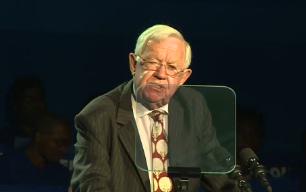
Gerardo Hernandez is one of the Cuban Five members who visited the Free State on Wednesday as part of their world tour.

Speaking at a media briefing at the Kaizer Sebothelo building in Bloemfontein, he said he hopes that new leaders and the younger generation will be able to keep going forward and maintain the legacy of their older leaders.

He said they were happy to see many active young people during their visit to the country.

Hernandez stressed that it is very important for the youth to be active as imperialism would want people to forget their history.

Meanwhile the US and Cuba have formally agreed on Wednesday to restore diplomatic relations on July 20, setting up a trip to Havana by John Kerry, who would become the first US secretary of state to visit the country in 70 years.

Kerry, speaking from Vienna, said he would visit Havana to raise the US flag outside the future US embassy, currently labeled an interests section.

“The progress that we mark today is yet another demonstration that we don’t have to be imprisoned by the past,” Obama said from the White House Rose Garden. “When something isn’t working, we can – and will – change.”

Following 18 months of secret negotiations brokered by Pope Francis and Canada, Obama and Castro announced in December they planned to reopen embassies and normalize relations. The agreement also included a prisoner swap.

Sparks backtracks furiously

Allister Sparks, notorious Boerhater, has apologised and blamed “senility” for his comments on Hendrik Verwoerd, in a bid not to push away more black DA voters.

Speaking at the DA congress in Port Elizabeth, he named apartheid architect Hendrik Verwoerd among “smart politicians” he had encountered in his 64 years as a journalist and analyst.

Yesterday, Sparks tried to cover his tracks: “In truth, Verwoerd and his policies appalled me.”

On the BDLive website , he explained the “context” of his senile remarks.

“I recognised that Verwoerd was a formidable figure. His dominance of his own party was total, to the extent that National Party MPs would hiss with outrage if any opposition MP ventured even a mild interjection. They hung on to his every word as he spelt out the details of his grand scheme of separating the races into ‘separate countries’.

“And he was clever, which is what I meant when I called him ‘smart’.”

Blacks took to social media to complain about Sparks’ vile racism, something the über-liberal Sparks hardly expected as he probably believed his own rants about “white racists” exonorated him from black criticism.

‘Our Rivonia trial lit the flame of revolution’: Denis Goldberg

Denis Goldberg
Denis Goldberg

Three silver-haired men sat together and recalled a court case 50 years ago that rocketed their friend and fellow freedom fighter to fame. To one man in the group that friend is simply “Nel.”

To the rest of the world he is Nelson Mandela, Nobel Peace Prize winner, South Africa’s former president, and a man who spent 27 years in jail for a cause he told a court in 1964 that he was prepared to die for.

Mandela, hospitalized since June 8, remains in critical condition. A grandson, Ndaba Mandela, said Tuesday that his grandfather is “very much alive” and responds when spoken to, though he is on life support in the form of mechanical ventilation. Mandela turns 95 on July 18.

Thursday marks the 50th anniversary of an event known in South African history as the Raid on Liliesleaf, a simple home in a Johannesburg suburb of Rivonia that served as the nerve center of activists seeking to overturn the white racist rule of South Africa’s apartheid era. Those arrested in the raid were charged with sabotage. Mandela had already been convicted of separate charges and was later tried and sentenced with those from Liliesleaf.

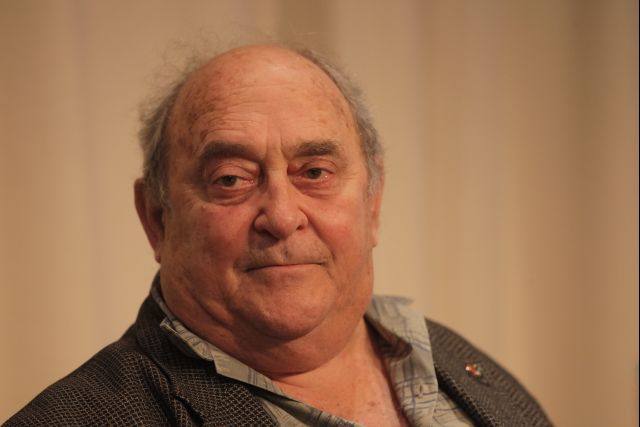
Denis Goldberg, 80, was one of the grey-haired men recalling the raid at a memorial for the event Monday evening. South Africa’s apartheid government, playing Cold War politics to win U.S. support, labeled those arrested as terrorists and communists. But Goldberg said the trial allowed those prosecuted in what became known as the Rivonia Trial to get their anti-apartheid views out to the public.

“It was a failed revolution at the time, but it was the spark that lit the flame,” said Bob Hepple, who was arrested at Liliesleaf but fled to England and did not face trial. “It’s great having a vision of freedom but you have to act to get freedom. It doesn’t fall from the trees.”

Mandela had previously traveled to Algeria to receive training for guerrilla warfare – violence that he never personally carried out but a strategy that he determined should be pursued by the African National Congress.

Writings discovered by the apartheid police in the Liliesleaf raid showed that Mandela had carefully pondered and endorsed the use of violence against apartheid.

“This was a thinking man. This was not a hot-headed leader,” Goldberg said.

Goldberg is one of the select few family members and friends who have visited Mandela since he was hospitalized June 8. Goldberg’s words last week that Mandela was conscious and responsive came in contradiction to papers filed in a Mandela family court case that described the former president as being in a vegetative state.

Goldberg and two contemporaries were invited to see Mandela by Graca Michel, Mandela’s wife. Goldberg said that Graca sat the three down and told them what she thought they should know about Mandela’s condition.

Goldberg retains the liberal feistiness that would have been required for a white man fighting for freedom for his black countrymen in the 1960s. He told Machel he would share the information about Mandela with the world. “I fought for democracy and I’m going to speak out,” he said.

“And Graca Machel said, ‘Yes, do that,'” Goldberg said.

Goldberg said it’s sad to see an old friend – once a strong physical presence – lying in bed “with a tube down his throat.” Mandela, he said, never addressed him by name. Goldberg is 15 years younger than the former president.

“For me he’s Nel and I’m boy,” Goldberg said. – AP

When the Mandela machine stops, what monstrous reality will return?

roodt_fbfoto

by Dan Roodt

Last night I woke up, checked my Twitter and, sure enough, there was a Beeld journalist tweeting at one or two in the morning that nothing was happening outside Mandela’s hospital in Pretoria, except the noise of the foreign journalists’ generators. I suppose they have outside broadcast units over there, vying with each other to be first on the air in Europe or the US to tell the world that Mandela is dead.

[followbutton username=’danroodt’ count=’true’ lang=’en’ theme=’light’]

Like Dan Roodt’s Facebook page

Mandela is that ultimate postmodern illusion: a fable, a South African simulation. Mandela sprung from a rural African village in the Eastern Cape, the most backward of South African provinces where the age-old African cattle culture is still being perpetuated and where subsistence farmers eke out a living on small patches of land controlled by their chief. From these primitive, rural surroundings Mandela was plucked to be put into global circulation, on gold coins and – more recently – even on our banknotes.

Shortly after Mandela’s familiar visage came rolling off the presses of the South African mint at Halfway House, between Johannesburg and Pretoria, the rand took a dive. It declined to over R10 per US dollar, as if the gods were saying: we don’t like what we see on our banknotes.

Announcing the new banknotes was the governor of the South African Reserve Bank, a Ms. Gill Marcus.  I caught some radio snippet where she was saying that “the new notes show our international icon, Nelson Mandela”. Her use of the possessive pronoun was quite revealing, because I strongly suspect that Mandela has always been a kind of extra in someone else’s movie or reportage. His incongrous first name “Nelson” was given to him by his white missionary teacher one day, a little bit like South African whites give their servants Western names like Petrus, Jonas, Sophia and so on.

Mandela never actually ruled South Africa. He was in office for two years but at the time, according to inside information, factions within the ANC fought over who should have control over his diary. Like Gill Marcus, they also had “their Mandela” who represented some kind of political capital to them, Mandela coins in a bag, as it were.

The bespectacled, frumpish Ms. Marcus is quite a bizarre central bank governor. She is no chic, French Christine Lagarde. When she occasionally announces that “interest rates are being kept unchanged” and rattling off a few clichés about the economy, she sounds like she is putting on an act. Simulating. Her suburban Johannesburg accent makes you think she should be pushing the trolley at some Northern Suburbs supermarket, filled with corn flakes and bottles of Coke, rather than running our central bank.

Gill Marcus also has a brother. His name is Gilbert. It sounds even more English than Nelson, so whoever christened him was somehow pretending to be distantly related to the House of Windsor too, or at least some or other British peer. The last time I saw Gilbert he was appearing in the Johannesburg High Court on behalf of the ANC and trying to defend the slogan “Kill a Boer, kill a farmer”, that innocent little ditty sung at political meetings of the ruling party. Mandela’s party, if you have a bad memory.

Marcus defended “Kill a Boer” by comparing it to the French national anthem, La Marseillaise, “not to be taken literally”. If “Kill a Boer” really is the ANC’s and Mandela’s “Marseillaise”, why is it not South Africa’s national anthem? one wonders. At least that would explain the explosion of racial and ethnic violence that commenced in South Africa, from the very moment that Mandela and his charming murderess of a wife (now ex-wife), Winnie, hoisted their famous fists in the air.

So Ms. Marcus runs the central bank and Mr. Marcus looks after freedom of speech for anyone out there who might want to go and kill some Boers. Interesting. Then they say that Mandela was all for “reconcilition” in South Africa. I remember one of his speeches where he told whites bluntly to emigrate if they didn’t like crime and violence or the corrupt ways of this party.

Lying in his bed at the Mediclinic Heart Hospital in Pretoria, Mandela has already been deified. As one news service put it: He is “a man considered by many to be a living saint”. No less. A woman with an American accent said on 702 Talk Radio in Johannesburg that “Mandela had performed many miracles”. I must have missed those. Did he turn water into wine? Did he walk on water?

However, it is precisely this unreal, messianic aspect of the Mandela cult that is so revealing about the void at the heart of the so-called post-apartheid state. Or the lies, the dissimulations, the propaganda, the make-believe. Whereas South African school books nowadays state that Mandela “went to prison because he was a leader” or “for his beliefs”, the truth is far less palatable. He was engaged in terrorist activities for a quasi-communist organisation getting support from the Soviet Union and left-wing groups and individuals in Britain. Until 2008 his name still appeared on a terrorist watch list in America, as USA Today reported:

“Nobel Peace Prize winner and international symbol of freedom Nelson Mandela is flagged on U.S. terrorist watch lists and needs special permission to visit the USA. Secretary of State Condoleezza Rice calls the situation ’embarrassing,’ and some members of Congress vow to fix it.”

But as Mandela stated once, without a hint of irony: “Some terrorists become heads of state.” Or saints.

How do we explain the Mandela cult? Last night some black man tweeted: “Mandela is South Africa’s George Washington, except he never owned slaves.” I beg to differ. Mandela had thousands of slaves, white slaves in the media who would stay up, upon a winter’s night on the Highveld.

I doubt that Mandela ever wrote a speech. They were all written for him, the make-believe black Messiah. Although, even calling Mandela “black” is something of a misnomer, as he was genetically tested and found to be partly Khoi, a descendant of the original hunger-gatherer groups that had inhabited the whole of southern Africa before they were driven out by the incoming Bantu tribes from further north. Within South Africa’s complex racial nomenclature, Mandela is really a Xhosa-speaking Coloured. When the notorious black nationalist and one-time spokesman for the ANC government, Jimmy Manyi, said in 2010 that “there were too many Coloureds in the Western Cape”, he could have included Mandela in that statement.

However, the fact that Mandela’s “blackness” is somehow suspect, adds even more to his status as a simulacrum. In a certain sense Mandela is a fugure who stepped out of white liberal fiction, an avuncular ex-terrorist who could be photographed in a Springbok rugby jersey in various poses. He would smile, exude bonhomie, and the crowds would go wild.

In essence, Mandela is the product of public relations, by design and by accident. He went to prison as a failed terrorist who got caught before he could do any real damage, although he harboured the intent. Out he came as a miraculous martyr, cameras flashing. Many people – most of them white and left-wing, if not communist – have toiled over the years to make him famous. Again without irony, people refer to the “Mandela brand”.

South Africa is an anomaly. As no less a commenator than Samuel Huntington stated in his Clash of Civilizations, the country imagined itself to be Western, yet it was rejected by the West. All the white, Western governments, with Bill Clinton’s American administration in the lead, dismissed South Africa in favour of the Mandela brand. He was the miracle cure, the panacea.

As it happened, he did not cure us. The term “witch doctor” is no longer politically correct and these days in South Africa you can get a prescription from your “traditional healer” who will invoke the spirits to cure you, while you perform some rituals or imbibe muti or medicine concocted of animal parts and herbs. Mandela, the ultimate traditional healer, has laid Western science low. Also political science. But, as so often happens after all the mumbo jumbo, he has not cured us. South Africa is still the same, the same population, the same ethnic and racial diversity, the same ills and problems.

Except, it has got worse. When Mandela and his merry band of exiles took over, there were fewer than 30 million people and no foreigners in significant numbers. Now the population has doubled and the ANC’s open-border policies have added millions of foreign Africans to our demography. It has resulted in xenophobic attacks and killings, riots, looting, as well as more strain on an already over-burdened infrastructure.

The old South Africa was a besieged state, besieged above all by Mandela’s white slaves, the journalists, who vilified it at will, without regard for accuracy or measure. They had introduced the culture of dissimulation that has slowly gnawed away at our meanings until now, when we have nothing left.

South Africa is an empty shell, a failing state. Its criminal levels of corruption have transformed it into an Ali Baba’s cave to be looted constantly. It is not so much Mandela’s legacy as that of his puppet masters, whoever they might be. He was just the extra on the stage, the figurehead, the aged male model in his trademark gaudy shirts.

Once South Africa had an identity, a sense of coherence. It may be hard to believe now, but at times in the past it enjoyed some esteem. That old South Africa was tied to Afrikaners and their policies which were subsumed under the increasingly odious propaganda term, apartheid. Many babies were thrown out with the bath water.

In a real sense, South Africa as a country has been abolished. We only have myths left. Or vacuous, vapid slogans that I do not even want to repeat here. We imagined that we were America, that Mandela was a Martin Luther King that had come to save us. But despite the American fast-food brands on all our street corners, this is not America.

Of course Mandela resonated with the American racial imaginary, that of the tens of millions of guilt-ridden white Americans after the civil rights movement, It accounts for his meteoric rise to being a media colossus. But the media machine that created him, that made him rise from the muddy puddles of Qunu, is just Tinseltown. It has no substance.

In E.M. Forster’s dystopian novella, The machine stops, everyone lives in a great machine that supplies them with their daily diet of illusions and allows them to communicate freely, a bit like the internet today. However, there is moment when the main character says to his mother in another room, in another country: “The machine stops.” After that, all hell breaks loose. At first slowly, then apocalyptically.

This is not to say that I am predicting that there would be genocide or the wholesale slaughter of whites when Mandela dies. But the set of illusions associated with the Mandela brand will not survive him.

At the very least, the hangover will be immense. South Africa, or the patch of polluted, mined earth that still goes by that name, no longer exists, apart from still issuing passports and identity papers. Under successive waves of negative and euphoric propaganda, it has lost its sense of the real, a bit like a scizophrenic patient. It has multiple identities: it is jabbering, now American, now African, then it wants to don the Springbok rugby jersey.

One nation, one beer, it mutters to itself.

But some day soon the reality check will have to come, when there is nothing left to loot, when Gill Marcus’s reassuring platitudes on the rand will no longer suffice to delude us and the rest of the world.

Vorster thought that the alternative to reform was “too ghastly to contemplate”. That alternative was revolution. And Mandela was the archangel of revolution that had brought us that ghastly alternative: farm murders, racial demagoguery, bankrupt municipalities, quotas, never-ending riots and mayhem.

I daresay there exists a level of ghastliness that we have not yet seen, of the Zimbabwean order, in the guise of “land reform”, hyperinflation and even more violence than what we have already become inured to.

That monstrous reality may not be very far.

[followbutton username=’danroodt’ count=’true’ lang=’en’ theme=’light’]

Like Dan Roodt’s Facebook page

‘If you want revolution, stop this party’

While Julius Malema may have little power left politically, he certainly wielded his weight at the MTN South African Music Awards (Samas) this weekend.

The disgraced former leader of the ANC Youth League made sure that South Africa’s current favourite musician, Dr Malinga, got to perform in the early hours of yesterday morning at the Samas’ infamous pre-party, hosted by independent record label Kalawa Jazmee.

The Kalawa party is traditionally one of the biggest parties during the Sama weekend at Sun City in North West. This year the party saw the label’s top artists, including Professor and Mafikizolo, on stage, with an impromptu appearance by Trompies.

By 3.30am the party was still in full swing and fans of the independent record label were demanding more. But the management of the Sun City Shebeen decided it was time to stop the party before Kalawa’s popular new artist, Dr Malinga (of Via Orlando fame), had to perform.

But according to one observer, Malema then jumped on stage.

“Malema grabbed the microphone and said to the white manager: ‘Chief, have you seen a revolution? If you want to see black people revolt, then stop this party.”

He then instructed Kalawa boss Oskido to play the CD and Dr Malinga to do his traditional leap dances on stage. The crowd apparently went ballistic, chanting “Juju! Juju! Juju!”

Co-director of Kalawa, Oskido, played down the incident.

“Julius asked the club owner if Dr Malinga could play. He was very polite,” said Oskido yesterday.

Malema was however just one of the high-profile guests invited to the 19th MTN Samas. Other guests included Generations actors Menzi Ngubane and Sophie Ndaba as well as director Rapulana Seiphemo.

The big winners for the night were Khuli Chana and the granddaughter of IFP leader Mangosuthu Buthelezi, Toya Delazy, with three Samas each.

Khuli Chana won best male and best rap as well as best album. Delazy won best newcomer, best pop as well as best producer for her debut album, Due Drop Deluxe.

The hotly contested best dance award, for which the nominees included Oskido, Vetkuk vs Mahoota, Pascal & Pearce and DJ Pepsi, was won by Black Coffee.

Zebra & Giraffe won best rock while best kwaito was won by Kalawa Jazmee artist, Professor.

Kalawa Jazmee provided a highlight when they ended the show with Vetkuk vs Mahoota. They performed their massive hits Stokvel and Via Orlando. When Dr Malinga kicked his way on stage for Via Orlando the crowd rose to their feet and screamed in excitement.

Lira provided a beautiful moment when she performed at the Samas for the first time. Her interactive show included fashion as well as dancers. The Samas were broadcast live on SABC1 with a viewership of five million.- IOL

Mines getting nervous as the revolution gains momentum

By Mike Smith

Bobby Godsell, the former Anglo American boss, Eskom boss and friend of Cyril Ramaphosa, the ANC’s chief negotiator at Codesa, said that the deaths at the Marikana mine was “outrageous”.

“In an apartheid South Africa with no (democratic) constitution you can say that violence was regrettable and understandable,” he said during a discussion at the Gordon Institute of Business Science in Johannesburg the other day.

“In a constitutional democracy, (violence) is not understandable. It is completely outrageous.

“People must be held accountable for those murders.”

Funny how Bobby Godsell seems to be concerned about 34 black miners, yet he has never spoken out against farm murders. More than 3 000 white farmers murdered since his beloved ANC took over in 1994… to date not a single word by Bobby Godsell.

Bobby Godsell says Marikana violence ‘outrageous’

He ain’t seen nothing yet. The situation at Marikana is far from over. A few days ago they marched to the Andrew Saffy Memorial Hospital and had another standoff with the police and another dead body (hacked to death with pangas) was found.

Yesterday morning at the Goldfields KTC West mines at Driefontein near Carletonville, Julias Malema said, “The mines are paying millions of rands of protection money into Jacob Zuma’s trust accounts.”

He called for a national strike, five days every month, and to make the mines “ungovernable” through peaceful means until their R12 500 wage demand was met.

Malema also confirmed that he was “under heavy police investigation” because he was accused of having instigated the violence at Marikana’s Lonmin mine.

Eight days ago the media announced with great fanfare that Malema’s arrest was imminent.

At the time there was not a single newspaper in the country that did not run with this nonsense. Look now. Nothing happened to Malema. He was not arrested and he is still visiting mine after mine fomenting his hatred towards whites and inciting violence and revolution in South Africa and the ANC lets him be.

Like I have always said, Malema says the things the ANC cannot say openly. His so-called banning from the ANC was just a scam. He is still their loyal agent and lapdog, carrying out the true agenda.

AT other mines, miners are also downing tools. More than 200 mine workers at Golfview Colliery near Ermelo have downed tools following a breakdown of wage negotiations with management.

Zwelenzima Vavi of Cosatu said before Marikana he spoke of South Africa sitting on a ticking time bomb, but now we should be speaking of exploding bombs.

Vavi said superstitions and elements of backwardness on the part of workers also needed to be addressed. He obviously referred to the Sangoma “Nzabe” who promised the miners to be bullet-proof after taking his Muti and the miners blaming their slaughter on a rabbit they killed earlier in the day.

Just like the rest of us, Vavi is also waiting for the report of the judicial enquiry. If it come out that the police indeed shot miners in the back, hunted them down and drove over them, I am afraid nothing will be able to stop the revolution.

To Communists there can be no revolution without extreme violence. They believe brutal violence is the midwife of revolution…

Don’t take my word for it, but South Africa is in for a rough ride in the next few months…all we need on top of the current explosive situation is for Nelson Mandela to croak and it will be the catalyst to disaster.

The ANC’s second revolution (okay, ‘transition’) against whites

by Dan Roodt

South Africa, like Cuba, is the last outpost of communism. Elsewhere in the world, experiments in collective farming and nationalisation have been abandoned as the grim mistakes of nineteenth-century radicalism, issuing forth from the bearded Karl Marx, scribbling away in the British Library.

However, behind Karl Marx there was a capitalist, Friedrich Engels, who bankrolled him and actually paid him to pour forth his books and pamphlets that would sow discord and resentment for more than a century.

The ANC, like many of the “tenured radicals” at South African universities, loves Karl Marx. The class struggle is their favourite nursery tale. And if you could add that the capitalists are actually white, then it’s no longer Little Red Ridinghood; it’s Little Red Soldiers marching from one conference to the next.

Unlike most journalists and newspaper pundits, I have actually read the ANC’s document on “the second transition”. Not so long ago, the ruling party – maybe we should capitalise “Party” as is communist practice – entertained us on the notion that South Africa was going through a two-stage revolution. Classical marxist theory holds that all of human history advances through a succession of “epochs”, culminating in “the most advanced stage, the classless society, or communism”. That is when people start queuing for bread, potatoes, shoes or waiting ten years to buy a two-stroke-engined car with nineteen-fifties technology.

At one point Cuba was going back to the bicycle. Not that I have anything against bicycles; on the contrary. Quite a few of our BEE moguls and traffic cops taking bribes alongside the roads, bulging out of their blue uniforms, could do with some exercise.

But to go back to stone age economic principles – “sharing” things around the camp fire – is a great leap backwards, if you will pardon the pun. In fact, Mao’s “great leap forward” was another communist cliché floating around the ANC’s Midrand conference yesterday.

According to Marx and Engels, there is first a political revolution, alternately called a “bourgeois revolution”, before the real transformation, the social revolution, begins. In the case of Russia, the “capitalist epoch” lasted only a few months, from February to October 1917, but we need not detain ourselves with such finer details. In ANC parlance, the transition of 1994 when De Klerk fired all his generals and handsupped before the Party’s militia, Umkhonto we Sizwe, was the political or “National Democratic Revolution”.

Until now, the second or social revolution has been chomping at the bit within the Luthuli House stables, ready to propel its bright-eyed, sushi-chomping jockeys into the apocalyptic dawn.

According to Jacob Zuma yesterday, the enemy, the class enemy, to put it more politically correctly, seems to be so-called white males. South African marxists have always confounded race and class. Mbeki, the great black marxist – or should I use the fashionable euphemism, “progressive” – intellectual, used to rave quite frequently about the white ruling class while he was still president. Or maybe Mbeki was just too habitually drunk to realise that putting yourself forward as a victim while you are wearing the crown represents a colossal contradiction.

However, not so long ago I read that 75% of white males over 50 were self-employed. That is only logical as BEE and affirmative action have already swept South African corporate life, not to mention the civil service and municipalities. Most municipalities are now all-black, with whites actually doing the cleaning. Our municipalities must have the most highly educated cleaning staff in the world; apparently some of the people wielding brooms and mops have postgraduate qualifications. But they happen to be white, which is a fatal handicap in the Republic of South Africa.

Younger white males are hanging on in the SME’s where racial headcounts are pursued with lesser fervour. In fact, a survey that I found on the internet yesterday showed that one in four white males of all ages was actually self-employed in 2006. By now the figure must be far higher.

So maybe the ANC, in its racial-marxist zeal, pursuing the Second Coming – wasn’t Mbeki also fond of quoting his favourite Xhosa poet, William Butler Yeats? – is barking up the wrong tree, “full of passionate intensity”.

One of the few people I mostly agree with in South Africa, is liberal historian Hermann Giliomee. I think that is because we both look at the current situation from the vantage point of history. Not… fantasy. He recently told me that he was just glad to have severed all ties with universities. In fact, the universities have become little ANC kindergartens, producing the type of pompous, quasi-marxist “papers” of which the ANC’s latest policy document is but a carbon copy.

We have to acknowledge that race, not class, is what the South African revolution is all about. That is why the white male bogeyman will be brandished, even if most of us white males eke out a measly living doing odd jobs on our computers in SOHOs. For those less familiar with American acronyms, that is “small office home office”. While the BMW-driving, black bourgeoisie are feasting out there, living it up in five-star hotels and bleeding this country dry.

To understand black identity, we have to look at America and a book such as Jared Taylor’s recent White Identity – racial consciousness in the 21st century.

In a nutshell: whites, with the exception of a few so-called “right-wing Afrikaners”, no longer have an identity. Blacks, on the other hand, are completely lacking in any European class consciousness. Their only consciousness is one of race. Not being very culturally assertive and preferring English as their means of communication, their only identity is being black, which may be further enhanced by hating whites.

Ultimately, the second revolution is not about poverty, equality, redressing past wrongs or any of the usual clichés offered by the ANC. It is about the black elite affirming its own identity.

Like Narcissus, they are looking at themselves in the mirror, whispering: “I am black, so black.” All other consequences flow from that existential premise and experience.

When I was a student, some of the campus radicals used to call it “black-being-in-the-world”. It had a kind of Heideggerian ring to it.

South Africa is going to pay a very high price for that singular mode of being.

Second revolution against whites must come, says Zuma

Johannesburg – The ANC’s second transition is necessary to overcome the compromises it made in the fight for democracy, President Jacob Zuma said on Tuesday.

“One of the causes of the slow pace to economic freedom is that ahead of [the first democratic election in] 1994… we went through a negotiations process,” Zuma said in Midrand.

“We had to make certain compromises in the national interest, and these were absolutely necessary to make. We had to be cautious about restructuring the economy in order to maintain economic stability and confidence at the time.”

Zuma was opening the policy conference of the ruling African National Congress.

He said the apartheid era’s economic power had remained intact.

“The ownership of the economy is still primarily in the hands of white males, in which it has always been.”

A document on the second transition was one of the ANC’s 13 policy documents which would be discussed during the four-day conference.

Zuma said the second transition would make the country a “true democratic developmental state… which has a number of instruments it can use to facilitate change”.

The first transition was still important because it had ushered in an era of democracy in South Africa.

“The time has come to do something more drastic to accelerate change towards economic transformation and freedom.”

Zuma asked delegates to discuss the notion of a second transition when dealing with the strategy and tactics document.

“It is time to ask questions about the present and future… the last 18 years was the first transition. We are calling for a dramatic shift… to deal with the triple challenge[s] of poverty, unemployment and inequality.”

– SAPA