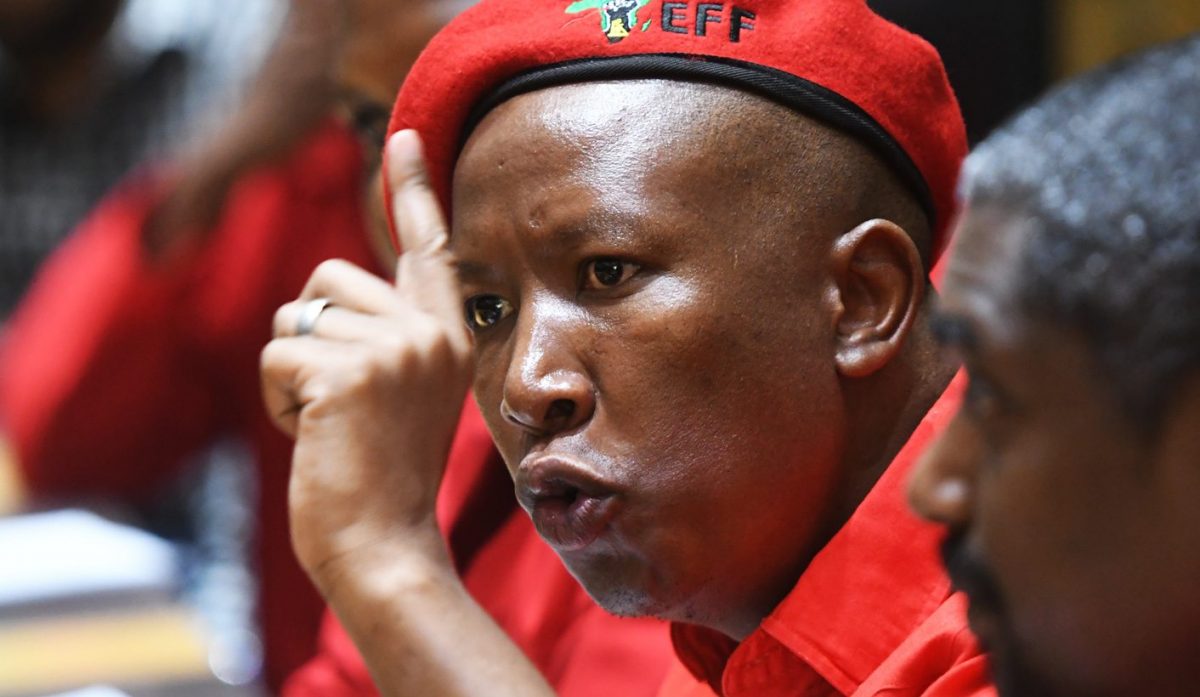
Letter: The saga of Senekal

My grandmother was born in Senekal. There were a few English-speaking families in the area at the time. She however married an Afrikaner. He was one of those men whom the whole world admired at the turn of the penultimate century, those brave Afrikaners who fought the British Empire to try and maintain their sovereignty, their culture and, most of all, their integrity. There are not too many of their type around today, especially when one reads the narrative in a Beeld article (23.10.20) of Mr. Nick Serfontein who calls himself a megaboer. Clearly he’s one of those farmers who has made a lot of money and who was perhaps ambiguous in his evaluation of the devious sellout of his people twenty five or so years ago based on a false promise; he perhaps hoped that by not rocking the boat, he and his chums would be left alone to continue unhindered with their prosperous enterprises.   But many of these big farmers seriously miscalculated: the new ANC government were never able to sustain themselves, either out of power or with power. Their parasitical policies would lead to the ruin of South Africa, and there is not much Mr. Serfontein can do about this fact.. His famous Thuma Mina letter to President Ramaphosa in May 2018 offering to help with “transformation” in empowering emerging farmers was brilliant in concept, and much of what he suggested was implemented. But in his current Beeld  article he complains bitterly about the lack of political will by the government to attain meaningful black farm ownership and success. Then there’s the crime and the farm murders and the stock theft and the veld fires and the threats of land expropriation ……  Yet strangely, he grumbles about the “rough” types who came to Senekal on Friday 16 October and who were not necessarily farmers, and the bikers and other so-called extremists who continue to give the Afrikaner “a bad name”. He is upset about the Afrikaner’s image in the world! What a priority!

A friend and I visited Senekal on that Friday, eager to obtain a seat at the courthouse trial of two men who allegedly brutally  murdered a young farmer who caught them stealing cattle. His mutilated body was tied to a fence post. This gruesome act triggered something within all of us: a revulsion about some of the people with whom we share this country. It was reminiscent of the Mau Mau terror tactics used against the British in pre-independence Kenya. We walked towards the court, only to be told by police that entrance was reserved for “family members only”. (Later we saw pictures of the Economic Freedom Fighters’ (EFF) leader Julius Malema sitting next to Minister of Police Bheke Cele in the court. So much for police impartiality!)

Virtually every street in the town was blocked off with barbed wire to accommodate the EFF. A number of stages had been set up for EFF speakers at various street venues from where massive loudspeakers head-splitting music blared and which carried raucous speeches from EFF officials. No other political party or grouping appeared to have applied for a speaking corner in town. Where were the Afrikaner groups ready to speak out for the farmers in response to the EFF’s noisy presence? We moved within the EFF crowd and heard their officials lambaste whites, racist Afrikaners, and the ANC government.  Calls to “kill the boer, kill the farmer, take the land,  expropriate without compensation” were relentless. “Whites have stolen our land” they yelled at the crowds. “Amandla” (power) was met with a thousand  “Awethu’s” (to us!).   Malema then appeared to hysterical screams and shouting. It was hot but his followers stood their ground under the beating sun. They were mostly underfed and poorly clothed – South Africa’s have-nots!  But EFF officials on the stage were all well-fed. No masks were in sight, and social distancing was someone else’s slogan!

The speeches were about hatred and victimhood. The EFF rhetoric fed into the poverty and the homelessness and the dreams that would never come true. There was no mention of plans for jobs, or fixing the infrastructure, or possible housing for the dispossessed in the red berets’ speeches. It was all about avarice, resentment and the urging their followers to take what is theirs by right! In effect, the EFF had simply taken over Senekal. Businesses closed down. Large transport trucks on their way to somewhere else had to be deviated to side roads. Dustbin rubbish was strewn over the streets, and cement parking posts were broken and dumped in the middle of the roads. Thousands of EFF supporters milled around: no shop was open. There was nothing to drink and nothing to eat for the crowd that had waited so long in the unremitting heat for the messiah. He and his friends had temporarily disappeared to have lunch somewhere.

In the Beeld  article, Mr. Serfontein said we mustn’t take any notice of Julius: we must ignore the EFF. We mustn’t stoop to their level, it was implied. This attitude is very much shared by many liberal  Afrikaners who don’t like to be seen as aggressive or retaliatory. They like to be known as “moderate”. So we ask Mr. Serfontein – what if Malema decides to take over Kroonstad, or even Bloemfontein. Who will stop him? He smells the weakness of the Afrikaner, continuously told by their church leaders and their passive media to remain calm and to get used to the status quo. The word “resistance” is not in their vocabulary. . Violence is anathema to these pacifists, but it’s not anathema to the EFF or the ANC. The latter came to power with violence as their trump card. Nelson Mandela refused to renounce violence as a condition for his release in 1990. He knew how to get his way with the Afrikaner and so does Julius Malema.

The EFF obtained permission to protest in Senekal. Why would permission  be denied them in Kroonstad? And if it were denied, wouldn’t the EFF go in anyway? Who would stop their mobs from tearing Kroonstad apart? What if they arrive at Mr. Serfontein’s farm, armed and violent and demanding to enter his property? Will Mr. Serfontein ignore them then? In a war, ignoring your enemies is lunacy. In Senekal on that hot Friday, farmers should have had a speaking corner. Malema should have been told in no uncertain terms that exhorting his followers to kill the boer will have consequences. One more farmer killed and action will be taken. And if Mr. Serfontein feels nervous about this, this action doesn’t have to be violent. A first step would be to tell the EFF to grow their own food. Farmers will sell their produce direct to selected clients. If the government does nothing to stop these public exhortations to kill farmers, then the boers must make a plan. Mr. Serfontein should be invited to come up with some suggestions.

We are at war in South Africa. It has been declared against a sector of the South African population by a South African political party, publicly and confrontationally. When war was declared against the boer republics at the turn of the penultimate century, those brave men didn’t ignore the  redcoats. They fought for their land and their integrity. The fact that they lost was due to their numbers, not cowardice. Ignoring Malema gives him a free pass to extend his violence and rabble rousing. More farmers will lose their lives.  On Friday 16th, EFF member of parliament  Mbuyiseni Ndlozi exhorted the crowd with the song “Bizani iFire Brigade”. These words mean “Call the fire brigade. Burn these boere”. During the week following, more than 130 000 hectares of veld was destroyed by fire, with 35 000 ha destroyed in the Northern Cape and 40 000 ha in the North West. Livestock, game, grazing and properties were burnt, and farmers say it will take up to three years to get these farms back to proper production.

Ignore the EFF, Mr. Serfontein? You do so at your peril. Like so many of his ilk, Mr. Serfontein is constantly worrying about the “image” of the Afrikaner overseas. Theuns Eloff is another hand wringer. Various church men are constantly telling their flock to “be calm” while fellow Afrikaners are being murdered in their beds, on farms and in the cities. Why is this? Israelis don’t worry about public relations when their country’s security is at stake. The USA believes in the end justifying the means. Guantanamo, extraordinary rendition and their secret torture prisons throughout the world attest to this. Then there’s Russia where “image” is considered something of a joke. Mr. Serfontein may be surprised to know that the image of his type of Afrikaner overseas is that they are the world’s laughing stock. Where else would any other sovereign nation hand over its people lock stock and barrel to a bunch of third world gangsters? No wonder you lost your country Mr. Serfontein. Soon you will lose your livelihood and your people will be reduced to paupers in the land of their birth. Your weakness and your obsession with “moderation” and your image is your Achilles heel.

It is not surprising that the Afrikaans newspaper Beeld gave a full page to Mr. Serfontein’s bleatings. His 2018 letter to President Ramaphosa didn’t do the trick. Nothing will do the trick with the ANC except well-thought out retaliation. The ANC respects power and it exploits weakness. But the Beeld’s relentless brainwashing of the Afrikaner since the mid seventies has worked well. It’s media crucifixion of Dr. Eschel Rhoodie during the seventies Information debacle, and its insidious exhortations for Afrikaners to support Mr. de Klerk’s “yes” vote to “share power” with the ANC was well executed. The Beeld has not let up, even today when it is faced with the tragedy of its “compromise” policies. Thank Heavens for social media’s reality reporting. Buying the Beeld,  and subscribing to News 24 is to feed the crocodile that is destroying you. Stick to social media. It could save our lives and our country.
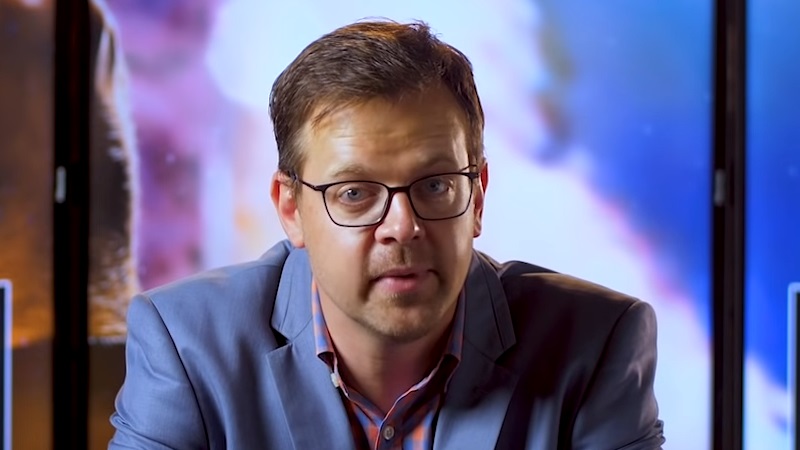
Dan Roodt: Afriforum and Ernst Roets’s betrayal

Recently, Ernst Roets sought to assure the world that Afriforum “rejects white nationalism”. Whatever he means by that is open to interpretation but he saw fit to characterise me as “white nationalists” in his statement.

I am the father of dizygotic twins, but am not myself a Siamese twin so that one could refer to me in the plural. Unless Roets wanted to show that he was now venturing so far out on the spectrum of PCspeak that he was referring to “he” and “she” as simply “they” as some LGBTI activists do. According to Wikipedia, “In the early 21st century, use of singular they with known individuals has been promoted for those who do not identify as male or female”.

Now, I have news for Ernst Roets. I definitely identify as male, even “toxically male”. I do not wear make-up or dresses, so there is no need for him to refer to me in the plural or “singular they”, as the case may be.

However, his link to a News24 article, contains a previous unwarranted attack on me when his colleague Kallie Kriel sided with the American Daily Show, who fraudulently edited an interview with me to convey exactly the opposite of what I had actually said, to call me a “racist”.

There may be honour amongst thieves, but not among Afrikaners being called “racists”. I think both Kallie Kriel and Afriforum have been vilified as racists more times than I have, but they instinctively side with the enemy rather than with their fellow Afrikaner. Or whites.

This reminds me a bit of a fascinating conversation I had with PW Botha not long before his death. Speaking to him was almost like dialing up history on those old communal telephone lines, with voices activated out of the past. PW Botha had known or met many famous twentieth-century figures, including of course Margaret Thatcher, as well as the first president of Israel, Chaim Weizmann, who had given him a sword. But as a young man in the NP, PW had also served as an aide to Dr. DF Malan.

Apparently PW had quizzed Malan on why the split of 1933 had taken place between the Hertzog and Malan factions. Malan had remained silent for a while, while PW created the same anticipation in me, listening to his firm, well-articulated voice, even at his advanced age. When he spoke the word, it was almost as if I could hear DF Malan pronouncing it himself: “Afrikanerverraad.” That one, terrible word said it all, a century of betrayals that stretched from the Anglo-Boer War right to the moment when Tertius Delport was begging FW de Klerk not to surrender completely to the ANC, one early morning in the Union Buildings prior to the release of the so-called “Record of Understanding”.

Roets’s denunciation of “white nationalism” by referring to me has no other logic than that of a bizarre, atavistic lapse into Afrikanerverraad. Instead of citing any of my multifarious writings, of which there are about a million words scattered on the internet, he prefers linking to Adriaan Basson’s stereotypically liberal News24 with its regular diatribes against both whites and Afrikaners. Clearly, in his zeal to distance himself from “white nationalism”, Roets would collude with the looney left, perhaps even Julius Malema or Andile Mngxitama, with whom Afriforum seem to skirmish in the courts for light entertainment but does not criticise their black nationalism.

As Roets puts it, “black nationalism could be equally problematic, but that is not the point of this article”. No, black nationalism, which is threatening to plunge South Africa into the kind of downward spiral reminiscent of Zimbabwe or Uganda under Idi Amin, may be tolerated. The real danger against which Roets seems to fulminate is “white nationalism”. He defines it thus:

“White nationalism has been described in many different ways, but essentially it boils down to promoting the interests of white people, because they are white.”

Then he goes on to explain that Afriforum has a “communitarian approach” and that “people freely associate with particular communities” that are “naturally organised along cultural, linguistic or religious lines”. Also, “Afriforum does not have a focus on the rights of the ‘white community’ and would object to such a description…”

So whites being singled out for affirmative action or racial quotas in sport or even genocidal rhetoric such as that spouted by Malema or Mngxitama will no longer be defended by Afriforum, being opposed to “white nationalism”. We know that South African whites are not popular, neither with the ANC nor with the mainstream media with whom Afriforum is so cosily aligned, especially News24, so what Ernst Roets is really intimating to us is:

“Whitey, you’re on your own.”

But, Ernst Roets diffidently assures us, it is

“not inaccurate” to “describe Afriforum as a conservative organisation… while we dissociate with the stigma that is today associated with conservatism as an ideology that seeks to return to the past, or that objects to change merely because it isn’t able to deal with change, or that seeks to preserve heritage at the expense of progress”.

Roets’s defence of “conservatism” sounds about as wishy-washy as Afriforum’s objection to the blanket ban on the 1928 flag which it would never display itself and “discourages” people from displaying, but would defend as an expression of “freedom of speech”. So I suppose in tune with Roets’s Canadian-style, multicultural “communitarianism” whereby “people freely associate with particular communities”, including a few die-hard Afrikaners and KhoiSan, but also the communities of Rastafarians, gays and swingers, Afriforum would always be there for them, provided they have signed a debit order.

Gay white nationalists exist and possibly there are conservative Christian swingers too, who knows? Afriforum would reject the former but embrace the latter, or at least it would champion non-nationalist white gays. Nationalism seems to be the thorn in the side here.

Given that it does not itself fly the oranje-blanje-blou, Afriforum would do well to follow the example that I saw at the Canadian embassy in Warsaw in 2018, and hoist the gay flag! After all, no-one would be offended and suspect it of “seeking to preserve heritage at the expense of progress”.

Take it from me, Ernst, if Afriforum had to hoist the gay flag above its headquarters it would be seen as downright progressive and I am sure Eusebius McKaiser would give you at least an hour’s worth of enthusiastic airtime on Radio 702.

Gay pride is kosher, but not white pride, as we know. Call it the Zeitgeist or the dominant ideology, but we are all painfully aware of the weight with which it presses down upon us.

Apart from its casual betrayal of many committed and patriotic Afrikaners such as myself, I see other problems with Afriforum’s lack of conviction in the face of the leftist sewage pipe (“stigmatising and stereotyping”) that is trained on anyone daring to stand up for the rights of the white minority in South Africa. As many people have already said: One does not choose one’s race, despite what the “whiteness theorists” say. Being white, is not something you can be cured of.

Guillaume Faye who died early this year, associated with the so-called “new right” and identitarianism, often stressed that one does not choose one’s identity, but is at least partially defined by one’s enemies. Even if every white in South Africa had to abjure “whiteness” (I must apologise for using this obnoxious term again but it seems apposite), the DA, ANC and all the black-nationalist parties left of it would still see us as “whites”. We are criticised and attacked, sometimes as Afrikaners, but more often simply as “the whites”.

Again, this is none of our own choosing. The moment we object to being insulted, attacked and legislated against as whites, we will be stigmatised as “racists”, “fascists”, “white nationalists”, “heteronormative toxic males” and every other flavour in the leftist cookbook.

Evidently, Afriforum is not up to weathering such a semantic onslaught and would prefer to scurry down the multicultural rabbit hole, together with Justin Trudeau, who may or may not be wearing Islamic robes or his gay-pride costume, depending on the day of the week.

Afriforum seems to have some courage in taking on the powers-that-be. But not enough, I am afraid. In many of its fights, and not only regarding the flag, it seems lukewarm, without passion. Is that what we need, in these times of decay and every-day terror?

The old National Party did not really fight the ANC so much as those Afrikaner parties and groups to the right of it such as the CP, HNP and AWB, Afrikanervolksfront, Freedom Front, etc. Having divided the conservative or righ-wing movement in South Africa, is it any wonder that the NP finally capitulated to the Marxist ANC and South African Communist Party? Afriforum will enter into agreements with Malema’s EFF, such as it did around the “Kill a Boer” song, yet it would not be seen in public, let alone make an agreement with Afrikaner organisations it deems “nationalist”.

It seems to have taken a leaf from the American “cuckservative” handbook: to make youself more respectable to liberals, the left and, of course, the mainstream media, you have to attack other conservatives and stigmatise them as “right-wing” and “nationalist”. The ANC or the EFF does not have to fight Afrikaner organisations; Afriforum will do it for them, in its quest to become the cuckservative champion in South Africa. Soon Ernst Roets will even call Helen Zille of the former Progressive Party and Rand Daily Mail, “right-wing” and “racist”.

Recently, Helen Zille told Max du Preez during their tête à tête recorded on video: “Max, everybody on Twitter calls everybody else ‘racist’.” But I suppose Afriforum wants to make sure it is part of the crowd calling others “racist”, instead of at the receiving end of the insult, where they currently find themselves.

However, the thing that bothers me the most about Afriforum is its lack of intellectual rigour. It reminds me of the National Party in its death throes, when it was everything to everyone. It was finally swallowed up by its arch-enemy, the ANC, under Kortbroek van Schalkwyk. In its many compromises and tip-toeing around fake lexical traps (such as “white nationalism”), the organisation is betraying a fear of being “caught out” by the PC mob, rather than any clear strategic thinking or set of convictions.

In the face of extremism — even the ruling party is extremist in many of its policies — Afriforum is offering us a few half-hearted clichés about “community rights” and “freedom of speech”. I am almost tempted to say that, confronted with white genocide (which many overseas observers are discerning in South Africa, given the violence and arsenal of laws and policies deployed against us whites), Afriforum is offering us a band-aid or some aspirin.

It is too scared or too shallow of intellect to think through to the heart of the problem which is, admittedly, complex and not easy to circumscribe or to find solutions for. In many respects, South Africa is the first quasi-Western society collapsing under the weight of its own unmanageable diversity, be it ethnic, ideological, cultural or linguistic.

My oft-repeated slogan is that the National Party did not fail due to a lack of resources or funds. It had a functioning state, media, embassies in the most sought-after parts of Western capitals, a powerful army, dedicated police and universities full of loyal academics. Ultimately its failure was an intellectual one, because it was not prepared to confront its enemies in the battle of ideas. Long before it embraced an ANC takeover, it had capitulated intellectually.

Afriforum might be a well-financed NGO, taxing hundreds of thousands of Afrikaners every month with debit orders, but it has nothing compared to the resources of the former National Party government. The current state can fight it in the courts every day, using taxpayer funds.

Our only hope is that there could arise a group or organisation that would fearlessly expose the moral and ideological bankruptcy of the ANC-terrorist regime and its fatal grip on the country, no matter how much the deranged leftists in the media and in the ANC itself would hurl their usual abuse: “racist”, “fascist”, “white nationalist”, “white supremacist”, “toxic male”, etc. It must not only confront and break down the dominant ideology, but also offer an alternative vision for the country, a way out of the present impasse.

Alas, Afriforum is not that organisation. It and its “head of policy and action”, Ernst Roets, are too frileux, as the French say. Which one might translate as: “cautious”.

Malema pleads for black unity

Julius Malema pleaded with Alexandra residents on Monday to embrace black Africans in a bid to save black racial unity.

The EFF leader reminded his racial equals of the critical role that African countries had played to overthrow white rule.

He told residents to stop competing with black foreigners or to blame black foreigners for their suffering and to blame the government instead.

Shots were fired at a group of EFF members as residents waited at the corner of Fourth Avenue for Malema to appear.

Shots, it seemed, were fired from the Madala hostel where Zulu residents were holed up fearing some attack from the EFF Pedi’s. One EFF member was shot in the leg and rushed to hospital.

Malema’s visit to the area followed the xenophobic attack of Mozambican Emmanuel Sithole in Alexandra on Saturday.

Police have arrested all four men in connection with the murder.

EFF targets mining magnates

Closing the EFF’s national people’s assembly in Bloemfontein yesterday, party president Julius Malema called on members to “block mines” in which magnate Patrice Motsepe (African Rainbow Minerals), Deputy President Cyril Ramaphosa ( Lonmin) and National Assembly Speaker Baleka Mbete (Gold Fields) had interests.

Malema described the proposed mass action as a protest against the way in which black economic empowerment benefited only a few wealthy, politically connected individuals instead of communities.

“We target these companies not because of the perceived ANC sympathies of the beneficiaries but because the money should be put to use to empower communities, and these people are the faces of the few who have become rich rather than creating community trusts,” he said.

Malema said yesterday the EFF intended always to act “within the law and the constitution. We are a disciplined organisation.”

He said land grabs were necessary to prevent the “land issue from leading to the civil strife it has caused in the rest of Africa”.

Police recently removed land invaders organised by the EFF from an area near Nelmapius in Pretoria. The squatters christened the area Malemaville.

But political analyst Ralph Mathekga said the EFF was being “disingenuous”.

“The biggest contradiction with the EFF is that you have a party that agrees to be in parliament and therefore agrees to be bound by the [legal] processes of that institution but chooses to use extra-legal means to achieve its objectives. It is disingenuous,” he said.

“[Malema’s] words would carry weight, perhaps, if they had refused to take part in elections and chosen to go outside the parliamentary process, but they have chosen not to do so. I think they are concerned about being seen to be swallowed up by parliamentary processes. No one is stopping them abdicating their positions in parliament.”

With only 25 seats in parliament, the EFF has so far failed to influence policy positions. It has instead resorted to showmanship, best characterised by the August 21 “pay back the money” chanting.

Political analyst JP Landman said the EFF’s utterances were good for democracy.

“What it has done is force people to take a stand. Since the EFF has come to parliament, the ANC has come out saying it is committed to land reform.”

The ANC, Landman said, was committed to land reform within the context of Section 25 of the constitution, which stipulated that property may be expropriated only by law, with payment of compensation.

Source: timeslive

‘Necklace’ attack on Afrikaner woman

A white Afrikaner woman, Jenny van Tonder, 63, suffered a necklace attack this week as a black attacker, Edwin Mapatha, 57, threw gasoline over her and her car and then set her alight.

Van Tonder has sustained 25% burn wounds over her body. Her face, chest and arms have been burnt and her throat and lungs severely affected.

The “necklace”, a method whereby the victim is burnt alive, usually by also placing a tyre around his or her neck, was popularised by so-called “freedom fighters” from the ruling ANC and South African Communist Party in the 1980s.

A private security guard, Gerrit Coetzee of Special Operations Group, had to arrest Mapatha as the South African Police failed to intervene. In fact, many police officers have been recruited from the ANC’s militia, Umkhonto we Sizwe, whose main war song is “Kill a Boer, kill a farmer”.

Until now, it has not been confirmed or denied that Mapatha is a member of Umkhonto we Sizwe.

However, the victim is not out of danger yet. She is being treated in a state hospital, Chris Hani Baragwanath, in the black area of Soweto. The hospital was named after Communist Party leader and extremist terrorist, Chris Hani, who was known for his antiwhite views and influence over the Soweto community. It is feared that Van Tonder could be attacked once again in hospital.

Plastic surgeons are supposed to examine the victim. As South Africa has imported a large number of doctors from the remaining communist countries, notably Cuba, and chances are that they will be Cubans.

Black-on-white revenge attacks are a common occurrence in South Africa, as the state television often incite blacks to go out and kill white people. Both the president, Jacob Zuma, and the then youth leader of the ruling party, Julius Malema, have publicly called for the killing of whites and to “make the dogs and cowards run”.

During the notorious “farm murders” elderly white victims are usually tortured for hours before being murdered. Few perpetrators are ever apprehended as police claim to be “overwhelmed”.

PRAAG supports EFF call to scrap Die Stem

PRAAG, the Pro-Afrikaans Action Group, has come out in favour of the EFF plan to scrap the bits of Die Stem still sung as part of the South African national anthem.

“Although, like all Afrikaners, we love Die Stem,” said Dan Roodt, leader of PRAAG, “we have to face the fact that it represents a kind of patriotism and national identity that do not fit in with South Africa’s open-border, internationalist, pan-African policies.”

According to PRAAG, there is vast popular and institutional support for doing away with Die Stem, which is being astutely exploited by the Economic Freedom Fighters. “Just like the Business Day, the country’s main business newspaper, supports the confiscation of Afrikaner-owned farms, the English universities, media, and even religious bodies like the South African Council of Churches or the Jewish Board of Deputies would also support doing away with any Afrikaans or Afrikaner snippets still included in the national anthem. There is a rising tide of Boerehaat in South Africa, which it would be unwise to further exacerbate by insisting on any retention of Afrikaner elements within South Africa’s post-1994 British and pan-African identity.”

At the same time PRAAG supports the singing of Die Stem at Afrikaans art festivals, such as Innibos in Nelspruit where singer Steve Hofmeyr recently got 45 000 people to sing the 1928 anthem written by poet CJ Langenhoven, as well as other Afrikaner patriotic songs. “Steve did the right thing,” said Roodt. “We have to face the fact that mainstream South Africa has rejected our language, culture, literature and traditions and as a non-colonial people we would never force it upon others, unlike the British, French and other colonial powers. Let us sing Die Stem henceforth among ourselves, as a souvenir of our lost sovereignty and a song of hope for the future when sometime we will again be free of cultural, linguistic, political and military domination.”

Roodt also rejected neo-marxist criticism of Hofmeyr’s act in Nelspruit, with left-wing radicals characterising it as “fascist” and “authoritarian”. “These days in our country, everything is ‘fascist’,” Roodt said. “The family, heterosexuality, spelling correctly, giving marks for a maths test, rugby, aesthetic standards, stopping immigrants at the border, are all derided as manifestations of right-wing extremism. The EFF does not wear red overalls for nothing. In fact, Julius Malema is the spiritual and intellectual leader of the South African revolution and we predict that the universities will soon fall over themselves to award him honorary doctorates in political science, economics and philosophy.”

“Let us not stand in the way of transformation and revolution,” Roodt concluded. “But at the same time, let us uphold our quaint habits, such as good Afrikaans spelling, giving marks for maths tests in our schools and singing Die Stem.”

Rupert laughs at Malema

Two parties?
Two parties? Rupert denies Malema’s claims

Julius Malema has accused billionaire businessman Johann Rupert of controlling the ANC and DA and being behind the EFF leader’s tax and political woes, the Sunday Times reported.

When Rupert was contacted for comment by the paper, he laughed uncontrollably before asking: “Did he really, really say that?”

Rupert told the newspaper that he funded neither the DA nor the ANC.

Malema accused Rupert of supporting both parties as well as the SA Revenue Service.

“The ANC and DA are one thing. They agree on everything. The ANC is a black DA and the DA is a white ANC.

“All of them are controlled by Rupert and friends,” the Economic Freedom Fighters leader told supporters at a rally in Khayelitsha in Cape Town on Saturday.

Malema told the crowd that Rupert wanted the ANC to deal with him when he was its youth league leader. He also said that Rupert controlled the SA Revenue Service.

“Rupert said the ANC Youth League is like an irritating mosquito in a room and it needs a Doom. President Jacob Zuma became that ‘Doom’.”

Source: Sapa

Julius Malema suddenly turns attention on Afrikaners after British visit

...or not to be? The British puppet dreams of a new scorched earth
…or not to be. The British puppet dreams of a new scorched earth

It never takes too long for any black politician in South Africa to become a paid puppet of a foreign colonial power.

Julius Malema wasted no time. Juju has suddenly turned all his attention on the white Afrikaners calling them the “Broederbond” or “Stellenbosch mafia”.

This happened strangely right after Malema’s interview with the FT which appeared on the front page last week.

They “control” South Africa, according to Economic Freedom Fighters (EFF) chief Malema. He declared Afrikaners a “mafia” on Saturday in Cape Town to launch his party’s provincial manifesto.

The new Boerhaat direction the EFF leader has adopted – a very old theme in Britain which led to thousands of white Afrikaners being killed in concentration camps – is directed mainly at white Afrikaner farmers.

It has long been suspected that Britain would like to see Afrikaners abandon their land as the British generously fund organisations such as PLAAS to bring about Zimbabwean-style “land reform”.

The British brought the ANC to power, some say, only so that South Africa could once again become part of the Commonwealth. It seems as though Malema has just been instructed to finish the ethnocide against Afrikaners.

The Broederbond was infiltrated and disbanded in the 1980’s and the few rich individuals in Stellenbosch do not represent Afrikaners. Nevertheless, South Africa could only achieve economic emancipation if the Broederbond was dismantled, Malema declared.

What Malema probably meant to say was that emancipation could only be achieved by “wiping out the last vestiges of Afrikanerdom”. Lord Kitchener, the architect of the phrase as well as the concentration camps that killed mostly women and children, also used black soldiers during the Anglo-Boer War to terrorise Afrikaners.

Malema mostly ranted on about the importance of the expropriation of white land without compensation, a centrepiece of his party’s election manifesto.

White farmers are being slaughtered daily while the South African Police Service watches idly, taking no interest in the ongoing internationally recognised genocide.

Malema entered the Mandela Park Stadium like a rock star, with marshalls struggling to hold back crowds of adoring fans.

“Don’t underestimate the Stellenbosch mafia. They control everything in South Africa,” Malema warned about 2.500 EFF supporters at the stadium in Khayelitsha.

“They control the judiciary, they control the economy, they control the land, they control the chain stores, they control the mines, they control the banks,” Malema said, ignoring the glaring reality of a firm British grip on the country since 1994.

A cursory glance at who owns what in South Africa shows that Afrikaners are, with the exception of a few lucky ones, barely represented in any sector, except education where they earn a pittance to teach blacks English.

The hate-filled rhetoric against Afrikaners sounded more like the old white Anglo-Saxon discourse, but blacks have often warmed to the theme.

Most Afrikaners are permanently locked out of the job market because they do not qualify for Affirmative Action and BBEE, and almost a million now live as squatters as a result. Nearly as many have emigrated to escape harsh racial laws and naked racial discrimination they have to face daily.

According to Malema, both the ANC and the DA take instructions from this “mafia”, even though both parties favour racial and ethnic discrimination against Afrikaners.

“If the Stellenbosch boys don’t want you to be anything, you will never become something in life.”

Malema said the Broederbond exerted influence through an “only white” and predominantly Afrikaner unit of the SA Revenue Service (Sars) to “destroy emerging individuals” and protect monopoly capital. “If the Broederbond says ‘this boy is a problem’, Sars (goes) after him,” he said.

Malema has been provisionally sequestrated by the High Court in Pretoria after an application by Sars over a R16 million tax debt.

He said this unit also had “one Indian who thinks like (a white)”.

“It is the unit in Sars that still reflects apartheid,” Malema said.

“Now that unit goes and terrorises every small business which is competing with the multinationals, including companies that are owned by Broederbond people.”

During his 45-minute speech, Malema also had the crowd in stitches with his insults to rivals.

Referring to President Jacob Zuma, whom he didn’t name, Malema said it was odd that someone with a head “that looks like butternut” still “couldn’t think”.

Turning his attention to “the madam” – Western Cape premier Helen Zille – he said when she “saw us from distance, she must be shivering in her heels”.

Malema targets big spenders says FT

MalemaFTThe Financial Times carried this story titled: Malema targets big game in ANC’s heartland on the front page:

Sitting in a plush lodge on the edge of Kruger National Park, the self-styled

revolutionary and spokesman for South Africa’s dispossessed outlines calmly his plans to expropriate land from white farmers, and nationalise banks and mines in Africa’s largest economy.

“We are worse than the way we were during apartheid,” he tells the Financial Times during a 90 minute interview. “The only thing that has changed is the government of white people has been replaced with a government of black people.”

The stout, boyish-looking 33-year-old, dressed in black tracksuit and black trainers, is a highly divisive figure. To critics, including many businesspeople, he is an opportunistic rabble-rouser tainted by corruption allegations. To supporters, he is a rare voice speaking to the divisions enduring in one of the world’s more unequal societies despite strides taken since the end of white rule.

Campaigning to the left of the ruling African National Congress he aspires to steal votes from the ruling party’s heartland, the rural and urban black poor, in elections on May 7. They are widely expected to be the most closely contested since the end of apartheid 20 years ago.

Mr Malema described president Jacob Zuma – the man he helped propel to the country’s top job – as a “monster”, and denounced the ANC’s 20-year record in power. He formally launched his Economic Freedom Fighters in October after being expelled from the ANC – where he led the militant youth league – for indiscipline in 2012.

He makes the point that while under the ANC more black people may have gained access to water and electricity, the water is often not clean and the electricity connection does not guarantee power. “So you are actually in more pain because these things are closer to you and, close as they are, you cannot use them,” he says.

This message resonates with the frustrated black majority in a country where youth unemployment is at least 50 per cent, and almost 40 per cent of the population live below the poverty line. It also carries weight with blacks of all classes who believe they are still economically marginalised in a country where the corporate world remains predominantly in white hands.

The challenge for Mr Malema is to turn disgruntlement into votes and survive court cases that could derail his career.

The politician, whose penchant for designer watches has come to symbolise his perceived opulent lifestyle, has had his properties auctioned off as the revenue authority has pursued him for R16m ($1.5m) in outstanding taxes. He is fighting a sequestration order and says he is willing to make a revised offer to resolve the matter.

Mr Malema has courted controversy in the past by saluting President Robert Mugabe of Zimbabwe but he says the EFF would not follow the path of Zimbabwe, where the forced and often violent seizure of white-owned land triggered a collapse of the economy.

But he says he wants government to be the custodian of land that grants licences to users and insists the state should control 60 per cent of mines.

“Foreign investors who are prepared to share with South Africans are more than welcome,” he says. “But if it is about individualism and maximisation of profit to the exclusion of indigenous people, such a foreign investor will not be entertained.”

Mr Malema and the EFF have brought a new dimension to the country’s political landscape. Pallo Jordan, an ANC intellectual, has said the ANC “might opt for more radical policies” if it faces an effective challenge from the left, “realigning South African politics in directions that few will have anticipated”.

The other threat to the ANC comes from the Democratic Alliance, the main opposition party. But it is still viewed by many – fairly or not – as a largely white party.

Yet for all his outward confidence Mr Malema acknowledges the campaign against the well-oiled ANC election machinery is a difficult one. And touting his radical policies can be a hindrance when seeking financial backers.

“It is a very difficult campaign in that we do not have resources and our policies are such that those who own resources will never finance us,” Mr Malema says. “Elections are very expensive things in South Africa, but if we had resources we would remove the ANC from power tomorrow.”

Source: FT. By Lionel Barber, Andrew England & Javier Blas

EFF supporters pack Tembisa stadium to capacity

eff_tembisaThe Mehlareng stadium in Tembisa, east of Johannesburg erupted with applause when Economic Freedom Fighters leader Julius Malema arrived on Saturday for the party’s manifesto launch.

The stadium was packed to capacity with supporters spilling over on the pitch in front of the stage.

Thousands dressed in red EFF T-shirts and berets chanted “Juju Juju”. The red EFF berets are sold for R100 each and not handed out for free as other political parties do.

The exited crowd chanted: “He is going to Parliament, make way for him”. They waved umbrellas, posters and banners.

EFF supporters said the ANC is not a threat as they use rented crowds.

Professional victimhood: South Africa’s growth industry

delport_manfred_600by Manfred Delport

[followbutton username=’ManfredDelport’ count=’true’ lang=’en’ theme=’light’]

Follow Manfred on Facebook.

Rape is a serious problem in South Africa. South Africa is known as the rape capital of the world. At least 55,000 rapes occur annually, including shockingly brutal incidents like the rape and disembowelment of Anene Booysen in 2013. Most rapes however go unreported, due to the stigma and humiliation involved in the legal process.

According to the South African Medical Research Council, rape may be under-reported by a factor of 25:1 in South Africa, meaning that the real number of rapes committed in the country is probably as high as 1,3 million! Even in countries at war, rape does not occur as frequently as it does in South Africa.

But, of course, this being the professional victimhood capital of the world, there are those that make a living by pretending they’ve been wronged or raped too. I call them professional victims, because they cynically make a living from others’ pain and suffering. They don’t build, invent, work hard or innovate. They especially do not take personal responsibility for their own actions. Instead, they externalize blame. It’s never their own fault, but always somebody else’s. Often they tend to be self-styled activists, and of course, journalist hacks desperately seeking some kind of inspiration.

Let’s take a case study. One of these professional victims gets involved with the ex-boyfriend of an acquaintance. She admits he’s got a reputation for being a known womanizer, but like a moth drawn to a candle, she can’t stay away from him. One night, by her own admission, she gets horrendously drunk in his company and invites him to her home, to “meet her dogs”. (No, really, this is her own story. )The inevitable happens. They have sex. Four years later, on social media, she alleges the sex was, in fact, rape, after reading some random piece of feminazi propaganda. “Strangely”, however, she did not report the alleged rape to the authorities, and her alleged rapist departed the next morning without incident. She remembers her vagina and thighs hurting the next morning (as did her head from her hangover, I would hazard).  How convenient. No DNA tests, no possible defence or rebuttal from the alleged assailant, just her wild allegations, four years after the fact. The allegations predictably contain no whiff of personal responsibility for her own actions.

A lack of evidence or proof has, however, never interested the professional victims, feminazis and libtards. The alleged rapist, who has had no opportunity to defend himself, is declared guilty by the Feminazi Inquisition. Immediately a whole industry of professional victims and seventeenth-rate journalist hags, mostly feminazis and professional gay victims in the employ of News24, springs to life. They sniff blood in the water. David Bullard, a semi-retired newspaper columnist, aids her cause immensely by making the mistake of calling the professional victim’s version of the events into question.  Voila! A dream situation for a ragged assortment of News24 hacks, feminazis and libtards, who vent their hysterical anger by screaming on Twitter.

Bullard is roundly condemned for daring to question the professional victim’s behaviour. Feminazis waste no time in screaming hysterical abuse at Bullard and all men who dare to question the activist’s version of events. Acres of trashy condemnation, cheap sensationalism and generalizations of all men being potential rapists appear in the already-nauseating pages of Women24. The professional victim, obviously and cynically not missing out on a commercial opportunity, publishes absurd stories on her blog, like this one, in which another so-called victim is convinced by a so-called therapist that she is also a rape victim. Again this happens three days after the event, after voluntarily sharing a bed with a man in a hotel room, and admitting to experiencing an orgasm in his car the next day, after the alleged rape. Again no charges are laid.

But what have these professional victims and feminazis really achieved? They’ve made it more difficult for real victims to come forward. They have done huge damage to real rape victims by crying wolf, because their unlikely stories and cynical exploitation of public sympathy have led many to wonder how many other alleged rapes are really what they purport to be.

Of course, professional victimhood, the externalization of blame for one’s own lack of initiative, a lack of a work ethic and a lack of morals, is endemic to South Africa, and not limited to feminazi hacks. Julius Malema is another professional victim, forever whingeing about how whites “stole” blacks’ land. To a professional victim like Malema, the facts, such as that the land was mostly obtained in a perfectly legal fashion by means of treaties and agreements, don’t matter at all. Malema doesn’t want to hear that Botswana, an entire country, as well as Lesotho and Swaziland, were given to blacks as part of a land settlement. No, it is a lot easier to pretend to be a victim, and to blame external parties for your own backwardness.

I can carry on quoting examples of professional victimhood. Affirmative-action beneficiaries are prime examples of professional victims. Jan van Riebeeck didn’t find schools, platinum mines, the wheel or commercial enterprises in South Africa in 1652, so it is impossible to logically blame colonizers for the lack of jobs, education or commercial opportunities among the then indigenous population. However, today all blacks are viewed as victims, and therefore Patrice Motsepe’s children will enjoy preference over poor white kids from a white squatter camp when both apply for a job. Another example of professional victims are those who loot and burn down the shops of Somali or Pakistani shopkeepers in townships. It never occurs to the looters that there is nothing preventing them from establishing the same kind of shops that the Somalis do. It is much easier to pretend to be a victim and to allege that the Somalis are stealing their livelihoods.

It’s easy to offend professional victims. It is easy to bring down a torrent of abuse and screams of “male chauvinism” or “racism” on your own head. All you have to do is to use terms like the following against these professional victims:

  • Take personal responsibility for your actions.
  • Work hard.
  • Stop blaming others.

All yours, professional victims. I look forward to the stream of filthy invective, outrage, abuse and hate that will now inevitably issue forth from your insignificant little poison pens.

Malema: Winnie last remaining revolutionary in ANC

Juju and Winnie
Juju and Winnie

EFF leader Julius Malema praised Winnie Madikizela-Mandela and said should be honoured for her struggle for liberation. Madikizela-Mandela, as a struggle icon could have become president of the country, he said.

“If we do not honour Winnie Mandela, it means the apartheid propaganda has succeeded. To defeat the propaganda we have to honour the remaining revolutionary.”

Malema said that allegations about lawyer Dali Mpofu, who left the ANC and joined the EFF last month, and Madikizela-Mandela having an affair were not true.

“This man does not have the potential to sleep with his mother. Winnie is Mpofu’s mother.”

Malema claimed ANC leaders benefited from investors as far back as the early 1990s. He mentioned leaders by name, saying they benefited from foreign companies currently operating in the country.

Madikizela-Mandela, Malema said, was the “only cadre of the revolution”.

Malema said Madikizela-Mandela will not join the Economic Freedom Fighters.

“She deeply identifies herself with the ANC. Asking her to join the EFF is like asking her to let go of herself and who she truly is,” he told supporters outside the Polokwane High Court.

Malema failed earlier in the day to persuade the court to withdraw criminal charges against him.

Judge Ephraim Makgoba ruled that the case against him would go ahead next year as scheduled, unless the National Prosecuting Authority decided to drop the charges.

Malema loses court bid

Julius Malema, with red beret

The Polokwane High Court dismissed EFF leader Julius Malema’s application to have charges against him dropped on Thursday.

Judge Ephraim Makgoba said the case against him would go ahead next year as scheduled, unless the National Prosecuting Authority decided to drop the charges against him.

The expelled former ANC Youth League leader faces charges of fraud, corruption, money-laundering, and racketeering.

It is alleged that he made nearly R4 million from corrupt activities.

Earlier it was reported by Sapa that Dali Mpofu had arrived at the Polokwane High Court on Thursday to support corruption-accused EFF leader Julius Malema.

Sporting a red Economic Freedom Fighters beret, red shirt and black jacket, Mpofu joined other Malema supporters waiting near the court entrance for Malema to arrive.

Mpofu is the lawyer representing the wounded and arrested Marikana mineworkers at the Farlam Commission of Inquiry into the shooting at the Lonmin platinum mine near Rustenburg last year, when 34 people were killed.

He recently announced he had resigned from the African National Congress to join the EFF.

A large contingent of international and local journalists also gathered outside the court where Malema was due to launch a bid to have charges against him dropped.

Earlier on Thursday, hundreds of Economic Freedom Fighters members blew vuvuzelas and some waved knobkerries as they chanted songs against President Jacob Zuma.

“Muso wa Zuma reya o menola [we will unseat Zuma’s government],” they sang.

Traffic was bumper-to-bumper, with streets around the court closed.

The expelled former ANC Youth League leader faces charges of fraud, corruption, money-laundering, and racketeering.

It is alleged that he made nearly R4 million from corrupt activities.

Malema is out on R10,000 bail. His four co-accused, who are his business associates, are out on bail of R40,000 each.

On Thursday, the EFF leader was expected to make representations to the judge in an attempt to have the charges against him dropped.

The State alleges that the five misrepresented themselves to the Limpopo roads and transport department, leading to a R52m contract being awarded to On-Point Engineering.

According to court papers, Malema had business ties with Lesiba Gwangwa, one of the co-accused and a director of On-Point Engineering.

Malema’s Ratanang Family Trust was an indirect shareholder in On-Point.

The department paid the company R43m. According to the charge sheet, Malema substantially benefited from this payment, using it to buy a farm and a Mercedes-Benz. – Sapa

Red sea of supporters gather to support Malema before court appearance

EFF supporters
EFF supporters

Hundreds of EFF members gathered in the Polokwane police station foyer on Thursday to support their leader Julius Malema ahead of his court bid to have the charges against him dropped.

Malema’s supporters held placards and banners indicating which regions of the Economic Freedom Fighters they came from.

They also blew vuvuzelas and some waved knobkerries as they chanted songs against President Jacob Zuma.

“Muso wa Zuma reya o menola”, meaning “we will unseat Zuma’s government”, they sang.

Traffic was bumper to bumper, with streets around the court closed ahead of Malema’s appearance in the Polokwane Circuit of the High Court in Pretoria.

The expelled ANC Youth League president faces charges of fraud, corruption, money-laundering, and racketeering.

It is alleged that he made nearly R4 million from corrupt activities.

Malema is out on R10,000 bail. His four co-accused, who are his business associates, are out on bail of R40,000 each.

On Thursday, the EFF leader is expected to make representations to the judge in an attempt to have the charges against him dropped.

The State alleges that the five misrepresented themselves to the Limpopo roads and transport department, leading to a R52m contract being awarded to On-Point Engineering.

According to court papers, Malema had business ties with Lesiba Gwangwa, one of the co-accused and a director of On-Point Engineering.

Malema’s Ratanang Family Trust was an indirect shareholder in On-Point.

The department paid the company R43m. According to the charge sheet, Malema substantially benefited from this payment, using it to buy a farm and a Mercedes-Benz.

If the charges are not dropped, Malema’s trial would be heard from September 30 to October 31 next year. – Sapa