SA mining safety lagging behind

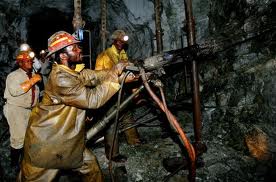
The National Union of Mine Workers (NUM) says the country’s mining sector is still far lagging behind in implementing the required health and safety measures.

The union concedes that, although strides are being made by mining houses to improve safety, some mining companies are still prioritising profit over the Health and Safety of miners.

These safety concerns are expected to be on top of the agenda when the Union commemorates the death of over a hundred mine-workers at Vaal Reefs Mine twenty years ago.

They died when a locomotive fell into a shaft, landing on a cage in the mine at Orkney in the North West in May 1995.

NUM’s national spokesperson, Livhuwani Mammburu says there are still sporadic incidents: “We think that there must be a space for a free environment, and as the NUM we don’t think there is. We think that recent incidents in the mining sector highlights yet another gap that we have in terms of health and safety.”

Blue chip companies pull back from Clintons

An Exxon Mobil spokesman said this week that the company has decided not to be involved in the Clinton Global Initiative this year. The oil company said its decision was unrelated to recent scrutiny of the foundation, but this is the first year it has not been a sponsor since 2009. Other sponsors, including Monsanto, are reevaluating their partnerships.

Some blue-chip companies that have long provided large donations to the Clinton Foundation are pulling back or reassessing their support.

Bill and Chelsea Clinton are convening foreign leaders here at a lush golf resort set in a palm grove this week to showcase their foundation’s charitable work. But the conference also highlights new controversies engulfing the Clinton family’s vast philanthropic enterprises as Hillary Rodham Clinton begins her presidential campaign.

A liberal human rights organization and several Republican lawmakers, for instance, are criticizing the Bill, Hillary and Chelsea Clinton Foundation for accepting donations from a Moroccan government-owned mining company, whose seven-figure sponsorship of this week’s gathering came amid growing scrutiny of foreign-government contributions to the charity.

This week’s flashy Morocco conference — a first-ever Africa and Middle East spinoff of the flagship CGI held each September in New York — underscores the foundation’s controversial fundraising practices, which have become a potential anchor on Hillary Clinton’s nascent campaign.

Source: Washington Post

British firms linked to severe human rights abuses

Hundreds of British firms operating abroad may be implicated in severe human rights abuses such as modern slavery, poverty-level wages, beatings, killings and environmental damage, an international NGO warns.

The NGO probed one such British firm, Glencore, regarding its conduct in the Democratic Republic of the Congo (DRC).

A report released by the Business and Human Rights Resource Centre on Wednesday found that British businesses impact heavily on communities and individuals around the globe.

The NGO’s research suggests UK firms are linked to human rights scandals worldwide, many of which occur in developing nations.

This improper conduct is compounded by “critical weaknesses” in UK regulation that leave victims in foreign states defenseless against firms’ “negligent or reckless” practices, the research found.

Out of sight, out of mind?
The Resource Centre monitors the human rights impacts of more than 6,000 firms in over 180 states. When human rights concerns are raised by civilians, it approaches the firms in question and sounds them out.

Since 2005, the Resource Centre has contacted 303 UK-based firms across the world about allegations of human rights violations.

The NGO’s report says the majority of these allegations center on UK firms’ practices abroad, particularly in the Global South. Its research uncovered “critical weaknesses in UK Government policy and action on business and human rights.”

While firms’ conduct in Britain is regulated, improper practices of UK companies operating abroad regularly “go unpunished,” the NGO said.

The Resource Centre warned that victims of “corporate abuse” face diminished access to justice in Britain, particularly since the coalition government introduced the Legal Aid, Sentencing and Punishment of Offenders Act 2012.

The NGO’s report said UK firms operating within the extractive industry require particularly “urgent attention.”

“Allegations against extractive companies were 47 percent of the total against UK companies,” it said. The NGO probed Glencore in the Democratic Republic of the Congo (DRC).

“While London has become a global hub for mining and extractive industries, these companies are often implicated in some of the most egregious allegations of human rights abuses, including displacements, killings, and large-scale pollution.”

Among the charges leveled at the firm were claims it had contaminated local communities’ water supplies, and was linked to brutal beatings and killings by police.

Glencore insisted it “is committed to upholding human rights,” and refuted allegations that it “manipulates DRC regulation to suit its interests.”

The Resource Centre’s report also uncovered UK firms’ links to allegations of labor rights abuses, particularly within the fashion industry. Allegations of modern slavery also surfaced in its study.

“UK companies are linked to allegations of labor rights abuses and modern slavery, particularly through complex global supply chains,” the report said.

“Among non-extractive companies, these issues emerged as the key area of concern, particularly for apparel companies.”

“Allegations [also] linked UK companies to forced labor, union busting, poverty wages, and workplace deaths – like the Rana Plaza factory collapse that took the lives of 1,129 workers in 2013,” it added.

The Resource Centre’s report called upon the next government to encourage and compel British companies to respect their staff’s basic human rights, and ensure abuses are met with accountability.

Economic Relations Programme Director Peter Frankental of Amnesty International UK, said the message of the Resource Center’s report is clear.

“When it comes to respecting human rights, businesses need to raise their game and the government needs to hold them accountable when they don’t.”

Phil Bloomer, director of the Resource Centre, said UK businesses severely impact upon communities worldwide.

“As a leading economy our companies should be setting the standard for corporate conduct on human rights, not being implicated in everything from poverty wages to beatings and killings,” he said.

“The next government must encourage and push companies to respect human rights and ensure abuses do not go unpunished.”

EFF targets mining magnates

Closing the EFF’s national people’s assembly in Bloemfontein yesterday, party president Julius Malema called on members to “block mines” in which magnate Patrice Motsepe (African Rainbow Minerals), Deputy President Cyril Ramaphosa ( Lonmin) and National Assembly Speaker Baleka Mbete (Gold Fields) had interests.

Malema described the proposed mass action as a protest against the way in which black economic empowerment benefited only a few wealthy, politically connected individuals instead of communities.

“We target these companies not because of the perceived ANC sympathies of the beneficiaries but because the money should be put to use to empower communities, and these people are the faces of the few who have become rich rather than creating community trusts,” he said.

Malema said yesterday the EFF intended always to act “within the law and the constitution. We are a disciplined organisation.”

He said land grabs were necessary to prevent the “land issue from leading to the civil strife it has caused in the rest of Africa”.

Police recently removed land invaders organised by the EFF from an area near Nelmapius in Pretoria. The squatters christened the area Malemaville.

But political analyst Ralph Mathekga said the EFF was being “disingenuous”.

“The biggest contradiction with the EFF is that you have a party that agrees to be in parliament and therefore agrees to be bound by the [legal] processes of that institution but chooses to use extra-legal means to achieve its objectives. It is disingenuous,” he said.

“[Malema’s] words would carry weight, perhaps, if they had refused to take part in elections and chosen to go outside the parliamentary process, but they have chosen not to do so. I think they are concerned about being seen to be swallowed up by parliamentary processes. No one is stopping them abdicating their positions in parliament.”

With only 25 seats in parliament, the EFF has so far failed to influence policy positions. It has instead resorted to showmanship, best characterised by the August 21 “pay back the money” chanting.

Political analyst JP Landman said the EFF’s utterances were good for democracy.

“What it has done is force people to take a stand. Since the EFF has come to parliament, the ANC has come out saying it is committed to land reform.”

The ANC, Landman said, was committed to land reform within the context of Section 25 of the constitution, which stipulated that property may be expropriated only by law, with payment of compensation.

Source: timeslive

Anglo might sell SA platinum assets

Diversified mining firm Anglo American might sell its platinum assets in South Africa, valued at $1.4 billion (R15bn), next year, Deutsche Bank speculated yesterday in a note.

A sale would increase fair value for Anglo’s stock by 13 percent to £17.50 (R318 at yesterday’s exchange rate), said Rob Clifford, a Deutsche Bank mining analyst.

Sibanye Gold, South Africa’s second-largest gold producer, might be interested in the company’s three mines in Rustenburg, while an offer from platinum peers was unlikely, he said. “We think this offers Anglo the cleanest exit, minimising legacy closure and employment obligations.”

Subsidiary Anglo American Platinum (Amplats), the world’s largest platinum producer, had been rocked by the strike at its Rustenburg and Union mines since January 23.

Anglo planned to switch to mechanised open-pit mining from labour-intensive underground excavation, the chief executive, Mark Cutifani, said in April.

The company was seeking to exit its high-cost, low-return mines in Rustenburg in 2015, Clifford said. “There is an opportunity for a new owner of the Rustenburg mines to take out costs. Some industry participants are looking in general at mergers and acquisition opportunities in the platinum industry. The ongoing strike may bring some of those opportunities to fruition.”

About 37 percent of Anglo’s assets are in South Africa and generate 55 percent of operating profit. They include Kumba Iron Ore operations, the Venetia Diamond Mine in Limpopo and the Zibulo Colliery in Mpumalanga.

Source: IOL

Man arrested for firing shots at protest

kagisoA man has been arrested after firing shots during a protest  in Kagiso, Krugersdorp, Gauteng police said.

He is accused of discharging a firearm and was taken into custody on Saturday after a protest erupted in the area, said Brigadier Sipho Ngubane.

Kagiso residents took to the streets over the weekend, demanding that mining activities in the area be stopped immediately.

“They were complaining that the mining activities in the area were damaging their houses.”

Most of the roads were still blocked with stones and burnt tyres, although Ngubane said the situation was calm on Monday morning.

He said on Sunday police fired rubber bullets to disperse protesters who were throwing stones.

“A municipal and a police vehicle were badly damaged by stones thrown by protesters.”

No one was arrested on Sunday.

Police would be deployed until the situation returned to normal, said Ngubane.

A meeting between the department of mineral resources and the mining company is scheduled for Tuesday.

Strikes in mining sector hit five-year high

labourThe number of strikes last year in South Africa hit a five-year high, with the mining sector accounting for 82.4% of them, says the labour depratment.

A total of 99 strikes were recorded in 2012, close to half of them unprotected or wildcat strikes, and many of them characterised by violence, labour director general Nkosinathi Nhleko told journalists in Cape Town on Wednesday.

Tabling the latest Industrial Action Report, which covers the 2012 calendar year, he said strikes over the period involved 241 391 workers, cost the economy 3.3-million working days, and resulted in workers losing R6.6-billion in wages.

The trend was continuing into this year.

“From what we can all see, there is a continuation of the trend we experienced in 2012,” Nhleko said.

However, no figures were yet available for the current calendar year. Asked why so many strikes involved violence, he suggested this had to do with leadership.

“The issue of how parties in the dispute have got to conduct themselves … hinges largely around the issue of exercise of leadership.

“And when we cite leadership as a factor … it is also informed by the mere fact that when these things begin to happen, it is something that wants to suggest that at a level of exercise of leadership, there is something that has not been handled properly and … accordingly.”

‘Worrying’
This, Nhleko said, was a “worrying point”. He said “social partners” needed to tackle the issue of how to prevent violence during strikes.

According to the report, 99 “strike incidents” were recorded in 2012, compared to 67 in 2011; 74 in 2010; 51 in 2009; and, 57 in 2008.

“South Africa experienced violent, bloody and deadly industrial actions in the mining, transport and agricultural industries … Out of 99 strikes processed within the department, 45 strikes were unprotected.”

The department of labour said in a statement that “A feature of industrial action during 2012 was the heightened violence that accompanied strike action, particularly in the mining and transport sectors. The violence and damage to property that was evident in the agricultural sector should also be noted, although these were protest actions and not strictly strike action.”

Mining
The document finds most of the working days lost by industry were in the mining sector (82.4%).

“Wages, bonuses and other compensation issues still remain the main reasons for work stoppages in South Africa during 2012.”

Further, most workers involved in last year’s labour unrest were members of the National Union of Mineworkers.

Among the provinces, Gauteng – South Africa’s economic heartland – had the most work stoppages.

“Gauteng experienced 42 strikes in 2012, up from 33 in 2011, an increase of 27.3%.”

According to the report, workers still had confidence in the Labour Relations Act, the legislation governing bargaining processes and associated legislation, “[but] most of them believe that the cost of living is too high”.

Among its conclusions are that “government needs to take control of the situation and solidify practice and protocol with regard to wage negotiations before the nation’s mining sector becomes un-investable [sic] as a result of the strikes.” – Sapa

Mining and land rights discussed at PAP

Constitution Hill
Constitution Hill

Mining activity and the land issue is to be discussed in the Pan African Parliament.

Co-hosted by Oxfam, Action Aid, the Institute for Poverty, Land and Agrarian Studies (PLAAS), and the Future Agricultures Consortium, the hearings offer people affected by land dispossession an opportunity to share their experiences with a panel linked to the Pan African Parliament.

The land question came up at a two-day hearing at Constitution Hill, Johannesburg, during the continent’s first ever land grab rights hearings on Thursday and Friday.

The villagers claim that the land that they share with a platinum mining company has been degraded by the contamination of its underground water.

The mining company has a long lease on the land.

“Our old people were manipulated into believing that mining would be beneficial to them,” Brand Nthapo said. “But the contaminated water has taken that away.”

Devastation is the recurring theme of the stories told by many villagers in the platinum belt of Limpopo.

“A cloud of devastation looms over the heads of people in Mapela [in the Mokopane area].”

Nthapo said that when mining in Mokopane started 20 years ago traditional leaders would lease the land out for R5000 a year. This, he said, had now been raised to R15000 a year.

The story of the Mokopane people was one of nine told during the hearings at Constitution Hill.

Raulina Valoyi, of Mozambique, said she and other villagers felt betrayed by the company that took their land.

“We gave them a portion of the land but they went beyond that and took even the land we used for produce.

“Now we do not have enough land for crops,” she said.

Panel chairman and director of the African Institute for Economic Development Olokushi Adebayo said the hearings gave an insight into how land grabs affected people’s daily lives.

“What is both sad and annoying is that we seem to be allowing history to repeat itself. Colonialism was directly linked to land grabs disguised as partnerships.”

Adebayo and his six co-panellists, and representatives of villagers affected by land transfers, agreed that they would call on all organisations and administrations dealing with land dispossession to audit land use to determine who were the true beneficiaries.

Adebayo said the solution to making Africa’s food resources secure lay not in large-scale commercial farming but in small-scale farming.

“We will be meeting at the Pan African Parliament where the findings from the studies we have conducted will be presented.” – timeslive.co.za

Mine firm desecrated sacred Aboriginal site

aboartAn Australian mining firm was convicted on Friday in Darwin of desecrating a sacred outback Aboriginal site in a landmark ruling protecting the beliefs of the beleaguered minority in the country.

OM (Manganese) Limited, an Australian subsidiary of Singapore-based OM Holdings Limited, was fined $133 600 for damaging the spiritual significance of an Aboriginal rock site at Bootu Creek, north of remote Tennant Creek in the Northern Territory.

OM Manganese had previously been convicted of physically damaging the site when an overhanging rock feature known as the Horse’s Head collapsed due to nearby blasting activities in 2011, destroying the area known in English as “Two Women Sitting Down”.

But Darwin magistrate Sue Oliver on Friday ruled it had also amounted to desecration.

“The defendant did not consider damage to the site as a vague and remote possibility,” Oliver said, describing the company’s failure to do so as “wilful blindness”.

“The defendant company made decisions that involved the sacred site that favoured business and profit over the [cultural protection] obligations they had.”

Oliver imposed the fine for what the local Kunapa people said amounted to destruction of the site, forever disrupting their relationship with the land and its mythology or “dreaming”.

“It will always remain a sacred site to us, but it has been ruined and we don’t know what to do,” said Kunapa representative Gina Smith of the site which had been “there for thousands of years as part of our culture and our story”.

“It’s been significantly changed, which makes it much harder for Aboriginal people to recognise the dreaming,” she added.

“We’re not likely to use it any more.”

According to the Kunapa dreaming, a marsupial rat and a bandicoot fought over bush tucker, or native food, at the Bootu Creek site and their blood spilled over the rocks, turning them the rich red of manganese ore.

The Aboriginal Areas Protection Authority, the statutory body responsible for overseeing sacred sites in the Northern Territory which brought the case against OM Manganese, welcomed the “historic” ruling.

“When a sacred site is desecrated or damaged it tears the social fabric of the affected community, as the harmony of those people is inherently linked to that sacred site,” said AAPA chief Ben Scambary.

OM Holdings said it had contested the desecration charge on the basis that the damage was unintentional, but it accepted Oliver’s ruling.

“The company never intended to harm, damage or disrespect the sacred site. We sincerely regret the damage and the hurt caused and I unreservedly apologise to the site’s custodians and traditional owners,” OM CEO Peter Toth said in a statement to the Australian stock exchange.

Aborigines, the most disadvantaged Australians, are believed to have numbered around one million at the time of British settlement in 1788. There are now just 470 000 out of a total population of 23 million. – AFP

Four illegal miners found dead on East Rand

guns_ak47sFour illegal miners died and 11 were wounded during a clash in a mine shaft in Brakpan North, Ekurhuleni emergency management services said on Monday.

“We’ve counted four [dead miners], but there’s a possibility that the number could rise,” said spokesman Rogers Mamaila.

Mamaila said shots were fired during an underground clash between two groups of illegal miners.

“We rescued 11 people with various injuries, including gunshot wounds, and some needing amputations,” Mamaila said.

Emergency workers were still at the scene. -Sapa

Mining bosses still raking in millions

Filling a few pockets

The mining industry is in the doldrums. Declining metal prices and rising costs foreshadow a tumultuous time ahead for the sector which is still reeling from devastating wildcat strikes last year.

Yet mining bosses continue to rake it in – with one individual taking home much as R45-million last year – serving to fuel the ideological war between themselves and their workers, the haves and have-nots, particularly as wage negotiations and the strike season kick into gear.

Last year, the chief executives of just the top three gold and platinum miners in South Africa earned collective remuneration totalling R140-million, leaving workers and unions indifferent to pleas of poverty by mining houses in ongoing wage negotiations.

Peter Major, a mining analyst at Cadiz Corporate Solutions, said executive remuneration would continue to add fuel to the fire when it came to wage negotiations.

He said many senior directors and many in management had a short-term, selfish view, which, he felt, let a proud 150-year-old industry down.

“If these guys wanted workers to take a zero percent increase, the first thing they would do is take a pay cut. That’s what leading by example – from the front – is all about. Instead, many of these ‘leaders’ are taking increases and bonuses. And when viewed against the enormous and frequent write-downs we’ve been seeing, resignations, firings and jail time should be up for serious consideration. It’s atrocious.”

On July 15 gold employers tabled an opening offer of a 4% wage increase, which was swiftly rejected by all worker representatives at different levels, who have demanded anything from a 10% to a 100% increase.

The parties reconvened on July 24 for another round of tough talks in which the offer was revised up to 5%, after which Solidarity, UASA (formerly known as United Association of South Africa) and the National Union of Mineworkers (NUM) declared a wage dispute that will be referred to the Commission for Conciliation, Mediation and Arbitration.

But gold producers say they simply cannot afford the increases. The Chamber of Mines’s figures for the fourth quarter of 2012 show – based on cash costs and an average gold price – that almost half of the country’s gold mines are unprofitable or marginal, at best.

But executive pay, at least for the major players in the sector, remains sizeable, as confirmed by company remuneration reports for 2012.

Top of the list is Gold Fields chief executive, Nicholas Holland, who earned a basic salary of R9.3-million, but after bonuses, share proceeds and other benefits, took home R45.3-million – R12.6-million more than the year before. Gold Fields chief financial officer Paul Schmidt took home almost R20-million.

Speaking to the media in May this year, Holland outraged unions when he said: “We can’t continue giving double-digit increases when productivity is declining. That’s not sustainable.”

AngloGold Ashanti’s former chief executive, Mark Cutifani, took home R43.2–million last year, while the company’s chief financial officer and now chief executive, Srinivasan Venkatakrishnan, was paid a total of R36-million.

Lonmin’s former chief executive, Ian Farmer, who stepped down due to illness in December 2012, earned R13.8-million for the year ended September 30 2012, compared with R17.9-million for the year before.

Gideon du Plessis, the general secretary of trade union Solidarity, said the remuneration was “exorbitant”.

“I understand the fiduciary duty they have and the difficulty of the task … but if you compare the remuneration of entry level workers to executives, there is a 100% mismatch. It conflates the perception that they do have the money.”

A salary freeze would mean little, insiders said.

“Mining bosses have never had any good gestures, the only gesture they show you is that they smile while you are in pain … If there is not a complete change in the manner they run their business, there will never be peace in the sector.” – M&G

Anglo to face multiple silicosis suits in SA

silicosisGold miners vowed on Thursday to take their silicosis lawsuit against London-listed Anglo American to South Africa’s courts, after a British court refused to hear their case.

London’s High Court ruled on Wednesday that it did not have jurisdiction over claims by miners that they fell victim to the deadly lung disease while working deep underground in the company’s South African mines.

Lawyers for the miners plan to appeal against that decision, but will also press ahead with individual cases in the South African legal system, said attorney Zanele Mbuyisa.

“We are going to issue the same claims in South Africa on an individual basis,” Mbuyisa told AFP.

“In the next two days, we will have the first 50 claims and it would go further on a rolling basis,” she added.

South African and British lawyers initially filed the class action for 450 people who had worked on gold mines from 1960 to 1998.

“Several hundreds more” have since been added, according to Mbuyisa.

The miners claimed they contracted the disease with no known cure from inhaling dangerous levels of silica dust while drilling rocks in gold mines.

When miners are exposed to excessive amounts, silica dust gets locked into the lungs and permanently scars the organ.

The result is silicosis. Symptoms include persistent coughing and shortness of breath. It often leads to tuberculosis and death.

Anglo American moved its headquarters from Johannesburg to London in 1999, a year after grouping its gold operations into Anglo Gold, now Anglo Gold Ashanti.

It has since sold its gold interests.

The firm welcomed Wednesday’s ruling, agreeing that a British court “does not have jurisdiction to hear this claim,” spokesperson Hulisani Rasivhaga told AFP. – Sapa/AFP

Quadrupled recycled platinum supply driving mining price down

A significant increase in the supply of platinum from recycling, a strong fall in demand for autocatalysts and price-elastic Chinese jewellery demand are combining to hobble the platinum mining industry.

 (Amplats) CEO Chris Griffith tells Mining Weekly Online in the accompanying video interview that secondary supply of platinum from recycling quadrupled from 500 000 oz a year to 2-million ounces a year from 2000 to 2012, with demand for autocatalysts falling by nearly 9% in the latter year.

While much store was placed on extra demand for jewellery in China, this demand proved to be price elastic, with demand rising when the price was down and demand falling when it was up, which kept the price in a narrow range.

With the price unlikely to rise and with the massive increase in costs, the industry is facing an increasingly tight future.

“Current market conditions are very difficult for platinum miners,” says Griffith.

This is in sharp contrast to the market conditions of the past.

From the 1980s to the 2000s, the rate of growth of demand for platinum in jewellery, industry and autocatalysis averaged 5% a year.

In 2006, Amplats anticipated wrongly that these halcyon conditions would persist to 2012.

But instead of demand continuing to grow at a rate of 5% a year from 2007 to 2012, there was a slight overall demand reduction, plummeting autocatalyst demand and ups-and-downs from jewellery demand, which traditionally serves as a market saviour when prices are low.

Miners were increasing supply in the expectation of continued high growth and at the same time the 2-million ounces of recycled supply began to virtually match what Amplats puts on to the market a year from its mining activities.

As a result of these fundamentals, there is an oversupply of platinum in the market – a scenario that is likely to persist.

“We’re unlikely to see a substantial improvement in demand in the short term and we are likely to see additional ounces come on to the market from secondary supply.

“Some of the demand will come from highly price-elastic areas, which means that the price is unlikely to rise.

“With the price unlikely to rise and with the massive increase in costs, it means that the industry is facing increasingly difficult times going ahead, not better times, hence the need for us, under circumstances of having loss-making shafts, to make a change to the business.”

The change has been the most far-reaching in the JSE-listed company’s 58-year history and involves the closure of two mines, the mothballing of four shafts, the selling of Union mine and the offer to create at least one new non-mining job for each of the 14 000 mining jobs that are expected to be shed.

“Clearly, our first objective has to be to restore profitability. In that process, we’ve evaluated this business inside and outside, backwards and forwards, for almost a year now, “ Griffith tells Mining Weekly Online.

The production profile will be cut by 400 000 oz to align the output with demand and Rustenburg will be restructured into three operating entities, removing 250 000 oz to 300 000 oz a year of high-cost production.

Four Rustenburg shafts, Khuseleka 1 and 2 shafts and Khomanani 1 and 2 shafts, will be mothballed for the long-term and the Rustenburg operations will become a 320 000 oz to 350 000 oz a year producer, ensuring more effective capital allocation.

As a result, Amplats will reduce its planned capital expansion over the next ten years by 25% to R100-billion in order to focus investment on low-cost, high-margin projects. – Creamer Media

Anglo American CEO blames ‘apartheid’ for mine violence

Cynthia Carroll, CEO of Anglo American

Violence witnessed in the mining sector this year stems from apartheid, outgoing Anglo American CEO Cynthia Carroll said on Tuesday.

“The violence we have seen in the mining sector this year has its seeds in the legacy of apartheid and the underlying social problems that remain,” she said during a discussion at the Gordon Institute of Business Science in Johannesburg.

“The curse of unemployment means that mine workers often have many other people who are economically dependent on them.”

Carroll said the history of the migrant labour system loosened the bonds of family life and dislocated communities.

“The brutalisation of human relationships that occurred under apartheid… all of these factors can be seen in the turmoil and tragedy we have experienced this year.”

Carroll said whatever the challenges the country faced, there were “truths” which had to be faced.

The first was that there was no future for any society without law and order.

“Public order is the bedrock without which civilisation collapses. This year we have seen violence and unrest across the mining industry and in several other sectors.”

Another truth the nation had to face was that anarchy in the workplace benefited no one.

Businesses that could not generate adequate returns ultimately collapsed and died.

“It is the responsibility of management, not just to shareholders, but also to employees, to ensure that companies remain economically competitive.”

The maintenance of law and order and the restoration of stable labour relations were critical to perceptions of South Africa as a place to do business.

“They [international investors] will make their judgements on the basis of the reality they can see.”

She said the mining sector was at the heart of the South African economy, generating 18.7 percent of the country’s GDP and directly employing 13.5 million people.

“It [mining] has a critical role to play in supporting the aspirations of the New Growth Path and the objectives of the National Development Plan.”

Carroll said discussions on the regulation of the mining sector had been going on for a long time.

“The spectre of nationalisation has been laid to rest. But the need to guard against damaging regulatory changes remains.” – Sapa