Chinese want to buy SA platinum assets on the cheap after strikes

platinum ingotsBloomberg reports that China’s Long March Capital Ltd., which partners with Citic Group Corp., is considering buying South African platinum assets after their value was depressed by strikes, the company’s Managing Partner Clement Kwong said.

The company is now reviewing a decision to hold off on purchasing South African platinum assets because of the labor issues, Kwong said in a Feb. 19 interview in Johannesburg. Long March last year partnered with Citic unit Baiyin Non-Ferrous Metal Group Co. Ltd. and China-Africa Development Fund to complete their buy-out of Perth-based Gold One International Ltd. and indirectly acquired a stake in Westonaria, South Africa-based Sibanye Gold Ltd.. (SGL)

“If the industry survives and makes a profit then that would be a good signal to look at investing,” said Kwong, who founded Long March Capital with a partner in 2008. “This last round has repriced these assets down so I think it would be as cheap as it gets.”

Anglo American Platinum Ltd. (AMS), Impala Platinum Holdings Ltd. (IMP) and Lonmin Plc (LMI) say they have lost 4.4 billion rand ($399 million) of revenue because of a four-week strike by about 70,000 workers. The companies, which together produce about three quarters of the world’s platinum, suffered losses from weeks of walk-outs in 2012 and 34 protesting miners were killed by police at Lonmin’s Marikana mine on Aug. 16 that year.

The platinum workers are demanding that monthly wages for the lowest-paid underground laborers be more than doubled to 12,500 rand a month. The Association of Mineworkers and Construction Union, which represents the employees, rejected a pay-increase offer of as much as 9 percent. South Africa’s annual inflation rate is 5.8 percent.

Share Decline

Anglo American Platinum declined 0.6 percent in Johannesburg yesterday to 450.37 rand, giving it a market value of 121.5 billion rand, a third of its value when it reached a record in 2008. Lonmin has declined by three quarters since its 2008 record while Impala has fallen 64 percent.

“There is a current situation that has not been resolved,” Kwong said. “But we think we are scraping the bottom now. I don’t see how much worse the demands can be.”

Long March Capital advises and manages the group of investors, which in December completed their purchase of Gold One. The mining company acquired a 17 percent stake in Sibanye in August.

Long March Capital remains “very positive” on the “phenomenal number” of investment opportunities in South Africa, although it’s wary of labor issues and discussion by the ruling African National Congress of additional taxes and nationalizing the nation’s mines, Kwong said.
‘Huge Opportunity’

The ANC in 2012 backed higher taxes for mines and rejected proposals to nationalize mines, an idea that the party’s youth wing had promoted for two years.

“Some of the challenges like organized labor, the somewhat unclear regulatory environment, these are discouraging to further investment,” Kwong said. “But the underlying economics, the underlying resources, still present huge opportunity for further investment.”

South Africa is the continent’s largest coal and gold producer and holds the world’s biggest reserves of platinum and chrome. Jinchuan Group Ltd. and the China Development Bank in 2011 bought a 45 percent stake in Wesizwe Platinum Ltd. (WEZ) State-owned China National Arts & Crafts Corp. Last month bought Aquarius Platinum Ltd.’s (AQP) Blue Ridge and Sheba Ridge mines for $37 million. Glencore Xstrata Plc (GLEN) said in November it would like to sell its 24.5 percent stake in Lonmin.
Congo, Zimbabwe

As Long March Capital seeks to expand into Africa, it is also doing due diligence on mine projects in Democratic Republic of Congo and will look at assets in Zimbabwe next week, Kwong said.

“The more de-risked a project, the easier it is to get funded today so something without even a pre-feasibility report is a little difficult to swallow,” Kwong said. “But if it is near production, but requires a substantial amount of capex to take it into production in order to unlock value, that is probably our favorite type of profile. We do have access to a reasonably priced source of capital in order to provide the capex to unlock the projects.” – Franz Wild, Bloomberg.com
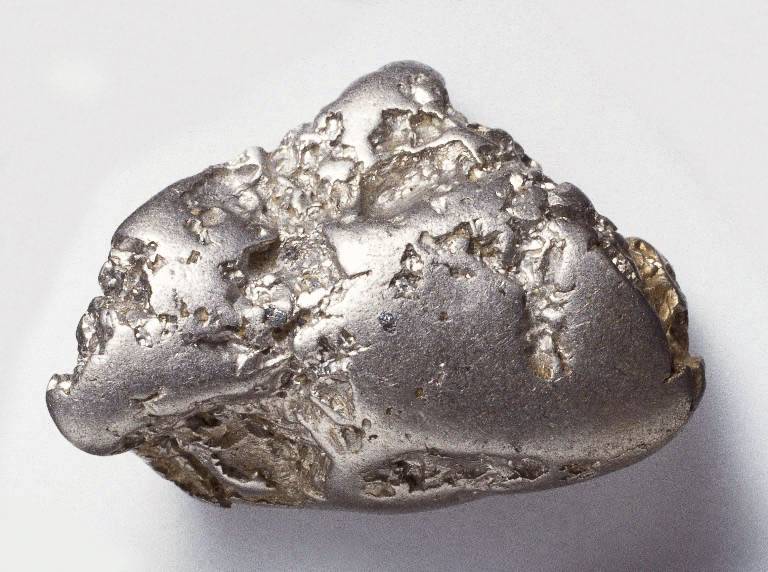
Quadrupled recycled platinum supply driving mining price down

A significant increase in the supply of platinum from recycling, a strong fall in demand for autocatalysts and price-elastic Chinese jewellery demand are combining to hobble the platinum mining industry.

 (Amplats) CEO Chris Griffith tells Mining Weekly Online in the accompanying video interview that secondary supply of platinum from recycling quadrupled from 500 000 oz a year to 2-million ounces a year from 2000 to 2012, with demand for autocatalysts falling by nearly 9% in the latter year.

While much store was placed on extra demand for jewellery in China, this demand proved to be price elastic, with demand rising when the price was down and demand falling when it was up, which kept the price in a narrow range.

With the price unlikely to rise and with the massive increase in costs, the industry is facing an increasingly tight future.

“Current market conditions are very difficult for platinum miners,” says Griffith.

This is in sharp contrast to the market conditions of the past.

From the 1980s to the 2000s, the rate of growth of demand for platinum in jewellery, industry and autocatalysis averaged 5% a year.

In 2006, Amplats anticipated wrongly that these halcyon conditions would persist to 2012.

But instead of demand continuing to grow at a rate of 5% a year from 2007 to 2012, there was a slight overall demand reduction, plummeting autocatalyst demand and ups-and-downs from jewellery demand, which traditionally serves as a market saviour when prices are low.

Miners were increasing supply in the expectation of continued high growth and at the same time the 2-million ounces of recycled supply began to virtually match what Amplats puts on to the market a year from its mining activities.

As a result of these fundamentals, there is an oversupply of platinum in the market – a scenario that is likely to persist.

“We’re unlikely to see a substantial improvement in demand in the short term and we are likely to see additional ounces come on to the market from secondary supply.

“Some of the demand will come from highly price-elastic areas, which means that the price is unlikely to rise.

“With the price unlikely to rise and with the massive increase in costs, it means that the industry is facing increasingly difficult times going ahead, not better times, hence the need for us, under circumstances of having loss-making shafts, to make a change to the business.”

The change has been the most far-reaching in the JSE-listed company’s 58-year history and involves the closure of two mines, the mothballing of four shafts, the selling of Union mine and the offer to create at least one new non-mining job for each of the 14 000 mining jobs that are expected to be shed.

“Clearly, our first objective has to be to restore profitability. In that process, we’ve evaluated this business inside and outside, backwards and forwards, for almost a year now, “ Griffith tells Mining Weekly Online.

The production profile will be cut by 400 000 oz to align the output with demand and Rustenburg will be restructured into three operating entities, removing 250 000 oz to 300 000 oz a year of high-cost production.

Four Rustenburg shafts, Khuseleka 1 and 2 shafts and Khomanani 1 and 2 shafts, will be mothballed for the long-term and the Rustenburg operations will become a 320 000 oz to 350 000 oz a year producer, ensuring more effective capital allocation.

As a result, Amplats will reduce its planned capital expansion over the next ten years by 25% to R100-billion in order to focus investment on low-cost, high-margin projects. – Creamer Media

Two more miners killed by police, one dragged by armoured car

Amplats strikers
Amplats strikers

RUSTENBURG, South Africa (AP) — Days after soldiers were deployed, South African President Jacob Zuma’s office announced Thursday he has ordered military forces to assist police trying to control labor unrest in the nation’s crucial mining sector. Despite resolution of the longest and bloodiest strike, two more deaths were reported.

Even as miners returned to work Thursday at the Lonmin PLC platinum mine in Marikana where police killed 34 miners on Aug. 16 labor advocates said police killed two more people: a ruling party municipal councilor who died of injuries from a rubber bullet and a miner who was run over by an armored car.

Zuma’s office said he was invoking the Constitution to use the military to support police “in the prevention and combating of crime as well as the maintenance of law and order in the Marikana Area … and other areas around the country where needed” until Jan. 31. The notice from the presidency referred to section 201 (2) of the Constitution, which states that “only the President, as head of the national executive, may authorize the employment of the defense force.”

Last weekend some 1,000 soldiers were trucked into the “platinum belt” northwest of Johannesburg.

Thursday morning, police in two water cannon trucks and several armored cars confronted striking Anglo American Platinum miners at a shantytown where residents set up barricades of rocks and burning tires and logs. Before long, the fires died down and most of the police pulled back. The people dispersed, leaving a herd of goats milling around the water cannons. Strike leader Evans Ramokga told The Associated Press that one miner was run over Wednesday by a police armored car and dragged several meters (feet) before it stopped. He said the man died overnight in the hospital.

Police spokesman Dennis Adriao said he was unaware of the incident which occurred at the scene where police fired rubber bullets, tear gas and stun grenades to break up a march by thousands of strikers. The mines near Rustenburg belong to Anglo American Platinum, the world’s largest platinum producer.

“The only thing we want is to sit down and have them hear our demands,” Ramokga said. He said authorities have refused to give permission for the thousands of strikers among Anglo’s 15,000 workers there to hold a protest march to back their demands for a gross monthly salary of 16,070 rand ($2,000).

Anglo issued an ultimatum for workers to report for duty by Thursday night or threatened to act on a court order declaring the strike illegal. That gives Anglo the power to fire strikers.

“Anglo American Platinum’s Rustenburg mining operations are already under considerable economic pressure, any further delays in returning to work will only increase the risk to the long-term viability of these mines,” it said in a statement late Wednesday.

The Marikana Solidarity Campaign meanwhile reported that African National Congress councilor Paulina Masutlhe was shopping Saturday at the Wonderkop shantytown where Lonmin platinum miners live when police firing from a speeding armored car hit several women. Masutlhe was hit in the abdomen and leg and rushed to the hospital, where she died Wednesday, a statement said.

Adriao said he is investigating the report of a death. He said police had reported to the Independent Police Investigative Directorate that several people were hit by rubber bullets in a raid to disarm strikers on Saturday, the day after the government ordered a crackdown.

The directorate already has opened 34 murder and 78 attempted murder charges against police in the Aug. 16 shootings, the worst state violence since the white minority apartheid regime was brought down in 1994. The government has said it is awaiting the outcome of a judicial commission of inquiry that is to report to the president in January.

The solidarity campaign condemned the brutality of police and called for “the immediate identification and suspension of the police officers involved in her (Masutlhe’s) murder. “

“We are also extremely unhappy that, to date, none of the police officers involved in the massacre on 16 August 2012 has been identified or suspended – this is totally unacceptable and unlawful,” said the campaign that includes the powerful Congress of South African Trade Unions that is part of a governing alliance with the African National Congress party and the South African Communist Party.

The deaths at the two mines, both northwest of Johannesburg, bring the strike-related death toll to 47.

Lonmin on Tuesday resolved its five-week strike by agreeing to pay raises of 16 to 22 percent.

The strike already has spread to several gold, platinum and chrome mines, damaging investor confidence in the country that produces 75 percent of world platinum and is the No. 4 chrome producer and in the top 10 of gold producers.

Police fire rubber bullets at Amplats miners

Police used rubber bullets and teargas to disperse a group of people gathered near Anglo American Platinum (Amplats) in Rustenburg on Wednesday, said a spokesman.

“Police dispersed people trying to gather illegally. As we have said, we are not tolerating any illegal gatherings,” said Captain Dennis Adriao.

“Police utilised teargas and stun grenades, and rubber bullets were used at the [nearby] squatter camp.”

Amplats spokeswoman Mpumi Sithole said: “I can confirm that [the police have] dispersed a group of people gathering illegally at Sondela informal settlement.

“We do not know why the people were gathered and cannot confirm if they are our employees. As reported yesterday [Tuesday], our mines are operational…”

Last week, government ministers in Cabinet’s security cluster said the government would no longer tolerate violence, threats and intimidation taking place in the mining sector, as massive strikes sprang up along Rustenburg’s platinum belt, with another one near Carletonville.

The measures included a crackdown on illegal gatherings, the carrying of dangerous weapons, incitement, and threats of violence against anyone in the affected areas.

Adriao said that for large groups of people to gather, in terms of the Regulation of Gatherings Act, they had to give notice to the local municipality for the gathering to take place.

Section four set out certain conditions for the gathering.

“Police need to be present, emergency services need to be on standby, marshalls present the whole day. Water points need to be established,” said Adriao.

The relevant municipality in this case was Rustenburg.

Further details were not immediately available, but SAFM reported that mineworkers near Jabula and Thembelani mine had been arrested and that the gathering was related to an unprotected pay strike.

After suspending operations last week, citing employee safety due to the situation in the region, Amplats resumed operations on Tuesday.

Workers were paid over the suspension period, and praised the company for this.

On Friday, during the operations suspension, they marched to the company’s Bleskop stadium and decided that they also wanted a salary increase.

Unlike their mining colleagues at other operations, who were seeking R12,500, they said they wanted R16,070 and other modifications to their fringe benefits.

On Tuesday night a lengthy strike at nearby Lonmin ended with a wage agreement.

Amplats miners striking for R16 070 per month

Striking Anglo American Platinum (Amplats) mineworkers demanded pay of R16,070 a month at a meeting at the Blesbok stadium in Rustenburg on Thursday.

This was according to Gaddafi Ndoda, who described himself as a member of a newly formed workers’ committee.

“To us, R12,500 is just a basic salary,” he said, referring to the amount raised as a demand among many mineworkers over the past weeks.

“Anglo is the most-paying (sic) mine in the country, so our demand is different from other mineworkers,” said Ndoda.

He said they wanted “nothing to do” with AngloPlats’ Mageu beverage, and wanted their refreshment allowance to be R30 a day.

On Wednesday workers there complained about the quality of the Mageu, an energy drink made from fermented grains.

He said currently workers were not entitled to a safety and transport allowance.

“We want our transport allowance to be R60 daily and [our] safety allowance to be R1500.”

They also wanted the increase in their living-out allowance to be R2000 — up from R1700.

An “executive committee” of six members representing workers outside formal union forums had been formed and they were expected to take a memorandum to the mine’s management in Klipfontein near the stadium, he said.

While heading towards the nearby offices, about half the workers who had been in the stadium accompanied the committee, singing and dancing, amid tight security.

As in the past week, the police had Nyalas stationed in the area and a helicopter overhead. Amplats security vehicles and security guards were also on alert, and a Netcare911 ambulance was on standby.

Workers carried knobkerries, sticks and whips. Some also carried umbrellas.

It appeared that a group of striking workers from Lonmin Platinum did not join them as hoped.

Amplats said it suspended operations on Wednesday out of concern for the safety of its employees, and said there was no strike at the mine.

CEO Chris Griffith said the situation in the Rustenburg area was volatile, and that people who wanted to go to work could not because of threats of violence.

“Anglo American Platinum has decided to suspend its operations in the Rustenburg area with immediate effect,” he said in a statement.

“The suspension will continue until such time as operations can be safely resumed.”

Amplats’ chairwoman Cynthia Carroll said the company was in touch with authorities “at the highest level” to identify ways of working with government and the recognised labour unions to achieve a swift and peaceful resolution.

She said the company’s Rustenburg platinum operations were already under financial pressure, and the suspension of operations on Wednesday risked their long-term viability, the longer the situation lasted.

A strike at Lonmin entered its second month this week. Workers at Gold Fields’ KDC West mine were also on strike on Thursday. – Sapa

ANC tries to reassure ‘panicking’ international community about South Africa

ANC secretary general Gwede Mantashe has denied there was wide-spread panic over recent violent protests countrywide.

“I’m not sure what’s the difference between panic and caution. If they take cautionary measures to avoid the damage and deaths of people that have occurred now, I don’t think that can be called panic, it would be called cautionary,” Mantashe told SAfm on Thursday morning.

Asked for reaction to investors and the international community “panicking” about the situation, Mantashe said there were two “distinct problems” that needed to be dealt with.

“When there is lawlessness, the state must be capable to deal with that. When there is agitation and incitement, the state must be able to deal with that,” said Mantashe.

If the state becomes “flat-footed”, “everything can break loose”.

“I think that is where I am more worried than the panic you are talking about.”

He also expressed concern about threats to bring the mining industry to a standstill. Mantashe said it would be regrettable if bargaining councils no longer functioned properly.

A month ago, 34 people were shot dead by police at Lonmin platinum mine in Marikana, Rustenburg in the North West. Protests — apparently sparked by rivalry between two unions — had left 10 people dead the week before the shooting by police.

Another body was found at the mine this week, where talks to deal with a R12,500 monthly salary demand were yet to yield any results.

The mine has not been able operate for weeks, and protests by mineworkers seem to have spilled over to more mines — Anglo American Platinum in Rustenburg, and Goldfields’ KDC West mine in Carletonville.

Expelled African National Congress Youth League leader Julius Malema has addressed striking miners, urging them to go on work stoppages every month until their demands were met.

He also addressed disgruntled soldiers on Wednesday, causing the defence minister to accuse him of being counter-revolutionary and trying to incite members of the SA National Defence Force against the state.

Mantashe said the ANC national executive committee would meet to discuss “all these matters that are in the public domain”.

“It’s not an emergency [meeting], it’s a normal NEC meeting. It’s scheduled,” he said. – Sapa