
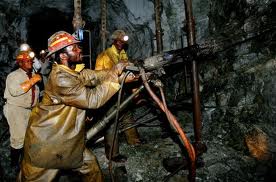
The mining industry is in the doldrums. Declining metal prices and rising costs foreshadow a tumultuous time ahead for the sector which is still reeling from devastating wildcat strikes last year.
Yet mining bosses continue to rake it in – with one individual taking home much as R45-million last year – serving to fuel the ideological war between themselves and their workers, the haves and have-nots, particularly as wage negotiations and the strike season kick into gear.
Last year, the chief executives of just the top three gold and platinum miners in South Africa earned collective remuneration totalling R140-million, leaving workers and unions indifferent to pleas of poverty by mining houses in ongoing wage negotiations.
Peter Major, a mining analyst at Cadiz Corporate Solutions, said executive remuneration would continue to add fuel to the fire when it came to wage negotiations.
He said many senior directors and many in management had a short-term, selfish view, which, he felt, let a proud 150-year-old industry down.
“If these guys wanted workers to take a zero percent increase, the first thing they would do is take a pay cut. That’s what leading by example – from the front – is all about. Instead, many of these ‘leaders’ are taking increases and bonuses. And when viewed against the enormous and frequent write-downs we’ve been seeing, resignations, firings and jail time should be up for serious consideration. It’s atrocious.”
On July 15 gold employers tabled an opening offer of a 4% wage increase, which was swiftly rejected by all worker representatives at different levels, who have demanded anything from a 10% to a 100% increase.
The parties reconvened on July 24 for another round of tough talks in which the offer was revised up to 5%, after which Solidarity, UASA (formerly known as United Association of South Africa) and the National Union of Mineworkers (NUM) declared a wage dispute that will be referred to the Commission for Conciliation, Mediation and Arbitration.
But gold producers say they simply cannot afford the increases. The Chamber of Mines’s figures for the fourth quarter of 2012 show – based on cash costs and an average gold price – that almost half of the country’s gold mines are unprofitable or marginal, at best.
But executive pay, at least for the major players in the sector, remains sizeable, as confirmed by company remuneration reports for 2012.
Top of the list is Gold Fields chief executive, Nicholas Holland, who earned a basic salary of R9.3-million, but after bonuses, share proceeds and other benefits, took home R45.3-million – R12.6-million more than the year before. Gold Fields chief financial officer Paul Schmidt took home almost R20-million.
Speaking to the media in May this year, Holland outraged unions when he said: “We can’t continue giving double-digit increases when productivity is declining. That’s not sustainable.”
AngloGold Ashanti’s former chief executive, Mark Cutifani, took home R43.2–million last year, while the company’s chief financial officer and now chief executive, Srinivasan Venkatakrishnan, was paid a total of R36-million.
Lonmin’s former chief executive, Ian Farmer, who stepped down due to illness in December 2012, earned R13.8-million for the year ended September 30 2012, compared with R17.9-million for the year before.
Gideon du Plessis, the general secretary of trade union Solidarity, said the remuneration was “exorbitant”.
“I understand the fiduciary duty they have and the difficulty of the task … but if you compare the remuneration of entry level workers to executives, there is a 100% mismatch. It conflates the perception that they do have the money.”
A salary freeze would mean little, insiders said.
“Mining bosses have never had any good gestures, the only gesture they show you is that they smile while you are in pain … If there is not a complete change in the manner they run their business, there will never be peace in the sector.” – M&G