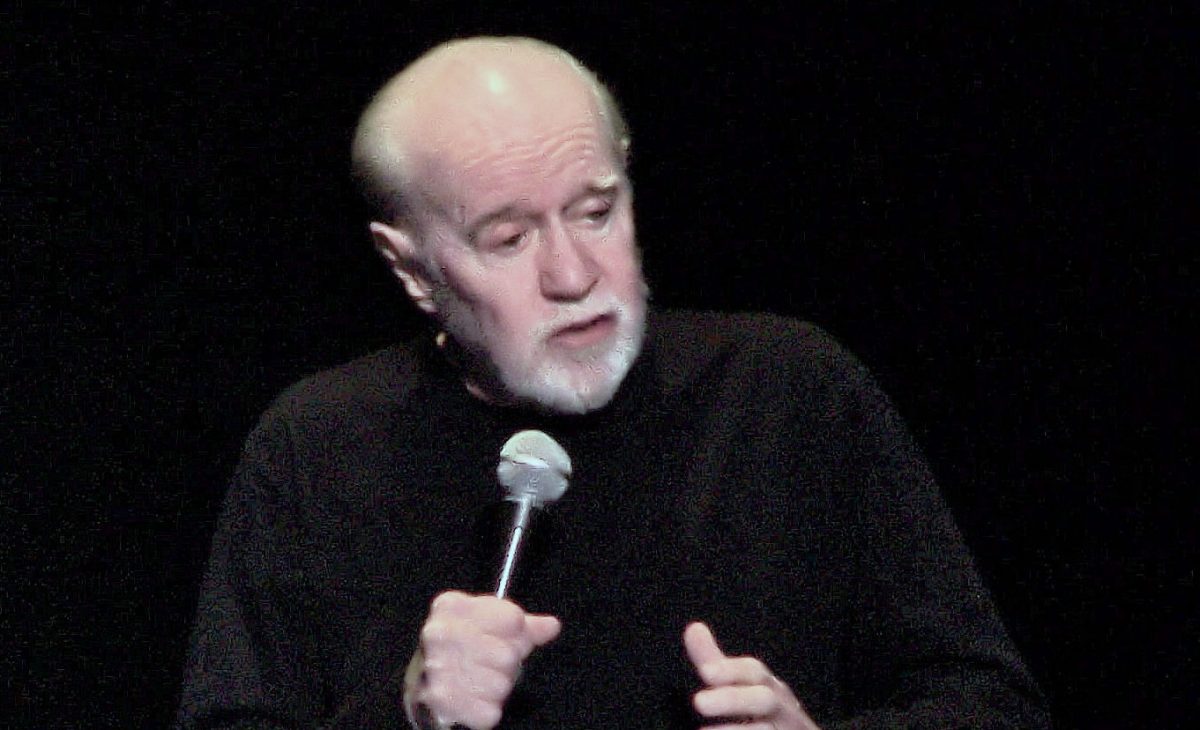
In his 2005 HBO stand-up comedy special, world-famous philosopher and social critic (posing as a stand-up comedian) George Carlin has enumerated quite a few things humanity should be ashamed of, like war, genocide, consumerism, and several others. If you look at the mainstream media, all you see is bad news: an earthquake here, famine there, a caravan of desperate people heading for the US border, armed conflicts all over the world, and countless examples of corporate greed exploiting not only humans but animals, nature, the planet as a whole. In times like these, it’s hard to remember that there are still things that make us as a species worthy of survival. If you find it hard to think of any, here are a few things that will – at least for a while – restore your faith in humanity.
England’s soccer team donates all World Cup winnings to charities
Sports stars are just a bunch of overpaid entertainers – this is something that probably crosses the minds of many when seeing the fabulous amounts they make year after year. This might be true – but, it seems, not all of them are greedy. After failing to take home the World Cup this year (France proved it’s better at football), England’s national football team donated all its World Cup winnings to charity. And it’s not two pennies either – the team took home at least $22 million by reaching the semi-final in the competition.
Prepare to be even more surprised: England’s footballers have been playing internationally for free for more than a decade. Since 2007, all their wages from international games to charity through the England Footballers Foundation (EFF), supporting charities like UNICEF, Cancer Research UK, The Honeypot Children’s Charity, and many others.
March for Our Lives, Washington DC, USA
Everyone in the United States of America has the right to bear arms, according to their Constitution’s Second Amendment. Sometimes, this leads to tragic incidents – like the Stoneman Douglas High School shooting in Parkland, Florida, on Valentine’s Day 2018. This tragic event triggered a massive outrage not only from the media but from the students, too – on March 24, they organized a massive demonstration in Washington DC (and inspired over 800 similar events all across the US and the world) demanding tighter gun control.
While the protests were criticized by many, claiming that their goal was to “destroy the Second Amendment”, media outlets have described them as a potential tipping point for gun control legislation in the country.
The Two Koreas
North Korea and South Korea have had an antagonistic relationship for decades – and they both took a step in the right direction this year. This spring, the presidents of the two countries – North Korean leader Kim Jong Un, and South Korean president Moon Jae-In met for the first time, each of them stepping on the soil of the neighbouring country as a symbolic gesture. Their first summit was mostly ceremonial, with symbolic gestures made by both, including the planting of a tree, the signing of the Panmunjom Declaration for Peace, Prosperity and Unification on the Korean Peninsula, and had a formal dinner.
Since then, the two leaders met twice – in May and September – and are planning to organize another in December, when North Korean president Kim Jong Un will visit Seoul.
The University of the Free State announced yesterday that the historical statue of M.T. Steyn, the last president of the former Boer Republic that came to an end in 1902 is to be “relocated off campus”. In recent years, the university has been prone to antiwhite sentiment, including attacks on statues representing white people.
According to a statement released by the university, “Council furthermore requested that the relocation must be done in complete cooperation
with the family of President MT Steyn. The decision of the Council follows a recommendation made by the ‘Special Task Team’ in a report to the Rector and Vice-Chancellor, Prof Francis Petersen, that the statue should be relocated to a site off campus.”
Prof Francis Petersen (left) making the announcement last night that MT Steyn’s statue will be removed
“The decision was not taken lightly, but I believe that it was in the best interest of the university,” said Prof Petersen. The “Special Task Team” was appointed earlier this year by Prof Petersen “to develop and implement a framework on engaging with a process to review the position of the
statue in front of the Main Building on the Bloemfontein Campus.”
Black students and communist radicals started to object to the MT Steyn statue as far back as 2003, and objections to “the statue of the white man” were again raised during a University Assembly on 28 April 2015. In
January 2018, the university’s Integrated Transformation Plan (ITP) work stream dealing with “Names, Symbols and Spaces” embarked on a process of “reviewing how space and symbolic representation facilitates or hinders social inclusion in a diverse community”. Representations of white people were seen as “hindering diversity”, therefore the MT Steyn statue had to go as “a priority”.
On 8 March 2018, the black-dominated Student Representative Council (SRC), once again asked for the MT Steyn statue “to be removed”. Prof Francis Petersen, a radical coloured academic that used to be with the Cultural-Marxist-infested University of Cape Town, and then nominated to be vice-chancellor and principal of the rural University of the Free State, “acknowledged the urgency of the matter and appointed the Special Task Team to review the position of the statue”.
According to Prof Petersen, the relocation of the statue to a site off campus
will best serve the university’s vision for the future. “This includes ensuring that the UFS is a place where everyone feels welcome, where
diversity is encouraged and celebrated, where concepts such as
decolonialisation are challenged in an academic and realistic
way, and where integration is accomplished in a holistic manner
– as reflected in the ITP,” he said.
The Integrated Transformation Plan (ITP) of the university is meant to “racially transform” the institution in keeping with the overal “transformation” ideology of the ruling ANC-terrorist regime of South Africa. According to the university, “as established in the ‘Names, Symbols and Spaces’ work stream of the Integrated Transformation Plan, the university’s statues, artworks, names, and memorabilia should facilitate social inclusion in a diverse community and reflect a transformed university. The visual and spatial environments should also promote inclusivity and non-racialism. Keeping the statue in its current position – elevated and central, in front of the building that houses the university’s executive management– does not align with the core principles of inclusivity and diversity.”
“In fact, a large proportion of our student body is feeling unwelcome (at least in the specific space in front of the Main Building), as it represents a period in history that they do not feel part of… A comprehensive approach and coherent process will be implemented to reconceptualise the space in front of the Main Building. Members of the Special Task Team will form part of the reconfiguration process,” said Prof Petersen.
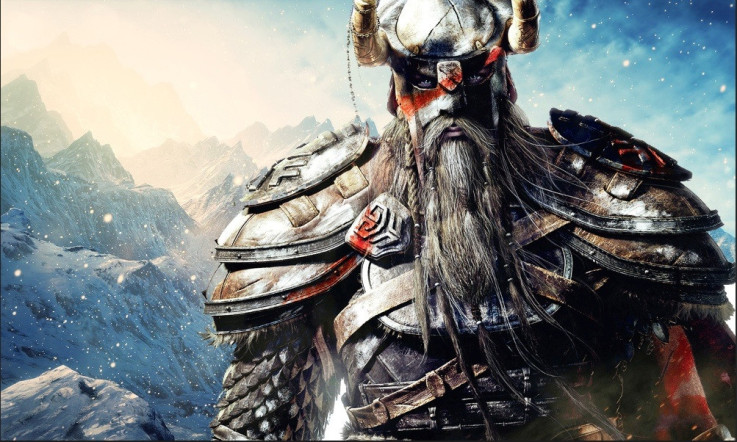
“The Middle Ages is a space where white supremecy is legitimised. The maintenance of white privilege. The gamer community use ‘historical facts’ to legitimise this kind of literacy,” said British Ph.D. candidate Victoria Cooper recently. Mediaeval representations in video games was the focus of Victoria Cooper’s paper, Playing Politics: Exploring Nationalism and Conservatism in Fantasy Video Games, which was given earlier this month at the International Medieval Congress. Part of the session,The Use and Abuse of the Middle Ages in the Modern World, IV: Nationalism and Identity, it examined the ways in which medieval imagery and history are often hijacked by far-right political groups and nationalist organisations to legitimise their historical narratives.
Victoria Cooper
Cooper, a PhD candidate at the University of Leeds, used player assessments of the Middle Ages, marketing, and player forums as the backbone of her research. Forums, in particular, are good resources for player observation because conversations here spring up organically and aren’t censored. When Cooper was speaking to players, she was careful to never brings up the Middle Ages to see if they brought it up themselves. The result? Most players do.
What did these unchecked conversations reveal? The games don’t inspire a specific kind of nationalism with another country per se, but they do harken to “the mediaeval’ which becomes it’s own space, and has its own nationalistic quality where real heritage is superimposed upon a fictional world.
Cooper notes that the medieval world is often exploited by right wing groups, such as the British National Party (BNP). They used the symbol of Excalibur to promote “Englishness”, since, according to legend, Excalibur is the sword that confers the rightful kingship of England. There is even an online shop profiting from this perceived sense of English nationalism that declares, “Excalibur: the number 1 patriotic goods store”. However, it appears that the BNP is no longer affiliated with the shop and Excalibur has taken great pains to extricate itself from the association by posting a large disclaimer on their front page stating, “Excalibur has no affiliation or ties to any political party. All merchandise sold on Excalibur belongs to Excalibur and any profits made from such merchandise stays with Excalibur.”
Groups like the BNP in England often attempt to tie a mediaeval past to their nationalism by framing it with shirts like, “White and Proud”, or “Anglo Saxon”, as a form of identity politics.
#GamerGate
Cooper recalled the infamous “#GamerGate” – the 2014 scandal that erupted in the gaming world when several prominent women challenged the status quo of the community. The women received rape, violence and death threats. They (and their supporters) were also “doxed”; a tactic whereby private information, like a home address, phone number, place of work and personal details are made public in an effort to silence and publicly shame the person.
Cooper noted that the gaming community has traditionally had horrible reactions towards academic inspection of games because players want to maintain them as apolitical and are resistant to changing the status quo. The predominantly white, male players of Gamergate insisted that representations of the games should be divorced from modern politics.
However forcefully players maintain their arguments, many gamers continue to map their identity, heritage, and ancestry onto these games. They claim to be apolitical, yet in the same breath, refuse to acknowledge the politics behind these games. According to Cooper, they subscribe to the popular idea of the Middle Ages as ‘gritty, white, male, and powerful’. They cling to the notion that women didn’t fight in the Middle Ages, fiercely stating this as ‘as fact’, and steadfastly refusing to allow women agency in warrior roles.
Unfortunately for gamers, the tide is turning and the inspection of their identities is happening whether they like it or not, and will continue to gain momentum. Games like Skyrim, and The Elder Scrolls are only the tip of the iceberg. What Gamergate tried to shut down, instead, opened a Pandora’s Box that can never be closed. Academics, like Cooper, will continue to challenge, examine and illustrate the ways these groups misappropriate mediaeval history. – mediavalists.net
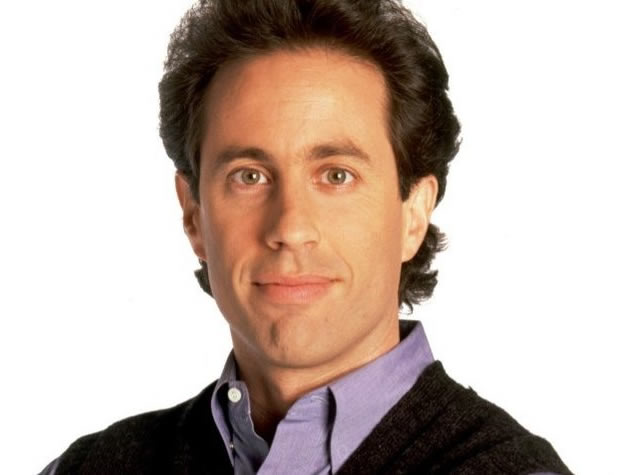
College kids are too politically correct for Jerry Seinfeld.
The comedian spoke to ESPN Radio host Colin Cowherd for an episode of “The Herd with Colin Cowherd” to promote the latest season of “Comedians in Cars Getting Coffee,” and the two talked about political correctness and comedy. Cowherd commented how comedians like Chris Rock and Larry the Cable Guy won’t perform at college campuses for this very reason.
“I hear that all the time,” Seinfeld said. “I don’t play colleges, but I hear a lot of people tell me, ‘Don’t go near colleges. They’re so PC.’ I’ll give you an example: My daughter’s 14. My wife says to her, ‘Well, you know, in the next couple years, I think maybe you’re going to want to be hanging around the city more on the weekends, so you can see boys.’ You know what my daughter says? She says, ‘That’s sexist.’ They just want to use these words: ‘That’s racist;’ ‘That’s sexist;’ ‘That’s prejudice.’ They don’t know what the f–k they’re talking about.”
The culture war against Christianity is picking up speed, says Patrick Buchanan.
Last week came word Saint Louis University will remove a heroic-sized statue of Father Pierre-Jean De Smet S.J. from the front of Fusz Hall, where it has stood for 60 years.
The statue depicts De Smet holding aloft a crucifix as he ministers to two American Indians, one of whom is kneeling.
Historically, the statue is accurate. Father De Smet, “Blackrobe,” as he was known, was a 19th-century missionary to Indian tribes who converted thousands. A friend of Sitting Bull, he spent his last years in St. Louis.
And as the mission of this Jesuit university is, presumably, to instruct the Catholic young in their faith and send them out into the world to bring the good news of Jesus Christ as Lord and savior to nonbelievers, what exactly is the problem here?
According to SLU Assistant Vice President for Communications Clayton Berry, “some faculty and staff … raised questions about whether the sculpture is culturally sensitive.” Senior Ryan McKinley is more specific: “The statue of De Smet depicts a history of colonialism, imperialism, racism and of Christian and white supremacy.”
The faculty and staff are ashamed of the truth for which Saint Louis University was supposed to stand.
The SLU president should have been honest with the iconoclasts. SLU is a Catholic university that welcomes students and faculty not of the faith. Instead, they try to hide who they are.
Music mockumentary Stone Cold Jane Austen will be one of eight South African films screening at the Cannes Film Festival later this month.
The films form part of the Marche Du Film programme which takes place from May 12 to 21, the film market business side of the Cannes Film Festival.
Writer/director Jon Savage is surprised that his film has made it onto the line-up. “It’s not a very traditional film. It’s a feature film in the style of a mockumentary. My film is going to Cannes, I’m going, too.”
Crowdfunded Stone Cold Jane Austen was shot over a three-and-half-year period and features Rob van Vuuren, Savage and Kurt Schoonraad as the only fictional characters in the story of an English rock band wanting to break into the lucrative Afrikaans rock market.
“All the Afrikaans stars from Fokofpolisiekar to Kurt Darren are in it, either as people supporting the idea, or not,” said Savage.
The film has been picked up by Nu Metro Theatre for local release on May 22.
Three of the films which will screen at the film market were produced by Cape Town production company ZenHQ Films.
Action crime thriller Dias Santana, is the country’s first South African-Angolan co-production between ZenHQ Films and Giant Sables Media Entertainment and was written and directed by Chris Roland and Maradona Dias Dos Santos.
Critically acclaimed Afrikaans fantasy romance Die Windpomp and the politically incorrect action comedy Bordering on Bad Behaviour are their other two films. Die Windpomp will screen as The Windmill and is currently available online or on DVD while Bordering on Bad Behaviour is doing the international film festival rounds and will release locally later this year.
Here is the official trailer for Stone Cold Jane Austen.
The writer Günter Grass, who broke the silences of the past for a generation of Germans, has died in hospital in Lübeck at the age of 87.
German president Joachim Gauck led the tributes, offering his condolences to the writer’s widow Ute Grass. “Günter Grass moved, enthralled, and made the people of our country think with his literature and his art,” he said in a statement. “His literary work won him recognition early across the world, as witnessed not least by his Nobel prize.”
Günter Grass
“His novels, short stories, and his poetry reflect the great hopes and fallacies, the fears and desires of whole generations,” the statement continued.
Tributes began to appear within minutes of the announcement of Grass’ death on Twitter by his publisher, Steidl.
In the UK, Salman Rushdie was one of the first authors to respond, tweeting:
This is very sad. A true giant, inspiration, and friend. Drum for him, little Oskar. https://t.co/5b4Y7fTtin
The Turkish Nobel laureate Orhan Pamuk had warm personal memories: “Grass learned a lot from Rabelais and Celine and was influential in development of ‘magic realism’ and Marquez. He taught us to base the story on the inventiveness of the writer no matter how cruel, harsh and political the story is,” he said.
He added: “In April 2010 when there was a mushroom cloud over Europe he was in Istanbul and stayed more than he planned. We went to restaurants and drank and drank and talked and talked … A generous, curious and a very warm friend who also wanted to be a painter at first!”
Grass found success in every artistic form he explored – from poetry to drama and from sculpture to graphic art – but it wasn’t until publication of his first novel, The Tin Drum, in 1959 that he found the international reputation which brought him the Nobel prize for literature 40 years later. A speechwriter for the German chancellor Willy Brandt, Grass was never afraid to use the platform his fame afforded, campaigning for peace and the environment and speaking out against German reunification, which he compared to Hitler’s “annexation” of Austria.
Grass was born in the Free City of Danzig – now Gdansk – in 1927, “almost late enough”, as he said, to avoid involvement with the Nazi regime. Conscripted into the army in 1944 at the age of 16, he served as a tank gunner in the Waffen SS, bringing accusations of betrayal, hypocrisy and opportunism when he wrote about it in his 2006 autobiography, Peeling the Onion.
The writer was surprised by the strength of the reaction, arguing that he thought at the time that the SS was merely “an elite unit”, that he had spoken openly about his wartime record in the 1960s, and that he had spent a lifetime “working through” the unquestioning beliefs of his youth in his writing. His war came to an end six months later having “never fired a shot”, when he was wounded in Cottbus and captured in a military hospital by the US army. That he avoided committing war crimes was “not by merit”, he insisted. “If I had been born three or four years earlier I would, surely, have seen myself caught up in those crimes.”
Instead he trained as a stonemason, studied art in Düsseldorf and Berlin, and joined Hans Werner Richter’s Group 47 alongside writers such as Ingeborg Bachmann and Heinrich Böll. After moving to Paris in 1956 he began working on a novel which told the story of Germany in the first half of the 20th century through the life of a boy who refuses to grow.
A sprawling mixture of fantasy, family saga, bildungsroman and political fable, The Tin Drum was attacked by critics, denied the Bremen literature prize by outraged senators, burned in Düsseldorf and became a global bestseller.
Speaking to the Swedish Academy in 1999, Grass explained that the reaction taught him “that books can cause offence, stir up fury, even hatred, that what is undertaken out of love for one’s country can be taken as soiling one’s nest. From then on I have been controversial.”
A steady stream of provocative interventions in debates around social justice, peace and the environment followed, alongside poetry, drama, drawings and novels. In 1977 Grass tackled sexual politics, hunger and the rise of civilisation with a 500-page version of the Grimm brothers’ fairytale The Fisherman and His Wife. The Rat (1986) explored the apocalpyse, as a man dreams of a talking rat who tells him of the end of the human race, while 1995’s Too Far Afield explored reunification through east German eyes – prompting Germany’s foremost literary critic, Marcel Reich-Ranicki, to brand the novel a “complete and utter failure” and to appear on the cover of Der Spiegel ripping a copy in half.
His last novel, 2002’s Crabwalk, dived into the sinking of the German liner Wilhelm Gustloff in 1945, while three volumes of memoir – Peeling the Onion, The Box and Grimms’ Words – boldly ventured into troubled waters.
Germany’s political establishment responded immediately to the news of Grass’s death. The head of the German Green party, Katrin Göring-Eckardt, called Grass a “great author, a critical spirit. A contemporary who had the ambition to put himself against the Zeitgeist.”
“Günter Grass was a contentious intellectual – his literary work remains formidable,” tweeted the head of the opposition Free Democratic party, Christian Lindner.
The foreign minister Frank-Walter Steinmeier was “deeply dismayed” at the news of the author’s death, a tweet from his ministry said.
Steinmeier is a member of the Social Democratic party, which Grass had a fraught relationship with – after campaigning for the party in 1960s and 70s, he became a member in 1982, only to leave ten years later in protest at its asylum policies.
“Günter Grass was a contentious intellectual who interfered. We sometimes miss that today,” SPD chairwoman Andrea Nahles said.
While there were plenty of tributes recognising Grass as one of Germany’s most important post-war writers, social media users swiftly revived many of the controversies of his divisive career, bringing up his membership of the SS and his alleged anti-Semitism.
Speaking to the Paris Review in 1991, Grass made no apology for his abiding focus on Germany’s difficult past. “If I had been a Swedish or a Swiss author I might have played around much more, told a few jokes and all that,” he said. “That hasn’t been possible; given my background, I have had no other choice.”
The controversy flared up again following by publication of his 2012 poem What Must be Said, in which he criticised Israeli policy. Published simultaneously in the Süddeutsche Zeitung, the Italian La Repubblica and Spanish El País, the poem brought an angry response from the Israeli ambassador to Germany, Shimon Stein, who saw in it “a disturbed relationship to his own past, the Jews, and Israel”.
Despite his advanced age, Grass still led an active public life, and made vigorous public appearances in recent weeks. In a typically opinionated interview for state broadcaster WDR, which he gave in February after a live reading from Grimms’ Words, Grass called his last book a “declaration of love to the German language”.
He also talked about how the internet and the loss of the art of letter-writing had led to a “new illiteracy”. “Of course that has consequences,” he said. “It leads to a poverty of language and allows everything to be forgotten that the Grimm brothers created with their glorious work.”
He also remained critical of western policy in the Middle East (“now we see the chaos we make in those countries with our western values”), and talked about how his age had done nothing to soften his political engagement.
“I have children and grandchildren, I ask myself every day: ‘what are we leaving behind for them?’ When I was 17, at the end of the war, everything was in ruins, but our generation, whether for good reason or not, had hope, we wanted to shape the future. That’s very difficult for young people today, because the future is virtually fixed for them.” – The Guardian
In Spain’s Malaga on Wednesday a branch of the Russian Museum opened — the first in Europe and the only one to date in the world.
The opening of the museum began with a minute’s silence — in memory of the passengers who died on the flight which crashed in France on the way from Barcelona to Dusseldorf. In light of the tragedy, it was decided to cancel all the festivities associated with the opening.
The opening ceremony was attended by Director of the Russian Museum Vladimir Gusev, Mayor of Malaga Francisco de la Torre Prados, and Russian Ambassador to Spain Yuri Korchagin, as well as other representatives of the Russian Museum, City Hall and the embassy, who familiarized themselves with the exposition. The opening of the exhibition has attracted huge media interest — not only Russian and Spanish, but also European and even Latin American.
What will be displayed there?
The museum plans to hold three exhibitions each year, one permanent and two temporary, said Director of the Russian Museum Vladimir Gusev. About 100 works were included in the first permanent exhibition, entitled “Russian Art of XV–XXth Centuries”, with a wide variety of works, from icons of the XVth century to socialist realism. Among these paintings are ones from Venetsianov, Briullov, Ivanov, Levitan, Vereshchagin, Repin, Konchalovsky, Kandinsky, Tatlin, Rozanova, Chagall, Rodchenko, Altman, Filonov, Malevich, Deineki, and many other famous Russian artists.
The first temporary exhibition’s title is “Russian Art of the Diaghilev Period.” It presents works by artists who worked with Sergei Diaghilev at the time when he created the magazine “World of Art” and the creative association under the same name. The total exhibition includes 69 works — paintings , drawings, and sculptures — from Bakst, Vrubel, Golovin, Goncharova, Larionov, Somov, and Benois. In addition, the exhibition presents theatrical set designs, costumes, and photographs from those years.
In July, a temporary exhibition of avant-garde artist Pavel Filonov will be opened. “The next exhibition will be a temporary one devoted to Filonov — a page in the Russian avant-garde, which appeals to the Spaniards. I am very happy because this is my favorite artist. The French underestimated Filonov, but he appeals to the Spanish mentality. They even asked us to open the exhibition sooner, in July rather than November,” said Gusev.
Europe-wide event
“Without false modesty or false pathos, I can say that I’m simply stunned — because the level of paintings which is represented here is very high — almost all are retrospective, from icons to contemporary art. The visitors to the museum will be able to form an impression of how our great national art was developed. There are no such types of art in Malaga or in the whole of Spain. Today’s event is an event on a European scale. When we talk about Europe from Vladivostok to Lisbon, this is an event of just such a magnitude,” Ambassador Yuri Korchagin told RIA Novosti.
The Ambassador said that the idea of opening a branch of the museum came from the Mayor of Malaga. He came two and a half years ago with a request to assist in the organization of a permanent exhibition of one of the Russian museums. At the time, “The Russian Museum” was not mentioned.” This is what is intriguing — usually the Hermitage and other famous museums of Russia are what one hears about abroad.
I was nine years old and knew nothing about boxing, but my eye was caught by a newspaper picture of the victorious Patterson standing over Johansson, out cold on the canvas.
I read the article and asked my father if this meant no one on earth could beat Patterson. He said that was right; Patterson was the best boxer in the world.
I remember thinking to myself that this just wasn`t right. Surely, there must be one of our guys—a white guy—who could beat him. Floyd Patterson was an American like me, while Ingemar Johansson was a foreigner, a Swede, but I still wanted the white man to win.
Buy this book now for R200 or €15, world-wide delivery
Readers will no doubt dismiss thoughts of a nine-year-old child as “racism”—as prejudice I learned from my surroundings—but they should not be so hasty. My parents were missionaries, and I was born and reared in Japan. At age nine I had no experience of black people. My parents had always said that all races were equal and that all people were children of God.
I also had no special objection to Patterson because he was black. I think I would have been just as perplexed if Johansson had been knocked out by an Arab or a Chinese.
As I grew up I adopted my parents` liberal views of race, and forgot all about Patterson and Johansson. In fact, as a young liberal I would have been ashamed to recall that I had rooted for the white man rather than the American. It was only when I was in my 40s and began to question conventional assumptions about race that I even remembered what I had thought about that 1961 title fight.
As we will see in Chapter 4, children of all races have untutored racial preferences that may be part of their nature. It serves little purpose to call these preferences “racism”, as if they were a moral failing. They appear to be an expression of natural racial identity, which arises far earlier than most people realize and can persist despite efforts to suppress it. Clever experiments in adults show that they retain these preferences, even when they are convinced they do not. Racial identity can be condemned, fought, ignored, or cultivated, but it is unrealistic for a society to pretend it does not exist.
The American civil rights movement of the 1950s and 1960s was based on the assumption that consciousness of race is a prejudice that is learned from a prejudiced society. The movement`s goal was to eliminate racial prejudice and even consciousness of race, and build a society in which race would not matter.
That effort failed; generation after generation race continues to matter.
And yet, official American assumptions about race—that it is a trivial distinction it is our destiny to transcend—have not changed. The result is a stubborn gap between what Americans say and claim to think about race, and how they act. This stark contrast is described in the first chapter of this book.
Though they seldom talk about it, at some level most Americans know how little their behavior resembles what are supposed to be their ideals. The result is frustration, confusion, and not a little hypocrisy. I believe decades of frustration were behind the wishful thinking that surrounded the election of the first black American president in 2008.
Shortly before Barack Obama took office, I was invited to join a radio debate on the significance of the election. The other guest, a professor at Yale, used language that was then nearly universal. He called the election “transformational”, saying it would dramatically change the lives of both blacks and whites.
I said it was a mistake to expect “transformation”, or perhaps even much change at all. I asked whether the fact that we had a black president would reduce rates of black crime, illegitimacy, and school failure, and whether whites would now welcome black and Hispanic neighbors.
I noted that in 1990, Virginia—the heart of the old Confederacy—elected a black man, Douglas Wilder, as governor, and that his election was greeted with similarly extravagant expectations. At the end of four years, the circumstances of blacks and the state of race relations were unchanged.
The host of the program so resented my suggestion that “transformation” should be expected to show concrete results that he accused me of trying to deceive his listeners. Clearly, he had been swept up in the heady excitement of the moment, an excitement caught by Paul Krugman, who wrote in the New York Times that if Mr. Obama`s election “didn`t leave you teary-eyed and proud of your country, there`s something wrong with you”. [ The Obama Agenda, New York Times, November 7, 2008.]
Why would an election cause a radio host to take offense at the idea that “transformation” should bring measurable gains? Why would it bring a Nobel laureate in economics to tears?
It is because so many people saw the election as expiation for America`s sins and the final achievement of the goals of the civil rights movement. The election of a black president meant victory had finally come.
There had already been a half century of effort. School integration, civil rights laws, affirmative action, the Great Society, Black History Month, the King holiday, black appointments to cabinet and Supreme Court—all reflected a deep desire to do away with distinctions of race. Every institution and authority figure in the country condemns racism and urges that it be fought on all fronts. The United States has poured more moral energy into improving race relations than into anything else in its history.
And yet, in November 2008, race was still the American dilemma. The fact that it was still a dilemma despite so much effort fostered something like a yearning for miracles. That yearning gained force with every step Mr. Obama took towards the White House and reached a climax at his inauguration.
Two years later, there is so little euphoria left that it is difficult for most Americans to remember how giddy with hope they were on January 20, 2009 when Mr. Obama took the oath of office. The CNN news channel hinted at miracles when it offered viewers an inaugural T-shirt that read, “Obama raises hand, lifts a nation“. Actress Susan Sarandon was hoping for miracles when she said of the new president, “He is a community organizer like Jesus was. And now, we`re a community and he can organize us”.
Indeed, the whole world was hoping for miracles. The London Times headlined its inauguration story The New World. England`s Sun newspaper titled its story One Giant Leap for Mankind.
There was such a frenzy over the new president that former Clinton press secretary Dee Dee Myers was no doubt right to call him “the most famous living person in the history of the world”. Mr. Obama had been president for less than a month when he was nominated for the Nobel Peace Prize, and had been president for only eight months when the Nobel Committee declared him the winner.
All this explains the hostility to my question about the tangible consequences for race relations of an Obama victory—whether there was going to be real change or just happy talk. People hoping for miracles do not want to be asked practical questions.
But there have been no miracles. The Gallup organization recorded a huge spike in optimism about American race relations at the time of the inauguration, but one year later it found that “optimism about race relations is now almost identical to where it was 46 years ago, when Gallup first asked the question”.
This book tries to explain why there have been no miracles. It does so by examining the enduring phenomenon of racial consciousness. For many Americans—probably most Americans—race remains an unspoken consideration in decisions about where to live, what schools to attend, what clubs to join, whom to marry, and what parts of town to avoid at night.
The closer we look at how Americans live, the more clearly we see how much race continues to matter. At the same time, the moral imperative of the civil rights movement—that race should mean nothing—remains so strong that many whites deny, even to themselves, that race plays any role in these decisions.
We insist that “diversity” is a great strength, but for most Americans this is mere lip service. They rarely seek diversity in their personal lives, living instead in homogeneous islands that look nothing like the racial and cultural mix this country has become. Anti-discrimination laws ensure integration at work, at school, and in public, but in private the races generally separate. A dinner party, poker game, wedding reception, church service, or backyard barbecue is rarely a multi-racial mosaic. When they are beyond the reach of the law, Americans revert to the patterns of segregation the law forbids.
Why is this? Chapters 2 and 3 of this book, together with the scientific findings reported in Chapter 4, should leave no doubt that diversity is not a source of strength but a source of conflict.
Americans therefore live a contradiction that makes it difficult to talk honestly about race. There is probably no other subject about which there is a greater divergence between what is said publicly and thought privately, or between official pronouncements and personal behavior.
At least that is true for whites. Chapters 5 and 6 explore the open rejection by Blacks and Hispanics of the civil-rights ideal of transcending race. For many minorities, race or ethnicity is central to their identity. The Congressional Black Caucus exists to shape legislation from a limited perspective: What`s in it for blacks? The Hispanic caucus has an equally narrow perspective.
Non-white racial/ethnic solidarity is an entrenched part of the political landscape, and the pressure tactics to which it gives rise have been very successful. As we will see in Chapter 7, Asians are now adopting the same tactics. Non-white leaders are so accustomed to promoting explicitly racial interests that they would be dumbfounded at the suggestion that they should broaden their horizons and work for all Americans. And yet that is the goal all Americans must have if the country is to “move beyond race”.
Chapter 8 describes the radical transformation of white racial attitudes that has occurred in the last half century. Up until the 1950s, most white Americans felt the same kind of racial identity that is common among non-whites. These sentiments have almost completely disappeared—certainly from public sight.
No politician would dare examine legislation by asking what was in it for whites. No city in America has a white firefighters` union or a white caucus on the city council. Across the political spectrum, Americans assert that any form of white racial consciousness or solidarity is despicable.
Whites, therefore, have tried to keep their end of the civil rights bargain. They have dismantled and condemned their own racial identity in the expectation that others will do the same.
Why, though, is it so hard to build a society in which race does not matter? To the extent that Americans even ask themselves this question, they would say that it is because Americans—whites, especially—have not tried hard enough. And yet, how much harder can a people try? Today, after 50 years of trying, most whites cannot muster much more than exhausted resignation in the face of reports on school resegregation and yawning gaps in test scores or poverty rates.
This book departs from convention in that it does not ask that we just keep trying harder. Instead, it suggests that we would do well to rethink our assumptions. If, generation after generation, Americans tend to segregate themselves, is it possible that the expectations for integration were not reasonable? If diversity is a source of tension, are there risks in basing policies on the assumption that it is a strength? If non-white groups continue to advance race-based interests, is it wise for whites to continue to act as if they have none?
The ideal of moving beyond race still appeals to the vast majority of whites. They dream of an America in which there is no such thing as racial conflict, in which all Americans work together for common goals. They love to quote Martin Luther King`s “I Have a Dream” speech about judging people by “the content of their character“.
And yet, two generations after that speech was delivered, how many blacks judge whites by the content of their character? And when whites take a wrong turn off the freeway, do they lock their car doors because they can read the character of the people on the sidewalk?
Perhaps it is time to question goals that run counter to near-universal behavior. There may be lessons for us in the failure of Soviet-style Communism. It is our era`s foremost example of a system that made mesmerizing promises of an earthly paradise but betrayed those promises. Millions of people were inspired by an ideology that would do away with capitalist exploitation. Marxists believed that the working class would seize the means of production, the state would wither away, selfishness would disappear, and man would live “from each according to his ability to each according to his needs”. In the name of this ideology millions gave their lives—and took the lives of millions of others.
But Communism failed. It failed for many reasons, not least because it was a misreading of human nature. Self-interest cannot be abolished. People do not work just as hard on collective farms as they do on their own land. The almost universal rejection of Communism today marks the acceptance of people as they are, not as Communism wished them to be.
Is it possible that our racial ideals assume that people should become something they cannot?
If most people prefer the company of people like themselves, what do we achieve by insisting that they deny that preference?
If diversity is a weakness rather than a strength, why work to increase diversity?
I believe that mistaken assumptions about race are leading us in dangerous directions. Merely to raise these questions, however, is to dissent from the deeply held convictions of many thoughtful Americans—and they are more than mere convictions. For many Americans, perhaps even most Americans, they are the foundations of morality; even to question the assumptions of the civil-rights vision is illegitimate.
Of course, we can never speak honestly about race if the majority brooks no dissent. There cannot be dialogue if doubters are thought to be not merely mistaken but immoral. In fact, it is a sign that the defenders of orthodoxy are unsure of their ground when they close their ears to disagreement. Real solutions to real problems require honest discussion, and honest discussion comes at a cost. As Thomas Paine said: “He who dares not offend cannot be honest”.
When it comes to race, few dare to offend. In February 2009, Mr. Obama`s black Attorney General, Eric Holder, caused a stir when he noted that workplaces are integrated but that in their private lives Americans live in “race-protected cocoons”, as if we were still living in “the country that existed almost 50 years ago“. He said Americans were “a nation of cowards” because they do not talk about race, and urged us to “be honest with each other”.[Obama`s attorney general claims US is `voluntarily segregated` , By Alex Spillius, Telegraph[UK], February 19, 2009 ]
But did Mr. Holder mean it? Is he willing to consider that, if in some important ways our country has not changed in 50 years, it may mean it was unrealistic to expect it to change?
Of course, it is likely that Mr. Holder just wanted whites to break out of their “race-protected cocoons”, embrace people of other races, and apologize for racism. And, as we will see in Chapter 8, whites are more than ready to apologize. When they speak as whites it is almost always to apologize. But apologies for slavery and Jim Crow—things for which no living white person is responsible—take neither bravery nor honesty.
Attorney General Holder was right to say Americans are cowards about race. But he was wrong about why. White Americans are cowards, but not because they are unwilling to admit guilt and atone for the past. They are cowards because they fear that any departure from carefully scripted opinions about race—to suggest, for example, that the very fact of multi-racialism gives rise to serious problems no matter what whites do—will be met with charges of “racism”.
And they are right. Charges of “racism” are not a form of debate; they are meant to silence debate. Accusations of racism are often transparent attempts to choke off honest discussion.
This book is an attempt to understand race relations as they are—not as we might wish them to be. We cannot understand the world we live in if we refuse to rethink assumptions that may be wrong. Nor can we make progress if we are knocked off course for fear that others may call us names.
Reexamining our assumptions about race could have far-reaching consequences, which are explored in the final chapter. Disturbing as such a reexamination may be, it will help us understand the choices our country faces today and the choices we made in the past. We can continue down a path that is likely to ensure tension and social dislocation—or we can reorient policies in more realistic directions.
This book is about racial identity, something most people who are not white take for granted. They come to it early, feel it strongly, and make no apologies for it.
Most American whites do not have a strong sense of racial identity. But they would do well to understand what race means for others.
They should also ponder the consequences of being the only group for whom such an identity is forbidden and who are permitted no aspirations as a group.
These questions—certainly the most controversial in this book—are taken up in the final chapter.
Buy this book now for R200 or €15, world-wide delivery
Just 16 in 1988, the boy who would become film star Mark Wahlberg assaulted two Asian men while trying to steal two cases of beer from a convenience store.
More than 25 years later, Wahlberg, a devout Catholic and philanthropist, has made a much publicized — and much debated — request for a pardon for his crime.
But now, another of Wahlberg’s victims — not one of the Asian men, but an African American woman he attacked in 1986 — says the Commonwealth of Massachusetts shouldn’t forgive and forget hate crimes, even if they were committed by a movie star.
“I don’t think he should get a pardon,” Kristyn Atwood, 38, of Decatur, Ga., told the Associated Press. She was a Boston fourth grader on a field trip to the beach when Wahlberg and his partners-in-crime threw rocks and yelled racial epithets, including the n-word, at her and her classmates.
“I don’t really care who he is,” she said. “It doesn’t make him any exception. If you’re a racist, you’re always going to be a racist. And for him to want to erase it I just think it’s wrong. … It was a hate crime and that’s exactly what should be on his record forever.”
The attack left a scar, she said — and trauma that won’t fade even if the actor’s record is wiped clean.
“I was really scared,” Atwood told the AP. “My heart was beating fast. I couldn’t believe it was happening. The names. The rocks. The kids chasing.”
Wahlberg was not tried and convicted for this 1986 attack. Instead, a Boston judge issued a civil rights injunction against him and his friends; as the AP put it, “essentially a stern warning that if they committed another hate crime, they would be sent to jail.”
Unfortunately for Wahlberg, Judith Beals, the former Massachusetts assistant attorney general who sought that civil rights injunction, offered her thoughts on the actor’s pardon last week in a Boston Globe editorial called “Don’t Pardon Mark Wahlberg.”
“In the 13 years I served in the attorney general’s office, I recall only one instance of a defendant violating a civil rights injunction — Mark Wahlberg,” Beals wrote, saying his 1988 attack on the Asian men at the convenience store showed “the same tendency toward serial acts of racial violence.” She added: “Wahlberg has never acknowledged the racial nature of his crimes. Even his pardon petition describes his serial pattern of racist violence as a ‘single episode’ that took place while he was ‘under the influence of alcohol and narcotics.’ For a community that continues to confront racism and hate crime, we need acknowledgment and leadership, not denial.”
Indeed, Beals said a pardon would do little but indicate Wahlberg enjoys white privilege, undermining the actor’s work with at-risk youth: “A formal public pardon would highlight all too clearly that if you are white and a movie star, a different standard applies. Is that really what Wahlberg wants?”
Besides family members in business with the actor with the restaurant Wahlburgers — and, presumably, the cast of “Entourage” — there is at least one person in Wahlberg’s corner as he seeks his pardon: Hoa Trinh, one of the Asian men he attacked in 1988.
“I would like to see him get a pardon,” Trinh said. “He should not have the crime hanging over him any longer. … He paid for his crime when he went to prison. I am not saying that it did not hurt when he punched me in the face, but it was a long time ago.”
An unnamed producer wrote in an email to Sony chairman Michael Lynton that films with black actors — using Denzel Washington in The Equalizer as an example — don’t perform well because the international audiences are “racist,” according to documents found in the Sony hack.
The producer suggested that the two-time Oscar winner should not star in big-budget films as the international audience will not accept him in a leading role because of his race.
Denzel Washington in ‘The Equalizer’
“I believe that the international motion picture audience is racist — in general pictures with an African American lead don’t play well overseas. When Sony made Equalizer they had to know that Denzel opens pics domestically, however the international gross would be somewhat limited,” the producer wrote in an Oct. 27 e-mail.
Lynton wrote back asking if he was saying The Equalizer “shouldn’t have been made or that African American actors should be excluded?”
“No, I am not saying ‘The Equalizer’ should not have been made or that African American actors should not have been used (I personally think Denzel is the best actor of his generation),” the producer responded. “Casting him is saying we’re ok with a double if the picture works,” the producer wrote, using a baseball analogy.
Washington is “reliable at the domestic [box office], safe, but has not had a huge success in years. I believe whenever possible the non event pictures, extra ‘bets’ should have a large inherent upside and be made for the right price. Here there isn’t a large inherent upside,” the producer wrote.
The producer also wrote that he or she hoped the statement wasn’t “inappropriate or provocative.”
The Equalizer grossed about $191 million worldwide. Approximately $90 million was earned overseas. The producer said this figure would have been higher if a black man wasn’t in the lead role.
According to the emails, a sequel to the movie was set for 2017, but would be “a double, with a remote chance of a home run.”
Calls to Denzel Washington’s publicist were not immediately returned. – buzzfeed.com
The Russian-Austrian opera soprano Anna Netrebko has given support to east Ukrainian separatists, posing with one of their top political leaders and holding up the flag of Novorossia, a self-declared amalgamation of territory that is seeking independence from Kiev.
Netrebko, who holds dual citizenship, was pictured with the flag during a press conference in St Petersburg over the weekend, where she announced she was donating 1m roubles (£12,000) to the Donetsk Opera Theatre.
“I have a lot of musician friends in Donetsk, we have been writing to each other a lot, and they told me the theatre was sacred for them, and the building had been partly damaged. I decided that I wanted to help as much as I can. I think it’s the right thing to do because art is art, and helps us get through all situations,” Netrebko said.
Donetsk is under the control of pro-Russia separatists, and much of the civilian population has fled after areas of the city were shelled by the Ukrainian army. Fighting in east Ukraine has killed more than 4,000 people since May.
The main opera house building has not suffered but a warehouse where costumes are kept was damaged by shelling. Although many of the singers and orchestra have left town, the theatre plans to put on operas and ballets this season.
Netrebko said she would visit Donetsk and sing at the opera theatre as soon as military hostilities in the region were over. Asked about her views on the conflict, she insisted she was apolitical. “This is politics and I have nothing to do with politics, I just want to support art,” she said.
However, minutes later she held up the Novorossia flag and handed over a cheque to Oleg Tsaryov, a former Ukrainian MP who is wanted by Kiev on charges of separatism. Tsaryov, who is on a list of individuals sanctioned by the EU for their role in events in east Ukraine, styles himself as the chairman of the parliament of Novorossia.
“Donetsk has not surrendered, just like Leningrad did not surrender [during the Nazi siege],” Tsaryov said. “This [donation] is important for us not just because it’s money, but because it is support for us.”
“I think it’s the right thing to do because art is art, and helps us get through all situations,” Netrebko said.
Netrebko, 43, is one of the most in-demand opera singers in the world, drawing full houses for her performances. She made her name at the Mariinsky Theatre in St Petersburg, whose director, Valery Gergiev, is close to the Russian president, Vladimir Putin. Some of Gergiev’s concerts in the west have been disrupted over his apparent support for the government line on issues such as gay rights.
Netrebko is due to perform in Tchaikovsky’s Iolanta at the Metropolitan Opera in New York in January, and will sing the role of Mimi in Puccini’s La Boheme at the Royal Opera House in London next summer.
French film “Serial (bad) weddings,” or “Qu’est qu’on a fait au bon Dieu” – seen by more than 12 million people in France so far this year – will not make it to the United States or the UK because distributors have described it as racist and politically incorrect.
The film is about conservative, white, Catholic parents whose four daughters horrify them by marrying men from other religions and ethnicities, including an Arab Muslim.
It has “nothing to do with quality,” the magazine said. “Although the “bad’ is in parentheses, that’s perhaps the best way to describe Serial (Bad) Weddings.”
Variety magazine said the film portrays “racist stereotypes” and feeds into “France’s ambient xenophobia.”
James Chapman – professor of film studies at the University of Leicester in England, and a media historian – said there were various factors behind the rejection of the movie by distributors.
A film that might provoke accusations of racism “can have social and political consequences” in a country, “though more so in terms of the controversies they generate than any long-term effects on people’s attitudes and behavior,” Chapman told Al Arabiya News.
He added that some movie distributors can choose not to handle a “racist” movie for fear of upsetting certain groups and generating adverse publicity.
He said U.S. distributors might shun the film to avoid possible legal prosecution against them.
In the United States, a person who commits a “hate crime” by insulting a person’s race, color, religion or national origin can face a fine or imprisonment of up to 10 years.
Reacting to the decision of American and British film distributors, Sabine Chemaly, international sales director at France’s TF1 International, said English-speaking audiences “have a very different cultural approach” compared with the French.
The former “would never laugh at blacks, Jews or Asians,” Chemaly told French weekly Le Point.
“They know that this will immediately create too much controversy at home.”
French film critics say the movie should not be seen as racist, but as a means to overcome racism in France.
“Neither Arabs, Muslims, Jews or any other community regard this movie as offensive,” Jean-Michel Frodon, film critic at French newspaper Le Monde and cinema studies professor at the National Institute of Political Sciences in Paris, told Al Arabiya News.
“It’s necessary to deal openly with existing stereotypes if we wish to go beyond them.”
He added that it was better to let such movies circulate to give an understanding of what is really happening in France, where “racism is still too present.”
Frodon said the mistake of the producers was to lack subtlety in presenting the different characters.
The film has been a success across Europe, with more than 2 million viewers in Germany. – alarabiya.net
Is a new cold war brewing between Hollywood and Russia?
After a string of recent movies including The Avengers, Jack Ryan: Shadow Recruit and A Good Day to Die Hard featured Russian villains, a member of the country’s parliament has suggested outlawing foreign movies that “demonize Russia and Russians.” And on Sept. 17, top Russian director Yuri Kara called for a ban on U.S. films until it lifts sanctions imposed against Russia for annexing Crimea from Ukraine. “Hollywood would exert pressure on Obama, and he would lift the sanctions,” said Kara.
Another director, Stanislav Govorukhin, who was Russian president Vladimir Putin’s campaign chief in the election two years ago, also has spoken out in favor of restrictions on Hollywood fare. “I believe that it would be good to limit the presence of Hollywood movies on Russian screens,” he said Sept. 18 at a congress of All-Russian People’s Front, a pro-Kremlin organization, which he co-chairs.
Any limit on access to the Russian market would hurt Hollywood like never before. In 2013, Russia’s box office grew to $1.3 billion, becoming the world’s sixth-largest movie market. U.S. fare accounted for more than 75 percent of the total gross.
Curtailing U.S. movies might play well with Putin, but many in the Russian entertainment community aren’t fans of possible retaliation. “Hollywood movies create steady audience flow to theaters here, leading to more screens being opened in the country, which eventually helps Russian productions,” says Alexander Akopov, head of Moscow’s AMedia.
Russia’s public chamber has said it will consider the introduction of a 40 percent quota for Russian releases. Govorukhin believes Russian releases wouldn’t be able to fully replace Hollywood films as the local film industry only produces 60 features a year, so more films made “in countries with rich film cultures,” such as Turkey, Korea, Iran and Japan, should be released in Russia, as well as more European films, he says.
In addition to the U.S. sanctions against Russia, several high-profile portrayals have rankled nationalist pride.
In 2008, Indiana Jones and the Kingdom of the Crystal Skull was attacked by communists in St Petersburg for a “distorted depiction of the Soviet Union’s foreign policy in the 1950s” and “satirized and negative portrayal of Soviet soldiers.”
British actor Kenneth Branagh is among the latest in Hollywood’s long list of Russian screen villains, playing diabolical oligarch Viktor Cherevin hell bent on destroying America in the winter release Jack Ryan: Shadow Recruit. Other recent portrayals: A sadistic former KGB agent in The Avengers; bent Russian officials in A Good Day to Die Hard; a Russian-American loan shark in Limitless and even Russian missile space debris that destroys the US space station in Gravity.
“In some films, anti-social and sometimes anti-Russian rhetoric is present, confusing the younger generation,” the chamber’s first deputy secretary Vladislav Grib was quoted as saying on Sept. 24 by the Russian news agency ITAR-TASS. “At the same time, Russian pictures have a hard time reaching the screens and sometimes they are unable to do that at all,” he added.
Akopov believes a compromise is in order. “We understand that there is no way for Hollywood to stop portraying us as the bad guys,” he says. “We just advise that Hollywood add some balance and introduce some good Russian characters into their stories too. Apart from being fair and politically correct, this approach will also help keep screens open for Hollywood in the world’s sixth largest theatrical market.”
– The Hollywood Reporter
This website uses cookies to improve your experience. We'll assume you're ok with this, but you can opt-out if you wish. Cookie settingsACCEPT
Privacy & Cookies Policy
Privacy Overview
This website uses cookies to improve your experience while you navigate through the website. Out of these cookies, the cookies that are categorized as necessary are stored on your browser as they are essential for the working of basic functionalities of the website. We also use third-party cookies that help us analyze and understand how you use this website. These cookies will be stored in your browser only with your consent. You also have the option to opt-out of these cookies. But opting out of some of these cookies may have an effect on your browsing experience.
Necessary cookies are absolutely essential for the website to function properly. This category only includes cookies that ensures basic functionalities and security features of the website. These cookies do not store any personal information.
Any cookies that may not be particularly necessary for the website to function and is used specifically to collect user personal data via analytics, ads, other embedded contents are termed as non-necessary cookies. It is mandatory to procure user consent prior to running these cookies on your website.