Faith in Humanity Restored, 2018 Edition

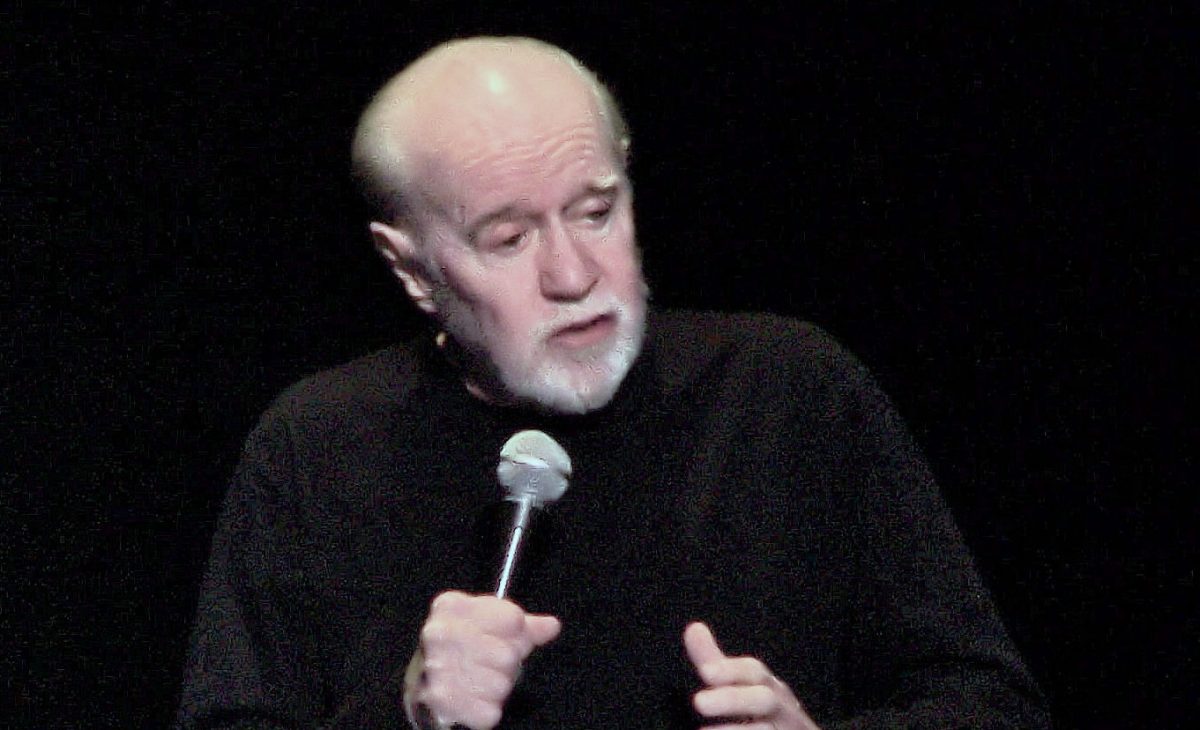
In his 2005 HBO stand-up comedy special, world-famous philosopher and social critic (posing as a stand-up comedian) George Carlin has enumerated quite a few things humanity should be ashamed of, like war, genocide, consumerism, and several others. If you look at the mainstream media, all you see is bad news: an earthquake here, famine there, a caravan of desperate people heading for the US border, armed conflicts all over the world, and countless examples of corporate greed exploiting not only humans but animals, nature, the planet as a whole. In times like these, it’s hard to remember that there are still things that make us as a species worthy of survival. If you find it hard to think of any, here are a few things that will – at least for a while – restore your faith in humanity.

England’s soccer team donates all World Cup winnings to charities

Sports stars are just a bunch of overpaid entertainers – this is something that probably crosses the minds of many when seeing the fabulous amounts they make year after year. This might be true – but, it seems, not all of them are greedy. After failing to take home the World Cup this year (France proved it’s better at football),
England’s national football team donated all its World Cup winnings to charity. And it’s not two pennies either – the team took home at least $22 million by reaching the semi-final in the competition.

Prepare to be even more surprised: England’s footballers have been playing internationally for free for more than a decade. Since 2007, all their wages from international games to charity through the England Footballers Foundation (EFF), supporting charities like UNICEF, Cancer Research UK, The Honeypot Children’s Charity, and many others.

March for Our Lives, Washington DC, USA

Everyone in the United States of America has the right to bear arms, according to their Constitution’s Second Amendment. Sometimes, this leads to tragic incidents – like the Stoneman Douglas High School shooting in Parkland, Florida, on Valentine’s Day 2018. This tragic event triggered a massive outrage not only from the media but from the students, too – on March 24, they organized a massive demonstration in Washington DC (and inspired over 800 similar events all across the US and the world) demanding tighter gun control.

While the protests were criticized by many, claiming that their goal was to “destroy the Second Amendment”, media outlets have described them as a potential tipping point for gun control legislation in the country.

The Two Koreas

North Korea and South Korea have had an antagonistic relationship for decades – and they both took a step in the right direction this year. This spring, the presidents of the two countries – North Korean leader Kim Jong Un, and South Korean president Moon Jae-In met for the first time, each of them stepping on the soil of the neighbouring country as a symbolic gesture. Their first summit was mostly ceremonial, with symbolic gestures made by both, including the planting of a tree, the signing of the Panmunjom Declaration for Peace, Prosperity and Unification on the Korean Peninsula, and had a formal dinner.

Since then, the two leaders met twice – in May and September – and are planning to organize another in December, when North Korean president Kim Jong Un will visit Seoul.


South Korea talks tough after landmine incident

South Korean President Park Geun-hye talked tough on Monday, demanding that North Korea apologise over a recent landmine incident, even as the bitter rivals held marathon negotiations in a bid to defuse tensions that have brought the peninsula to the brink of armed conflict.

Park said anti-North propaganda broadcasts would continue unless Pyongyang took responsibility for landmine explosions early this month that wounded two South Korean soldiers in the Demilitarised Zone (DMZ) separating the two countries.

North Korea denies it laid the mines.

The incident has escalated into a crisis that saw both sides exchange artillery fire on Thursday and ramp up their military readiness. The United Nations, the United States and the North’s lone major ally, China, have all called for calm.

“We need a clear apology and measures to prevent a recurrence of these provocations and tense situations,” Park told a meeting with her top aides, according to a statement released by her office. “Otherwise, this government will take appropriate steps and continue loudspeaker broadcasts.”

Seoul and Washington were reviewing the possibility of bringing in “strategic” US military assets, South Korean Defence Ministry spokesperson Kim Min-seok said, without elaborating.

Source: Reuters

Chief Justice wants white males out

South Africa’s black Chief Justice berated the government and corporations for hiring white males to defend them in courts.

Speaking at a Durban Chamber of Commerce and Industry luncheon, Mogoeng Mogoeng said: “There’s still a lot to be done to empower women, especially black women [in the judiciary].

“But the big challenge is that whenever big business has a matter before our court they brief white male lawyers.

“The same goes for the government: It briefs white males,” he said.

Mogoeng urged businesses to support young black student lawyers at universities and called on white male lawyers, to stop paying lip service to transformation in the legal sector.

Mogoeng, without irony, called on South Africa to follow the example of countries like South Korea and Singapore. They had succeeded, he said, due to good governance, unified purpose and a strong emphasis on education.

Both countries are listed among the worst in the world for black people.

“I cannot stress this too much, we need to embrace education aggressively,” Mogoeng said.

South Korea fails to contain MERS

Hong Kong issued a red alert and advised against traveling to South Korea, where an epidemic of Middle East Respiratory Syndrome (MERS) is gaining pace. The virus is spreading despite attempts to contain the outbreak.

In Korea, the number of infected people passed 100 this week, reaching 122 on Thursday. Tenth patient died from the disease, health officials said on Thursday. Most of the victims are elderly patients with other health problems unrelated to the virus. Over 3,250 people remain in quarantine.

Two people in Hong Kong who traveled to South Korea recently are being tested for possible MERS contagion, the authorities said on Thursday. Previously 31 people were tested negative in Hong Kong.

Earlier a man tested positive for the disease in China after coming from S. Korea, and a man in Taiwan was taken to hospital with symptoms consistent with MERS.

South Korean authorities are trying to stop the spread of the virus by closing schools and canceling public events. Neighbors in the region are scaling down tourist travel to South Korea, with Hong Kong alone scrapping 600 tours to the MERS-hit country.

Macau issued an advisory against traveling to South Korea.

MERS most likely spread to South Korea from Saudi Arabia, where the virus was first identified in 2012. At least 448 deaths are attributed to it, most of them in the Middle East, according to the World Health Organization numbers. The Korean outbreak is the largest so far outside the Middle East.

The virus is of the same coronavirus family that caused a massive epidemic in China in 2003 from severe acute respiratory syndrome (SARS). So far there is no vaccine for MERS.

China launches World Bank rival

China and India are backing a 21 country $100 billion Asian Infrastructure Investment Bank (AIIB) to challenge to the World Bank and Asian Development Bank.

Memorandum of understanding were signed with 21 Asian countries in Beijing Friday. Australia, Indonesia and South Korea were absent following hidden pressure from Washington.

The development bank was proposed a year ago by Chinese President Xi Jinping, and is to offer financing for infrastructure projects in underdeveloped Asian countries.

Headquartered in Beijing, former chairman of the China International Capital Corp investment bank Jim Liqun, is expected to take a leading role.

The bank will initially be capitalized with $50 billion, most of it contributed by China. The country is planning to increase authorized capital to $100 billion. With that amount the AIIB would be two-thirds the size of the $175 billion Asian Development Bank.

India will be the second largest bank shareholder though Kuwait, Qatar, Mongolia, Kazakhstan, Pakistan, Nepal, Oman, and all the countries of the Association of Southeast Asia, except Indonesia are involved.

Australia, Indonesia and South Korea did not participate following US claims of ‘concerns’ about a rival to Western-dominated multilateral lenders.

Japan, China’s main rival in Asia, which dominates the Asian Development Bank along with the United States, did not attend but had not been expected to do so.

Indonesia refused to participate claiming it needs time to discuss China’s proposal.

The Australian Financial Review said US Secretary of State John Kerry had personally asked Australian Prime Minister Tony Abbott to “steer clear” from joining AIIB.

“Australia has been under pressure from the US for some time to not become a founding member of the bank and it is understood Mr. Kerry put the case directly to the prime minister when the pair met in Jakarta on Monday following the inauguration of Indonesian President Joko Widodo,” the paper said.

South Korea, one of America’s closest allies in Asia, is also prevaricating. Its finance ministry said it spoke with China to request more time to consider details such as the AIIB’s governance and operational principles.

US officials have said they do not want to support an initiative Washington thinks is unlikely to promote good environmental, procurement and human rights standards in the way the World Bank and ADB are required to do.

But Chinese officials are convinced the American opposition is an attempt to contain the global rise of China and its ambition to remain the dominant power in Asia.

“You could think of this as a basketball game in which the US wants to set the duration of the game, the size of the court, the height of the basket and everything else to suit itself,” Wei Jianguo, a former Chinese commerce minister, told the Financial Times.

Matthew Goodman, scholar at the Center for Strategic and International Studies in Washington DC believes the initiatives of a BRICS Bank and AIIB “represent the first serious institutional challenge to the global economic order.”

Chinese Finance Minister Lou Jiwei said the AIIB will set high standards, safeguard policies and improve on bureaucratic, unrealistic and irrelevant policies, according to the Xinhua news agency.

Source: RT

Russia dumping dollars to protect currency and falling oil prices

As the United States expands its proxy war against Russia and the BRICS nations through a newly discovered secret deal with Saudi Arabia to force down global oil prices, Russia is firing back to this monetary attack against their currency and economy. On Oct. 10, a new report on Russian currency outflows shows that during the third quarter ending in September, the Eurasian state paid off a near record $53 billion in foreign debt, and sold off dollars to use as capital to stabilize their declining currency, and to protect their primary resource industry from the deflation America has caused through the dumping of excess oil into the market supply.

Some of this money was used earlier this week to support the declining Rouble as President Putin authorized the transfer of over $2 billion to be used directly to support the Russian currency. Additionally, the Russian central bank has already authorized funds to be set aside to supplement Russian corporations and oil industries should the need arise for liquidity and capital.

Despite the reassuring narrative from The West that Russia faces “costs” and is increasingly “isolated” due to sanctions for its actions in Ukraine, the most recent data suggests reality is quite different. First, capital outflows slowed dramatically in Q3 (from $23.7 billion in Q2 to $13 billion in Q3) with September seeing capital inflows for the first time since Sept 2013. Second, Russia’s current account surplus was significantly stronger than expected ($11.4 billion vs $8.8 billion expected) driven by increased trade. Third, and perhaps most crucially, Russia paid down a massive $52.8 billion in foreign debt as Putin “de-dollarizes” at near record pace, reducing external debt to the lowest since 2012. – Zerohedge

Russia is not the only Eurasian nation de-dollarizing at a fast pace. Earlier this week as well, long time U.S. economic ally South Korea disseminated that their foreign reserve holdings had grown in the Yuan over the past year, almost doubling its prior total of 13.7% which was the amount they held at the end of 2013. These reserves replace former dollar holdings, and rise a huge red flag that the Far Eastern manufacturing center is quickly moving into the Eurasian Trade camp, and away from Western hegemony.

America’s gambit to force down the price of oil is a ploy the U.S. used in the late 1980’s to destroy the Rouble, and tear down the old Soviet Union’s economy. However, the Russian leadership is not stupid, and have realized for a long time that this was an Achilles Heel in their economic system, and this time, the tables are quickly turning against the U.S. as Russia simply dumps more and more dollars to use as capital to supplement their currency and industry during these short term attacks by the West in their attempt to cripple them monetarily.

Source: Examiner

Eating on camera in South Korea

eataloneThe job that Americans were destined to do: get paid to eat a lot of food while other people watch on the internet. Reuters is reporting on “gastronomic voyeurism,” a trend growing in popularity in South Korea.

34-year-old Park Seo-yeon used to work for a consulting firm but has left that job. Why? She’s earning more than $9,000 a month to eat on camera.

Going by the name, “The Diva,” she sits down to a table of food and eats for up to three hours. Her viewers chat with her and send her “virtual balloons,” which Reuters says, “translate into cash.”

So, what’s the deal? The Diva thinks it’s about enjoying something through someone else, “People enjoy the vicarious pleasure with my online show when they can’t eat that much, or don’t want to eat food at night, or are on a diet.”

One of The Diva’s fans, 26-year-old Park Sun-Young says it’s about approximating the feeling of having company. “It’s comforting for people who eat alone,” says Park.

Apparently, eating alone is something that is happening more and more in South Korea. Reuters points out that within 15 years, a third of the nation’s population could be comprised of one-person households, the fastest rate amongst developed countries.

Source: Reuters

Japan: China’s new air defense zone ‘very dangerous’ escalation

senkakuThe government branded as “very dangerous” China’s announcement Saturday that it has set up an East China Sea air defense identification zone that includes the Japan-held Senkaku Islands.

The Chinese Defence Ministry said the zone was created to “guard against potential air threats,” but the move will only inflame a bitter sovereignty row over the islets, which China claims as Diaoyu.

Later Saturday, China scrambled air force jets, including fighter planes, to patrol the new zone.

Its outline is shown on the ministry website and a Chinese state media Twitter account — pic.twitter.com/4a2vC6PH8O. It covers a wide area of the East China Sea between South Korea and Taiwan, and includes the Senkaku islets.

In Tokyo, Junichi Ihara, head of the Foreign Ministry’s Asian and Oceanian Affairs Bureau, lodged a protest by phone with Han Zhiqiang, a minister at the Chinese Embassy, according to a statement issued by the ministry.

Ihara was quoted as telling Han that Japan can “never accept the zone set up by China,” as it includes the Senkakus. He further said the new zone will “escalate” already fraught bilateral ties over the uninhabited but potentially resource-rich islet chain, branding China’s move “very dangerous,” the statement said.

Vice Foreign Minister Akitaka Saiki plans to summon Chinese Ambassador to Japan Cheng Yonghua as early as possible Monday to state Tokyo’s position on the matter.

Chinese Defence Ministry spokesman Yang Yujun said Saturday that the establishment of the zone, which China said entered into force as of 10 a.m. Saturday, was aimed at “safeguarding state sovereignty, territorial land and air security, and maintaining flight order.”

“It is a necessary measure in China’s exercise of self-defense rights. It has no particular target and will not affect the freedom of flight in relevant airspace,” Yang said in a statement on the ministry’s website.

“China will take timely measures to deal with air threats and unidentified flying objects from the sea, including identification, monitoring, control and disposition, and it hopes all relevant sides positively cooperate and jointly maintain flying safety,” he said.

Along with the new zone, the Chinese ministry released a set of aircraft identification rules that it says must be followed by all aircraft entering the area, under penalty of intervention by China’s military.

Aircraft are now expected to provide their flight path, clearly mark their nationality and maintain two-way radio communication in order to “respond in a timely and accurate manner to identification inquiries” from Chinese authorities.

Shen Jinke, spokesman for the People’s Liberation Army Air Force, reported late Saturday that it had conducted a sweep of the area using early warning aircraft and fighter jets. “The patrol is in line with international common practices, and the normal flight of international flights will not be affected,” Shen said.

Four Chinese Coast Guard boats briefly entered Japan’s territorial waters around the Senkakus on Friday, after multiple incursions at the end of October and the beginning of this month further aggravated tensions between Beijing and Tokyo.

Defense Minister Itsunori Onodera in late October said the repeated incursions are a threat to peace and fall in a “gray zone (between) peacetime and an emergency situation.”

A few days earlier, his Chinese counterpart had threatened Japan that any bid to shoot down China’s drones would constitute “an act of war.” That move came after a report said Japan had drafted plans to destroy foreign drones that encroach on its airspace if warnings to leave are ignored.

Sino-Japanese relations have remained icy for more than a year because of the Senkakus dispute, which was revived when Japan purchased three of the five main islets in September 2012, effectively nationalizing the entire chain. Since then, China has regularly sent coast guard vessels to the islets, which lie 400 km west of Okinawa and 200 km northeast of Taiwan. – AFP

The warmongers: not looking out for us

mercer_ilanaby Ilana Mercer

[followbutton username=’IlanaMercer’ count=’true’ lang=’en’ theme=’light’]

Like Ilana Mercer’s Facebook page

To listen to U.S. government officials there is only an upside to the punitive sanctions imposed on Iran by the United States and a reluctant European Union. Consequently, the emphasis is forever on how to toughen the punishment; never on whether to lift economic sanctions on the long-suffering people of Iran.

But what about the effects of trade boycotts on American businesses?

Chris Harmer of The Institute for the Study of War estimates that the Boeing Company alone forfeits a minimum of $25 billion in business every year because of U.S.-imposed sanctions on Iran, a niche market that is filled by the Russians. Overall, Harmer puts the value to U.S. business of trade lost due to the economic embargo on Iran at approximately $50 billion per annum.

For example, Iran imports $1.5 billion worth of cars a year, the beneficiaries of which are companies like Nissan, Toyota and Peugeot (when they might have been General Motors and Chrysler). Peugeot does an added half a billion dollars’ worth of commerce with Iran just in car parts.

The Iranian economy, moreover, has diversified and is adapting to life without the U.S. The rest of the world—pockets in Europe and most of Asia—has not isolated Iran, with the result that the country has many trading partners other than the U.S. And while Iran has lost petroleum revenue due to sanctions, the trend will not endure. China, Japan and South Korea are hungry for the country’s crude.

Not to be overlooked are the costs to Americans of sanction enforcement, avers Harmer. In addition to the opportunity costs—the missed business aforementioned—there are “direct costs.” The Office of Foreign Asset Control in the U.S. Treasury Department squanders around $1 billion a year in developing lists of “financial institutions that are subject to sanctions,” and then infringing on the rights of individuals and companies to freely exchange privately owned property.

“Indirect costs” are incurred in the course of cultivating a massive U.S. intelligent infrastructure—a veritable alphabet soup of agencies—upon which the Treasury draws in enforcing a regimen of sanctions.

Into the Cannibal's Pot

So, too, are the “deterrent costs” borne by the American taxpayer who pays for patrolling the Persian Gulf, the Northern Arabian Sea and the Strait of Hormuz.

Ultimately, trade, not democracy, is the best antidote to war with Iran. The more economically intertwined countries become, the less likely they are to go to war. More than boycotts, barter with Iran is bound to promote goodwill and reduce belligerence on both sides.

As a general rule, state-enforced boycotts harm honest, hard-working Americans who use the economic means to earn their keep. They benefit servants of Uncle Sam—the political class and its media and think-tank hangers-on. For they deploy the political means to advance their ends and grow their sphere of influence. As libertarian economist Murray Rothbard once observed, these “are two mutually exclusive ways of acquiring wealth”—the economic means is honest and productive, the political means is dishonest and predatory.

As always, it’s us against them: the state versus the people who labor outside it and in spite of it.

For now, Obama’s eager response to Iranian overtures has sidelined Syria. Before Syria recedes in memory—to be replaced by demands for action against Iran—it’s worth considering one constant quantity: the media guttersnipes and their motivation.

The bobbingheads of TV have been complaining in the most unctuous terms that Russia and Syria have pulled one over us. The U.S., they lament, has been weakened, evidently, because someone halted the momentum of war.

You see, the chattering and political classes cannot conceive of greatness outside the state because they are part of the state apparatus and depend on it for status and income.

Conversely, individual Americans—who have nothing to gain and only losses to sustain from war—should never conflate their interests with those of the government and its emissaries, who have everything to gain from the great theatre that is war.

More than anyone, who benefits when America goes to war? Those who “function within the nimbus of great power” in D.C. and around it—the media-military-congressional-industrial complex.

Thus did Charles Krauthammer ridiculously equate the failure to go to war against Syria with “Russia supplanting America as regional hegemon.”

Krauthammer was joined by others, not least of them Bill O’Reilly and his sidekick Dennis the Menace. How diminished will the bluster of both media mouths be if the U.S. is no longer dictating the terms of war (lots of it) and peace (too little of it) in the world? Their immense egos will suffer. Maybe even their incomes, eventually.

But not you, the everyday American.

Putin stopped a war in Syria. This is not the same as “supplanting” American power. Rather, the Russians replaced bully power with a balance of power, and this is good for ordinary Americans.

He who saves you from war is better than he who sends you to war. The proof is in the Putin.

[followbutton username=’IlanaMercer’ count=’true’ lang=’en’ theme=’light’]

Like Ilana Mercer’s Facebook page

©2013 By ILANA MERCER

For syndication rights to http://BarelyABlog.com or http://IlanaMercer.com, contact ilana@ilanamercer.com. Read more.

Digital dementia

digitaldementiaDoctors in South Korea are reporting a surge in “digital dementia” among young people who have become so reliant on electronic devices that they can no longer remember everyday details like their phone numbers.

South Korea is one of the most digitally connected nations in the world and the problem of internet addiction among both adults and children was recognised as far back as the late 1990s.

That is now developing into the early onset of digital dementia – a term coined in South Korea – meaning a deterioration in cognitive abilities that is more commonly seen in people who have suffered a head injury or psychiatric illness.

“Over-use of smartphones and game devices hampers the balanced development of the brain,” Byun Gi-won, a doctor at the Balance Brain Centre in Seoul, told the JoongAng Daily newspaper.

“Heavy users are likely to develop the left side of their brains, leaving the right side untapped or underdeveloped,” he said.

The right side of the brain is linked with concentration and its failure to develop will affect attention and memory span, which could in as many as 15 per cent of cases lead to the early onset of dementia.

Sufferers are also reported to suffer emotional underdevelopment, with children more at risk than adults because their brains are still growing.

The situation appears to be worsening, doctors report, with the percentage of people aged between 10 and 19 who use their smartphones for more than seven hours every day leaping to 18.4 per cent, an increase of seven per cent from last year.

More than 67 per cent of South Koreans have a smartphone, the highest in the world, with that figure standing at more than 64 per cent in teenagers, up from 21.4 per cent in 2011, according to the Ministry of Science, ICT and Future Planning.

Dr Manfred Spitzer, a German neuroscientist, published a book titled “Digital Dementia” in 2012 that warned parents and teachers of the dangers of allowing children to spend too much time on a laptop, mobile phone or other electronic devices.

Dr Spitzer warned that the deficits in brain development are irreversible and called for digital media to be banned from German classrooms before children become “addicted.” – The Telegraph
