New Ebola death in Sierra Leone

A woman who died last week in northern Sierra Leone tested positive for Ebola, the National Ebola Response Centre (NERC) said Monday, in a setback for the country’s bid to gain Ebola-free status.
Related Stories

There had been celebratory scenes last week when the country’s last known Ebola patient was released from hospital in the central city of Makeni after being cured of the virus, raising hopes the west African nation may finally have beaten the devastating epidemic.

Sources contacted by AFP confirmed that the woman was in her mid-60s and lived in Sella Kafta village in Kambia District.

A swab taken after her death Friday confirmed she had contracted Ebola.

She had not travelled to either Liberia or Guinea, two other countries also blindsided by the worst outbreak of Ebola in history, which has killed some 11,300 people since first emerging in December 2013 in Guinea.

Ebola is back in Sierra Leone

Two new cases of the deadly Ebola virus have been recorded in Sierra Leone’s capital city of Freetown, about three weeks after the most recent new cases were found, underscoring the difficulty of ridding the region of the disease.

“This is worrisome because we had already closed all Ebola quarantine structures in Freetown since we had gone for weeks without a case,” Sidi Yahya Tunis, a spokesman for the National Ebola Response Centre (NERC) told Reuters. The cases were found in a densely populated slum called Magazine.

Sierra Leone, one of the three West African nations hit hardest during the outbreak, has so far experienced more than 13,000 cases and more than 3,900 deaths. Guinea is still struggling to hit zero cases; Liberia, which at one point last year led all three in the highest number of cases, was declared Ebola-free in May.

Altogether, the three countries have reported more 27,350 cases and more than 11,170 deaths. Overall infections are on the decline, with fewer than 25 cases in Ebola treatment units last week.

Source: Reuters

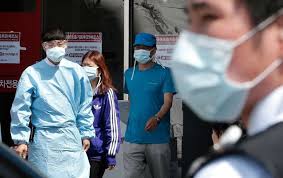
South Korea fails to contain MERS

Hong Kong issued a red alert and advised against traveling to South Korea, where an epidemic of Middle East Respiratory Syndrome (MERS) is gaining pace. The virus is spreading despite attempts to contain the outbreak.

In Korea, the number of infected people passed 100 this week, reaching 122 on Thursday. Tenth patient died from the disease, health officials said on Thursday. Most of the victims are elderly patients with other health problems unrelated to the virus. Over 3,250 people remain in quarantine.

Two people in Hong Kong who traveled to South Korea recently are being tested for possible MERS contagion, the authorities said on Thursday. Previously 31 people were tested negative in Hong Kong.

Earlier a man tested positive for the disease in China after coming from S. Korea, and a man in Taiwan was taken to hospital with symptoms consistent with MERS.

South Korean authorities are trying to stop the spread of the virus by closing schools and canceling public events. Neighbors in the region are scaling down tourist travel to South Korea, with Hong Kong alone scrapping 600 tours to the MERS-hit country.

Macau issued an advisory against traveling to South Korea.

MERS most likely spread to South Korea from Saudi Arabia, where the virus was first identified in 2012. At least 448 deaths are attributed to it, most of them in the Middle East, according to the World Health Organization numbers. The Korean outbreak is the largest so far outside the Middle East.

The virus is of the same coronavirus family that caused a massive epidemic in China in 2003 from severe acute respiratory syndrome (SARS). So far there is no vaccine for MERS.

Hundreds of new Ebola cases suspected in Sierre Leone

A three-day lockdown in Sierra Leone has exposed hundreds of potential new cases of Ebola, aiding efforts to bring to an end an epidemic that has already killed 3,000 people in the country.

Officials ordered the country’s 6 million residents to stay indoors or face arrest during the period that ended late on Sunday as hundreds of health officials went door-to-door looking for hidden patients and educating residents about the virus.

Reports to authorities of sick people increased by 191 percent in Western Area, which includes the capital, during the lockdown compared with the previous weekend, said Obi Sesay of the National Ebola Response Center.

“Tests are being carried out on their blood samples, and the results will be in by Wednesday,” Sesay said, adding that 173 of the patients in Freetown met an initial case definition for Ebola.

In the rest of the country, there was a 50 percent increase in sick people reported in the lockdown’s first two days, Sesay said.

Sierra Leone has reported nearly 12,000 cases since the worst Ebola epidemic in history was detected in neighboring Guinea a year ago. In all, more than 10,000 people have died in the two countries plus Liberia.

New cases have fallen since a peak of more than 500 a week in December, but the government said the lockdown, its second, would help identify the last cases and reduce complacency.

A source who declined to be identified said there were 961 death alerts nationwide during the lockdown’s first two days and 495 reports of illness of which 235 were suspected Ebola.

Source: Reuters

Black boys attacked at NY school and called ‘Ebola’

A group that advocates for Africans in the Bronx is calling for action after it says two brothers who had recently immigrated to the borough from Senegal were beaten and badly injured by several people who called them “Ebola” in school.

The 11- and 13-year-old boys, in sixth and eighth grade, respectively, were attacked Friday afternoon at I.S. 318 in Tremont, according to the African Advisory Council. Their father, Ousame Drame, said they were pummeled by other students in the schoolyard during lunch after enduring weeks of taunts.

The boys, who have been in the U.S. for about a month, were taken to the hospital after the attack.

Drame said his sons have been cruelly harassed for two weeks over Ebola. Days after news broke that the deadly disease was in the United States, he said students, whispering the word, “Ebola,” told other students not to talk to the boys. They were treated like cancers, he said.

“If they go to the gym they don’t want them touching the ball – ‘Oh, you have Ebola, don’t play with us,'” Drame said.

Though the children were raised in Senegal, they were born in America — and have every right to be here, their father said.

But Drame didn’t blame the students.

“They don’t know nothing. They’re babies,” he said.

Instead, Drame insisted the school system wasn’t doing enough to protect his children and others like them. He called on politicians and educators to spread awareness about the disease — and to step in when necessary.

Calling the attack “unacceptable,” advocates say it is just the latest incidence of disrespect and bullying of Africans since the outbreak of Ebola in West Africa.

“Where was the school administrators, where was the school staff when all of this was happening?” asked Charles Cooper of the African Advisory Council as he demanded more action.

Drame said his sons will return to school, but he wants confirmation they’ll be safe — physically and emotionally.

The Department of Education says it’s aware of the complaint and that it dispatched additional security to the boys’ school. The agency said it would instruct teachers and principals to be on high alert for any potential instances of bullying or discrimination. It also said it would send information to parents to help them better understand the issue and dispel any misconceptions their children might have.

“We will not tolerate intimidation or bullying of our students, especially in this moment when New Yorkers need to come together,” Schools Chancellor Carmen Farina said in a statement.

Senegal is one of several West African countries where Ebola cases have been reported, but there have been no new cases in that country since late August, according to the CDC. The World Health Organization has declared the country “Ebola-free.”

Cases continue to be reported in Guinea, Liberia and Sierra Leone. A few health care workers and travelers coming from those countries have also been diagnosed with the disease in other countries, including one person in New York City.

Source: nbcnewyork.com

Oz shuts the door on ebola

Australia has issued a blanket ban on visas from West African nations affected by the Ebola outbreak to prevent the disease reaching the country, Immigration Minister Scott Morrison said, becoming the first rich nation to shut its doors to the region.

Australia has not recorded a case of Ebola despite a number of scares, and conservative Prime Minister Tony Abbott has so far resisted repeated requests to send medical personnel to help battle the outbreak on the ground.

The decision to refuse entry for anyone from Sierra Leone, Guinea and Liberia, while touted by the government as a necessary safety precaution, was criticised by experts and advocates as politically motivated and short sighted.

“The government has strong controls for the entry of persons to Australia under our immigration programme from West Africa,” Morrison told parliament on Monday.

“These measures include temporarily suspending our immigration programme, including our humanitarian programme from Ebola-affected countries, and this means we are not processing any application from these affected countries.”

All non-permanent or temporary visas were being cancelled and permanent visa holders who had not yet arrived in Australia will be required to submit to a 21-day quarantine period, he added.

A number of US states, including New York and New Jersey, have also imposed mandatory quarantines on returning doctors and nurses amid fears of the virus spreading outside of West Africa. Federal health officials say their approach is extreme.

The Ebola outbreak that began in March has killed nearly 5 000 people, the vast majority in West Africa. The disease has an incubation period of about three weeks, and becomes contagious when a victim shows symptoms.

Ebola, which can cause fever, vomiting and diarrhoea, spreads through contact with bodily fluids such as blood or saliva.

Australia has contributed A$18 million to help fight the disease but has been criticised by medical groups, opposition lawmakers and rights groups for not sending teams to affected regions.

The risks to Australia were already small due to its geographical isolation, said Dr Adam Kamradt-Scott, a senior lecturer at the University of Sydney’s Marie Bashir Institute for Infectious Diseases and Biosecurity.

The visa ban, he said, would do nothing to protect the country from Ebola while potentially having a negative public health impact by unduly raising fears about the disease and creating a general climate of panic.

“This blanket ban actually does very little to reduce the risk of Ebola arriving in Australia. It also sends a very bad message both in terms of our humanitarian assistance programme as well as Australia’s attitude towards West Africa at the moment,” he told Reuters.

“This is purely just a political decision. There is very little scientific evidence or medical rationale why you would choose to do this, and this is the type of politics we find starts to interfere with effective public health measures.”

Earlier in October, it was revealed that Australia had turned down requests from Britain and the United States to send personnel to Sierra Leone to assist in combating the outbreak there, as well as additional funding.

Australia’s “narrow approach” to Ebola makes no sense from a health perspective, given that applicants for humanitarian visas are already screened and monitored for illnesses, said Graham Thom, a spokesperson for Amnesty International Australia.

Refusing to send healthcare workers while at the same time refusing entry to those most in need will further damage Australia’s reputation, already under fire over its tough asylum seeker policies, he said.

“There are ways and means in which people can be monitored, quarantined to insure that those who come are free from the disease,” he told Reuters.

“All it does is insure that already exceedingly vulnerable people are trapped in a crisis area and sends a signal about Australia’s commitment to actually dealing with this crisis in a responsible way as a member of the international community.”

Source: Reuters

Rwanda screens US, Spanish visitors for ebola

The East African nation of Rwanda is requiring all visitors from the United States and Spain to self-monitor, fill out an extensive questionnaire and report their medical condition for the first 21 days of their visits because of the Ebola cases that have surfaced in the two Western countries.

Coincidentally or not, the new screening follows an embarrassing uproar in a New Jersey school over the imminent enrollment of two Rwanda children that initially prompted their parents to keep them at home for 21 days.

The order by the Rwanda government to visiting Americans and Spaniards was posted Tuesday on the website of the U.S. Embassy in Rwanda:

“On October 19, the Rwandan Ministry of Health introduced new Ebola Virus Disease screening requirements. Visitors who have been in the United States or Spain during the last 22 days are now required to report their medical condition—regardless of whether they are experiencing symptoms of Ebola—by telephone by dialing 114 between 7:00 a.m. and 8:00 p.m. for the duration of their visit to Rwanda (if less than 21 days), or for the first 21 days of their visit to Rwanda. Rwandan authorities continue to deny entry to visitors who traveled to Guinea, Liberia, Senegal, or Sierra Leone within the past 22 days.”

The U.S. and Spain have both recorded deaths from Ebola. In Dallas, a Liberian national died of the virus two weeks ago and two nurses who treated him tested positive for the virus. At least two Spanish missionaries died in Spain after contracting the disease in West Africa. One Spanish nurse also tested positive for the virus.

Rwanda is located in East Africa about 2,600 miles east of Liberia, the closest of the three West African countries with the Ebola outbreak. Rwanda has been unaffected by the Ebola outbreak on the other side of the continent and has reported no cases of the virus.

The dust-up in New Jersey involving two Rwanda children took a new turn Monday with an apology by the superintendent of the Maple Shade School District in Burlington County.

The children were supposed to begin classes Monday at Howard Yocum Elementary School in Maple Shade, N.J., but ran into a backlash from other parents, WTXF-TV in Philadelphia.com reports.

The uproar started after a school nurse sent a note to staff members saying that the school intended to take the temperature of the two students three times a day for the next 3 weeks, the normal incubation period for Ebola.

Source: USA Today

‘This ebola is a very different bug’

Peter Jahrling of the National Institute of Allergy and Infectious Disease is on the front lines fighting this disease in Liberia. He is one of the top authorities in the world on Ebola.

Jahrling believes the current Ebola outbreak may be caused by an infection that spreads more easily than it did before.

Dr Jahrling explained that his team, who are working in the epicentre of the crisis in the Liberian capital of Monrovia, are seeing that the viral loads in Ebola patients are much higher than they are used to seeing.

He told Vox.com: ‘We are using tests now that weren’t using in the past, but there seems to be a belief that the virus load is higher in these patients [today] than what we have seen before. If true, that’s a very different bug.

‘I have a field team in Monrovia. They are running [tests]. They are telling me that viral loads are coming up very quickly and really high, higher than they are used to seeing.

‘It may be that the virus burns hotter and quicker.’

The head of the Center for Infectious Disease Research and Policy at the University of Minnesota – Dr. Michael Osterholm – is a prominent public health scientist and a nationally recognized biosecurity expert.

Dr. Osterholm just gave a talk shown on C-Span explaining that a top Ebola virologist – the Head of Special Pathogens at Canada’s health agency, Gary Kobinger – has found that the current strain of Ebola appears to be much worse than any strain seen before … and that the current virus may be more likely to spread through aerosols than strains which scientists have previously encountered.

The Los Angeles Times reports that dr. C.J. Peters, who battled a 1989 outbreak of the virus among research monkeys housed in Virginia and who later led the CDC’s most far-reaching study of Ebola’s transmissibility in humans, said he would not rule out the possibility that it spreads through the air in tight quarters.

“We just don’t have the data to exclude it,” said Peters, who continues to research viral diseases at the University of Texas in Galveston.

Dr. Philip K. Russell, a virologist who oversaw Ebola research while heading the U.S. Army’s Medical Research and Development Command, and who later led the government’s massive stockpiling of smallpox vaccine after the Sept. 11 terrorist attacks, also said much was still to be learned. “Being dogmatic is, I think, ill-advised, because there are too many unknowns here.“

A study was conducted back in 2012 that demonstrated that the Ebola virus can be transferred from one animal to another animal without any physical contact whatsoever:

When news broke that the Ebola virus had resurfaced in Uganda, investigators in Canada were making headlines of their own with research indicating the deadly virus may spread between species, through the air.

The team, comprised of researchers from the National Centre for Foreign Animal Disease, the University of Manitoba, and the Public Health Agency of Canada, observed transmission of Ebola from pigs to monkeys. They first inoculated a number of piglets with the Zaire strain of the Ebola virus. Ebola-Zaire is the deadliest strain, with mortality rates up to 90 percent. The piglets were then placed in a room with four cynomolgus macaques, a species of monkey commonly used in laboratories. The animals were separated by wire cages to prevent direct contact between the species.

Within a few days, the inoculated piglets showed clinical signs of infection indicative of Ebola infection. In pigs, Ebola generally causes respiratory illness and increased temperature. Nine days after infection, all piglets appeared to have recovered from the disease.

Within eight days of exposure, two of the four monkeys showed signs of Ebola infection. Four days later, the remaining two monkeys were sick too. It is possible that the first two monkeys infected the other two, but transmission between non-human primates has never before been observed in a lab setting.

Ebola: South Africa rejects offer to host 2015 Africa Cup of Nations

Sports authorities of the South African Republic followed the steps of Morocco and also decided against hosting next year’s Africa Cup of Nations biennial football championship, citing concerns over the outbreak of deadly Ebola virus in West Africa.

“The possibility of holding the Africa Cup of Nations is excluded,” South African Sports Minister Fikile April Mbalula said.

South Africa already hosted the Africa Cup of Nations in 2013 in place of Libya, which was torn by the war at that time. “Our budget is incapable of holding the championship in 2015,” Mbalula said. “This is totally impossible.”

Mbalula also said that on top of everything, his country was “facing the task of fighting Ebola.” “We are not immune to it,” the South African sports minister added.

Morocco earlier claimed that it made the decision to cancel hosting the 16-nation football tournament, scheduled to run between January 17 and February 8 next year, as it wanted to avoid holding an event involving countries where Ebola cases were registered, as well as to prevent the expansion of the deadly virus.

Issa Hayatou, the president of the African football’s governing body CAF, arrived in the South Africa Republic last Thursday in order to find a solution to the emerged problem concerning the hosting country.
The CAF earlier stated that it had no plans of postponing or changing the championship’s date of January 17-February 8.

The World Health Organization (WHO) reported last week that the Ebola epidemic was spreading geographically and the death toll exceeded the figure of 4,500, while the number of probable and suspected cases exceeded neared 9,000.

Source: ItarTass

‘I have ebola, I’ve been to Africa’

Amid cries of racism from black leaders including Jesse Jackson, cases of Ebola have topped 8,000 now, according to official data from the World Health Organization, though many cases could actually be unreported.

The death toll continues to climb near 4,000, and officials have stressed the outbreak is unprecedented and may continue to get worse.

Dallas County Commissioner John Wiley Price made similar arguments this week that Thomas Duncan, the first patient diagnosed with Ebola in the United States, died because his race and lack of “privilege” kept him from receiving the care he needed.

“It is historical what has happened in this community,” said Mr. Price, who is black. “If a person who looks like me shows up without any insurance, they don’t get the same treatment.”

An American passenger was booted off a US Airways flight and screened after reportedly joking that he had Ebola and telling the rest of the flyers they were “screwed.”

During a flight from Philadelphia to the Dominican Republic, the 54-year-old American – who remains unidentified – reportedly yelled, “I have Ebola, you are all screwed,” according to the Dominican news outlet Diario Libre.

He also yelled out, “I’ve been to Africa!” an airport official told Fox News Latino.

He didn’t yell “bomb,” but he might as well have. After the supposed joke was aired, there was noticeable panic and concern on the airplane, which was carrying 290 passengers. The plane was isolated as soon as it landed in Punta Cana, where a medical team outfitted with hazmat suits boarded the aircraft and removed the passenger.

After conducting a medical check, the passenger was found not to be infected with the virus. Though he was coughing on the flight, he had no fever when he was inspected. He had never been to Africa, either.

In a video captured by a passenger, an African-American can be seen being taken out of the plane by medical officials.

Fifty-eight percent of Americans supported the flight ban, according to a poll conducted in a collaboration between NBC News and SurveyMonkey.

Only twenty percent of respondents did not support a travel ban from the likes of Guinea, Liberia, and Sierra Leone.

As of earlier this week, neither the World Health Organization nor the White House endorsed an all-out travel ban to the US from affected nations.

Airplane cabin cleaning crews at New York’s LaGuardia International Airport began a 24-hour strike on Wednesday, citing, in part, possible exposure to the Ebola virus. Meanwhile, a poll found most Americans want flights banned from Africa.

“The whole country is shivering, worried about the problems of Ebola,” said Hector Figueroa, President of 32BJ Service Employees International Union, according to CBS New York.

Cabin cleaners per plane at LaGuardia have been reduced by up to half, and the time to clean planes has been cut down to as little as five minutes, workers said, as reported by CBS New York.


Largest Liberian newspaper accuses US of creating ebola

The Liberian Daily Observer, which is the largest newspaper in Liberia, just published an article on their front page with the headline, “Ebola, AIDS Manufactured By Western Pharmaceuticals, US DoD?” The article accuses the US of manufacturing the Ebola outbreak in a scheme to use Africa as a testing ground for bioweapons.

SITES AROUND AFRICA, AND IN WEST AFRICA, HAVE OVER THE YEARS BEEN SET UP FOR TESTING EMERGING DISEASES, ESPECIALLY EBOLA

The World Health Organization (WHO) and several other UN Agencies have been implicated in selecting and enticing African countries to participate in the testing events, promoting vaccinations, but pursuing various testing regiments. The August 2, 2014 article, West Africa: What are US Biological Warfare Researchers Doing in the Ebola Zone? by Jon Rappoport of Global Research pinpoints the problem that is facing African governments.

Obvious in this and other reports are, among others:

(a) The US Army Medical Research Institute of Infectious Diseases (USAMRIID), a well-known centre for bio-war research, located at Fort Detrick, Maryland;

(b) Tulane University, in New Orleans, USA, winner of research grants, including a grant of more than $7 million the National Institute of Health (NIH) to fund research with the Lassa viral hemorrhagic fever;

(c) the US Center for Disease Control (CDC);

(d) Doctors Without Borders (also known by its French name, Medicins Sans Frontiers);

(e) Tekmira, a Canadian pharmaceutical company;

(f) The UK’s GlaxoSmithKline; and

(g) the Kenema Government Hospital in Kenema, Sierra Leone.

Reports narrate stories of the US Department of Defense (DoD) funding Ebola trials on humans, trials which started just weeks before the Ebola outbreak in Guinea and Sierra Leone. The reports continue and state that the DoD gave a contract worth $140 million dollars to Tekmira, a Canadian pharmaceutical company, to conduct Ebola research. This research work involved injecting and infusing healthy humans with the deadly Ebola virus. Hence, the DoD is listed as a collaborator in a “First in Human” Ebola clinical trial (NCT02041715, which started in January 2014 shortly before an Ebola epidemic was declared in West Africa in March. Disturbingly, many reports also conclude that the US government has a viral fever bioterrorism research laboratory in Kenema, a town at the epicentre of the Ebola outbreak in West Africa. The only relevant positive and ethical olive-branch seen in all of my reading is that Theguardian.com reported, “The US government funding of Ebola trials on healthy humans comes amid warnings by top scientists in Harvard and Yale that such virus experiments risk triggering a worldwide pandemic.” That threat still persists.

Can statins help treat Ebola?

THIS week, the World Health Organization endorsed the use of experimental drugs in the fight against the Ebola epidemic in West Africa. That is the right decision. There is no proven vaccine or treatment for Ebola, and in light of the severity of the current outbreak, experimental treatments that have not been tested on humans should be an option.

The problem is that these drugs are in exceedingly short supply. Recently, two American aid workers infected with the Ebola virus were treated with the experimental drug ZMapp, and they survived. Unfortunately, only a handful of doses of ZMapp have been produced. For the foreseeable future, even limited deployment of this and other experimental drugs will be impossible.

Is there anything else that could be used to treat Ebola patients? Surprising as it may seem, we believe that several widely available drugs that were initially developed to treat patients with cardiovascular diseases and diabetes may be effective.

More than a decade ago, clinicians noted striking similarities between patients with Ebola and those with bacterial sepsis. Both diseases involve severe dysfunction of the endothelial cells that line blood vessels throughout the body. This dysfunction in turn precipitates major abnormalities in blood coagulation. Both can eventually lead to the failure of internal organs, primarily the liver and kidneys, and organ failure often leads to death. Something similar is seen in many patients with other forms of acute critical illness, including pneumonia and influenza.

Researchers have since discovered that abnormalities of endothelial function and coagulation can be modified or reversed by treatment with drugs such as statins, angiotensin-converting enzyme (ACE) inhibitors and angiotensin-receptor blockers (ARBs), which were developed to treat patients with cardiovascular diseases and diabetes. Known as immunomodulatory drugs, they also have the ability to modify the body’s response to infection. While they don’t prevent infection itself, they can prevent complications like organ failure. A clinical trial published in the journal Critical Care in 2012 demonstrated, for example, that early treatment of sepsis patients with a statin reduced the occurrence of organ failure (a complication that often kills Ebola patients) by 83 percent.

Unlike experimental Ebola treatments, these immunomodulatory drugs have been approved and are produced as inexpensive generics. They are available to anyone who lives in a country with a basic health care system, and this includes the countries in West Africa that are struggling to cope with Ebola.

Representatives from the World Health Organization have expressed reservations about what we are proposing. They have suggested, for instance, that the use of such drugs could increase viral replication and worsen the disease. But several studies have shown that statins actually reduce viral replication in human diseases like hepatitis C and improve clinical outcomes.

Our proposal would not be without risk. But the best evidence we have suggests that Ebola patients and their doctors should be given a chance to consider the benefits as well as the risks that these drugs may offer. Nothing should stop physicians from using them as long as they document the impact of treatment on disease outcome.

We want to stress that we support the public health measures that are being used to combat the outbreak. That said, the urgent needs of individual Ebola patients demand that something more be offered.

The challenge presented by Ebola in West Africa could be viewed as one aspect of a larger problem. Perhaps one day these immunomodulatory drugs might be used in the treatment of patients with many forms of acute critical illness, including pneumonia and influenza, much as oral rehydration solution is used to treat patients with severe diarrhea, regardless of the cause.

Viewed in this way, the challenge of treating Ebola patients also represents an opportunity to transform the way acute critical illness is managed throughout the world. We should not pass it by.

Source: By DAVID S. FEDSON and STEVEN M. OPAL, NYT

US to test Ebola vaccine on people

The U.S. government will begin testing on people an experimental Ebola vaccine as early as September, after seeing positive results from tests on primates, according to media reports on Thursday.

The National Institutes of Health’s infectious disease unit is working with the U.S. Food and Drug Administration to put the vaccine into trial as quickly as possible, according to CNN and USA Today. The director of that unit could not be reached for comment.

Source: Reuters

US scientist recreates H1N1 flu virus that killed 500,000 people

A controversial researcher who in the past had replicated the deadly Spanish flu of 1918 has done it again, this time cooking up in his lab an especially resilient strain of the H1N1 virus.

Dr Yoshihiro Kawaoka, professor of virology at University of Wisconsin at Madison, has reportedly tweaked the 2009 strain of pandemic influenza responsible for some 500,000 deaths worldwide to make it resistant to the human immune system’s antibodies.

Kawaoka’s many critics have said that his latest provocative experiment has essentially rendered the world’s population defenseless against the virus.

According to the U.S. Centers for Disease Control and Prevention, the H1N1 virus that sparked the 2009-2010 pandemic has turned into a regular human flu virus that continues to circulate seasonally worldwide.

The same lab works on the Ebola virus.

Source: Daily Mail