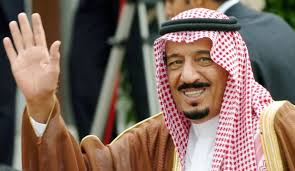
Saudi Arabia offers to build 200 mosques in Germany

Saudi Arabia is offering to pay for the construction of enough mosques in Germany to facilitate the needs of every 100 refugees that enter the country. The offer comes as Europe has been flooded with hundreds of thousands of illegal immigrants and asylum seekers from Syria and Iraq.

Fanning out across Europe, seeking refuge, some 4 million refugees are looking for a place to settle down as war ravages Syria. In Syria itself, another 6.5 million are displaced. There are only 10.6 million Syrians, just half of the nation’s total population, still living in their homes. Syrians now make up 20 percent of the planet’s refugees.

These people have needs, including food, shelter and other basics. They also want their spiritual needs met and since nearly all of them are Muslim, that means they want mosques. To meet that demand, Saudi Arabia is offering to build a mosque for every 100 refugees accepted by Germany. Similar offers may be extended to other nations.

The refugees are streaming into Europe instead of into Islamic countries. Saudi Arabia has welcomed some of the refugees, but other Arab states are denying entry to most of these people. These nations have incredible wealth, mostly because of their oil industries, but they would rather build mosques abroad than welcome these refugees into their territory.

Source: Catholic Online

Lavrov calls Saudi diplomat imbecile

Russia’s Foreign Minister Sergei Lavrov prompted a wave of social media buzz this week after being filmed swearing under his breath during a press conference in Moscow with his Saudi counterpart.

Lavrov and Foreign Minister Adel al-Jubier met Tuesday to discuss how to resolve the worsening Syrian civil war, and the fate of President Bashar al-Assad.

The two men disagreed how to deal with the embattled president, as Russia believes Assad, an ally of President Vladimir Putin, should be involved in a coalition against the Islamic State, but Saudi Arabia wants him removed from power.

While the Saudi top diplomat spoke, Lavrov was seen shaking his head, adjusting his glasses, and muttering to himself, “[expletive] imbeciles,” according to translators.

Lavrov said the two top diplomats agreed on steps to help the Syrian government and opposition groups discuss the future of the country.

Russian and Iranian officials are persuading Saudi Arabia and the United States to realize that fighting terrorism in the region is more important than ousting Assad, The New York Times reported this week.

Jubeir insisted after his meeting with Lavrov that “there is no place for Assad in the future of Syria.”

According to United Nations estimates, the Syrian civil war has killed over 200,000 people since it began over four years ago.

The former U.S. Ambassador to Russia Michael McFaul tweeted Wednesday: “Really? And he used to accuse me of undiplomatic language.”

Source: UPI

Saudi king blames Mossad for 9/11

The former ambassador to Saudi Arabia said in an interview this week that following 9/11, Saudi King Salman had insisted to him that the Mossad was responsible for the attacks.

“One of my first calls was with then-governor of Riyadh… Prince Salman, who is now the king. His response was very emphatic [that] this could not have been Saudis, we couldn’t possibly have done this,” former envoy Robert Jordan said on CNN’s Fareed Zakaria GPS.

“This had to have been an Israeli plot. The Mossad must have done this,” he cited Salman as saying at the time.

“I got the same thing from the minister of interior, Prince [Mohammed bin] Nayef,” Jordan continued. “I finally had to bring a CIA briefer out and show some of these princes some compelling evidence that it, indeed, was Saudis who were the hijackers.”

Jordan went on to say that he saw the Saudis as being in denial about the fact that 15 of the 19 hijackers were from their country.

The Saudis eventually altered their position, he said, after al-Qaida bombed three Western housing compounds in May 2003.

“At that point, Crown Prince Abdullah said to me that he understood that they had a problem, that they would take immediate action to capture or kill the attackers and to treat just as harshly anyone who gave them comfort or aid or even tried to justify what they did,” said the former ambassador.

In his new book, Desert Diplomat: Inside Saudi Arabia Following 9/11, Jordan writes that the Palestinian issue was often a “source of Saudi anger directed at me.”

“America should be able to resolve this, they told me.

After all, the United States was omnipotent. All Washington had to do was snap its fingers and Israel would come to heel, do whatever we commanded it to do,” he says in the book.

Source: Jerusalem Post

Russia and Saudi Arabia sign nuclear deal

A number of cooperation documents were signed by Russia and Saudi Arabia on Thursday, after President Putin met with Saudi Prince Mohammed in what was one of the most anticipated meetings at the international economic forum in St. Petersburg.

The pair has signed six agreements in total, Al Arabiya News Channel reported. A cooperation agreement on a peaceful nuclear program was among the documents, the press service of Russia’s nuclear agency, Rosatom, said.

According to Rosatom, the document is the first in the history of Russia-Saudi relations to create a legal framework for cooperation between the nations in the field of nuclear energy. Future joint projects might include construction of nuclear power reactors, provision of services in nuclear fuel cycling, including those for nuclear power stations and research reactor facilities.

The Gulf kingdom has no industrial nuclear power plants, but has big plans for developing nuclear energy.

The two oil heavyweights have also agreed on the creation of a working group to develop joint energy projects, Russian Energy Minister Aleksandr Novak said on Thursday. Saudi Arabia is interested in energy projects in Russia, the minister said, adding that Russia doesn’t aim to replace existing partners in oil and gas cooperation, but rather wants to establish new ones.

The countries are ready to cooperate in a number of other spheres, the minister told journalists, mentioning pharmaceuticals and infrastructure development as prospective sectors.

“Our colleagues from Saudi Arabia have brought a lot of projects to the table. These projects will be introduced to our companies, including the ones involving the construction and upgrade of railways and building underground railway systems,” Novak said, adding that the Gulf kingdom plans to build metro systems in four cities in the near future.

Russia’s state space agency, Roscosmos, and Saudi national center for science and technology KACST signed papers including agendas for future cooperation in space exploration.

On meeting Putin, the 30-year old deputy crown prince Mohammed bin Salman, who is Saudi Arabia’s Defense Minister, announced that his father, King Salman, was inviting the Russian leader to visit the Gulf state.

“I have the honor to pass on an invitation to visit the kingdom of Saudi Arabia, as we regard Russia as one of the important states in the contemporary world, and our relations have roots in the past,” Prince Mohammed said, adding that Russia had been the first country to officially recognize the Gulf kingdom. “We will aim to develop bilateral relations in all sectors,” he added.

South Korea fails to contain MERS

Hong Kong issued a red alert and advised against traveling to South Korea, where an epidemic of Middle East Respiratory Syndrome (MERS) is gaining pace. The virus is spreading despite attempts to contain the outbreak.

In Korea, the number of infected people passed 100 this week, reaching 122 on Thursday. Tenth patient died from the disease, health officials said on Thursday. Most of the victims are elderly patients with other health problems unrelated to the virus. Over 3,250 people remain in quarantine.

Two people in Hong Kong who traveled to South Korea recently are being tested for possible MERS contagion, the authorities said on Thursday. Previously 31 people were tested negative in Hong Kong.

Earlier a man tested positive for the disease in China after coming from S. Korea, and a man in Taiwan was taken to hospital with symptoms consistent with MERS.

South Korean authorities are trying to stop the spread of the virus by closing schools and canceling public events. Neighbors in the region are scaling down tourist travel to South Korea, with Hong Kong alone scrapping 600 tours to the MERS-hit country.

Macau issued an advisory against traveling to South Korea.

MERS most likely spread to South Korea from Saudi Arabia, where the virus was first identified in 2012. At least 448 deaths are attributed to it, most of them in the Middle East, according to the World Health Organization numbers. The Korean outbreak is the largest so far outside the Middle East.

The virus is of the same coronavirus family that caused a massive epidemic in China in 2003 from severe acute respiratory syndrome (SARS). So far there is no vaccine for MERS.

Expert warns Syria about to fall into ISIS hands

According to Doctor Natasha Underhill, an expert on terrorism in the Middle East from Nottingham Trent University in the UK, the Islamic State could be on the verge of a breakthrough in Syria.

The lecturer at Nottingham Trent University told Express.co.uk that ISIS militants seized huge phosphate mines depriving the Syrian regime of a desperately-needed revenue source. She added that the latest development puts Syria on the verge of disintegration.

It’s really a power play for Islamic State. The mines are one of the last things Syria could make money from. It will push the state closer towards failure which is now almost inevitable. Syria is at crisis point. It’s already seen as a crisis state. We are just one or two more key events away from failure as we know it. With the situation as it is we could wake up tomorrow and the whole state would have changed.

But Syria will only be the beginning. Dr Underhill said if Syria falls into hands of ISIS it will give the terrorists more legitimacy in the eyes of those in the region and encourage similar Islamic extremist groups to pledge their support, much as Boko Haram has in Africa.

Islamic State has a political strand to their organisation and when it moves into an area sets up local government-type institutions. […] Once ISIS takes over a significant piece of land – and we’ve seen this in Afghanistan where the Taliban took over 90 per cent of the country – then that gives them legitimacy – not in the wider world but in the direct area, which is their target audience. […] While ISIS has shown it is willing to focus on a core area rather than seek to expand at a vast rate, neighbouring Jordan should still be aware of the likelihood of an invasion.

Underhill has unwittingly also highlighted the complete failure of the Clean Break strategy.

Commonly known as the “Clean Break” report [A Clean Break: A New Strategy for Securing the Realm], is a policy document that was prepared in 1996 by a study group led by Richard Perle for Benjamin Netanyahu, Israeli premier.

The report explained a new approach to solving Israel’s security problems in the Middle East, advocating an aggressive new policy including the removal of Saddam Hussein from power in Iraq and the containment of Syria by engaging in proxy warfare and highlighting its possession of “weapons of mass destruction”.

Yemeni leader flees while Saudi Arabia continues with air strikes

Yemen’s President Abd-Rabbu Mansour Hadi left his refuge in Aden for Saudi Arabia on Thursday as Houthi rebels battled with his forces on the outskirts of the southern port city.

Throughout the day, warplanes from Saudi Arabia and Arab allies struck at the Shi’ite Houthis and allied army units, who have taken over much of the country and seek to oust Hadi.

Warplanes resumed bombing the Houthi-held capital Sanaa on Thursday evening, shaking whole neighborhoods and terrifying residents. Several civilians have been reported killed in Sanaa.

“My whole family and I are preparing to sleep in the basement, as it’s the safest part of the house,” said resident Fawzia Nedras.

“The windows are rattling and we think they may break. We live near the airport, where we think a lot of the Houthi leaders are living and many of the air strikes are.”

Houthi leader Abdel-Malek al-Houthi said in a televised speech Yemenis would confront the “criminal, unjust and unjustified aggression” by Saudi Arabia.

Residents and security officials said the second night of air strikes throughout Yemen targeted air and ground force bases loyal to ex-president Ali Abdullah Saleh, whose forces have bolstered the Houthi advance.

The Saudi-led military intervention marked a major escalation of the Yemen crisis, in which Iran supports the Shi’ite Muslim Houthis, and Sunni Muslim monarchies in the Gulf back Hadi and his fellow Sunnis in Yemen’s south.

Iran denounced the surprise assault on the Houthis and demanded an immediate halt to Saudi-led military operations.

Tehran also made clear Saudi Arabia’s deployment of a coalition of Sunni states against its Shi’ite enemies would inflame the sectarian hatreds already fuelling wars around the Middle East.

Hadi’s departure under Saudi protection from Aden, his embattled base since fleeing Sanaa in February, could be a turning point.

Saudi state news showed pictures of Hadi smiling and holding hands with the Saudi defense minister receiving him at an airport in the capital Riyadh and said he would go on to Egypt to attend an Arab summit on Saturday.

Mohammed Marem, the director of Hadi’s office, confirmed he would attend the meeting in person, dropping his original plan to address it via video link.

Hadi would seek a “Marshall Plan” from Arab leaders to aid his war-torn country, his foreign minister Riyadh Yaseen told pan-Arab Al Jazeera TV, referring to a major economic stimulus for Europe after World War Two.

It was far from certain whether Hadi would be able to return to Aden.

On the city’s northern outskirts, Houthis and allied troops fought gun battles with militiamen loyal to Hadi. Thirteen pro-Houthi fighters and three militiamen were killed and several others were killed in running street fights in nearby towns.

Pro-Hadi fighters retook Aden airport, a day after it was captured by Houthi forces. The facility remained closed.

Major gamble

The Saudi move was a major gamble by the world’s top oil exporter to check Iranian influence in its backyard without direct military backing from Washington.

“We will do whatever it takes in order to protect the legitimate government of Yemen from falling,” Saudi Arabia’s ambassador to the United States, Adel al-Jubeir, told a news conference in Washington.

In Sanaa, which the Houthis seized in September, warplanes earlier bombed the main airport and al Dulaimi military air base, residents said.

A Reuters witness said four or five houses had been damaged. Rescue workers put the death toll at 13, including a doctor pulled from the rubble of his clinic.

Warplanes also struck Houthi fighters near Yemen’s border with Saudi Arabia, tribal and Houthi sources said. There was heavy street fighting in Houta, north of Aden, in which five pro-Houthi fighters and four militiamen were killed.

Thousands of Houthi supporters gathered to condemn the air strikes at the gate to Sanaa’s old city, waving Houthi banners and chanting “Death to America!”

Al-Arabiya said Saudi Arabia was contributing 100 warplanes to operation “Storm of Resolve” and more than 85 were being provided by the United Arab Emirates, Qatar, Bahrain, Kuwait, Jordan, Morocco and Sudan.

Egyptian air forces were participating and four naval ships headed to secure the Gulf of Aden. Turkey said it might provide logistical support.

Turkish President Tayyip Erdogan said later Iran had been trying to dominate the Middle East.

“It is really not possible to tolerate this. Iran has to understand,” he said, adding Tehran should withdraw any forces it had in Yemen as well as from Syria and Iraq.

Pakistan’s Prime Minister Nawaz Sharif said any threat to Saudi Arabia would “evoke a strong response” from Islamabad.

Pakistan, which borders eastern Iran, said it was considering a Saudi request that it send troops to Yemen.

Saudi Brigadier General Ahmed Asseri, spokesman for the operation, told a news conference:

“There are no plans at this stage for ground forces operations, but if the need arises, the Saudi ground forces and those of the friends and sisterly forces are ready and will repel any aggression.”

Arab foreign ministers agreed in Egypt on Thursday on a draft resolution to form a unified Arab military force.

“The task of the force will be rapid military intervention to deal with security threats to Arab nations,” Arab League Secretary General Nabil Elaraby said.

Russia’s President Vladimir Putin called for an immediate cessation of military activities in Yemen in phone conversations with Iran’s President Hassan Rouhani, the Kremlin said.

U.S. Secretary of State John Kerry raised Yemen on Thursday with his Iranian counterpart before turning to nuclear negotiations in Switzerland.

Iran’s Foreign Ministry demanded an immediate halt to the “aggression and air strikes” in Yemen.

“Military actions in Yemen … will further complicate the situation,” ministry spokeswoman Marzieh Afkham said, quoted by Fars news agency.

A senior Iranian official told Reuters: “Iran will use all possible political ways to allay tension in Yemen. Military intervention is not an option for Tehran.”

Riyadh accuses Iran of stirring up sectarian strife throughout the region and in Yemen with its support for the Houthis. Iran denies funding and training the Houthis.

Ambassador Jubeir said the assaults were in response to a request by Hadi. Washington said it supported the operation and had authorized U.S. logistical and intelligence support.

A widening Yemen conflict could disrupt the narrow Bab el-Mandeb strait, through which nearly 4 million barrels of oil are shipped daily to Europe, the United States and Asia. Oil prices surged as much as 6 percent on Thursday.

Yemen closed its main ports. The U.S. military said it would help ensure the strait at the tip of the Red Sea remains open. -Reuters

Saudi Arabia launches military operation in Yemen

A massive escalation of the tribal conflict in Yemen has brought the region closer to an all-out war.

The Shi’ite Houthi rebels have ousted the sitting president and control large parts of the country, a move that riled Saudi-Arabia.

Airstrikes by Saudi Arabia, Qatar, UAE, Kuwait, Bahrain, supported by Egypt, Morocco, Sudan, Pakistan, Jordan
Saudi-Arabia are concentrating 150,000 troops near the Saudi-Yemenite border.

The US was informed in advance and supports the operation. The Saudi-led air campaign against the Houthis in Yemen has been called “Decisive Storm”.

Saudi Arabia has warned international shipping firms not to approach any Yemenite harbor while Houthi rebels have threatened to escalate and push the entire region into a hot war.

With the military campaign initiated by Saudi Arabia, the risk of an escalation of the conflict with Iran grows as Saudi Arabia is an American ally.

In a sign of the broadening scope of Barack Obama’s intervention across the region, officials in Washington said the US was establishing a “joint planning cell” with Saudi Arabia to co-ordinate the air strikes on the Houthi forces.

A widening Yemen conflict could pose risks for global oil supplies, and Brent crude oil prices shot up nearly 6% soon after the operation began.

New Saudi king beheads four

Saudi Arabia on Tuesday beheaded two more of its citizens and a Pakistani, continuing the strictest punishment under new King Salman.

Omar bin Yahya bin Ibrahim al-Barkati was tried and convicted of incest, the interior ministry said in a statement carried by the official Saudi Press Agency.

“He was executed as punishment for his crime and as a lesson to others,” the ministry said, adding that authorities carried out the sentence in southwestern Asir region.

In a separate case, Yassir bin Hussein al-Hamza was executed in northwestern Jawf region after his trial and confession for smuggling amphetamine pills, the ministry said.

A third convict, Latif Khan Nurzada, a Pakistani, was executed for trafficking heroin into the kingdom. He was executed in the Muslim holy city of Mecca, the ministry said in another statement.

According to an AFP tally, their executions bring to 16 the number of Saudis and foreigners put to death this year under the kingdom’s strict version of Islamic sharia law.

Four have been executed since King Salman took office last Friday after the death of his predecessor Abdullah.

Under Abdullah, the number of executions jumped from 27 in 2010 to around 80 annually, with 87 last year.

The oil-rich Gulf Arab state faces constant international criticism over its human rights record, including the use of the death penalty.

Source: AFP

Lying to go to war

The Christian Science Monitor uncovered evidence of Republicans lying in 2002 to go to war.

When George H. W. Bush ordered American forces to the Persian Gulf – to reverse Iraq’s August 1990 invasion of Kuwait,– part of the administration’s case was that an Iraqi juggernaut was also threatening to roll into Saudi Arabia.

Citing top-secret satellite images, Pentagon officials estimated in mid–September that up to 250,000 Iraqi troops and 1,500 tanks stood on the border, threatening the key US oil supplier.

But when the St. Petersburg Times in Florida acquired two commercial Soviet satellite images of the same area, taken at the same time, no Iraqi troops were visible near the Saudi border – just empty desert.

“It was a pretty serious fib,” says Jean Heller, the Times journalist who broke the story.

Shortly before US strikes began in the Gulf War, for example, the St. Petersburg Times asked two experts to examine the satellite images of the Kuwait and Saudi Arabia border area taken in mid-September 1990, a month and a half after the Iraqi invasion. The experts, including a former Defense Intelligence Agency analyst who specialized in desert warfare, pointed out the US build-up – jet fighters standing wing-tip to wing-tip at Saudi bases – but were surprised to see almost no sign of the Iraqis.

“That [Iraqi buildup] was the whole justification for Bush sending troops in there, and it just didn’t exist,” Ms. Heller says. Three times Heller contacted the office of Secretary of Defense Dick Cheney (now vice president) for evidence refuting the Times photos or analysis – offering to hold the story if proven wrong.

The official response: “Trust us.” To this day, the Pentagon’s photographs of the Iraqi troop buildup remain classified.

Source: CSM

Drill, Baby Drill!

drillbabyAmerica is poised to displace Saudi Arabia as the world’s top oil producer with fracking. With that could come a hobbling of Opec and unforeseen shifts in US foreign policy.

So rapid has been the change in its energy fortunes that even some experts, as well as policy-makers in Washington, are struggling to keep up. Nor are we just talking oil. So much natural gas is being released by the shale also that for now outlandish quantities of it are simply being burned off into the atmosphere.

Even predicting future oil output isn’t the precise science you’d expect. “We keep raising our forecasts, and we keep underestimating production,” Lejla Alic, an analyst with the International Energy Agency noted recently. Last year US production reached 7.4 million barrels a day, an increase over 2012 of 15.3 per cent. A jump that large hasn’t been seen since 1951. This year the US should produce 8.3 million barrels a day.

Take another indicator – the volumes of crude being moved by trains, often a mile long, from the shale fields to refineries and terminals. In all of 2008, train companies moved 9,500 wagons of the black stuff. Last year, 400,000 of them rumbled across America.

How long America’s shale boom will last is hard to forecast also. In Texas, which on its own is set to increase production to 4 million barrels a day this year, the drilling peak still hasn’t been reached, but it’s the politicians around the world who set the price and make the markets. Increasingly, the decisions that matter will rest with the US, as it adjusts to its new status as a glut producer.

“The United States is now poised to become an energy superpower,” write By Robert D. Blackwill and Meghan O’Sullivan, in the current issue of Foreign Affairs magazine.

The consequences are likely to be far-reaching, notably affording Washington a chance it hasn’t had since the energy crisis of the early 1970s to reassess its relationships with those countries, often ruled by unappetising despotic governments – Saudi Arabia included – on which America has had to depend for so long to feed its fossil fuel needs.

“Since 1971, when US oil production peaked, energy has been construed as a strategic liability for the country, with its ever-growing thirst for reasonably priced fossil fuels sometimes necessitating incongruous alliances and complex obligations abroad,” they write. “That logic has been upended, and the newly unlocked energy is set to boost the US economy and grant Washington newfound leverage around the world.”

Among the determinations Washington must make is whether to overturn a federal law, also dating back to the early ‘70s, that forbids US companies from exporting crude in all but a few circumstances. Full energy independence may still be many years away, but proponents of ending the ban argue it would not only further boost the US economy – fracking added 0.3 per cent to GDP growth last year – but also help America mitigate or even end Opec’s market influence and lessen Russia’s leverage also.

The Russia equation has, thanks to the Crimea crisis, raced to the fore, though it is more about gas from fracking than oil. America will see captured output touch 70 billion cubic feet a day in 2014, reaching over 100 billion cubic feet per day by 2040. In the past days, Bills have been tabled in both houses of Congress demanding that the federal government speed up the granting of licences to companies to export natural gas across the Atlantic precisely to reduce the dependency of Western Europe and Ukraine on Russian supplies.

Among those wading in is House Speaker John Boehner. “The US Department of Energy’s excruciatingly slow approval process amounts to a de facto ban on American natural gas exports that Vladimir Putin has happily exploited to finance his geopolitical goals,” he said in a statement last week.

Building the infrastructure to export quantities needed to alter the energy politics of Europe will take several years. Nor will changes in America’s foreign policy stance because of its newfound oil fortunes become obvious overnight.

Indeed, some experts warn against over-stating the likely effects. “The US has a lot of interest in what’s going on around the world, in the Middle East and elsewhere, regardless of whether it is independent or self-sufficient in fuels,” Adam Sieminski, the administrator of the Energy Information Administration in Washington told the Financial Post. “Those political and economic interests will remain whether we become an exporter or not.”

As vivid as the gas flares in the Texas sky at night, however, is America’s new-found love affair with fracking. Environmentalists warn loudly of water contamination disasters and some home owners speak of being rattled by man-made earthquakes, but there is no giving it up now. It’s a whole different world to 2008, when US oil production was at a historical low and Sarah Palin was drawing liberal ire declaring that “Drill, Baby Drill!” was the answer to all of America’s problems. Suddenly she seems to have been right.

Source: The Independent

Iraq, Iran to challenge Saudi oil dominance

saudioilIraq is poised to flood the oil market by tripling its capacity to pump crude by 2020 and is collaborating with Iran on strategy in a move that will challenge Saudi Arabia’s grip on the Organisation of Petroleum Exporting Countries.

Iraq’s intention to challenge Saudi Arabia’s status as the “swing producer” in the OPEC cartel could see a dramatic fall in oil prices if Baghdad decides to break the group’s quotas and sell more of its crude on the open market.

“We feel the world needs to be assured of fuel for economic growth,” Hussain al-Shahristani, Deputy Prime Minister for Energy in Iraq told oil industry delegates attending a Chatham House Middle East energy conference.

Al Shahristani said on Tuesday that Iraq plans to boost its capacity to produce oil to 9m barrels a day (bpd) by the end of the decade as Baghdad rushes to bolster its economy, which is still shattered by war and internal conflict. Iraq was producing 3m bpd in December, according to the International Energy Agency.

“It’s very difficult to predict actual world (oil) demand by 2020 because the world economy is unpredictable,” said Mr al-Shahristani.

British oil giants BP and Royal Dutch Shell are also poised to benefit from Iraq’s ambitious production plans.

Both companies are already managing two huge oil fields in southern Iraq which are vital if Baghdad is to achieve its goal.

However, even if Iraq is able to achieve its target of boost production capacity it is unlikely to be able to put in place sufficient pipeline and port infrastructure to export the additional crude.

Iraq’s main export terminal for loading oil tankers at Al Faw near Basra will require billions of pounds worth of improvements in addition to the refurbishment of its pipeline network.

Iraq’s ambitious plan could see it clash increasingly with the regime in Saudi Arabia, which has used its influence in OPEC over the last decade to keep oil prices above $100 a barrel. Saudi itself is now under pressure to boost output to maintain market share. The kingdom pumped 9.8m bpd in December up by about 100,000 barrels from the previous month.

Experts say that attention within OPEC, which pumps 30pc of the world’s crude, could increasingly focus on compliance with more of the group’s members tempted to pump more barrels to protect their share of the market as the cartel grapples with the rise of US shale oil production.

Combined, Iran and Iraq hold greater reserves of oil than Saudi Arabia and the potential with the help of international investment to match its capacity to produce oil, which currently stands at around 12.5m b/d of crude.

Source: The Telegraph

Saudi Arabia severs diplomatic ties with US

The kissing is over
The kissing is over

Upset at President Barack Obama’s policies on Iran and Syria, members of Saudi Arabia’s ruling family are threatening a rift with the United States that could take the alliance between Washington and the kingdom to its lowest point in years.

Saudi Arabia’s intelligence chief is vowing that the kingdom will make a ‘major shift’ in relations with the United States to protest perceived American inaction over Syria’s civil war as well as recent U.S. overtures to Iran, a source close to Saudi policy said on Tuesday.

Prince Bandar bin Sultan told European diplomats that the United States had failed to act effectively against Syrian President Bashar al-Assad and the Israeli-Palestinian conflict, was growing closer to Tehran, and had failed to back Saudi support for Bahrain when it crushed an anti-government revolt in 2011, the source said.

The growing breach between the United States and Saudi Arabia was also on display in Washington, where another senior Saudi prince criticized Obama’s Middle East policies, accusing him of ‘dithering’ on Syria and Israeli-Palestinian peace.

In unusually blunt public remarks, Prince Turki al-Faisal called Obama’s policies in Syria ‘lamentable’ and ridiculed a U.S.-Russian deal to eliminate Assad’s chemical weapons. He suggested it was a ruse to let Obama avoid military action in Syria.

‘The current charade of international control over Bashar’s chemical arsenal would be funny if it were not so blatantly perfidious. And designed not only to give Mr. Obama an opportunity to back down (from military strikes), but also to help Assad to butcher his people,’ said Prince Turki, a member of the Saudi royal family and former director of Saudi intelligence.

The United States and Saudi Arabia have been allies since the kingdom was declared in 1932, giving Riyadh a powerful military protector and Washington secure oil supplies.

The Saudi criticism came days after the 40th anniversary of the October 1973 Arab oil embargo imposed to punish the West for supporting Israel in the Yom Kippur war.

That was one of the low points in U.S.-Saudi ties, which were also badly shaken by the September 11, 2001, attacks on the United States. Most of the 9/11 hijackers were Saudi nationals.

Saudi Arabia gave a clear sign of its displeasure over Obama’s foreign policy last week when it rejected a coveted two-year term on the U.N. Security Council in a display of anger over the failure of the international community to end the war in Syria and act on other Middle East issues.

In Bahrain, home of the U.S. Fifth Fleet, a simmering pro-democracy revolt by its Shi’ite majority has prompted calls by some in Washington for U.S. ships to be based elsewhere.

The source declined to provide more details of Bandar’s talks with the diplomats, which took place in the past few days.

But he suggested that the planned change in ties between the energy superpower and the United States would have wide-ranging consequences, including on arms purchases and oil sales.

Saudi Arabia, the world’s biggest oil exporter, ploughs much of its earnings back into U.S. assets. Most of the Saudi central bank’s net foreign assets of $690 billion are thought to be denominated in dollars, much of them in U.S. Treasury bonds.

‘All options are on the table now, and for sure there will be some impact,’ the Saudi source said.

‘Prince Bandar told diplomats that he plans to limit interaction with the U.S.,’ the source close to Saudi policy said. – Daily Mail

Gulf states to introduce medical testing to detect gays

arabgaysBahrain, Kuwait, Qatar, Oman, Saudi Arabia and the UAE already outlaw homosexuality, but are toughening their stance.

A medical test being developed by Kuwait will be used to detect homosexuals and prevent them from entering the country – or any of the Gulf Cooperation Countries (GCC), according to a Kuwaiti government official.

GCC member countries – Bahrain, Kuwait, Qatar, Oman, Saudi Arabia and the United Arab Emirates – already deem homosexual acts unlawful.

This stance is being toughened, according to Yousouf Mindkar, the director of public health at the Kuwaiti health ministry.

He told Kuwait newspaper Al Rai: ‘Health centres conduct the routine medical check to assess the health of the expatriates when they come into the GCC countries. However, we will take stricter measures that will help us detect gays who will be then barred from entering Kuwait or any of the GCC member states.’

Those taking part in homosexual acts in Kuwait, if they’re under 21, can receive a jail sentence of up to 10 years.

Earlier this month Oman newspaper The Week was suspended over an article that was deemed to be sympathetic to homosexuals, according to the BBC.

It’s illegal to be gay in 78 countries, with lesbianism banned in 49. Five countries mete out the death penalty to gay people – Iran, Saudi Arabia, Sudan, Yemen and Mauritania.

Iran: Since 1979, the government has executed more than 4,000 people charged with homosexual acts. A non-adult who engages in consensual sodomy is subject to a punishment of 74 lashes.

Saudi Arabia: Although the maximum punishment for homosexuality is execution, the government tends to use other punishments – such as fines, prison sentences, and whipping – unless it feels that homosexuals have challenged state authority by engaging in social movements.

Sudan: For homosexual men, lashes are given for the first offence, with the death penalty following the third offence. 100 lashes are given to unmarried women who engage in homosexual acts.For lesbian women, stoning and thousands of lashes are the penalty for the first offence. Today, the issue has divided some religious communities. In 2006, Abraham Mayom Athiaan, a bishop in South Sudan, led a split from the Episcopal Church of Sudan for what he regarded as a failure by the church leadership to condemn homosexuality sufficiently strongly.

Yemen: Homosexuality is still illegal in Yemen in accordance to the country’s Shari’ah legal system. Punishment ranges from flogging to death.

Mauritania: The Shari’a law applies in Mauritania. The penal code states that, since 1983,any adult Muslim caught engaging in an ‘unnatural act’ with a member of the same sex is punishable with the death sentence by public stoning.