What Kabuga’s arrest means for international criminal justice — and Rwanda

Kerstin Carlson, University of Southern Denmark

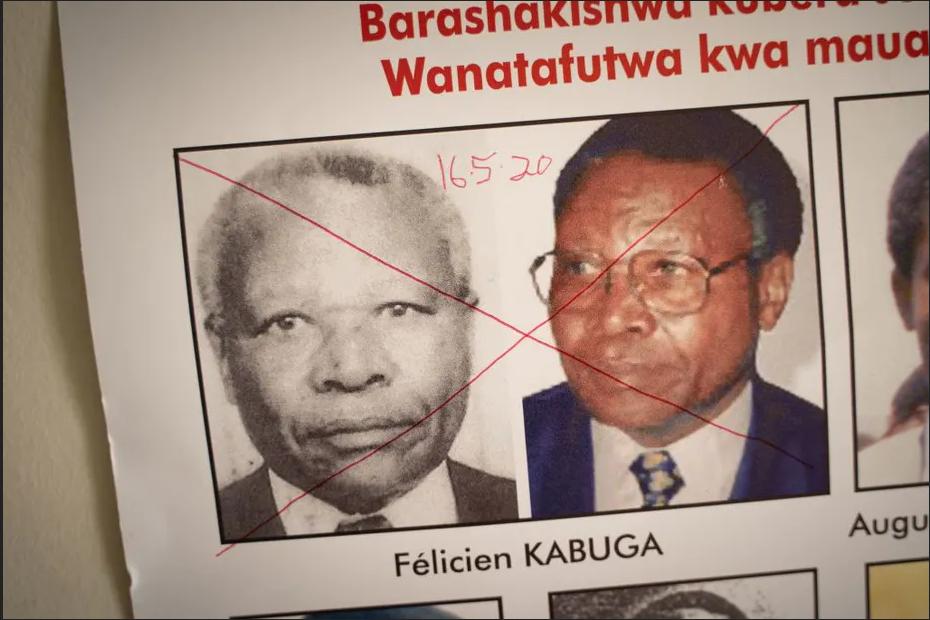
Félicen Kabuga, the Hutu financier of Rwanda’s 1994 genocide, has been captured after 26 years in hiding. More than 800,000 Rwandans, primarily Tutsis, were slaughtered by their countrymen in 100 days of genocide.

Kabuga was arrested by French police in a sting operation in a suburb of Paris on May 17. They were acting on an indictment by the International Criminal Tribunal for Rwanda in 1997. Despite a global arrest warrant accompanied by a $5 million bounty, Kabuga avoided authorities for 26 years.

He owned and operated Radio Mille Collines, which broadcast messages of hatred. This included the notorious command to “kill the cockroaches” before and during the genocide. He allegedly imported and distributed the hundreds of thousands of machetes that were instruments of the genocide.

Despite the arrest, there are a number of reasons that Kabuga’s case does not represent a simple triumph for justice.

First, the long anticipated trial that would shed light on how Rwanda’s genocide was organised may not come to pass. Kabuga is at least 84 years old. There is already a fight heating up about where he should be tried: France, Tanzania, or Rwanda. After this question has been resolved, we should expect that his attorneys will argue he is too frail to stand trial. Thus Kabuga’s advanced age and the slow speed of international justice mean that he may never see trial.

Second, his arrest revisits the contested success of transitional justice in Rwanda, and showcases the mixed record of international justice more generally.

The legacy of a tribunal

Based in Arusha, Tanzania, the International Criminal Tribunal for Rwanda was set up in 1994. It operated until 2015. It indicted 93 individuals, and heard 55 cases. Since its closure, outstanding work and cases are handled by the International Residual Mechanism for Criminal Trials, which has branches in The Hague and Arusha. It handles only ongoing cases or outstanding warrants, and has no power to bring new indictments.

International criminal justice faces a number of criticisms. These include that it is slow and expensive, replicates colonial power relations and is overtly political.

In addition to these standard criticisms, during its working lifetime the International Criminal Tribunal for Rwanda faced multiple corruption allegations.

Kabuga was one of nine indicted individuals long at large, an ongoing reminder of the limitations of international criminal justice. Lacking their own police force, international courts rely on the cooperation of states to produce wanted individuals.

In Kabuga’s case, the capture was made possible by the investigative work of a special French office that pursues violators of international criminal law.

That the French followed up on this 26-year-old, cold, indictment is significant. International cooperation and institutional validation can have useful spillover effects for other international criminal justice institutions, specifically the International Criminal Court. It has struggled massively to convince member states to enforce its warrants.

Kabuga’s arrest, and the international cooperation that brought it about, is a reminder of the promise, and premise, that underwrote the tribunal. His alleged participation in the Rwandan genocide is the type of criminality that international justice seeks to prosecute: leaders and enablers who have not personally committed atrocity, but who were central to its deadly reach.

Kabuga’s arrest is thus also a victory against impunity. His trial should reiterate an insistence on rule of law norms making violations of international criminal law prosecutable.

Rwanda’s contentious transitional process

Accountability for international crime is a central component of “transitional justice”. This is a policy designed to substitute liberal, rule of law values in place of ethnic, nationalist, authoritarian or murderous rule.

In the case of the International Criminal Tribunal for Rwanda, “reconciliation” was embedded in the UN Resolution setting it up.

But Rwandan President Paul Kagame has rejected this model of transitional justice. Instead, a firm line is drawn between Tutsis, the victims of the genocide, and Hutus, the perpetrators of the genocide. This erases many facts, such as moderate Hutu victimisation or Tutsi-organised crimes.

Attempts to address facts outside of those officially sanctioned are decisively suppressed by the state. This has included imprisonment and assassination.

One of the International Criminal Tribunal for Rwanda’s biggest failures was arguably its inability to challenge Kagame’s ethnically divisive narrative.

In the first years of its work, prosecutors began investigating crimes associated with the Rwandan Patriotic Front (RPF), the Tutsi forces led by Kagame. In retaliation, Kagame stopped cooperating with the court and had its prosecutor, Carle del Ponte, removed. No RPF members, or Tutsis, were ever indicted by the tribunal.

Kagame is often praised for his stewardship over Rwanda’s economic recovery. Increasingly, however, observers speculate that his authoritarianism will interrupt this economic success. More worryingly, scholars in the area fear that Kagame’s ethnicity-based governance risks future repetitions of cyclical ethnic violence in Rwanda.

Insistence on rule of law norms

In the wake of Kabuga’s arrest, some international criminal justice scholars have supported Rwanda’s call to have him tried in the country, instead of sending him to the tribunal in Arusha.

This call should be resisted.

Present-day Rwanda is a country in which opposition figures die – in jail or otherwise – with alarming regularity. International institutions as well as state governments should demand higher rule of law standards, particularly in a country that has been the recipient of sustained, multifaceted international assistance.The Conversation

Kerstin Carlson, Associate Professor International Law, University of Southern Denmark

This article is republished from The Conversation under a Creative Commons license. Read the original article.

Dan Roodt: #Plaasmoorde has again made South Africa a global topic

SA is a country that is singularly lacking in real debate: it only knows slogans and monochrome distinctions between good and evil. Nelson Mandela was a saint and Verwoerd a disciple of the devil. Nadine Gordimer, who the zealous Swedes thought worthy of the Nobel Prize, publicly admitted she dealt in “Manichean poisons”.

And so Ismail Lagardien took it upon himself to warn Business Day readers of the looming global “regse gevaar” (Echoes of the global far-right movement, March 5), represented by nationalist movements in Europe and a self-proclaimed “race realist” such as Jared Taylor, a soft-spoken American who also happens to be fluent in both Japanese and French.

I mention this because, unlike the self-assured monolingual leftist with his quasi-religious world view denying ethnic or cultural difference, most “populist” heretics have actually gone to the trouble of living or learning about foreign lands. They also tend to respect or appreciate other cultures, and real diversity — as opposed to the fake kind of cramming members of different races into photographs or advertisements.

I suppose I have to congratulate Lagardien for at least noticing there has been some intellectual change in the world over the past decade or so, no mean feat in SA where we are completely out of sync with the rest of the planet, and doomed to become Zimbabwe 2.0.

Due to its farm murders, rampant violence and crime, SA has once again become a global topic, a cause célèbre. It represents something of an antithesis to civilisation, a new Barbary coast where Westerners suffer ignominy, discrimination, as well as grotesque killings and torture. It is ironic that Lagardien cites Rwanda as an outcome of “identity politics”. In the early 1990s, Rwanda had much in common with contemporary SA, where an ethnic majority foists its will onto a minority. That majoritarian will-to-genocide was enunciated in the so-called Hutu Ten Commandments, including the 8th one: “The Hutu should stop having mercy on the Tutsi.”

It is inconceivable that right-wing politicians in Europe, who are all polyglot and ‘europhile’, would ever create another world war, destroying their common heritage

Only the more conservative section of Westerners have any sympathy for the martyrdom of the Afrikaner people today; our so-called “compatriots” are completely indifferent, if not actually in agreement with the anomic freedom fighters attacking us on a daily basis, on farms and elsewhere. However, many young people in Amsterdam have told me that becoming aware of our history and current plight represented a “red pill” to them, changing their lives and outlook forever.

Typically, we are the scapegoats of the regime’s many failures; its venality and inefficiency are not to blame for the lack of jobs and poverty. No, “They stole our land!”

To leftists, any form of vague patriotism or waving a national flag, even during sports matches, is considered “fascist” because it deviates from the internationalist Marxist precept that “the workers (should) have no fatherland”. Lagardien’s tremulous fears of Il Duce’s return contrasts with his silence on the 100-million people killed by communism in the 20th century.

In our society, the egalitarian extremism of the South African Communist Party or EFF is much more likely to lead to concentration camps and genocide than a few middle-aged men discussing Arnold Toynbee or Oswald Spengler. By the way, Spengler’s mammoth work on The Decline of the West has just been published in a new Dutch translation, accessible to Afrikaners.

Lagardien accuses me of “racism” and “a tryst with the US far-right”. According to the chaff currently dispensed at universities, race does not exist … but all whites are racist. Or at least they have “white privilege”. A week ago some caller from KwaZulu-Natal named “Sue” literally sobbed about her white guilt on Radio 702. It reminded me of a well-known book title, Le sanglot de l’homme blanc (The Tears of the White Man) by Pascal Bruckner.

Perhaps that is the ultimate meaning of “reconciliation”: to reconcile oneself with the decadent tristesse of such whites who have already surrendered three thousand years of logical thinking for the blind stupor of secular guilt.

Marine Le Pen is very witty, even if one does not agree with her. She once coined the term “semantic war” which is very useful. The bisyllabic “racist” is merely a weapon in the semantic war, but otherwise illogical and contradictory. It could also be countered with the rhetorical trick: “But I self-identify as black, so how can I be racist?” After all, in the cultural-Marxist wonderland we now live in, you may choose your race and your gender, so why should all whites not qualify for affirmative action and black economic empowerment if they literally just “tick the right boxes” on forms?

A Canadian member of the global “regse gevaar”, Lauren Southern, was born on June 16 1995; there must be some omen there. In one of her many YouTube videos, clad in a very feminine, tutu-like evening dress, she confronts a PC feminist protestor complaining about her complicity with the patriarchy by stating calmly: “But I’m a man. I’m officially a man.” This silenced the protestor completely because within her secular religion, you may not question someone’s “gender choice!”

Multi-cultural societies such as SA, Mexico, Brazil, as well as the more multi-cultural parts of the US and the EU, are intensely violent, with an undeclared war raging in the streets

Lagardien takes a leaf out of the diminutive French former president François Mitterand’s book by alleging that any form of national pride or identity is synonymous with war, or, as he terms it, “blood”. Empirically, we see exactly the opposite today. It is inconceivable that right-wing politicians in Europe, who are all polyglot and “europhile”, would ever create another world war, destroying their common heritage. Geert Wilders, Marine Le Pen, Alice Weidel and Viktor Orbán, to name a few, all want to end the new Cold War with Russia.

On the other hand, multi-cultural societies such as SA, Mexico, Brazil, as well as the more multi-cultural parts of the US and the EU, are intensely violent, with an undeclared war raging in the streets. The American military-industrial complex needs an enemy so as to keep the military order book full, so Europe must be kept divided, always under threat of a nuclear holocaust.

The internet has happily ended the cultural and diplomatic isolation of Afrikaners, still maintained by largely hostile Western embassies in Pretoria that are staffed by left-wing, career diplomats oblivious to the changes in our country and in the world. These days I feel more welcome in Europe or the US than in my own country where the Afro-Marxist extremism of EFF leader Julius Malema has come to define mainstream politics.

Hundreds, if not thousands, of books have been written on Afrikaner identity. They all contain a common mistake, in the sense that we romanticised Africa. Inscribed on a bronze plaque at the Afrikaans Language Monument on the Paarl rock is a quotation from poet NP van Wyk Louw: “Afrikaans is the language that connects Western Europe and Africa … It forms a bridge between the large, shining West and the magical Africa … And what great things may come from their union — that is maybe what lies ahead for Afrikaans to discover.”

Not only would the phrase “magical Africa” no longer be deemed politically correct, but it is simply wrong. There is no bridge; there is only a chasm, a divide, a sombre feeling of dread and horror that our best authors have evoked here and there, almost in spite of themselves. Cultural difference does not usually manifest playfully, as a kind of logical puzzle in the way that Jorge Luis Borges describes it in some of his stories. More typically, as the Germans have discovered after Angela Merkel’s open-border policy, it manifests as crime and violence.

Cultural difference does not usually manifest playfully, as a kind of logical puzzle … More typically, as the Germans have discovered after Angela Merkel’s open-border policy, it manifests as crime and violence

History did not end in 1989 or in 1994. Rather, it paused in 1945 and restarted in 1989. Much of our modernity lay buried under the rubble of the Second World War, figuratively speaking. The power of the Soviet Union, bequeathed to Joseph Stalin by Winston Churchill at Yalta, as well as the Western baby-boomers’ radicalism, imposed a largely uniform mode of thinking on the world, with many taboos. Leonid Brezhnev and Daniel Cohn-Bendit were only two sides of the same coin.

It is only now we are at last daring to question both Marxist-Leninism and cultural Marxism. While institutions remain largely “captured” by the red zealots, especially the universities and the media, individual minds are being freed, “red-pilled”, to question the dominant ideology and to understand our culture and history afresh.

One result is a return of some old issues that have never been resolved, and go as far back as Plato and Aristotle. SA is doomed to repeat its tortuous history, with indigenous whites either trekking away from or revolting against African lawlessness and attacks, with Britain abetting either side. In recent times, Britain has always chosen against us and for the communists, the radicals, the génocidaires even. The former British ambassador Baron Robin Renwick fraternises with Malema and is clearly impressed with him.

But as history repeats itself, we are returning to the 1890s when the injustices and atrocities meted out to us caused a world-wide wave of pro-Boer sympathy, stretching from the US to Russia, from Ireland to Italy. The high-handed contempt with which the ANC regime and the mainstream media treat us, being powerless and disenfranchised, as well as demographically swamped in a display of Hutu-majoritarian domination, may not last forever.

This piece was also published in Business Day on 12 March 2018.

Is City Press in favour of race war? Reply to Assata Shakur

Publishing a radical exhortation to sedition by a convicted black extremist like Assata Shakur in City Press (Listen up! The European is not your friend) is not only irresponsible, but demonstrates the double standards at work when it comes to freedom of expression in South Africa. If I had written a piece like that, telling white Afrikaners to “use force to break the shackles and obtain emancipation”, the police would have broken down my front door and I would have been charged with “high treason” like the Boeremag and might have been sent to prison for life.

roodt_fbfotoOstensibly her article is about Rhodes’s statue. However, it represents a blanket call to arms against whites or “Europeans” world-wide, especially South Africa’s beleaguered white minority of 8% that is already subject to official hostility, Nazi-style race laws and sustained criminal or ethnic attacks such as the gruesome plaasmoorde (farm murders).

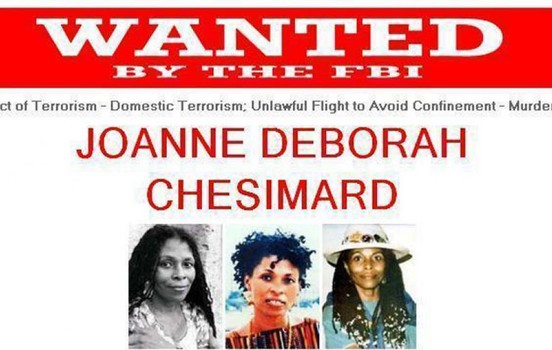
A cursory internet search reveals the following about Shakur: She was born JoAnne Deborah Byron and sentenced for the murder of a white policeman or state trooper, Werner Foerster, in the USA. Not only is she still wanted there as an escaped convict, but she was classified as a “domestic terrorist” by the FBI in 2005 with a price of $1 million on her head.

How come that if you speak out on behalf of the oppressed Afrikaner minority you are marginalised and censored, but an extremist anti-white radical like Shakur has free reign in the mainstream media to stir up racial and ethnic passions?

Apart from the xenophobia playing out on our streets, we also have leukophobia (“fear of whites”) which Shakur openly wants to inflame, causing even more violence than we are already experiencing. Section 16(2) of the 1996 constitution is quite clear that “freedom of expression… does not extend to a. propaganda for war; b. incitement of imminent violence; or c. advocacy of hatred that is based on race, ethnicity, gender or religion, and that constitutes incitement to cause harm”.

Obviously, Shakur’s diatribe against us whites contravenes all three sub-sections prohibiting so-called “hate speech”. Many people thought that South Africa was an exception on the continent and that we would not experience African-style ethnic strife, followed by economic collapse as happened in Rwanda, Liberia, Sierra Leone, Angola, Zimbabwe, the DRC and so many other countries. But our leftist media, besotted as they are with concepts like “revolution” and “transformation”, are inciting the same kind of racial and ethnic hatred that has been the bane of Africa since independence. Like the Indians were expelled from Uganda and Malawi, or the Portuguese from Angola and Mozambique, we should ultimately be booted out of South Africa in a glorious act of “black emancipation”.

Some might argue that Shakur is nothing but a caricature of black radicalism, as described in a book from my student days, Tom Wolfe’s Radical Chic and Mau-mauing The Flak Catchers. A more sophisticated reader – I daresay “European”! sipping coffee in a café in Paris or Milan – might see it for what it is: a pathetic attempt at fomenting racial revolution from Cuba, one of the last outposts of Marxist dystopia on the planet.

But given that South Africa is already mired in racial and ethnic strife, with axes and knives brandished on our horror-movie streets, its citizens brainwashed with simplistic notions of “white privilege” and “black disadvantage”, Shakur’s discourse could easily lead to civil war. Is that really what City Press and the directors of Naspers, its owners, have in mind for us?


Zuma: DRC rebels miss disarmament deadline

The Democratic Forces for the Liberation of Rwanda (FDLR) have missed the deadline set by the Southern African Development Community to voluntarily disarm themselves, it said on Saturday.

In spite of the presence of 20,000 UN peacekeepers, around 50 Congolese and foreign armed groups are still active in the region.

SADC chairman President Jacob Zuma urged the FDLR to come forward and disarm themselves unconditionally.

“The deadline set by the heads of state and government of SADC… for the FDLR to disarm voluntarily or face military action expired yesterday, 2 January 2015,” Zuma said in a statement.

A joint summit by the SADC heads of states would be held in Luanda, Angola to decide on measures to be taken.

“SADC remains committed to the internationally mandated objective of neutralising all negative forces operating in the Democratic Republic of the Congo, including the FDLR, and remains ready to play its fullest part in this regard,” Zuma said.

The east of the DRC has been a conflict area for two decades, French news agency Agence France-Presse reported last month.

Two major wars between 1996 and 2003, were fought with neighbouring countries including Uganda and Rwanda intervening directly or using militias to do their bidding.


Rwanda screens US, Spanish visitors for ebola

The East African nation of Rwanda is requiring all visitors from the United States and Spain to self-monitor, fill out an extensive questionnaire and report their medical condition for the first 21 days of their visits because of the Ebola cases that have surfaced in the two Western countries.

Coincidentally or not, the new screening follows an embarrassing uproar in a New Jersey school over the imminent enrollment of two Rwanda children that initially prompted their parents to keep them at home for 21 days.

The order by the Rwanda government to visiting Americans and Spaniards was posted Tuesday on the website of the U.S. Embassy in Rwanda:

“On October 19, the Rwandan Ministry of Health introduced new Ebola Virus Disease screening requirements. Visitors who have been in the United States or Spain during the last 22 days are now required to report their medical condition—regardless of whether they are experiencing symptoms of Ebola—by telephone by dialing 114 between 7:00 a.m. and 8:00 p.m. for the duration of their visit to Rwanda (if less than 21 days), or for the first 21 days of their visit to Rwanda. Rwandan authorities continue to deny entry to visitors who traveled to Guinea, Liberia, Senegal, or Sierra Leone within the past 22 days.”

The U.S. and Spain have both recorded deaths from Ebola. In Dallas, a Liberian national died of the virus two weeks ago and two nurses who treated him tested positive for the virus. At least two Spanish missionaries died in Spain after contracting the disease in West Africa. One Spanish nurse also tested positive for the virus.

Rwanda is located in East Africa about 2,600 miles east of Liberia, the closest of the three West African countries with the Ebola outbreak. Rwanda has been unaffected by the Ebola outbreak on the other side of the continent and has reported no cases of the virus.

The dust-up in New Jersey involving two Rwanda children took a new turn Monday with an apology by the superintendent of the Maple Shade School District in Burlington County.

The children were supposed to begin classes Monday at Howard Yocum Elementary School in Maple Shade, N.J., but ran into a backlash from other parents, WTXF-TV in Philadelphia.com reports.

The uproar started after a school nurse sent a note to staff members saying that the school intended to take the temperature of the two students three times a day for the next 3 weeks, the normal incubation period for Ebola.

Source: USA Today

‘Defeat of M23 may be orchestrated’

Refugees, DRC
Refugees, DRC

The ‘Defeat of M23’ was perhaps orchestrated, says Andre Vltchek, an investigative journalist. The situation in the DRC is unpredictable, and exceptionally volatile

Reports suggested that the UN grew tired of the insurgents, and the M23 gunmen were pinned down in the hills bordering Rwanda and Uganda. They were shelled mercilessly and crushed.

The final peace accord has not been signed because the Congolese delegation refused to enter the ceremony room in the Ugandan capital, Kampala, claiming there is no point in signing any agreement in view of the fact that M23 no longer exists.

This is the story, or at least that is how the story has been told in London and Washington.

Vltchek is acquainted with the city of Goma, said the capital was once called the ‘Riviera of Kivu’. He was once kept in detention there, several floors underground, interrogated by Congolese intelligence agents

Goma is so full of natural gas it could explode at any moment without warning and perhaps kill tens of thousands of people.

Arthur Tewungwa, a Ugandan businessman and an opposition figure told him that “most knowledgeable observers of the problems pertaining to the eastern DRC are aware that Kagame and Museveni have been the main architects of the chaos that has prevailed in the region.The myriad of so-called rebel groupings are ‘Frankensteins’ created by them to enable the pillage of the region amidst the semblance of chaos.”

Congolese immigrants in South Africa have made similar remarks. They say M23 was created by president Kabila himself.

A leading expert on the DRC, and one of the former UN genocide investigators, Keith Harmon Snow, spoke about the role of foreign companies in the present situation:

“Meanwhile, multinational corporations operating in Eastern Congo under the media radar, but soaked in Congolese blood, include Banro Gold, Casa Mining, Randgold, Mwana Africa, Loncor, Anglo-Gold Ashanti, Kilo Gold, and Moku Gold. These corporations benefit from having the Rwandan Tutsi in Kinshasa (Kanambe) and have deep ties to the criminal extortion, money-laundering, racketeering and theft behind the plunder and depopulation in the Great Lakes countries. The United Nations Forces (MONUC, MONUSCO) and the Rapid Intervention Forces (note the heavy presence of South African troops and South African mining companies in Eastern Congo) serve the corporate agenda.”

In Tokyo, Ms. Masako Yonekawa, formerly the head of the UNHCR Goma Office in eastern DRC, confirmed on camera, during a discussion: “Well, Rwanda has been getting a lot of assistance from the US Government and the UK, so that’s why they were able to build up their military power…”

Vltchek asked her whether there was indifference on the part of the superpowers towards the suffering of the Congolese people, and she replied that it was intentional. It’s because they had a very strong economic interest… the natural resources in the Congo, they were all to the benefit of the world economy.

Noam Chomsky, discussed Rwanda and DRC with Vltchek in Boston in 2012.

“Eastern Congo is where probably the worst atrocities in the world are taking place… Who do you point the finger at? Oh, they may have been killed by militias? But behind the militias are multinational corporations and governments, but they are a stage removed. You don’t see the multinational corporations that are using the militias to slaughter people so that they can get access to the coltan that Westerners use in their cell phones. It’s indirect, and a lot of the atrocities and crimes that you are describing have that problem,” Chomsky said.

Some insiders, including Keith Harmon Snow, are not even convinced that M23 has actually been defeated:

“At present, the propaganda system is again trotting out the refrain that ‘rebels in Congo have been defeated.’ The latest so-called ‘rebels’ – the M23 forces – are actually Rwandan government troops, not rebels. Reports now appearing in the Western mass media are that the ‘M23 rebels’ have ‘surrendered in Uganda’, or ‘turned themselves in’ in Rwanda. This is nonsense, since these are Rwandan defense forces. The varying incarnations of ‘rebels’ in eastern Congo have always been backed by Museveni (Uganda) and Kagame (Rwanda), in turn backed by the USA, UK and Israel. M23 is the same: another predominantly Tutsi army serving the Tutsi/Hema elites, not the people of Uganda or the people of Rwanda/Burundi.

Media reports have exaggerated the fighting between Congolese troops (FARDC) and their UN partner army, the Rapid Intervention Forces, against the M23. Most M23 were warned in advance of an impending assault and they fled to Rwanda and Uganda.”

The numbers aren’t precise, but it is generally agreed that between 8 and 10 million Congolese people died between 1994 and the present.

“Everybody is talking about the Rwandan genocide,” Congolese Presidential candidate Ben Kalala once told me. “Some 800,000 people died there. I am sorry for them, because they are human beings. But in the Congo 8 million people died: women, children, elderly… So what is the world waiting for?”

News of the genocide never get out because Tony Blair was serving as personal adviser to the Rwandan President Paul Kagame, and has friends and allies like Bill Clinton, Bill Gates and numerous other political, as well as economic and religious leaders.

Right now the situation in Rwanda, Uganda and DRC is unpredictable, and exceptionally volatile.

“The situation in Kigali is extremely tense, right now”, an Asian diplomat based in East Africa, who asked not to be identified, explained to me.

“The atmosphere is also very confusing… Security is beefed-up and it is clear that something may happen any moment. There are rumors that the West may let Kagame fall soon and replace him with a more suitable puppet… And of course he knows; he is extremely smart, and cunning, unlike Museveni. That is why he is putting up fortifications around himself. He needs those M23 people around him, in case of war! He needs them back! It is almost certain that there will be a conflict here soon… Next year is the 20th anniversary of the ‘genocide’ and of the RPF taking over the country,” he said.

Another regional showdown is most likely approaching. In East and Central Africa, what is called peace could actually be just another battle in a never-ending war. – RT

M23 rebels lay down arms after defeat in Democratic Republic of Congo

M23
M23

Democratic Republic of Congo rebels said Tuesday they were laying down their arms after a crushing assault by the UN-backed army pushed them out of the country’s mineral-rich troubled east.

The M23 movement said in a statement that it had “decided from this day to end its rebellion” and instead to pursue its goals “through purely political means.”

The move ends the insurgency that for 18 months has wracked the region rich in natural resources and the scene of some of Africa’s deadliest conflicts over the past two centuries.

Earlier, Kinshasa claimed “total victory” over the M23 after capturing the last two hills held by the movement’s die-hard fighters.

“The last remnants of the M23 have just abandoned their positions,” said Lambert Mende, communications minister and government spokesman.

“It’s a total victory for the DRC,” he said, adding that the holdout insurgents fled to neighbouring Rwanda.

“We have finished the job,” said Lieutenant Colonel Olivier Amuli, an army spokesman in the North Kivu region that was the scene of the fighting.

The Congolese army launched a major offensive against the rebels on October 25, steadily claiming their strongholds until dozens of fighters were this weekend pushed onto three hilltops about 80 kilometres (50 miles) north of the regional capital Goma and near the border of Rwanda.

The beleaguered insurgents called for a truce, but the army pressed on with its assault, claiming one of the hilltops on Monday.

The UN special force in the region, which had been backing the Congolese forces with aerial reconnaissance, intelligence and planning, joined direct combat late Monday after getting the green light to bombard the remaining positions of the beleaguered rebels.

“We will continue to fire until everything is under control,” said a source at the UN brigade.

With the rebels on the backropes, M23 leader Bertrand Bisimwa had on Sunday called for a ceasefire to allow a resumption of peace talks.

But the fighting only appeared to intensify after the M23 leader’s appeal, despite a statement issued early Monday by envoys from the European Union, African Union and the United Nations that said they were “concerned about the renewed outbreak of violence” that followed the truce call.

The UN and African leaders had urged the M23 — ethnic Tutsi former rebels who were incorporated into the Congolese army under a 2009 peace deal — to declare an end to the rebellion they first launched in April 2012, claiming that the government had not kept up its end of the deal.

“It is important that the M23… declare the end of the rebellion. The fighting must stop,” the head of the UN mission in DR Congo, Martin Kobler, said in a statement on Monday.

Meeting in South Africa late on Monday African leaders echoed the sentiment, saying that a peace deal for DR Congo could be signed if the rebels declared an end to their insurgency.

“The parties would sign an agreement on condition that the M23 makes a public declaration renouncing rebellion,” said Stergomena Tax, executive secretary of the 15-country Southern African Development Community (SADC) in Pretoria.

Analysts say better preparation by the Congolese troops and the backing of the UN brigade with the unprecedented offensive mandate have helped changed the game in the restive east of the DR Congo.

The heavily-armed 3,000-strong UN intervention brigade joined 17,000 peacekeepers already deployed with a mission to carry out offensive operations against the rebel fighters, who are accused of human rights abuses including rape, murder and recruiting child soldiers.

The latest fighting to break out in the border region, rich in sought-after minerals, has sent thousands of people fleeing to neighbouring Uganda.

The UN refugee agency said on Monday it had moved another 3,000 Congolese refugees to its transit camp in Uganda’s town of Kisoro to escape the fighting, bringing the total number of refugees in the small town to 8,000.

The area of North and South Kivu in DR Congo has for decades been the centre of conflict because of its location — having borders with Rwanda, Uganda, Burundi and Tanzania — and the minerals that lie buried underneath its lush green hills.

The minerals include gold and coltan and tin, key component in electronic devices from cell phones to televisions and computers. – AFP

The elusive quest for peace in DRC

M23 rebels are well-armed, say sources

The current conflict in the Kivu Region of the Democratic Republic of Congo (DRC) threatens to linger on despite an international effort to broker a truce between the M23 rebellion and the Congolese government. The 2012 version of this conflict is difficult to grasp, particularly because the M23 is a shifting armed movement, both geographically and politically. Its leadership is interchangeable among commanders, and the movement is supported by foreign influences with an eye on the geological riches of the region.

The evolution of the M23 Rebellion

Who exactly are the M23 rebels? This is the question the Rift Valley Institute’s Usamala Project tries to unpack in its recent report “From CNDP to M23: The evolution of an armed movement in Eastern Congo” (PDF). While the armed branch of the rebellion is easy to define, its political leadership is more elusive. The report explains further:

The M23 political leadership was made up mostly of former CNDP [National Congress for the Defence of the People] loyalists, with Jean-Marie Runiga Lugerero, the CNDP’s representative in Kinshasa, as political coordinator. However, there were also some new names, allegedly appointed after pressure by Rwanda (…) Between May and August 2012 the M23 also began to beef up its political wing. It named several new local chiefs, set up a tax collection network, and established a formal liaison office for humanitarians working in the area––structures reminiscent to those of the CNDP era. They also established two websites (www.soleildugraben.com and congodrcnews.com), a Facebook fan page and several Twitter accounts run by them or people close to them. On 20 October, in a move to further boost their legitimacy, they renamed their armed wing the Armée Révolutionaire du Congo (ARC, Congolese Revolutionary Army).

Indeed, while rudimentary at first, the public relations strategy of the M23 rebels has grown increasingly sophisticated in order to garner the public support. On Jeune Afrique, Trésor Kibungula illustrates the evolution of M23 on Facebook, from a timid start back in July, to a media platform sufficiently controversial that Facebook eventually had to shut it down.

An interview with  the M23’s Bertrand Bisimwa on the Congo Siaisa blog helps to explain the genesis of the movement and its alleged overarching goals:

The M23 is made up of armed groups that signed the March 23 agreement. We started by asking for the implementation of that deal. The government fought us, saying we didn’t have the right to demand that [..] Today, in addition to the March 23 agreement we want good governance in the country and a legitimate government. You have to realize that not all ex-CNDP joined the M23. In fact, most didn’t. It was these others, those who didn’t join, who helped rig the elections in [Jospeh] Kabila’s favor in Masisi.

General Sultani Makenga, the military leader of the M23 also gave an interview recently where he speaks about the fluid leadership of the M23 movement, giving updates on the status of former CNDP leader Laurent Nkunda and arrested general Bosco Ntaganda within the movement.

Aside from its shifting leadership, Melanie Gouby in Newsweek Magazine explains that the movement does not seem to have a defined political ideology and seems mostly driven to protect the economic and political interests of neighboring nations.

Involving all players in the quest for peace

The two nations with most economic and political stakes in the conflict are Rwanda and Uganda. According to the United Nations, Rwanda has been tied to the conflict in Kivu for a long time, despite denials from President Paul Kagame’s administration. Yet, there is little uncertainty about the Rwandan support as the Usamala project report explains:

Rwandan support for M23 has now been well documented, in particular by the UN Group of Experts. Their conclusions have been confirmed by Human Rights Watch, by MONUSCO, and by at least three embassies in Kigali through internal investigations [..]

With regards to Rwanda’s role in the crisis, the U.S. policy to minimize sanctions against Kagame’s administration is perplexing to many observers.

The Ugandan government is also suspected of providing logistics support to the latest M23 offensive. In the following video, Ugandan lawmakers ask the president to explain the relation to the Congo M23 rebels:

With so many players involved in the crisis, what’s in store for the region is still very unclear. Is the Goma withdrawal definitive for the M23? Some M23 fighters seem to firmly believe they will soon be back in the city. Observers do not seem to expect much from peace talks.

Gérard Prunier, a French academic and author, argues that Congo and Rwanda are “just playing a waiting game until the situation on the ground gets sorted out.” He believes there could be an escalation of the crisis:

If tomorrow you could have the secession of Katanga (ed’s note: a Congo region rich in minerals) back on the books, I wouldn’t be surprised

Meanwhile, the local population bears the main burden of this never ending war. The World Food Programme reports that at least 80,000 people are displaced in the region. isnblog.ethz.ch

France charges Rwandan doctor over genocide

Eugene Rwamucyo
Eugene Rwamucyo

French judges have charged a Rwandan doctor for planning to “commit the crime of genocide” in 1994, a judicial source said, after Kigali issued an international warrant against him.

Eugene Rwamucyo is wanted by Kigali for having allegedly planned and carried out atrocities in the Butare region of southern Rwanda, but in 2010, a French court rejected a request to extradite him.

After probing the accusations, judges in Paris whose job it is to investigate crimes against humanity decided to charge Rwamucyo with “involvement in an agreement with a view of committing the crime of genocide”, said the source, who wished to remain anonymous.

But they placed him under the status of “supervised witness” on the more serious charges of committing genocide and of complicity, the source added.

The status of “supervised witness” means that Rwamucyo can be interviewed under caution and could face further questions — and possibly charges — at a later stage.

“The fact that my client was placed under the status of supervised witness, and not under formal investigation, for ‘genocide’ shows the judges have doubts on this case and on the complaint that was made against him,” his lawyer Philippe Meilhac said.

The doctor is the subject of a complaint filed by the families of genocide victims for crimes against humanity.

Rwamucyo, who is in his 50s, lives in Belgium and used to work as a doctor in a hospital in the northern French city of Maubeuge.

He was suspended in 2009 when his employer found out the Rwandan government had issued an international warrant against him, and subsequently fired.

Rwamucyo denies the allegations of genocide and has accused the Tutsi-led government in Kigali of waging a campaign against him.

There are currently about 20 genocide-related cases pending in French courts.

France has repeatedly refused to extradite genocide suspects to Rwanda, fearing they would be denied a fair trial, but has sent some to Tanzania to face trial at the International Criminal Tribunal for Rwanda.

An estimated 800,000 people, mostly ethnic Tutsis, were massacred over the course of about 100 days from April to July 1994. – AFP

DRC shrugs off German mercenaries fighting for M23

The answer to German mercenaries

The Democratic Republic of the Congo military has warned that any aggressor would be met with force and added that it was untroubled by German and other mercenaries.

M23 rebels have issued a warning to the Congolese government that they would resume fighting to take control of the troubled east if the government does not start negotiations immediately.


Congolese troops backed by the UN Intervention Brigade including South African troops have taken up positions abandoned by M23 rebels in the hills overlooking the eastern town of Goma.


This happened after the rebels withdrew on Friday.


Meanwhile, Rwanda has denied accusations from the UN of helping the rebel group.


DRC military spokesperson Colonel Amuli Olivier said: “If Rwanda helps M23, Congo doesn’t care, because we know they have mercenaries from Germany, from Eritrea, from Uganda. The most important thing for Congo is to say whoever takes arms against Congo, will always face the full force of the army and the army’s objective is to secure Congolese borders and its civilians.”


The rebels have demanded the government to return to the negotiating table saying “if the Congolese government pushes on with the military option to the detriment of the Kampala talks, our armed forces reserve the right to re-take control (of Goma positions).”


Over the past week several peacekeepers have been injured in clashes among them, three South Africans.

M23’s political leader, Bertrand Bisimwa wrote a letter to South Africa earlier, asking them not to come and “kill their brothers”. He cautioned them that they are going to face similar treatment to the one they received when facing Seleka rebels in the Central African Republic (CAR) who killed 13 South African soldiers.

“If they (the South Africans) think they will go out into the hills and annihilate M23, they’re crazy,” Bisimwa said, adding: “If an army goes in, when it does not know the terrain or the politics is overconfident and is itself not combat equipped for these kind of operations, they’re going to be kicked. If South African special forces could not keep Seleka at bay – not nearly as coherent a target as M23 – how are they going to defeat M23, which are in their own back yard?”

South Africa is deploying more than 1000 troops in the DRC. Tons of weaponry, including helicopters, were flown in huge cargo planes from South Africa to Entebbe in Uganda, close to the Congolese border, where SA forces are expected to be based. The rebel group accuses Zuma of sending his troops to the DRC to protect his nephew Khulubuse’s oil interests.

South Africa may be badly underestimating the strength of the M23-rebels.

M23 rebels have grenade-launchers and a 37mm double barrelled aircraft defence cannon from the Congolese defence forces. A source inside the SA army admitted that there could be ‘loss of lives’ among the South Africans because the rebels know the terrain better.

The South African troops are part of a multilateral regional force, which includes the armies of Mozambique, Malawi and Tanzania, with the blessing of the UN Security Council which passed Resolution 2098 on March 28, 2013.

M23 claims the resolution transformed the UN peace keepers in a belligerent force, entrusted with offensive mission. The UN security council thus authorised an “intervention brigade” to allow “neutralisation of armed groups in the east of the DRC.” This decision was in sharp deviation of the UN’s historic peace mandate in the Congo, who in the past only had a mandate to ‘protect’ the area.

UN Security Council unanimously approved the creation of a brigade of more than 2,500 troops with a mandate to conduct “targeted offensive operations” against M23. The new UN force is to consist of three infantry battalions, an artillery company, a reconnaissance company and “special forces.”

It marked the first time that UN peacekeepers were given a mandate to conduct offensive operations, marking a dramatic change from the UN’s peace mandate in the past, which only allowed soldiers to shoot back when they were being shot at.

M23 says the UN is, in effect, coming to the “rescue of one of the most corrupt regimes in the world and will contribute to extending the reign of an army that is infamous for rampant rape and other atrocities that it wantonly and habitually inflicts on the Congolese population.”

The irony of Resolution 2098, is the UN Secretary General’s own words stating that corruption is the main cause of the failure of the DRC Government.

Sources say army officers take advantage of agricultural and mineral wealth, and set up taxes and roadblocks in the area. “The rationale for the presence of soldiers is ostensibly to protect people from rebellions. Unless they get rich on the backs of the same people, they have no interest in stopping the war.”

Some observers even argue that a part of the army is in the hands of Tutsis. More than nine generals out of thirty are said to be Tutsi Congolese. The M23, backed by Rwanda, want an independent state, Tutsiland.

SANDF readies to fight M23

M23
M23

Hundreds of South African soldiers deployed to the volatile east of the Democratic Republic of Congo are likely to be involved in violent clashes with thousands of battle-hardened rebels.

The UN has given the M23 rebels 48 hours to demobilise and surrender their weapons. The deadline expires today and if the rebels fail to meet it the UN intervention force of which the South Africans are a part will move in to forcibly disarm them.

About 900 South African soldiers from the SANDF’s 6 Infantry Battalion are deployed in and around the town of Goma as part of the UN’s intervention brigade.

Tens of thousands of civilians are said to be fleeing from war-ravaged Goma in anticipation of the blood-letting likely to come.

The South African troops are trained to deploy into battle zones from helicopters.

The brigade was formed to engage and attack the M23 rebels terrorising the region, allegedly with the backing of the Rwandan government and military.

The brigade, which also has troops from Malawi and Tanzania, will from today attempt to disarm the M23 rebels, an action they say they will oppose.

There is growing concern that there will be a repeat of the killing of South African soldiers as in the Central African Republic earlier this year. Dozens of SANDF soldiers were wounded and 15 killed in clashes between South African paratroops and Seleka rebels in March.

SANDF spokesman Brigadier-General Xolani Mabanga said: “We have competent troops with the equipment necessary to carry out their tasks.”

But Mabanga admitted that not all the troops were in place.

“As to when this will happen it is difficult to say … It is a highly sensitive operation, not only involving us.”

Institute for Security Studies senior researcher Andre Roux said: “The [South Africans] underwent three months of combat-readiness training and two months of mission-readiness training, and are now training intensively for combat operations.

“Deployed with specialist weapons capabilities, such as heavy machine guns and armoured vehicles, the troops are a very capable fighting force that can defeat the rebels.” – timeslive.co.za

Canadian court acquits man of genocide charges

The Ontaria Superior Court of Justice

A Rwandan man who came to Canada in 2001 as a refugee after the 1994 genocide in Rwanda has been acquitted on charges that he participated in the very genocide that he fled.

Jacques Mungwarere was acquitted Friday on one count of genocide by murder and on one count of crimes against humanity by murder.

He was arrested in 2009 in Windsor, Ontario, and accused of participating in a massacre of Tutsis in the region of Kibuye.

He claimed the accusations against him were fabricated. His lawyer argued that Mungwarere was fingered as a potential murderer after he agreed to testify for the defense at the trial of another Rwandan in the United States.

Ontario Superior Court Judge Michel Charbonneau ruled Friday that the defense raised a reasonable doubt. – AP

Rebels in Congo seize Goma, airport

M23 rebels are well-armed, say sources

A rebel group believed to be backed by Rwanda seized the strategic, provincial capital of Goma in eastern Congo on Tuesday, home to more than 1 million people as well as an international airport in a development that threatens to spark a new, regional war, officials and witnesses said.

Explosions and machine-gun fire rocked the lakeside city as the M23 rebels pushed forward on two fronts: toward the city center and along the road that leads to Bukavu, another provincial capital which lies to the south. Civilians ran down sidewalks looking for cover and children shouted in alarm. A man clutched a thermos as he ran.

Thousands of residents fled across the border to Rwanda, the much-smaller nation to the east which is accused of funneling arms and recruits to the M23 rebels.

By early afternoon the gunfire had stopped and M23 soldiers marched down the potholed main boulevards, unimpeded. Their senior commanders, who the United Nations has accused of grave crimes including recruiting child soldiers, summary executions and rape, paraded around the town in all-terrain vehicles, waving to the thousands of people who left their barricaded houses to see them.

The United Nations peacekeepers, known by their acronym MONUSCO, were not helping the government forces during Tuesday’s battle because they do not have a mandate to engage the rebels, said Congolese military spokesman Olivier Hamuli, who expressed frustration over the lack of action by the peacekeepers.

“MONUSCO is keeping its defensive positions. They do not have the mandate to fight the M23. Unfortunately, the M23 did not obey the MONUSCO warnings and went past their positions (at the airport). We ask that the MONUSCO do more,” he said.

A U.N. spokesman said in New York said that the nearly 1,500 U.N. peacekeepers in Goma held their fire to avoid triggering a battle. The peacekeepers “cannot substitute for the efforts of national forces” in Congo, said spokesman Eduardo del Buey.

On Wednesday the Security Council will review the mandate of the U.N. peacekeeping force in Congo. A resolution adopted Tuesday by the Security Council asks the U.N. secretary-general to recommend possible redeployment, and possible “additional force multipliers.”

The resolution approved unanimously by the council imposes targeted sanctions, including a travel ban and assets freeze on the M23 rebel group leadership. But it did not name two countries accused by Congo of supporting the rebels: Rwanda and Uganda.

The council demanded that the M23 rebels withdraw from Goma, disarm and disband, and insisted on the restoration of the crumbing Congolese government authority in the country’s turbulent East.

The resolution also calls for an immediate end to external support to the rebels and asks the U.N. secretary-general to report on the allegations of foreign support while expressing its readiness to take appropriate measures.

French Foreign Minister Laurent Fabius said Tuesday that the mandate of the U.N. forces in Congo “must be reviewed.” Speaking in Paris, he said it is “absurd” that the U.N. has 17,000 peacekeepers in all of Congo but they “couldn’t stop several hundred men” in Goma.

The French minister also said a rapprochement between Congo and Rwanda was critical to solving the crisis. Fabius said he’s been in touch with officials in both countries.

The rebels are believed to be backed by Rwanda, and to a smaller extent by Uganda, which are accused of equipping them with sophisticated arms, including night vision goggles and 120 mm mortars. Evidence is mounting of the involvement by the neighboring country and on Friday, the United Nations Group of Experts is expected to release its final report, detailing the role the neighboring nations played in the recruitment, financing and arming of the rebel movement, which was born in April.

Congolese government spokesman Lambert Mende said that Rwandan soldiers had crossed into Goma, hiking over footpaths across a volcano that looms between the two countries.

“Goma is in the process of being occupied by Rwanda,” said Mende, speaking from Congo’s distant capital of Kinshasa. “We have people who saw the Rwandan army traverse our frontier at the Nyamuragira volcano. They have occupied the airport and they are shooting inside the town. Our army is trying to riposte but this poses an enormous problem for them -this is an urban center where hundreds of thousands of people live,” he said.

A Congolese colonel, who was at the frontline in Goma before the city fell, said that the soldiers he saw were Rwandan. Neither his claim nor Mende’s could be independently verified.

Congo’s President Joseph Kabila flew to Uganda Tuesday for talks with President Yoweri Museveni, a Ugandan government spokesman confirmed. The official spoke in Kampala on condition of anonymity because he was not authorized to divulge the information.

M23 rebel spokesman Col. Vianney Kazarama confirmed that they had taken the airport and the city. “We are now inside the city of Goma,” he said.

Goma, a city of low-lying buildings, many topped by rusted corrugated roofs, was last threatened by rebels in 2008 when fighters from the now-defunct National Congress for the Defense of the People, or CNDP, stopped just short of the city. Their backs to the wall, the Congolese government agreed to enter into talks with the CNDP and a year later, on March 23, 2009, a peace deal was negotiated calling for the CNDP to put down their arms in return for being integrated into the national army.

The peace deal fell apart this April, when up to 700 soldiers, most of them ex-CNDP members, defected from the army, claiming that the Congolese government had failed to uphold their end of the deal. Like in 2008, they again advanced toward Goma. This time, the city fell and the disastrous consequences for the population were already on display.

At a municipal hospital, 19-year-old Nene Lumbulumbu described how she was cleaning her house, when she was hit by a stray bullet in the torso. A father stood over his little girl’s bed, clutching an X-ray showing the bullet lodged in her chest. He had sent her to fetch water in this city where most live without running water. She was brought back by neighbors, after being hit by a bullet.

The hospital was treating children whose arms were sheared off by exploding shells, and teenagers paralyzed from the neck down. Hospital director Justin Lussy said the injuries were just the tip of the iceberg.

“Regional and international actors must now prevent this turning into a new regional war,” said the International Crisis Group in a statement. “The past week has shown history repeating itself in eastern Democratic Republic of Congo, with the same tragic consequences for civilians in the region.”

If the rebels succeed in taking Bukavu, it will mark the biggest gain in rebel territory since at least 2003, when Congo’s last war with its neighbors, including Rwanda and Uganda, ended.

Jean-Claude Bampa, who lives near the road to Sake, the first town on the drive to Bukavu, spoke on the telephone over loud gunfire in the background. “I can hear gunshots everywhere, it is all around my home,” he said on Tuesday morning. “We are stuck inside and are terrified. I pray this will be over soon.” – AFP

Sweden’s first genocide trial opens

Stockholm

A Swede of Rwandan origin went on trial Friday on charges of taking part in the killings of tens of thousands of people during the 1994 genocide in his homeland, the first such case in the Nordic country.

Stanislas Mbanenande, 54, an ethnic Hutu, is charged with genocide and crimes against international law and faces up to life in prison if convicted. He allegedly took part in massacres between April 12 and June 30, 1994 that left thousands dead.

The indictment describes Mbanenande as having taken an “informal role as a lower-level leader among young Hutus who sympathised with, or came to sympathise with, Hutu extremism.”

It also states that his leadership status was borne out by the fact that he possessed an automatic firearm, which he is said to have fired into crowds.

Mbanenande allegedly murdered or recruited young men to take part in massacres.

He was ordered to stand trial in Sweden after Stockholm was unable to comply with a request to extradite him to Rwanda, where he has been given a lifetime sentence in absentia, due to the fact that he obtained Swedish citizenship in 2008.

He has denied all charges following his arrest in December last year under an international arrest warrant.

Mbanenande has been in Sweden since 2007, when he joined his family and obtained a residency permit based on family reunification grounds.

The April 6, 1994 killing of Rwanda’s Hutu president Juvenal Habyarimana triggered a genocide in which 800,000 people, mostly from the Tutsi minority, were killed, according to UN figures.

The trial is expected to take several months and will move to Rwanda for a few weeks to hear witnesses. – AFP