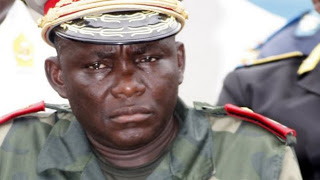
‘Defeat of M23 may be orchestrated’

Refugees, DRC
Refugees, DRC

The ‘Defeat of M23’ was perhaps orchestrated, says Andre Vltchek, an investigative journalist. The situation in the DRC is unpredictable, and exceptionally volatile

Reports suggested that the UN grew tired of the insurgents, and the M23 gunmen were pinned down in the hills bordering Rwanda and Uganda. They were shelled mercilessly and crushed.

The final peace accord has not been signed because the Congolese delegation refused to enter the ceremony room in the Ugandan capital, Kampala, claiming there is no point in signing any agreement in view of the fact that M23 no longer exists.

This is the story, or at least that is how the story has been told in London and Washington.

Vltchek is acquainted with the city of Goma, said the capital was once called the ‘Riviera of Kivu’. He was once kept in detention there, several floors underground, interrogated by Congolese intelligence agents

Goma is so full of natural gas it could explode at any moment without warning and perhaps kill tens of thousands of people.

Arthur Tewungwa, a Ugandan businessman and an opposition figure told him that “most knowledgeable observers of the problems pertaining to the eastern DRC are aware that Kagame and Museveni have been the main architects of the chaos that has prevailed in the region.The myriad of so-called rebel groupings are ‘Frankensteins’ created by them to enable the pillage of the region amidst the semblance of chaos.”

Congolese immigrants in South Africa have made similar remarks. They say M23 was created by president Kabila himself.

A leading expert on the DRC, and one of the former UN genocide investigators, Keith Harmon Snow, spoke about the role of foreign companies in the present situation:

“Meanwhile, multinational corporations operating in Eastern Congo under the media radar, but soaked in Congolese blood, include Banro Gold, Casa Mining, Randgold, Mwana Africa, Loncor, Anglo-Gold Ashanti, Kilo Gold, and Moku Gold. These corporations benefit from having the Rwandan Tutsi in Kinshasa (Kanambe) and have deep ties to the criminal extortion, money-laundering, racketeering and theft behind the plunder and depopulation in the Great Lakes countries. The United Nations Forces (MONUC, MONUSCO) and the Rapid Intervention Forces (note the heavy presence of South African troops and South African mining companies in Eastern Congo) serve the corporate agenda.”

In Tokyo, Ms. Masako Yonekawa, formerly the head of the UNHCR Goma Office in eastern DRC, confirmed on camera, during a discussion: “Well, Rwanda has been getting a lot of assistance from the US Government and the UK, so that’s why they were able to build up their military power…”

Vltchek asked her whether there was indifference on the part of the superpowers towards the suffering of the Congolese people, and she replied that it was intentional. It’s because they had a very strong economic interest… the natural resources in the Congo, they were all to the benefit of the world economy.

Noam Chomsky, discussed Rwanda and DRC with Vltchek in Boston in 2012.

“Eastern Congo is where probably the worst atrocities in the world are taking place… Who do you point the finger at? Oh, they may have been killed by militias? But behind the militias are multinational corporations and governments, but they are a stage removed. You don’t see the multinational corporations that are using the militias to slaughter people so that they can get access to the coltan that Westerners use in their cell phones. It’s indirect, and a lot of the atrocities and crimes that you are describing have that problem,” Chomsky said.

Some insiders, including Keith Harmon Snow, are not even convinced that M23 has actually been defeated:

“At present, the propaganda system is again trotting out the refrain that ‘rebels in Congo have been defeated.’ The latest so-called ‘rebels’ – the M23 forces – are actually Rwandan government troops, not rebels. Reports now appearing in the Western mass media are that the ‘M23 rebels’ have ‘surrendered in Uganda’, or ‘turned themselves in’ in Rwanda. This is nonsense, since these are Rwandan defense forces. The varying incarnations of ‘rebels’ in eastern Congo have always been backed by Museveni (Uganda) and Kagame (Rwanda), in turn backed by the USA, UK and Israel. M23 is the same: another predominantly Tutsi army serving the Tutsi/Hema elites, not the people of Uganda or the people of Rwanda/Burundi.

Media reports have exaggerated the fighting between Congolese troops (FARDC) and their UN partner army, the Rapid Intervention Forces, against the M23. Most M23 were warned in advance of an impending assault and they fled to Rwanda and Uganda.”

The numbers aren’t precise, but it is generally agreed that between 8 and 10 million Congolese people died between 1994 and the present.

“Everybody is talking about the Rwandan genocide,” Congolese Presidential candidate Ben Kalala once told me. “Some 800,000 people died there. I am sorry for them, because they are human beings. But in the Congo 8 million people died: women, children, elderly… So what is the world waiting for?”

News of the genocide never get out because Tony Blair was serving as personal adviser to the Rwandan President Paul Kagame, and has friends and allies like Bill Clinton, Bill Gates and numerous other political, as well as economic and religious leaders.

Right now the situation in Rwanda, Uganda and DRC is unpredictable, and exceptionally volatile.

“The situation in Kigali is extremely tense, right now”, an Asian diplomat based in East Africa, who asked not to be identified, explained to me.

“The atmosphere is also very confusing… Security is beefed-up and it is clear that something may happen any moment. There are rumors that the West may let Kagame fall soon and replace him with a more suitable puppet… And of course he knows; he is extremely smart, and cunning, unlike Museveni. That is why he is putting up fortifications around himself. He needs those M23 people around him, in case of war! He needs them back! It is almost certain that there will be a conflict here soon… Next year is the 20th anniversary of the ‘genocide’ and of the RPF taking over the country,” he said.

Another regional showdown is most likely approaching. In East and Central Africa, what is called peace could actually be just another battle in a never-ending war. – RT

The elusive quest for peace in DRC

M23 rebels are well-armed, say sources

The current conflict in the Kivu Region of the Democratic Republic of Congo (DRC) threatens to linger on despite an international effort to broker a truce between the M23 rebellion and the Congolese government. The 2012 version of this conflict is difficult to grasp, particularly because the M23 is a shifting armed movement, both geographically and politically. Its leadership is interchangeable among commanders, and the movement is supported by foreign influences with an eye on the geological riches of the region.

The evolution of the M23 Rebellion

Who exactly are the M23 rebels? This is the question the Rift Valley Institute’s Usamala Project tries to unpack in its recent report “From CNDP to M23: The evolution of an armed movement in Eastern Congo” (PDF). While the armed branch of the rebellion is easy to define, its political leadership is more elusive. The report explains further:

The M23 political leadership was made up mostly of former CNDP [National Congress for the Defence of the People] loyalists, with Jean-Marie Runiga Lugerero, the CNDP’s representative in Kinshasa, as political coordinator. However, there were also some new names, allegedly appointed after pressure by Rwanda (…) Between May and August 2012 the M23 also began to beef up its political wing. It named several new local chiefs, set up a tax collection network, and established a formal liaison office for humanitarians working in the area––structures reminiscent to those of the CNDP era. They also established two websites (www.soleildugraben.com and congodrcnews.com), a Facebook fan page and several Twitter accounts run by them or people close to them. On 20 October, in a move to further boost their legitimacy, they renamed their armed wing the Armée Révolutionaire du Congo (ARC, Congolese Revolutionary Army).

Indeed, while rudimentary at first, the public relations strategy of the M23 rebels has grown increasingly sophisticated in order to garner the public support. On Jeune Afrique, Trésor Kibungula illustrates the evolution of M23 on Facebook, from a timid start back in July, to a media platform sufficiently controversial that Facebook eventually had to shut it down.

An interview with  the M23’s Bertrand Bisimwa on the Congo Siaisa blog helps to explain the genesis of the movement and its alleged overarching goals:

The M23 is made up of armed groups that signed the March 23 agreement. We started by asking for the implementation of that deal. The government fought us, saying we didn’t have the right to demand that [..] Today, in addition to the March 23 agreement we want good governance in the country and a legitimate government. You have to realize that not all ex-CNDP joined the M23. In fact, most didn’t. It was these others, those who didn’t join, who helped rig the elections in [Jospeh] Kabila’s favor in Masisi.

General Sultani Makenga, the military leader of the M23 also gave an interview recently where he speaks about the fluid leadership of the M23 movement, giving updates on the status of former CNDP leader Laurent Nkunda and arrested general Bosco Ntaganda within the movement.

Aside from its shifting leadership, Melanie Gouby in Newsweek Magazine explains that the movement does not seem to have a defined political ideology and seems mostly driven to protect the economic and political interests of neighboring nations.

Involving all players in the quest for peace

The two nations with most economic and political stakes in the conflict are Rwanda and Uganda. According to the United Nations, Rwanda has been tied to the conflict in Kivu for a long time, despite denials from President Paul Kagame’s administration. Yet, there is little uncertainty about the Rwandan support as the Usamala project report explains:

Rwandan support for M23 has now been well documented, in particular by the UN Group of Experts. Their conclusions have been confirmed by Human Rights Watch, by MONUSCO, and by at least three embassies in Kigali through internal investigations [..]

With regards to Rwanda’s role in the crisis, the U.S. policy to minimize sanctions against Kagame’s administration is perplexing to many observers.

The Ugandan government is also suspected of providing logistics support to the latest M23 offensive. In the following video, Ugandan lawmakers ask the president to explain the relation to the Congo M23 rebels:

With so many players involved in the crisis, what’s in store for the region is still very unclear. Is the Goma withdrawal definitive for the M23? Some M23 fighters seem to firmly believe they will soon be back in the city. Observers do not seem to expect much from peace talks.

Gérard Prunier, a French academic and author, argues that Congo and Rwanda are “just playing a waiting game until the situation on the ground gets sorted out.” He believes there could be an escalation of the crisis:

If tomorrow you could have the secession of Katanga (ed’s note: a Congo region rich in minerals) back on the books, I wouldn’t be surprised

Meanwhile, the local population bears the main burden of this never ending war. The World Food Programme reports that at least 80,000 people are displaced in the region. isnblog.ethz.ch

DRC shrugs off German mercenaries fighting for M23

The answer to German mercenaries

The Democratic Republic of the Congo military has warned that any aggressor would be met with force and added that it was untroubled by German and other mercenaries.

M23 rebels have issued a warning to the Congolese government that they would resume fighting to take control of the troubled east if the government does not start negotiations immediately.


Congolese troops backed by the UN Intervention Brigade including South African troops have taken up positions abandoned by M23 rebels in the hills overlooking the eastern town of Goma.


This happened after the rebels withdrew on Friday.


Meanwhile, Rwanda has denied accusations from the UN of helping the rebel group.


DRC military spokesperson Colonel Amuli Olivier said: “If Rwanda helps M23, Congo doesn’t care, because we know they have mercenaries from Germany, from Eritrea, from Uganda. The most important thing for Congo is to say whoever takes arms against Congo, will always face the full force of the army and the army’s objective is to secure Congolese borders and its civilians.”


The rebels have demanded the government to return to the negotiating table saying “if the Congolese government pushes on with the military option to the detriment of the Kampala talks, our armed forces reserve the right to re-take control (of Goma positions).”


Over the past week several peacekeepers have been injured in clashes among them, three South Africans.

M23’s political leader, Bertrand Bisimwa wrote a letter to South Africa earlier, asking them not to come and “kill their brothers”. He cautioned them that they are going to face similar treatment to the one they received when facing Seleka rebels in the Central African Republic (CAR) who killed 13 South African soldiers.

“If they (the South Africans) think they will go out into the hills and annihilate M23, they’re crazy,” Bisimwa said, adding: “If an army goes in, when it does not know the terrain or the politics is overconfident and is itself not combat equipped for these kind of operations, they’re going to be kicked. If South African special forces could not keep Seleka at bay – not nearly as coherent a target as M23 – how are they going to defeat M23, which are in their own back yard?”

South Africa is deploying more than 1000 troops in the DRC. Tons of weaponry, including helicopters, were flown in huge cargo planes from South Africa to Entebbe in Uganda, close to the Congolese border, where SA forces are expected to be based. The rebel group accuses Zuma of sending his troops to the DRC to protect his nephew Khulubuse’s oil interests.

South Africa may be badly underestimating the strength of the M23-rebels.

M23 rebels have grenade-launchers and a 37mm double barrelled aircraft defence cannon from the Congolese defence forces. A source inside the SA army admitted that there could be ‘loss of lives’ among the South Africans because the rebels know the terrain better.

The South African troops are part of a multilateral regional force, which includes the armies of Mozambique, Malawi and Tanzania, with the blessing of the UN Security Council which passed Resolution 2098 on March 28, 2013.

M23 claims the resolution transformed the UN peace keepers in a belligerent force, entrusted with offensive mission. The UN security council thus authorised an “intervention brigade” to allow “neutralisation of armed groups in the east of the DRC.” This decision was in sharp deviation of the UN’s historic peace mandate in the Congo, who in the past only had a mandate to ‘protect’ the area.

UN Security Council unanimously approved the creation of a brigade of more than 2,500 troops with a mandate to conduct “targeted offensive operations” against M23. The new UN force is to consist of three infantry battalions, an artillery company, a reconnaissance company and “special forces.”

It marked the first time that UN peacekeepers were given a mandate to conduct offensive operations, marking a dramatic change from the UN’s peace mandate in the past, which only allowed soldiers to shoot back when they were being shot at.

M23 says the UN is, in effect, coming to the “rescue of one of the most corrupt regimes in the world and will contribute to extending the reign of an army that is infamous for rampant rape and other atrocities that it wantonly and habitually inflicts on the Congolese population.”

The irony of Resolution 2098, is the UN Secretary General’s own words stating that corruption is the main cause of the failure of the DRC Government.

Sources say army officers take advantage of agricultural and mineral wealth, and set up taxes and roadblocks in the area. “The rationale for the presence of soldiers is ostensibly to protect people from rebellions. Unless they get rich on the backs of the same people, they have no interest in stopping the war.”

Some observers even argue that a part of the army is in the hands of Tutsis. More than nine generals out of thirty are said to be Tutsi Congolese. The M23, backed by Rwanda, want an independent state, Tutsiland.

Fighting rages outside Goma

militia_in_eastFresh fighting raged Thursday outside the flashpoint city of Goma in eastern Democratic Republic of Congo, the M23 rebels and regular army said, blaming each other for the new hostilities.

An army officer said rebels had attacked government-held positions on Wednesday night 20 kilometres (12 miles) north of the capital of North Kivu province, sparking clashes with heavy weaponry that continued into Thursday.


The territory, near the villages of Mutaho and Kibati, has been in government hands since mid-July, he said, speaking on condition of anonymity.


M23 intelligence officer Modeste Bahati confirmed the renewed fighting but blamed the army for starting it by attacking rebel positions around Kibati.


“Our forces are holding their positions,” he told AFP.


The rebels accused the army of wanting to “broaden” an offensive against them.


“The absurd war relaunched by the Congolese government appears to be an outburst of anger after the failure of military-style diplomacy in these past weeks,” the movement’s spokesman Amani Kabasha said in a statement.


Kabasha accused the army of breaching “recent recommendations by the UN Security Council, the International Conference on the Great Lakes Region, and the SADC (Southern African Development Community) for the resumption of peace talks.”


Both sides said they were not yet able to say how many people had been killed or wounded.


The rebellion by the M23, a movement launched by Tutsi ex-soldiers who mutinied from the army in April 2012, is the latest insurgency to ravage the vast central African country’s mineral-rich but conflict-torn east.

The rebels, estimated to number about 1000, have been active in North Kivu province since May 2012. Founded by members of a previous rebel group integrated into the military under a 2009 peace deal, they left the army because they accused the government of failing to abide by the terms of the agreement.

The M23 occupied Goma – a city of about one million people and the hub around which most of the fighting has revolved for 10 days in November 2012 before withdrawing under international pressure.

The latest bout of fighting, which erupted in mid-July and has flared up periodically ever since, ended an almost two-month truce reached in May when UN chief Ban Ki-moon visited the region. – Sapa/AFP


SA soldiers injured in DRC

sadrcDRC government officials say South African soldiers are among those injured in renewed fighting around Goma.

South African soldiers are supporting Congolese troops as they battle M23 rebels in the DRC. The four soldiers were wounded on Friday.

Congolese troops are currently battling M23 rebels near the city of Goma.

The South Africans are part of a UN force supporting government troops. Ten Tanzanian soldiers were also injured in the fighting last week.

Fresh fighting broke out on Wednesday morning.

More than 1300 South African soldiers are stationed in the DRC. They were deployed in June as part of the UN’s Force Intervention Brigade.

Opposition parties have lashed out at government over the deployment of the soldiers to the DRC.

East Africa Bureau Chief Robyn Kriel spoke to us earlier about the latest in the DRC. – eNCA

SANDF readies to fight M23

M23
M23

Hundreds of South African soldiers deployed to the volatile east of the Democratic Republic of Congo are likely to be involved in violent clashes with thousands of battle-hardened rebels.

The UN has given the M23 rebels 48 hours to demobilise and surrender their weapons. The deadline expires today and if the rebels fail to meet it the UN intervention force of which the South Africans are a part will move in to forcibly disarm them.

About 900 South African soldiers from the SANDF’s 6 Infantry Battalion are deployed in and around the town of Goma as part of the UN’s intervention brigade.

Tens of thousands of civilians are said to be fleeing from war-ravaged Goma in anticipation of the blood-letting likely to come.

The South African troops are trained to deploy into battle zones from helicopters.

The brigade was formed to engage and attack the M23 rebels terrorising the region, allegedly with the backing of the Rwandan government and military.

The brigade, which also has troops from Malawi and Tanzania, will from today attempt to disarm the M23 rebels, an action they say they will oppose.

There is growing concern that there will be a repeat of the killing of South African soldiers as in the Central African Republic earlier this year. Dozens of SANDF soldiers were wounded and 15 killed in clashes between South African paratroops and Seleka rebels in March.

SANDF spokesman Brigadier-General Xolani Mabanga said: “We have competent troops with the equipment necessary to carry out their tasks.”

But Mabanga admitted that not all the troops were in place.

“As to when this will happen it is difficult to say … It is a highly sensitive operation, not only involving us.”

Institute for Security Studies senior researcher Andre Roux said: “The [South Africans] underwent three months of combat-readiness training and two months of mission-readiness training, and are now training intensively for combat operations.

“Deployed with specialist weapons capabilities, such as heavy machine guns and armoured vehicles, the troops are a very capable fighting force that can defeat the rebels.” – timeslive.co.za

DRC conflicts have worsened since passage of Dodd-Frank 1502 Act

Genl Amisi
Genl Amisi

One of the leading advocacy groups for the conflict minerals campaign Global Witness, a British NGO, published a report last week detailing the massive failure of the Dodd-Frank 1502 Act to achieve any of its intended goals.

The report documents how the conflicts have worsened since passage of the law and the SEC’s promulgation of the implementing regulations. And it reveals how, by driving the trade underground, the law has benefited the very worst elements in the Kivus: rogue military groups and armed militia.

Other NGOs had already revealed their fealty to the US Chamber of Commerce by publishing reports highly critical of Dodd Frank 1502, but none had previously positioned itself as a leader in the campaign.

Here are some of the report’s highlights:

Up to 10 tonnes of gold from South Kivu is being laundered each year through Burundi and exported to Dubai–with an “almost complete absence of checks” on the trade;

FARDC forces redeployed to fight M23 rebels left a security void filled by armed groups moving in on the mineral trade;

General Gabriel Amisi, who was fired last year as the army chief of staff for selling arms to the M23 rebels, controls one of the richest gold mines in South North Kivu;

Changes in security dynamics in the past year have provided rebels and FARDC with opportunities to take control of mining sites previously considered candidates for conflict-free sourcing;

Formal exports of the three Ts–tin, tantalum, and tungsten–are low in South Kivu and virtually non-existent in North Kivu. The majority of these minerals are smuggled out of eastern Congo, laundered through Rwandan tagging system, and exported as domestic Rwandan product.

The financial incentives to smuggle Congolese tin ore across the border outweigh the risks of getting caught, since “tagged” tin sells for $9/kilo, compared to a mere $3 or $4/kilo for untagged ore.

The government-led initiative to certify mining sites initiated in 2011 is already out of date and defunct;

The conflict-free tin initiative at Kalimbi in Nyabibwe, widely viewed as a test case for responsible sourcing, is being exploited by a military-led smuggling racket.

To be sure, the report concludes with the standard advocacy-based recommendations, to wit: that companies implement OECD due diligence procedures in full; that the Congolese government enforce domestic due diligence law, remove and prosecute army officers involved in the mineral trade, and formalize the gold trade; and that the donor governments support capacity building for mining authorities.

But the report convincingly demonstrates that the government has neither the will nor the capacity to bring the illicit trade to heel, and provides overwhelming evidence that Dodd-Frank has exacerbated the very problems it was meant to resolve. The sparse recommendations tacked on to the conclusion of the report tacitly acknowledge the nature of the problem: A government capable of making the recommended reforms would not need to be told to undertake them in the first place. To put it another way: A government that is unable and unwilling to govern its territory or protect its people is not a likely candidate to administer a complex and dynamic mineral trade regime.

With the publication last month of the Pole Institute’s highly critical No Kivu, No Conflict report, which concluded that the Kivus are “being asphyxiated” economically by Dodd-Frank 1502, this leaves The Enough Project as the law’s sole remaining cheerleader. In late February, Enough’s co-founder and public face,  John Prendergast, wrote this about the mineral campaign:

“For decades all of the benefits of eastern Congo’s vast mineral resource wealth have gone to those with the biggest guns — the Congolese army, local militias or neighboring countries. These minerals include, among others, gold, cobalt, copper, tin, industrial diamonds and coltan, used in cell phones, laptops and other electronic devices.

But U.S. and European consumer demands for a conflict-free minerals trade, congressional legislation, International Monetary Fund aid suspensions, U.N. experts’ reports, responsible investors and other influential voices are making it harder to profit violently and illegally from mineral smuggling.”

Further analysis from the Pole Institute:

“Thus, a pattern is emerging in which Kivu’s mining sector is being asphyxiated in the name of reform. Before 2010, Kivu’s mineral traders had willingly participated in moves to strengthen formal and legal channels and to safeguard Kivu livelihoods by creating “conflict-free” production and trading chains within Eastern Congo. The mining ban killed this off, and today the focus has moved to Katanga and Maniema, increasingly apparently favouring a nexus of mining firms closely linked to the power-holders in Kinshasa. Because they do not finance armed groups, these firms are seen as “conflict‐free,” but no criteria exists to judge the wider political ramifications of their activities, their benefits for local development and the possible exacerbation of local conflict caused by favouring certain firms in collusion with international partners to the detriment of others.”

– David Aronson

SA troops caught between fighting factions in DRC

Hercules C-130 with Monusco cargo

South African soldiers are caught between M23 rebels and government forces in the Democratic Republic of the Congo.

Fighting erupted anew in the war-torn east of the DRC on Sunday and continued yesterday after about 100 armed men disguised in women’s clothing entered the country from Rwanda, said local sources.

Soldiers of 6 SA Infantry Battalion have been deployed in the DRC in a United Nations “intervention brigade”.

The intervention brigade consists of 2069 soldiers, of whom 850 are South African, and falls under the authority of the UN’s broader 19000-strong Monusco peacekeeping mission in the Congo.

Unlike the peacekeeping force, the brigade, which also has Tanzanian and Malawian contingents, has been mandated to engage any group that tries to destabilise the region.

Lieutenant-Colonel Felix Prosper Basse, a spokesman for the Monusco force, said yesterday that the South Africans were ”in the middle” of the fierce fighting around Goma, the provincial capital.

“The [Monusco] operational base in Monigi has always been a South African base. It is on a hill dominating Goma,” said Basse.

The South African troops have been involved in two other clashes in the past week, sparked when another rebel group, the Mai Mai, attacked a nearby M23 base.

“The M23 repelled the attack and the Mai Mai turned and started to shoot at civilians and the blue helmets [UN soldiers] to intimidate them. The blue helmets fired warning shots but when they kept on coming we engaged them,” said Basse.

One rebel was killed in the fighting and two others were wounded.

Heavy calibre weapons were used, including multiple-rocket launchers, mortars and artillery. DRC government forces have been involved in heavy fighting against the M23 rebels since Sunday.

SA Defence Ministry spokesman Siphiwe Dlamini said the fighting was taking place in the areas where the South African troops are deployed.

“We are not involved,” he said.

The South African base was formerly held by M23 rebels but was taken by Monusco after the two M23 factions started fighting each other, leaving a gap for the UN force to move in. – Sapa-AP, AFP

SA will ‘enforce’ peace in DRC

On the ready to enforce peace

Tight security has been thrown around the deployment of more than 1000 heavily armed South African troops to the Democratic Republic of Congo.

In the past 72 hours, 1300 soldiers from 6 SA Infantry Battalion, including paratroops, special forces and engineers, have left for the eastern DRC as part of a UN peace enforcement mission.

 The troops are part of a brigade deployed to target the M23 rebel group waging war on the DRC government.

Defence Ministry spokesman Siphiwe Dlamini dismissed the issue of troop movements as “speculative” and refused to comment further.

But defence analyst Helmoed Heitman said: “There has been a lot of activity [at the weekend]. Not only at Bloemspruit, in the Free State, where the troops are deploying from, but also in Pretoria, where Waterkloof air force base has been a hive of activity.

“After the Central African Republic situation, South Africa is taking this far more seriously than the UN. There is a big concern that the UN sees this as a peacekeeping, and not a peace enforcement, mission.” – timeslive.co.za

SA going to war in DRC

As South African troops prepare for deployment to the violence-racked east of the Democratic Republic of Congo, the enemy is gearing up for full-scale war.

M23 welcomed in Goma

As South African troops prepare for deployment to the violence-racked east of the Democratic Republic of Congo, the enemy is gearing up for full-scale war.

A 1000-strong South African contingent is expected to be deployed to the region within a month as part of an African intervention force. It will almost certainly be drawn into conflict with the heavily armed and battle-hardened M23 rebel group after the collapse of peace talks between the rebels and the central government in Kinshasa.

One of 33 rebel groups in the region, the M23 has 40t of munitions looted from DRC army armouries in clashes in the east of the country last year.

The M23 routed DRC government forces in November in a fight for the capital of the country’s eastern region, Goma, where South African peacekeepers were deployed. In the battle for Goma, South African soldiers were caught by surprise and the M23 forces – whose officers have over 20 years of jungle combat experience – were able to take the town within days.

Reported to have access to T55 and T72 Soviet-era tanks, and armed with anti-tank and surface-to-air missiles, anti-aircraft guns, heavy machine guns, armoured vehicles and rocket-propelled grenades, the M23’s 5500-strong force is in the final stages of preparing for war.

The rebels have upped their propaganda war against the South Africans since warning President Jacob Zuma last month of a “catastrophic and apocalyptic” response if the SANDF engaged them.

The group has since revealed that it plans to kidnap SANDF troops to force South Africa to about-turn on the deployment.

The rebels are said to be backed by Rwandan and Ugandan military advisers and special forces, a claim both countries deny.

In March, the UN Security Council authorised the deployment of a 3000-man intervention force to the DRC to work alongside 17000 UN peacekeepers. The intervention force, which will comprise South African, Malawian and Tanzanian troops, is expected to arrive in the DRC within a month.

As opposed to the peacekeeping force, the new intervention force’s mandate will see troops being able to engage rebel forces regardless of provocation in order to bring stability to the region.

The SANDF has limited heavy-lift air transport capability, its Rooivalk attack helicopters’ Makopa anti-tank missiles are not yet certified, and it is most unlikely that the air force’s Gripen fighter jets will be deployed to the DRC. Knowing all this, South African soldiers are gravely concerned about the impending battle.

An army officer, who has knowledge of the mission’s planning, said: “We train and fight hard. We know our job and are capable, but with little air support, this fight is difficult. We learned good lessons in CAR but, make no mistake, this will not be easy.

“The M23 are well-armed and have good intelligence. They will not fight conventionally. It will be guerrilla-style attacks preying on our weaknesses, and our lack of cohesion and joint training with the other forces.”

SANDF spokesman Brigadier-General Xolani Mabanga declined to comment other than to say: “We are awaiting the UN’s force deployment orders.”

Defence analyst Helmoed Heitman said: “The M23 are not a bunch of ragtag rebels. They are superior in their jungle-fighting capabilities with backing from neighbouring countries [that are] running proxy military forces in the region.

”Our biggest problem is lack of air capabilities. We have the Rooivalk attack helicopter and Oryx troop-carrying helicopters, but we have no proper heavy-lift transport aircraft to get our equipment and troops in and out safely.

“The Rooivalk’s anti-tank missile is not certified, meaning it will have to get dangerously close to the enemy for its rockets to be effective.

“We are taking our long-range G5 cannon and various armoured vehicles but these vehicles will not withstand the M23’s fire-power. Their 37mm anti-aircraft guns are lethal both to air and ground targets and they have the support of tanks and special forces.”

Heitman said major hindrances included the lack of intelligence. “Our defence intelligence is what got us into trouble in CAR.

“Added to this is the UN’s view that this is just another peacekeeping mission. Instead of additional forces, they divided the current peacekeeping force, transferring the South African brigade to the intervention force and creating a vacuum for the rebels to capitalise on. This is not peacekeeping. It will be aggressive counter-guerrilla warfare in which people, including civilians, will die. You need numbers that are not there to bring about peace.”

Heitman said the M23 rebels knew the SANDF’s capabilities.

“They will not pick on us. They will pick on the possible weak links – Malawi and Tanzania – who have little battle experience. They will harass, divide and conquer.” He added: “They have the strong possibility of tank and special forces support.”

Sources from the DRC however, say there is little evidence that the different parties involved understand the real issues in the country. According to the dominant ethnic group, the Lingala, the president is happy about the diversion that both Malawi and Rwanda have created in order to bolster his power. – timeslive.co.za/PRAAG


Rebels in Congo seize Goma, airport

M23 rebels are well-armed, say sources

A rebel group believed to be backed by Rwanda seized the strategic, provincial capital of Goma in eastern Congo on Tuesday, home to more than 1 million people as well as an international airport in a development that threatens to spark a new, regional war, officials and witnesses said.

Explosions and machine-gun fire rocked the lakeside city as the M23 rebels pushed forward on two fronts: toward the city center and along the road that leads to Bukavu, another provincial capital which lies to the south. Civilians ran down sidewalks looking for cover and children shouted in alarm. A man clutched a thermos as he ran.

Thousands of residents fled across the border to Rwanda, the much-smaller nation to the east which is accused of funneling arms and recruits to the M23 rebels.

By early afternoon the gunfire had stopped and M23 soldiers marched down the potholed main boulevards, unimpeded. Their senior commanders, who the United Nations has accused of grave crimes including recruiting child soldiers, summary executions and rape, paraded around the town in all-terrain vehicles, waving to the thousands of people who left their barricaded houses to see them.

The United Nations peacekeepers, known by their acronym MONUSCO, were not helping the government forces during Tuesday’s battle because they do not have a mandate to engage the rebels, said Congolese military spokesman Olivier Hamuli, who expressed frustration over the lack of action by the peacekeepers.

“MONUSCO is keeping its defensive positions. They do not have the mandate to fight the M23. Unfortunately, the M23 did not obey the MONUSCO warnings and went past their positions (at the airport). We ask that the MONUSCO do more,” he said.

A U.N. spokesman said in New York said that the nearly 1,500 U.N. peacekeepers in Goma held their fire to avoid triggering a battle. The peacekeepers “cannot substitute for the efforts of national forces” in Congo, said spokesman Eduardo del Buey.

On Wednesday the Security Council will review the mandate of the U.N. peacekeeping force in Congo. A resolution adopted Tuesday by the Security Council asks the U.N. secretary-general to recommend possible redeployment, and possible “additional force multipliers.”

The resolution approved unanimously by the council imposes targeted sanctions, including a travel ban and assets freeze on the M23 rebel group leadership. But it did not name two countries accused by Congo of supporting the rebels: Rwanda and Uganda.

The council demanded that the M23 rebels withdraw from Goma, disarm and disband, and insisted on the restoration of the crumbing Congolese government authority in the country’s turbulent East.

The resolution also calls for an immediate end to external support to the rebels and asks the U.N. secretary-general to report on the allegations of foreign support while expressing its readiness to take appropriate measures.

French Foreign Minister Laurent Fabius said Tuesday that the mandate of the U.N. forces in Congo “must be reviewed.” Speaking in Paris, he said it is “absurd” that the U.N. has 17,000 peacekeepers in all of Congo but they “couldn’t stop several hundred men” in Goma.

The French minister also said a rapprochement between Congo and Rwanda was critical to solving the crisis. Fabius said he’s been in touch with officials in both countries.

The rebels are believed to be backed by Rwanda, and to a smaller extent by Uganda, which are accused of equipping them with sophisticated arms, including night vision goggles and 120 mm mortars. Evidence is mounting of the involvement by the neighboring country and on Friday, the United Nations Group of Experts is expected to release its final report, detailing the role the neighboring nations played in the recruitment, financing and arming of the rebel movement, which was born in April.

Congolese government spokesman Lambert Mende said that Rwandan soldiers had crossed into Goma, hiking over footpaths across a volcano that looms between the two countries.

“Goma is in the process of being occupied by Rwanda,” said Mende, speaking from Congo’s distant capital of Kinshasa. “We have people who saw the Rwandan army traverse our frontier at the Nyamuragira volcano. They have occupied the airport and they are shooting inside the town. Our army is trying to riposte but this poses an enormous problem for them -this is an urban center where hundreds of thousands of people live,” he said.

A Congolese colonel, who was at the frontline in Goma before the city fell, said that the soldiers he saw were Rwandan. Neither his claim nor Mende’s could be independently verified.

Congo’s President Joseph Kabila flew to Uganda Tuesday for talks with President Yoweri Museveni, a Ugandan government spokesman confirmed. The official spoke in Kampala on condition of anonymity because he was not authorized to divulge the information.

M23 rebel spokesman Col. Vianney Kazarama confirmed that they had taken the airport and the city. “We are now inside the city of Goma,” he said.

Goma, a city of low-lying buildings, many topped by rusted corrugated roofs, was last threatened by rebels in 2008 when fighters from the now-defunct National Congress for the Defense of the People, or CNDP, stopped just short of the city. Their backs to the wall, the Congolese government agreed to enter into talks with the CNDP and a year later, on March 23, 2009, a peace deal was negotiated calling for the CNDP to put down their arms in return for being integrated into the national army.

The peace deal fell apart this April, when up to 700 soldiers, most of them ex-CNDP members, defected from the army, claiming that the Congolese government had failed to uphold their end of the deal. Like in 2008, they again advanced toward Goma. This time, the city fell and the disastrous consequences for the population were already on display.

At a municipal hospital, 19-year-old Nene Lumbulumbu described how she was cleaning her house, when she was hit by a stray bullet in the torso. A father stood over his little girl’s bed, clutching an X-ray showing the bullet lodged in her chest. He had sent her to fetch water in this city where most live without running water. She was brought back by neighbors, after being hit by a bullet.

The hospital was treating children whose arms were sheared off by exploding shells, and teenagers paralyzed from the neck down. Hospital director Justin Lussy said the injuries were just the tip of the iceberg.

“Regional and international actors must now prevent this turning into a new regional war,” said the International Crisis Group in a statement. “The past week has shown history repeating itself in eastern Democratic Republic of Congo, with the same tragic consequences for civilians in the region.”

If the rebels succeed in taking Bukavu, it will mark the biggest gain in rebel territory since at least 2003, when Congo’s last war with its neighbors, including Rwanda and Uganda, ended.

Jean-Claude Bampa, who lives near the road to Sake, the first town on the drive to Bukavu, spoke on the telephone over loud gunfire in the background. “I can hear gunshots everywhere, it is all around my home,” he said on Tuesday morning. “We are stuck inside and are terrified. I pray this will be over soon.” – AFP