How corruption in South Africa is deeply rooted in the country’s past and why that matters

Steven Friedman, University of Johannesburg

When South Africans express shock at corruption, few seem to know that it is perhaps the country’s oldest tradition.

Citizen anger about corruption, a constant theme in South African political debate, reacts to a very real problem. This was underlined recently by news that well-connected people had enriched themselves at the expense of efforts to contain COVID-19. What is not real is the widespread belief that corruption is both new and easy to fix.

Reactions to corruption portray it as a product of African National Congress (ANC) rule (or majority rule for those who cling to the prejudice that black people cannot govern). In this view, it will disappear when the governing party gets serious about corruption or loses power.

In reality, however, corruption has been a constant feature of South African political life for much of the past 350 years. It is deeply embedded and it will take a concerted effort, over years, not days, to defeat it.

Colonialism, apartheid and corruption

Corruption in South Africa dates back to colonisation in 1652. Jan van Riebeeck, the Dutch East India company employee who was sent to colonise the Cape, got the job because he was given a second chance after he was fired for ignoring the company ban on using his office to pursue personal financial interests.

The period of Dutch rule he began, which lasted until 1795, was marked by tax evasion and corruption by public officials. Under British rule, which followed that of the Dutch, public spending was directed to serve private interests. The most prominent colonialist of the time, Cecil John Rhodes, was forced to resign after he gave a friend an 18-year monopoly catering contract for the government-run railways (JL McCracken; The Cape Parliament 1854-1910. London, Oxford University Press, 1967, p.115).

Paul Kruger’s Transvaal Republic, the Afrikaner-governed state against which the British fought at the turn of the century, was riddled with nepotism and economic favours for the connected. The British administration which replaced it served the interests of mine owners on whom it bestowed special privileges. What today is called “state capture”, the use of the state to serve private interests, was common to Afrikaner and British rule.

Given this history, it is not surprising that corruption was a constant feature of the apartheid period. Black people were its chief victims, since they had no rights and so no way of protecting themselves against abuse. But they were not the only ones, as politicians and officials used government power for personal gain.

The most corrupt period in the country’s history was the last few years of apartheid, when the attempt to combat the successful international sanctions campaign made corruption, protected by government secrecy, the core government strategy. This was often done with the collusion of private businesses.

Blurring the lines

By the time majority rule was achieved in 1994, corruption had become deeply embedded in the way the government operated and in how business related to the government. This directly affected the way South Africa was governed after 1994, despite the efforts of Nelson Mandela and his deputy, Thabo Mbeki.
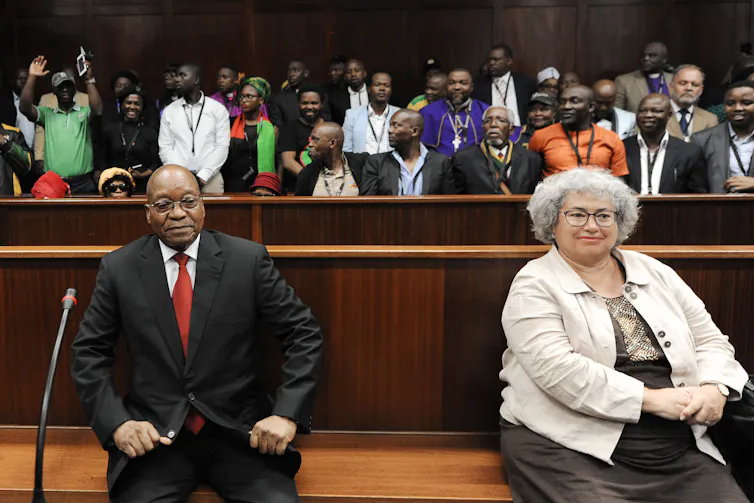
Former South African president Jacob Zuma and French arms company Thales, represented by Christine Guerrier, appear at the High Court in Durban on corruption charges.
Felix Dlangamandla/AFP via Getty Images

A particular feature of the last years of apartheid was a blurring of the public and private which was continued into the new order in at least two ways.

The first was obviously corrupt – the illicit networks which operated during the last years of apartheid recruited people in the new government: former enemies quickly became business partners.

The second was more complicated. It was widely assumed that the ANC would soon govern but its senior officials lacked the means to live the lifestyle expected of people of standing. Businesses, for motives both pure and impure, stepped in to help with cars, homes and private schools.

When businesses realised they would need black business partners, the only candidates they knew were the political activists with whom they negotiated. So, it was to them that they offered the shares and seats on boards which were essential if business was to adapt to new political realities.

The seeds of post-1994 corruption were, therefore, deeply planted in the country’s past. But corruption since then is also a symptom of another way in which the past was carried over into what was meant to be a new society. Before 1994, the groups which controlled the state used it to ensure that they controlled the economy too.

British rule gave English-speaking mine-owners special favours which allowed them to run the economy. After 1948, white Afrikaner rule was used to build the power and wealth of Afrikaans-owned business. But the post-1994 democracy has offered black business at best a role as junior partners of their white counterparts. Corruption has, therefore, become the means which some black people who want to rise to the top use to seek to achieve the dominant role enjoyed by previous business classes whose group controlled the state.

Corruption is also a symptom of the fact that the settlement which brought democracy left intact an economy which is highly concentrated so that new entrants find it hard to make their way in. Some turn to politics to achieve the middle- or upper-middle class life they are denied by an economy they cannot penetrate, no matter how hard-working and enterprising they are. It therefore answers a widespread need, which may explain why the corrupt networks are deep-rooted, particularly at the local and provincial level.

Tackling corruption

So, corruption is far more deeply rooted than current accounts would have us believe. Reformers such as President Cyril Ramaphosa confront a widespread reality which, because it reflects patterns which go back many years and springs from the exclusion of many from the benefits which democracy was meant to bring, is tenacious and can survive shocks.

Removing a few high-profile people will not change much because the networks will survive, as they have done since the departure of former president Jacob Zuma and the Gupta family, who were meant to be the cause of all the problems.

None of this means that sharply reducing corruption in South Africa is impossible. But a successful attempt to do this will need more than the instant cures favoured by the national debate – some high-profile convictions and barring people accused of corruption from public office.

Deep-rooted problems created over centuries demand thorough-going solutions which will take time to work. While this requires more patience and understanding than the national debate seems willing to offer, the alternative is many more years of public railing at corruption while the problem remains because its causes have been ignored.The Conversation

Steven Friedman, Professor of Political Studies, University of Johannesburg

This article is republished from The Conversation under a Creative Commons license. Read the original article.
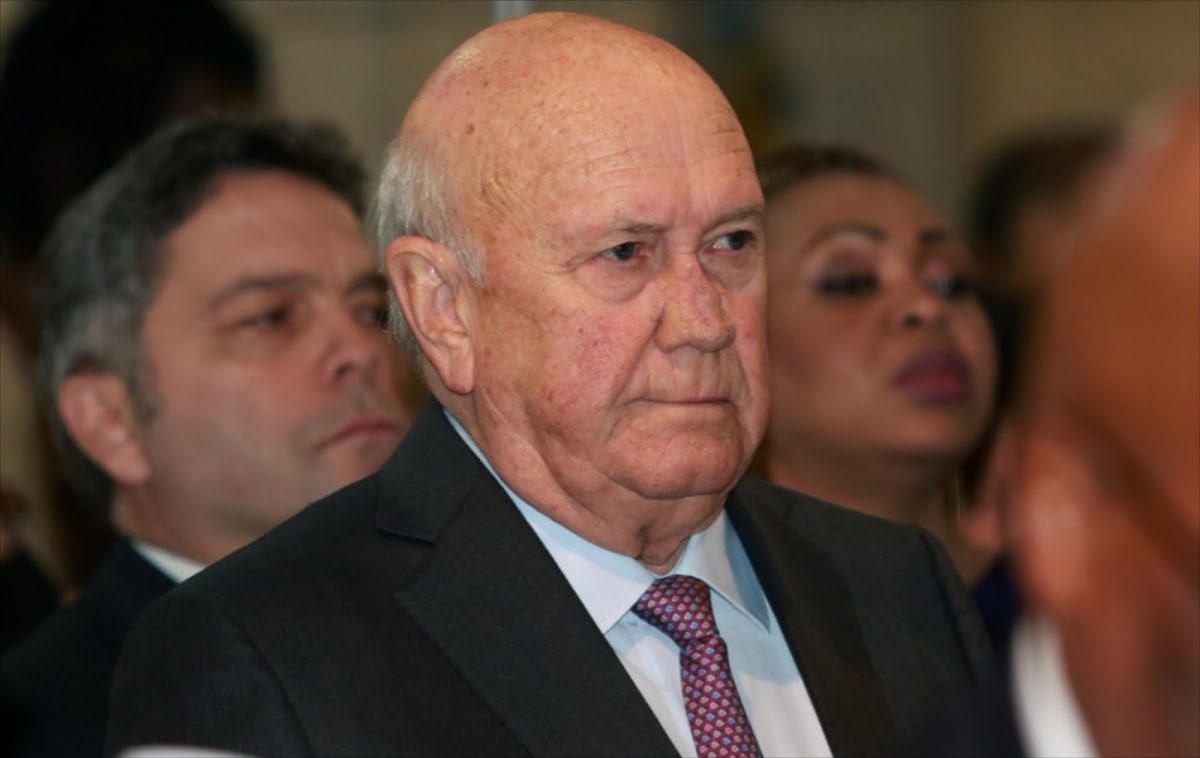
FW de Klerk Foundation kow-tows to its critics after ‘apartheid statement’

The FW de Klerk Foundation has completely retracted its previous statement that characterising “apartheid” as a “crime against humanity… was, and remains, an ‘agitprop’ project initiated by the Soviets and their ANC/SACP allies to stigmatise white South Africans” (see below).

It seems that the statement had been sent out by the Foundation’s CEO, Dr Dayne Morkel. However, the chairman of the board, Dr. Theuns Eloff, said that “no-one would be fired or resign”.

“It was a mistake to issue that statement, and I believe that the mistake was made because of an error in judgement and some emotionality over the attacks by the EFF,” said Eloff.

In another statement issued on 17 February by his foundation, De Klerk apologised profusely and stated:

“I have taken note of the vehement reaction to our response to the EFF’s attack on me at the State of the Nation address on Thursday night.

“I agree with the Desmond and Leah Tutu Foundation that this is not the time to quibble about the degrees of unacceptability of apartheid. It was totally unacceptable.

“The FW de Klerk Foundation has accordingly decided to withdraw its statement of 14 February unconditionally and apologises for the confusion, anger and hurt that it has caused.”

The original statement issued on 14 February reads as follows:

Last night at the opening of SONA, FW de Klerk, former President and Nobel Peace Laureate, and his wife Elita had to endure wave after wave of vitriolic attacks by Julius Malema and EFF members of Parliament, clad in their trademark red boiler suits. They claimed that his hands were dripping “with blood”, including the blood of those who had been slaughtered at Boipatong. Worst of all, FW de Klerk had denied – in a TV interview the previous week – that apartheid was “a crime against humanity.” Their demands that he should be removed from the chamber were rejected by the Speaker, Thandi Modise. De Klerk – who will turn 84 next month – sat impassively in the public gallery as he watched the spectacle below.

De Klerk has repeatedly acknowledged the grave injustices committed under apartheid and has sincerely apologised on a number of occasions to those who suffered under previous governments. These were more than empty words: he dedicated his entire presidency to the abolition of apartheid and the negotiation of a new Constitution that would entrench the rights of all South Africans regardless of race. He oversaw the process that culminated in the repeal of all the remaining apartheid laws.

But was apartheid a crime against humanity?

First we have to look at the origins of the charge: In November 1966 the UN General Assembly declared apartheid to be a crime against humanity – and in 1973 it adopted the Convention on the Suppression and Punishment of the Crime of Apartheid.

Both the Resolution and the Convention were political initiatives of the Soviet Union – which had itself committed atrocious crimes against humanity that involved the killing of millions of people. In 1976, when the Convention came into force, 23 of the 31 signatories were, according to Freedom House in New York, “not free”. Six were partly free – and only two were free. Ironically, South Africa was classified as “partly free” – and had a better human rights score than 27 of the signatories.

The 109 states that subsequently joined the Convention included none of the core democracies. According to the United States delegate:

“Deplorable as it is, we cannot, from a legal point of view, accept that apartheid can in this manner be made a crime against humanity. Crimes against humanity are so grave in nature that they must be meticulously elaborated and strictly construed under existing international law…”

The idea that apartheid was ‘a crime against humanity’ was, and remains, an ‘agitprop’ project initiated by the Soviets and their ANC/SACP allies to stigmatise white South Africans by associating them with genuine crimes against humanity – which have generally included totalitarian repression and the slaughter of millions of people.

By contrast, some 23 000 people died in South Africa’s political violence between 1960 and 1994 – of whom fewer than 5 000 were killed by the security forces. Most of the rest of the deaths occurred in the conflict between the IFP and the ANC. In Kenya, the British interned more than 320 000 people during the Mau-Mau uprising and hanged more than a thousand Mau-Mau members. In Algeria, the French killed more than 140 000 people in a war that claimed some 700 000 lives.

None of this is meant to whitewash the injustices that were undoubtedly committed under apartheid. However, we need a balanced understanding of the past – not one based on a simplistic black/white, good/evil framework – but on a framework that reflects the infinite shades of grey that actually characterise history.

John Allen, a close associate of Archbishop Desmond Tutu, acknowledges in his book “Rabble Rouser for Peace” that “no evidence was ever forthcoming (at the TRC) implicating De Klerk in violence.” This was despite the fact that Truth and Reconciliation Commission (TRC) clearly had an agenda to incriminate De Klerk. He writes of the TRC’s “frustration” at its failure to “pin responsibility for violations of human rights on De Klerk” and acknowledges “the embarrassing weakness of its finding against him.”

As for Boipatong, the TRC’s amnesty committee found in November 2000 that the IFP supporters who perpetrated the Boipatong killings in June 1992 had acted alone.

It is ironic that Julius Malema who launched the vitriolic attack on De Klerk, threatened to commit a real crime against humanity when he said on 7 November 2016 that “We are not calling for the slaughtering of white people – at least not now.”

In a way, an attack by Julius Malema and the EFF, is the sincerest form of compliment. We have seen his kind before: those who wear colour-coded uniforms; who use bully boy tactics to disrupt democratic processes; who whip up race hatred and call their leaders “Führer, or Duce, or Commander in Chief”. The words of a WB Yeats, (whom Malema would not doubt regard as a ‘colonialist’), came to mind while watching the EFF debacle in Parliament:

“Things fall apart; the centre cannot hold; Mere anarchy is loosed upon the world,

The blood-dimmed tide is loosed, and everywhere The ceremony of innocence is drowned;

The best lack all conviction, while the worst

Are full of passionate intensity.”

Issued by the FW de Klerk Foundation, 14 February 2020

Jimmy Carter has cancer

Former US president Jimmy Carter said on Wednesday that recent liver surgery revealed he had cancer that had spread to other parts of his body.

“I will be rearranging my schedule as necessary so I can undergo treatment by physicians at Emory Healthcare,” Carter, 90, said in a statement.

“A more complete public statement will be made when facts are known, possibly next week.”

Carter, a Democrat, served as the 39th president from 1977 to 1981 after defeating Republican incumbent Gerald Ford.

He was defeated for re-election in 1980 by Republican Ronald Reagan.

The Carter family has a history of pancreatic cancer, including his parents, two sisters and younger brother Billy Carter who all died from the disease.

Carter told the New York Times in 2007 that he and other relatives had given blood for genetic studies seeking to help doctors diagnose the disease.

Asked why he has escaped the disease for so long while it devastated the rest of his family he blamed smoking.

“The only difference between me and my father and my siblings was that I never smoked a cigarette,” said Carter, former governor of Georgia and a state senator.

Carter is a virulent critic of Israel. He maintains that Israeli policy in the West Bank represented instances of apartheid worse that those that once held sway in South Africa.

Carter’s comments were broadcast on Israel Radio, which played a tape of an interview with the ex-president. He made similar remarks in interviews, such as one to CBC television.

“When Israel does occupy this territory deep within the West Bank, and connects the 200-or-so settlements with each other, with a road, and then prohibits the Palestinians from using that road, or in many cases even crossing the road, this perpetrates even worse instances of apartness, or apartheid, than we witnessed even in South Africa.”

Carter has rejected the criticism of use of the word apartheid.

“I feel completely at ease,” said Carter, while accusing Israel of oppressing Palestinians. “I am not running for office. And I have Secret Service protection.”

Lone shooter caught after church massacre

Dylann Storm Roof, 21, allegedly shot dead nine people in South Carolina last night.

He was pictured in an earlier photograph wearing a jacket incongruously showing both flags of apartheid-era South Africa and one from colonial British-ruled Rhodesia, now Zimbabwe.

The white gunman has been caught in North Carolina.

The attack came just a day after the New York Times warned that “the main terrorist threat in the United States is not from violent Muslim extremists, but from right-wing extremists.”

Two months ago, after the fatal shooting of an unarmed black man, Walter Scott, by a white police officer in neighboring North Charleston, major protests occured highlighting racial tensions in the area.

The officer has been charged with murder, and the shooting prompted South Carolina lawmakers to push through a bill helping all police agencies in the state get body cameras. The black pastor was a sponsor of that bill.

It appears that Roof robotically said: “I have to do it. You rape our women and you’re taking over our country. And you have to go”,’ Sylvia Johnson, a church member said.

A five-year-old girl survived the attack after her grandmother told her to play dead. The gunman then fled.

Police launched a massive manhunt for Roof and released surveillance images showing him and his car, warning the public that he was dangerous. He was eventually caught on Thursday morning.

Roof’s uncle, Carson Cowles, told Reuters that his nephew had received a .45 caliber pistol as a birthday present in April. He called the 21-year-old ‘quiet, soft spoken’ and said he recognized him in the photo released by police.

In a photograph of Roof on Facebook, he is seen strangely displaying the flag of apartheid-era South Africa on his jacket. He is also wearing another flag depicting that of British colonial Rhodesia, now called Zimbabwe.

Roof also displayed a Confederate flag on his license plate.

Court records show he was charged with a drugs offense in March 2015 and trespassing in April.

Police have since headed to the home of Roof’s mother, Cowles added.

Of the shooting, Charleston Police Chief Gregory Mullen said: ‘We believe this is a hate crime – that is how we are investigating it.’

On Thursday, the Department of Justice’s Civil Rights Division, the FBI and the U.S. Attorney’s Office have launched a hate crime investigation into the mass shooting, ABC reported.

The Bureau of Alcohol, Tobacco, Firearms and Explosives and other agencies have joined the investigation, Mullen said.

Obama called the killings ‘senseless’ and said it again highlighted the need for gun control.

Flying the old flag

The “old South Africa” is still alive and well on the Cape Flats.

The country’s old “oranje, blanje, blou” flag was spotted fluttering over a Coloured [mixed race] residence in Fifth Road, Heathfield.

But neighbours say the flag is an insult to those who fought for freedom, and reminds them of the brutal days of apartheid.

They say the flag has been hoisted since October, and requests for it to be taken down have been ignored.

“This behaviour, in my opinion, indicates a total disrespect to the law and an insult to others,” said resident Richard Talliard.

But Mishkah Jappie, 36, says her husband Thaabied, 40, has “very good reasons” why he hung the flag on their roof.

“We believe nothing has changed from the apartheid days,” said the mom of six.

Thaabied was out on the road, looking for work when the Daily Voice visited. He lost his job as a paramedic in 2009.

“We don’t have water or electricity here and nothing seems to be better in our lives,” added Mishkah.

She said Thaabied got the flag from his stepfather, who served in the army during apartheid.

Her husband has become bitter because doors are still being slammed in his face more than 20 years after democracy.

“I am proud to say Nelson Mandela has opened up the pathway for us to prosper equally. But a lot of people are struggling while a few are getting richer everyday,” she added.

She said neighbours have asked them to remove the weathered and faded flag, but they refused.

The flag has become her family’s own symbol of oppression in the new South Africa.

“The neighbours say it’s hurting them to see the flag, but there are still features of the old order here,” said Mishkah.

A neighbour who did not want to be identified said: “Many people died because of that flag, it opens up old wounds for all of us.”

The South African Human Rights Commission said it would look into the matter.

Spokesman Isaac Mangena says: “South Africa has a flag that represents a rainbow nation. People must desist from displaying anything that would remind others of their sad past.”

Source: Daily Voice

Zuma blames his government’s problems on apartheid

President Jacob Zuma on Wednesday heavily criticised opposition MPs, accusing them of being unpatriotic and of being in a state of denial over the amount of damage apartheid had done to South Africa.

Replying to the debate on his budget vote on Wednesday, Mr Zuma retreated into blaming apartheid for the crises in education and at Eskom, and chastised MPs for talking down the country at a time when it was “doing well”.

He said many opposition MPs had finally learnt how to pronounce Nkandla and now could talk about little else.

During the debate, opposition MPs took issue with Mr Zuma’s contention that the country was on an upward path.

“Some of the honourable members on the opposition benches need to accept the fact that reversing the legacy of apartheid will take decades. The damage was extensive. The structure of the apartheid economy will also take longer to transform. We will continue to work steadily towards this goal, so that we build an inclusive economy that will create jobs and help us build a better life for our people.”

Mr Zuma also criticised Democratic Alliance (DA) leader Mmusi Maimane, albeit without naming him, saying that he had nothing to offer but the refrain — uttered earlier this year — that he was a broken president presiding over a broken country. He also turned to the matter of the recent behaviour of MPs which has seen presidential question time disrupted, MPs being dragged from the house for poor decorum, and filibustering.

“I will be failing in my duty if I do not comment on how our democratic Parliament is conducting its business during this term. As elected leaders of our people in Parliament, we have a joint responsibility to build our country. The conduct of some (members) raises doubt about their commitment to the work of Parliament.” He had hoped matters of decorum would be taken seriously so South Africans were not disappointed.

Zuma took issue with DA MP Michael Cardo, who accused him of conducting an imperial presidency and of shoring up his position with dubious appointments to high office.

“Honourable Cardo, I would caution against problematising all professionals who are appointed to senior positions. Your stereotyping of all appointees as being cronies and pliable is unfortunate and uncalled for.”

Most of the senior appointments in state and public institutions, he said, were doing a hard and thankless task in which they were attacked every day for doing their jobs. “We should be cautious about stereotyping and stigmatisation of black professionals, as it works against the nonracial society we are working so hard to build.”

Nelson Mandela welcomed Bantustans

The NP under FW de Klerk started the negotiations with Nelson Mandela “well”, but abandoned most white demands in September 1992, leading to the current growing assault on property rights, says Hermann Giliomee. He recently gave a lecture in honour of Richard Elphick at Wesleyan University, Middletown, Conn, USA.

In 1960 Mandela along with mostly white communists decided to form an armed body, later called Umkhonto we Sizwe, to embark on a campaign of sabotage and terror against whites and black moderates, now euphemistically called the “armed struggle”.

Albert Luthuli, the incumbent ANC president was firmly opposed the ANC embarking on a terror campaign.

Two Russian historians, Irina Filatova and Apollon Davidson, in The Hidden Thread; Russia and South Africa in the Soviet Era (Jonathan Ball), write that Mandela was present as a member of the SACP’s central committee:

Using the ANC’s distinction between members of the SACP, i.e. communists, and members of the ANC proper, or nationalists, the two [Russian] historians conclude there was no nationalist present when the SACP decided to embark on an armed struggle.

The controversy intensified when the Mandela Foundation released the 627 page original manuscript of Mandela’s account of his life, which was smuggled out of jail. It now appears that some very interesting passages was expurgated from the prison manuscript in producing the printed version of Mandela’s autobiography A Long Walk to Freedom (1994).

The unexpurgated prison manuscript include detail particularly on how Mandela wanted to deal with the Bantustans.

From the mid-1970s the tide turned against the white regimes in Southern Africa. The economy became bogged down by the sudden jump in oil prices together with a slump in commodity prices and growing demands from a much more assertive black work force.

The collapse of the dictatorship of Portugal in 1974 was the start of rapid withdrawal of Portugal from its Southern African colonies. Soviet-aligned regimes came to power in Mozambique and Angola. A South African attempt to intervene in Angola misfired badly. The Soviet government airlifted some 30 000 Cuban troops to the country. Secretary of State Henry Kissinger warned Vorster that due to opposition in the American Congress the Ford administration would not be able to counter further Soviet intervention in southern Africa.

In June 1976 a major uprising erupted in Soweto, near Johannesburg, and quickly spread to townships across the country. The political isolation of the white community was starkly exposed. The situation was so serious that on 8 August 1976 the Vorster cabinet had on its agenda the issue of the release of Nelson Mandela, which was by then twelve years in jail. There is no record of the decision.

What would have happened if Mandela were indeed released in 1976? Neville Alexander records that in 1971 he and Mandela debated using the apartheid channels, flawed as they were. Two years earlier, in 1974, Mandela had written a secret memorandum, entitled “Clear the obstacles and confront the enemy”, that was smuggled out.

In this document Mandela confronted the fact that the government of the Transkei, which was the putative homeland of most Xhosa, had opted to take the apartheid style independence in 1976. In terms of a 1971 law, Mandela who was born in the Transkei, would lose his South African citizenship.

Undeterred, Mandela wrote in his 1974 memorandum that the ANC faced an entirely new development: the independence of the Transkei, which was sure to be followed by other Bantustans. Mandela wrote: “The Transkei will have an independent legislature, judiciary and executive and may control its foreign relations” and then added:
“For the first time since conquest the people will run their own affairs. Now Africans will be able to be judges, magistrates, attorneys-general, inspectors of education, postmasters, army and police officers, and they will occupy other top positions in the civil service. Would it not be far better to consider independence as an accomplished fact and then call upon the people in these so-called free territories to help in the fight for a democratic South Africa?”

If a free Mandela had pushed for this policy of recognising the Transkei’s independence the strains in the ANC may well have become too great to contain. A major split may well have occurred in the movement, putting South Africa on a quite different course than one it took between 1976 and 1990.

Sparks backtracks furiously

Allister Sparks, notorious Boerhater, has apologised and blamed “senility” for his comments on Hendrik Verwoerd, in a bid not to push away more black DA voters.

Speaking at the DA congress in Port Elizabeth, he named apartheid architect Hendrik Verwoerd among “smart politicians” he had encountered in his 64 years as a journalist and analyst.

Yesterday, Sparks tried to cover his tracks: “In truth, Verwoerd and his policies appalled me.”

On the BDLive website , he explained the “context” of his senile remarks.

“I recognised that Verwoerd was a formidable figure. His dominance of his own party was total, to the extent that National Party MPs would hiss with outrage if any opposition MP ventured even a mild interjection. They hung on to his every word as he spelt out the details of his grand scheme of separating the races into ‘separate countries’.

“And he was clever, which is what I meant when I called him ‘smart’.”

Blacks took to social media to complain about Sparks’ vile racism, something the über-liberal Sparks hardly expected as he probably believed his own rants about “white racists” exonorated him from black criticism.

Anti-white Zille says Verwoerd was evil and clever

It seems that outgoing Democratic Alliance (DA) leader, Hellen Zille will be a puppet-master to the newly-elected black party leader, Mmusi Maimane, since he is indebted to her for her support.

Maimane was elected the new party leader at the DA’s Federal Congress in Port Elizabeth on Sunday.

“In any way the DA leadership wants me to support or help in whatever capacity, I’m there to do it,” Zille said in an exclusive interview with the SABC, adding to speculation that she is still in control.

Zille says she is confident that she has made the right decision to step down as party leader and has insisted she was not pushed into relinquishing her position.

“I spent a long time thinking about this decision. I knew when I was elected I would only stay 10 years at most. I think two five-year terms is fine. But then I was wondering do I go at 8 years or do I wait for that other two years and I spent about six months thinking about it, and about a month ago I thought: ‘Now is the time!'”

Zille has again defended Allister Sparks for his comments on Hendrik Verwoerd during his speech at the DA Federal Congress in Port Elizabeth on Saturday.

Zille says Sparks’ comments were taken out of context and that Sparks knew that the white Verwoerd was “evil”.

In Sparks’ defence, Zille said, “We all know he was a passionate supporter of the ANC and in fact, advised Nelson Mandela on communication strategies and other strategies, as an advisor, (and) not as a journalist. He knew and acted in every way to expose the evil of apartheid.”

She adds, “Evil people are not necessarily stupid people. And there is quite a difference in saying someone is intelligent and saying you support them. Some of the most evil people in our history have been some of the most clever and that is what is so frightening. So, he was not in any way paying a tribute to Verwoerd. In fact, he said it in his speech: ‘Apartheid was a crime against humanity.’ And very few people have done as much as Allister Sparks in journalism to expose that crime against humanity as he did.”

Zille hopes that being the puppetmaster to a black face would increase the party’s chances of attracting black votes, something she failed at miserably.

Dan Roodt: On two ex-spies’ tirade against ‘the white Afrikaner’

It has been at least a month since I visited that cauldron of leftist platitudes, The Daily Maverick. Talking of platitudes, the other day I discovered HL Mencken’s definition which everyone in this country should memorise as it is singularly apposite in this colonial society that is slowly slouching towards its Zimbabwe:

“Platitude: an idea (a) that is admitted to be true by everyone, and (b) that is not true.”

So this afternoon I decided it was time to boost my ego again by confirming just how stupid our PC brethren – although maybe we don’t belong to the same species at all, so we are hardly brothers – could be.

roodt_fbfotoAnd sure enough after reading Ranjeni Munusamy’s nebulous threat of the revolution, “transformation” and “radical economic change to come” (kind of Marx and Engels’s historical inevitability for Malema’s woodwork class), lo and behold, the latest anglocentric tirade against us, the much-maligned “white Afrikaner” by Nel Marais and Jo Davies:

White Afrikaner, repent or be damned

“Apartheid” in any of its senses is such a dead horse, especially while your marvellous system is flooding our dams and rivers with e. coli, farmers get tortured, babies get raped – you all know about the psychopathic, sadistic “substructure” of this so-called “democracy”, it’s more of a demonocracy – yet you keep flogging it!

Take note: your propaganda victory of 1976 or 1989 or whenever you felt the surge of testosterone and cried, “Aha, now we’ve got the hated Boers where we want them!”, is fast receding into memory. It’s like the Battle of Majuba for us, a magnificent victory and every year on 27 February a thousand Afrikaners climb the mountain to see where we beat the hell out of Britain’s finest soldiers in 1881, but it does nothing for our plight in the present.

Every dire right-wing prophecy by Eugene Terre’Blanche or Jaap Marais of the HNP – who knew a lot more than FW de Klerk’s whole cabinet put together – has come to pass! South Africa is a few inches – note the “imperial measurements” to gladden your English hearts – away from becoming another Liberia or Sierra Leone. Anarchy on steroids. Gentlemen in drag or in bridal gowns or naked with AK47s who are out to make war against the civilians, the elderly, the children, the weak and, of course, to rape the women. Despite everything that Africa Check and other PC, foreign-funded NGOs may say, South Africa is indeed “the rape capital of the world”.

Blaming the devil or the moon or apartheid will not help you one bit. You have made your bed and now you must lie in it. You wanted to place these people, many of whom couldn’t do a simple interest-rate calculation without a calculator, in charge, their greedy hands on every lever of power. Now they are robbing us blind and turning our once beautiful country into a human and ecological disaster, but guess what: It is your fault, not ours! You crazy left-wing, Marxist, feminist, anti-white, “progressive” mobs and “collectives” – how you love that word and its herd-like warmth – wanted all of this to happen. You placed bombs on our streets and in Wimpy bars in your fanatical thirst for revolution, transformation, radical change… Google “chimpanzee with AK-47” and you might find the YouTube video where a chimpanzee shows that he can also handle an AK-47 and hold it aloft as a victory sign, in the “African way”. Well, actually, I’ll save you the trouble:

That is more or less the content of your revolution and your much-vaunted “struggle” which, without Swedish money and East German intelligence, would never have happened.

This country is broken and like Humpty Dumpty, it will never be put together again. More people have been murdered and raped, more money and more goods stolen or defrauded over the last 20 years, than in the previous three centuries, since the arrival of Jan van Riebeeck in his three little ships!

Rolene Strauss
Rolene Strauss

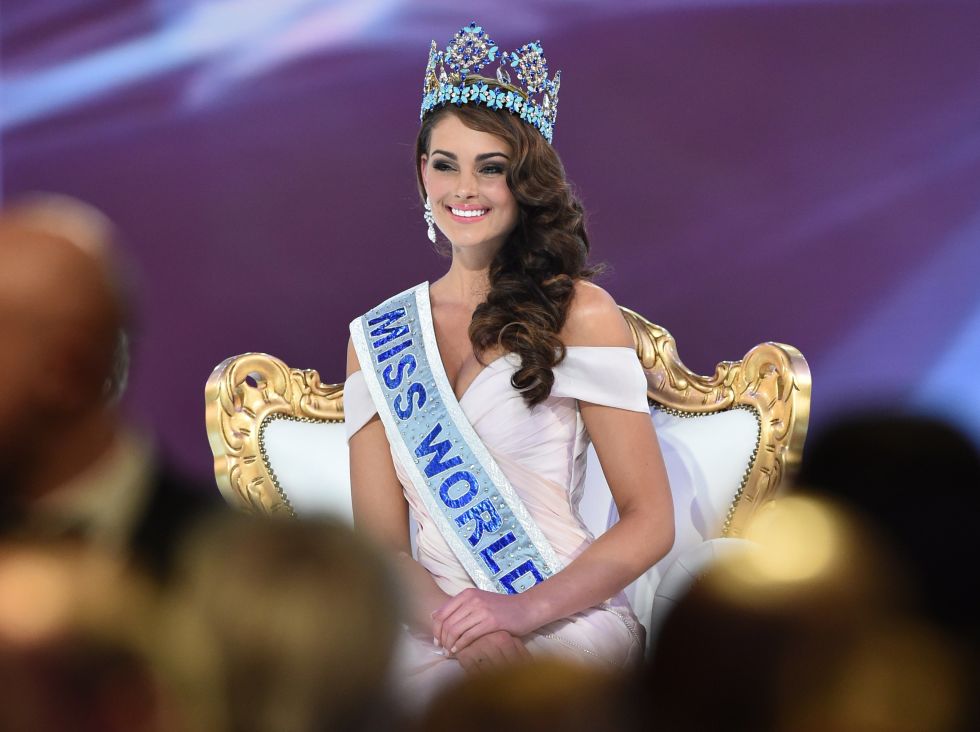
These two ex-spooks writing on The Daily Maverick are just making fools of themselves. They are trying to live up to a stereotype of what they imagine a British leftist would recognise as “the Afrikaner”. The reality, of course, is far more complex and an Afrikaner could be anyone from a farmer in shorts, two-tone shirt and velskoens to a derivatives dealer in New York or a lawyer or the current Miss World, Rolene Strauss. We are a quarrelling, disparate bunch but we share a common, highly standardised language spoken from the Limpopo to Cape Agulhas, not to forget Windhoek, as well as a love of the braai, biltong, melktert, Die Stem and politically incorrect singers such as Steve Hofmeyr and Bok van Blerk. Let’s leave rugby out of it and the sooner they transform the Springbok rugby team into the “All Blacks”, the better. Sport and alcohol have been our downfall and usually the two go together.

Quoting a few poems in a tendential way does not make up for the inability to think, I am afraid. The theory of “white privilege” is just a theory and no-one in this country has even bothered to write a book about it, unlike in the USA where they agonise much more over these things than we do.

The first contradiction you should try to deal with is the fact that, culturally and otherwise, we do not exist in this so-called “New South Africa”, your politically correct “Little England” where everybody tries very hard to emulate some lost British model (see my recent little essay: Raiders of the lost Empire: South Africa’s ‘English’ identity), replete with a stiff upper lip and cucumber sandwiches at the club. We have been completely marginalised, which was part of the grand plan concocted by De Klerk and his British masters, so it follows that:

  1. It does not matter what we believe, what we do or what we talk about, as it is of no consequence to the inner workings of the ANC, what Malema will say next, Robert Mugabe’s next state visit, Eskom’s load-shedding schedule or any of the issues that are really important.
  2. We have absolutely no influence over the fate of South Africa, hurtling towards a desired status as “just another African country” with attendant needs and ills such as food aid, IMF bailouts, peace-keeping and foreign doctors. Neither do our dead ancestors and their past political policies exercise any residual effects on today’s merry mayhem and “progressive” slide into Africanist utopia, which we would call “dystopia” as you couldn’t drink the tap water and you would have to carry a gun to go shopping.

You do not have to worry about “nothing changing”. It will definitely change – for the worse, and soon. We won’t enjoy it, but you will, as you revert to some Cuban or Maoist dream of riding around on antique bicycles past gigantic posters exhorting you to greater equality, as well as a few prison camps dotted around the countryside to hold it all together.

But we’ve also got plans, lots of them. In our future there is some little Luxemburg, a tiny corner of the country with an ocean view, full of banks and high-tech firms, symphony orchestras and opera companies belonging to a kunsteraad and lots more Afrikaans poetry, velskoens and shorts, Die Stem and other stuff you won’t like. But guess what, you will be so busy with your panoply of problems, internecine power struggles, civil wars between locals and xenos, as well as keeping the aid money flowing, that you won’t even notice. And most of these imperial, British leftists and their pseudo-Afrikaans emulators such as Nel Marais and Jo Davies won’t be here anymore, having packed for Perth or Toronto.

Also read J. Smith: The media try to make us whites feel guilty

J. Smith: The media try to make us whites feel guilty

I am honestly just a little bit tired of being told day after day and week after week how to think and act as a white person (or Afrikaner) – especially by white liberal journalists. Almost every article being churned out in the media lately has been an attack on whites or Afrikaners and this reached a climax during that period when some who call themselves “revolutionaries” were damaging and defacing statues and symbols of our past (and openly inciting it without any legal consequences) – even if a statue was dedicated to animals which suffered during the Anglo-Boer war.

During this period, the xenophobic attacks were starting (probably also to be blamed on us nasty whiteys and Afrikaners somehow), yet journalists were spending all their energy on writing column after column battering us about how bad we are and how our symbols and heritage have to go. Spending more time on this than on the barbaric xenophobic attacks, murders and general lawlessness.

I am old enough to remember the “grensoorlog dae” – I was drafted – not through choice. And I am also old enough to know people change their views. I have done all I can to integrate into the new South Africa. I treat black people with respect and develop friendships. In fact, the reality is that most white people do, but it is the media who keep portraying us as if we do not.

The media plays on our conscience and attempts to make us feel guilty over things we should not need to feel guilty. It is a form of psychological battering – day after day and week after week. It blatantly attacks our dignity – and our dignity is supposedly protected by the Constitution.

I also pay taxes. My taxes are a form of guilt money. Those taxes should be applied to help and uplift those who suffered under Apartheid. What the hell else do you want me to do? Give away my property? Pack up and leave? I did not kill anybody even when in the army. I did not shoot or abuse any black people. I grew up over “here” and black people lived over “there”. That was it. Never did I hate or disrespect them – we only lived in different worlds and went to different schools or restaurants etc. (Ironically I was probably more tolerant then than I am today – exactly because of all this current finger pointing and telling me how bad I apparently am.)

I was not part of the security forces who did the actual killing or destabilizing – now why should I feel responsible for their actions? I did not vote for them either and during the referendum I voted “yes” for the liberation of black people even when the ANC was busy bombing civilians and I lost a friend in the Church Street bombing.

In your article you generalise against whites and Afrikaners as most journalists do. You point out a handful of stereotypes who do not represent the majority of whites or Afrikaners whatsoever. The reality is different from what you suggest.

I wish this would just end now. Most of us do our best to integrate and we have to take this constant abuse on top of having to give up many of our rights such as the right to equality in the work place after all this BEE legislation.

We have a Constitution which states we are equal and nobody may be discriminated against based on their race or gender – yet if you are a white male you are now forced out of the workplace or not allowed into others – no matter whether you are a new generation white male who had nothing to do with Apartheid and weren’t born under Apartheid – you just have to now carry the consequences of those before you and be discriminated against just as black people were discriminated against before you.

We have to take all this crap whilst at the same time being constantly attacked, abused and having our dignity dragged through the mud. And it helps nothing towards reconciliation – instead it festers hatred and anger and polarizes us as a nation.

I have had enough of being told what to do and how to think. I am sick of constantly hearing how “racist” white people are. I carry no guilt for being white (like some opinionistas who even deny being Afrikaners even when that is something impossible to escape). I pay my taxes and the ANC government must use those taxes to build houses, create jobs, infrastructure and uplift their people. If they steal that tax money or abuse it, then it is none of my doing. And at the same time I respect my fellow South Africans and wish they could respect me as a fellow South African.

The majority of us are simply getting on with our lives. We work, we create jobs and we live in peace. We do not run around torching things we do not like or killing foreigners or farmers we do not like or looting shops or destroying statues of those who happen to have a different heritage or history.

So stop pointing fingers at us and acting as if you are all so high and bloody mighty (nobody appointed you as the moral police). If you have a guilty conscience for being in the previous intelligence services then it is your problem. Don’t make your conscience mine. It is about what we are doing now – today – and what we will do in the future – not all about what we have done in the past. We should not forget the past, but we cannot forever continue living in it. Learn from the mistakes so we do not ever repeat it.

Lastly – people naturally gravitate towards their own culture no matter where in the world they are from. New York is the most cosmopolitan of all cities, yet when you go to Brooklyn you will find distinct Irish, Italian, African-American, Polish, Indian or Jewish areas. It is the way people are. They associate with their culture and ways of life.

– J. Smith

Also read: Dan Roodt: On two ex-spies’ tirade against ‘the white Afrikaner’

British Labour Party holds segregated event

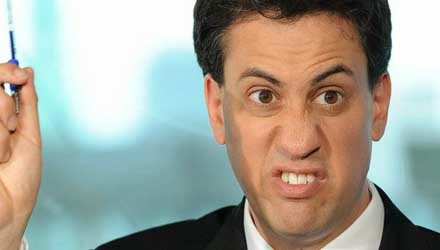
While Ed Miliband dreamt about multiculturalism in Britain, supporters joined hands in Birmingham for a segregated rally.

A Labour MEP for the West Midlands, proudly tweeted a picture of a Labour rally in Hodge Hill, in which seven Labour representatives spoke at a packed Islamic community centre.

The picture clearly shows that men and women were seated separately in the audience, during what was supposed to be an event to encourage political engagement.

This issue did not go unnoticed by the party’s critics, with many taking to Twitter to ask why Labour, which claims to be a party for equality, would support segregated audiences.

Alas the party is staying quiet. A party spokesman was contacted on Saturday night and asked to clarify Labour policy on gender segregation. They are yet to respond.

Actually none of the Labour candidates have been willing to comment on the subject. Jack Dromey, Shadow Minister for Communities and Local Government, and husband of leading Labour feminist Harriet Harman blocked questions on Twitter.

Orthodox branches of both Islam and Judaism require men and women to sit separately in their religious services, but the rally wasn’t a religious service.

Ed Miliband, a Jew, had vowed that upon being elected, Labour would make Islamophobia a crime. Curiously many Muslims believe that the Holocaust never happened.

The last Labour government tried to make it a crime to ‘disrespect’ Islam, at the behest of clamorous Muslim pressure groups.

Labour relies on the Allah block vote in very many constituencies and especially the postal votes of Muslim constituents who do not speak English.

Miliband has almost the least parliamentary experience of all the leaders of the three main parties since the Second World War.

He has had surgery “to change his voice”, as he suffers from a speech impediment, but his voice has not improved. Despite the official account, some maintain that Miliband has had cosmetic surgery done on his nose instead.

Bob urges migrants not to go to SA

Other African nations should stop their citizens from migrating to South Africa to prevent violence against foreigners, Zimbabwean President Robert Mugabe on Wednesday

A wave of anti-immigrant violence in South Africa has claimed seven lives in Durban and Johannesburg over the past four weeks. The South African government has deployed troops to stop the fighting.

After a summit of the Southern African Development Community (SADC) called to discuss industrialisation in southern Africa, Mugabe told reporters that South African President Jacob Zuma had briefed regional leaders on the violence.

Zuma told the meeting that his government would educate its citizens to be tolerant of foreigners and would keep its security forces on alert to prevent future attacks.

“I was suggesting that we, the neighbours, must do what we can to prevent more people going into South Africa. If we can do it, we can then try to get those in South Africa home,” said Mugabe, the current SADC chairman.

“So people should get back to their own countries. It’s not just one for South Africa to resolve but for us, we the neighbouring countries, to resolve. Our people should not have the instinct of rushing into South Africa.”

An estimated one million Zimbabweans live in South Africa, after fleeing economic crisis and political violence at home over the last 15 years.

Mugabe said his government had brought 800 of its citizens back from Durban, but most of them had indicated they planned to return to South Africa, Zimbabwe’s biggest trading partner.

“The people who are described as influx into South Africa are not pushed by governments,” said Mugabe, who has ruled the former British colony since independence in 1980.

“They are people who voluntarily go to South Africa. They think South Africa is the heaven, our heaven in southern Africa.”

Periodic outbreaks of anti-immigrant violence have been blamed on high unemployment in South Africa. The official jobless rate is around 25 percent although economists say is much higher.

Mugabe concurred, saying the living standards of black South Africans were low and that the migrants “who think there is heaven in South Africa and decide to go to South Africa, they make the situation of the Africans there worse.”

Source: Reuters

AgangSA vows to protect Paul Kruger statue

AgangSA members plan to form a human chain around the statue of Paul Kruger in Krugersdorp to protest the recent defacing of statues around the country.

A statue of Paul Kruger in the West Rand town of Krugersdorp was vandalised with red paint overnight on Tuesday.

Agang spokesperson Andries Tlouama said, “The attacks on statues will lead to more attacks on minorities and we cannot have that happen under our watch.”

“These attacks display lawlessness and are an indication that our country is slowly declining into a state of anarchy.”

Tlouama called those who deface statues “hooligans” and said the party will work to protect the rights of all South Africans, including minorities.

“We despise and are angry at apartheid, but the defacing of statues is childish, unnecessary and lawless,” he continued.

He said citizens should follow the proper channels to have colonial statues removed.

“If this continues, we might find ourselves in a state of civil war,” Tlouamma concluded.

AgangSA members plan to convene at the statue from 9am on Wednesday.

Source: eNCA