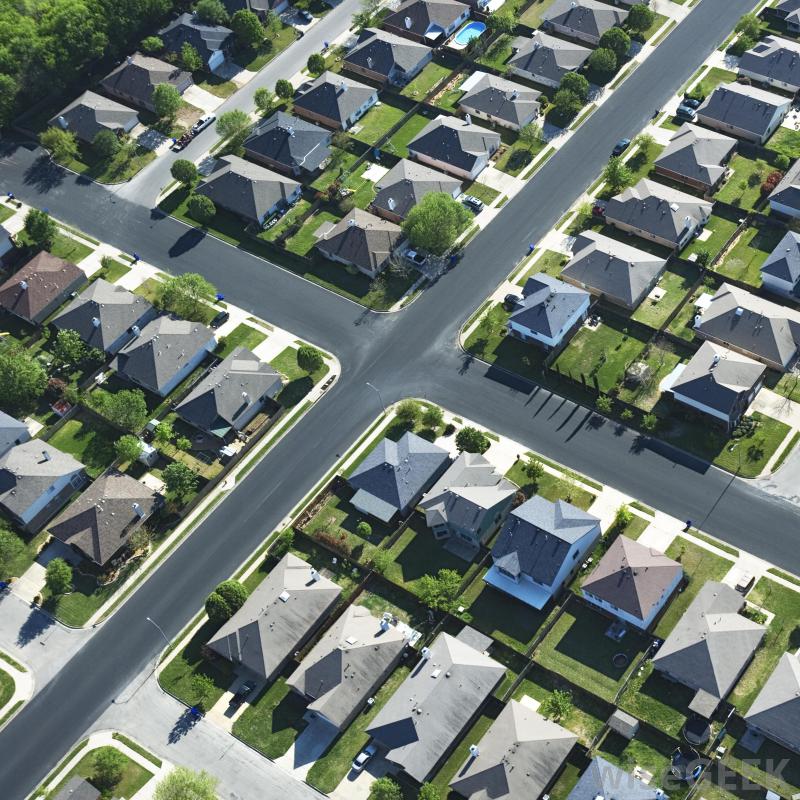
Obama wants to ‘break up’ white, Republican-voting neighbourhoods

The Obama administration is moving forward with regulations designed to help diversify America’s wealthier neighborhoods, drawing fire from critics who decry the proposal as executive overreach in search of an “unrealistic utopia.”

A final Department of Housing and Urban Development (HUD) rule due out this month is aimed at ending decades of deep-rooted segregation around the country.

The regulations would use grant money as an incentive for communities to build affordable housing in more affluent areas while also taking steps to upgrade poorer areas with better schools, parks, libraries, grocery stores and transportation routes as part of a gentrification of those communities.
“HUD is working with communities across the country to fulfill the promise of equal opportunity for all,” a HUD spokeswoman said. “The proposed policy seeks to break down barriers to access to opportunity in communities supported by HUD funds.”

It’s a tough sell for some conservatives. Among them is Rep. Paul Gosar (R-Ariz.), who argued that the administration “shouldn’t be holding hostage grant monies aimed at community improvement based on its unrealistic utopian ideas of what every community should resemble.”

“American citizens and communities should be free to choose where they would like to live and not be subject to federal neighborhood engineering at the behest of an overreaching federal government,” said Gosar, who is leading an effort in the House to block the regulations.

Civil rights advocates, meanwhile, are praising the plan, arguing that it is needed to break through decades-old barriers that keep poor and minority families trapped in hardscrabble neighborhoods.

“We have a history of putting affordable housing in poor communities,” said Debby Goldberg, vice president at the National Fair Housing Alliance.

HUD says it is obligated to take the action under the Fair Housing Act of 1968, which prohibited direct and intentional housing discrimination, such as a real estate agent not showing a home in a wealthy neighborhood to a black family or a bank not providing a loan based on someone’s race.

The agency is also looking to root out more subtle forms of discrimination that take shape in local government policies that unintentionally harm minority communities, known as “disparate impact.”

“This rule is not about forcing anyone to live anywhere they don’t want to,” said Margery Turner, senior vice president at the left-leaning Urban Institute. “It’s really about addressing long-standing practices that prevent people from living where they want to.”

“In our country, decades of public policies and institutional practices have built deeply segregated and unequal neighborhoods,” Turner said.

Children growing up in poor communities have less of a chance of succeeding in life, because they face greater exposure to violence and crime, and less access to quality education and health facilities, Turner suggested.

“Segregation is clearly a problem that is blocking upward mobility for children growing up today,” she said.

To qualify for certain funds under the regulations, cities would be required to examine patterns of segregation in neighborhoods and develop plans to address it. Those that don’t could see the funds they use to improve blighted neighborhoods disappear, critics of the rule say.

The regulations would apply to roughly 1,250 local governments.

Hans von Spakovsky, a fellow at the conservative Heritage Foundation, called the Obama administration “too race conscious.”

“It’s a sign that this administration seems to take race into account on everything,” Spakovsky said.

Republicans are trying to block the Affirmatively Furthering Fair Housing rule. Before passing HUD’s funding bill this week, the GOP-led House approved Gosar’s amendment prohibiting the agency from following through with the rule.

Though segregationist policies were outlawed long ago, civil rights advocates say housing discrimination persists.

HUD is looking to break down many barriers, but Gosar suggested the regulation would have negative repercussions.

“Instead of living with neighbors you like and choose, this breaks up the core fabric of how we start to look at communities,” Gosar said. “That just brings unease to everyone in that area.”

“People have to feel comfortable where they live,” he added. “If I don’t feel comfortable in my own backyard, where do I feel comfortable?”

Critics of the rule say it would allow HUD to assert authority over local zoning laws. The agency could dictate what types of homes are built where and who can live in those homes, said Gosar, who believes local communities should make those decisions for themselves rather than relying on the federal government.

If enacted, the rule could depress property values as cheaper homes crop up in wealthy neighborhoods and raise taxes, Gosar warned.

It could also tilt the balance of political power as more minorities are funneled into Republican-leaning neighborhoods, he suggested.

The Supreme Court is expected to weigh in on housing discrimination in a related case in the coming weeks. At issue is whether government policies that unintentionally create a disparate impact for minority communities violate federal laws against segregation.

The Texas Department of Housing and Community Affairs is facing accusations that it makes low-income housing funds more readily available in minority neighborhoods than in white neighborhoods. This promotes segregation, critics argue, by encouraging minorities to continue living in poor communities where government assistance is available.

Court observers say the case could have a profound impact on HUD’s rule. – thehill.com

Israel gives up on bus apartheid

The Israeli government has had to suspend a recently passed law that would have prevented Palestinians from travelling on the same buses as Israelis.

The apartheid-style segregation law was introduced by Israel’s Defence Minister Moshe Yaalon on Wednesday but provoked outrage from Israeli opposition.

The segregation programme was however short-lived and within hours of being launched, Israeli Prime Minister Benjamin Netanyahu said it was “unacceptable” and suspended it with immediate effect. The programme would have run a three-month trial.

If implemented, the programme would have stopped Palestinians who commute to Israel for work from using public transport available to Israelis living in West Bank settlements.

Source: eNCA

British Labour Party holds segregated event

While Ed Miliband dreamt about multiculturalism in Britain, supporters joined hands in Birmingham for a segregated rally.

A Labour MEP for the West Midlands, proudly tweeted a picture of a Labour rally in Hodge Hill, in which seven Labour representatives spoke at a packed Islamic community centre.

The picture clearly shows that men and women were seated separately in the audience, during what was supposed to be an event to encourage political engagement.

This issue did not go unnoticed by the party’s critics, with many taking to Twitter to ask why Labour, which claims to be a party for equality, would support segregated audiences.

Alas the party is staying quiet. A party spokesman was contacted on Saturday night and asked to clarify Labour policy on gender segregation. They are yet to respond.

Actually none of the Labour candidates have been willing to comment on the subject. Jack Dromey, Shadow Minister for Communities and Local Government, and husband of leading Labour feminist Harriet Harman blocked questions on Twitter.

Orthodox branches of both Islam and Judaism require men and women to sit separately in their religious services, but the rally wasn’t a religious service.

Ed Miliband, a Jew, had vowed that upon being elected, Labour would make Islamophobia a crime. Curiously many Muslims believe that the Holocaust never happened.

The last Labour government tried to make it a crime to ‘disrespect’ Islam, at the behest of clamorous Muslim pressure groups.

Labour relies on the Allah block vote in very many constituencies and especially the postal votes of Muslim constituents who do not speak English.

Miliband has almost the least parliamentary experience of all the leaders of the three main parties since the Second World War.

He has had surgery “to change his voice”, as he suffers from a speech impediment, but his voice has not improved. Despite the official account, some maintain that Miliband has had cosmetic surgery done on his nose instead.

South African beaches more segregated than ever: claim

The South African Sunday Times has done a “snap survey” and found that “a quarter of a century after beach apartheid was scrapped, South Africa’s bathing spots are still mainly segregated”. The newspaper says that “most lovers still flock to beaches “assigned” to them during apartheid, when the Reservation of Separate Amenities Act decreed separate beaches for “whites” and “nonwhites”.

No whites enjoying the sea, sun and surf in Durban.

Self-segregation has now become the norm and whites, especially, carefully select their swimming spots so as to avoid other races. “I just don’t enjoy it when there are blacks or coloureds around,” said one beachgoer in Cape Town. “Too much noise, no manners, and even hygiene issues.”

Property values in the Strand, on the outskirts of Cape Town, have dropped because the beach is now perceived as a “coloured” (mixed-race) beach while it was previously frequently mainly by white Afrikaners.

In Cape Town, while Clifton’s trendy Clifton 3rd and 4th beaches remain largely white, beaches at Camps Bay, Muizenberg and Noordhoek are “well integrated”, according to the Sunday Times.

The VreesloosAfrikaans.com website last week posted a photograph on its Facebook page of a crowded Durban beach.

This picture was captioned with the hashtag #KryDieDoom (get the Doom), referring to the insecticide.

Comments under this photograph included Annemarie Booysen’s “Ek wens ek was ‘n haai! [I wish I were a shark].”

“Waar is ‘n tsunami as jy hom nodig het? [Where is a tsunami when you need it?]…. Lol,” wrote Janine Crous.

However, not all beachgoers believe South Africa is still mired in the past. Visits to several top beaches revealed a variety of opinions on the subject.

At Umhlanga Rocks north of Durban, Shelley Mzobe said people on the beach were “nicely mixed”.

“All the people are here, black, white, Indian and coloured. There are no problems. We are all having fun.”

A Phoenix resident on North Beach said: “You see different colours of people here. Fifty years ago, this wasn’t the case. We’ve come a long way.”

But while people of various race groups walked the promenade, a sun lover from Cato Manor said he preferred to visit beaches further out where there were fewer people. “If we go to the beach it’s mainly in Umhlanga or La Mercy because it’s cleaner. I don’t see much of a mix here [central Durban]. It feels very one-sided being here now. In the past it was the whites who came here, now it’s the blacks. We don’t fit in.”

At Clifton, one of the few black people soaking up the sun was Vusi Mkhatshwa from Mpumalanga. He said he chose Clifton because “it’s safe, there are no sharks and it’s not that busy”.

Conny Maphagela from Johannesburg was also happy with the beach, but said that she was the only black person.

“I’ve been to Dolphin beach at Blouberg [Table View]. I like it here. It’s mainly white, mainly men. But I don’t have a problem with it.”

Ebrahim Essop from Johannesburg said the beach was “a nice place to relax”, but there was not much diversity.

“I look around, and I’m the only person who looks like me. Durban is more mixed,” he said.

Whites also complain about lifeguards, where affirmative-action has seen to it that most lifeguards are now black. “They just sit around and do nothing. It isn’t like in the old days when lifeguards were constantly on the look-out for swimmers that might get into trouble, or who issued shark warnings when necessary,” said one Durbanite who “would not be caught dead going to the main beaches”.

Jim Scown, a lifeguard from the UK, who has been in Cape Town for four weeks, said the lack of diversity could be for economic reasons. “There are wealthy people here. And you’ve got the expensive property around. Most people here are tourists,” he said.

On the other side of the city, at Monwabisi beach on False Bay, Khayelitsha mother of three Sindi Pakade said she loved visiting the beach.

“It’s safe. There’s the pool for the kids. And it’s close by. Last week, I was in Muizenberg and there was no parking,” she said.

Khaya Nyenga said he chose Monwabisi for its convenience – it was closer to his home and had more parking.

But Monwabisi was mainly black, and he preferred the diversity at other beaches.

“In Strand there’s a big mix. That’s why I like it. You see different people. For me, that’s good.”

Nathi Sotsepo and friend Ruza Sasanti said they were happy with the diversity at Monwabisi.

“There are more blacks than coloureds. There’s no problem for us. It’s between the whites and the blacks that there’s a problem,” she said.

The City of Cape Town’s director of sports, recreation and amenities, Gert Bam, said the city was committed to connecting communities through a reliable, affordable and safe public transport system.

“Cape Town is home to over 240km of coastline, which means that most communities are situated in close proximity to beaches. However, it is important to consider the relative proximity to poorer communities of those beaches that boast amenities and enhanced service provision, such as lifesaving services,” Bam said.

Lifeguards were deployed at sites with the most beach users. “The city relies on aerial photography to gain a sense of which beaches are most popular and on which days,” Bam said.

South African Institute of Race Relations spokeswoman Mienke Steytler blamed continued segregation on apartheid spatial planning.

“When cities were developed back in the day when all these [apartheid] laws were in place, they were developed specifically to separate people,” she said.

“We are now sitting with the consequences.”


Hunt for segregated toilets in SA continue

The SA Human Rights Commission on Wednesday said it would investigate another toilet segregation allegation at an animal clinic in Louis Trichardt, Limpopo.

“We are not aware of this allegation, but we will look into it,” SAHRC spokesman Isaac Mangena told Sapa.

“We will visit and see. Yes we will send investigators to that place.”

Mangena was commenting after the Sowetan newspaper reported that the Blouberg Animal Clinic had separate toilets for whites and blacks.

The clinic is located in the same area as the Vleissentraal office block, which came under fire last week after reported claims of toilet racism emerged.

Veterinarian Freddie Harris, who co-owns the clinic, declined a request from the newspaper to comment.

Last week, the same newspaper reported that the Vleissentraal office block in Louis Trichardt allocated toilets according to race groups.

The SAHRC subsequently told Sapa it had sent investigators to the building.

It launched an investigation, and warned that it would resort to approaching the Equality Court if it did not get co-operation from the building’s owner Bennie van der Merwe.

Last week Wednesday, Van der Merwe opened a case of defamation against the Sowetan newspaper over the article.

Van der Merwe denied the racism allegations to Sapa and said the newspaper was defaming its name.

“The allegations are not true. The newspaper didn’t even consult us. They didn’t phone us for comment,” he said.

He also took issue with its “whites only” headline.

Van der Merwe said another case of intimidation was also opened with the police, after the building’s manager received threatening text messages.

“We received threatening SMSes from an EFF member who threatened to burn our building, but the EFF claims it’s not from them,” he said at the time.

Mangena, meanwhile, said the commission would be meeting with Van der Merwe later on Wednesday.

“He will be coming to our offices in Polokwane today. This meeting will form part of our investigation.”

Ferguson all over again

A white off-duty policeman shot and killed a black teenager in St Louis on Wednesday, officers said, triggering a night of protests just miles from the site of another police shooting of another black youth in the suburb of Ferguson.

Police said the 18-year-old was armed and fired three shots while he was being chased by the officer, and they had recovered a gun at the scene.

The youth was killed almost two months to the day since sometimes violent protests erupted in Ferguson after a white police officer shot dead unarmed black 18-year-old Michael Brown.

In Wednesday’s shooting, the dead man was one of three people who fled after being approached by the officer, a six-year veteran of the department who was working for a private security company, St. Louis Metropolitan Police Chief Sam Dotson said.

The officer, who was wearing his city police uniform, fired 17 shots at the teenager, police added.

A crowd of around 200 gathered at the scene in the south St. Louis neighborhood of Shaw, 11 miles (18 km) south of Ferguson. Many of the protesters marched to a major thoroughfare, partially blocking traffic and chanting “Whose streets? Our streets?” as a police helicopter hovered overhead.

Teyonna Myers, 23, told the St. Louis Post-Dispatch newspaper that she was the cousin of the suspect and that he was unarmed when he was killed.

“He had a sandwich in his hand, and they thought it was a gun. It’s like Michael Brown all over again,” she told the paper. Police have not named the teenager.

Source: Reuters

Segregated in Wisconsin

Black children in Wisconsin continue to be segregated, the study by Wisconsin Council on Children and Families shows.

“Wisconsin has a great deal of work to do with regard to the success of our children of color,” reads the official report of the council published on Wednesday.

According to the study, 30 percent of white children in Wisconsin live in households below the poverty level, whereas the number of African-American children who are menaced by this level of economic insecurity amounts to 80 percent.

The study also shows that white adults between the ages of 25 and 29 are three times as likely to be in possession of an associate’s or a higher degree than their African-American or Latino peers. White children are also nearly six times more likely to have a good academic performance in eighth-grade math than their black peers.

The research was based on 12 indicators analyzing children’s success during each stage of life from birth to adulthood.

The council admits that a lot of work is yet to be done to eliminate all barriers for non-white children to “thrive as the United States continues to become a more diverse nation.”

73% of charter schools in New York are ‘segregated’

Not too many white faces here...
Not too many white faces here…

by Jason L. Riley, The Wall Street Journal

A new report on New York City public charter schools faults them for being too segregated. But what’s more important, the racial composition of a school’s student body or whether children in the school are learning?

According to UCLA’s Civil Rights Project, which produced the study, just 8 percent of New York City charter schools are considered multiracial, versus a New York City average of 14.5 percent. The authors, John Kucsera and Gary Orfield, conclude that some 73 percent of the city’s charters are “apartheid schools” where fewer than 1 percent of students are white. “Charter schools take the metro’s segregation to an extreme,” they write.

Charter critics pretend that something invidious is going on, but the reality is that charter operators consciously locate in slums and ghettoes to offer poor minorities better school choices. The racial makeup reflects the neighborhood, not some racist conspiracy. Moreover, public charter schools in New York City (and elsewhere) typically outperform the surrounding traditional public schools, and some are among the highest-performing schools in the state. This belies the notion that black children must be sitting next to white children in order to learn.

The political left has a longstanding obsession with the racial makeup of schools. The Supreme Court’s 1954 Brown decision introduced the notion that “separate” was inherently “unequal.” Ever since, and despite the fact that high-quality all-black schools have proliferated, the liberals have placed racial parity above all other concerns. The Obama Justice Department is currently trying to shut down a voucher program in Louisiana by arguing that it will harm desegregation efforts.

In other words, liberal policy makers would relegate disadvantaged black kids to inferior schools for esthetic reasons. Of course, polls over the decades have consistently shown that black parents care most about having access to a quality school in their neighborhood. The racial composition of that school is a secondary concern at best.

The Pursuit of Racial Amity

negroeschoolBy Fred Reed.

“One of the nice things about reality is that it is what it is, no matter what anybody says it is.”—the eminent philosopher James Morris

Pondering the smoking ruins of American racial policy, I wonder whether it isn’t time to say publicly what many, if not most, of both races know: It isn’t working. It isn’t going to work. If it were, it would have. If it were working, we would not need the unending laws to force the races together when they don’t want to be together. If people wanted diversity, it would happen without compulsion..

The hope that black and white would mingle amicably if only segregation were dismantled relied on a peculiarly American inattention to life and history, and on a belief that people will behave as we want them to, instead of how they observably do behave. Human nature remains human nature, no matter how hard one holds one’s breath and turns blue.

It is not an easy thing that we try to do. Frequently, far smaller disparities than those between black and white lead to bloody conflict. Catholics and Protestants, Shia and Sunni, Jew and Christian are often virtually indistinguishable, yet share a history of internecine butchery of each other. Is there anywhere an example of two groups so large and utterly different as blacks and whites successfully merging?

Despite our best imaginings, race is far more than skin deep. The races differ wildly in culture, appearance, attitudes, views of each other, language, musical taste, dress, attitudes toward law, education, family, and the role of government.

Much of what blacks believe about whites is almost psychotic. Exceptions and degrees, yes, but the centerline remains.

Over and over one hears blacks asserting that that we whites invented AIDS to kill off blacks, that we put substances in soft drinks to make black men impotent (“Honest, Latanya, them damn white folks put something in my Gatorade.”), and that we flood the ghetto with drugs to destroy black society. We are, blacks repeatedly insist, incorrigible racists determined to hold blacks down. Discrimination, “racial profiling,” police brutality, and “institutional racism” are, they say, the irremediable bedrock of the white soul. The Trayvon Martin case, blacks say, shows that it is open season for whites to kill young black males. Black after black says the only solution is to kill whites.

By contrast, to many whites the last sixty years have seen a desperate attempt to find something, anything, that would raise blacks to the intellectual, cultural, and economic standards of the First World. Nine white men passed Brown vs. the School Board, white federal marshals and white troops enforced the decision, an overwhelmingly white congress enacted the civil-rights acts of the Sixties, and still supports the endless welfare programs on which so many blacks depend. We censor ourselves savagely to avoid offending blaqcks. Even mild criticism of racial behavior is a firing offense.

Nothing is enough. We change the color of Santa, remove the Confederate flag, admit blacks to historically white schools for which they are not remotely qualified, and pay untold millions to settle suits over discrimination based on the inability of blacks to meet the standards applied to whites. It doesn’t work. The complaints never end.

We have tried desegregation, integration, mixed classrooms, Section Eight, AFDC, Head Start, affirmative action, quotas, Black History Day (or is it month?), laws against “hate crimes” by whites, outlawing of IQ tests by employers, on and on. It hasn’t worked. Nothing suggests that it will. The chasm appears intractable.

What if it isn’t working because it can’t? What do we do?

Note that our racial policy is in a sense anti-black: aimed at making blacks into dark-skinned whites who study, talk, act, and think like us—to get them to speak white English, wear suits, and adopt the cultural norms of whites.

Yet there is little evidence that blacks want to turn white. In fact they do much that is intended to maintain, or at any rate has the effect of maintaining, their separateness. Thus Keyshawn and Latoya instead of Robert and Carol. Thus Ebonics: Blacks could learn normal English if they chose, if only by imitating whites on television, but that would make them almost white. (In France and Mexico, for example, blacks speak the national language normally.) Black high-schoolers accuse their fellows who study of “acting white.” Blacks speak contemptuously of “oreos” and Uncle Toms.

Whites have no more desire to be black than blacks do to be white. This attachment of each race to its culture impossibilizes assimilation.

Things can seem to be working better than they are. Most whites see only bleached blacks, those in business clothes speaking perfect English on television. Few see the huge black urban ghettoes, hermetically isolated from the rest of the country. You can spend eight hours in these regions in a police car—I have, many times—and never see a Caucasian face. The ghettoes amount to a different country, a different civilization, in distributed enclaves. Assimilation before the heat death of the sun isn’t going to happen.

If you look at what people do instead of what they say, you will note that the races do not want to associate, and indeed don’t much like each other. For example in Washington, where I lived for many years, the races coexisted in compulsory amity at work but then went to separate neighborhoods, bars, and restaurants. When blacks wearied of the (black, actually) violence of the city, they moved to Prince Georges County in Maryland, heavily black; whites went to Fairfax Country, Virginia, almost all white. Black kids in white universities want black-only fraternities and living quarters. When whites threaten by gentrification to become a majority in black regions, like Washington itself, blacks hate it.
And now we have the Knockout Game of explicitly racial attacks by gangs of blacks, often leaving the victims crippled or dead. The media hide the occurrence of these assaults, the police (who know better) deny that they are racial, and the federal goverrnment deliberately does nothing. This is a dangerous game. It is interesting that a sober, conservative, black intellectual like Thomas Sowell sees a race war—his words, and worth reading, looming. See also Walter Williams.
Maybe a little less togetherness would better preserve the peace. The Supreme Court once said irrationally that “separate is inherently unequal.” Why? Men and women have separate public bathrooms. Is this unequal? We have sports teams separate by sex. Inherently unequal? Should we force sexual integration of sports? Jews and Catholics have schools intended to preserve theilr cultures, and it doesn’t seem to have brought the Republic down.
So then, why do we keep trying to compel a togetherheid that no one seems to want? Why not let the races manage their own affairs as they see fit? For instance, we might organize the schools by culture instead of race. As a white man, I want my children to go to a culturally white school, meaning one that stresses real academics, requires good English and what I regard as civilized dress, and demands good comportment. No social promotion, affirmative action, or toleration of seriously bad behavior. Such blacks students as chose to meet these standards would be welcome–but they woulod have to meet them.
This would result in something close to de facto segregation by race. So what? It would also end complaints by blacks of discrimination in grades, discipline, and so on, since they would be running their own schools, and whites would no longer complain of the dumbing down of courses and the inability to maintain their standards of language and behavior. If by law all schools received the same funding, none would be at a disadvantage.

It is worth a thought, methinks: comity at arms length.. What we are doing isn’t working. Violence grows. Sooner or later there will be an explosion.and, perhaps, a conflict from which the country will never recover.

Chronology of conflicts around segregation in the USA

The Arkansas National Guard forcing the school to accept nine black students in Little Rock, Arkansas

As the USA commemorates with fanfare the so-called “March on Washington in August 1963” by black Americans, here follows some of the milestones on the road to equal rights between blacks and whites in the United States:

December 1955 -MONTGOMERY BUS BOYCOTT: Rosa Parks, an African American from Montgomery, Alabama, became an icon of the civil rights movement. Age 42 at the time, she refused to vacate her bus seat for white passengers. She was arrested and sentenced to a fine for violating segregation laws. Black people led by the clergyman Martin Luther King Jr organised a boycott of the city’s buses in protest. Thirteen months later, the Supreme Court in Washington ruled that segregation on public buses was unconstitutional.

September 1957 – LITTLE ROCK NINE: Nine black students became the first African Americans to be admitted into a previously all-white public high school in Little Rock, Arkansas. The governor deployed the National Guard to prevent them from attending the school. US president Dwight D Eisenhower federalised the National Guard and established his own command above the governors, and deployed soldiers to enforce integration. A 1954 ruling by the Supreme Court in Washington had officially ended racial segregation in public schools, but it took years until that was fully implemented within individual states. February 1960 – RESTAURANT SIT-IN: Four African American students sat at a restaurant counter reserved for whites only in Greensboro, North Carolina. Their sit-in was the start of many nonviolent actions across the South to demand the end of segregation in public places. This group evolved into the Student Nonviolent Coordinating Committee (SNCC).

August 1963 – MARCH ON WASHINGTON: Around 250,000 people rallied in Washington to protest discrimination in jobs and living, at the time the largest demonstration in the history of the United States. The highlight of the event was Martin Luther King Jr’s “I Have a Dream” speech, in which he demanded that blacks and whites live as equals. King was awarded the Nobel Peace Prize in 1964 for his non-violent fight to end segregation. Four years later at age 39, he was felled by an assassin’s bullet.

March 1965 – SELMA-MONTGOMERY MARCHES: Civil rights groups launched in Selma, Alabama, a programme to register blacks to vote. On March 7, 600 people started to march from Selma to the Alabama state capital Montgomery, 86 kilometres away. Police attacked participants. The so-called “Bloody Sunday” left scores of people injured, and single participants were later killed. The second march also failed to reach its desired destination. After a third march that was protected by the National Guard, King addressed 25,000 people in Montgomery in March 24. In August 1965, US president Lyndon B Johnson signed into law the Voting Rights Act, which banned poll taxes and literacy tests that kept blacks from registering to vote. Millions signed up after the act passed. – dpa

Why don’t you have black friends?

Tanner Colby
Tanner Colby

by Tanner Colby

“So, how many black friends do you have now?”

It’s a question I get asked a lot, ever since I set out five years ago to find out why I, your typical middle-class white person, had no black friends at all.

I do have black friends now, actually. Several. But I rarely offer that information when asked, because to ask white people how many black friends they have is to pose the wrong question.

Recently, a Reuters poll came out showing that 40% of white Americans have zero nonwhite friends, and only 20% of white Americans have five or more nonwhite friends. People seemed shocked that the numbers were so bad.

Personally, I was surprised that they were so good. America remains a deeply segregated and divided country. Even accounting for institutional and socioeconomic barriers, in the places we have the opportunity to integrate—the high school cafeteria, for instance—we largely don’t.

The Reuters survey itself is misleading, lumping all minorities together under the vague heading of “nonwhite.” Depending on what part of the country you live in (e.g, anywhere but Minnesota or Wyoming), it’s not uncommon to have Asian or Hispanic friends.

But the social divide between whites and those groups is more a function of the slow-rolling, generational process of immigrant assimilation. That is a wholly different phenomenon from the social divide between whites and blacks, which is the product of 400 years of slavery and segregation. That’s the social divide we should worry about, and if the poll had focused on that, the numbers would surely have been much worse.

The reason why “How many black friends do you have?” is such a terrible question is because it shows how we typically talk when we talk about race. Even when we try to talk about race in a constructive way, we usually make black people the object of the sentence, rarely the subject.

Black friends are the things to be acquired to prove one is not racist. The way the question is asked accords black people no agency, nor does it reveal anything about the real character of the white person being queried.

What you really want to know is not “How many black friends do I have?” but rather, “Have I become the type of individual that a black person might choose to be friends with?” That’s a real question. Poll a couple thousand white people with that and you might start to get some interesting answers, or at least some confused and befuddled looks.

White people are products of their own whitewashed, sanitized environment. Black people have been systematically excluded from white neighborhoods. Black stories rarely surface in popular culture. The history of race in high school textbooks has been boiled down to a handful of bedtime stories about Jackie Robinson and Rosa Parks. Try to tap into the average white person’s feelings on race and you won’t necessarily find feelings of hate and antipathy. You just won’t find much of anything, no fully formed or well-considered thoughts about race of any kind. There’s nothing really there. Even white people who want black friends don’t know where to start.

America’s lack of integration wouldn’t be such a big deal except for the fact that relationships and social networks are vital to economic advancement.

Even when programs like school busing and affirmative action give black people access to white spaces, when those people go to climb the social ladder there’s nothing there for them to grab onto, because there’s very little reciprocal effort coming from the other direction. It’s high effort and low reward.

The result is that black people end up with integration fatigue. Many black writers responded to the Reuters poll with essays on why they didn’t want white friends, and didn’t need them. White friends weren’t worth the bother.

This is their prerogative, but ultimately, it’s to society’s disadvantage because white people control the access to, well, just about everything. If you don’t have white friends, you might have a decent job and a comfortable life, but all the doors of opportunity in this country are not open to you. “I may do well in a desegregated society,” the Rev. Martin Luther King Jr. said, “but I can never know what my total capacity is until I live in an integrated society.”

Interracial friendships, social bonds across the color line, are a key factor in putting the sins of America’s past behind us. But it’s not something that’s accomplished by white people knowing lots of black people. It helps if white people know how to be better white people. – CNN.COM

Tanner Colby is the author of Some of My Best Friends Are Black: The Strange Story of Integration in America.

Verwoerd pumped millions into black education

by H.S. Brink

Firstly, blaming HF Verwoerd for the textbook mess is nonsensical at best and for your newspaper to portray Verwoerd as the “architect of apartheid” is a false representation.

Those who perpetuate this lie may well be referred to a book by David Walsh called The Roots of Segregation – Native Policy in Natal (1845-1910), published in 1971.

The foreword says: “(Lord) Shepstone’s policy was the precursor of the later policy of segregation, which in turn has been called apartheid, separate development and separate freedoms.”

Walsh in his conclusion writes: “It is a myth that apartheid is the exclusive product of Afrikaner nationalism: it’s antecedents are to be found in Natal.”

When the National Party came to power in 1948 it inherited a disorderly schooling system for blacks that was run mainly by Anglican and Catholic churches.

The 1951 Eiselen report on black education revealed shocking facts. Admission to school was subject to baptism. Parental participation was non-existent. Most black children had never been to school. Illiteracy was rife.

No indigenous language was tolerated and  English was the sole medium of instruction for education.

Part of subsidised teachers’ salaries landed in church coffers. Some priests and nuns got a pittance.

In Taung, as was the practice elsewhere, the community built the church which doubled up as one massive classroom for 500 scholars.

In and around Mafeking 25 000 scholars had 56 classrooms between them.

Verwoerd changed all this with an orderly system, pumping millions of pounds into black education, plus the £2 million representing the total tax contribution by blacks.

Additionally, a special levy was placed on urban property taxes to build schools and alleviate the backlog in black education, and so on and so forth.

Yet President Jacob Zuma, who believed in liberation before education, accuses Verwoerd of putting black people “back for centuries”.

One cannot but wonder who put the rest of Africa back for centuries?

As for the pretext of Afrikaans being the cause of the 1976 school uprising, think again.

The two schools that were in the forefront of the Soweto riots did not receive tutoring in Afrikaans in any subject.

Also, an  advisory board’s polling of all black schools’ governing bodies revealed that 64% approved of Afrikaans and English as mediums of education.

Zuma’s promotion of the “second revolution”, where scholars such as Hector Pieterson will undoubtedly be used again as pawns in a communist game, will indeed put South Africa back for centuries.