by H.S. Brink
Firstly, blaming HF Verwoerd for the textbook mess is nonsensical at best and for your newspaper to portray Verwoerd as the “architect of apartheid” is a false representation.
Those who perpetuate this lie may well be referred to a book by David Walsh called The Roots of Segregation – Native Policy in Natal (1845-1910), published in 1971.
The foreword says: “(Lord) Shepstone’s policy was the precursor of the later policy of segregation, which in turn has been called apartheid, separate development and separate freedoms.”
Walsh in his conclusion writes: “It is a myth that apartheid is the exclusive product of Afrikaner nationalism: it’s antecedents are to be found in Natal.”
When the National Party came to power in 1948 it inherited a disorderly schooling system for blacks that was run mainly by Anglican and Catholic churches.
The 1951 Eiselen report on black education revealed shocking facts. Admission to school was subject to baptism. Parental participation was non-existent. Most black children had never been to school. Illiteracy was rife.
No indigenous language was tolerated and English was the sole medium of instruction for education.
Part of subsidised teachers’ salaries landed in church coffers. Some priests and nuns got a pittance.
In Taung, as was the practice elsewhere, the community built the church which doubled up as one massive classroom for 500 scholars.
In and around Mafeking 25 000 scholars had 56 classrooms between them.
Verwoerd changed all this with an orderly system, pumping millions of pounds into black education, plus the £2 million representing the total tax contribution by blacks.
Additionally, a special levy was placed on urban property taxes to build schools and alleviate the backlog in black education, and so on and so forth.
Yet President Jacob Zuma, who believed in liberation before education, accuses Verwoerd of putting black people “back for centuries”.
One cannot but wonder who put the rest of Africa back for centuries?
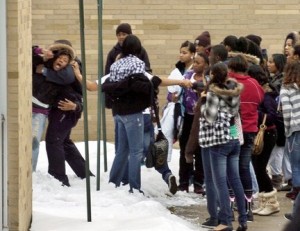
As for the pretext of Afrikaans being the cause of the 1976 school uprising, think again.
The two schools that were in the forefront of the Soweto riots did not receive tutoring in Afrikaans in any subject.
Also, an advisory board’s polling of all black schools’ governing bodies revealed that 64% approved of Afrikaans and English as mediums of education.
Zuma’s promotion of the “second revolution”, where scholars such as Hector Pieterson will undoubtedly be used again as pawns in a communist game, will indeed put South Africa back for centuries.