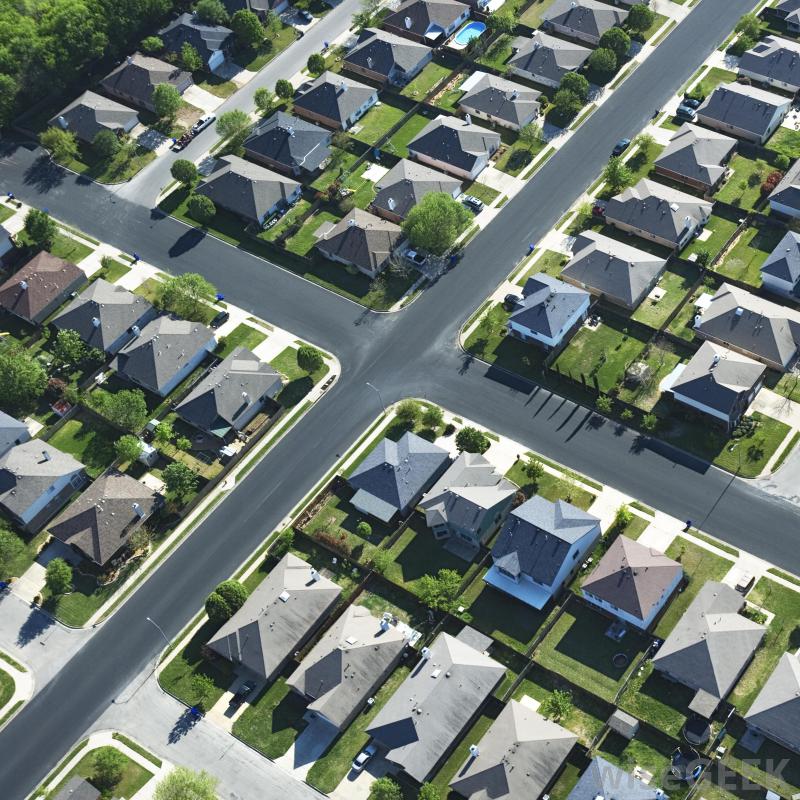
Obama wants to ‘break up’ white, Republican-voting neighbourhoods

The Obama administration is moving forward with regulations designed to help diversify America’s wealthier neighborhoods, drawing fire from critics who decry the proposal as executive overreach in search of an “unrealistic utopia.”

A final Department of Housing and Urban Development (HUD) rule due out this month is aimed at ending decades of deep-rooted segregation around the country.

The regulations would use grant money as an incentive for communities to build affordable housing in more affluent areas while also taking steps to upgrade poorer areas with better schools, parks, libraries, grocery stores and transportation routes as part of a gentrification of those communities.
“HUD is working with communities across the country to fulfill the promise of equal opportunity for all,” a HUD spokeswoman said. “The proposed policy seeks to break down barriers to access to opportunity in communities supported by HUD funds.”

It’s a tough sell for some conservatives. Among them is Rep. Paul Gosar (R-Ariz.), who argued that the administration “shouldn’t be holding hostage grant monies aimed at community improvement based on its unrealistic utopian ideas of what every community should resemble.”

“American citizens and communities should be free to choose where they would like to live and not be subject to federal neighborhood engineering at the behest of an overreaching federal government,” said Gosar, who is leading an effort in the House to block the regulations.

Civil rights advocates, meanwhile, are praising the plan, arguing that it is needed to break through decades-old barriers that keep poor and minority families trapped in hardscrabble neighborhoods.

“We have a history of putting affordable housing in poor communities,” said Debby Goldberg, vice president at the National Fair Housing Alliance.

HUD says it is obligated to take the action under the Fair Housing Act of 1968, which prohibited direct and intentional housing discrimination, such as a real estate agent not showing a home in a wealthy neighborhood to a black family or a bank not providing a loan based on someone’s race.

The agency is also looking to root out more subtle forms of discrimination that take shape in local government policies that unintentionally harm minority communities, known as “disparate impact.”

“This rule is not about forcing anyone to live anywhere they don’t want to,” said Margery Turner, senior vice president at the left-leaning Urban Institute. “It’s really about addressing long-standing practices that prevent people from living where they want to.”

“In our country, decades of public policies and institutional practices have built deeply segregated and unequal neighborhoods,” Turner said.

Children growing up in poor communities have less of a chance of succeeding in life, because they face greater exposure to violence and crime, and less access to quality education and health facilities, Turner suggested.

“Segregation is clearly a problem that is blocking upward mobility for children growing up today,” she said.

To qualify for certain funds under the regulations, cities would be required to examine patterns of segregation in neighborhoods and develop plans to address it. Those that don’t could see the funds they use to improve blighted neighborhoods disappear, critics of the rule say.

The regulations would apply to roughly 1,250 local governments.

Hans von Spakovsky, a fellow at the conservative Heritage Foundation, called the Obama administration “too race conscious.”

“It’s a sign that this administration seems to take race into account on everything,” Spakovsky said.

Republicans are trying to block the Affirmatively Furthering Fair Housing rule. Before passing HUD’s funding bill this week, the GOP-led House approved Gosar’s amendment prohibiting the agency from following through with the rule.

Though segregationist policies were outlawed long ago, civil rights advocates say housing discrimination persists.

HUD is looking to break down many barriers, but Gosar suggested the regulation would have negative repercussions.

“Instead of living with neighbors you like and choose, this breaks up the core fabric of how we start to look at communities,” Gosar said. “That just brings unease to everyone in that area.”

“People have to feel comfortable where they live,” he added. “If I don’t feel comfortable in my own backyard, where do I feel comfortable?”

Critics of the rule say it would allow HUD to assert authority over local zoning laws. The agency could dictate what types of homes are built where and who can live in those homes, said Gosar, who believes local communities should make those decisions for themselves rather than relying on the federal government.

If enacted, the rule could depress property values as cheaper homes crop up in wealthy neighborhoods and raise taxes, Gosar warned.

It could also tilt the balance of political power as more minorities are funneled into Republican-leaning neighborhoods, he suggested.

The Supreme Court is expected to weigh in on housing discrimination in a related case in the coming weeks. At issue is whether government policies that unintentionally create a disparate impact for minority communities violate federal laws against segregation.

The Texas Department of Housing and Community Affairs is facing accusations that it makes low-income housing funds more readily available in minority neighborhoods than in white neighborhoods. This promotes segregation, critics argue, by encouraging minorities to continue living in poor communities where government assistance is available.

Court observers say the case could have a profound impact on HUD’s rule. – thehill.com

800 000 rally against Charlie Hebdo in a country of 1.3 million

Nearly one million Muslims rallied in Grozny, Chechnya against the French magazine Charlie Hebdo. There are only 1.3 million people in all of Chechnya.

They’re more upset with the magazine than they are with the killer Kouachi brothers.

Voice of America reported:

Hundreds of thousands of people in the Russian Muslim region of Chechnya gathered in the regional capital Grozny on Monday to protest against caricatures of Islam’s Prophet Muhammad.

Chechnya’s Interior Ministry said more than a million people attended the demonstration. Earlier Monday, the Russian Interior Ministry had estimated the number of attendees at more than 800,000.

The republic’s population is around 1.3 million.

Before the rally, Chechen leader Ramzan Kadyrov urged people to attend to protest against what he called “the vulgarity, immorality, lack of culture, and the shamelessness of those who drew the caricatures of the Prophet.”

Earlier this month, gunman attacked the offices of the French satirical magazine Charlie Hebdo in Paris, killing 12 people. The killings were said to be retaliation for the publication’s depictions of Muhammad.

Some of the Chechen protesters Monday carried signs reading “Hands off the Prophet Muhammad,” Addressing the crowd, Kadyrov declared “If needed, we are ready to die to stop anyone who thinks that you can irresponsibly defile the name of the Prophet.”

Source: Gateway Pundit

Auf Deutsch bitte!

The rise of immigration in Germany is prompting one of the parties in the government coalition to seek a requirement that would oblige all foreigners to speak only German in public and at home. The proposal has caused a wave of criticism.

A comrade in the coalition led by Chancellor Angela Merkel’s Christian Democratic Union (CDU), the Christian Social Union (CSU), is due to approve a party draft policy paper proposal on Monday, requiring immigrants to practically abandon the use of their native tongue.

In the paper, as quoted by Reuters, the CSU says: “People who want to remain here on a permanent basis should be obliged to speak German in public and within the family.”

CSU argues that “social interaction works only when all speak the same language”, and says that all foreigners who enter to remain will be offered a language training course.

It was not immediately clear how the party proposes to enforce such a rule without invasive surveillance of immigrants’ homes.

Wolfgang Bosbach, a member of Merkel’s conservative CDU, agrees with the CSU proposal, arguing that speaking German is crucial for the immigrant integration process.

“Language skills are of paramount importance for good integration opportunities. Therefore, it is important to speak with children at home also in German,” Bosbach told Bayerische Rundfunk.

Yet the new proposal was swiftly denounced by the other parties in Merkel’s government, including a senior official from the chancellor’s Christian Democratic Union (CDU).

The latest data released by Germany’s statistics office show record immigration last year, with most of the new arrivals coming from European Union countries like Poland, Bulgaria and Romania in search of employment. The influx of 1,226,000 people to Germany in 2013 shows an increase of 13 percent from 2012, the highest on record since 1993.

“It is not the business of politicians whether I speak Latin, Klingon or Hessian at home,” Peter Tauber, general secretary of the CDU, said on Twitter.

Yasmin Fahimi, for the Social Democrats (SPD), called the proposal “totally absurd”.

“The state has no role to play in deciding what language people speak within the walls of their own home,” Fahimi told German newspaper Bild.

Black identity and racism in Brazil

Integration and miscegenation were actually government policy in Brazil.

Before teams representing their countries from around the world arrived in Brazil, the country’s president, Dilma Rousseff, took the opportunity to label 2014 the “anti-racism World Cup.”

The declaration came after a wave of racist incidents in soccer around the world targeting black players, many of whom are Brazilian. While it’s a well-intentioned gesture and a particularly important one for a World Cup being hosted in the country that’s home to the largest population of people of African descent outside of Africa, Brazil has a complex past and present when it comes to race.

That complexity can perhaps best be illustrated by the fact that many black Brazilians don’t think of themselves as black. Brazilian soccer star Neymar is a great example. Asked during an interview in 2010 if he had ever experienced racism, his response was, “Never.” He added, “Not inside nor outside of the soccer field. Even more because I’m not black, right?”

This denial of blackness may seem confusing to many Americans, because despite his long, straightened and occasionally blond hair, Neymar is clearly black. But for Brazilians, being black is very different from what it is in the United States.

“The darker a person is in Brazil, the more racism she or he is going to suffer. Light-skinned black people don’t identify as black most of the time,” says Daniela Gomes, a black Brazilian activist who is currently pursuing a doctorate in African Diaspora studies at the University of Texas. “A lot of people choose to deny their blackness. They don’t believe they are black, but they suffer racism without knowing why.”

Gomes calls it a “brainwash” that Brazilians go through in a country that likes to hold itself up as a model for racial harmony. But she also points to differences in the histories of the United States and Brazil. “We never had segregation, we never had the one-drop rule, we never had those kinds of things that are so normal for an African American,” she said. “What happened in Brazil was the opposite.”

Integration and miscegenation were actually government policy in Brazil. Around the time that slaves were freed, in 1888, the government sought to whiten its population through the importation of European immigrants. This idea was made law by Decree 528 in 1890 and opened the country’s borders to foreign immigrants, except for those from Africa and Asia.

The goal of this immigration effort was depicted in an 1895 painting by Brazilian artist Modesto Brocos known as The Redemption of Ham, which features a black grandmother, mixed-race mother, white father and white baby. The grandmother stands to the left with her hands raised in prayer, praising God that her grandson is white. This, says Brazilian entrepreneur and activist Carlos Alberto David, is the “final point” of racism in Brazil.

“Racism in Brazil is very sophisticated and structured,” says David. “The racism here is not physical. It works on people psychologically.”

Neymar, whose son looks very similar to the grandson in The Redemption of Ham, seems to have had quite a different experience in the four years since saying that he wasn’t black. The star forward has been subjected to monkey noises made by his own teammates, had multiple bananas thrown at him during international matches and even confronted an opposing coach he thought called him a monkey during a game.

Source: The Root