Chiefs the underdogs in Super Rugby semifinal

The Chiefs performing the haka

by Steve McMorran

Despite being defending champions and finishing atop the Super Rugby standings in the regular season, the Chiefs accept that they’re underdogs in Saturday’s all-New Zealand semifinal against the Crusaders.

Though they won 12 of 16 games to qualify automatically for the semifinals and though they beat the Crusaders in the first of two regular season meetings, the Hamilton-based Chiefs are given little chance of halting the Crusaders’ drive to an eighth Super Rugby title.

The Christchurch-based Crusaders have developed an irresistible momentum in the second half of the season, winning five straight matches since their 28-19 loss to the Chiefs on May 24. Their 43-15 win over the Chiefs three weeks ago and their 38-9 quarterfinal win over the Queensland Reds make them hot title favorites.

The Pretoria-based Bulls will host the ACT Brumbies in the other semifinal after finishing second behind the Chiefs in the regular season to earn home advantage in the playoffs.

The Bulls performed substantially above expectations to finish atop the South African conference and won eight straight matches before a loss to the Stormers in the last round cost them the chance of finishing in first place overall.

The Canberra-based Brumbies, who edged the Cheetahs 15-13 last weekend, face the immense task of traveling to South Africa for the semifinal and attempting to overcome the Bulls’ formidable home advantage at Loftus Versfeld.

The task is a larger one for the members of the Brumbies’ squad who played for Australia against the British and Irish Lions and may still be recovering from the physical and emotional strain of that series defeat.

The All Blacks’ mid-year series against France was less taxing and neither the Chiefs nor the Crusaders have been harmed by their players’ involvement. If anything, the Crusaders’ form has steadily improved in the month since the test window, led particularly by an upswing in the form of star flyhalf Dan Carter, who scored 18 points in their win over the Chiefs and 20 against the Reds.

The Chiefs’ sandwiched their loss to the Crusaders between unconvincing wins over the Blues and Hurricanes and seem well short of the form which carried them to their first Super Rugby title last year.

“Most of the country is writing us off, which is not a bad thing,” Chiefs coach Dave Rennie said. “But we’re happy with where we’re heading and we’ve got a pretty happy bunch who are keen to make amends from the last time we played,” the Crusaders.

“Obviously they’ll come in as favorites but we get to play them at home.”

The Chiefs have carefully analyzed their recent heavy loss to the Crusaders and are confident of repairing the deficiencies that match highlighted.

“We were caught short, especially from an intensity point of view, so we can change that quickly because we can control that,” Rennie said. “We’ve been here before, we’ve played the Crusaders quite a bit over the last couple of years and so we know what to expect.”

The Crusaders have named the same 22 they deployed against the Reds, resisting any temptation to elevate All Blacks captain Richie McCaw from the bench into the starting XV. McCaw returned to top rugby in last weekend’s match, playing the last 15 minutes.

Coach Todd Blackadder said starting McCaw “was never part of our thinking” because the veteran backrower is only just returning from an extended break and “it would be a huge step to go into a game like this.”

The Bulls have been able to nurse several key players back to health during the break they earned by qualifying directly for the semifinals. Scrumhalf Francois Hougaard and center Jan Serfontein have recovered from injuries and been named in the starting lineup, while Junior Springboks lock Paul Willemse has been included on the bench.

“We have worked hard to put ourselves in a position where we could host a semifinal at home and achieved that,” Bulls coach Frans Ludeke said. “We cannot allow all that effort to go to waste.

“We certainly respect the Brumbies. But this match will be about us and our ability and drive to make them play the game at our tempo.”

Brumbies coach Jake White shunned the temptation to ring changes after last weekend’s unconvincing performance against the Cheetahs.

“They have a good record at Loftus and … they are a typical South African side: very big and physical with some quality finishers out wide,” said White, who guided South Africa to the 2007 World Cup title. “So it’s up to our players to combat that with our own game.” – AP

Crusaders beat Reds 38-9 in Super 15 quarterfinal

Dan Carter leading the Crusaders to victory

Flyhalf Dan Carter scored a try among 20 points as the Crusaders beat the Queensland Reds 38-9 in the Super 15 quarterfinals Saturday to edge closer to their first Super Rugby title in since 2008.

Carter scored the second of four tries by the Christchurch-based Crusaders and kicked three conversions and three penalties – six goals from eight attempts – to reward his team’s physical domination of the Reds, who were champions two years ago.

The Crusaders will play either the Hamilton-based Chiefs or Pretoria-based Bulls in next weekend’s semifinals depending on the outcome of Sunday’s match between the ACT Brumbies and Bloemfontein-base Cheetahs.

If the third-ranked Brumbies beat the sixth-ranked Cheetahs, the Crusaders will play the defending champion Chiefs but if the Cheetahs win they will travel to South Africa to play the two-time champion Bulls.

The Crusaders will face either of those assignments with confidence after Saturday’s comprehensive win. From the start they physically overpowered the Reds in every area.

Ryan Crotty scored first in the 10th minute, running off a pass from Carter who took the ball to the gain-line from a five-meter scrum.

Carter scored his own try in the 30th minute after an outstanding lone break by Sam Whitelock, carried on with quick passes by Israel Dagg and Zac Guildford.

Winger Tom Marshall scored in the 51st minute after Crockett had split open the Reds defense and linked with Todd, who provided the last pass to the try-scorer. The Reds were almost cowed when Reid and Carter combined in the buildup to Crotty’s second try 15 minutes from fulltime.

The Crusaders dominated the contact area with powerful tackles, with physical force and with technique which brought them seven breakdown turnovers. They were able to advance beyond the gain-line at every venture, brushing aside Queensland’s ineffective interior defense. When they did so, creating even partial breaks, there were players in ready support and all Crusaders – backs and forwards – had the level of skill to keep the ball alive and offload in tackles.

Backrowers George Whitelock, Kieran Read and Matt Todd easily thrust their way through tackles then picked out supporting players with well-timed passes. But even tight forwards such as prop Wyatt Crockett and lock Sam Whitelock – the latter one of the most energetic players on the field – had the ability to brush past the shoulders of Queensland tacklers, to extend their arms and feed the ball to teammates in space.

Carter ran vigorously into contact and either passed or established quick and accurate phase play. There was a stark comparison in the record of his opposite number, out of favor Wallabies flyhalf Quade Cooper, who was so reluctant to take the ball into contact he wasn’t once tackled in the first half, nor did he make a tackle one-on-one.

“That was pretty pleasing,” Crusaders captain Read said. “I guess it’s good to hit your straps at this time of year. … It was a great start from our guys which set the tone pretty early and it continued on from there.

“I think in finals games defense is where your character shows and probably where it’s won. Certainly, we stepped up there from last week and I guess the conditions probably helped,” he added. “We were able to play a bit of free-flowing footy which is nice as well.”

The only Queenslanders to make a significant impact were scrumhalf Will Genia, who placed himself defensively in the backfield to take Crusaders’ kicks and who was steady in that effort.

Lock James Horwill returned to the Reds’ lineup, along with Genia, after leading the Wallabies in their three-test series against the British and Irish Lions. He had an unusually subdued game, hovering mostly in midfield, and was substituted after only 60 minutes.

In contrast, All Blacks captain Richie McCaw took the field as a replacement in the 65th minute to end an eight match “sabbatical” absence from top-line rugby. He carried the ball over the advantage line with his first touch, helping to set up the Crusaders’ final try and the second of the night to center Crotty.

The Crusaders will now attempt to end a title drought which goes back to 2008 when they won their seventh championship: following those they achieved in 1998, 1999, 2000, 2002, 2005 and 2006. They remain unbeaten in playoffs matches on their home ground in Christchurch where the Reds haven’t won any game since 1998.

—–

Crusaders 38 (Ryan Crotty 2, Dan Carter, Tom Marshall tries; Dan Carter 3 conversions, 3 penalties; Tom Taylor penalty), Reds 9 (Quade Cooper 2 penalties). HT: 21-6. – AP

Super Rugby: McCaw v. Cooper as Crusaders face Reds

Richie McCaw
Richie McCaw

Richie McCaw’s return will add extra spice to Saturday’s Super Rugby qualifier between Canterbury Crusaders and Queensland Reds as the All Blacks skipper comes up against old foe Quade Cooper.

McCaw is back after a six-month sabbatical from rugby and has been named among the replacements as the seven-time champions look to stay alive in the Super 15 title race in the sudden-death encounter against the 2011 winners.

The Reds are looking to overturn a six-match losing record in Christchurch, and have not beaten the Crusaders in New Zealand since 1999.

The winners will progress to next week’s semi-finals against either holders Waikato Chiefs or triple champions Northern Bulls, who have a bye after finishing first and second in the final standings.

McCaw’s debut appearance of the season provides a psychological lift for the Crusaders, who also have All Black ace Dan Carter calling the shots in his fly-half duel with discarded Cooper.

And there’s little love lost between the Wallaby and McCaw.

Cooper shoved the Kiwi in the head after James O’Connor scored a match-winning try in the 2010 Bledisloe Test in Hong Kong.

During the 2011 Tri-Nations decider the Australian kneed McCaw following a ruck but was later exonerated.

Cooper said he was anticipating a torrid time from the Crusaders’ supporters following his past incidents with the revered All Blacks skipper.

“I expect that every week. Nothing changes. We just played down in NSW and I take it I’m not the most favourable bloke down there either,” Cooper said.

“It is what it is and that’s part and parcel of rugby and rivalries in rugby. We’ve got a great rivalry with the Crusaders as a team. We played them in 2011 and managed to get the win. I’m sure that will add to the occasion.”

Crusaders coach Todd Blackadder said of McCaw: “While he’s mentally tough, he won’t be physically fit to the level that’s required. He’s a quality player and he’s Richie McCaw, of course, but at the end of the day we’ve still got to put this team first.”

The match will have a Test feel to it with 13 All Blacks (nine present and four former) in the Crusaders up against a Reds team containing 14 Wallabies (six present and eight former).

The Reds will also be strengthened by the return of key Wallabies –scrum-half Will Genia and lock James Horwill — who missed last week’s 14-12 win over the Waratahs.

While Queensland haven’t won in Christchurch for 14 years they have beaten all four New Zealand sides they have played this season.

If they defat the Crusaders they will become the first Australian team to clean sweep all five Kiwi opponents.

In Sunday’s other qualifier, South Africa’s Central Cheetahs are searching for their first victory in five trips to Canberra when they take on the ACT Brumbies.

It will be the Brumbies’ first playoff game since 2004 when they downed the Crusaders in the final, while the Cheetahs are making their debut in the finals.

The Brumbies lost out on the important second spot to the Bulls after their 21-15 last-round slip-up against the lowly Western Force in Perth.

Wallaby flanker George Smith will return to the Brumbies starting side after playing 30 minutes off the bench against the Force.

“For me now it’s about picking a team that can win the competition,” Brumbies World Cup-winning Springbok coach Jake White said.

“George has all that experience, has played in play-offs and won the competition before so any bit of advantage we can get going into this knockout stage of the competition is going to be vital.”

The Cheetahs narrowly lost 24-23 on their last trip to Canberra. – AFP

Peyper to referee Super rugby playoff

Jaco Peyper
Jaco Peyper

South African referee Jaco Peyper will be in charge of the first Vodacom Super Rugby qualifier between the Crusaders and the Reds in Christchurch, New Zealand, on Saturday.

This was confirmed by the SA, New Zealand and Australian Rugby (Sanzar) body on Tuesday.

The second qualifier, scheduled for Sunday morning in Canberra, Australia, between the Brumbies and the Cheetahs, would be refereed by New Zealand’s Glen Jackson.

Sanzar also confirmed that the first semi-final of the southern hemisphere franchise competition would be hosted at Loftus Versfeld, in Pretoria, when the Bulls take on the highest placed qualifier at 5.05pm on July 27.

The second semi-final, between the Chiefs and the other qualifier, would take place at Waikato Stadium in Hamilton, New Zealand, at 9.35am (SA time) on the same day.

Referee appointments for the semi-finals would be confirmed early next week. – Sapa

Anders Breivik’s ideas ‘are almost mainstream in many European countries’

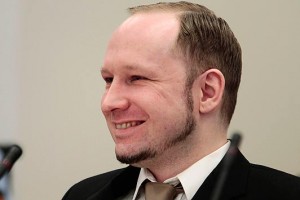
Anders Breivik in court in April 2012Norwegian mass killer Anders Behring Breivik may have failed to ignite a race war with Muslims, but he succeeded in stoking anxieties about the stability of Europe’s increasingly diverse societies.

Though his talk of an international underground of killers – latter-day Crusaders he called the Knights Templar – seemed to be mere fantasy, and while his methods place him far beyond the pale of mainstream politics, many of his beliefs are to be found within the fold of anti-Muslim, anti-immigrant populists.

“His ideological `manifesto’ is a distilled representation of a cultural crisis that pervades the European continent and finds expression in an increasingly xenophobic populism,” Kirsten Simonsen, a professor at Denmark’s Roskilde University, wrote in “Bloodlands”, a 2012 series of essays about Breivik.

Some notions – that Europe and its indigenous cultures are being weakened by immigration and multiculturalism – have been helping reshape the continent’s right-wing politics for years.

These beliefs occasionally find an echo on the margins of centre-right parties, among politicians seeking support from communities plagued by rising unemployment.

Mario Borghezio is a case in point.

The Italian politician set off a storm of outrage after Breivik’s gun and bomb massacre by declaring in a radio interview that its perpetrator had some “excellent” ideas.

Borghezio exemplifies a trend among populist anti-immigration groups – the use of the language of Western counter-terrorist efforts against al Qaeda to pursue what amounts to an anti-Islamic cultural campaign.

CALL FOR A “EUROPEAN SPRING”

Human rights groups are increasingly alarmed, not just at the far right, but at what many see as the pandering to its Islamophobic stereotypes by Europe’s mainstream parties.

“We need our own ‘European Spring’ to overcome old and emerging forms of racism and intolerance,” Nils Muiznieks, the Commissioner for Human Rights at the Council of Europe, a governmental human rights body, wrote in a July 2012 blog.

Muslims, he said, had become the primary “other” in right-wing populist discourse in Europe, and needed to be accepted as an integral part of society, entitled to equality and dignity.

Political parties in Austria, Bulgaria, Belgium, Denmark, France, Italy, the Netherlands, Norway and Switzerland had employed anti-Muslim rhetoric for political gain, he said.

Borghezio’s Breivik comment was denounced by his party, the pro-devolution, anti-immigrant Northern League, which apologized to Norway and temporarily suspended Borghezio from their ranks.

The European lawmaker argued the indignant reaction was misplaced, because he strongly condemned Breivik’s violence.

And yet, a year on, he still sees Breivik’s stance on some issues as attractive – particularly a perceived need to prevent Muslim immigration to Europe and combat Islamist extremism.

“Not all the ideas were criminal. It is the man who behaved in a criminal way,” Borghezio told Reuters.

CHEAP MUSLIM LABOUR

Tough regulation of immigrants, particularly Muslims, was essential, he said. In many mosques in Italy, he said, Muslims in economic difficulty were encouraged by extremist Islamist organizations “to carry out antisocial and illegal acts”.

His comments echo the public position of many in Europe’s far-right networks: a sense that the continent is under threat from Islamic extremists and is being betrayed by a rapacious political elite that values cheap Muslim labor above the economic welfare of its own communities.

Security specialists worry that far-right social media commentary stigmatizing Europe’s Muslims may help push enthusiasts towards militancy, much as al Qaeda propaganda opened pathways to violence for numerous Islamist radicals.

In a 2012 report, European police agency Europol stated the threat of violent right-wing extremism “has reached new levels in Europe and should not be underestimated. The threat will most likely come from lone actors, but organized, underground groups also have the capability and intention to carry out attacks.”

Some argue Breivik might have had more chance of setting off the kind of religious war he imagined if he had targeted Muslims, so as to create a cycle of revenge killings, rather than killing young white Norwegians from the pro-immigration Labour party, which encouraged a rallying behind common values.

“COUNTER-JIHADIST” MOVEMENT

On September 3, 2011, six weeks after Breivik’s Utoeya massacre, Stephen Lennon, a leader of the rightist English Defence League, took to a podium in central London and warned against any repeat of the 2005 attacks by British Islamists on London’s transport network that killed 52 people.

“The Islamic community will feel the full force of the English Defence League if we see any of our citizens killed, maimed or hurt on British soil ever again,’ he said.

U.S.-based researcher Arun Kundnani, in a June 2012 paper for the Hague-based International Centre for Counter-Terrorism, asserts that in the past two decades rightist violence in Europe has been comparable to Islamist bloodshed.

By his count, since 1990, at least 249 people had died in incidents of far‐right violence in Europe, compared to 263 who have been killed by jihadist violence.

A 2012 report by a left-wing anti-racist group, Hope Not Hate, identified more than 100 groups it said were part of a so-called counter-jihadist movement promoting anti-Islamic agendas in Europe, the United States, Canada and Australia, sharing anti-Islamic commentaries, photos, videos and rock music.

The groups, some of which Breivik quotes from in his manifesto, replaced the old racial nationalist politics of neo-Nazis with the language of cultural wars, Hope Not Hate said.

Immigration is an obsession with such groups.

Fifteen to 20 million Muslims, out of a total population of 500 million, are estimated to live in the 27-member European Union as well as non-EU members Norway and Switzerland.

France, a nation of 60 million people, is home to Europe’s largest Muslim minority, estimated at about 5 million. Norway estimates two percent of its 5 million population are Muslims.

A 2011 Pew survey of 50 European countries said the Muslim share of the population was expected to grow from six percent of the region’s people in 2010 to eight in 2030, due in part to higher birth rates among Muslims than non-Muslims.

“ADULTERATING” PURE NORWEGIAN BLOOD

Breivik argued his 77 victims, mostly teenagers at the ruling Labour Party’s summer camp on Utoeya, deserved to die because they supported Muslim immigration, which he said was adulterating pure Norwegian blood.

In Norway itself, Breivik’s deeds rebounded against the right. The mainstream but anti-immigration Progress Party, briefly joined by Breivik, suffered a huge blow in municipal elections two months after the attack.

But a growing number of opinion surveys show Europeans increasingly receptive to the notion that immigration, especially by Muslims, should be curbed or halted.

A July 2011 Pew Attitudes survey found that, when asked whether Muslims wanted to adopt local customs or stay culturally distinct, majorities of European populations chose the latter answer. A Populus research service poll in 2011 of more than 5,000 people in Britain for the Left-wing Searchlight Educational Trust found deep resentment among a range of communities about immigration.

“TOO MANY” IMMIGRANTS

In June 2012 an Ipsos MORI poll on attitudes to immigration found that in seven out of nine EU member states surveyed the majority regarded immigration as having had a negative impact on their country: Sweden and Poland were the only exceptions.

Mainstream centre-political parties have tried to keep up with the trend, enacting a variety of measures in the social sphere that have sometimes inflamed tensions on the street.

France banned clothing that covers the face in April 2011 and Belgium followed suit in July of the same year, while similar legislation has been proposed in the Netherlands, Italy and some Spanish regions. Switzerland barred the construction of new minarets following a referendum in 2009.

There is a broad European shift away from overt skin-color racism to prejudices about culture and religion shaped in part by the West’s war on al Qaeda.

“The whole focus of far right activity in Europe has shifted from race, the idea that ‘blacks are inferior’, to wider issues of identity,” said Ted Cantle, executive chairman of the Institute of Community Cohesion, a think tank.

Multiculturalism is another bugbear of the far right, which tends to define it as an excessive tolerance of immigrant communities that amounts to Western cultural suicide.

Centre-right politicians who have also questioned multiculturalism and advocated the primacy of Western liberalism in recent years include British Prime Minister David Cameron, German Chancellor Angela Merkel and former French President Nicolas Sarkozy. All did so facing domestic political pressure to take a tougher line on immigrants unwilling to adapt to host cultures.

Another example is Dutch populist Geert Wilders, head of the anti-immigration, anti-euro Freedom Party. Breivik’s manifesto reproduced anti-Islamic comments Wilders made to the Dutch parliament. Wilders has denounced Breivik and his actions.

Pepe Egger, head of Western European Forecasting for the UK-based Exclusive Analysis research house, says some of Breivik’s ideas are held quite widely among European political activists.

“The bizarre thing is that his ideas, as Islamophobic as they are, are almost mainstream in many European countries,” he told Reuters. “The perceived need to defend Europe against ‘Islamisation’ is not that far removed from what you can find in the opinion pieces in large daily newspapers.” – Reuters