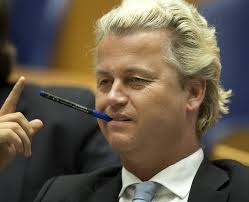
Le Pen and Wilders announce new EU parliamentary group

Marine Le Pen, the leader of France’s National Front, announced the creation of Europe of Nations and Freedoms, a new far-right European Parliament group that will qualify for up to €17.5 million of EU money over the next four years.

Le Pen failed to form a group after the European elections last year, despite a surge in support for far-right parties. Her party topped the French vote, returning 24 MEPs.

At least 25 MEPs from seven different countries are needed to form a political group.The new group will include Geert Wilders’ Dutch Party for Freedom, the Freedom Party of Austria, Italy’s Lega Nord, and Belgium’s Vlaams Belang.

Le Pen did not reveal which MEPs from which countries have joined that core but that news is expected later today. At least two MEPs from two different countries not already linked to the alliance are needed to form the faction.

Parliament sources told EurActiv that at least one of the MEPs are thought to be from Poland’s Congress of the New Right. EurActiv understands that Hungary’s Jobbik party will not be joining because they are too extreme. Some press reports claimed a UK Independence Party member could be joining.

Le Pen announced last night that she would hold a press conference to unveil the faction. Wilders also hinted at an important announcement, according to Dutch media reports.

J’annoncerai demain à Bruxelles la constitution de notre groupe “Europe des Nations et des Libertés”. MLP

— Marine Le Pen (@MLP_officiel) June 15, 2015

She said on Twitter, “Tomorrow in Brussels, I will announce the creation of our group, Europe of Nations and Freedom.”

According to research by think tank Open Europe, based on 38 MEPs, the new group could apply for:

an annual grant of €2,974,718.39 to set up and run the new group;
a grant for a linked pan-European political party;
a grant for a linked political foundation or think tank;
amounting to €4,442,759.83 every year;
or about €17.5 million over the remaining four years of Parliament’s term.

Source: euractive.com
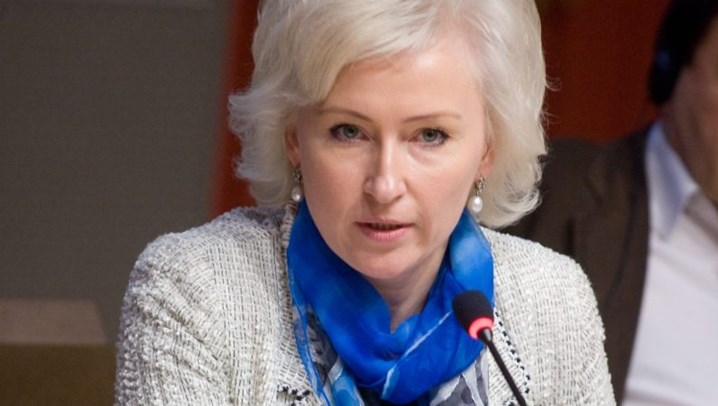
Liberal MP calls African migrants a threat to white race

Kristiina Ojuland, a former Foreign Minister of Estonia and former member of the European Parliament, voiced her disapproval of the European Commission’s migrant quota plan on her official Facebook page, by calling for a pan-European campaign against admitting any refugees in the EU.

In a post that was more reminiscent of a far-right extremist, than a former Vice President of the European Liberal Democrat and Reform Party (ALDE), Ojuland said that the “white race is threatened” by dark-skinned immigrants (Ojuland actually used an Estonian word “neeger” which is not officially considered offensive in Estonia, but nevertheless becoming socially unacceptable).

“Today yet again I see a fully able young Negro begging for money in Italy, from people who have worked hard to earn a lunch. I think that we should start a pan-European campaign to collect signatures to ensure that not a single so-called refugee gets across the Mediterranean. Enough of this nonsense!” Ojuland, the former high-ranking politician who for years campaigned Estonia to join the EU, wrote.

Her posting has so far gathered over 2,000 “likes”, 500 shares and 300 comments. While many people pointed out her offensive remarks and some called her racist, one would have thought that the former foreign minister would back down, but it didn’t turn out to be so. Instead, Ojuland chose to rigorously defend her statement and even went offensive against the moderate commentators who asked for common sense.

“Stop using a word ‘racist’! As a white person, I feel that the white race is threatened today! Are Estonians also so brain-washed now that they start talking some kind of politically correct bullshit?” Ojuland said.

Another reasonable commentator was told by former liberal MEP that by being a member of the European Union does not mean “accepting people who would squeeze Estonia’s social system”. “Estonia needs to say clear no to Mediterranean migrants!” exclaimed Ojuland.

Ojuland was the Foreign Minister of Estonia from 2002-2005. In June 2004 she ran for the post of secretary-general of the Council of Europe, but was defeated. She was a member of the Estonian Reform Party from 1995-2013 and from 2009-2014 served as 1 of the 6 Estonian MEPs in the European Parliament. Ojuland was expelled from the Reform Party in June 2013 over alleged vote rigging in the party board elections and subsequently founded Party of People’s Unity, which failed to gain enough votes to enter the Parliament, effectively ending Ojuland’s major political career in Estonia.

Source: Estonian Public Broadcasting

Member of European parliament urges recognition of DPR

The MP of the 7th session from the party Forza Italia, Fabrizio Berto announced in the conversation with journalists that the international community has to take the results of elections in the Donetsk People’s Republic (DPR) seriously and recognize the state forthwith.

As Fabrizio Berto explains:

I have a big work experience in a quality of observer. First of all, I observed that the organization of the process correspond European standards. I saw that people were happy to go to the elections. They were to wait for a long time in queues to enter the cabin to give the vote. And this fact is a confirmation of their ability to create their destiny themselves. I think that it wouldn’t be so in Italy.

He pointed out that the results of these elections reflect aspiration of people whom were seen by international observers at the electoral constituencies. The representative of the European Parliament stressed the common values of Europe:

We were also on the Saur-Tomb and saw military conditions, in which people live. I would like to say that both Ukrainians and Russian, inhabitants of the European Union have to have one common value, it is human life.

European parliament failed to calculate impact of sanctions

The European parliament seems to be a particulary useless body

The European Parliament did not conduct any of its own official studies on the impact of its sanctions against Russia prior to their implementation or to this day, said Director-General of the European Parliamentary Research Service (EPRS) Anthony Teasdale and Secretary-General of the European Parliament (EP) Klaus Welle on Tuesday.

“On sanctions, no we have not, in the European Parliament Research Service, done any analysis on the financial implications,” said Teasdale in response to a question from RIA Novosti at a Wilson Center event on EU economic integration.

He said there had been no requests from parliamentary committees, noting that “the committees have not been meeting for the last three or four months, because we’ve been having European elections.”

On July 31, the European Commission officially adopted stricter sanctions against Russia. According to the EP officials, this was done without a comprehensive study of the costs to Europeans. The sanctions barred access to secondary capital markets, the arms trade, and trade in technology used in oil exploration and production. Numerous European countries have already argued that the Western countries’ sanctions and the food import ban imposed by Russia on August 7 are damaging the economy.

“I was surprised myself that we hadn’t produced this,” said Welle of an outside study citing the impact, specifically, of the European oil trade with Russia being cut back. “On the question of did we calculate the effect of the sanctions specifically on this end, I am not aware of that.”

On August 7, Russia imposed a ban on food imported from the United States, the European Union, Australia, Canada and Norway in response to the Western sanctions. The ban targets meat, seafood, dairy products, fruit and vegetables and other food, and is expected to last one year.

Source: RIA Novosti

Marine Le Pen fails to form conservative group in EU parliament

Marine Le Pen has failed to find support in the minimum of seven European Union countries for her conservative group, the European Alliance for Freedom.

Le Pen and Geert Wilders of the Dutch Freedom Party did not gain enough allies to qualify as a single caucus in the new European parliament, which now denies them access to funding and extra speaking time. They would also not be able to serve on committees.

Following European parliamentary elections last month, won by Le Pen’s Front National, the various parties had until Monday midnights to form a group comprising at least 25 MEPs from at least seven countries.

The Le Pen-led grouping includes Wilders’ Freedom party, the Austrian Freedom Party, Italy’s Liga Nord and Belgium’s Vlaams Belang. Le Pen and Wilders easily easily exceeded the minimum seats required, the European Alliance for Freedom was two countries short of the required seven.

Wilders and Le Pen said they refused to collaborate with a new party of the extreme right in Poland, viewed as antisemitic but also certain to clash with Wilders’ and Le Pen’s views on immigration to their countries from eastern Europe.

The Polish New Right Congress – which advocates abolishing women’s voting rights – and the Lithuanian Order and Justice parties said they refused to join the Le Pen group.

The Lithuanian party preferred to join British Ukip leader Nigel Farage’s Europe of Freedom and Democracy parliamentary group.

Yesterday, the Front National declared that it failed to muster a full-sized European parliamentary group as it had not wanted to ally itself with parties demonstrating incompatible values.

Florian Philippot, the party’s vice-president, told the French radio station Europe 1: “We were several parties, but we needed to come from seven countries and this time it didn’t work.”

Philippot also said to Reuters: “We have no group, for the time being at least. But our deputies, who are more numerous than any other party in the French delegation, will be there to defend France under any circumstances, with or without a group.”

Ludovic de Danne, Le Pen’s European spokesman, tweeted: “Never mind the betrayals and media agitation. We and our allies will build a solid and coherent political group later.”

The new 751-seat European assembly sits for the first time next week.

Subsidies for political groups in the European parliament are substantial. The European Alliance for Freedom could have received up to €22m for operational expenses.

In its media release yesterday, the Front National stated:

“We regret it in the short term, but we take responsibility for our moral and political choice in the long term.

Convinced that it will be possible for us to form this group shortly, we are committed from the very first session in Strasbourg on 1 July to our struggle as patriots for our sovereignty, our identity and our liberty. We shall continue in parallel and with the greatest determination, our negotiations with several parties in Europe so as to constitute this greater formation in favour of sovereignty in the European parliament.”

Geert Wilders riding high

geertDutch right-wing leader Geert Wilders is riding high ahead of this month’s European Parliament elections, hoping to destroy from within what he calls the ‘monster of Brussels’.

The platinum-haired Wilders in November announced “the start of the liberation of Europe” from the European Union after forming a partnership with French right-wing party National Front (FN).

Like the FN’s leader Marine Le Pen, Wilders wants to take his country out of the EU and to abandon the euro.

The latest Ipsos opinion poll on May 1 ranked Wilders’ PVV third in the Netherlands, just below the ruling coalition partner People’s Party for Freedom and Democracy (VVD) and the pro-Europe D66.

Despite thousands filing police complaints of racism against Wilders, his anti-EU and anti-immigration call still appeals to many disillusioned with crisis-driven budget cuts blamed on Brussels.

The virulently pro-Israel Wilders has been giving extensive interviews, including to pro-Kremlin media, blaming the Ukraine crisis on the European Union.

The Dutch Centre for Information and Documentation on Israel (CIDI) on Wednesday said he was “betraying his principles” by cooperating with Le Pen.

Despite Wilders’ fawning approaches to Nigel Farage, his UK Independence Party (UKIP) and Scandinavian eurosceptic parties have said they would not work with Wilders because of his association with Le Pen.

In order to form a far-right anti-European bloc, Wilders and Le Pen would have to find like-minded politicians in at least a quarter of the EU’s 28 member states and see 25 members elected to the now trimmed-down 751-seat European Parliament.

So far Wilders reportedly wants Italy’s Northern League, Austria’s FPO, Belgium’s Vlaams Belang, Slovakia’s SNS and the Swedish Democrats on board.

If they become an official European political group, they would benefit from subsidies, offices, a communication budget, seats on committees and speaking time in parliament proportional to their number.

The Netherlands this time only has 27 seats in the European Parliament and with the PVV expected to gain around five seats, it will remain junior to the mightier National Front.

“Indirectly though he’ll have a far greater impact,” said political analyst Andre Krouwel, because of his ability to create doubt and division within bigger parties.

“He’s using it on national level. It is likely to happen on European level as well,” Krouwel said.

Source: AFP

EU parliament votes to suspend US from SWIFT to avoid spying

euparliamentThe European Parliament voted Wednesday for US access to the global financial database held by a Belgian company to be suspended because of concerns that the US is snooping on the database for financial gain rather than just to combat terrorism.

The Strasbourg based parliament voted 280 in favor, with 254 against, with 30 abstentions, and called for a suspension of US access until a full enquiry clarifies the situation.

“We need full transparency, especially with all the NSA revelations. Europe cannot accept that the data of private citizens is being accessed without anyone knowing about it”, Guy Verhofstadt, the leader of the Liberals in the European Parliament, told Reuters.

EU lawmakers are concerned that the US is covertly using information from the SWIFT database following leaked US documents aired by Brazil’s biggest television network Globo, which indicated that the US has secretly tapped into SWIFT.

Under current agreements the US has limited access to the SWIFT database. The deal is part of transatlantic cooperation following the September 2001 attacks, and allows certain data from SWIFT to be shared with the US treasury.

The idea was that by sharing on a limited basis the millions of financial messages that take place across the world every day, it would help combat terrorism.

However, the parliament’s vote is symbolic, not binding, and rather reflects EU wide public anger at the NSA spying allegations. The European Commission and the various EU governments will still need to approve a suspension of US access to SWIFT.

The European Commission has said in a statement that it had no immediate plans to propose a suspension of SWIFT to its member states and that it was “still waiting for additional written assurances”that the US was respecting its prior written agreement with the EU.

For its part the US has denied it is doing anything wrong. According to the EU Home Affairs Commissioner Cecilia Malmstrom, the US Treasury undersecretary for terrorism, David Cohen, has told her that the US government has respected the 2010 agreement on SWIFT.

But there is undoubtedly a firm belief within certain sections of the EU parliament that the EU should be more careful about what it shares with the US.

“The EU cannot continue to remain silent in the face of these ongoing revelations: It gives the impression we are little more than a lapdog of the United States,” said Jan Albrecht, a German Green in the EU parliament.

The vote comes on the back of allegations by the Le Monde newspaper that the NSA has spied on the agency records of millions of phone calls of top French politicians and business people.

The claims were taken seriously by the French government and on Monday morning the US ambassador to France Charles Rivkin was summoned to the French Foreign Ministry to give an explanation.

It was also reported earlier this week that years of spying on Mexico by the NSA had helped Americans get the upper hand in business talks and get investment opportunities that were more favorable to them. – RT


Marine Le Pen loses parliamentary immunity, exposing her to ‘racism’ charge

Marine Le Pen
Marine Le Pen

The leader of France’s National Front lost her right to legal immunity as a European Parliament deputy on Tuesday, exposing her to possible prosecution over a racism charge.

Marine Le Pen’s loss of immunity came at the request of a Lyon court three years after she was accused of inciting racial hatred for comparing Muslim street prayers to the occupation of France by Nazi Germany.

A majority of parliamentarians voted to ratify the decision, as recommended by a judicial committee, a parliament official said after the hearing at the parliament’s seat in the northern French city of Strasbourg.

A public trial in France would be a setback for the National Front as it seeks to capitalize on her rising popularity to grab territory from the ruling Socialist Party and mainstream right in local and European Parliament elections next year.

Le Pen’s anti-immigrant, anti-EU party is notably gaining support at the expense of President Francois Hollande’s Socialists in a darkening economic context, as high and rising joblessness fuels the spread of her euro-skeptic views.

The National Front has also profited from a tax evasion scandal that prompted the resignation of ex-Budget Minister Bernard Cazeneuve, stealing votes in his former home district during a by-election last month.

It is tipped to make strong gains in May 2014 European elections, with one survey by pollster YouGov in June showing it could reap 18 percent of the vote — ahead of the Socialists but behind the center-right UMP party.

By comparison in 2009, when Le Pen won her EU parliament seat in the North-West France region, the National Front scored a total of just 6.3 percent of the vote, versus 16.4 percent for the Socialists and 27.8 percent for the UMP.

Le Pen was ranked France’s third most popular politician in a web-based poll conducted in May by web site L’Internaute. That placed her one position behind former President Nicolas Sarkozy, and 24 positions ahead of Hollande.

If found guilty of inciting racial hatred, she would face a maximum penalty of one year in prison and 45,000 euros in fines. – Reuters

48 European Members of Parliament condemn ‘farm attacks’ against white South Africans

Philip Claeys
Philip Claeys in the European Parliament

Philip Claeys (Vlaams Belang), Andreas Mölzer (FPÖ) and Fiorello Provera (Lega Nord) submitted a written declaration to the European Parliament to protest against the ongoing ‘farm attacks’ in South Africa, which have already led to the death of thousands of Boers – white South Africans.

This declaration emphasizes the concern of the European Parliament and the systematic character of the attacks against white South Africans, and asks the South African government to urgently take measures to protect the Boers.

The declaration has been signed by 48 European Members of Parliament from 19 different member states and 7 political groups: Socialists, Liberals, Christian Democrats, Independents, the Eurosceptics of the EFD and the ECR, and even a member of the Communist group. “This shows that the horrendous ‘farm attacks’ are of great concern to several political groups across Europe”, Philip Claeys MEP concluded.

Vlaams Belang would like to thank in particular Louis Michel (MR) for his remarkable support for this initiative.

Another remarkable fact is that only one group did not support this declaration: the Greens – of which Frieda Brepoels (N-VA) is a member.  Vlaams Belang regrets the fact that the Greens and the N-VA apparently are not concerned by the massive killing of white South African Boers…