Battlelines drawn for independence

Leaders of the Flemish nationalists in Belgium, the Catalans in Spain and Italy’s Venetians said they still have momentum on their side, despite the ‘No’ vote in Scotland.

“Whether it was a ‘no’ or a ’yes’ vote, the main thing is that the process has started,” Gerolf Annemans, leader of the Vlaams Belang, or Flemish Interest party, said in an a phone interview. “You can’t say this is a clear vote for unity. The process of autonomy and national identity can’t be stopped.”

Separatists across Europe that had been energized by the Scottish nationalists’ push for independence were drawing breath today after voters opted to remain with the U.K. by about 10 percentage points. That leaves the Catalans as the most likely candidate to test EU leaders’ insistence that newly independent states will have to reapply for membership and face a period in the wilderness before reclaiming its full rights.

European Commission President Jose Manuel Barroso, Spanish Prime Minister Mariano Rajoy and German Foreign Minister Frank-Walter Steinmeier all welcomed the vote, which shores up the constitutional status quo in the 28-member bloc.

“I think this is a good decision for Scotland, Great Britain and Europe,” Steinmeier said in a statement.

Roger Albinyana, head of the foreign affairs department of the Catalan regional government, said in an interview with Bloomberg Television today that his movement is still determined to hold a referendum, despite the opposition of the national government in Madrid.

“There is a strong determination from the Catalan people,” Albinyana said. “We’ll do our best to hold that vote.”

Rajoy — who today said Scotland had avoided “grave social, economic, institutional, political consequences” of a split — has pledged to prevent Catalans voting on independence from Spain in a ballot Regional President Artur Mas has penciled in for November. The Catalan Parliament is set to approve the legal framework for the referendum today and Mas’s allies are urging him to defy the legal threats from the central government.

Mas today told reporters in Barcelona that Catalonia will push on with its independence referendum, and that a vote is the only way to resolve conflicts between Catalonia and the rest of Spain.

Gianluca Busato, who organized an unofficial referendum in March that called for independence of the Veneto region in northeast Italy, said economic arguments appeared to have won out in Scotland, the exact same reason why he said his region will eventually choose independence.

What the Catalans do regarding independence will likely have an impact on Spain’s Basques, who already have some autonomy.

The Basque region on the border between Spain and France has long sought independence. Around 150,000 Basques formed a 123km-long human chain on June 8 in a “Right to Decide” event.

The organizers of the Veneto vote said 2.36 million people voted in March, with 89 percent approving independence. Busato said Scotland’s experience shows the need for a more professionally prepared referendum next time.

“The oppressive fiscal transfers from Veneto to the rest of Italy are apparent for all to see,” Busato said in a phone interview. “For the Scottish, independence may have appeared more of a gamble.’

Source: Bloomberg

Scots spur separatists

For Kurt Ryon, the mayor of Steenokkerzeel, a Flemish village 10 miles northeast of Brussels, watching the Scottish independence campaign in the final days before the referendum is like watching a good soccer match. “They were losing for the first half and most of the second half,” he said, “but now we’re in the 85th minute and they could be winning.”

Mr. Ryon, who wants his native Flanders to split from Belgium, is rooting for Scotland to do the same from Britain, and like a faithful soccer fan he has all the gear: a T-shirt from the Scottish pro-independence “yes” campaign, a collection of “yes” pins on his denim jacket and copious amounts of a beer specially brewed by Flemish nationalists to express their solidarity. The label says “Ja!” next to a Scottish flag, Flemish for yes.

From Catalonia to Kurdistan to Quebec, nationalist and separatist movements in Europe and beyond are watching the Scottish independence referendum closely — sometimes more so than Britons themselves, who seem to have only just woken up to the possibility that Scotland might vote next Thursday to bring to an end a 307-year union. A curious collection of left and right, rich and poor, marginal and mainstream, these movements are united in the hope that their shared ambition for more self-determination will get a lift from an independent Scotland.

In the Basque Country, an autonomous community in northern Spain, the leader of the governing nationalist party has been known to dress up in a kilt and jokes that Basques would rather be part of an independent Scotland than remain part of Spain, which has ruled out any kind of vote. In Veneto, a region of northern Italy, nationalists have held a Scottish-inspired online referendum and now claim that nine in 10 inhabitants want autonomy.

Busloads of Catalans, South Tiroleans, Corsicans, Bretons, Frisians and “Finland-Swedes” are headed for Scotland to witness the vote. Even Bavaria (which calls itself “Europe’s seventh-largest economy”) is sending a delegation.

“It would create a very important precedent,” said Naif Bezwan of Mardin Artuklu University in the Kurdish part of Turkey. Across the Iraqi border (“the Kurdish-Kurdish border,” as Mr. Bezwan puts it), where a confluence of war, oil disputes and political turmoil has renewed the debate about secession, Kurds pine for the opportunity of a Scottish-style breakup.

“Everyone here is watching,” said Hemin Lihony, the web manager at Rudaw, Kurdistan’s largest news organization, based in Erbil, Iraq.

History offers few examples of nations splitting up in a consensual way. The velvet divorce between the Czechs and the Slovaks in 1993 is one, the Norwegian referendum on independence from Sweden in 1905 another. But mostly, nation states go to war over their borders.

The United States fought a civil war to preserve the union. Turkey fought Kurdish nationalists for decades and still denies them the right to Kurdish-language education. Kosovo declared its independence from Serbia only after a war in the 1990s.

President Vladimir V. Putin of Russia, who annexed Crimea after a stealth invasion and a referendum there, and who has been accused of aggressively aiding separatists in eastern Ukraine, has happily supported Scotland’s independence bid. But his attachment to self-determination is selective: In the Russian republics of Chechnya and Dagestan, he has deployed savage force to crush Muslim separatists.

In some cases, the referendum in Scotland is fueling new hopes, however improbable, among separatist fringe groups. When the president of the Texas Nationalist Movement, Daniel Miller, was invited to the University of Stirling in Scotland this year, he said the Scots were paving the way for an independent Texas. In others, the vote is re-energizing debates with considerable geopolitical importance.

In Taiwan, which China claims as part of its territory even though Taiwan is effectively independent with its own currency, military and democratically elected government, some hope a Scottish “yes” vote could prompt a more careful deliberation over the island’s future.

Wang Dan, a student leader in the 1989 Tiananmen Square protests, wrote in a recent column for Taiwan’s Apple Daily, “If the Scottish vote succeeds, it will be worth considering by those who advocate deciding Taiwan’s status through a referendum.”

But it is in Europe that a Scottish “yes” vote would probably create the largest ripples.

It would be the first time that a member of the European Union faces secession by a region eager to become a member in its own right. If Scotland succeeds in negotiating its own membership in the bloc, it would suddenly make the prospect of independence seem safer and more attractive elsewhere in Europe, said George Robertson, a former secretary general of NATO.

“There is a serious risk of a domino effect,” said Mr. Robertson, himself a Scot and an opponent of independence. A “yes” vote, he warned, could trigger “the Balkanization of Europe.”

Nationalists, however, say that a bit of Balkanization may be just what Europe needs.

In the slightly dilapidated Brussels office of the European Free Alliance, which groups together 40 parties representing Europe’s “stateless nations,” a busy map shows what Europe would look like if they all became independent. François Alfonsi, the president of the alliance and a proud Corsican, admits that it would be messy, but “democracy is messy and democracy is what Europe needs.”

Across town, Mark Demesmaeker, a Flemish member of the European Parliament who has decorated his office with a Scottish flag and keeps a copy of the Scottish white paper on independence on his desk, speaks of “failed nation states.”

In his view, Britain has failed to give the Scots and Welsh proper representation in Parliament, and Spain has failed to deliver democracy to Catalans and Basques eager to have their own independence vote. Other nations, like France and Italy, have been mired in political and economic stagnation. Mr. Demesmaeker’s own country, Belgium, cannot even form a government. (Belgium had elections in May and is still deep in coalition talks; the last time it took 541 days.)

Pro-European national movements like his own, the New Flemish Alliance — now the biggest party not just in Flanders but in all of Belgium — are the best antidote to the far-right, anti-European and anti-immigrant nationalist movements that did so well in European elections earlier this year, he said.

“If Scotland votes ‘yes,’ it will be an eye-opener for many people on the street,” Mr. Demesmaeker said. “Most people think it’s our fate to be part of Belgium. But Flanders could be a prosperous nation. It’s a democratic evolution that is going on in different states of the European Union. Eventually we want Flanders to take its place in the E.U.”

If plenty of nationalists have pledged their solidarity with Scotland, the reverse has been less true. The Scottish referendum takes place just days before the regional government of Catalonia is expected to confirm that it will hold an independence vote of its own on Nov. 9, which would override legal and political objections from Madrid.

Alfred Bosch, a Catalan lawmaker, said his counterparts in Scotland had shown little interest in being associated with events in Catalonia.

The Scots “probably want to distance themselves from anything that they see as not as ripe and as mature as their own process,” Mr. Bosch said. “They don’t want to create any hostility from Spain or other countries that might also have pro-independence movements,” not least because those governments will have to recognize an independent Scotland and consider whether to allow it into the European Union.

Whatever the outcome of the referendum, many nationalists say Scotland has already won.

“They have the opportunity to decide their own future,” said Andoni Ortuzar, the president of the governing Basque Nationalist Party, who wore a kilt in the 2012 carnival to celebrate the announcement of a Scottish referendum that year. “That’s what national self-determination is,” he said. “That’s all we ask.”

Source: NYT

Venetian nationalists accused of ‘terror’

Luca Zaia
Luca Zaia

Italian police on Wednesday arrested 24 people involved in a campaign to demand independence for Venice and its surrounding region and seized a tractor that they said the activists had tried to convert into a sort of tank.

The surprise arrests came just two weeks after activists held an online vote calling for the Veneto region, which encompasses the lagoon city, to break away from the rest of Italy and declare itself the “Repubblica Veneta”.

The authorities accused the 24 separatists of being involved in “terrorism”, “fabrication of weapons of war” and “subversion of the democratic order”.

The activists were part of a “secessionist group that was planning various initiatives, some of them violent, aimed at pushing for the independence of Veneto and other parts of the national territory of the Italian State,” the paramilitary Carabinieri said.

The activists were allegedly planning to use the “tank”, which was armed with a makeshift cannon, to stage a protest in Venice’s St Mark’s Square, 17 years after a similar stunt in which Veneto separatists drove a home-made armoured car into the famous square.

Police claim the makeshift tank was in good working order and was capable of firing projectiles from its barrel.

Those arrested included Franco Rocchetta, a former MP and the founder of the Liga Veneta, or Veneto League, one of several separatist movements calling for independence for the affluent north-eastern region.

In last month’s unofficial referendum, organisers claimed that 56 per cent of registered voters in the region cast a vote online and that an overwhelming majority supported secession from Italy.

They said that out of a total 2.36 million votes cast, 2.1 million voted for independence.

The drive for independence is supported by Veneto’s most powerful politician, Luca Zaia, who is president of the region and a member of the separatist Northern League.

Mr Zaia leads a regional assembly which is debating holding an official referendum on the issue, just as Scotland secured the right to hold September’s vote on seceding from the UK. He says there are powerful economic and cultural reasons for Veneto to strive for independence.

Venetians and the people of surrounding cities such as Padova and Vicenza deeply resent the fact that each year Rome takes 20 billion euros of their tax revenue.

They feel that the money is squandered on corrupt and dysfunctional parts of Italy, particularly in the crime-ridden south.

Source: The Telegraph

Landslide victory for Flemish nationalists

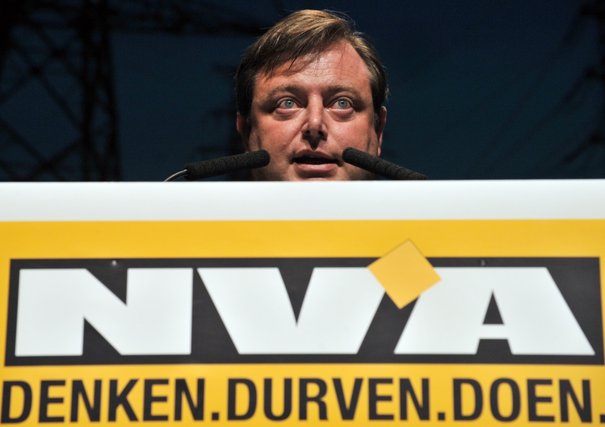
Bart de Wever

Flemish nationalists made sweeping gains across northern Belgium in local elections on Sunday, a success that will bolster separatists’ hopes for a break-up of the country.

Bart de Wever, leader of the New Flemish Alliance (NVA), is set to become mayor of the northern city of Antwerp, Belgium’s economic heartland, after his party emerged as the largest one ending about 90 years of socialist rule.

Soon after the ballot results emerged, Mr De Wever, who had turned the tough mayoral race into a referendum on Flander’s independence for Belgium, demanded that the country’s prime minister give greater independence to the Dutch-speaking north.

“De Wever sent a strong signal to Brussels and he has put his party on course to send an even clearer one in 2014 … they will try to go for an even bigger win in the federal elections,” said a veteran political analyst for the Gazet Van Antwerpen.

“We want to give Flemish people the government they want at all levels. That is why I call on Elio Di Rupo and the francophone politicians. Take up your responsibility,” said De Wever.

The strong result recorded by the Flemish nationalists is likely to have an impact across Europe, where the sovereign debt crisis, which has seen rich countries bail out poor ones, has revived separatist sentiment throughout the continent.

Flanders, which is the most economically prosperous region of Belgium, has long resented financing the ailing economy of French-speaking Wallonia, and Sunday’s victory will strengthen their demand for self-rule.

Lieven De Winter, a political scientist at Université Catholique de Louvain, said that Mr De Wever’s victory was a clear step forward for separatist who had long been campaigning for secession from the southern part of the country. However, he warned that the process towards accomplishing a break-up would be wrath of problems.

“There is no doubt that tonight De Wever made a small step towards completing his dream of a break-up but there are many obstacles ahead … at the end of the day you need two to tango,” Mr De Winter said.

NVA won about 38 per cent of votes in Antwerp against about 28 per cent secured by the Socialists, according to provisional Flanders government data. Meanwhile, in the rest of the northern region the Flemish nationalists won more than 30 per cent of support.

NVA is expected to seek the support of the Socialists to run Antwerp – in Belgium it is common for opposing parties to form a coalition after elections as no one party enjoys an outright majority throughout the country.

Belgium consists of Dutch-speaking Flanders, francophone Wallonia and Brussels, its bilingual capital. The Socialists have tried to keep Brussels French through Arab immigration. Political powers have already been devolved to regional governments, Flanders, in more populous with about 6m people compared with 3.5m in Wallonia.

NVA’s victory in Antwerp and strong result across the north of Belgium will give good momentum to the separatists in the run-up to the key federal elections in 2014, said analysts. – FT