Russian Unity Day: 8 000 Russian nationalists protest against migrants

Russians on the march for Unity Day

Several thousand Russian nationalists rallied Monday in Moscow, venting against the migrants they accuse of pushing up the crime rate and taking their jobs.

The protest took place on the national holiday of Unity Day, established in 2005 to replace commemorations of the Bolshevik Revolution.

Many demonstrators carried Russian imperial flags. One group displayed a banner reading “Young People Against Tolerance.” The protesters in a southern neighborhood of the Russian capital ranged from tough-looking youths to older people.

Animosity is strong among nationalists against migrants both from the former Soviet Central Asian republics and non-Slavs from the largely Muslim Russian Caucasus region.

Monday’s rally came three weeks after rioters targeted a vegetable warehouse where they believed the killer of an ethnic Russian man was working. Police later rounded up more than 1,000 migrants working at the warehouse.

Some demonstrators praised the riot and suggested it was backed by the state.

“People received a signal that if they engage in such pogroms, there will be progress,” said Yevgeny Morgunov, a 36-year-old researcher at the Russian National Academy of Sciences.

He said he didn’t support the radical exclusionary sentiment reflected in the nationalist slogan “Russia for Russians,” but said “if Russians feel good, the other people of Russia will feel it too.”

There were no immediate reports of trouble at the Moscow rally, but the Interfax news agency said police detained 12 participants in a similar rally in the Siberian city of Krasnoyarsk. Nationalist demonstrations were also reported in the cities of Irkutsk and Kazan.

A U.N. report in September said Russia has about 11 million migrants. The state news agency RIA-Novosti, however, cited the Federal Migration Service as saying only about 718,000 of them have residency permits. – AP
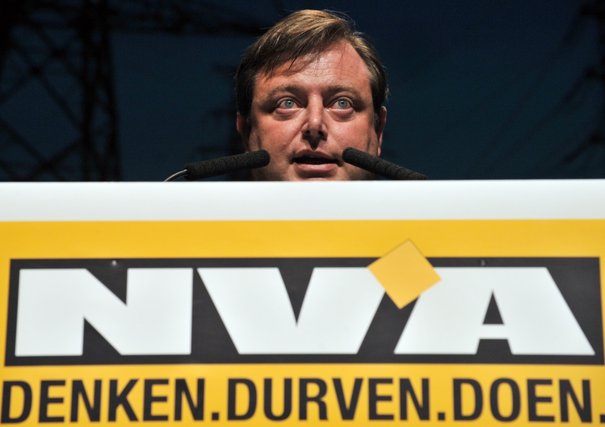
Landslide victory for Flemish nationalists

Bart de Wever

Flemish nationalists made sweeping gains across northern Belgium in local elections on Sunday, a success that will bolster separatists’ hopes for a break-up of the country.

Bart de Wever, leader of the New Flemish Alliance (NVA), is set to become mayor of the northern city of Antwerp, Belgium’s economic heartland, after his party emerged as the largest one ending about 90 years of socialist rule.

Soon after the ballot results emerged, Mr De Wever, who had turned the tough mayoral race into a referendum on Flander’s independence for Belgium, demanded that the country’s prime minister give greater independence to the Dutch-speaking north.

“De Wever sent a strong signal to Brussels and he has put his party on course to send an even clearer one in 2014 … they will try to go for an even bigger win in the federal elections,” said a veteran political analyst for the Gazet Van Antwerpen.

“We want to give Flemish people the government they want at all levels. That is why I call on Elio Di Rupo and the francophone politicians. Take up your responsibility,” said De Wever.

The strong result recorded by the Flemish nationalists is likely to have an impact across Europe, where the sovereign debt crisis, which has seen rich countries bail out poor ones, has revived separatist sentiment throughout the continent.

Flanders, which is the most economically prosperous region of Belgium, has long resented financing the ailing economy of French-speaking Wallonia, and Sunday’s victory will strengthen their demand for self-rule.

Lieven De Winter, a political scientist at Université Catholique de Louvain, said that Mr De Wever’s victory was a clear step forward for separatist who had long been campaigning for secession from the southern part of the country. However, he warned that the process towards accomplishing a break-up would be wrath of problems.

“There is no doubt that tonight De Wever made a small step towards completing his dream of a break-up but there are many obstacles ahead … at the end of the day you need two to tango,” Mr De Winter said.

NVA won about 38 per cent of votes in Antwerp against about 28 per cent secured by the Socialists, according to provisional Flanders government data. Meanwhile, in the rest of the northern region the Flemish nationalists won more than 30 per cent of support.

NVA is expected to seek the support of the Socialists to run Antwerp – in Belgium it is common for opposing parties to form a coalition after elections as no one party enjoys an outright majority throughout the country.

Belgium consists of Dutch-speaking Flanders, francophone Wallonia and Brussels, its bilingual capital. The Socialists have tried to keep Brussels French through Arab immigration. Political powers have already been devolved to regional governments, Flanders, in more populous with about 6m people compared with 3.5m in Wallonia.

NVA’s victory in Antwerp and strong result across the north of Belgium will give good momentum to the separatists in the run-up to the key federal elections in 2014, said analysts. – FT