South Africa to receive R5 billion in Covid-19 funding from African Development Bank

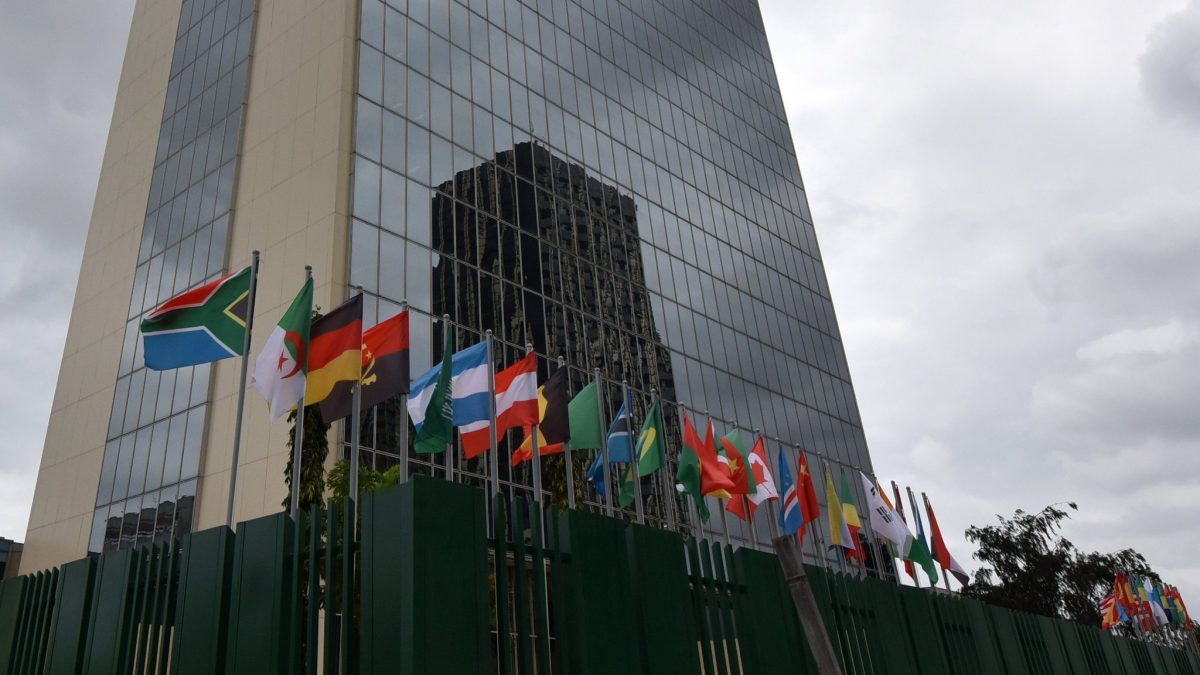
ABIDJAN, Ivory Coast. The Board of Directors of the African Development Bank (www.AfDB.org) has approved a loan of approximately R5 billion ($288 million) to the government of South Africa, as the country battles one of the largest COVID-19 caseloads in the world.

South Africa confirmed its first case of COVID-19 on 5 March 2020 and is currently the most affected in Africa, and among the top five in the world in terms of confirmed cases (381,798 as at 22 July, with 5,368 deaths).

The loan falls under the Bank’s $10 billion COVID-19 Response Facility and will finance South Africa’s COVID-19 Response Support Program, and represents the Bank’s first ever budget support to the country. The operation is designed as a Crisis Response Budget Support Operation prepared following a request from the government of South Africa.

The purpose of the program is to: (i) protect lives and promote access to essential equipment to prevent infection, such as protective personal equipment, sanitizers and gloves (ii) protect livelihoods by preserving jobs, incomes, food security and access to essential public services (iii) protect firms by supporting enterprises in the formal and informal economy to withstand the impacts of COVID-19 and prepare for economic recovery.

South Africa’s ability to respond to the pandemic has implications for neighbouring countries as well as the continent as a whole, given its position as Africa’s second-largest economy after Nigeria.

Even before the pandemic, South Africa was experiencing an economic slump. In 2019, the country registered GDP growth of 0.2% – the lowest in a decade – and according to Bank estimates it could drop to the worst in 90 years in 2020. Projections show a GDP contraction of 6.3% and 7.5% under baseline and worst-case scenarios, respectively.

These growth forecasts have placed budgetary constraints on the government’s ability to deal with the health crisis.

In order to ensure a complementary intervention, the African Development Bank operation was designed in collaboration with other partners, including the International Monetary Fund, World Bank and the New Development Bank.

South Africa is ranked as the most prepared African country to deal with a pandemic, according to a Global Health Security (GHS) Index. Yet significant challenges remain in the public health sector, including underfunding and human resource shortages. While the private health sector is better equipped, it remains unaffordable to the majority of South Africans.

The COVID-19 outbreak is also likely to adversely affect the gains made in controlling other infectious diseases such as TB and HIV/AIDS. South Africa’s scaling up of mass testing has also put pressure on capacity at public sector laboratories, and concerns have been raised about the rising numbers of infections among health workers.
BRICS bank to pour $780m down Eskom’s black hole

The New Development Bank plans to lend as much as $780 million to Eskom Holdings SOC Ltd. for infrastructure projects this year as the ailing South African power utility battles to keep power supply steady.

Eskom, which on Wednesday entered a seventh day of controlled power cuts, is contending with operational and financial challenges, threatening the productivity of Africa’s most-industrialized economy. The government is considering various interventions to turn the company around, including a $4.8 billion bailout over three years and splitting the organization into three parts to help contain costs.

The NDB, back by the so-called BRICS nations of Brazil, Russia, India, China and South Africa, is in talks with the government about loans that could alleviate some of the pressure on the country’s electricity grid, the lender’s president, K.V. Kamath, said by phone.

The development institution is rolling out a $180 million loan to Eskom to build transmission lines and is considering two further projects in 2019, he said. The first is a $480 million loan that will pay for retrofitting flue-gas desulfurization equipment to make the Medupi power plant compliant with new environmental standards. The second is a further $300 million facility to improve the country’s battery-storage capacity, Kamath said.

—Bloomberg (extract, and BRICS bank press release)

EU lends to Zimbabwe again

The European Union has given Zimbabwe $267 million, it said on Monday, the first time the bloc has given financial aid to the southern African nation’s government since imposing sanctions in 2002.

The 28-nation EU has gradually eased biting sanctions on Zimbabwe to encourage political reform, although it has kept an asset freeze and a travel ban on veteran President Robert Mugabe and his wife Grace, as well as an arms embargo.
Since imposing the sanctions, the EU has shunned the government, and restricted its funding to charities only.

The EU ambassador to Zimbabwe Philippe Van Damme said during a signing ceremony that the agreement opened a new chapter in the bloc’s relationship with Zimbabwe, but cautioned that new problems could still emerge in future.
“Does this mean that everything is suddenly sorted out and that we are entering a new honeymoon? No, we have cleared some obstacles in our partnership, and as in any partnership new problems may emerge, old problems may reappear,” he said.

Mugabe’s ZANU-PF party has long demanded the complete removal of EU sanctions it denounces as illegal.

Finance Minister Finance Patrick Chinamasa said the aid marked a significant step towards improving ties between Zimbabwe and the EU but that sanctions on Mugabe and his wife would hurt full normalisation of relations.

“As long as the chief executive (Mugabe) remains under sanctions, our relations remain poisoned and unproductive,” Chinamasa said.

The EU said the funds will improve health, agriculture-based economic development, governance and institution-building.
Half of the money would be released this year, and the rest will be paid gradually until 2020, Van Damme said.